
SINOLINK SECURITIES(600109)

Search documents
视频|国金证券给您拜年了!
Xin Lang Cai Jing· 2026-02-16 02:08
专题:资本市场大咖2026新春献词:骏马踏春来 驭势稳行启新程 炒股就看金麒麟分析师研报,权威,专业,及时,全面,助您挖掘潜力主题机会! 来源:国金证券研究所 责任编辑:杨赐 专题:资本市场大咖2026新春献词:骏马踏春来 驭势稳行启新程 炒股就看金麒麟分析师研报,权威,专业,及时,全面,助您挖掘潜力主题机会! 来源:国金证券研究所 责任编辑:杨赐 ...
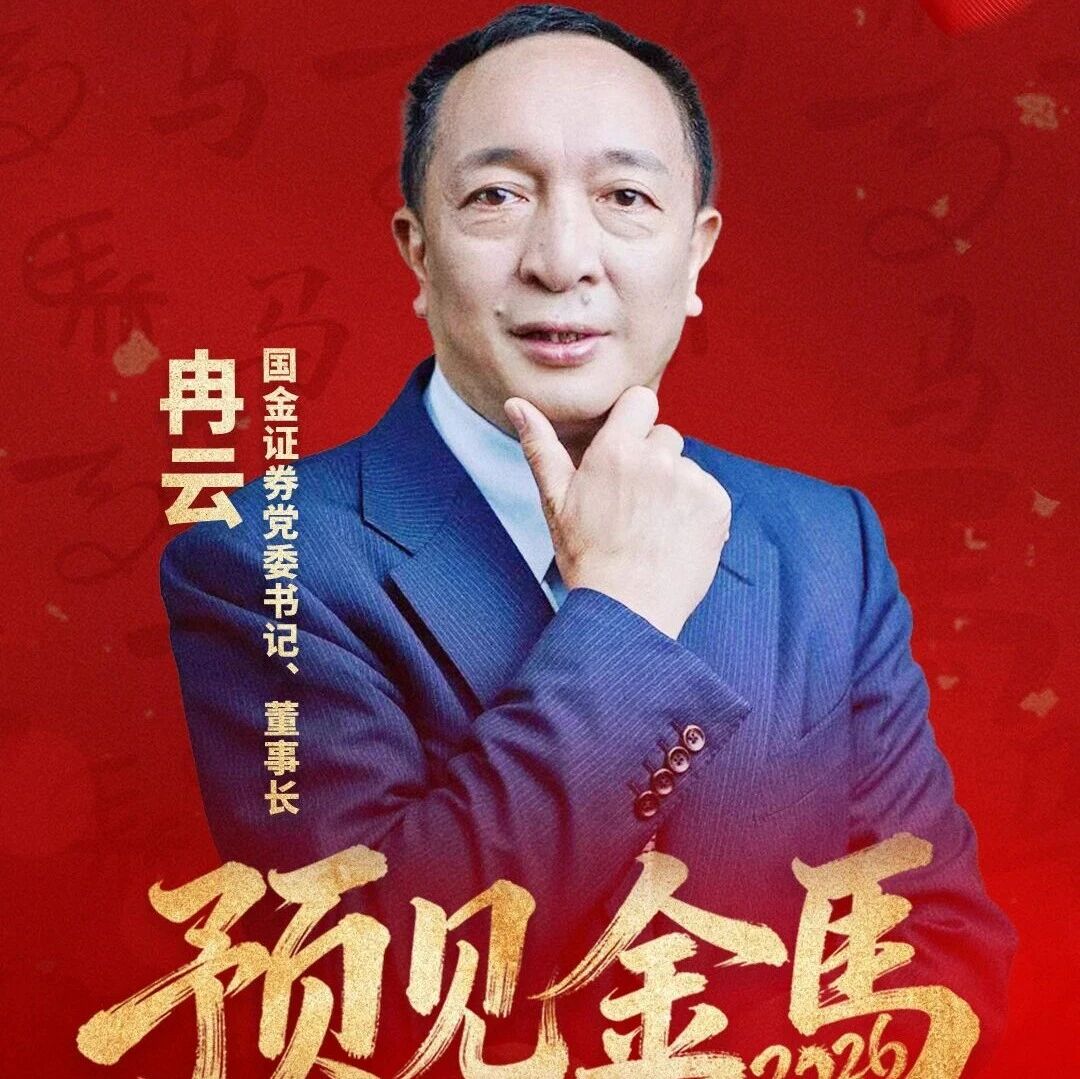
预见金马|国金证券董事长冉云:笃行实干,做实体经济的长期“陪伴人”
券商中国· 2026-02-15 12:13
新 春 快 乐 顺流逆流,皆为行路的风景;心有罗盘,便有笃定的方向。券商中国微信平台粉丝总量已强势突破600万大关,值此2026年新春佳节来临之际,我们深深感恩每一位读 者朋友长久的信任与陪伴。在此,券商中国、券中社APP诚邀各大金融机构共同录制新春寄语视频,一起回顾2025年的精彩历程与深刻洞察,携手展望2026年的崭新蓝 图与无限可能。 国金证券党委书记、董事长冉云在《预见金马》年终策划中表示,过去一年,全球经济环境复杂多变,但中国资本市场展现了强大的内生韧性。 证券行业在新"国九条"的指引下,正加速回归服务实体经济的本源,从追求规模转向追量更重质,从短期博弈转向长期价值。 展望2026年,冉云表示,新的一年,金融强国建设的蓝图催人奋进,行业将更加坚定地行驶在高质量发展的主航道上。国金证券将继续坚守"本 分",深耕主责主业,做实体经济的长期"陪伴人"和价值发现的坚定"守望者"。 以下为视频全文: 大家好,新年好!我是国金证券党委书记、董事长冉云。祝贺券商中国微信粉丝突破600万! 寒暑流易,光华常新。转眼间,我们告别了耕耘不辍的2025年,迎来充满希望的2026年。在这辞旧迎新的美好时刻,很高兴通过券商中 ...

增资、发债、新设、担保......开年中金、广发、华泰等多家券商为出海筹措“弹药”
Xin Lang Cai Jing· 2026-02-14 10:35
Core Viewpoint - Chinese securities firms are increasingly expanding their overseas operations, with multiple major and mid-sized firms announcing initiatives for international capital operations at the beginning of the year [1][2]. Group 1: Recent Developments - On February 13, major firms including CITIC Securities, CICC, and Zhongtai Securities announced guarantees for their overseas subsidiaries [2]. - GF Securities reported a change in registered capital from 7.606 billion RMB to 7.825 billion RMB due to a completed H-share placement, with funds aimed at enhancing overseas subsidiary capital [2]. - GF Securities plans to list its zero-interest convertible bonds on the Vienna MTF [3]. Group 2: Industry Trends - GF Securities is not the first to pursue overseas financing; Huatai Securities recently issued 10 billion HKD in zero-interest convertible bonds for international business support [5]. - Since 2025, over ten securities firms have made significant strides in international business, with firms like Western Securities and Dongwu Securities establishing wholly-owned subsidiaries in Hong Kong [6]. - The push into overseas markets represents a shift for Chinese securities firms from local intermediaries to global traders, driven by the need for risk hedging and capital flow [6]. Group 3: Performance Metrics - As of mid-2025, 13 out of 16 comparable A-share listed securities firms reported over 10% year-on-year growth in overseas business revenue [7]. - Notable revenue figures include CITIC Securities at 6.912 billion RMB (up 13.57%), CICC at 4.024 billion RMB (up 75.66%), and Haitong Securities at 2.459 billion RMB (up 76.21%) [8]. Group 4: Future Outlook - Experts predict that a significant number of quality domestic enterprises will connect with global markets through Hong Kong, creating opportunities for IPOs and cross-border capital services [9]. - The competitive edge in overseas business will increasingly focus on cross-border derivatives and FICC (Fixed Income, Currency, and Commodity) operations [10]. - Chinese securities firms are expanding beyond Hong Kong to Southeast Asia and the Middle East, establishing a comprehensive international business landscape [10]. Group 5: Strategic Considerations - The future growth potential for Chinese securities firms lies in cross-border wealth management, offshore RMB-related businesses, and investment banking in emerging markets [11]. - Firms are advised to build a composite team that understands both international rules and Chinese industries, while also enhancing cross-cultural integration [12].






风险偏好高低切换下,房地产链迎价值机遇,建材ETF(159745)近1周新增规模居同类产品第一
Xin Lang Cai Jing· 2026-02-13 05:12
消息方面,国金证券在《A股策略周报:高切低与简单题》研报中表示,风险事件密集冲击下,全球大 类资产开启"Risk-off"模式在AI产业叙事出现阶段性退潮、就业市场超预期降温等事件密集冲击下,近 期全球大类资产开启"Risk-off"模式,美国国债收益率下行,市场避险情绪严重,直至周五(2026年2月 6日)才有所缓解。而在权益资产内部,全球股票市场出现明显的成长向价值的加速风格切换。导致市 场如此激烈风险再平衡的直接诱因在于近期AI Agent技术的快速进步,引发市场对于AI从赋能者变为掠 夺者的担忧,大型软件股遭遇抛售潮;与此同时,当前美股财报季部分重要科技股业绩信号同样并不乐 观,如AMD、ARM、高通等业绩指引低于市场乐观预期,BIG7大超预期的资本开支投入则加剧了市场 对其业绩能否顺利兑现的质疑等。而风格的另一端,制造业修复的信号正在变得愈发明显,且工业、原 材料、房地产等价值板块同样具备AI较难替代特征,因此在本轮风格切换中获得市场青睐。 中银证券研报称,全年来看,可能会出现两个拐点,一个是一季度末左右的"政策拐点",一个是四季度 左右的"基本面拐点"。"政策拐点"可能会体现在房地产供需两端的政策 ...

国金证券:黄磷供需格局有望逐步向好 硫磺价格高企或将助推景气上行
智通财经网· 2026-02-13 03:26
智通财经APP获悉,国金证券发布研报称,从供给侧来看,黄磷作为典型的高耗能产品政策端严控新增 产能,同时基于能耗标准与产能规模加速推进行业节能降碳以及落后小产能出清;从需求侧来看,黄磷 下游主要应用于热法磷酸、草甘膦、三氯化磷等领域,一方面终端六氟磷酸锂为代表的新能源需求高速 增长,草甘膦等传统领域近年来需求相对稳定,另一方面硫磺价格的持续上涨导致湿法磷酸成本抬升, 间接提升热法磷酸性价比的同时有望为黄磷提供涨价空间,建议关注具备较大规模黄磷产能且具备一定 业绩弹性的相关标的。 国金证券主要观点如下: 供给侧:产能区域集中特征较为明显,新增产能受严格约束 根据《热法磷酸与湿法工业磷酸的技术经济分析》,生产单吨湿法工业磷酸需要消耗硫磺1.292吨,以 25年年初为基准,截至2026年2月4日国产硫磺价格为4065元/吨,累计上涨2569元/吨,累计涨幅约为 172%,根据硫磺单耗计算累计抬高湿法工业磷酸单吨生产成本3319元。2025年5月以来热法磷酸价格开 始低于湿法磷酸,且价差呈现扩大趋势,同时热法磷酸相较于湿法纯度较高,因此热法磷酸在硫磺价格 上涨的背景下性价比相对提升。 SMM预计,2026年硫磺供给增 ...
转债择时+择券策略周度跟踪-20260213
SINOLINK SECURITIES· 2026-02-13 03:02
Report Information - Report Title: Convertible Bond Selection + Timing Strategy Weekly Tracking (as of February 2, 2026) - Report Date: February 2, 2025 - Report Source: Financial Products Center, Securities Research Report [1] Core Viewpoints - This week, the three strategies jointly held 6 convertible bonds, namely Lanfan Convertible Bond, Changqi Convertible Bond, Qiaqia Convertible Bond, Fuhan Convertible Bond, Xianle Convertible Bond, and Zheng22 Convertible Bond. The sub - low - price strategy maintained low turnover, and the price center of the increased - holding targets was at a medium - high level. The option strategy also maintained low turnover [2] - The double - low strategy's increased - holding targets this week were mainly affected by the implied volatility, the factor of convertible bond price changes relative to the underlying stock price changes, and the环比 change of the conversion premium rate [6] - From an industry perspective, the model's recommended directions are petroleum and petrochemicals, building materials, building decoration, social services, and basic chemicals. The industry mainline is cyclical, mainly contributed by the factor of conversion price change relative to the underlying stock price change and the conversion premium rate factor. There is a marginal increase in social services [7] Strategy - related Summaries Sub - low - price Strategy - Increased - holding targets: ForceNuo Convertible Bond (123221), YinBang Convertible Bond (123252), etc. [4] - Performance: It fell 1.84% in the past week, with an excess return of - 0.96% compared to the Wind Convertible Bond Low - price Index. It rose 5.44% this year, with an excess return of 1.65% compared to the benchmark. In the past year, the annualized return was 25.15%, the Sharpe ratio was 2.21, the Calmar ratio was 3.96, the maximum drawdown was 6.35%, and the annualized excess return was 4.09% [10][12][26] - Factor: The factor was the average closing price of the past week, with a weight of 100%. The IC mean was - 7.90%, the IC standard deviation was 22.29%, the ICIR was - 35.45%, the frequency of IC>0 was 18.53%, and the p - Value was 0.00% [15] Option Strategy - Increased - holding targets: NaiPuZhuan02 (123265), LianRui Convertible Bond (118064), etc. [6] - Performance: It fell 1.84% in the past week, with an excess return of - 0.96% compared to the Wind Convertible Bond Low - price Index. It rose 7.95% this year, with an excess return of 4.08% compared to the benchmark. In the past year, the annualized return was 32.53%, the Sharpe ratio was 3.09, the Calmar ratio was 6.96, the maximum drawdown was 4.68%, and the annualized excess return was 10.12% [10][12][26] - Factor: The main factor was the intraday amplitude difference of the convertible bond relative to the underlying stock, with a weight of 100%. The IC mean was - 4.40%, the IC standard deviation was 19.04%, the ICIR was - 23.09%, the frequency of IC>0 was 31.38%, and the p - Value was 0.00% [15] Double - low Enhanced Strategy - Increased - holding targets (TOP10): ShuangLiang Convertible Bond (110095), LiZi Convertible Bond (111014), etc. [25] - Performance: It fell 2.63% in the past week, with an excess return of - 1.17% compared to the Wind Convertible Bond Double - low Index. It rose 6.40% this year, with an excess return of 4.12% compared to the benchmark. In the past year, the annualized return was 30.83%, the Sharpe ratio was 2.18, the Calmar ratio was 3.97, the maximum drawdown was 7.76%, and the annualized excess return was 14.17% [10][12][26] - Factor: Multiple factors were involved, such as the convertible bond price change relative to the underlying stock price change in the past week, the average closing price in the past week, and the 环比 change of the conversion premium rate in the past week, each with a weight of 20% [15] Industry Rotation Strategy - Recommended industries: Petroleum and petrochemicals, building materials, building decoration, social services, and basic chemicals. The top 5 industries and bottom 5 industries are also presented in the report [7][8] - Performance: It fell 1.38% in the past week, with an excess return of 0.10% compared to the Wind Convertible Bond Double - low Index. It rose 4.34% this year, with an excess return of 2.10% compared to the benchmark. In the past year, the annualized return was 23.38%, the Sharpe ratio was 1.71, the Calmar ratio was 3.52, the maximum drawdown was 6.64%, and the annualized excess return was 7.62% [10][12][26] - Factor: Four factors were used, including the Amihud ratio, the double - low factor's historical quantile, the convertible bond price change relative to the underlying stock price change in the past 2 weeks, and the 环比 change of the conversion premium rate in the past month, each with a weight of 25% [15]
研报掘金丨国金证券:维持中国中免“买入”评级,赴日旅游大幅下滑,免税消费回流可期
Ge Long Hui A P P· 2026-02-12 07:29
Group 1 - The core viewpoint of the report indicates a significant decline in Chinese tourists traveling to Japan following travel advisories issued by the Chinese Ministry of Foreign Affairs and the consulate in Japan, with a notable drop in December [1] - Hainan has emerged as a new popular destination for Chinese tourists, with platforms like Qunar and Ctrip reporting over a 45% year-on-year increase in daily flight orders to Hainan during the Spring Festival holiday [1] - Major source cities for Hainan tourism include Beijing, Shanghai, and Chengdu, with approximately 40% of tourists from Shanghai and surrounding areas and about 25% from Beijing [1] Group 2 - Domestic duty-free consumption continues to grow, with expectations for strong performance during the Spring Festival peak season [1] - The earnings per share (EPS) forecast for China Duty Free Group has been adjusted to 1.77, 2.79, and 3.34 yuan for the years 2025, 2026, and 2027 respectively, based on various factors including the return of consumption in Japan and the popularity of Hainan tourism [1] - The price-to-earnings (PE) ratios corresponding to the adjusted EPS forecasts are projected to be 52.16, 33.15, and 27.69 times, referencing the closing price of 97.00 yuan on February 11, 2026 [1]

中国重汽:接受国金证券等投资者调研

Mei Ri Jing Ji Xin Wen· 2026-02-11 09:24
Group 1 - The core point of the article is that China National Heavy Duty Truck Group (China National Heavy Truck) announced an investor research meeting scheduled for February 11, 2026, where the company's board secretary and investor relations personnel will participate and address investor inquiries [1] Group 2 - The company is engaging with investors through a scheduled research meeting, indicating a proactive approach to investor relations [1]
化债攻坚期城投审批的边际变化:化债攻坚期城投审批的边际变化
SINOLINK SECURITIES· 2026-02-11 01:30
1. Report Industry Investment Rating No relevant content provided. 2. Core Viewpoints of the Report - In January, the approval of urban investment bonds was characterized by a continuous increase in registration quotas, a slowdown in the approval pace, and a low level of terminated project scale. The overall financing pace at the beginning of the year shifted from loose to tight [5][47]. - The marginal changes in bond market supervision and approval reflect that the current implementation of debt - resolution policies continues the orientation of "strictly controlling increments, resolving existing stocks, and providing long - term empowerment." The issuance of the third batch of 2 trillion yuan in replacement bonds started in early January, and the Ministry of Finance further clarified that ultra - long - term special treasury bonds would continue to be arranged in 2026. Considering that 2026 is the sprint stage for debt resolution and the 6 - trillion - yuan replacement bond plan is coming to an end, the upward trend of urban investment bond registration quotas is expected to continue [5][47]. - In the long run, the urban investment debt - resolution work has entered a critical period of accelerating and improving efficiency. The debt - resolution paths will be more diverse, and the differentiation of debt - resolution effects among different regions will become more obvious. As the goal of clearing hidden debts approaches, local debt - resolution efforts will continue to increase, the market - oriented clearance process of financing platforms will accelerate, and measures to promote platform transformation through asset restructuring will be more in - depth [6][48]. 3. Summary According to the Directory 3.1 Registration Situation: Continuous Increase in Urban Investment Registration Quotas - In January, the registration quota of urban investment platforms continued to rise. The registration scale of provincial, municipal, and district - county urban investment all increased to varying degrees, while the registration scale of weak - quality districts and counties declined. The scale in regions such as Zhejiang, Shandong, and Hubei increased significantly month - on - month [2][12]. - The planned issuance scale of urban investment bonds registered on the exchange was 315 billion yuan (previous value: 239.4 billion yuan), and that on DCM was 177.1 billion yuan (previous value: 168.5 billion yuan). The overall registration continued to rise and was higher than the quotas in the same period of the past three years [12]. - The proportion of district - county urban investment bonds in the three - month moving average among all administrative levels continued to decline for three months to 52%. The registration scale of district - county platforms with a budget revenue of less than 5 billion yuan was 66.9 billion yuan (previous value: 92.3 billion yuan), and the three - month moving average proportion increased to 37.8% [15][18]. 3.2 Approval Feedback: Slowdown in Urban Investment Bond Approval - In January, the approval pace of DCM and the exchange for urban investment bonds slowed down. The average number of feedbacks from DCM was 2.4 times (previous value: 2.4 times), and the feedback time increased to 41.5 days (previous value: 40.6 days); the average number of feedbacks from the exchange was 4.2 times (previous value: 4.2 times), and the feedback time increased to 77.8 days (previous value: 68.9 days) [25]. - The feedback pace of public urban investment corporate bonds in prefecture - level cities accelerated significantly, while that of private urban investment corporate bonds in prefecture - level and district - county levels slowed down [30]. - The approval feedback days in Sichuan, Fujian, Hubei and other regions were significantly extended. The approval pace in Anhui, Jiangxi, Hunan and other regions accelerated significantly, while Shandong and Henan continued the trend of a slowdown in the approval speed [32]. - The approval pace of weak - quality district - county platform bonds continued to slow down. The feedback days of district - county platforms with a general budget revenue of less than 5 billion yuan were 67.2 days (previous value: 65.2 days), lower than the average of last year [35]. 3.3 Terminated Issuance: Low - Level Maintenance of Terminated Project Scale - In January, the scale of terminated projects remained at a low level. The planned issuance scale of terminated urban investment bonds increased from 500 million yuan to 600 million yuan, and the number of terminated projects was the same as last month, both being 1. The proportion of the terminated scale of district - county urban investment bonds in the three - month moving average increased to 74% [37]. - The terminated projects of urban investment platforms mainly occurred in Hubei, mainly in district - county platforms [42]. 3.4 Research Conclusions and Suggestions - The approval of urban investment bonds in January showed the characteristics of a continuous increase in registration quotas, a slowdown in the approval pace, and a low - level maintenance of terminated project scale. The overall financing pace at the beginning of the year shifted from loose to tight [5][47]. - The marginal changes in bond market supervision and approval reflect the implementation of the current debt - resolution policy. Considering the debt - resolution situation in 2026, the upward trend of urban investment bond registration quotas is expected to continue [5][47]. - In the long run, the urban investment debt - resolution work has entered a critical period, with more diverse debt - resolution paths and more obvious differentiation in debt - resolution effects among regions. Local debt - resolution efforts will increase, and platform transformation will be promoted more deeply [6][48].
“数”看期货:大模型解读近一周卖方策略一致观点-20260210
SINOLINK SECURITIES· 2026-02-10 08:08
- The report discusses the performance of the four major stock index futures contracts (IF, IC, IM, IH) over the past week, highlighting that IH had the highest increase of 0.90%, while IC experienced the largest decline of -0.08%[3][11] - The average trading volume of the contracts showed mixed performance, with IC increasing the most by 2.72%, and IH decreasing the most by -16.58%[3][11] - The average open interest of all four contracts declined, with IF showing the largest decrease of -11.61%, and IM the smallest decrease of -0.69%[3][11] - The annualized basis rates for the current contracts of IF, IC, IM, and IH were -2.13%, -4.76%, -8.13%, and -0.44%, respectively, as of last Friday's close[3][11] - The inter-month spread rates for IF, IC, IM, and IH contracts were at the 3.10%, 0.60%, 11.80%, and 31.30% percentiles of their historical distributions since 2019, with IM and IH at normal levels and IF and IC at relatively low levels[4][12] - Dividend forecasts for the next year indicate that the Shanghai and Shenzhen 300 Index, CSI 500 Index, SSE 50 Index, and CSI 1000 Index will impact index points by 81.23, 90.90, 72.77, and 68.78, respectively[4][12] - The report provides a formula for calculating forward and reverse arbitrage returns in index futures trading, considering factors such as transaction costs, margin ratios, and risk-free rates[46] - The dividend estimation method involves using historical dividend patterns and EPS data to predict future dividend points, with specific formulas provided for calculating the impact on index points[48][52]