HLGF(600346)

Search documents
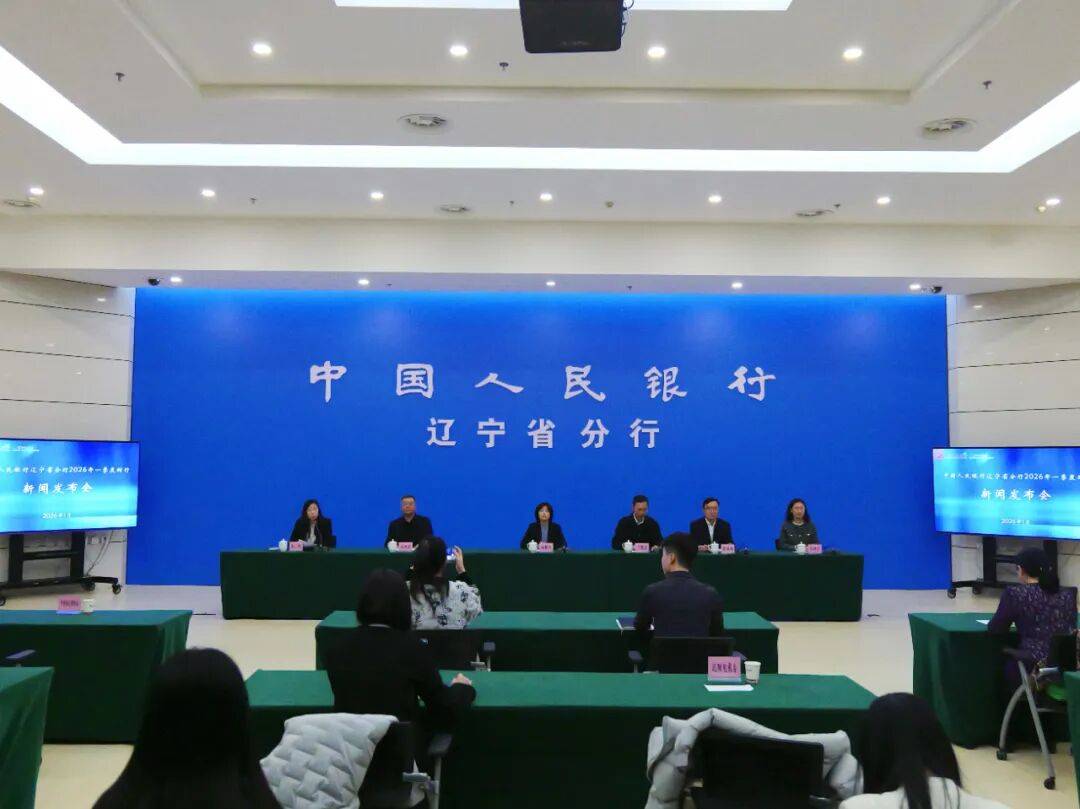
去年辽宁非金融企业债务融资达661.73亿,连续两年实现高速增长
Sou Hu Cai Jing· 2026-01-30 15:17
Core Viewpoint - The People's Bank of China Liaoning Branch is focused on enhancing financial services for the real economy, particularly through the development of the bond market and improving the accessibility of financial products for enterprises, thereby driving high-quality economic growth in Liaoning province. Group 1: Bond Financing and Policy Promotion - The bank has intensified policy promotion efforts, conducting activities themed "Debt Financing Tools Activate Liaoning's New Productive Forces" to educate 150 major state-owned and leading private enterprises about new policies in the interbank bond market [1] - In 2025, non-financial corporate debt financing tools issued in the province reached 66.173 billion yuan, a year-on-year increase of 20.6%, with an average interest rate dropping to 2.21%, saving enterprises over 318 million yuan in interest costs [1] Group 2: Counter Bond Business Expansion - A monitoring mechanism for counter bond business has been established, promoting awareness and understanding of counter bond products through various channels [2] - The number of participating institutions in the interbank market's counter bond business increased from 1 to 6, with 3,298 bank outlets covering all 14 cities in the province, resulting in 25,710 transactions and a transaction amount of 11.413 billion yuan, a year-on-year growth of 198.5% [2] Group 3: Support for the Bill Market - The bill market is leveraged for low-cost financing and high liquidity, with efforts to enhance information disclosure and credit management to ensure efficient market operation [3] - In 2025, the cumulative acceptance amount of bills in Liaoning reached 626.793 billion yuan, a year-on-year increase of 1.6%, while the cumulative bill discount amount was 567.988 billion yuan, up 15.14% [3] Group 4: Technology Innovation Bond Market - The establishment of a "Technology Board" for bonds aims to support local technological innovation and private enterprises, with 145 key enterprises already included in the bond issuance reserve [7] - The bank has implemented a mechanism to promote debt financing tools and conducted various policy interpretation and training activities, resulting in successful issuance of technology innovation bonds totaling 8.8 billion yuan, including the first technology innovation bond in Northeast China [7]



化工“双碳”:政策擎双碳,化工领方向
Guolian Minsheng Securities· 2026-01-30 12:49
Investment Rating - The report maintains a positive investment rating for the chemical industry, highlighting the potential benefits from the "dual carbon" policy implementation [5]. Core Insights - The "dual carbon" policy is expected to significantly impact the chemical industry, with a focus on carbon emissions control becoming a rigid constraint during the 14th Five-Year Plan period [6][14]. - The report identifies that the attention towards "dual carbon" from provincial leaders has increased by 137% since September 2025, indicating a shift in focus towards carbon emissions as a critical performance metric [7][18]. - The chemical industry is anticipated to undergo structural changes, with high carbon intensity sectors facing supply constraints, while low-carbon leaders are expected to benefit from the transition [8][30]. Summary by Sections 1. "14th Five-Year Plan": Carbon Peak Closing Battle - Local carbon assessments may treat carbon emissions as an equally important rigid constraint [15]. - High carbon intensity sectors such as ammonia fertilizer, coal chemical, and chlorine-alkali are likely to face capacity constraints first [29][30]. 2. Petrochemical "Dual Carbon" Opportunities - The petrochemical sector is expected to undergo a transformation driven by the "dual carbon" goals, with a focus on optimizing supply and demand structures [38]. - Refining sector dynamics are shifting towards improved supply-demand balance due to stringent approval processes for new projects and the elimination of high-energy-consuming capacities [38]. 3. Basic Chemical "Dual Carbon" Opportunities - Coal chemical industry is projected to stabilize supply under carbon limits, driving quality improvements in the sector [3.1]. - Carbon fiber and fluorochemical sectors are expected to benefit from process optimization and green transitions [3.2][3.3]. 4. Investment Recommendations - The report suggests focusing on three categories of leading companies: 1. Integrated leaders in the oil chemical sector with scale and efficiency advantages [8]. 2. Coal chemical leaders with advanced processes and low emissions [8]. 3. High-quality firms in fluorochemical and carbon fiber sectors that align with "dual carbon" goals [8].


涤纶产业链整体向好-利好涤纶产业链企业-民营大炼化有望周期向上
2026-01-30 03:11
Summary of Conference Call Records Industry Overview - The polyester industry chain is showing overall improvement, benefiting companies within the chain, particularly private large-scale refining enterprises [1][3] - PX supply is tight due to seasonal production cuts from leading companies like Hengli Petrochemical and Zhejiang Petrochemical, with inventory at historical lows, enhancing bargaining power for major players like Rongsheng Petrochemical, Sinopec, and PetroChina [1][2] Key Points on PTA and PX - No new PTA capacity is expected in 2026, while downstream polyester production plans are anticipated to drive PTA prices up, with current PTA profitability gradually improving [1][2] - The price of long and short fibers is influenced by cost factors, particularly fluctuations in PTA and ethylene glycol prices [1][2] - Ethylene glycol is expected to see new capacity coming online from late 2025 to early 2026, leading to a relatively loose supply in the first half of 2026, although significant price increases are unlikely [1][4] Market Dynamics - Domestic demand for polyester filament is recovering moderately, with the cancellation of mandatory certification in India providing export benefits and overseas demand growing at 10%-15% annually [3][8] - Companies are rationally controlling operating rates to balance profits, with expectations for filament prices to improve post-Spring Festival [3][8] Company Capacities - Major PX producers and their capacities include: - Rongsheng Petrochemical: 10.4 million tons - Sinopec: 7.5 million tons - PetroChina: 6.3 million tons - Hengli Petrochemical: 5 million tons - Dongfang Shenghong: 2.8 million tons - Hengyi Petrochemical: 1.05 million tons [5] Technological Advancements in PTA - The PTA industry has undergone significant technological iterations, reducing energy consumption and processing fees, with fourth-generation processing costs dropping to 300-350 RMB/ton [7] - The industry faced severe losses in the second half of 2025, but recent improvements in processing fees are expected to continue into 2026 [7] Challenges for Private Refining Enterprises - New refining capacity is becoming increasingly difficult to secure due to carbon emission pressures and strict domestic regulations on liquefied projects [10] - High energy costs and insufficient competitiveness have led to many European ethylene and large chemical facilities opting for shutdowns, presenting challenges but also opportunities for structural optimization [10] Profitability Insights - Many refineries are currently operating at a loss due to the price differential from crude oil to naphtha, but private refining enterprises with longer product lines and higher production efficiency are performing relatively well [11] - PX currently shows favorable profitability, with a price differential close to $350 and processing fees around $150 [11] Future Outlook - The ethylene market is at a cyclical low, with potential for price increases as overseas capacities decrease, which could benefit private refining enterprises [12] - Long-term prospects for private refining companies are positive, with expectations of entering an upward cycle due to scale advantages, technological capabilities, and integrated production [14]
太猛了!加快轮动了
Ge Long Hui· 2026-01-29 11:49
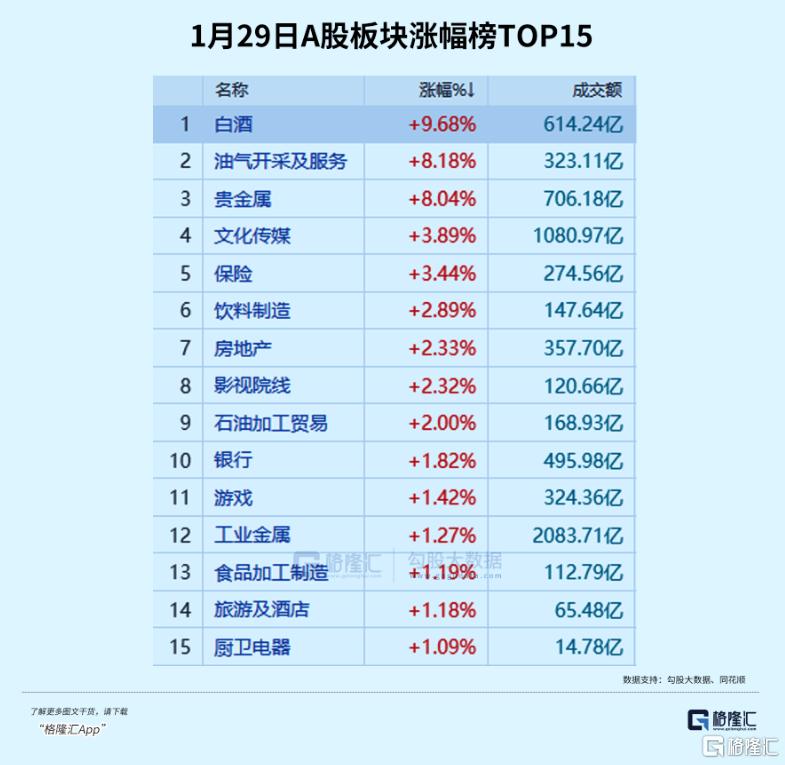
Group 1: Market Performance - The A-share liquor sector experienced a significant surge, with a rise of 9.68% on January 29, leading the market performance for the day [1][2] - The oil and gas extraction and service sector also saw a notable increase of 8.18%, with a total transaction volume of 32.31 billion [2] - The precious metals sector rose by 8.04%, with a transaction volume of 70.62 billion, indicating strong market interest [2] Group 2: Energy and Petrochemical Sector Dynamics - The energy and petrochemical sector's rise began in early January 2026, with domestic crude oil futures rebounding from 411 yuan/barrel to 475 yuan/barrel, a 15% increase [4] - The oil and gas extraction and service sector has accumulated a remarkable increase of 44.22% year-to-date, ranking second in market performance, only behind precious metals [7] - The petrochemical ETF (159731) has shown a cumulative increase of 14.71% since the beginning of the year, reflecting strong investor interest [9] Group 3: Geopolitical and Economic Influences - The recent surge in the petrochemical sector is driven by escalating geopolitical tensions, particularly between the U.S. and Iran, raising concerns over oil supply stability [11] - The market has priced in a risk premium of $3-8 per barrel due to fears of potential disruptions in oil supply from Iran, which produces approximately 3.3 million barrels per day [11] - The classic rotation pattern in commodity markets, where precious metals lead, followed by industrial metals and then energy, is being validated again [14][16] Group 4: Agricultural Sector Insights - The agricultural sector is expected to gain market attention as commodity prices rise, driven by increased costs in agricultural production due to higher energy prices [17][24] - The CPI and food prices have shown signs of recovery, with the CPI rising by 0.8% year-on-year, indicating a potential shift in consumer price dynamics [18] - The agricultural ETF (516810) tracks a comprehensive index covering the entire agricultural value chain, which may benefit from the rising commodity prices [26] Group 5: Industry Outlook - The petrochemical industry is at a turning point, with new policies aimed at preventing excessive competition and improving profitability [22] - The capital expenditure ratios in the refining and chemical sectors are showing a trend towards conservatism, indicating a strategic shift among companies [23] - The anticipated recovery in the petrochemical sector is supported by both geopolitical factors and the broader commodity market dynamics, suggesting a favorable outlook for industry leaders [24][25]




成交额超2亿元,石化ETF(159731)连续16天净流入
Sou Hu Cai Jing· 2026-01-29 02:16
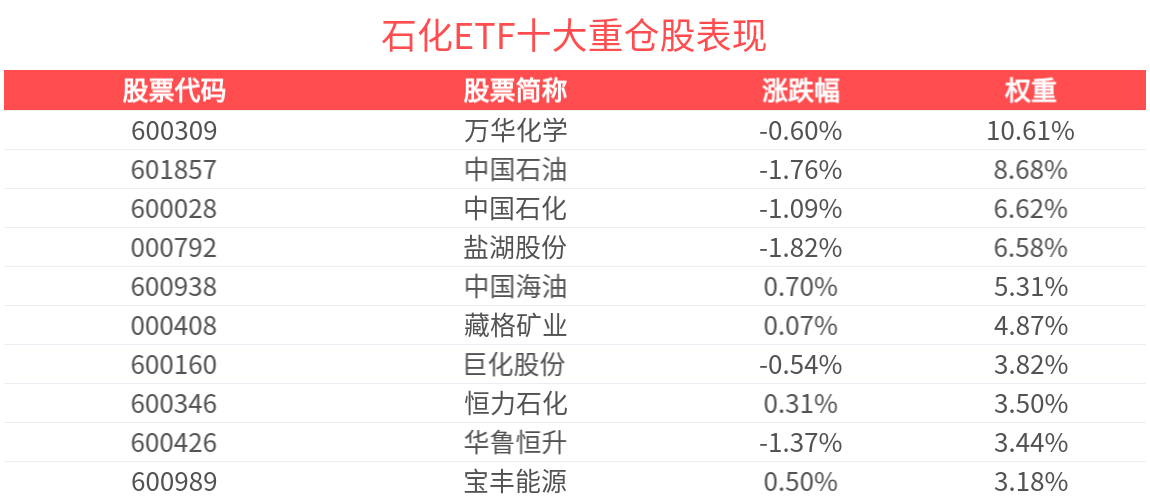
Core Viewpoint - The petrochemical sector is experiencing mixed performance, with the China Petroleum and Chemical Industry Index showing a slight decline, while the Petrochemical ETF has seen significant inflows and growth in net value over the past two years [1][2]. Group 1: Market Performance - As of January 29, 2026, the China Petroleum and Chemical Industry Index decreased by 0.27%, with stocks like Sankeshu and Zhongfu Shenying leading gains, while companies like Hebang Bio and China Petroleum faced declines [1]. - The Petrochemical ETF (159731) fell by 0.47%, with a latest price of 1.05 yuan and a trading volume of 2.12 billion yuan, indicating active market participation with a turnover rate of 17.99% [1]. Group 2: Fund Flows and Performance Metrics - The Petrochemical ETF has seen continuous net inflows for 16 days, totaling 838 million yuan, with the latest share count reaching 1.106 billion and a total scale of 1.166 billion yuan, marking a new high [2]. - Over the past two years, the net value of the Petrochemical ETF has increased by 66.80%, with the highest single-month return recorded at 15.86% and the longest consecutive monthly gain spanning 8 months, achieving a maximum increase of 41.6% [2]. - The average return during the rising months of the Petrochemical ETF is 5.25%, and as of January 23, 2026, the one-year Sharpe ratio stands at 2.22 [2]. Group 3: Industry Trends and Outlook - According to Guosen Securities, the petrochemical sector is strictly implementing capacity reduction and replacement requirements for new refining projects, focusing on upgrading old facilities and demonstrating new technologies [2]. - The refining capacity in China is approaching the policy threshold of 1 billion tons, leading to the gradual consolidation and elimination of smaller capacities, while larger refineries are expected to increase their market share, optimizing the industry structure [2]. - With limited growth in refined oil demand, the transition towards "reducing oil and increasing chemicals" will be essential for refineries [2]. Group 4: Key Stocks in the Index - The top ten weighted stocks in the China Petroleum and Chemical Industry Index as of December 31, 2025, include Wanhua Chemical, China Petroleum, and China Petrochemical, collectively accounting for 56.73% of the index [2].



化工行业迎来战略窗口期,石化ETF(159731)连续15日合计“吸金”7.45亿元
Sou Hu Cai Jing· 2026-01-28 02:11
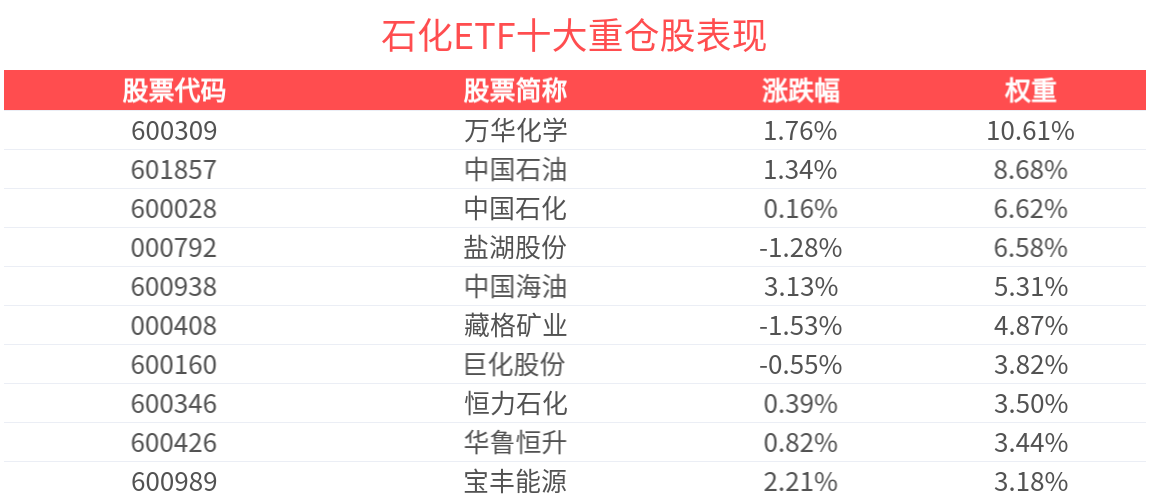
Core Viewpoint - The petrochemical sector is experiencing a positive trend, with the China Petrochemical Industry Index showing an increase, and significant inflows into the Petrochemical ETF, indicating strong investor interest and potential for growth [1][2]. Group 1: Market Performance - As of January 28, 2026, the China Petrochemical Industry Index rose by 0.54%, with key stocks like Zhejiang Longsheng hitting the daily limit up, and others such as China National Offshore Oil Corporation and Hubei Biopharma also seeing gains [1]. - The Petrochemical ETF (159731) increased by 0.39%, with a turnover rate of 4.34% during the trading session [1]. - Over the past 15 days, the Petrochemical ETF has attracted a total net inflow of 745 million yuan, reaching a record high of 1.018 billion shares and a total size of 1.045 billion yuan [1]. Group 2: Performance Metrics - The Petrochemical ETF has seen a net value increase of 62.39% over the past two years [1]. - The highest monthly return since inception was 15.86%, with the longest streak of consecutive monthly gains being 8 months and a maximum cumulative increase of 41.60% [1]. - The average monthly return during the rising months was 5.25%, and the ETF outperformed its benchmark with an annualized excess return of 2.35% over the past year [1]. Group 3: Industry Outlook - Tianfeng Securities indicates that a turning point in policy and capital expenditure is evident, with the concept of "anti-involution" suggesting improved profitability and healthier long-term development for the industry [1]. - The chemical industry is entering a strategic window, characterized by the exit of high-cost marginal capacity overseas and a restructuring of the global chemical order [1]. Group 4: Top Holdings - As of December 31, 2025, the top ten weighted stocks in the China Petrochemical Industry Index accounted for 56.73% of the index, including Wanhua Chemical, China Petroleum, and China Petrochemical among others [2].

政策指引+价格回暖+业绩预喜,化工行业ETF易方达(516570)汇聚“三桶油”与细分领域化工龙头
Sou Hu Cai Jing· 2026-01-27 11:18
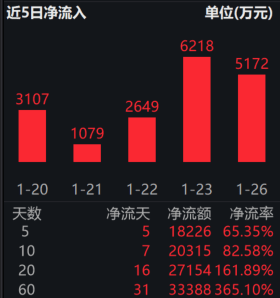
Group 1 - The global chemical industry is transitioning from "overcapacity" to "high-quality supply" by 2026, driven by national growth policies, marginal recovery in overseas demand, and the initiation of a restocking cycle, leading to a stabilization and rebound in the prices of basic chemicals and a significant improvement in industry profit expectations [1][3]. - The E Fund Chemical Industry ETF (516570) has become a core tool for investors to capitalize on the petrochemical industry's recovery, with the index it tracks rising by 15.10% in the past month and 51.39% over the past year as of January 26, 2026 [1][5]. - The ETF has attracted significant capital inflow, with over 180 million yuan in net inflows in the past five days and over 270 million yuan in the past twenty days [1][5]. Group 2 - The "High-Quality Development" policy framework has been established, emphasizing the control of new refining capacities and the scientific regulation of ethylene and paraxylene production, marking a shift from quantity-driven growth to quality and efficiency improvements [3][4]. - A global restocking cycle has commenced, with widespread price increases for chemical products, including a 550 yuan/ton increase for butadiene and a 100 yuan/ton increase for bisphenol A, alongside sulfur prices reaching near ten-year highs [3][4]. - Major international companies like BASF and Dow have also raised prices for MDI/TDI, indicating a strong performance in the polyurethane market, supported by increased global oil demand projected at 950,000 barrels per day for 2026 [4][5]. Group 3 - Chemical companies are expected to report positive earnings, with Salt Lake Co. forecasting a net profit of 8.29 to 8.89 billion yuan for 2025, representing a year-on-year growth of 77.78% to 90.65%, and other companies like Juhua Co. and Cangge Mining also projecting significant profit increases [5][6]. - The E Fund Chemical Industry ETF (516570) tracks the CSI Petrochemical Industry Index, with top holdings including major companies like Wanhua Chemical and China Petroleum, covering over 56% of the index, thus providing a balanced exposure to both energy security and growth in new materials [5][6]. - The ETF has a low comprehensive fee rate of 0.20% per year, making it an ideal tool for participating in the current economic upturn in the chemical sector [5][6].


未知机构:天风能源紧扣芳烃副产品主线石化迎来涨价潮1芳烃和副产品-20260127
未知机构· 2026-01-27 02:05
Summary of Conference Call Notes Industry Overview - The petrochemical industry is experiencing a price surge driven by aromatics and by-products, with significant improvements in price differentials since early December. Key price changes include: - PX price differential improved by $81/ton - Pure benzene price differential improved by $98/ton - PTA price differential improved by 190 RMB/ton - Styrene price differential improved by 866 RMB/ton - Butadiene increased by 3650 RMB/ton - Sulfur increased by 325 RMB/ton, reaching a new high [1][1][1] Key Points and Arguments 1. **Aromatics and By-products as Price Drivers**: The surge in prices is attributed to the early end of production and a decline in supply for aromatics and by-products, indicating a long-term supply-demand imbalance. Exports exceeding expectations are also a significant catalyst for this price increase [1][1][1]. 2. **Olefins Rebalancing**: The year 2025 is projected to be a significant year for olefin production, which may lead to severe price impacts. The ethylene/propylene price differential is currently below the 20th percentile of the last decade. The market is in a rebalancing phase, with expectations of increased maintenance and exit plans for overseas ethylene in 2026, leading to a potential recovery of 600-700 RMB/ton in PP/PE futures from recent lows [1][1][1]. 3. **Tightening of Olefin Approvals**: Although olefin approvals have significantly tightened, existing capacity will need time to be absorbed, with a potential rebound in 2026, though a reversal is not yet assured [2][2][2]. 4. **Impact of Carbon Neutrality Goals**: The "dual carbon" goals are reshaping the long-term pricing logic in the industry. The tightening of carbon indicators during the 14th Five-Year Plan and the difficulty in approving new petrochemical capacities suggest that supply-demand improvements are a long-term trend. The elimination of older facilities may accelerate, benefiting leading companies that have expanded capacity in recent years, thereby strengthening their cost and carbon emission advantages [2][2][2]. Recommendations - The petrochemical sector is a key focus area for national macroeconomic regulation. The recent price increases in the sector are not merely valuation adjustments but are driven by the sequential price increases of key products. Recommended companies include: - Rongsheng Petrochemical - Hengli Petrochemical - Dongfang Shenghong - Hengyi Petrochemical - Huajin Co., Ltd. - Qixiang Tengda [2][2][2].


触线“万亿之城”,大连再进发
Xin Lang Cai Jing· 2026-01-26 22:08
Economic Growth and Development - Dalian's GDP is projected to reach 1,000.21 billion yuan by 2025, reflecting a year-on-year growth of 5.7% at constant prices, marking a significant milestone in the city's high-quality development [9] - The city aims to enhance its economic structure by focusing on traditional industry upgrades and the cultivation of strategic emerging industries, with notable projects like Hengli New Materials and Chery Automobile's KD packaging center coming online [13] - The industrial output value of Dalian is expected to grow by 11.7% year-on-year, supported by a robust performance in both traditional and emerging sectors [13] Consumption and Investment - Dalian's consumption initiatives have successfully stimulated 18.7 billion yuan in consumer spending, with a ratio of 1:8 in terms of economic impact [14] - The city has seen a 20% increase in domestic tourists and a 20.4% rise in tourism revenue, alongside a 70.2% growth in inbound tourism, achieving record highs [14] - A total of 1,369 projects worth over 100 million yuan were initiated or resumed, representing a 14.1% increase year-on-year [14] Foreign Trade and Investment - Dalian established 286 new foreign-invested enterprises, with foreign trade exports increasing by approximately 10% [15] - The city has seen a significant boost in cross-border e-commerce, with over 200 new enterprises and a 16% increase in cross-border e-commerce import and export volume [15] Innovation and Technology - Dalian is accelerating the construction of a nationally influential regional technology innovation center, with 25 research fields and 398 laboratories established [18] - The local technology transfer rate exceeds 45%, with a 10% increase in the value of technology contracts [18] Infrastructure and Urban Development - Major infrastructure projects, including the Hengli Heavy Industry Phase II and the construction of the Jinzhou Bay International Airport, are progressing rapidly [14] - The city is enhancing its business environment with 77 application scenarios for efficient service delivery and over 90% of government services available online [17] Social Development and Quality of Life - In 2025, Dalian's public spending on social welfare accounted for 86.4% of fiscal expenditures, with a focus on improving employment, education, and healthcare services [20] - The city is set to expand its focus on public welfare projects from 15 to 23 in 2026, emphasizing practical and inclusive development [20]
春季行情轮动至“业绩锚”,化工板块周期复苏引领估值修复
第一财经· 2026-01-26 13:49
2026.01. 26 本文字数:2633,阅读时长大约4分钟 作者 | 第一财经 魏中原 近期A股春季行情中,化工板块表现亮眼,成为市场焦点。万华化学(600309.SH)、恒力石化(600346.SH)、华鲁恒升(600426.SH)等龙头股迭创 阶段新高,环氧丙烷等化工品价格持续上涨,带动相关个股表现强劲。数据显示,1月19日至23日,基础化工板块上涨7.29%,在申万31个行业中排名第 四,该行业1月以来累计涨逾13%,跑赢电子与通信。 在以科技为主线的本轮牛市行情中,资金开始拥抱化工现象背后,是化工行业从2021年高点后经过四年低迷,正逐步走出周期底部,迎来景气度反转。 随着上市公司2025年度业绩预告密集披露,化工板块的"春意"渐浓,多家龙头化工企业的"扭亏""预增"公告,如同预告着行业基本面的回暖,行业盈利回 升趋势明显,为板块估值修复提供了坚实支撑,市场正对化工板块进行重新定价。 除了上述龙头,一批公司在报告期内实现了惊人的增长弹性或彻底的困境反转。例如,农药行业的利民股份、利尔化学等公司均预计去年净利润增幅超过 100%。更有多家公司成功"扭亏为盈",如康达新材(002669.SZ)、万凯新 ...