
China National Gold (600916)

Search documents
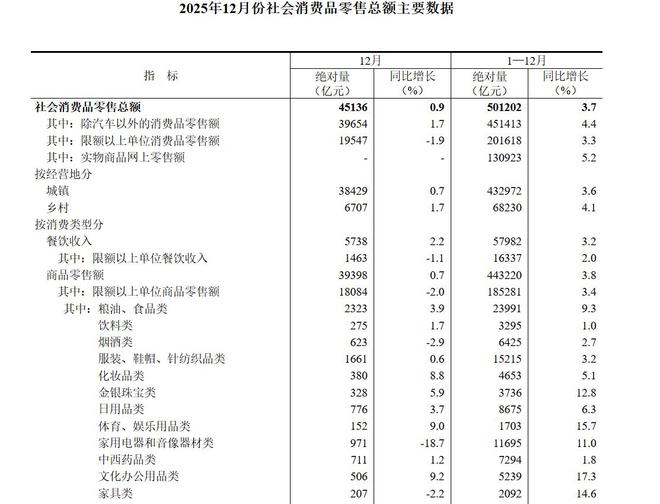
去年金银珠宝卖了3736亿,但金店生意却是“冰火两重天”
Di Yi Cai Jing Zi Xun· 2026-01-20 09:11
Group 1: Gold Price and Retail Performance - International gold prices have surged over 60% in the past year, leading to record high domestic gold prices and increased retail sales in the gold and jewelry sector, with retail sales expected to reach 373.6 billion yuan in 2025, a growth of 12.8% [1] - Despite the overall increase in retail sales, the actual sales volume for enterprises remains under pressure, as the rise in gold prices has limited consumer purchasing behavior, particularly for non-essential items [2][3] - Domestic gold consumption decreased by 7.95% year-on-year in the first three quarters of 2025, with gold jewelry consumption dropping by 32.5% [3] Group 2: Company Performance - Chow Tai Fook (01929.HK) reported a revenue of 38.99 billion HKD for the first half of the 2026 fiscal year, a decline of approximately 1.1% year-on-year, while net profit increased slightly by 0.16% [4] - Mengjin Garden (02585.HK) experienced a net loss of 70.09 million yuan in the first half of 2025, despite a revenue increase of 4.72% to 10.451 billion yuan [5] - China Gold (600916.SH) expects a significant decline in net profit for 2025, projecting a decrease of 55% to 65%, attributed to market conditions and reduced consumer traffic [5] Group 3: Market Trends and Consumer Behavior - There is a noticeable polarization in the gold retail market, with high-end brands like Lao Pu experiencing strong demand and long queues, while mass-market brands struggle to attract consumers [6][7] - Lao Pu is projected to achieve a net profit growth of 224% in 2025, reaching 4.8 billion yuan, driven by strong demand during peak seasons [9] - The gold jewelry market is undergoing a transformation, with a shift towards cultural and product originality, as highlighted by recent investments in emerging brands [10] Group 4: Future Outlook - Gold prices are expected to continue rising, with forecasts suggesting a potential increase of 15% to 30% by 2026, and a bullish outlook from CITIC Securities predicting prices could exceed 5,100 USD per ounce by the end of 2026 [12]


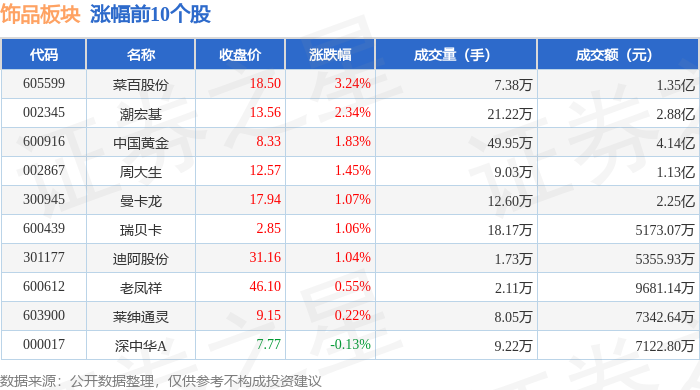
饰品板块1月20日涨0.95%,菜百股份领涨,主力资金净流出7286.99万元
Zheng Xing Xing Ye Ri Bao· 2026-01-20 08:51
Market Overview - The jewelry sector increased by 0.95% on January 20, with Cai Bai Co., Ltd. leading the gains [1] - The Shanghai Composite Index closed at 4113.65, down 0.01%, while the Shenzhen Component Index closed at 14155.63, down 0.97% [1] Individual Stock Performance - Cai Bai Co., Ltd. (605509) closed at 18.50, up 3.24% with a trading volume of 73,800 shares and a turnover of 135 million yuan [1] - Chao Hong Ji (002345) closed at 13.56, up 2.34% with a trading volume of 212,200 shares and a turnover of 288.7 million yuan [1] - China Gold (600916) closed at 8.33, up 1.83% with a trading volume of 499,500 shares and a turnover of 414 million yuan [1] - Zhou Dazheng (002867) closed at 12.57, up 1.45% with a trading volume of 90,300 shares and a turnover of 113 million yuan [1] - Man Ka Long (300945) closed at 17.94, up 1.07% with a trading volume of 126,000 shares and a turnover of 225 million yuan [1] Capital Flow Analysis - The jewelry sector experienced a net outflow of 72.87 million yuan from institutional investors, while retail investors saw a net inflow of 48.13 million yuan [2] - The overall capital flow indicates that while institutional investors withdrew funds, retail investors were more active in purchasing [2] Detailed Capital Flow for Selected Stocks - Chao Hong Ji (002345) had a net inflow of 17.99 million yuan from institutional investors, but a net outflow from retail investors of 12.26 million yuan [3] - Lao Feng Xiang (600612) saw a net inflow of 4.22 million yuan from institutional investors, with a net outflow of 4.29 million yuan from retail investors [3] - Cai Bai Co., Ltd. (605509) had a net inflow of 3.86 million yuan from institutional investors, but also faced a net outflow from retail investors of 3.33 million yuan [3] - China Gold (600916) experienced a net inflow of 3.46 million yuan from institutional investors, while retail investors had a net outflow of 10.96 million yuan [3]



中国黄金涨2.08%,成交额2.35亿元,主力资金净流入1410.88万元
Xin Lang Cai Jing· 2026-01-20 05:48
Group 1 - The core viewpoint of the news is that China Gold's stock has shown a positive trend with a 2.08% increase on January 20, reaching 8.35 yuan per share, with a total market capitalization of 14.028 billion yuan [1] - As of September 30, China Gold's revenue for the first nine months of 2025 was 45.764 billion yuan, a year-on-year decrease of 1.74%, while the net profit attributable to shareholders was 335 million yuan, down 55.08% year-on-year [2] - The company primarily engages in the research, design, production, sales, and brand operation of gold jewelry products, with 98.83% of its revenue coming from gold products [1] Group 2 - China Gold's stockholder count increased by 2.57% to 121,000 as of September 30, while the average circulating shares per person decreased by 2.51% to 13,882 shares [2] - The company has distributed a total of 2.52 billion yuan in dividends since its A-share listing, with 1.848 billion yuan distributed in the last three years [3] - The top ten circulating shareholders include Hong Kong Central Clearing Limited, which holds 17.5866 million shares, a decrease of 6.1263 million shares from the previous period [3]
黄金股早盘活跃 美欧关税争端刺激避险情绪 现货黄金再创新高
Zhi Tong Cai Jing· 2026-01-19 19:35
Group 1 - The escalation of the US-EU tariff dispute has heightened market risk aversion, leading to a surge in international precious metal prices, with spot gold briefly surpassing $4690 per ounce, setting a new historical high [1] - Starting February 1, 2026, the US will impose a 10% tariff on all goods exported from Denmark, Norway, Sweden, France, Germany, the UK, the Netherlands, and Finland, as stated by Trump on social media [1] - If an agreement for the "complete and thorough purchase of Greenland" is not reached, the tariff rate will increase to 25% starting June 1, 2026 [1] Group 2 - Gold stocks were active in early trading, with Zijin Mining International (02259) rising by 3.86% to HKD 172.4, and Zhaojin Mining (01818) increasing by 3.84% to HKD 37.9 [2] - China National Gold International (02099) saw a rise of 1.96% to HKD 192.8, while Shandong Gold (01787) increased by 1.33% to HKD 42.78 [2]
饰品板块1月19日涨1.28%,潮宏基领涨,主力资金净流出3602.15万元
Zheng Xing Xing Ye Ri Bao· 2026-01-19 08:52
Market Overview - The jewelry sector increased by 1.28% on January 19, with Chao Hong Ji leading the gains [1] - The Shanghai Composite Index closed at 4114.0, up 0.29%, while the Shenzhen Component Index closed at 14294.05, up 0.09% [1] Stock Performance - Chao Hong Ji (002345) closed at 13.25, up 3.84% with a trading volume of 241,000 shares and a turnover of 318 million yuan [1] - Fei Ya Da (000026) closed at 17.25, up 3.67% with a trading volume of 138,400 shares and a turnover of 238 million yuan [1] - Xinghua Jewelry (002731) closed at 13.10, up 3.23% with a trading volume of 143,900 shares and a turnover of 187 million yuan [1] - Other notable stocks include Man Ka Long (300945) at 17.75, up 2.84%, and Deep China A (000017) at 7.78, up 1.83% [1] Capital Flow - The jewelry sector experienced a net outflow of 36.02 million yuan from institutional investors, while retail investors saw a net inflow of 19.23 million yuan [2] - Speculative funds had a net inflow of 16.79 million yuan [2] Individual Stock Capital Flow - Fei Ya Da (000026) had a net inflow of 12.42 million yuan from institutional investors, while it faced a net outflow of 11.98 million yuan from speculative funds [3] - Lao Feng Xiang (600612) saw a net inflow of 7.14 million yuan from institutional investors, with a net outflow of 9.14 million yuan from retail investors [3] - Chao Hong Ji (002345) had a net inflow of 3.93 million yuan from institutional investors, with a net outflow of 3.96 million yuan from speculative funds [3]


2026年全球及中国钼金属行业背景、发展现状、市场供需、竞争格局及未来发展趋势研判:供需紧平衡凸显价值,高端转型开拓新局[图]
Chan Ye Xin Xi Wang· 2026-01-19 01:09
Core Insights - Molybdenum is a critical transition metal with high melting point and strength, categorized into four main forms: pure molybdenum, molybdenum alloys, molybdenum compounds, and molybdenum products [1][2][3] - The global molybdenum market is characterized by a long-term tight balance, with a projected demand gap of 0.39 million tons in 2024, which may expand in the future [1][7] - China holds a significant advantage in molybdenum reserves, becoming the core support for global molybdenum industry development, with production and consumption both leading globally [1][9] Industry Overview - The molybdenum industry is divided into three main segments: upstream (exploration and mining), midstream (smelting and processing), and downstream (deep processing and end applications) [5][6] - Upstream is dominated by major enterprises that control core resources, while midstream is characterized by high industry concentration but relies on imported high-end technologies [5][6] - Downstream applications are primarily in the steel industry, with rapid growth in emerging fields such as renewable energy and aerospace [1][6] Policy and Strategic Importance - Recent policies from the Chinese government aim to regulate resource management and promote industry upgrades, including export controls and support for green mining technologies [6][7] - Molybdenum is classified as a strategic mineral due to its scarcity and concentrated global distribution, with China, the US, and Peru being the top three countries in terms of reserves [6][7] Supply and Demand Dynamics - Global molybdenum production is expected to remain between 262,100 tons and 290,200 tons from 2020 to 2024, with consumption fluctuating between 247,600 tons and 294,100 tons [7][8] - In 2024, China's molybdenum production is projected to reach 133,700 tons, with consumption also on the rise, reflecting a compound annual growth rate of 6.78% from 2020 to 2024 [10][11] Competitive Landscape - The Chinese molybdenum industry is characterized by an oligopolistic structure, with leading companies like Jinduicheng Molybdenum Co., Ltd. and Luoyang Molybdenum Co., Ltd. controlling approximately 70% of the market share [11][12] - The competition is intensifying as smaller firms focus on niche markets, while larger firms leverage their resources and technology to maintain a competitive edge [11][12] Future Development Trends - The industry is expected to shift towards green and intelligent resource development, with a focus on efficient utilization of low-grade and associated molybdenum ores [12][13] - There will be a transition from traditional raw material output to high-end manufacturing, with an emphasis on domestic production of high-purity molybdenum products and specialized alloys [12][13] - Demand for molybdenum is anticipated to grow in both traditional sectors and emerging fields, with strategic support from policies aimed at enhancing the high-potential areas of the industry [12][14]




高金价“遇见”消费旺季,黄金珠宝品牌如何应对?
Shang Hai Zheng Quan Bao· 2026-01-18 08:03
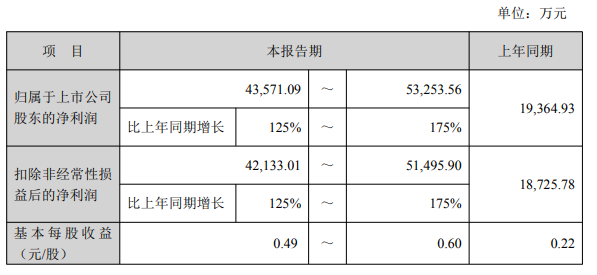
Group 1 - The gold jewelry brands are launching new products and promotional activities ahead of the upcoming Lunar New Year, focusing on the "Year of the Horse" theme to attract consumers [1][2] - As of January 18, 2025, the domestic price of gold jewelry remains high, averaging around 1435 RMB per gram, with various brands offering discounts and promotions to stimulate sales [3] - Companies like Cai Bai and Chow Tai Fook are enhancing their product lines with creative designs and collaborations, aiming to capitalize on the festive shopping opportunities [4] Group 2 - The jewelry industry is experiencing a divergence in consumer spending, with brands like Chow Tai Fook and Lao Puhuang showing resilience despite market pressures [6][8] - Chow Tai Fook's 2025 annual performance forecast indicates a significant profit increase, with net profit expected to rise by 125% to 175% year-on-year, attributed to enhanced product and brand strength [6][7] - In contrast, China Gold anticipates a decline in net profit by 55% to 65% for 2025, primarily due to market challenges and reduced customer traffic [8]
黄金跌了价,2026年1月14日人民币黄金最新价格,中国黄金最新价格
Sou Hu Cai Jing· 2026-01-15 18:55
Core Viewpoint - The article discusses the persistent price disparity between international gold prices and retail gold jewelry prices in China, highlighting the reasons behind this phenomenon and its impact on consumer behavior. Group 1: Price Disparity - On January 14, 2026, international gold prices fell to $4,587 per ounce, while retail gold prices in stores remained above 1,400 yuan per gram, creating a gap of nearly 400 yuan [1][3] - This price disparity has been ongoing, with similar occurrences noted in late October 2025 when retail gold prices dropped by over 70 yuan per gram but remained significantly higher than the Shanghai Gold Exchange spot prices [3][6] Group 2: Factors Influencing Retail Prices - The price consumers pay for gold jewelry includes not only the base gold price but also manufacturing costs and brand premiums, which can significantly inflate the final price [4][6] - Retailers often hold inventory purchased at higher prices, leading to a "lag effect" where they do not immediately lower prices in response to falling gold prices, thus maintaining higher retail prices [6][11] Group 3: Changing Consumer Behavior - Younger consumers are increasingly viewing gold as an investment rather than just a traditional gift, with many opting for more cost-effective purchasing options [6][8] - The market is splitting into two paths: one focused on high-priced branded jewelry for aesthetic and emotional value, and another seeking investment-grade products closer to the actual gold price [8][11] Group 4: Alternative Purchasing Channels - In Shenzhen's Shui Bei area, gold prices are closely aligned with the actual gold price, offering a significant price advantage over branded stores [8] - Banks are also becoming important players in the gold market, offering competitive prices for investment gold bars and smaller gold products, appealing to consumers seeking reliability and transparency [9][11] Group 5: Investment vs. Consumption - Gold jewelry is primarily a consumer product, while investment gold bars and products like "gold beans" are seen as pure financial investments [11][13] - The article emphasizes the importance of understanding the purpose of gold purchases, whether for consumption or investment, to make informed decisions in the market [13]
今日水贝金价及各大银行金条报价【2026.1.15】
Xin Lang Cai Jing· 2026-01-15 03:17
Group 1 - The price of gold bars from various banks and institutions has shown an increase, with specific examples including the Construction Bank and Industrial and Commercial Bank both reporting a rise of 3.40 yuan per gram [1][2] - The Shanghai Gold Exchange reported a gold bar price of 1035 yuan per gram, reflecting an increase of 3.00 yuan per gram [2] - The silver prices have also seen increases, with the average price for silver bars from different sources showing rises, such as the Baoquan Coin's silver bar increasing by 1.86 yuan per gram [2][3] Group 2 - The current market for gold and silver bars is dynamic, with prices subject to real-time changes, indicating a volatile investment environment [3]



中国黄金涨2.20%,成交额1.65亿元,主力资金净流入950.92万元
Xin Lang Cai Jing· 2026-01-15 02:48
Group 1 - The core viewpoint of the news is that China Gold's stock has shown a positive trend with a 2.20% increase, reaching 8.36 CNY per share, and a total market capitalization of 14.045 billion CNY [1] - As of January 15, the stock has increased by 2.58% year-to-date, with a 2.45% rise over the last five trading days and a 4.24% increase over the last twenty days, while it has decreased by 3.24% over the last sixty days [1] - The company primarily engages in the research, design, production, sales, and brand operation of gold jewelry products, with 98.83% of its revenue coming from gold products [1] Group 2 - As of September 30, the number of shareholders for China Gold has increased to 121,000, a rise of 2.57%, while the average circulating shares per person have decreased by 2.51% [2] - For the period from January to September 2025, China Gold reported a revenue of 45.764 billion CNY, a year-on-year decrease of 1.74%, and a net profit attributable to shareholders of 335 million CNY, down 55.08% year-on-year [2] - The company has distributed a total of 2.52 billion CNY in dividends since its A-share listing, with 1.848 billion CNY distributed in the last three years [3]