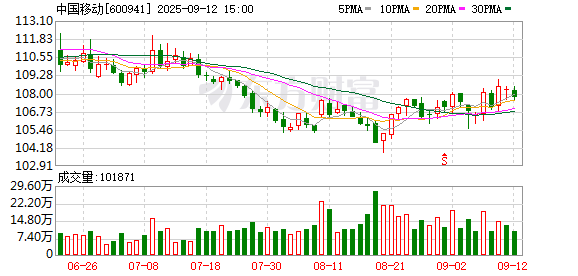
CHINA MOBILE(600941)

Search documents
贵阳:算力心脏的崛起
2 1 Shi Ji Jing Ji Bao Dao· 2025-09-15 04:45
Core Insights - Guizhou's capital, Guiyang, has transformed from a remote and underdeveloped area to a central hub for data centers and computing power in China, attracting major tech companies like Apple, Huawei, Tencent, and Alibaba [2][5][7] - The digital economy in Guizhou is projected to account for 34% of its GDP by 2024, marking six consecutive years of the fastest growth rate in the country [2][5] Group 1: Economic Transformation - Guiyang has become a key player in China's data center landscape, with over 47 major data centers established, including 19 in the Gui'an New Area, making it one of the most concentrated regions for super-large data centers globally [2][6] - The region's computing power has reached a scale of over 90 EFLOPS (FP16), with more than 98% of its computing power being intelligent computing, positioning it as a leader in domestic intelligent computing capabilities [6] Group 2: Strategic Advantages - Guiyang's success is attributed to three main factors: timing, geographical advantages, and human efforts. The city capitalized on the growing demand for computing power and national policies supporting data center development [3][4] - The natural climate of Guizhou, with an average annual temperature of around 15°C, allows data centers to operate efficiently with reduced cooling costs, while abundant hydropower resources keep electricity prices significantly lower than in eastern regions [4] Group 3: Future Prospects - As the demand for computing power continues to rise with advancements in AI and IoT, Guiyang is positioned to not only serve as a national computing base but also as a potential global node in the computing network [7] - The transformation of Guizhou from a perceived remote province to a "computing heart" illustrates a unique path in digital economic development over the past decade [7]



Oracle云业务发展强劲,英伟达发布Rubin CPX GPU | 投研报告
Zhong Guo Neng Yuan Wang· 2025-09-15 02:06
Core Insights - Oracle reported strong performance in its cloud business with a backlog of $455 billion in remaining performance obligations (RPO), an increase of $317 billion from the end of last year, representing a year-over-year growth of 359% [2][4] - The growth in orders is primarily driven by data center-related orders from clients such as OpenAI, xAI, Meta, and NVIDIA [2][4] - For FY2026, Oracle's cloud infrastructure IaaS revenue is expected to grow by 77% to reach $18 billion, with projections for the following four years being $32 billion, $73 billion, $114 billion, and $144 billion respectively [2][4] Industry Developments - NVIDIA launched the Rubin CPX GPU, designed to enhance inference performance and efficiency for contexts exceeding 1 million tokens, featuring 128GB GDDR7 memory and AI computing power of 30 PFLOPS [3] - Lixun introduced Co-packaged Copper (CPC) technology at the 2025 Shenzhen Optical Expo, aimed at addressing high-performance, low-cost interconnect challenges in the AI and computing era [3] - Taiwanese AI server ODM manufacturers reported a monthly revenue of NT$121.39 billion in August, a year-over-year increase of 16.71%, with Wistron achieving a remarkable 198.14% increase [4] - China Unicom received a satellite communication business operating license, accelerating the development of satellite internet infrastructure in China [4] - The communication index rose by 3.00% this week, with the Shanghai and Shenzhen 300 index increasing by 1.38%, indicating a relative performance gain of 1.62% [4] Investment Recommendations - The global cloud service provider (CSP) AI arms race is accelerating, with new product launches from companies like Apple and Huawei, and events such as the Open Data Center Conference and META Developer Conference [5] - Continued focus on optical devices and modules, communication equipment, and liquid cooling technologies is recommended [5] - The three major telecom operators remain important assets for dividend allocation, with stable operations and increasing dividend payout ratios [5]



通信行业周报2025年第37周:racle云业务发展强劲,英伟达发布RubinCPXGPU-20250914
Guoxin Securities· 2025-09-14 09:47
Investment Rating - The report maintains an "Outperform" rating for the communication industry [5] Core Insights - Oracle's cloud business shows strong growth with a remaining performance obligation (RPO) of $455 billion, a year-over-year increase of 359% [11][12] - The AI infrastructure sector is rapidly evolving, highlighted by NVIDIA's launch of the Rubin CPX GPU, which enhances performance for large context AI models [26][31] - Taiwanese AI server ODM manufacturers reported a monthly revenue of NT$121.39 billion in August, reflecting a year-over-year growth of 16.71% [34][41] Summary by Sections Industry News Tracking - Oracle's RPO reached $455 billion, up $317 billion from the previous quarter, driven by significant contracts with major clients like OpenAI and NVIDIA [11][12] - NVIDIA introduced the Rubin CPX GPU, designed for high-performance AI tasks, featuring 30 petaFLOPS of computing power and 128GB of GDDR7 memory [26][31] - Taiwanese ODM manufacturers, including Hon Hai and Quanta, reported strong revenue growth, with TSMC's August revenue increasing by 33.84% year-over-year [34][41] Investment Recommendations - Continuous focus on AI computing infrastructure development is advised, with recommendations for companies involved in optical devices and communication equipment [72] - The three major telecom operators are considered important assets for dividend allocation, with stable operations and increasing dividend payouts [72] - Key recommended stocks for the upcoming week include China Mobile, Zhongji Xuchuang, ZTE, and Yinvik [72]


2025服贸会观察—— 共享“数智”机遇 感受行业前沿脉动
Ren Min Wang· 2025-09-14 02:55
Group 1: AI and Digital Innovations - The 2025 China International Service Trade Fair showcased new AI technologies and digital applications, enhancing global service trade quality and providing immersive experiences for consumers and businesses [1] - Educational innovations included personalized health development models and integrated smart campus solutions, demonstrating the application of AI in education [2] - The integration of AI with geographic spatial technology by China Mobile created a comprehensive educational resource ecosystem, enhancing learning and cultural engagement [2] Group 2: Telecommunications and Social Governance - The telecommunications sector presented various applications such as "AI + new calls" and "5G + subway," highlighting the international facilitation of service trade and the advancement of global 5G applications [3] - The design of the Fengtai Railway Station showcased a combination of new and traditional communication technologies, ensuring aesthetic appeal and strong signal coverage [3] - Innovative exhibition methods, including dynamic demonstrations, allowed visitors to experience the impact of digital technology on social governance [3] Group 3: Supply Chain and Transportation Innovations - The supply chain and transportation services exhibition featured leading companies showcasing innovations in digital transportation and smart manufacturing [5] - The China-Singapore "Digital Trade Port" project, utilizing blockchain technology, improved the efficiency of trade document processing and promoted green digital upgrades in international trade [5] - The initiative fostered a closed-loop model of "business practice - standard formulation - international promotion," encouraging more enterprises to join the digital ecosystem [5] Group 4: Interactive Experiences - The fair included multiple immersive interactive points, allowing attendees to experience the practical applications of transportation technology through AI videos and smart models [6]



2025服贸会上,各类创新服务集中亮相
Da Zhong Ri Bao· 2025-09-13 01:26
Group 1 - The 2025 China International Service Trade Fair showcases various innovative services that are reshaping consumer experiences and lifestyles [2] - The aging population in China is driving demand for home care solutions, with companies like Shandong Xinyue Health Technology presenting products designed for elderly care [3][4] - Shandong Xinyue's home care solutions include a set of four products aimed at improving the living conditions of elderly individuals at home, emphasizing the need for a more suitable home environment [4] Group 2 - China Unicom introduced the Mifang card, which allows users to make digital payments and use public transportation, enhancing convenience for both locals and foreign visitors [5] - China Mobile's 5G new calling service offers real-time translation during calls, facilitating communication between speakers of different languages [6] - The digital consumption sector is rapidly evolving, with a focus on creating innovative consumption scenarios to drive market growth [6] Group 3 - The presence of intelligent robots at the fair highlights their growing role in various sectors, including banking and healthcare [8] - As of December 2024, there are 451,700 intelligent robot companies in China, with a registered capital of 64,445.57 billion yuan, indicating significant growth in the industry [8] - Companies are encouraged to develop specialized robots to capture niche markets, particularly in the manufacturing sector [8]

港交所消息:9月11日,中国移动持有的香港宽频好仓比例从70.70%增至72.05%

Xin Lang Cai Jing· 2025-09-12 16:18
Group 1 - The core point of the article is that China Mobile has increased its stake in Hong Kong Broadband from 70.70% to 72.05% as of September 11 [1]
中国移动研究院牵头编写《全国一体化算力网智算中心算力池化技术要求》促进异构算力融合
Xin Lang Cai Jing· 2025-09-12 12:14
Core Viewpoint - Data has become a new production factor and a core engine driving the high-quality development of the digital economy, with the national integrated computing network and data infrastructure being crucial for the Digital China strategy [1] Group 1: National Integrated Computing Network - The national integrated computing network aims to efficiently allocate resources, promote green and low-carbon facilities, and provide flexible computing power through the integration of diverse heterogeneous computing resources [1] - The current challenges faced by the national integrated computing network include severe fragmentation of computing resources and insufficient overall utilization [1] Group 2: Smart Computing Center - The "Technical Requirements for Computing Pooling in Smart Computing Centers" focuses on the challenges of heterogeneous computing integration by abstracting, virtualizing, and task-scheduling cross-architecture computing resources [1] - This approach aims to create a unified and transparent "intelligent computing pool" to ensure the flexibility of intelligent computing power [1] Group 3: Standardization and Ecosystem Development - The newly released technical document establishes unified standards to break down barriers of heterogeneous computing resources, activating the aggregated value of dispersed computing through pooling thinking [1] - The goal is to transform the vertical domestic smart computing "small ecosystem" into an open and collaborative "large ecosystem," promoting the standardized construction of computing pooling in smart computing centers [1]
中国移动研究院深度参与编制多项数据基础设施与可信数据空间技术文件推动标准体系完善
Xin Lang Cai Jing· 2025-09-12 12:13
Core Viewpoint - Data has been recognized as the fifth production factor, becoming a core engine for driving the high-quality development of the digital economy [1] Group 1: Data Infrastructure and Standards - The National Data Bureau has guided the development of six technical documents related to data infrastructure and trusted data space, with three documents each for both areas [1] - China Mobile Research Institute has played a significant role in compiling these technical documents, focusing on regional/industry functional node technical requirements and access management for data infrastructure [1] Group 2: Role of China Mobile - China Mobile Research Institute has been deeply involved in the entire process of standard research, technical discussions, and soliciting opinions, showcasing its leadership in the fields of data infrastructure and trusted data space [1] - The company aims to continue supporting the development of national standards and infrastructure construction in the data element field, contributing to breaking down data barriers and releasing data [1]
中国移动南亚东南亚国际数字信息大通道IBB节点升级上线
Zhong Guo Xin Wen Wang· 2025-09-12 11:58
Group 1 - The core viewpoint of the article highlights the launch of the upgraded IBB node by China Mobile, which significantly reduces latency for internet services between South Asia, Southeast Asia, and China, catering to increasing digital export demands [2][3] - The upgraded IBB node serves as a global regional core backbone for China Mobile's CMINET network, centralizing international business management in Kunming and enhancing disaster recovery capabilities with the Hong Kong IBB [2] - The routing optimization changes the previous sea cable route to a more efficient land cable route, improving stability and reducing latency for critical applications such as financial trading, live streaming, and cloud gaming [3] Group 2 - The upgrade addresses long-standing communication bottlenecks between China and the "Two As," enhancing routing, lowering latency, strengthening security, and enabling business aggregation [3] - The new communication network structure, characterized by "land cable as the main, sea cable as a complement," strengthens efficient connections between China and South Asian and Southeast Asian countries [3] - This development supports the "Digital Yunnan" initiative, facilitating the digital transformation of traditional industries and promoting the growth of emerging sectors like cross-border e-commerce and digital finance [3]

通信行业9月12日资金流向日报
Zheng Quan Shi Bao Wang· 2025-09-12 11:57
Market Overview - The Shanghai Composite Index fell by 0.12% on September 12, with 9 out of 28 sectors experiencing gains, led by non-ferrous metals and real estate, which rose by 1.96% and 1.51% respectively [1] - The communication sector had the largest decline, dropping by 2.13%, followed by the comprehensive sector with a decrease of 1.95% [1] Capital Flow Analysis - The net outflow of capital from the two markets reached 53.64 billion yuan, with 6 sectors seeing net inflows [1] - The non-ferrous metals sector led the net inflow with 2.168 billion yuan, while the construction and decoration sector followed with a net inflow of 721 million yuan [1] - The non-bank financial sector experienced the largest net outflow, totaling 8.138 billion yuan, followed by the electronics sector with a net outflow of 7.517 billion yuan [1] Communication Sector Performance - The communication sector saw a net outflow of 6.087 billion yuan, with 125 stocks in the sector; 50 stocks rose, including 4 that hit the daily limit, while 73 stocks fell, including 1 that hit the lower limit [2] - The top three stocks with the highest net inflow in the communication sector were Runjian Co., with 404 million yuan, followed by TeFa Information and Cambridge Technology, with 320 million yuan and 301 million yuan respectively [2] - The stocks with the largest net outflow included Xinyi Sheng, Tianfu Communication, and Changxin Bochuang, with outflows of 1.225 billion yuan, 599 million yuan, and 582 million yuan respectively [2][4]