
CHINA MOBILE(600941)

Search documents
中国移动投资建数据承载网 华为成最大赢家
Sou Hu Cai Jing· 2026-01-21 10:10
Core Insights - China Mobile has announced the results of its backbone network project for data transmission from 2025 to 2027, with Huawei emerging as the largest winner and ZTE receiving a smaller share [1][3] Group 1: Project Overview - The project involves the procurement of 159 routers, divided into four bidding packages, with the first package selecting two winners while the other packages have one winner each [3] - The total bid amount for the project exceeds 686 million yuan (approximately 6.86 billion yuan) excluding tax [3] Group 2: Bidding Results - In Package 1, Huawei won 70% of the share with a bid of approximately 547 million yuan (excluding tax), while ZTE secured 30% with a bid of about 505 million yuan, resulting in a bid difference of over 42 million yuan [3] - Huawei also won Packages 2, 3, and 4 with bids of approximately 118.56 million yuan, 10.55 million yuan, and 31 million yuan respectively, with Package 4 being procured directly [3] - Overall, Huawei's total winning bid amount exceeds 540 million yuan, making it the largest winner in the project, while ZTE's winning amount is around 150 million yuan [3]



南向资金今日净买入超139亿港元 创近两周单日流入新高
Mei Ri Jing Ji Xin Wen· 2026-01-21 09:55
每经AI快讯,1月21日,南向资金今日净买入约139.30亿港元,为1月6日以来单日流入新高。盈富基 金、恒生中国企业分别获净买入约41.53亿港元、18.17亿港元;中国移动遭净卖出9.21亿港元。 ...
超200股已跌破“924”!千亿市值权重占一成,这些板块临近行情起点
Xin Lang Cai Jing· 2026-01-21 09:28
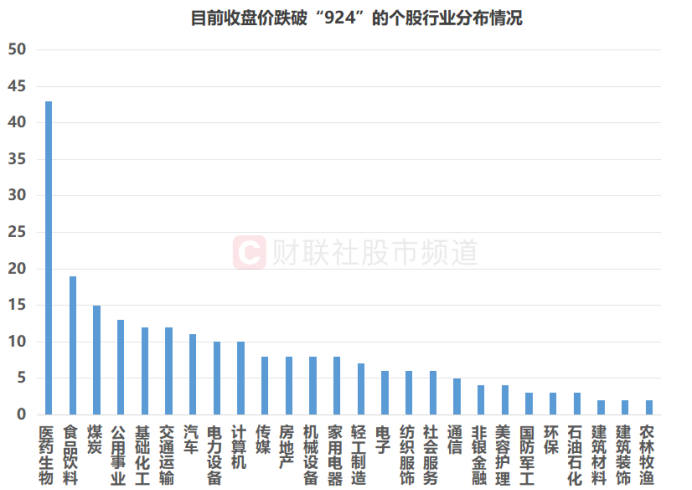
Core Viewpoint - The A-share market has shown overall stability, but nearly 230 stocks have seen their closing prices fall below the level recorded on September 24, 2024, accounting for approximately 4.3% of the total market [1]. Industry Analysis - The pharmaceutical sector has the highest number of stocks below the September 24 closing price, making up 18.7% of the total. Other sectors with significant representation include food and beverage, coal, public utilities, basic chemicals, and transportation, each exceeding 10% [2]. - Among the sub-sectors, stocks in the liquor, traditional Chinese medicine, thermal coal, coking coal, and residential development categories are the most affected, with a notable presence of chemical preparations, in vitro diagnostics, and medical consumables [2]. Market Capitalization Insights - The average total market capitalization of the over 200 stocks currently below the September 24 closing price is approximately 43.6 billion, with a median market capitalization of 10.8 billion. Stocks with a market capitalization below 5 billion account for nearly 30%, while those above 100 billion represent close to 10% [5]. - Notably, China Mobile, the only stock with a market capitalization exceeding 1 trillion, has seen a decline of about 3.7% from its September 24 closing price, currently fluctuating around 96 yuan [5]. Performance of Major Stocks - Key large-cap stocks that have fallen below the September 24 closing price include China Petroleum, Yangtze Power, China Telecom, Wuliangye, and others. Six stocks, including Pizaihuang and Daqin Railway, have experienced declines exceeding 10% [7]. - The performance of the dividend index has lagged behind the broader market, with a cumulative increase of only 5.9% since September 24, while other indices have shown more substantial gains [8]. Index Performance Overview - As of January 21, all 31 first-level industry indices are above their September 24 levels, with an average increase of approximately 58.12% and a median increase of 53.42%. The communication, non-ferrous metals, electronics, and comprehensive sectors have seen increases exceeding 130% [10]. - Conversely, sectors such as coal, food and beverage, public utilities, banking, and transportation have shown relatively lower growth, with the coal sector only increasing by 0.6% [10].




通信服务板块1月21日跌1.48%,三维通信领跌,主力资金净流出9.78亿元
Zheng Xing Xing Ye Ri Bao· 2026-01-21 09:08
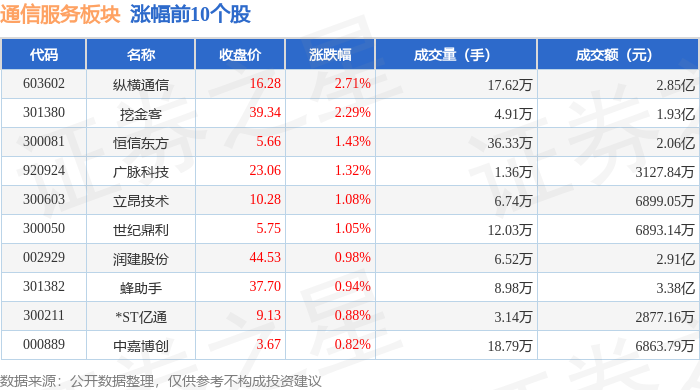
Market Overview - The communication services sector experienced a decline of 1.48% on January 21, with Sanwei Communication leading the drop [1] - The Shanghai Composite Index closed at 4116.94, up 0.08%, while the Shenzhen Component Index closed at 14255.12, up 0.7% [1] Stock Performance - Notable gainers in the communication services sector included: - Zongheng Communication: closed at 16.28, up 2.71% with a trading volume of 176,200 shares and a turnover of 285 million yuan [1] - Wajingke: closed at 39.34, up 2.29% with a trading volume of 49,100 shares and a turnover of 193 million yuan [1] - Hengxin Oriental: closed at 5.66, up 1.43% with a trading volume of 363,300 shares and a turnover of 206 million yuan [1] - Conversely, significant decliners included: - Sanwei Communication: closed at 13.43, down 5.75% with a trading volume of 2.215 million shares and a turnover of 2.994 billion yuan [2] - China Telecom: closed at 5.80, down 2.52% with a trading volume of 3.0047 million shares and a turnover of 1.758 billion yuan [2] - Putian Technology: closed at 31.49, down 1.47% with a trading volume of 223,400 shares and a turnover of 708 million yuan [2] Capital Flow - The communication services sector saw a net outflow of 978 million yuan from institutional investors, while retail investors contributed a net inflow of 495 million yuan [2] - Key stocks with notable capital flows included: - Data Port: net outflow of 55.1 million yuan from institutional investors, with a retail net outflow of 74.6 million yuan [3] - China Mobile: net inflow of 37.96 million yuan from institutional investors, but a net outflow of 83.09 million yuan from retail investors [3] - Hengxin Oriental: net inflow of 15.33 million yuan from institutional investors, with a retail net outflow of 18.77 million yuan [3]


“顶流”调仓!傅鹏博、李晓星,加仓这些股票
Zhong Guo Zheng Quan Bao· 2026-01-21 08:51
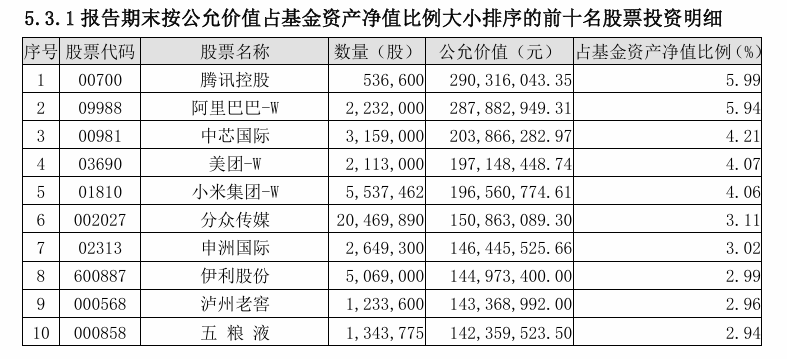
Group 1: Fund Manager Insights - Fund manager Fu Pengbo reduced holdings in companies with weak fundamentals and increased investments in data center liquid cooling, storage, and computing-related companies [1][2] - Fu noted that the annual reports of listed companies for 2025 will be pre-disclosed by the end of January 2026, with high-growth sectors like AI, non-ferrous metals, and lithium battery materials expected to show significant growth [1][3] - Li Xiaoxing increased positions in Hong Kong internet and consumer stocks while reducing holdings in some Hong Kong financial stocks, believing that overall opportunities in the equity market for 2026 outweigh risks [1][4] Group 2: Fund Performance and Adjustments - Fu's fund saw minor changes in its top ten holdings, with Maiwei Co. replacing China Mobile, and increased positions in Han's Laser while reducing stakes in companies like Ningde Times and Tencent [2][3] - Li's fund reported a stock position of 88.55% at the end of Q4 2025, a decrease of 4.54 percentage points from Q3 2025, with new entries in the top ten holdings including Tencent, Alibaba, and Meituan [4][5] Group 3: Market Outlook - Fu and Zhu believe that the stock market's activity is increasing, with a "spring excitement" arriving early, and expect high growth in sectors like AI and semiconductor manufacturing [3][6] - Li highlighted that AI remains the main line of global technological innovation, with significant capital expenditure growth in the AI sector, and domestic internet companies expected to maintain stable growth [6][7] - The consumer sector's performance needs dynamic observation, with many quality consumer stocks showing favorable dividend yields [6][7] Group 4: Sector-Specific Insights - The pharmaceutical sector experienced fluctuations in Q4 2025 due to previously high market expectations and capital flowing to other popular sectors, but long-term prospects for domestic innovative drugs remain positive [7] - The CRO and CDMO segments are showing clear signs of recovery in domestic and international demand, indicating an industry turning point [7]






刷新17年纪录的“公募冠军基金经理”任桀,持仓大调整!新赛道布局+最新研判来了
Mei Ri Jing Ji Xin Wen· 2026-01-21 05:24
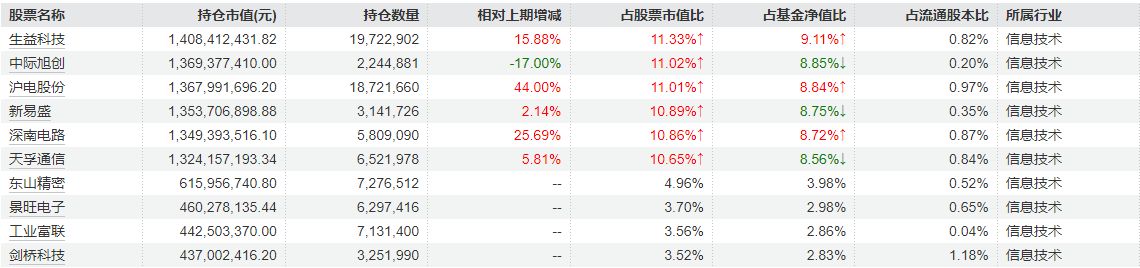
Group 1 - The core point of the article highlights that Yongying Fund's manager Ren Jie achieved a remarkable annual return of 233.29% for the Yongying Technology Smart A fund in 2025, breaking a 17-year record in the public fund industry [1] - The fund significantly reduced its equity investment from 91.59% in Q3 to 78.76% by the end of Q4 2025, reallocating assets to bank deposits and clearing out bond investments [2] - The top ten holdings of the Yongying Technology Smart A fund saw changes, with new additions including Dongshan Precision, Jingwang Electronics, Industrial Fulian, and Cambridge Technology, while previous holdings like Taicheng Light, Lanke Technology, and Shijia Light did not appear in the top ten [2][3] Group 2 - The fund manager emphasized a continued focus on global cloud computing investments, particularly in the optical communication and PCB sectors, while also acknowledging the potential for mean reversion after valuation expansion cycles [1][4] - The Yongying Hong Kong Stock Connect Technology Smart fund also underwent significant changes, with major reductions in holdings of Tencent Holdings and Bilibili-W, both exceeding 20% [5][7] - The performance of the Yongying Hong Kong Stock Connect Technology Smart A and C shares showed a net value growth rate of -22.02% and -22.14% respectively, underperforming their benchmarks by 7.88 and 8.00 percentage points [7]



中美竞逐万亿美元新赛道,五层解构下的投资蓝图
Tebon Securities· 2026-01-21 04:07
Investment Rating - The report maintains an "Outperform" rating for the commercial aerospace industry [1] Core Insights - The aerospace sector is transitioning from being viewed as a "cost center" driven by national will to a "growth engine" driven by commercial demand, with significant investments and strategic planning from both the US and China [6][9] - The global aerospace economy is projected to reach $613 billion in 2024, with commercial aerospace contributing 78%, and is expected to exceed $1 trillion by 2032 [6][9] - The value chain of commercial aerospace is divided into five core levels: "space, ground, terminal, rocket, and application," each presenting unique market opportunities and technical challenges from 2026 to 2030 [10][29] Summary by Sections 1. Space: Satellite Manufacturing - The satellite manufacturing market in China is expected to grow from approximately 7.1 billion yuan in 2025 to about 39.4 billion yuan by 2030, reflecting a shift from sporadic research models to continuous, batch engineering deliveries [16][18] 2. Ground: Ground Systems - The ground systems market is projected to increase from around 1.2 billion yuan in 2025 to approximately 39.1 billion yuan by 2030, evolving from a supporting role to a core infrastructure essential for stable satellite constellation operations [21][22] 3. Terminal: Key Variable for Commercial Aerospace - The terminal market is anticipated to grow from 500 million yuan in 2025 to about 141.9 billion yuan by 2030, driven by multiple vertical industries and potential consumer scenarios [23][24] 4. Rocket: Core Constraint - The cost of rocket launches is a critical constraint, with reusable technology expected to reduce costs by 80%-90% compared to traditional expendable rockets. The market for rocket launch services is projected to grow from approximately 10.7 billion yuan in 2025 to about 34.3 billion yuan by 2030 [25][26] 5. Application: Final Value Realization - The application market is expected to expand from 200 million yuan in 2025 to 525 billion yuan by 2030, with the revenue share from applications projected to rise from single digits to over 67% by around 2030 [27][28] 6. Investment Opportunities - Investment opportunities in commercial aerospace can be categorized into three main tracks: 1. Launch and manufacturing segments, which are expected to benefit directly from increased orders and visibility 2. Core components and systems, characterized by high technical barriers and critical for long-term competitiveness 3. Downstream applications and operational services, which, while currently limited in scale, hold the greatest long-term potential for value realization [29][30]


底座坚实、数字为翼,济宁以雄心破局数字强市
Qi Lu Wan Bao· 2026-01-21 03:14
Core Viewpoint - Jining is positioning itself as a "digital strong city" by leveraging digital infrastructure and industry integration to achieve a trillion-yuan economy by 2026 [1][4] Group 1: Digital Infrastructure Development - The launch of the Lunan Computing Power Network Center by China Mobile enhances the computing power landscape in Jining and surrounding cities, injecting core energy into new productive forces [3] - Jining has implemented over 5,543 industrial projects with investments exceeding 500 million yuan, achieving a 50% deep transformation rate in digitalization among large-scale industrial enterprises [3] - The city has established a communication network with 18,000 5G base stations, serving as a "digital artery" for continuous digital iteration and expansion [3] Group 2: Industrial Cluster and Economic Growth - Luoshi Robotics has emerged as a leading enterprise, becoming the first domestic industrial robot brand to enter Xiaomi's YU7 welding workshop, attracting over 20 upstream and downstream companies to settle in Jining [3] - The first products from the Shandong Times New Energy Base are set to be exported, with expectations for Jining to become the largest and most advanced production base for energy storage and power batteries in Northern China by 2025 [3] - The core revenue of Jining's digital economy is projected to exceed 70 billion yuan by 2025, doubling from 2021, with automotive electronics and digital terminals becoming provincial benchmarks [3] Group 3: Strategic Initiatives and Future Goals - The 2026 government work report emphasizes a dual-engine strategy of "data elements ×" and "artificial intelligence +" to promote the integration of the real economy and digital economy [4] - Jining is advancing its industrial strategy by establishing a provincial-level digital economy innovation development pilot zone and attracting high-end manufacturing and AI industries [4] - The city aims to create over 50 application scenarios across manufacturing, cultural tourism, and government sectors, empowering various industries through comprehensive digitalization [4]


山东移动聊城闸口营业厅:以智慧与温度,重新定义服务体验
Qi Lu Wan Bao· 2026-01-21 03:14
Core Insights - The transformation of the Shandong Mobile Liaocheng Branch's Zhakou Service Hall integrates local culture and advanced technology, creating a new service space characterized by efficiency, immersive experience, and warmth. Group 1: Service Redesign - The service hall has restructured its layout to enhance customer experience, featuring diverse functional areas such as a smart experience zone, self-service area, and a dedicated space for seniors, allowing for both quick service and engagement with cutting-edge technology [2] - Customers can experience seamless gigabit networks in an FTTR all-optical network environment and explore smart city and telemedicine applications through VR devices, providing a tangible sense of the digital future [2] Group 2: Efficiency Improvements - The service hall promotes "paperless processing" and "one certificate for all services," enabling over 80% of routine transactions to be completed within 3 minutes [3] - Smart self-service terminals and an online appointment system effectively manage customer flow, facilitating an "arrive and complete" service model [3] Group 3: Community Engagement - A dedicated "care seat" for the elderly is equipped with reading glasses and first aid kits, along with regular "silver hair classes" to teach smartphone usage and anti-fraud knowledge, helping seniors integrate into the digital world [4] - The management conducts regular "CEO reception days" to address customer concerns directly, while also providing free services like drinking water and charging stations for outdoor workers, fostering a supportive community environment [5] Group 4: Future Commitment - The transformation reflects the company's commitment to deepening its "heart-level service" philosophy, aiming to enhance service content through technological innovation and human insights, positioning itself as a benchmark for smart service experiences [5]
中国移动实现通信网时间同步从“城域自治”迈向“全国一体”
Bei Jing Ri Bao Ke Hu Duan· 2026-01-21 03:13
Core Viewpoint - China Mobile has successfully completed the first large-scale, cross-provincial commercial trial of the BeiDou satellite co-view synchronization system, marking a significant advancement in high-precision time synchronization capabilities from "metropolitan autonomy" to "national integration" [1][2]. Group 1: Technical Achievements - The trial utilized the distributed satellite co-view (DCV) technology to achieve nanosecond-level high-precision time synchronization across a nationwide network, overcoming the previous issue of "time islands" in metropolitan areas [1]. - The implementation of the industry standard for the BeiDou satellite co-view synchronization system (YD/T 4769-2024) in this large-scale trial represents a significant milestone in the integration of communication networks and high-precision time synchronization [1][2]. - The relative time difference between different regional time servers was stabilized within 9 nanoseconds, which is an improvement of more than an order of magnitude compared to traditional methods [2]. Group 2: Infrastructure and Future Outlook - The trial achieved a deep integration of national-level timing infrastructure with communication networks, utilizing the high-precision ground timing system from the National Time Service Center as a unified reference for standard time signals [2]. - China Mobile plans to continue enhancing collaboration with various sectors to accelerate the construction of a nationwide integrated time-space synchronization network, which will support emerging services such as 6G communication, computing networks, and artificial intelligence [2].