CHINA MOBILE(600941)

Search documents
卫星物联网商用试验正式启动!千亿市场规模可期(附概念股)
Zhi Tong Cai Jing· 2025-11-24 01:56
Core Viewpoint - The launch of commercial trials for satellite IoT in China marks a significant step towards enhancing the satellite communication market, stimulating industry growth, and supporting emerging sectors like commercial space and low-altitude economy [1][2][3] Industry Summary - The Ministry of Industry and Information Technology announced the start of a two-year commercial trial for satellite IoT, aimed at enriching market supply and establishing a regulatory framework [1] - The satellite IoT business connects various IoT devices through satellite communication, providing low-speed data services for a wide range of applications, including agriculture and emergency communications [1][2] - The satellite communication market in China is projected to exceed 80 billion yuan in 2023, with an expected annual growth rate of approximately 15% from 2024 to 2029, potentially reaching over 200 billion yuan by 2029 [2] - The commercial trial is expected to create significant demand for satellite launches, driving growth in satellite manufacturing and rocket launch industries [1][3] Company Developments - China Telecom has made advancements in satellite internet technology, enabling mobile devices to connect directly to satellites, with coverage extending to 25 million mobile terminals [4] - China Mobile has received a license to operate satellite mobile communication services, enhancing applications in emergency communication and remote area connectivity [5] - China Unicom successfully launched four low-orbit satellites, including the first domestic satellite with 3GPP narrowband IoT capabilities, marking a significant step in low-orbit satellite IoT development [5]



青鸟消防中标中国移动物联网消防大模型开发项目
Xin Lang Cai Jing· 2025-11-24 01:13
Core Insights - Qingniao Fire Protection has recently won the bid for the development project of a fire safety model for China Mobile Internet of Things Co., Ltd [1] Company Summary - Qingniao Fire Protection successfully secured a significant project with China Mobile, indicating its growing influence and capabilities in the fire safety technology sector [1]
中国启动卫星物联网商用试验,低空经济与商业航天站上新风口
Di Yi Cai Jing· 2025-11-23 13:13
Group 1 - The core viewpoint is that the launch of satellite IoT commercial trials is a key link connecting commercial aerospace and low-altitude economy, aiming to enhance service capabilities and establish a regulatory framework for emerging industries [1][2] - The Ministry of Industry and Information Technology (MIIT) announced the official start of satellite IoT commercial trials, which will last for two years, to stimulate market vitality and support the healthy development of new industries [1][4] - Satellite IoT is expected to enable real-time tracking and data transmission for low-altitude vehicles, addressing communication gaps in the low-altitude economy and fostering deep integration between commercial aerospace and low-altitude sectors [2][3] Group 2 - The satellite IoT business connects various IoT devices through satellite communication technology, providing wide-area IoT connectivity in regions where terrestrial networks are unavailable [3][4] - The MIIT has proposed 19 specific measures to promote the development of the satellite communication industry, including organizing satellite IoT commercial trials and expanding market access for private enterprises [4][5] - Major telecommunications companies like China Telecom, China Mobile, and China Unicom are actively expanding their satellite communication services, enhancing applications in emergency communication and remote area connectivity [5][6] Group 3 - The integration of satellite IoT technology is expected to attract more capital and resources into the low-altitude sector, promoting collaborative development across various industry segments such as drone manufacturing and airspace management [3][5] - The commercial trials are anticipated to create opportunities for upstream and downstream enterprises in the satellite IoT industry chain, leading to a more complete industrial ecosystem [2][5] - The MIIT aims to enhance the synergy between industrial internet and artificial intelligence, promoting the development of smart manufacturing and digital infrastructure [6][7]


研判2025!中国量子科技行业发展历程、政策、市场规模、重点企业及前景展望:量子科技应用前景广阔,行业规模增长潜力巨大[图]
Chan Ye Xin Xi Wang· 2025-11-23 01:24
Core Insights - Quantum technology is a strategic emerging field crucial for national information security, experiencing rapid market growth under national strategic guidance, with China's market size projected to grow from 4.523 billion yuan in 2015 to 13.104 billion yuan in 2024, reflecting a compound annual growth rate of 12.55% [1][14] - Significant breakthroughs in quantum technology are anticipated globally in 2024, transitioning from theoretical research to practical applications, with advancements in quantum computing platforms and quantum communication systems [1][14] - The development of quantum technology is expected to drive the next technological revolution, providing new tools and perspectives for exploring the unknown [1][14] Industry Overview - Quantum technology integrates principles of quantum mechanics with information science, computing, and materials science, focusing on information acquisition, processing, and transmission through quantum effects [4][13] - The industry primarily encompasses three core areas: quantum computing, quantum communication, and quantum precision measurement [4][13] Industry Development History - The Chinese government has emphasized the importance of advancing quantum technology, with strategic planning and support increasing since 2020 [6][9] - Notable achievements include the successful development of the "Zu Chongzhi No. 3" quantum computing prototype in March 2025, positioning China among the global leaders in superconducting quantum computing [1][7] - Recent advancements include the establishment of a 300-kilometer quantum direct communication network, validating the feasibility of long-distance secure communication [1][7] Industry Policies - The Chinese government has prioritized quantum technology in its "14th Five-Year Plan," aiming to implement significant national projects in frontier fields like quantum information [9][10] - The upcoming "15th Five-Year Plan" is expected to further promote quantum technology as a new economic growth point, alongside other emerging industries [9][10] Industry Value Chain - The quantum technology industry chain includes upstream components and technology development, midstream core equipment and system development, and downstream applications across various sectors such as cloud computing, finance, and defense [10][11] Market Size and Trends - The global quantum technology market is projected to reach $8.02 billion in 2024, with a year-on-year growth of 10.77%, and is expected to grow to $11.93 billion by 2025 [13] - Quantum computing dominates the market, accounting for 64.92% of the total, with North America leading in technological breakthroughs and industry applications [13][14] Key Companies - Major players in the Chinese quantum technology sector include China Great Wall Technology Group, Keda Technology, State Grid Information Communication, and others, contributing to a diverse competitive landscape [2][16] - China Great Wall Technology has reported significant growth in its computing industry, achieving a revenue of 5.148 billion yuan in the first half of 2025, a year-on-year increase of 9.63% [16] - Wuhan Guangxun Technology focuses on optical electronic devices and has seen a substantial increase in revenue from its data and access business, growing by 149.16% year-on-year in the first half of 2025 [16][17] Future Development Trends - Quantum computing is expected to overcome hardware performance bottlenecks, enhancing stability and developing new quantum bit architectures [17] - Quantum communication aims to establish broader and faster quantum key distribution networks, facilitating the construction of a future quantum internet [18] - Quantum measurement technology is anticipated to achieve significant precision improvements, expanding its applications in various fields [19]





2025中国5G+工业互联网大会在武汉开幕
Xin Lang Cai Jing· 2025-11-22 05:41
Core Viewpoint - The 2025 China 5G + Industrial Internet Conference was inaugurated in Wuhan, marking a significant step in the development of satellite IoT business trials, which will enhance the satellite communication market supply and support the growth of emerging industries such as commercial aerospace and low-altitude economy [1] Group 1 - The Ministry of Industry and Information Technology officially launched commercial trials for satellite IoT services during the conference [1] - The commercial trials aim to enrich the supply in the satellite communication market and support the safe and healthy development of new industries [1] - A cooperation memorandum was signed between the Hubei Provincial Government and major telecom companies including China Telecom, China Unicom, China Mobile, China Information Communication Technologies, and China Tower [1] Group 2 - The industrial and information technology departments of Jiangxi, Hubei, and Hunan provinces signed a memorandum for collaborative development of the industrial internet in the Yangtze River Middle Reaches urban agglomeration [1]

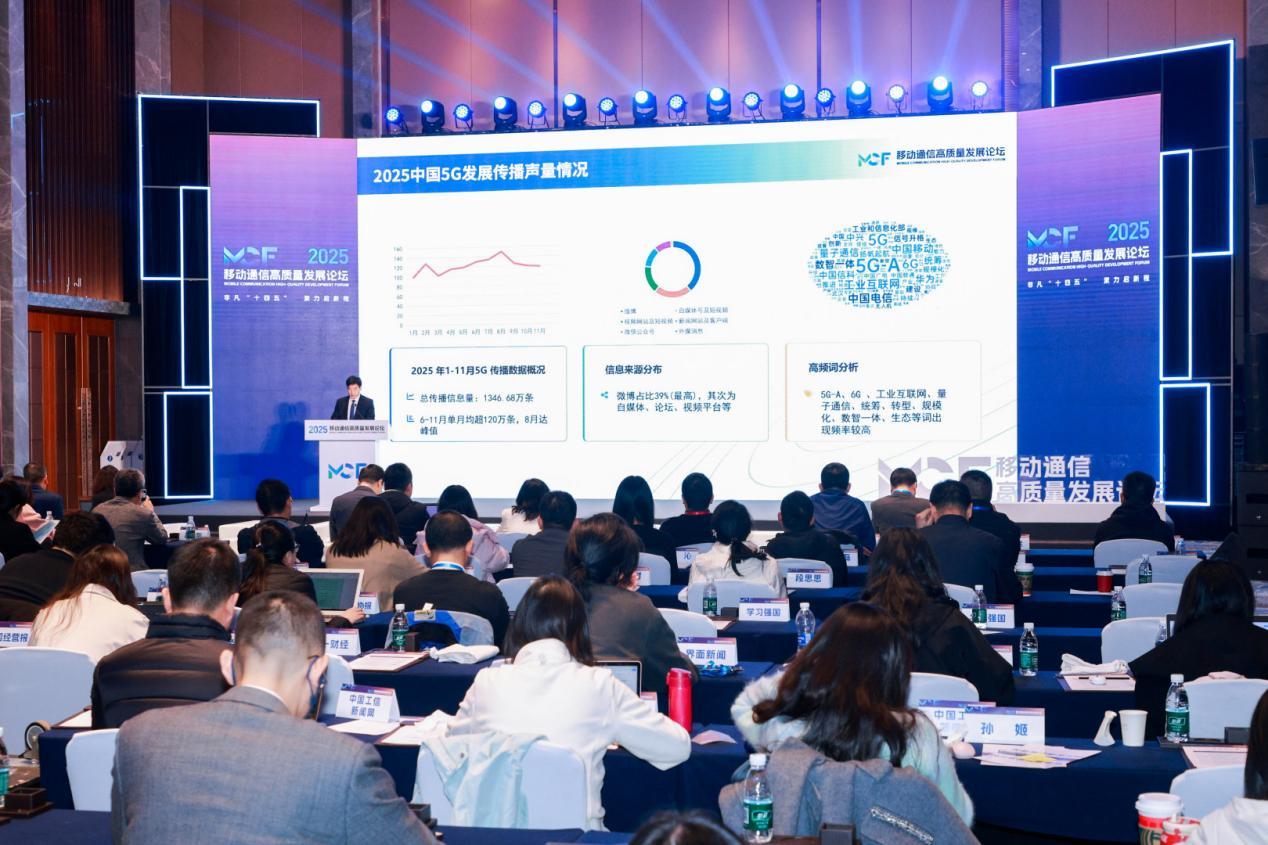
新华网:2025移动通信高质量发展论坛武汉举办 5G-A深耕与6G布局共绘产业新蓝图
Xin Hua Wang· 2025-11-22 04:00
Core Insights - The 2025 Mobile Communication High-Quality Development Forum was held in Wuhan, focusing on 5G applications, 5G-A technology breakthroughs, 6G planning, and integrated network construction [2] - The forum highlighted the transition of China's 5G industry from "technology leadership" to "value empowerment" [2] Group 1: Technological Advancements - 5G-A and 6G are key focal points, with major telecom operators showcasing their technological innovations and breakthroughs [3] - China Mobile is advancing a "hexagonal" technology framework for 6G, focusing on ten innovation areas, including high-performance networks and integrated sensing [3] - China Telecom is conducting outdoor trials for millimeter-wave sensing and has established over 300 low-altitude sensing stations across 18 provinces [4] - China Unicom has achieved full commercial use of 5G-A, with download speeds reaching 5Gbps outdoors and 5.7Gbps indoors [4] Group 2: Industry Applications - 5G applications are now in a phase of large-scale deployment, significantly driving the digital transformation of various industries [6] - China Mobile has integrated 5G into industrial production, while China Unicom has served over 20,000 industry-specific clients with more than 50,000 large-scale application projects [6] - China Telecom's low-altitude economy and satellite internet initiatives are emerging as new growth areas, with direct satellite services covering 25 million mobile devices [6] Group 3: Communication and Public Perception - The "2025 China 5G Development Communication Power Analysis" report indicates a shift in public perception from technical parameters to actual value [8] - From January to November 2025, there were 13.47 million online news reports related to 5G development, with a peak in August [8] - Key provinces leading in 5G communication include Beijing, Shanghai, and Guangdong, with major telecom companies acting as core communicators of 5G value [8] Group 4: Emerging Trends - Five major trends in communication were identified, including the mainstreaming of application results and the economic and social value of large-scale deployments [9] - The integration of 5G with AI is creating a new paradigm for intelligent communication networks [9] - The forum emphasized the importance of collaboration among telecom operators and industry players to build a synergistic ecosystem for innovation and value creation [9]

人事丨中国移动50余个关键岗位调整,正加速驶向AI时代
Sou Hu Cai Jing· 2025-11-21 13:30
Core Insights - China Mobile has undergone a significant leadership restructuring, affecting over 50 key positions, including the chairman and provincial company executives, highlighting a strategic focus on technological innovation and digital transformation [2][3] - The appointment of Chen Zhongyue as the new chairman marks the end of an era under former chairman Yang Jie, who led the company through a period of rapid expansion and innovation [2][4] Leadership Changes - The restructuring includes the promotion of technology-oriented executives, emphasizing the company's commitment to enhancing its capabilities in AI and digital services [2][3] - Key appointments include Chen Huai Da as vice president and party committee member, and Zhu Han Wu as vice president of China Unicom, indicating a shift towards a more technology-driven management team [3] Financial Performance - As of the first three quarters of 2025, China Mobile reported revenues nearing 800 billion yuan and a net profit of 115.4 billion yuan, leading among the three major telecom operators [4] - However, the company's non-recurring net profit growth of 6.6% lags behind China Unicom's 10.9%, signaling potential challenges in sustaining growth in a saturated market [4] Strategic Direction - China Mobile is planning a major organizational reform across its 25 subsidiaries, focusing on strategic restructuring, market separation, and the establishment of a centralized digital intelligence department [4][5] - The company aims to streamline its subsidiaries to fewer than 10 core enterprises, indicating a shift towards a more efficient operational model [5] Future Initiatives - By 2028, China Mobile plans to double its investment in AI and digital infrastructure, aiming to build the largest and most technologically advanced intelligent computing facilities in China [5] - The introduction of the new international brand CMobile reflects the company's global strategy, emphasizing customer cooperation, creation, and connection [5]
十大关键词解码“十四五”中国移动通信行业发展成绩单
Zhong Guo Xin Wen Wang· 2025-11-21 12:58
Core Insights - The forum highlighted the significant achievements and forward-looking strategies of China's mobile communication industry during the 14th Five-Year Plan period, emphasizing ten key terms that reflect the industry's development [1][2] Group 1: Key Developments in 5G - China has accelerated its 5G development, achieving its construction goals ahead of schedule, with 4.705 million 5G base stations built and 1.167 billion 5G mobile phone users by September 2025 [1] - The global market share for 5G base stations and mobile phones exceeds 50%, while the market share for 5G modules surpasses 80% [1] Group 2: Application and Ecosystem Growth - The country has established the world's most extensive 5G application ecosystem, with over 138,000 5G application cases covering 86 out of 97 major categories of the national economy [1] - More than 20,000 "5G + Industrial Internet" construction projects have been initiated, and 1,260 5G factories have been cultivated, indicating a shift of industry applications from the periphery to core processes [1] Group 3: Connectivity and IoT Expansion - The initiative has achieved "gigabit access in every county, 5G access in every town, and broadband access in every village," with over 90% of administrative villages covered by 5G networks [2] - By August 2022, the number of IoT terminal users reached 1.698 billion, surpassing mobile phone users for the first time, marking a new phase of "Internet of Everything" [2] Group 4: AI Integration and 6G Development - The integration of mobile communication and AI is driving network upgrades and industry transformation, with new scenarios and models emerging, such as "smart native," "5G-A × AI," and "AI+" [2] - China has initiated 6G research and development, completing the first phase of technology trials with over 300 key technology reserves [2]
中国移动咪咕社区化升级落地 “十百千亿”计划赋能体育生态协同发展
Zheng Quan Shi Bao Wang· 2025-11-21 10:09
Core Viewpoint - The Chinese government has issued a policy document aimed at enhancing the integration of the sports industry with the digital economy, which presents significant opportunities for companies like China Mobile's Migu to develop a digital sports content ecosystem [1][3]. Group 1: Policy and Industry Trends - The "31 Document" encourages the deep integration of the sports industry with the digital economy and the establishment of digital sports service platforms [1]. - The trend towards community-based digital sports content ecosystems is seen as a response to policy directives and a way to expand the potential of the sports industry [1][3]. Group 2: Migu's Initiatives - Migu has launched a new community system called "Migu Number" to connect creators, organizations, and clubs, shifting from pure traffic operations to fostering user engagement and identity [1]. - Migu's "Ten-Hundred-Thousand-Billion" plan aims to create a new digital sports ecosystem by leveraging a large consumer base, substantial resources, and traffic, focusing on nurturing sports content creators [3]. Group 3: Industry Collaborations and Expectations - Industry leaders express optimism about Migu's rich content offerings and its potential for innovation in sports IP, which could enhance fan engagement and content monetization [2]. - The upgrade of Migu's platform is viewed as a win-win for various stakeholders in the sports industry, enhancing content diversity and user engagement [2].
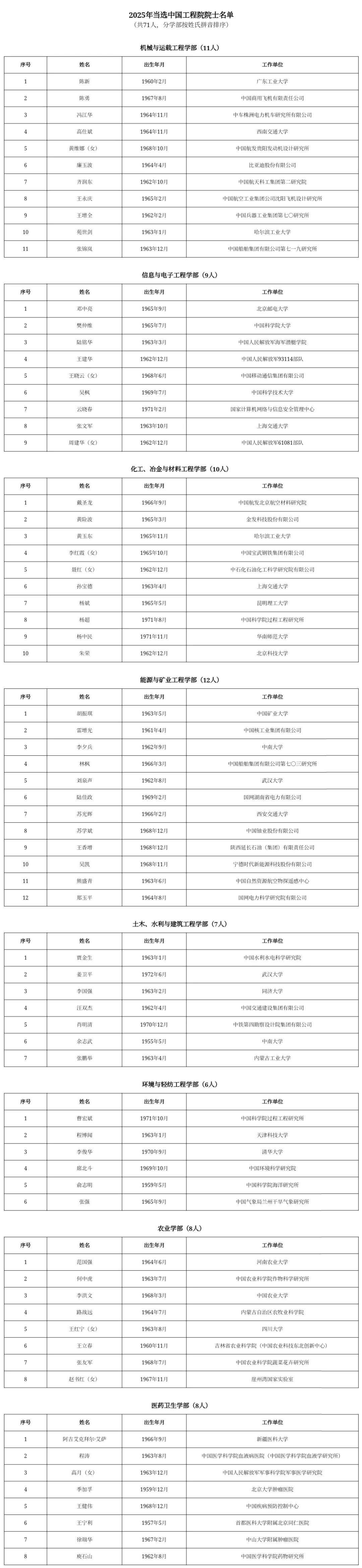
两院院士增选,多家A股公司有专家当选(附名单)
Shang Hai Zheng Quan Bao· 2025-11-21 08:08
Core Points - The Chinese Academy of Sciences and the Chinese Academy of Engineering announced the results of the 2025 academician elections, electing 73 academicians from the former and 71 from the latter [1] - Notable new academicians include Huang Xianbo from Jinfa Technology, Lian Yubo from BYD, Wang Xiaoyun from China Mobile, Su Xuebin from China Uranium Industry, and Wu Kai from CATL [1][3] Group 1: Academicians and Their Contributions - Huang Xianbo, Chief Scientist at Jinfa Technology, has made significant contributions in the development and industrialization of polymer materials, including environmentally friendly flame-retardant thermoplastic resins and biodegradable plastics [1] - Lian Yubo, Chief Scientist at BYD, has focused on the design and development of key systems for new energy vehicles, and was awarded the "National Excellent Engineer" title in 2024 [2] - Wang Xiaoyun, Chief Engineer at China Mobile, has a background in wireless communication and is recognized for his engineering expertise [3] - Su Xuebin, Chief Engineer at China Uranium Industry, has led research that increased the economically extractable uranium resources in China by three times and enhanced natural uranium production capacity by 2.5 times [3] - Wu Kai, former Chief Scientist at CATL, has been involved in cutting-edge research in lithium battery technology and has transitioned to focus on new product and technology development [3] Group 2: Company Profiles - Jinfa Technology specializes in polymer materials and has a strong emphasis on research and development in high-performance materials [1] - BYD is a leading player in the new energy vehicle sector, focusing on continuous innovation in core technologies and products [2] - China Mobile is a major telecommunications provider in China, with significant contributions to wireless communication technology [3] - China Uranium Industry is engaged in the mining and utilization of natural uranium and radioactive co-associated mineral resources, with a focus on comprehensive resource utilization [4]