CMS(600999)

Search documents
大行评级|招商证券国际:多重利好催化机器人及智驾链 看好优必选、小鹏等龙头企业
Ge Long Hui· 2025-09-10 02:40
招商证券国际发表研究报告指,AI+智能驾驶及AI+机器人双赛道迎来多重利好,板块效应增强,龙头 股估值提升。投资策略方面,长线看布局,中线看交付兑现,强推重点龙头公司。个股方面,人形整机 首推优必选、小鹏汽车,智驾供应链重点推荐地平线、禾赛科技、速腾聚创,机器人零件关注敏实集 团。该行分别上调优必选及地平线目标价至155港元及13.8港元,维持"增持"评级。 ...
研报掘金丨招商证券国际:升优必选目标价至140港元,评级增持
Ge Long Hui A P P· 2025-09-08 07:37
格隆汇9月8日|招商证券国际研究报告指,优必选(9880.HK)上半年归母净亏损4.1亿元人民币,按年及 按季分别收窄20%及32%,符合该行预期;期内收入按年升27.5%,净利率为66.6%,按年改善39.4个百 分点。公司9月起将开始为此前9,000万元汽车客户大单批量交付,全年工业机型出货上调至500台以 上;教育机器人天空行者科研版200至300台,预计今年总交付超过800台。另外,公司于9月再获国内知 名企业2.5亿元采购合同。该行分别上调2025至27年收入预测5%、4%及7%,亏损预测减少4%、2%及 22%,反映机器人订单及交付强于预期;目标价由110港元升至140港元,评级增持。 ...
招商证券国际:升优必选目标价至140港元,评级增持
Xin Lang Cai Jing· 2025-09-08 07:27
招商证券国际研究报告指,优必选(9880.HK)上半年归母净亏损4.1亿元人民币,按年及按季分别收窄 20%及32%,符合该行预期;期内收入按年升27.5%,净利率为66.6%,按年改善39.4个百分点。公司9 月起将开始为此前9,000万元汽车客户大单批量交付,全年工业机型出货上调至500台以上;教育机器人 天空行者科研版200至300台,预计今年总交付超过800台。另外,公司于9月再获国内知名企业2.5亿元 采购合同。该行分别上调2025至27年收入预测5%、4%及7%,亏损预测减少4%、2%及22%,反映机器 人订单及交付强于预期;目标价由110港元升至140港元,评级增持。 ...
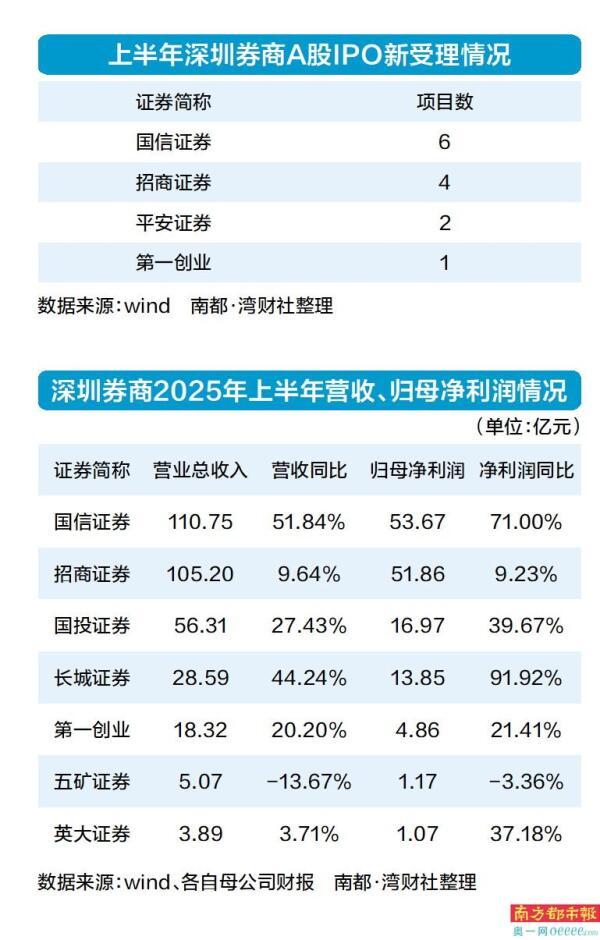
国信证券成营收总量、营收增速“双第一”
Nan Fang Du Shi Bao· 2025-09-07 23:17
| 上半年深圳券商A股IPO新受理情况 | | | --- | --- | | 证券简称 | 项目数 | | 国信证券 | 6 | | 招商证券 | 4 | | 平安证券 | 2 | | 第一创业 | 1 | | | | 深圳券商2025年上半年营收、归母净利润情况 | | | | --- | --- | --- | --- | --- | | | | | | (单位:亿元) | | 证券简称 | 营业总收入 | 营收同比 | 归母净利润 净利润同比 | | | 国信证券 | 110.75 | 51.84% | 53.67 | 71.00% | | 招商证券 | 105.20 | 9.64% | 51.86 | 9.23% | | 国投证券 | 56.31 | 27.43% | 16.97 | 39.67% | | 长城证券 | 28.59 | 44.24% | 13.85 | 91.92% | | 第一创业 | 18.32 | 20.20% | 4.86 | 21.41% | | 五矿证券 | 5.07 | -13.67% | 1.17 | -3.36% | | 英大证券 | 3.89 | 3.71% | ...

中国证券行业-全面向好,手续费收入重回正轨;第三季度交易收入喜忧参半Securities Broker_Dealer - China (H_A) 1H25 wrap-up_ Fee income back in the game; mixed trading income in 3Q
2025-09-07 16:19
Summary of Key Points from the Conference Call Industry Overview - **Industry**: Securities Broker/Dealer in China - **Period Covered**: 1H25 Core Insights and Arguments 1. **Revenue and Earnings Growth**: Brokers reported better-than-expected revenue and earnings growth in 1H25, with net profit increasing by 40% YoY (excluding one-offs) and total operating income rising by 24% YoY [1][9][10] 2. **Fee Income Recovery**: Fee income returned to double-digit growth for the first time since 2022, with an 18% YoY increase in fee income and a 48% YoY surge in trading income on average [1][33] 3. **Market Sentiment**: The growth was supported by a rebound in market sentiment, strong market turnover, and a recovery in equity fund AUM [1][33] 4. **Brokerage Fee Growth**: Brokerage fees grew by 35% YoY on average, accounting for 24% of revenue, driven by market share gains and improved client mix [34] 5. **Offshore Revenue Contribution**: Offshore revenue contribution increased to 12% in 1H25 from 9% in 2024, with CICC leading at 31% revenue contribution from offshore [3][27] 6. **Trading Income Dynamics**: Trading income surged by 48% YoY, contributing to 48% of operating income, with CITICS and CICC leading in trading yield [50][52] 7. **Investment Banking Opportunities**: Investment banking fees contributed to 6% of revenue, with significant growth driven by HK IPOs, particularly for CICC and CITICS [45][49] 8. **Cost-to-Income Ratio Improvement**: All brokers saw improvements in their cost-to-income ratios due to strong revenue growth [16][60] Additional Important Insights 1. **A-Share Market Performance**: The A-share market recorded the strongest half-year average daily turnover (ADT) in history at RMB1.98 trillion, which is expected to drive brokerage commissions and product sales fees in 3Q25E [2][35] 2. **Asset Management Growth**: Asset management fees grew by 3-29% YoY, with stock and hybrid mutual fund AUM reaching a new high of RMB8.8 trillion [39][41] 3. **New Stock Accounts**: There was a sequential improvement in new stock accounts opened, with 1.96 million in July and 2.65 million in August [36] 4. **Mixed Trading Outlook**: While trading income is expected to remain strong, there are concerns about bond market performance affecting trading income in 3Q25E [4][51] 5. **Regulatory Environment**: The regulatory focus may shift towards loosening IPO requirements for the STAR Market, which could impact future A-share IPO fundraising [45] This summary encapsulates the key points discussed in the conference call, highlighting the positive trends in revenue, fee income, and market dynamics while also noting potential challenges and regulatory considerations.






【十大券商一周策略】短期调整接近尾声,上行逻辑仍未改变,资金聚焦高低切
Zheng Quan Shi Bao Wang· 2025-09-07 14:57
Group 1: Market Liquidity Characteristics - Recent market liquidity characteristics indicate a clear divergence in ETF fund flows, with broad-based funds decreasing while industry/theme funds are increasing, and A-shares decreasing while Hong Kong stocks are increasing, reflecting a high-cut low characteristic of institutional allocation funds [1] - The market may be entering the last round of intensive subscription and redemption phase for actively managed public funds since 2021, as core assets held by institutions rise, which may help alleviate redemption pressure and shift focus towards the next industrial trend and economic recovery [1] - The coexistence of high debt funding rates and passive interest rate cuts from central banks abroad is easing competitive pressure on Chinese manufacturing, suggesting a long-term recovery in profit margins as the industry shifts from market share advantages to pricing power [1] Group 2: Investment Strategies - It is recommended to adjust portfolio structures by focusing on structural opportunities in sectors such as consumer electronics, resources, innovative pharmaceuticals, chemicals, and gaming [2] - The current high risk appetite in the market supports equity asset performance, with a suggestion to overweight AH shares and US stocks while maintaining a standard allocation to bonds and gold [3] - The A-share market is expected to experience a low-slope upward trend after recent adjustments, with a focus on sectors like AI computing power, solid-state batteries, humanoid robots, and commercial aerospace [5] Group 3: Sector Focus and Trends - The A-share market is currently in a phase of resonance inflow from both institutions and individuals, with a focus on TMT sectors as a long-term main line, while short-term strategies may involve low-crowding sectors [4] - The market is likely to continue a trend of oscillation and upward movement, with attention on sectors such as machinery and electrical equipment that have potential for rebound [7] - The focus on sectors benefiting from domestic high-tech industry development and the "anti-involution" concept is emphasized, particularly in low-valuation assets in the service consumption field [7] Group 4: Market Sentiment and Volatility - The A-share market is experiencing increased volatility, with a cautious sentiment prevailing compared to previous phases, but is expected to maintain a trend of oscillation and upward movement [9] - The market is likely to enter a phase of consolidation, with a focus on sectors that have lagged behind but still have strong economic logic [6] - The current high volatility in the market suggests that a new trend of significant upward movement will require new catalysts, with attention on sectors like electrical equipment and non-ferrous metals [8]
券商“五篇大文章”考核定调:科技金融占比最高,多项指标涉及债券领域
Xin Lang Cai Jing· 2025-09-07 14:20
Core Viewpoint - The China Securities Association has introduced a new evaluation system focused on the financial "Five Major Articles" to enhance the responsibilities of securities firms and align their services with national strategies [1][2]. Group 1: Evaluation Framework - The evaluation method consists of 25 articles divided into four chapters: general principles, evaluation indicators and scoring methods, implementation and results application, and appendices [1]. - The evaluation aims to guide securities firms to invest resources in key national strategic areas, enhancing risk control and promoting high-quality industry development [1][2]. Group 2: Evaluation Indicators - The evaluation includes quantitative indicators for the five areas: technology finance (50 points), green finance (10 points), inclusive finance (10 points), pension finance (10 points), and digital finance (10 points) [2][3]. - Specific indicators for technology finance include amounts and numbers of technology innovation bond underwriting, equity financing for technology companies, and direct investments in non-listed technology firms [1][3]. Group 3: Industry Impact - The introduction of the evaluation system is expected to shift the focus of securities firms from scale expansion to deeper functional development, promoting a more differentiated competitive landscape [2][5]. - The evaluation encourages firms to enhance their service capabilities in technology, green, and inclusive finance, moving away from short-term profit-seeking behaviors [2][8]. Group 4: Performance Rankings - The top firms in technology finance include CITIC Securities with 128.19 billion yuan in technology innovation bond underwriting, followed by CITIC Jiantou and Guotai Junan [5][6]. - In the inclusive finance sector, the leading underwriters for private enterprise bonds are招商证券 and 广发证券, both exceeding 30 billion yuan [7]. - The rankings reflect a competitive landscape where leading firms dominate core areas while smaller firms carve out niches in specific segments [5][8].


招商证券:A股转为更低斜率上行的概率较大
Xin Lang Cai Jing· 2025-09-07 11:57
Group 1 - The core viewpoint indicates that the short-term market adjustment is nearing its end, transitioning to a more sustained low-slope upward trend [1] - After the adjustment, market sentiment may marginally slow down, and the pace of incremental capital may become healthier [1] - The market is still in the second phase of a bull market, with a higher probability of transitioning to a lower slope upward trend as described in the September report [1] Group 2 - The recommended core strategy post-adjustment is to "embrace low penetration sectors," with current focus areas including solid-state batteries, AI computing power, humanoid robots, and commercial aerospace [1] - From a mid-term perspective, attention should also be given to high intrinsic return quality growth strategies [1]
招商证券:A股调整结束了吗?后市应如何应对?
智通财经网· 2025-09-07 11:54
Core Viewpoint - The short-term adjustment of A-shares is nearing its end, transitioning to a more sustainable low-slope upward trend, with the market still in the second phase of a bull market that began in September 2024 [1][2]. Market Strategy - The core strategy post-adjustment is to "embrace low penetration sectors," focusing on areas such as solid-state batteries, AI computing power, humanoid robots, and commercial aerospace [1][2]. - In the medium term, high intrinsic return quality growth strategies should also be considered, particularly in the 300 and 500 quality growth categories [2]. Market Performance - Recent A-share market performance has been weak due to several factors: intense market speculation around the National Day parade, profit-taking in previously high-performing sectors, and a noticeable decrease in trading volume [2]. Economic Indicators - The manufacturing PMI for August showed a month-on-month increase, and North American PCB shipments turned positive year-on-year, indicating improved economic conditions in certain sectors [3]. - Key areas of improvement include rising precious metal prices due to expectations of Federal Reserve interest rate cuts, and a positive trend in the TMT sector with increased PCB shipments and software industry profits [3]. Fund Flows - There has been a net inflow of 187.7 billion yuan in financing over the first four trading days, with a significant increase in newly established equity public funds and net inflows into ETFs [3]. Industry Developments - OpenAI's announcement of self-developed AI chips is expected to change the supply-demand dynamics in the AI computing market, with significant capital expenditures planned for data center server chips [4]. - OpenAI's cash burn forecast for 2029 has been raised to $115 billion, indicating a substantial increase in expected expenditures [4]. Valuation Trends - Overall A-share valuation levels have declined, with the Wind All A Index PE (TTM) down 0.3 from the previous week, currently at the 66.5% historical valuation percentile [4].
非银金融行业周报:公募三阶段降费落地,1H25保险行业增配二级权益超6000亿元-20250907
Shenwan Hongyuan Securities· 2025-09-07 11:43
Investment Rating - The report maintains a "Positive" outlook on the non-bank financial industry, indicating an expectation for the industry to outperform the overall market [1]. Core Insights - The public offering's third phase of fee reduction is expected to benefit investors significantly, with an estimated annual reduction of approximately 300 million yuan [2]. - The insurance sector is seeing a strategic shift towards long-term investments, with a notable increase in the proportion of participating insurance products, which is expected to drive long-term capital inflows into the market [2]. - In the first half of 2025, the insurance industry allocated over 600 billion yuan to secondary market equities, reflecting a growing trend of insurance capital entering the stock market [2]. Summary by Sections Market Review - The Shanghai Composite Index closed at 4,460.32, with a slight decline of 0.81% over the week. The non-bank index fell by 4.96%, with specific declines in brokerage, insurance, and diversified financial sectors of 5.31%, 4.03%, and 5.55% respectively [5][6]. Non-Bank Industry Data - As of September 5, 2025, the 10-year government bond yield was 1.83%, with a slight increase of 0.03 basis points. The credit spreads for corporate bonds also showed minor fluctuations [12]. - The average daily trading volume in the stock market was 26,035.62 billion yuan, reflecting a decrease of 12.75% week-on-week but a year-to-date increase of 48.25% [15]. Investment Analysis - The report recommends three main investment lines in the brokerage sector, focusing on leading institutions benefiting from improved competitive dynamics, firms with significant earnings elasticity, and those with strong international business capabilities [2]. - In the insurance sector, continued recommendations include major players such as China Life, New China Life, and Ping An, indicating confidence in their market positions and growth potential [2].