
CMS(600999)

Search documents
招商证券预测2026年11月净租金回报与房贷利率有望拉平
Xin Hua Cai Jing· 2026-01-05 09:46
Core Viewpoint - The Chinese real estate industry is expected to reach a turning point around 2026 after undergoing a cyclical adjustment, with net rental returns and mortgage rates projected to converge by November 2026 under the assumption of stable mortgage rates and rents [1][2]. Group 1: Market Observations - The three key market focus areas identified for the real estate sector in 2026 include changes in second-hand housing inventory, policy transitions following the expiration of the "Financial 16 Measures," and the trajectory of debt extension events for certain real estate companies [1]. - Current challenges persist in the second-hand housing market, with a net increase of 12% in the number of second-hand homes listed across 49 cities by November 2025 compared to the end of 2024, while transaction volumes have mostly shown negative year-on-year growth [1]. - The imbalance in supply and demand has put downward pressure on prices, with the second-hand residential price index in 70 cities experiencing a month-on-month decline of 0.7% in November 2025, a widening drop compared to mid-year [1]. Group 2: Rental Returns and Mortgage Rates - The narrowing difference between net rental return rates and mortgage rates is seen as a key factor in stabilizing demand, with the current difference at approximately 60 basis points [2]. - Assuming stable rental levels and mortgage rates, it is projected that by November 2026, the net rental return and mortgage rates will converge, influenced by the linear extrapolation of average monthly price declines since 2025 [2]. - The capital market may respond similarly to the U.S. experience in 2009, where significant excess returns in real estate stocks were observed once the difference between net rental returns and mortgage rates turned positive, indicating that the approach of the equilibrium point could lead to preemptive pricing in the capital market for second-hand housing inventory [2].

招商证券家电行业2026年度策略:内需国补续期 出海科技成长
智通财经网· 2026-01-05 07:47
Group 1 - The core viewpoint is that the home appliance industry is expected to underperform the market in 2025 due to multiple factors including a preference for growth styles, a decline in domestic subsidies, and disruptions from overseas tariffs [1] - The home appliance sector achieved a positive return of 9% in 2025, ranking 22nd among all industries, influenced by the increasing share of TMT transactions and the reduction of domestic subsidies post-618 [1] Group 2 - For domestic sales in 2026, the government will continue to support the "trade-in" subsidy program, with an estimated total subsidy fund of 250-300 billion yuan, including 80 billion for home appliances [2] - The six major categories of home appliances will continue to receive subsidies, with new AI products being added to the 3C category [2] Group 3 - The company sees opportunities in technology exports, supply chain advantages, and hardware innovation in sectors like 3C consumption, consumer robotics, and 3D printing [3] - The transition to new national standards for power banks and the expected growth in the European balcony solar storage market are anticipated to drive hardware innovation in AI applications [3] Group 4 - Investment recommendations include focusing on high-dividend value leaders like Midea Group and Haier Smart Home, and paying attention to Gree Electric and other brands in the white goods sector [4] - For technology exports, companies like Anfu Technology and Anker Innovations are highlighted, along with opportunities in 3D printing and consumer robotics [4] - The tool export chain is recommended, with companies like Juxing Technology and Quanfeng Holdings being favored due to expected demand growth in North America [4]
2025年A股IPO中介机构收费排行榜
Sou Hu Cai Jing· 2026-01-05 06:36
Core Insights - In 2025, a total of 116 companies were listed on the A-share market, representing a 16% increase from 100 companies in the same period last year [1] - The net fundraising amount for these 116 newly listed companies reached 122.025 billion yuan, a significant increase of 104.25% compared to 59.743 billion yuan in the previous year [1] - The total fees charged by IPO intermediaries for these companies amounted to 9.156 billion yuan, with underwriting and sponsorship fees accounting for 6.704 billion yuan, legal fees for 0.821 billion yuan, and audit fees for 1.631 billion yuan [1] Segment Analysis Underwriting and Sponsorship Fees - The total underwriting and sponsorship fees ranked by board are as follows: Sci-Tech Innovation Board (21.54 billion yuan), Shanghai Main Board (15.37 billion yuan), Growth Enterprise Market (15.11 billion yuan), Shenzhen Main Board (9.24 billion yuan), and Beijing Stock Exchange (5.78 billion yuan) [2][3] - The average underwriting fee is highest for the Sci-Tech Innovation Board at 11.337 million yuan, while the lowest is for the Beijing Stock Exchange at 2.222 million yuan [4] Legal Fees - The total legal fees ranked by firms are led by Shanghai Jintiancheng (1.14 billion yuan), followed by Beijing Zhonglun (1.05 billion yuan), and Zhejiang Tiance (0.57 billion yuan) [7][8] - The average legal fee is highest for the Sci-Tech Innovation Board at 832.01 thousand yuan, and lowest for the Beijing Stock Exchange at 364.62 thousand yuan [4] Audit Fees - The top three audit firms by total fees are Rongcheng (4.17 billion yuan), Tianjian (2.86 billion yuan), and Lixin (2.19 billion yuan) [10][11] - The average audit fee is highest for the Shanghai Main Board at 1.8518 million yuan, and lowest for the Beijing Stock Exchange at 632.39 thousand yuan [4]




营业地址成谜的小微私募 如何“吞下”上市公司6000万元投资?
Sou Hu Cai Jing· 2026-01-05 06:36
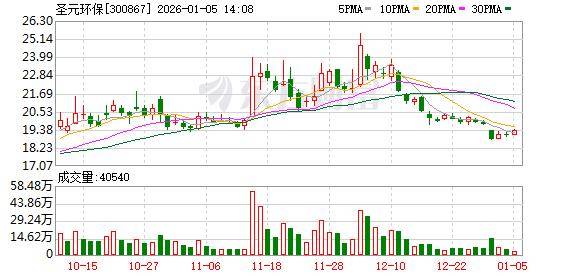
Core Viewpoint - A small private equity firm with an unclear business address has incurred significant losses after receiving a 60 million investment from a subsidiary of Shengyuan Environmental Protection, leading to a dramatic decline in fund value over nine months [2][3]. Group 1: Investment Details - Shengyuan Environmental Protection's wholly-owned subsidiary, Xiamen Jinlingji Construction Engineering Co., Ltd., invested 60 million in the "Deep Bo Hongtu Growth No. 1 Private Securities Investment Fund" in March 2025 [3]. - The fund's net value plummeted from 0.9215 yuan per unit on December 4, 2025, to 0.2596 yuan per unit by December 11, 2025, marking a decline of over 70% within a week [4]. - As of December 25, 2025, the fund's unit net value had further decreased to 0.1846 yuan, resulting in a cumulative loss of approximately 46.92 million, or 81.54% [3]. Group 2: Fund Management and Operations - The "Deep Bo Hongtu Growth No. 1 Private Securities Investment Fund" is managed by Shenzhen Deep Bo Xin Investment Management Co., Ltd., and is classified as an R4-level medium-high risk product [3]. - Concerns have been raised regarding the fund's abnormal net value fluctuations, suggesting potential internal risk control failures and possible violations of disclosure obligations by the fund manager [5]. Group 3: Regulatory and Legal Actions - Following the discovery of the fund's severe losses, Shengyuan Environmental Protection engaged in discussions with the fund manager, who proposed that an individual, Wen Tingtao, would assume joint liability for the investment losses [5]. - The fund manager has been accused of unauthorized trading and falsifying fund net value information, while the custodian, China Merchants Securities, has been criticized for failing to fulfill supervisory duties [5][6]. - The Xiamen Securities Regulatory Bureau issued a warning letter to Shengyuan Environmental Protection for failing to disclose significant losses in a timely manner [7]. Group 4: Company Background and Concerns - Shenzhen Deep Bo Xin Investment Management Co., Ltd. was established in May 2014 and has a registered capital of 10 million, with a management scale of only 0-500 million [8]. - The firm has been previously listed as a "lost contact" entity by the Asset Management Association of China, raising questions about its credibility and operational transparency [8][9].

2025年A股IPO中介机构收费排行榜
梧桐树下V· 2026-01-05 03:33
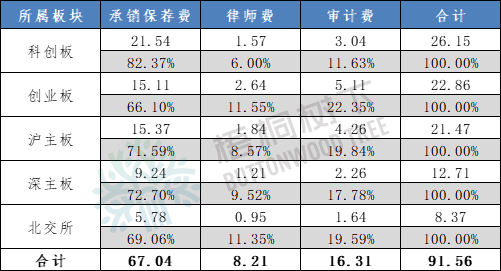
Core Insights - In 2025, a total of 116 companies were listed on the A-share market, representing a 16% increase from 100 companies in the same period last year [1] - The net fundraising amount for these 116 newly listed companies reached 1220.25 billion yuan, a significant increase of 104.25% compared to 597.43 billion yuan in the previous year [1] - The total fees charged by IPO intermediaries for these companies amounted to 91.56 billion yuan, with underwriting and sponsorship fees accounting for 67.04 billion yuan, legal fees for 8.21 billion yuan, and audit fees for 16.31 billion yuan [1] Segment Analysis Underwriting and Sponsorship Fees - The total underwriting and sponsorship fees by segment are ranked as follows: Sci-Tech Innovation Board, Shanghai Main Board, ChiNext, Shenzhen Main Board, and Beijing Stock Exchange [2] - The average underwriting fee is highest in the Sci-Tech Innovation Board at 11,337.61 thousand yuan, while the lowest is in the Beijing Stock Exchange at 2,222.30 thousand yuan [5][6] - The total underwriting fees are led by CITIC Securities with 12.44 billion yuan from 15 deals, followed by Guotai Junan and CITIC Jinshi with 9.96 billion yuan and 8.82 billion yuan, respectively [8][10] Legal Fees - The top three law firms by total fees are Shanghai Jintiancheng, Beijing Zhonglun, and Zhejiang Tiance, with total fees of 1.14 billion yuan, 1.05 billion yuan, and 0.57 billion yuan, respectively [11] - The average legal fee is highest in the Sci-Tech Innovation Board at 832.01 thousand yuan, while the lowest is in the Beijing Stock Exchange at 364.62 thousand yuan [5] Audit Fees - The leading audit firms by total fees are Rongcheng, Tianjian, and Lixin, with total fees of 4.17 billion yuan, 2.86 billion yuan, and 2.19 billion yuan, respectively [12][14] - The average audit fee is highest in the Shanghai Main Board at 1,851.80 thousand yuan, while the lowest is in the Beijing Stock Exchange at 632.39 thousand yuan [6] Overall Fee Structure - The total fees for intermediaries in the IPO process are distributed as follows: underwriting fees (67.04 billion yuan), legal fees (8.21 billion yuan), and audit fees (16.31 billion yuan) [1][4] - The average fees across segments indicate that the Sci-Tech Innovation Board commands the highest fees overall, while the Beijing Stock Exchange has the lowest average fees [5][6]



招商证券涨2.04%,成交额4.10亿元,主力资金净流入3090.80万元
Xin Lang Cai Jing· 2026-01-05 02:47
Group 1 - The core viewpoint of the news is that China Merchants Securities has shown a positive stock performance with a 2.04% increase in price as of January 5, 2025, and a total market capitalization of 147.67 billion yuan [1] - The company has experienced a stock price increase of 2.04% year-to-date, 1.31% over the last five trading days, and 4.36% over the last 20 days, while showing a slight decline of 0.59% over the last 60 days [2] - As of September 30, 2025, the company reported a revenue of 18.244 billion yuan, representing a year-on-year growth of 27.76%, and a net profit attributable to shareholders of 8.871 billion yuan, with a year-on-year increase of 24.08% [2] Group 2 - The company has distributed a total of 37.668 billion yuan in dividends since its A-share listing, with 8.992 billion yuan distributed over the last three years [3] - As of September 30, 2025, the number of shareholders increased to 175,900, reflecting a growth of 23.14% compared to the previous period [2] - The top ten circulating shareholders include China Securities Finance Corporation Limited, holding 171 million shares, and Hong Kong Central Clearing Limited, holding 149 million shares, with the latter showing a decrease of 7.961 million shares compared to the previous period [3]
AI 商业化系列深度报告之二:AI 电商的星辰大海-招商证券-20页
Sou Hu Cai Jing· 2026-01-05 00:18
Group 1 - AI e-commerce is becoming a core path for the commercialization of large models, transforming the shopping chain and integrating ecological resources to shift from "self-search" to "intelligent agency," achieving a closed-loop conversion from intent to transaction [1][4][5] - OpenAI adopts an open protocol route, collaborating with retailers like Etsy, Shopify, and Walmart through the Instant Checkout feature, which allows direct payment and contextual recommendations, resulting in 15% of Walmart's recommendation traffic coming from ChatGPT in September, up from 9.5% in August [5][18] - Amazon has developed its closed-source Rufus model, focusing on personalized memory, multimodal search, and price tracking, with a 140% year-on-year increase in monthly active users by 2025, while also using legal means to protect its platform traffic ecosystem [6][25][30] Group 2 - The AI e-commerce infrastructure is becoming increasingly complete, with the ACP protocol establishing a unified interaction standard that addresses compatibility issues in payment and inventory systems, leading to clear monetization paths [1][45][46] - Alibaba's "Qwen" project launched the "Qwen APP," achieving over 10 million downloads in its first week, integrating various ecological resources to enable cross-scenario AI shopping collaboration [6][58][62] - Douyin's "Doubao" has integrated with its marketplace, directly recommending products based on consumer needs and guiding purchases, covering multiple high-frequency categories [6][65] Group 3 - The new generation of AI consumer agents is evolving, with companies like "What Worth Buying" launching AI shopping assistants that enhance the shopping experience by integrating comparison, recommendation, and ordering processes [6][68] - The AI e-commerce sector is expected to see significant investment opportunities as companies that master AI e-commerce entry points will gain control over traffic distribution and market expansion [1][34][51]

招商证券:1月A股继续演绎春季攻势概率较高 关注投资驱动顺周期涨价方向
智通财经网· 2026-01-04 22:52
Core Viewpoint - The A-share market is expected to continue its upward trend in January, driven by improved fundamentals and increased government investment, with a high probability of a spring rally [1][2] Fundamental Analysis - The issuance of local government special bonds is anticipated to accelerate, and central budget investments are expected to increase, leading to a marginal improvement in the fundamentals [2] - The year-on-year growth rate of listed companies' annual performance forecasts is likely to rebound significantly due to a low base effect from the previous year [2][5] - The domestic capital market is expected to see increased inflows as the market sentiment improves, aided by the appreciation of the RMB and the return of foreign capital [2][4] Market Sentiment and Performance - January will see heightened speculation around performance disclosures, with a focus on companies that exceed expectations or show significant improvements post-announcement [1][2] - The sectors of commercial aerospace, AI applications, and semiconductor equipment are highlighted as key areas of focus for investment in January [2] Style and Sector Allocation - The recommended investment style for January favors large-cap growth stocks, with suggested index combinations including CSI 300 and STAR Market 50 [3] - Sector allocation should focus on cyclical and technology sectors, with specific recommendations for industries such as power equipment, machinery, non-bank financials, electronics, and basic chemicals [3][6] Liquidity and Capital Supply - Incremental capital is expected to maintain a stable net inflow in January, with foreign and insurance capital likely to be the main sources of this inflow [4] - The central bank is expected to implement measures to ensure liquidity remains ample, particularly around tax periods and year-end [3][4] Industry Trends and Recommendations - Industries expected to see high growth or improvement in annual reports include those with pricing power, export advantages, and sectors within TMT (Technology, Media, Telecommunications) [5][6] - The focus on sectors with marginal improvements includes AI hardware, robotics, AI applications, non-ferrous metals, and domestic computing power [3][6] External Liquidity Factors - The Federal Reserve's ongoing easing cycle is expected to positively influence market risk appetite in the first half of the year, although expectations may be subject to revision based on economic data [4]
证券Ⅱ行业:公募销售费改平稳落地,框架完善兼顾市场关切
GF SECURITIES· 2026-01-04 07:24
Investment Rating - The report assigns a "Buy" rating for the securities industry, indicating an expected stock performance that will exceed the market by more than 10% over the next 12 months [9]. Core Insights - The public fund sales fee reform has been smoothly implemented, with a focus on benefiting investors and addressing market concerns. The reform is expected to save approximately 51 billion CNY in investment costs annually, with a comprehensive fee rate reduction of about 20% [5]. - The new rules on redemption fees have been established to protect market liquidity while benefiting investors. The differentiation in redemption fees is aimed at encouraging long-term investment practices [5]. - The classification of products and supporting policies have been upgraded to create a more refined fee rate regulatory system, promoting the development of index funds and equity funds [5]. - The report emphasizes the importance of wealth management institutions' service capabilities in the context of the growing equity fund market, suggesting a focus on companies like Huatai Securities, CICC, Guotai Junan, and CITIC Securities [5]. Summary by Sections Regulatory Changes - The China Securities Regulatory Commission (CSRC) issued new regulations on public fund sales fees, effective from January 1, 2026, marking the completion of a three-phase fee reduction process [5]. - The third phase of the reform is projected to provide approximately 30 billion CNY in annual benefits to investors [5]. Product Classification - The new regulations simplify redemption fee structures into three tiers and allow flexible arrangements for different types of funds, particularly benefiting individual investors in index funds [5]. - The maximum subscription fee rates have been refined, with specific caps for different fund types, encouraging the growth of index funds [5]. Investment Recommendations - The report suggests focusing on companies that are well-positioned to benefit from the reforms and the anticipated growth in the equity fund market, including Huatai Securities (AH), CICC (H), Guotai Junan (AH), and CITIC Securities (AH) [5].


招商证券国际:首予小马智行H股“增持”评级 属L4领域先行者
Xin Lang Cai Jing· 2026-01-02 05:35
Core Viewpoint - The report from China Merchants Securities International initiates coverage of Pony.ai's H-shares with an "Overweight" rating, highlighting its position as a pioneer in the L4 autonomous driving sector, with strong technological and commercialization capabilities forming a competitive moat [1] Group 1: Company Overview - Pony.ai is recognized as a leader in the L4 autonomous driving field, leveraging world models and virtual driver technology to deepen its market presence [1] - The company has achieved significant breakthroughs in commercialization, notably reaching profitability for its Robotaxi single vehicle in Guangzhou during the third quarter of last year, marking a milestone in its commercial journey [1] Group 2: Market Position and Growth Potential - Pony.ai holds a substantial market share in both autonomous ride-hailing services and autonomous trucking, benefiting from its first-mover advantage and industry standing [1] - The acceleration of the deployment of its seventh-generation vehicles and the expansion of its fleet size are expected to sustain strong growth momentum [1]