INDUSTRIAL BANK(601166)

Search documents
2025年国家开发银行


Shang Hai Zheng Quan Bao· 2025-12-09 18:53
Core Insights - The awards for financial bond underwriting and market-making have been announced, recognizing various banks and securities firms for their outstanding performance in the industry [1][2][3][4][5][6][7] Group 1: Outstanding Underwriters - The title of "Outstanding Underwriter" was awarded to several banks, including CITIC Bank, Shanghai Pudong Development Bank, and Industrial and Commercial Bank of China [1][2] - A total of 10 banks were recognized as "Excellent Underwriters," highlighting their contributions to the financial bond market [1] Group 2: Excellent Market Makers - The "Excellent Market Maker" category included firms such as Huatai Securities and CITIC Securities, showcasing their role in enhancing market liquidity [2][4] - A diverse range of banks, including Ping An Bank and Industrial Bank, were acknowledged for their market-making capabilities [2][4] Group 3: Special Awards - Special awards were given for various categories, including "Debt Sea Rising Award" and "Green Low Carbon Award," recognizing banks like Agricultural Bank of China and Postal Savings Bank of China for their innovative approaches [3] - The "Technology Innovation Award" was awarded to banks that demonstrated significant advancements in financial technology [3] Group 4: Individual Recognitions - Individual awards were presented to key personnel from various banks, such as CITIC Bank's Sun Wei and China Everbright Bank's Liu Yan, acknowledging their leadership in driving financial bond initiatives [4][5] - The "Outstanding Underwriting Supervisor" category highlighted individuals from major banks, emphasizing the importance of leadership in underwriting processes [5]
兴业银行济南分行:依托资金流信息平台,赋能科创企业发展
Qi Lu Wan Bao· 2025-12-09 14:02
Core Insights - The funding flow information platform effectively breaks the "information island" between banks and enterprises, enabling banks to better understand the real operational status of companies, thereby reducing credit risk identification costs and encouraging lending [1] - The platform allows technology innovation enterprises to convert their technical value and operational stability into credit support, facilitating quantifiable credit and accessible financing [1] Group 1: Challenges Faced by Enterprises - A specific automotive parts technology company in Rizhao has three major financing challenges: significant "light asset" characteristics, high R&D expenditure (12% of revenue), and dispersed operating funds across three banks, leading to difficulties in traditional credit assessments [1] - The company holds 14 utility model patents and has created jobs for over 50 local technicians, positioning it as a "specialized, refined, distinctive, and innovative" enterprise within the regional automotive industry chain [1] Group 2: Innovative Financing Solutions - After obtaining authorization from the enterprise, the Jinan branch of Industrial Bank utilized the funding flow information platform to access multi-dimensional data, overcoming traditional credit limitations [2] - The bank integrated cross-bank transaction data and analyzed indicators such as transaction frequency and payment cycles over the past 12 months to assess the company's operational stability [2] - A three-dimensional credit model was constructed, incorporating operational capability, R&D potential, and credit status, ultimately determining a credit loan limit of 5 million yuan without requiring any collateral from the enterprise [2]

兴业银行拦截“游戏账户买卖”骗局,成功守护客户资金
Nan Fang Du Shi Bao· 2025-12-09 13:01
Group 1 - The core event highlights the successful interception of a new type of fraud targeting gaming account transactions by Industrial Bank's Dongguan branch, which helped a customer avoid a loss of over 16,000 yuan [2] - The bank's intelligent anti-fraud system detected a high-risk transaction related to an "overseas transportation card recharge" and issued a warning, leading to immediate action by the fraud prevention team [2] - The customer, Mr. Zhu, was targeted by scammers posing as customer service representatives, who attempted to manipulate him into sharing sensitive information and downloading malicious software [2] Group 2 - The incident demonstrates the effective collaboration between technology and human response, as well as the quick coordination between the head office and branch to contain the risk at an early stage [3] - The bank has issued reminders to customers about the importance of not trusting unfamiliar transaction requests, avoiding unknown links, and safeguarding personal and banking information [3] - Customers are advised to report any suspicious activities immediately to the bank's official customer service or visit a branch for verification to protect their finances [3]


银行数字化抢蛋糕比赛,胜负已分?
Tai Mei Ti A P P· 2025-12-09 12:21
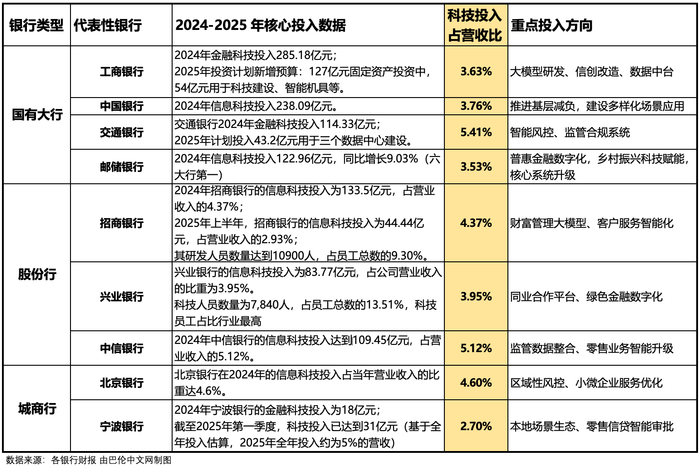
Core Insights - The digital transformation of China's banking industry is entering a "deep water zone" by 2025, characterized by market expansion, technological upgrades, and intensified competition [1] - The IT investment in the banking sector is projected to reach 169.315 billion yuan in 2024, with a growth rate of 3.6%, and is expected to exceed 266.2 billion yuan by 2028 [1] - The digital bidding landscape shows that successful digitalization in banking relies not only on investment scale but also on precise alignment with the bank's positioning and strategic partnerships [1] Investment Trends - In 2024, the six major state-owned commercial banks are expected to invest a total of 125.459 billion yuan in fintech, accounting for 52% of the total banking sector investment [2] - By 2025, the banking sector's fintech investment is anticipated to reach 333.85 billion yuan, representing a 38% increase from 2024 [2] Bank Types and Investment Focus - State-owned banks are leading in digital investment, with major banks like ICBC planning to invest 285.18 billion yuan in fintech in 2024, while smaller banks are focusing on localized services and specific pain points [3][5] - The investment focus for state-owned banks includes large model development, data platforms, and intelligent risk control systems [3] - Regional banks are prioritizing local economic services and optimizing processes for small and medium enterprises, with some banks investing over 6% of their revenue in technology [5] Digital Bidding Characteristics - The digital bidding projects are categorized into four main tracks: risk management, compliance control, data services, and technology platforms, each with varying technical requirements and budget allocations [7][8] - Risk management projects are rated the highest in complexity, requiring a deep understanding of financial logic and AI technology [7] - Compliance control projects are driven by regulatory requirements and have a high degree of standardization, making them easier to replicate [7] Competitive Landscape - A dual-competitive landscape is emerging between bank technology subsidiaries, which excel in understanding financial regulations, and internet technology companies, which leverage general technology capabilities [10][11] - The collaboration between bank technology subsidiaries and internet technology companies is becoming a mainstream approach, combining business understanding with technological innovation [17] Future Outlook - The investment landscape is expected to become more differentiated, with large banks focusing on systematic construction while smaller banks target essential local needs [18] - The emphasis will shift towards practical technologies that address compliance issues and enhance operational efficiency, with a growing trend of collaboration between different types of technology providers [18]



兴业银行呼和浩特分行全力保障自治区“六个工程”建设
Zhong Guo Jin Rong Xin Xi Wang· 2025-12-09 06:52
Core Viewpoint - The financial institutions in the region are actively supporting the implementation of the "Six Projects" as outlined in the government work report, focusing on sustainable development and economic growth through various financial services [1][3]. Group 1: Financial Support for "Six Projects" - The financial office of the regional party committee is guiding financial institutions to effectively utilize financial policies and tools to support the "Six Projects" [1]. - The total green loan balance of the bank reached 14.113 billion, with an increase of 2.701 billion since the beginning of the year [2]. - The bank has invested 4.24 billion in a 300,000 kW photovoltaic project in 2024, in addition to the previously committed 500 million [2]. Group 2: Specific Project Financing - For the "Warm Project," the bank provided 599 million in financing to eight key heating enterprises, with 361 million disbursed this year [2]. - The bank utilized big data to assist loan decisions for small and micro enterprises, resulting in an online financing business balance of 1.433 billion, including 294 million in tax-interactive loans [2]. - The bank supported 274 technology-based enterprises with a technology finance loan balance of 33.858 billion, an increase of 8.081 billion since the beginning of the year [2]. Group 3: International Business Support - The bank provided comprehensive financial services for over 100 international business clients, with a total foreign currency payment volume of 1.28 billion, including over 3.5 billion in cross-border RMB payments [2]. Group 4: Future Plans - The financial office will continue to coordinate and strengthen the work of financial institutions, directing resources towards key areas to ensure the successful implementation of the "Six Projects" and promote high-quality economic and social development [3].
兴业银行济南分行高效落地亿元国际信用证业务助企跨境采购拓市场
Qi Lu Wan Bao· 2025-12-09 05:42
Core Insights - The article highlights the successful completion of a 100 million yuan international letter of credit business by Industrial Bank's Jinan branch, which supports a key manufacturing enterprise in Zouping in its overseas raw material procurement and reduces cross-border settlement costs [1][2] - The collaboration exemplifies the bank's commitment to serving the real economy and enhancing local enterprises' cross-border development [2] Group 1: Business Impact - The enterprise involved is a key manufacturer in Zouping, focusing on metal products, and has increasing demands for efficient and low-cost cross-border settlement services due to accelerated overseas market expansion [1] - The bank established a specialized service team to tailor an international letter of credit solution based on the enterprise's needs, including procurement processes, cash flow cycles, and exchange rate risk management [1] Group 2: Operational Efficiency - The Jinan branch implemented a green approval channel and a "branch linkage + cross-border financial task force" model to ensure rapid business execution, improving efficiency by over 50% compared to conventional processes [1] - The 100 million yuan international letter of credit not only aids in cost savings for cross-border procurement but also locks in forward exchange rates, effectively mitigating risks from international market fluctuations [1] Group 3: Future Outlook - The Jinan branch aims to continue leveraging its cross-border financial advantages to provide diverse and high-quality financial services, supporting regional enterprises in global competition and contributing to local economic development [2]
九卦 | 一步之遥:股份制银行集体逼近全球系统重要性银行门槛
Sou Hu Cai Jing· 2025-12-08 13:40
Core Viewpoint - The Financial Stability Board (FSB) has released the 2025 list of Global Systemically Important Banks (G-SIBs), which includes 29 banks globally, with China's five major state-owned banks maintaining their positions. Notably, Industrial and Commercial Bank of China (ICBC) has moved from Group 2 to Group 3 for the first time [1][5][10]. Group 1: G-SIBs List and Rankings - The 2025 G-SIBs list remains consistent with 2024, but there are changes in group classifications. The third group has increased from 2 to 4 banks, including ICBC and others [5][10]. - In the "Bucket 0" category, which does not incur additional capital requirements, China Merchants Bank has improved its ranking from 34th to 30th, closely approaching the G-SIBs threshold [5][6][10]. - Other Chinese banks, such as Industrial Bank and CITIC Bank, are also nearing the G-SIBs threshold, indicating a shift in the global financial stability focus [3][5][9]. Group 2: Factors Influencing Rankings - The rise in rankings for Chinese banks is attributed to improvements in interconnectedness and complexity metrics rather than size, which has traditionally been the focus [3][8]. - For instance, China Merchants Bank's total score increased significantly from 103 to 122, with interconnectedness and complexity contributing 31 and 60 points, respectively [7][8]. Group 3: Implications of G-SIBs Inclusion - Being classified as a G-SIB entails stricter capital regulatory requirements, which could compress the Return on Equity (ROE) for these banks [3][10]. - The additional capital requirements for G-SIBs range from 1% to 3.5% depending on the group, which could impact the capital strategies of banks approaching the threshold [10][11]. Group 4: Future Considerations for Chinese Banks - Chinese banks need to enhance their capital buffers and risk management frameworks to prepare for potential G-SIBs inclusion, as this could lead to increased systemic risk distribution [12][13]. - The banks are encouraged to diversify their capital tools and optimize asset structures to improve capital efficiency [12][13]. Group 5: Cross-Border Business Development - There is a need for Chinese banks to accelerate their cross-border business development to adapt to low-interest-rate environments and reduce reliance on single markets [15][14]. - Despite some progress, the density of overseas branches and subsidiaries remains low, indicating a need for strategic growth in international operations [15][14].


同日被监管重罚超2300万!兴业银行、徽商银行、成都银行风控漏洞曝光
Xin Lang Cai Jing· 2025-12-08 11:28
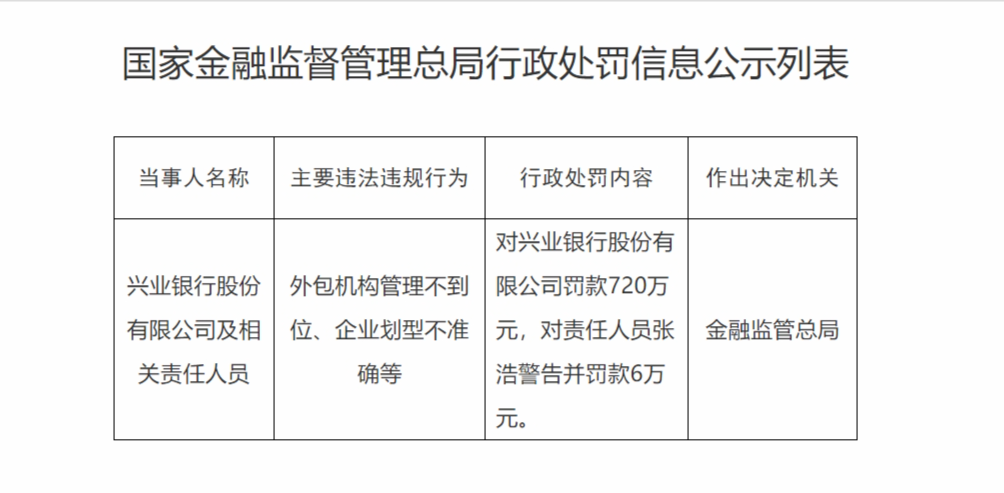
Core Insights - On December 5, three banks, namely Industrial Bank, Huishang Bank, and Chengdu Bank, received regulatory fines totaling over 23 million yuan, highlighting ongoing compliance issues within the banking sector [1][12][13] - The fines reflect a "zero tolerance" approach from regulators towards violations, with each bank facing penalties around 8 million yuan, indicating a strong commitment to rectifying compliance failures [1][12][13] Summary by Category Regulatory Actions - Industrial Bank was fined 7.2 million yuan, with a responsible individual receiving a warning and a 60,000 yuan fine, marking a significant penalty following previous fines for inadequate loan management [1][12][13] - Huishang Bank faced a total of 8.66 million yuan in fines, with violations including improper loan issuance and inadequate post-loan management, indicating deep-rooted governance issues [2][3][12][15] - Chengdu Bank was fined 900,000 yuan, with 15 branches collectively fined 6.35 million yuan, reflecting widespread internal control challenges across its operations [3][4][12][16] Common Violations - "Inadequate loan management" emerged as a common issue among the penalized banks, representing a significant area of regulatory concern within the industry [5][17] - A report indicated that 57.05% of banking violations were related to credit business, with "inadequate loan management" being the most frequent reason for penalties, accounting for 12.99% of cases [5][17] Systemic Issues - The penalties highlight systemic weaknesses in loan management and internal controls across the banking sector, suggesting a misalignment between growth objectives and risk management practices [9][21][23] - The reliance on external institutions for loan management has introduced new compliance risks, as seen in the case of Industrial Bank, which was penalized for inadequate management of external partners [10][22] Regulatory Trends - The regulatory environment is shifting towards more stringent oversight and systemic governance, with a focus on integrating compliance into the core operations of banks [11][23] - Continuous regulatory penalties may not significantly impact the financials of large banks, but the reputational damage and operational restrictions could have long-term implications [11][23]
起存门槛提高利率下调 大额存单为啥突然不香了?
Yang Guang Wang· 2025-12-08 10:12
陆女士表示:"(利率)跟之前比,肯定没得比。我去年9月份存了一笔是(年利率)2.4%,三年 期的是2.4%。今年三年期的只有1.75%了。" 央广网北京12月8日消息(总台中国之声记者王逸群)据中央广播电视总台中国之声报道,五年期 大额存单集体"下架",三年期大额存单门槛上调,长期限存款产品为何"一单难求"?存款利率下行压力 下,普通储户如何配置资产? 近日,"六大国有银行集体下架五年期大额存单"的消息引发关注。不少居民反映,大额存单额度难 抢,利率下调。记者查询多家银行手机银行发现,五年期大额存单产品已经基本退市,部分三年期大额 存单也提高了办理门槛。那么,长期限存款产品越来越难买的背后,都有哪些原因?存款短期化是否会 成为未来趋势?面对存款利率下调,普通居民和银行业应当如何调整? 安徽马鞍山市民陆女士是一名财务人员,一直关注着理财方面的信息。她告诉记者,自己此前曾持 有三年期大额存单,今年到期后本想续存同类产品,却发现市场早已不是当初的模样。 董希淼介绍:"近年来,商业银行净息差明显下滑,通过提高门槛、压缩额度,一定程度上能降低 高成本负债规模,努力维持息差基本稳定。部分银行将稀缺的中长期存款额度,作为服 ...


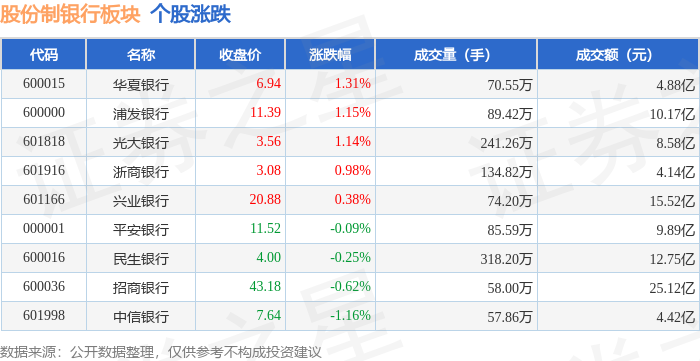
股份制银行板块12月8日涨0%,华夏银行领涨,主力资金净流入1.71亿元
Zheng Xing Xing Ye Ri Bao· 2025-12-08 09:09
Core Viewpoint - The banking sector showed a slight increase on December 8, with the Shanghai Composite Index rising by 0.54% and the Shenzhen Component Index increasing by 1.39% [1] Group 1: Stock Performance - The banking sector rose by 0.0% compared to the previous trading day, with Huaxia Bank leading the gains [1] - Key stock performances include: - Huaxia Bank: Closed at 6.94, up 1.31% with a trading volume of 705,500 shares and a turnover of 488 million [1] - Pudong Development Bank: Closed at 11.39, up 1.15% with a trading volume of 894,200 shares and a turnover of 1.017 billion [1] - Everbright Bank: Closed at 3.56, up 1.14% with a trading volume of 2.4126 million shares and a turnover of 858 million [1] - Other banks showed mixed results, with some experiencing slight declines [1] Group 2: Capital Flow - The banking sector experienced a net inflow of 171 million in main funds, while retail investors saw a net outflow of 1.44 billion [1] - Detailed capital flow for selected banks includes: - China Merchants Bank: Net inflow of 114 million, with a 4.53% share of main funds [2] - Huaxia Bank: Net inflow of 69.04 million, with a 14.13% share of main funds [2] - Minsheng Bank: Net inflow of 65.87 million, with a 5.17% share of main funds [2] - Other banks like Ping An Bank and CITIC Bank experienced net outflows [2]