INDUSTRIAL BANK(601166)

Search documents
【以案说险】990万大额转账暗藏风险 银行多维排查+警银联动成功守护高龄客户资金
Bei Jing Shang Bao· 2025-11-26 09:44
Core Viewpoint - The incident highlights the importance of risk management in banking, showcasing how proactive measures can prevent potential fraud and protect customer funds [1][4]. Group 1: Incident Overview - A customer, Mr. Zhang, attempted to transfer 9.9 million yuan, initially claiming it was for a company equity transfer, but later changed the reason to purchasing property, raising suspicions [2][3]. - Multiple red flags were identified, including the customer's age, the large amount of money, the presence of a non-relative, and inconsistencies in the transaction's purpose [2][3]. Group 2: Risk Management Actions - Bank staff engaged in thorough communication with Mr. Zhang to clarify the transaction details while simultaneously coordinating with local police to assess potential fraud risks [3]. - Upon further investigation, the police advised the bank to suspend all related transactions, which the bank promptly executed, successfully preventing any financial loss [3][4]. Group 3: Commitment to Financial Safety - The successful handling of this case reflects the bank's commitment to prioritizing customer fund safety, demonstrating professional risk signal detection and effective communication [4]. - The bank emphasizes a proactive risk prevention philosophy, particularly for vulnerable groups like elderly customers, ensuring a balance between security and quality service [4].

外汇展业改革参与银行增至26家 三季度工行等4家入列
2 1 Shi Ji Jing Ji Bao Dao· 2025-11-26 07:00
Core Insights - The foreign exchange business reform has been positively received by commercial banks and the public, with 26 banks participating as of September 2025, covering various types of banks across the country [1][2] Group 1: Reform Implementation and Participation - As of September 2025, 26 banks are involved in the foreign exchange business reform, including 5 large banks, 9 joint-stock banks, 4 city commercial banks, and 8 foreign banks [1] - The newly added banks in the third quarter include Industrial and Commercial Bank of China, Deutsche Bank, Mizuho Bank, and Mitsubishi UFJ Financial Group [2] Group 2: Benefits of the Reform - The reform has reduced the burden on enterprises, allowing them to handle foreign exchange transactions more efficiently, with some businesses experiencing a significant reduction in processing time from days to minutes [3] - Banks have improved their customer identification and service capabilities, leading to a reduction in average processing time for transactions by over 50% [3] - The reform has enhanced regulatory quality, with banks establishing risk monitoring systems to better track cross-border transactions and identify abnormal activities early [3] Group 3: Future Directions - The State Administration of Foreign Exchange plans to further enhance the foreign exchange management system, focusing on convenience, openness, security, and intelligence [4] - Future efforts will include expanding the coverage of the reform to benefit more enterprises and integrating various facilitation policies [4] - The application of new technologies such as artificial intelligence and big data will be encouraged to improve efficiency in foreign exchange services [4]



兴业银行将在11月27日晚上进行系统维护升级
Jin Tou Wang· 2025-11-26 03:23
Core Points - Industrial Bank (601166) announced a system maintenance upgrade scheduled for November 27, 2025, from 23:00 to 24:00 Beijing time [1] - During the maintenance period, various services including installment product selection, credit card points redemption, debit card point redemption, and hotel booking services will be temporarily unavailable [1] - Customers are advised to plan their transactions in advance and can contact the bank's 24-hour customer service for assistance [1]
兴业银行济南分行创新消费贷助力民生消费升级
Qi Lu Wan Bao· 2025-11-25 16:17
Core Insights - The article highlights the proactive measures taken by Industrial Bank to enhance consumer loan offerings in response to national policies aimed at expanding domestic demand and improving consumer spending levels [1][2] Group 1: Consumer Loan Innovations - Industrial Bank has introduced several consumer loan innovations, including single-signature loans for married borrowers, flexible borrowing and repayment options, and extended loan terms to address consumer concerns about fund usage and repayment [1] - A case study is presented where a client, facing urgent educational expenses for her child studying abroad, received a loan of 600,000 yuan quickly through the bank's single-signature service, demonstrating the effectiveness of these innovations [1] Group 2: Commitment to Customer-Centric Services - Industrial Bank maintains a customer-centric service philosophy, focusing on addressing pain points in the consumer finance sector and continuously optimizing financial products and service processes [2] - The bank's Jinan branch plans to further innovate in the consumer loan sector, aligning with national policy directions to launch more financial products that meet public needs, thereby contributing to consumption upgrades and high-quality economic development [2]
AIC再开闸,老树新枝更需苦练内功
第一财经· 2025-11-25 15:38
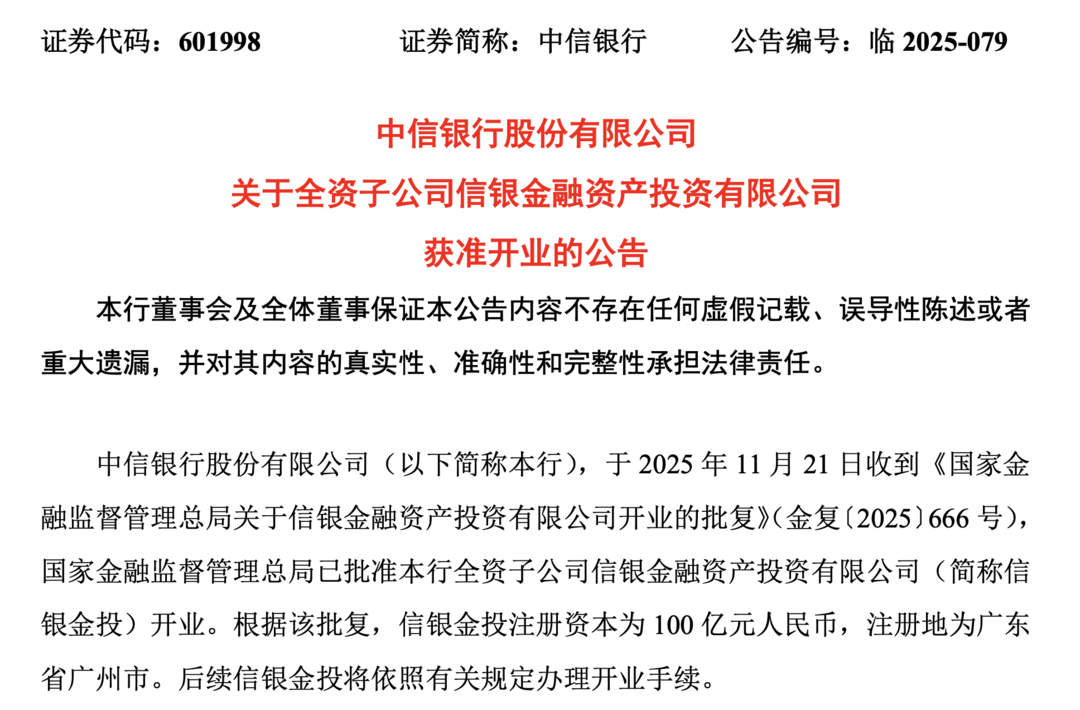
Core Viewpoint - The establishment of Asset Investment Companies (AICs) by banks like Industrial Bank, CITIC Bank, and China Merchants Bank indicates a significant expansion of comprehensive financial operations in China, following regulatory approvals aimed at enhancing the financial ecosystem and supporting troubled enterprises [2][3]. Summary by Sections AIC Establishment and Regulatory Background - The first AIC pilot programs began in 2017 with five major state-owned banks, primarily focusing on debt-to-equity swaps to assist viable but struggling companies in reducing leverage and managing risks [2]. - In 2020, the regulatory framework was expanded to allow AICs to engage in direct equity investments beyond debt-to-equity swaps, with further relaxations announced in 2024 [2]. Performance and Investment Data - As of June 2024, the total assets of the five major AICs reached 586.99 billion yuan, with 156 investment cases completed in 2024, amounting to 57.604 billion yuan [3]. Challenges and Risks - AICs face significant challenges, including limited external financing channels, high risk weights from parent banks, and insufficient research and personnel capabilities [4]. - The banking sector's traditional focus on collateralized loans and scale efficiency may hinder effective risk management in equity investments, raising concerns about the success rates of rapid debt-to-equity transitions [5]. Recommendations for Improvement - To enhance the effectiveness of AICs, it is crucial to develop a governance framework based on direct investment risk characteristics and to improve market transparency [5]. - The establishment of a credit transfer market and the promotion of credit asset securitization are essential for revitalizing credit resources and enabling market-driven pricing of credit assets [6].




高息优先股密集退场 银行优先股投资逻辑生变
Zhong Guo Jing Ying Bao· 2025-11-25 13:12
Core Viewpoint - Recent announcements from multiple commercial banks regarding the redemption of preferred shares indicate a shift in capital management strategies within the banking sector [1][2]. Group 1: Redemption of Preferred Shares - Several banks, including Ping An Bank and Nanjing Bank, have announced plans to redeem preferred shares issued over five years ago, with Ping An Bank set to redeem 200 million shares worth 20 billion yuan by March 2026 and Nanjing Bank planning to redeem 49 million shares worth 4.9 billion yuan by December 2025 [1]. - Since July, at least nine banks, including Industrial and Commercial Bank of China and Bank of Beijing, have disclosed similar redemption plans, creating a notable trend in the market [1]. Group 2: Reasons for Redemption - The high dividend rates set at the time of issuance, combined with declining market interest rates, incentivize banks to redeem high-cost preferred shares and replace them with lower-cost perpetual bonds [2]. - Regulatory changes and the need for banks to optimize their capital structures are also significant factors driving the decision to redeem high-cost preferred shares [2]. Group 3: Capital Management Strategies - The banking sector is transitioning from a focus on scale expansion to a cost-efficiency-centered model, emphasizing the need for banks to balance the redemption of high-interest preferred shares with the issuance of low-cost capital tools [3]. - Banks are adopting more diversified and flexible capital supplement tools, allowing them to respond to market conditions effectively, such as redeeming high-interest preferred shares when interest rates are low [3].




一财社论:AIC再开闸,老树新枝更需苦练内功
Di Yi Cai Jing· 2025-11-25 12:35
兴业银行、中信银行和招商银行AIC的设立,表明试点进一步落地,综合金融运营的尝试取得阶段性成 绩。数据显示,截至2024年6月末,五大AIC资产合计5869.9亿元。清科研究中心的不完全统计数据显 示,2024年全年五大AIC及附属投资机构共完成156起投资案例,投资金额576.04亿元。 银行AIC八年前的破茧,不仅有助于为正规金融机构试点混业综合金融业务提供试点窗口和经验积累, 而且有助于推动银行体系内部存量资产盘活。 长期以来,银行系统面临着存量信贷资产流动性不足和风险揭示不充分等问题,大量信贷资产一经形 成,就主要以银行系统内部估值定价和风险识别为主,其风险矩阵的迁移变动,风险类型和特征是否适 合银行传统的处理方式,都面临着复杂的风险敏感性适应问题。由于国内缺乏大型的信贷转让市场,导 致信贷资产的整个生命周期,要么全程在银行系统内部匹配,要么不良化后剥离出售,束缚了银行的能 动性,也不可避免导致许多本可以在不良化前获得救济的风险资产,未能得到有效的管理和交易。 AIC为银行系统管控存量风险资产提供了新的工具和配置空间,将适合债转股的资产转为股权,有助于 动态完善银行系统内部的风险资产结构;同时有助于改 ...
股份制银行板块11月25日涨1.62%,中信银行领涨,主力资金净流入4.23亿元
Zheng Xing Xing Ye Ri Bao· 2025-11-25 09:09
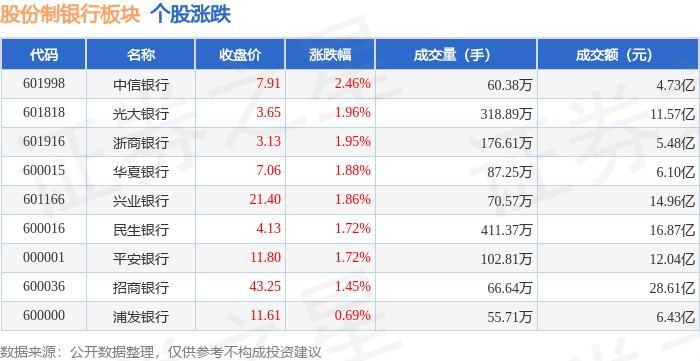
Market Performance - The banking sector saw an increase of 1.62% on November 25, with CITIC Bank leading the gains [1] - The Shanghai Composite Index closed at 3870.02, up 0.87%, while the Shenzhen Component Index closed at 12777.31, up 1.53% [1] Individual Bank Performance - CITIC Bank's closing price was 7.91, with a rise of 2.46% and a trading volume of 603,800 shares, amounting to a transaction value of 473 million [1] - Other notable banks included Everbright Bank, which closed at 3.65 with a 1.96% increase, and Zhejiang Commercial Bank, which closed at 3.13, up 1.95% [1] Fund Flow Analysis - The banking sector experienced a net inflow of 423 million from main funds, while retail funds saw a net outflow of 149 million [1] - Main fund inflows were led by Ping An Bank with 159 million, while CITIC Bank had a main fund inflow of 81.6 million [2] Detailed Fund Flow for Individual Banks - Ping An Bank had a main fund inflow of 159 million, but retail funds saw a net outflow of 23.58 million [2] - CITIC Bank's main fund inflow was 81.6 million, with retail funds experiencing a net outflow of 39.91 million [2] - Everbright Bank had a main fund inflow of 18.28 million, while retail funds saw a significant outflow of 78.13 million [2]

四川省首笔|兴业银行成都分行支持全省首个再生资源碳减排项目开发成功
Zhong Guo Jin Rong Xin Xi Wang· 2025-11-25 08:01
Core Viewpoint - The article highlights the successful implementation of carbon reduction projects in Sichuan, emphasizing the role of financial institutions like Industrial Bank Chengdu Branch in supporting sustainable development and carbon neutrality initiatives [1][4]. Group 1: Carbon Reduction Projects - Sichuan has fully implemented the new development concept and actively promoted carbon peak and carbon neutrality goals, with the support of financial institutions [1]. - Sichuan Yingu Carbon Sink Recycling Resource Co., Ltd. has successfully developed the first carbon reduction project in the province, achieving over 120,000 tons of CDCER issuance [1][3]. - The company has established a recycling system for waste materials and has been recognized as a pilot enterprise for the "Recycling System of Recycled Resources" by the Ministry of Commerce [3]. Group 2: Financial Support and Innovation - Industrial Bank Chengdu Branch has provided a loan of 4 million yuan to support the "Carbon Benefit Tianfu" mechanism carbon reduction project, demonstrating its commitment to green finance [1][4]. - The bank has developed customized financial service plans linked to the success of carbon reduction projects, offering interest rate reductions upon successful project completion [3]. - The Chengdu Branch has introduced various innovative financial products, including "carbon footprint" loans and regional carbon rights pledge loans, to support carbon neutrality goals [4]. Group 3: Commitment to Sustainable Development - The company plans to donate 80,000 tons of carbon reduction to support the carbon neutrality initiative for the Chengdu World Universiade [4]. - Industrial Bank Chengdu Branch is recognized as a pioneer in green finance, actively promoting sustainable development and contributing to the "Beautiful China" initiative [4].

三家股份制银行AIC获批开业 能否破解科创企业融资难题?
Sou Hu Cai Jing· 2025-11-25 06:46
Core Viewpoint - The establishment of financial asset investment companies (AICs) by several joint-stock banks marks a significant expansion in China's banking sector, aimed at enhancing capital flow to technology innovation enterprises and optimizing financing structures [9][10][13]. Group 1: Recent Developments - Three joint-stock banks, including CITIC Bank, China Merchants Bank, and Industrial Bank, have recently received approval to establish their AICs, with registered capitals of 10 billion RMB for CITIC and Industrial Banks, and 15 billion RMB for China Merchants Bank [1][3][11]. - The establishment of these AICs is seen as a strategic move to support the development of technology finance and enhance the banks' comprehensive operational capabilities [13][14]. Group 2: Purpose and Function of AICs - AICs are designed to facilitate market-oriented debt-to-equity swaps, primarily aimed at helping enterprises reduce leverage and improve capital structures [9][10]. - The initial focus of AICs was on managing non-performing assets, but they are now evolving into market-driven asset management and investment institutions [10][12]. Group 3: Trends and Future Directions - The regulatory framework for AICs has expanded, allowing for broader investment activities beyond debt-to-equity swaps, including equity investments and corporate restructuring [10][12]. - The approval of AICs from joint-stock banks signifies a shift in the competitive landscape from state-owned banks to a more diversified banking system, enhancing the efficiency of financial resource allocation [14]. Group 4: Impact on Technology and Innovation - AICs are increasingly positioned as long-term capital providers for technology innovation, with a focus on sectors such as semiconductors, new energy, and high-end equipment [15][16]. - The combination of debt-to-equity swaps and equity investments allows AICs to offer comprehensive financial services to technology enterprises, addressing their unique financing challenges [15][16].