PING AN OF CHINA(601318)

Search documents
「数据看盘」平潭发展龙虎榜现外资与量化博弈 多家实力游资集体出逃华人健康
Sou Hu Cai Jing· 2025-12-19 10:08
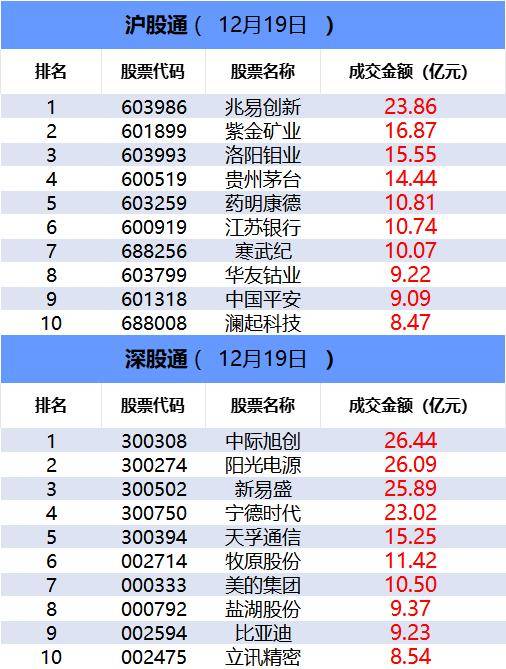
Group 1: Market Overview - The total trading amount for the Shanghai Stock Connect was 940.49 billion, while the Shenzhen Stock Connect reached 1,048.92 billion [2] - The top traded stocks on the Shanghai Stock Connect included Zhaoyi Innovation with 23.86 billion, followed by Sanfang Qianhe and Luoyang Copper with 16.87 billion and 15.55 billion respectively [3] - On the Shenzhen Stock Connect, the leading stock was Zhongji Xuchuang with 26.44 billion, followed by Sunshine Power and New Yisheng with 26.09 billion and 25.89 billion respectively [3] Group 2: Sector Performance - Sectors such as Hainan, dairy, and retail showed significant gains, while precious metals and semiconductors experienced declines [4] - The mechanical equipment sector led in net inflow of funds with 38.67 billion, followed by non-ferrous metals and transportation equipment with 35.32 billion and 31.28 billion respectively [5] - The electronic sector had the highest net outflow of funds at -57.70 billion, followed by semiconductors and pharmaceuticals with -30.20 billion and -17.73 billion respectively [6] Group 3: Individual Stock Activity - The top stocks with net inflow included Xue Ren Group with 13.84 billion, followed by N Youxun and Shanzi Gaoke with 13.69 billion and 10.55 billion respectively [7] - The stocks with the highest net outflow were Meinian Health at -9.05 billion, followed by Shenwei Electronics and C Muxi-U with -6.98 billion and -6.81 billion respectively [8] Group 4: ETF Trading - The top ETFs by trading amount included A500 ETF Huatai Baichuan with 133.655 billion, and Hong Kong Securities ETF with 104.353 billion, showing increases of 7.50% and 18.61% respectively [9] - The ETFs with the highest growth in trading amount compared to the previous trading day included Hengsheng Dividend Low Volatility ETF with 183.92% increase and Industrial Nonferrous ETF with 140.82% increase [10] Group 5: Futures Market - In the futures market, all four major index contracts (IH, IF, IC, IM) saw both long and short positions increase, with IF and IM contracts showing a higher number of short position increases [11] Group 6: Institutional and Retail Activity - Institutional activity showed a decrease compared to the previous day, with notable purchases in Aerospace Intelligence and Shanzi Gaoke, while significant sales were observed in Meinian Health and Xue Ren Group [12][13] - Retail investors were active, with significant buying in Xue Ren Group and Shanzi Gaoke, while selling was noted in Huaren Health and other stocks [14][15]





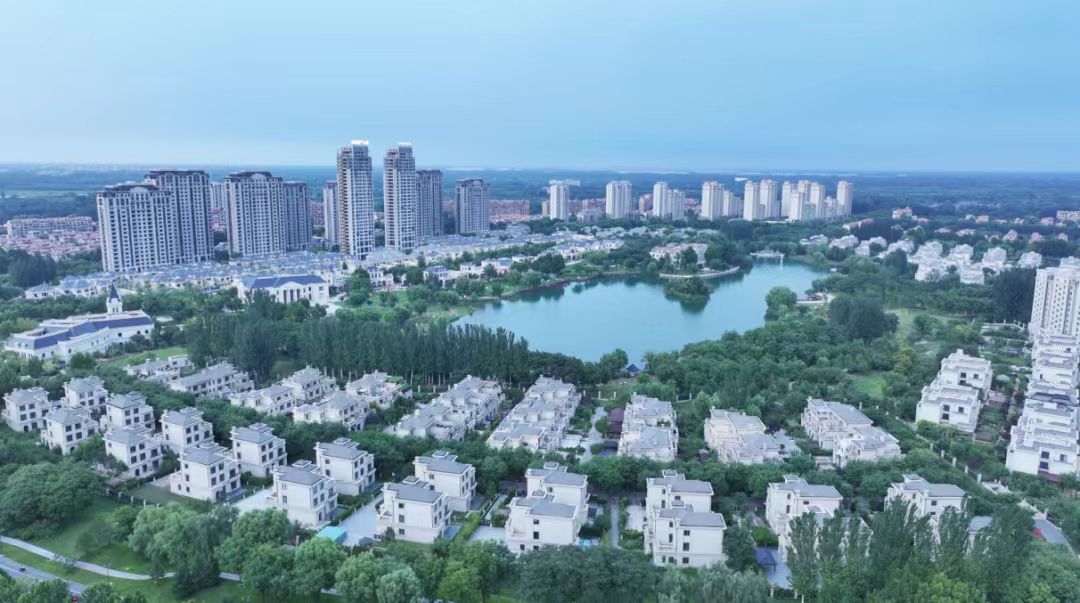
中国天楹:中国平安人寿保险股份有限公司及其一致行动人持股比例已降至8.00%

2 1 Shi Ji Jing Ji Bao Dao· 2025-12-19 09:58
Core Viewpoint - China Tianying announced that its shareholder, China Ping An Life Insurance Co., Ltd., along with its concerted parties, reduced their stake in the company by 17.39 million shares, representing 0.73% of the total share capital, from 8.73% to 8.00% [1] Group 1 - The share reduction occurred between December 12 and December 18, 2025, through centralized bidding [1] - The reduction in shareholding will not lead to a change in the company's control or governance structure [1] - The parties involved in the share reduction are not the controlling shareholders or actual controllers of the company [1]
87股连续5日或5日以上获融资净买入
Zheng Quan Shi Bao Wang· 2025-12-19 03:11
Core Viewpoint - As of December 18, a total of 87 stocks in the Shanghai and Shenzhen markets have experienced net financing inflows for five consecutive days or more, indicating strong investor interest in these stocks [1] Group 1: Stocks with Longest Net Inflows - The stocks with the longest consecutive net inflows are AVIC Jonhon Optronic Technology and Liyuan Heng, both achieving net inflows for 11 consecutive trading days [1] - Other notable stocks with significant net inflows include China Ping An, Shengmei Shanghai, Chuangzhong Technology, Changchun High-tech, Trina Solar, Aerospace Electric, Nocera Health, and China Shipbuilding Special Gas [1]


平安诉华夏幸福案因“审理方式和管辖权待明确”暂缓
Xin Lang Cai Jing· 2025-12-19 02:00
智通财经记者 | 李香才 12月17日,上海金融法院开庭审理了备受资本市场关注的"平安诉华夏幸福案"。 柏文喜进一步分析说:"案件一旦进入实体审理,华夏幸福将直面仲裁协议效力之争;若被认定无效,平安即可通过法院诉讼快速查封资产、公开裁判, 对华夏幸福声誉和重整计划造成二次冲击。先用程序异议把节奏慢下来,可为其争取谈判时间或重整窗口 。" 时间回溯到2018年,平安人寿受让华夏幸福19.7%股份,本次受让后平安人寿及其一致行动人平安资管受托管理资金共持有华夏幸福19.88%股份。对于此 次收购,平安人寿当时表示,主要基于看好华夏幸福未来长期发展潜力,以获得稳定的股息分红,分享长期价值投资收益。 彼时,华夏控股向平安人寿、平安资管承诺,华夏幸福2018、2019、2020年度归属于上市公司股东的净利润分别不低于114.15亿元、144.88亿元、180.01 亿元。如上市公司前述任一会计年度实际净利润小于承诺净利润的95%,则华夏控股应予补偿。 华夏幸福2018年和2019年达成业绩承诺,不过,2020年则相差甚远,因此触发补偿条款。 中国平安人寿保险股份有限公司、 平安资产管理有限责任公司作为原告,华夏幸福基业 ...

两融余额较上一日减少34.80亿元 电子行业获融资净买入额居首
Sou Hu Cai Jing· 2025-12-19 01:48
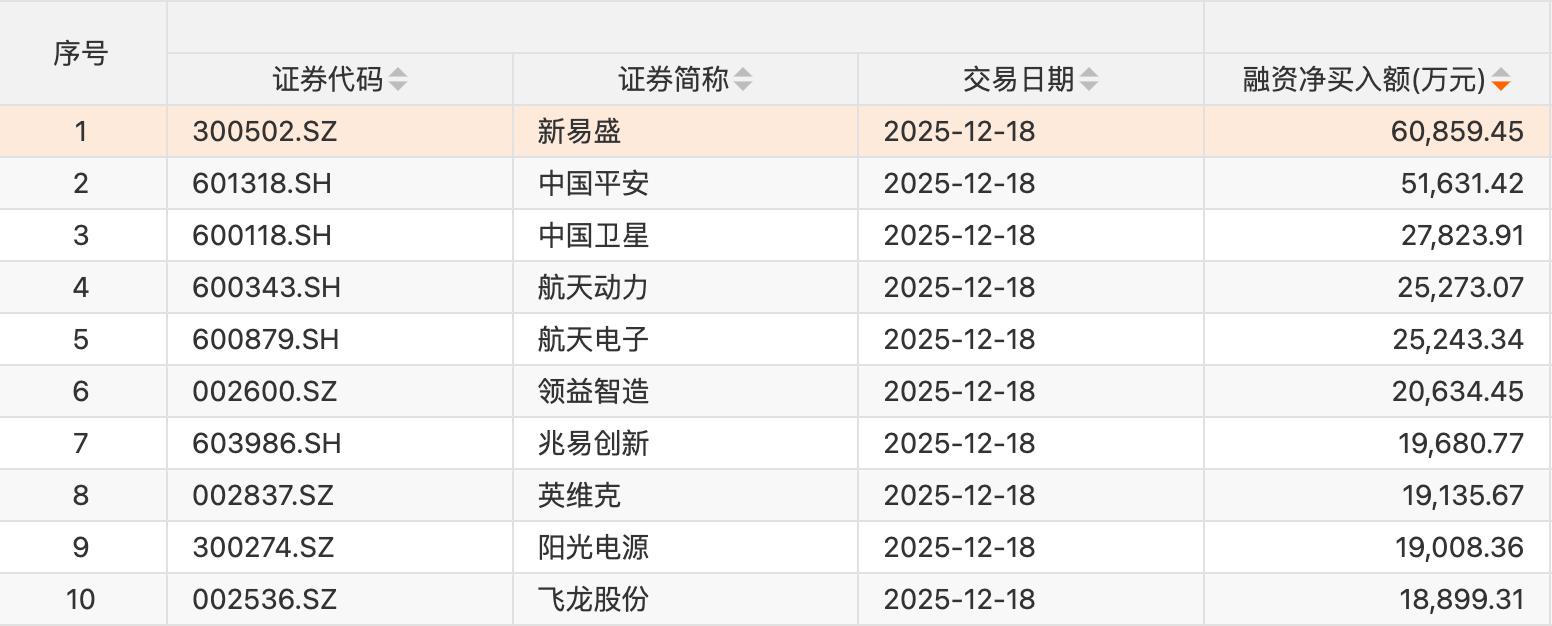
| 序号 | | | | | --- | --- | --- | --- | | | 证券代码 ◆ | 证券简称 ◆ | 交易日期 ◆ | | 1 | 300502.SZ | 新易盛 | 2025-12-18 | | 2 | 601318.SH | 中国平安 | 2025-12-18 | | 3 | 600118.SH | 中国卫星 | 2025-12-18 | | ব | 600343.SH | 航天动力 | 2025-12-18 | | 5 | 600879.SH | 航天电子 | 2025-12-18 | | 6 | 002600.SZ | 领益智造 | 2025-12-18 | | 7 | 603986.SH | 兆易创新 | 2025-12-18 | | 8 | 002837.SZ | 英维克 | 2025-12-18 | | 9 | 300274.SZ | 阳光电源 | 2025-12-18 | | 10 | 002536.SZ | 飞龙股份 | 2025-12-18 | 资金流向方面,申万31个一级行业中有14个行业获融资净买入,其中,电子行业获融资净买入额居首,当日净买入17.28亿元;获融资 ...


保险股价值重估 资产负债两端持续优化
Zhong Guo Zheng Quan Bao· 2025-12-19 01:44
Core Viewpoint - The insurance sector is experiencing a valuation recovery, driven by policy support and increasing consumer demand for health and wealth protection, with major companies like China Pacific Insurance, New China Life, and China Life seeing significant stock price increases, and China Ping An reaching a four-year high [1][2]. Policy Support - The strong rebound in the insurance sector is initiated by policy support, specifically the recent adjustment of risk factors for insurance companies' investment in stocks, which reduces capital occupation and enhances solvency ratios [2]. - The policy encourages insurance funds to invest in a stable and long-term manner, with a focus on holding positions for over three years, which is seen as a timely boost for the market [2]. - If insurance capital reallocates to equity assets, it could potentially unlock 550 billion to 600 billion yuan in long-term funds by 2026 [2]. Consumer Demand Shift - A report by Accenture indicates a structural shift in consumer focus towards health and wealth, with health concern rising from 78% in 2021 to 87% in 2025, and wealth concern increasing from 47% to 61% [4]. - This shift translates into a rigid demand for insurance products, with a notable preference for protection-oriented products such as dividend insurance, health insurance, and million medical insurance [4]. - Companies like China Ping An and China Pacific Insurance are adapting to these changes, with significant growth in their health insurance segments and overall profitability [4][5]. Valuation Recovery Logic - The insurance sector is expected to enter a golden development period, with investment logic shifting from "valuation repair of existing business" to "growth capability valuation premium," highlighting the advantages of leading companies [7]. - By 2026, the total assets of the insurance industry are projected to exceed 45 trillion yuan, with equity investment scale reaching 6 trillion yuan, making it a significant source of long-term capital in the A-share market [7]. - China Ping An is anticipated to lead the market due to its comprehensive industry chain layout, product innovation, and technological empowerment, with target prices being raised by multiple institutions [7].


资金风向标|两融余额较上一日减少34.80亿元 电子行业获融资净买入额居首
Sou Hu Cai Jing· 2025-12-19 01:42
截至12月18日,A股两融余额为24993.66亿元,较上一交易日减少34.80亿元,占A股流通市值比例为2.61%。当日两融交易额为1718.86亿元,较上一交易日 减少134.06亿元,占A股成交额的10.23%。 上证报中国证券网讯(刘禹希 记者 徐蔚)截至12月18日,A股两融余额为24993.66亿元,较上一交易日减少34.80亿元,占A股流通市值比例为2.61%。当日 两融交易额为1718.86亿元,较上一交易日减少134.06亿元,占A股成交额的10.23%。 资金流向方面,申万31个一级行业中有14个行业获融资净买入,其中,电子行业获融资净买入额居首,当日净买入17.28亿元;获融资净买入居前的行业还 有国防军工、机械设备、通信、电力设备、非银金融等。 个股方面,29只个股获融资净买入额超1亿元。新易盛获融资净买入额居首,净买入6.09亿元;融资净买入金额居前的还有中国平安、中国卫星、航天动 力、航天电子、领益智造、兆易创新、英维克、阳光电源、飞龙股份等。 | 序号 | 证券代码 ◆ | 证券简称 ◆ | 交易日期 ◆ | | --- | --- | --- | --- | | 1 | 300 ...



两融余额三连降,累计减少63.04亿元
Zheng Quan Shi Bao Wang· 2025-12-19 01:41
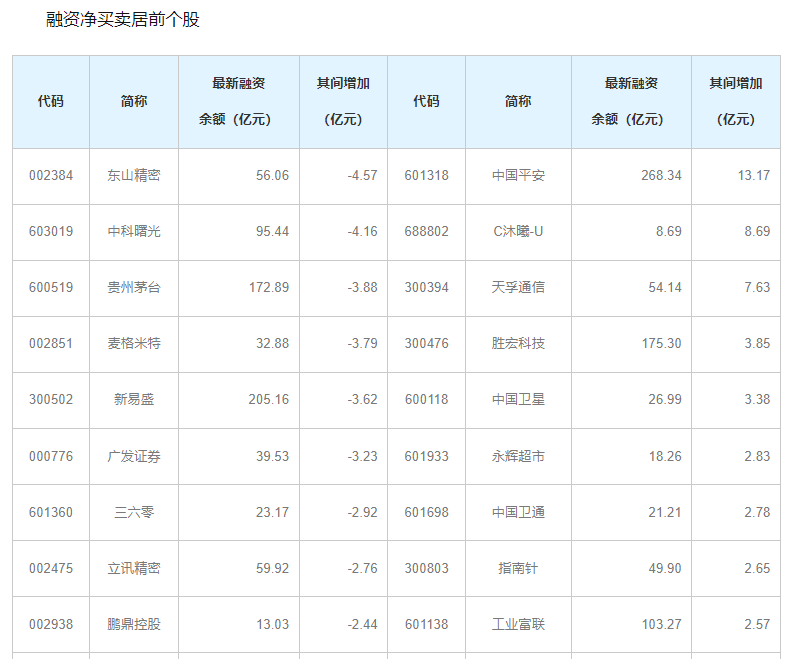
Summary of Key Points Core Viewpoint - As of December 18, the margin financing balance in the Shanghai and Shenzhen markets decreased to 24,993.66 billion yuan, marking a reduction of 34.80 billion yuan from the previous trading day, continuing a downward trend for three consecutive trading days with a total decrease of 63.04 billion yuan [1] Group 1: Margin Financing Decrease - The largest decrease in margin financing balance was observed in Dongshan Precision (002384), which saw a reduction of 4.57 billion yuan [2] - Other notable decreases in margin financing included Zhongke Shuguang (603019) with a reduction of 4.16 billion yuan and Kweichow Moutai (600519) with a decrease of 3.88 billion yuan [1][2] Group 2: Margin Financing Increase - In contrast, the stocks with the largest increases in margin financing were China Ping An (601318), which increased by 13.17 billion yuan, followed by C Muxi-U (688802) with an increase of 8.69 billion yuan, and Tianfu Communication (300394) with an increase of 7.63 billion yuan [1][2]




保险股价值重估!资产负债两端持续优化
Zhong Guo Zheng Quan Bao· 2025-12-18 23:36
Group 1 - The insurance sector is experiencing a valuation recovery, with stocks like China Pacific Insurance, New China Life Insurance, and China Life Insurance seeing significant increases, while China Ping An's stock price has reached a four-year high [1] - The release of substantial new capital and the growing consumer demand for health and wealth protection are expected to optimize the assets and liabilities of leading insurance companies, indicating a shift into a value reassessment cycle for insurance stocks [1] Group 2 - The strong rebound in the insurance sector is driven by policy support, including a recent adjustment by the Financial Regulatory Administration that lowers the risk factors for insurance companies investing in stocks, thereby enhancing their solvency ratios and expanding investment limits [3] - The policy encourages insurance funds to adopt a long-term investment strategy, with a potential influx of 550 billion to 600 billion yuan in long-term capital into the market by 2026 if insurance capital is fully allocated to equity assets [3][4] Group 3 - A recent report by Accenture indicates a structural shift in consumer focus towards health and wealth, with health concern levels rising from 78% in 2021 to 87% in 2025, and wealth concern levels increasing from 47% to 61%, driving demand for insurance products [6] - The preference for protection-oriented products has surged, with significant growth in dividend insurance, health insurance, and million medical insurance, contributing to a robust increase in new business value for companies like China Ping An [6] Group 4 - The investment logic for insurance stocks is shifting from "valuation repair of existing business" to "growth capability valuation premium," with leading companies expected to see their valuation advantages further highlighted [8] - By 2026, the total assets of the insurance industry are projected to exceed 45 trillion yuan, with equity investment scale reaching 6 trillion yuan, positioning the insurance sector as a significant source of long-term capital in the A-share market [8]
股票市场概览:资讯日报:大型科技股拖累标普500指数四连跌-20251218
Guoxin Securities Hongkong· 2025-12-18 13:17
Market Overview - The S&P 500 index has experienced four consecutive declines, primarily driven by large technology stocks[1] - Major U.S. indices collectively fell, with the Nasdaq down nearly 2%[9] - The S&P 500 closed at 6,800, reflecting a decline of 1.16% for the day and a year-to-date increase of 14.28%[3] Hong Kong Market Performance - The Hong Kong stock market showed a significant recovery in the afternoon, with major indices rebounding after two consecutive days of decline[9] - Large technology stocks such as Meituan and Kuaishou rose nearly 2%, while Tencent and Alibaba increased over 1%[9] - The financial sector saw a collective rise, with China Life Insurance up over 4% and CITIC Securities up over 3%[9] Sector Highlights - Precious metals stocks strengthened, with China Silver Group rising over 7% due to a weaker dollar and expectations of interest rate cuts, pushing silver prices above $66 per ounce[9] - The aviation sector saw gains, with China Southern Airlines up over 5% as ticket bookings surged ahead of the New Year holiday[9] - The lithium battery sector also rose, driven by a significant increase in lithium carbonate futures prices, with Tianqi Lithium up 5.83%[9] Economic Indicators - Japan's November exports grew by 6.1% year-on-year, exceeding market expectations, with a trade surplus of 322.2 billion yen[13] - The U.S. Treasury yields have shown fluctuations, impacting market sentiment and investment strategies[18]