
BANK COMM(601328)

Search documents
六大国有行日赚38亿!最新披露
Nan Fang Du Shi Bao· 2025-09-02 04:53
Core Insights - The six major state-owned banks in China reported mixed performance in their mid-year results for 2025, with total assets exceeding 200 trillion yuan and a combined net profit of 693.9 billion yuan, averaging a daily profit of 3.8 billion yuan [1][4]. Financial Performance - All six banks achieved revenue growth year-on-year, with China Bank leading at 3.76% and Construction Bank following at 2.15%, while net profit showed a "three up, three down" trend [2][3]. - Agricultural Bank recorded the highest net profit growth at 2.53%, while Industrial and Commercial Bank, Construction Bank, and China Bank experienced declines in net profit ranging from -1% to -2% [2][3]. Asset Quality and Risk Management - By the end of June 2025, the non-performing loan (NPL) ratio for the six banks decreased, with Postal Savings Bank being the only bank to see an increase, maintaining the lowest NPL ratio at 0.92% [9][10]. - The provision coverage ratio for non-performing loans varied, with China Bank's ratio falling below 200%, while Agricultural Bank maintained the highest at 295% [11][12]. Capital Adequacy and Dividends - The core Tier 1 capital adequacy ratio showed mixed results, with three banks increasing their ratios and three decreasing, while all banks maintained a ratio above 10% [12][13]. - The six banks proposed a total interim dividend of 204.66 billion yuan, with each bank distributing 30% of their net profit as cash dividends [12][14]. Interest Margin and Fee Income - The net interest margin continued to decline across the banks, with Postal Savings Bank having the highest margin at 1.7%, despite a year-on-year decrease [5][6]. - Fee and commission income showed growth for four banks, with Postal Savings Bank leading at an increase of 11.59%, while Industrial and Commercial Bank and Construction Bank saw declines [7].




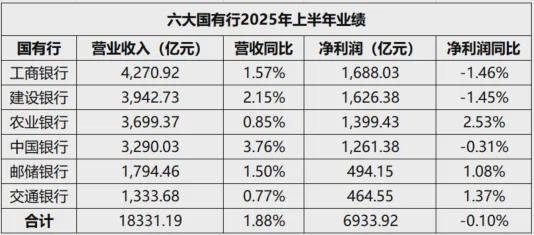
六大行推出超2046亿元大手笔分红计划 有助于强化投资者信心
Jin Rong Shi Bao· 2025-09-02 04:04
Core Viewpoint - The six major state-owned banks in China announced a total cash dividend of 204.657 billion yuan for the first half of 2025, reflecting strong financial performance and a commitment to shareholder returns [1] Group 1: Dividend Announcements - Industrial and Commercial Bank of China (ICBC) plans to distribute 1.414 yuan per share, totaling approximately 50.396 billion yuan, leading the dividend payouts among listed banks [1] - Agricultural Bank of China, Bank of China, China Construction Bank, Bank of Communications, and Postal Savings Bank of China have proposed interim dividend amounts of 41.823 billion yuan, 35.25 billion yuan, 48.605 billion yuan, 13.811 billion yuan, and 14.772 billion yuan respectively [1][2] - Postal Savings Bank has maintained a stable dividend payout ratio of 30% since 2018, with a total dividend exceeding 170 billion yuan since its H-share listing [2] Group 2: Market Performance and Investor Sentiment - As of August 29, 2025, the stock prices of major banks have shown significant fluctuations, with ICBC up 11.18% and Agricultural Bank up 37.37% year-to-date [3] - The overall market sentiment has improved due to favorable policies, shifting investor preference from defensive sectors to growth sectors [3][4] - Experts believe that the stable dividend policy reflects banks' confidence in their profitability and capital adequacy, which is expected to attract long-term investments [4] Group 3: Financial Health and Regulatory Environment - The capital adequacy ratio of the six major banks is generally above 13%, providing a safety net for dividend distributions [4] - Regulatory encouragement for banks to enhance dividend stability aims to create a predictable return for investors, particularly appealing to long-term funds like insurance and pension funds [4]



国企红利ETF(159515)最新规模创近1月新高!机构:红利资产仍具价值
Sou Hu Cai Jing· 2025-09-02 03:40
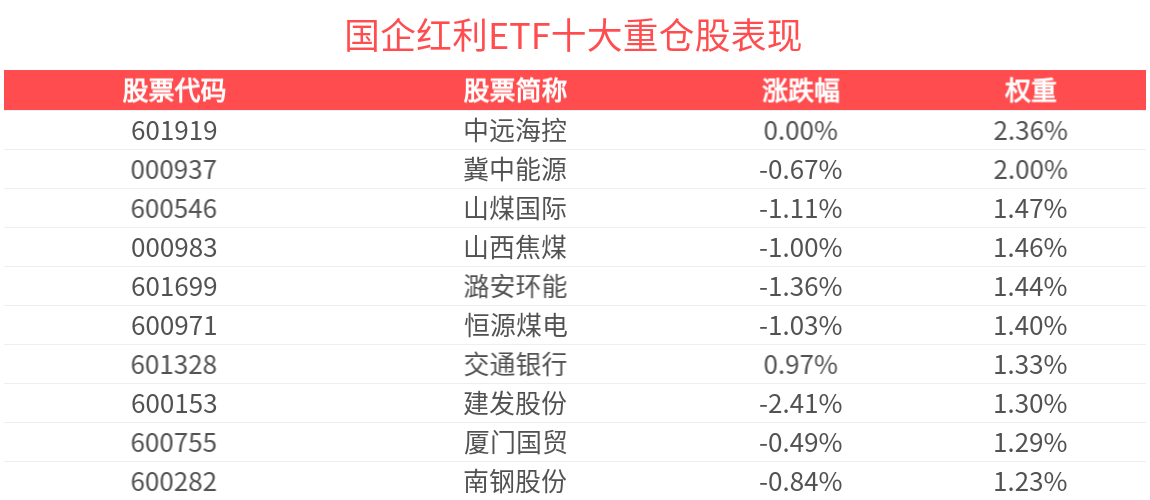
Group 1 - The China Securities State-Owned Enterprises Dividend Index (000824) decreased by 0.38% as of September 2, 2025, with mixed performance among constituent stocks [1] - The top-performing stocks included Chongqing Rural Commercial Bank (601077) up by 3.45%, Shanghai Rural Commercial Bank (601825) up by 2.97%, and China Merchants Bank (600036) up by 2.22% [1] - The National Enterprise Dividend ETF (159515) was adjusted downwards, with the latest price at 1.14 yuan [1] Group 2 - The National Enterprise Dividend ETF reached a new high in size at 51.2135 million yuan and a new high in shares at 44.7866 million shares in the past month [1] - China Galaxy Securities predicts a volatile upward trend in the A-share market, emphasizing the appeal of dividend assets with high safety margins and low valuations in the current market environment [1] - Everbright Securities highlights the irreplaceable value of dividend assets as core assets in the A-share market, especially with many companies implementing profit distribution plans for the 2024 fiscal year [1] Group 3 - The China Securities State-Owned Enterprises Dividend Index includes 100 listed companies selected for high cash dividend yields, stable dividends, and certain scale and liquidity [2] - As of August 29, 2025, the top ten weighted stocks in the index accounted for 16.84% of the total index weight, with China COSCO Shipping Holdings (601919) being the highest at 2.36% [2][4]



六大行推出超2046亿元大手笔分红计划
Jin Rong Shi Bao· 2025-09-02 03:06
Core Viewpoint - The six major state-owned banks in China announced their mid-term dividend plans for 2025, with a total cash dividend amounting to 204.657 billion yuan, reflecting strong financial performance and a commitment to shareholder returns [1][2]. Group 1: Dividend Announcements - Industrial and Commercial Bank of China (ICBC) plans to distribute 1.414 yuan per share (including tax), totaling approximately 50.396 billion yuan, leading the dividend payouts among listed banks [1]. - Agricultural Bank of China, Bank of China, China Construction Bank, Bank of Communications, and Postal Savings Bank of China have proposed mid-term dividend amounts of 41.823 billion yuan, 35.25 billion yuan, 48.605 billion yuan, 13.811 billion yuan, and 14.772 billion yuan, respectively [1]. - Postal Savings Bank has maintained a stable dividend payout ratio of 30% since 2018, with cumulative dividends exceeding 170 billion yuan since its H-share listing [2]. Group 2: Market Performance and Investor Sentiment - The stock prices of listed banks have generally reached new highs this year, followed by some fluctuations. As of August 29, 2025, ICBC's stock has increased by 11.18%, while Agricultural Bank's stock has surged by 37.37% [3]. - Market sentiment has improved due to favorable policies, shifting investor preference from defensive sectors to growth sectors, indicating a potential for renewed interest in bank stocks [3][4]. - Experts believe that the stable dividend payout ratios around 30% reflect the banks' confidence in their profitability and capital adequacy, which is supported by a capital adequacy ratio above 13% for the six major banks [4]. Group 3: Implications for Future Investments - The high dividend payouts are seen as a strategy to attract long-term investments from insurance funds and pension funds, positioning bank stocks as scarce "safe-haven assets" in a low-interest-rate environment [4]. - The mid-term dividend plans are viewed as a response to policy guidance and a means to enhance investor confidence, which could positively impact stock prices [4].
六大行上半年经营业绩稳健
Jin Rong Shi Bao· 2025-09-02 03:06
Core Insights - The six major state-owned banks in China reported a combined net profit of 682.5 billion yuan for the first half of 2025, with total assets exceeding 214 trillion yuan as of June 30 [1][2] - The banks demonstrated steady growth in asset quality and capital adequacy, with non-performing loan ratios remaining low [4][6] Group 1: Financial Performance - The six banks collectively achieved over 1.8 trillion yuan in operating income, with core indicators such as annualized return on assets (ROA) and return on equity (ROE) showing positive trends [2] - Agricultural Bank, Postal Savings Bank, and Transportation Bank reported positive growth in both operating income and net profit, with net profit growth rates exceeding 1% [2] - Industrial and Commercial Bank achieved operating income of 409.08 billion yuan and net profit of 168.80 billion yuan, with ROA and ROE at 0.67% and 8.82% respectively [2] Group 2: Fee and Commission Income - China Bank and Construction Bank saw significant increases in fee and commission income, with China Bank's net fee income growing by 9.17% year-on-year [3] - Construction Bank reported operating income of 385.90 billion yuan, with net fee and commission income increasing by 4.02% [3] Group 3: Asset Quality - The non-performing loan ratios for the six banks remained low, with Industrial and Commercial Bank and Construction Bank both at 1.33%, showing a year-on-year decrease [4] - Capital adequacy ratios for the banks were robust, with Industrial and Commercial Bank at 19.54% and Agricultural Bank at 17.45% [4] Group 4: Risk Management - The banks have strengthened credit risk management, particularly in real estate and personal loan sectors, while also enhancing their risk control measures [5][6] - The provision coverage ratios were substantial, with Industrial and Commercial Bank at 217.71%, indicating strong risk absorption capacity [6] Group 5: Support for the Real Economy - The banks continued to support the real economy with reasonable credit allocation, focusing on key areas and sectors [7][8] - Agricultural Bank reported significant growth in loans for rural industries and construction, with balances of 2.70 trillion yuan and 2.44 trillion yuan respectively [7] - China Bank's loans for strategic emerging industries grew by 22.92%, while Construction Bank supported technology innovation with loans increasing by 16.81% [8]
上海超20家银行调整房贷利率
3 6 Ke· 2025-09-02 02:06
Core Viewpoint - Major banks in Shanghai have announced adjustments to housing loan interest rates, eliminating the distinction between first and second home loans, which is expected to stimulate demand in the real estate market [1][2][11]. Group 1: Policy Changes - Over 20 banks, including major institutions like ICBC and Bank of China, have issued announcements regarding the adjustment of second home loan interest rates, allowing eligible existing loans to be adjusted as well [1]. - From September 1, 2025, personal housing loan interest rates in Shanghai will no longer differentiate between first and second homes, aligning with the market interest rate pricing mechanism [2][11]. - The adjustment follows the announcement made on August 25, which aimed to optimize the city's real estate policies [2]. Group 2: Interest Rate Details - Prior to the adjustment, the lower limit for first home loan rates was 3.05%, while second home rates varied by region [5]. - After the adjustment, the interest rate structure will be determined based on market conditions and the bank's operational status, with no distinction between first and second homes [2][6]. - Eligible existing loans can be adjusted if their interest rate add-on exceeds the average add-on of newly issued loans by 30 basis points [8][10]. Group 3: Market Impact - The adjustments are seen as beneficial for customers looking to improve their housing situation, particularly in the upcoming "Golden September and Silver October" sales period [11][12]. - Data indicates a seasonal decline in Shanghai's real estate market, with new supply and transaction volumes decreasing in August, but the adjustments are expected to boost market confidence and activity in September and October [11][13]. - The anticipated increase in new and second-hand housing transactions is expected to reverse the current downward trend in the market [14].
交通银行(601328):营收向上改善,资产进一步提质
Tianfeng Securities· 2025-09-02 01:14
Investment Rating - The report maintains a "Buy" rating for the company [6][9]. Core Views - The company has shown signs of revenue improvement with a year-on-year increase of 0.77% in revenue and 1.61% in net profit attributable to shareholders for the first half of 2025 [2][6]. - Non-interest income has contributed positively to the revenue growth, indicating a potential upward trend in earnings [2][14]. - The asset quality has further improved, with a decrease in the non-performing loan ratio to 1.28% and an increase in the provision coverage ratio to 209.6% [5][29]. Financial Performance Summary - Revenue for the first half of 2025 was approximately 133.368 billion yuan, with net interest income accounting for 63.92% of total revenue [2][14]. - The net interest margin recorded was 1.21%, slightly down by 2 basis points from the previous quarter [17]. - The total interest-earning assets reached 14.92 trillion yuan, reflecting a year-on-year growth of 9.12% [4][24]. Asset and Liability Analysis - The total interest-bearing liabilities amounted to 12.04 trillion yuan, showing a year-on-year increase of 6.05% [4][28]. - The structure of interest-bearing liabilities indicates a significant reliance on deposits, which accounted for 74.78% of total liabilities [4][28]. - The company has seen a notable improvement in the cost of interest-bearing liabilities, with the average cost rate for deposits decreasing to 1.85% [3][17]. Non-Interest Income and Fee-Based Revenue - Non-interest income for the first half of 2025 was 48.121 billion yuan, with a slight year-on-year increase of 0.02% [2][23]. - The net fee and commission income was 20.458 billion yuan, reflecting a decrease of 2.58% year-on-year [3][23]. - Investment income decreased by 13.83% year-on-year, contributing 8.99% to total revenue [3][23]. Asset Quality and Provisioning - The non-performing loan ratio improved to 1.28%, with a provision coverage ratio of 209.6% [5][29]. - The company has increased its loan provision ratio to 2.68%, indicating a proactive approach to managing credit risk [5][29]. - The overall asset quality has shown resilience, with significant improvements in various sectors, particularly in corporate loans [30][31].
消费贷“国补”这几点要注意
Ren Min Ri Bao· 2025-09-01 23:58
Core Points - The new personal consumption loan interest subsidy policy is effective from September 1 this year to August 31 next year, offering a subsidy rate of 1% per annum, with a maximum subsidy not exceeding 50% of the loan contract interest rate [1] - The total subsidy cap for each borrower at one lending institution is set at 3,000 yuan, corresponding to a cumulative consumption amount of 300,000 yuan, with a specific cap of 1,000 yuan for single loans below 50,000 yuan [1] - The average personal consumption loan interest rate from commercial banks is around 3%, potentially reducing the actual interest burden for consumers to about 2% during the policy period [1] Consumption Scope - The subsidy covers two categories of consumption: daily expenses for single loans below 50,000 yuan and significant expenditures such as household vehicles, education, cultural tourism, and health care for loans of 50,000 yuan and above [1] Lending Institutions - A total of 23 designated lending institutions are involved, including 6 large commercial banks, 12 joint-stock banks, and 5 other personal consumption loan providers, all of which have a broad regional coverage and are frequently accessed by consumers [1] Application Process - Several banks have automated systems to recognize consumer account transaction information for subsidy operations, simplifying the application process for borrowers [2] - Consumers can apply for personal consumption loans through various channels, including mobile banking apps, and the subsidy will be automatically deducted from the loan interest on the settlement date [2] - Strict measures are in place to prevent fraudulent activities related to loan applications, with penalties for those who attempt to misuse the subsidy funds [2]
直击消费贷款贴息落地首日
财联社· 2025-09-01 23:54
Core Viewpoint - The implementation of the personal consumption loan interest subsidy policy aims to stimulate consumer spending and support the retail credit market, with banks actively participating in the program and developing systems to facilitate the process [1][2][6]. Group 1: Policy Implementation - The personal consumption loan interest subsidy policy officially started on September 1, with participating banks accepting applications for the subsidy [1]. - The subsidy covers consumption loans under 50,000 yuan and key areas such as home purchases, elderly care, and education [1]. - Different banks have varying operational details regarding application channels and eligibility criteria, including whether existing loans prior to September 1 qualify for the subsidy [1][5]. Group 2: Technical Integration - Banks are utilizing technology to streamline the subsidy process, with some institutions directly deducting the subsidy from loan interest payments [2][5]. - The maximum cumulative subsidy for each borrower is set at 3,000 yuan, corresponding to a total consumption amount of 300,000 yuan during the policy period [2]. Group 3: Market Impact - Bank executives express optimism about the positive impact of the subsidy policy on retail credit growth, with expectations of stable growth in personal consumption and business loans [6]. - The subsidy is anticipated to enhance the leverage effect of funds, potentially increasing the lending capacity of state-owned and joint-stock banks [6]. Group 4: Risk Considerations - Credit card installment plans are explicitly excluded from the subsidy program [7]. - Concerns regarding rising risks in retail credit are noted, with banks monitoring credit card risk as a leading indicator for overall retail credit risk [8]. - Banks have issued warnings against misuse of personal consumption loans, stating that violations may result in the denial or recovery of subsidies [8].


羊毛太少!信用卡正被年轻人抛弃?有卡民7张信用卡销掉6张
Di Yi Cai Jing· 2025-09-01 22:50
Core Viewpoint - The credit card sector in China is experiencing a significant decline, with various metrics such as credit card loan balances, transaction volumes, and the number of active cards showing downward trends, indicating a shift in consumer behavior and market dynamics [1][2][3]. Credit Card Loan Balances - The total credit card loan balance of 14 major banks reached 7.52 trillion yuan, a decrease of 197.57 billion yuan or 2.56% compared to the beginning of the year, with 11 banks reporting a decline [1][2]. - China Bank reported the largest decrease in credit card loans, down 13.88% to 522.50 billion yuan, while other banks like Ping An Bank and Industrial Bank saw reductions of 9.23% and 8.07%, respectively [2]. Credit Card Transaction Volumes - The total credit card transaction amount for 12 banks was 11.47 trillion yuan, reflecting a year-on-year decline of 11.05%, equivalent to a drop of 1.42 trillion yuan [2]. - The highest decline in transaction volumes was observed in China Bank and Everbright Bank, both exceeding 18%, while Construction Bank and Agricultural Bank experienced declines of around 5% [2]. Credit Card Circulation - The total number of circulating credit cards among 10 banks was 890 million, a decrease of 3.91 million cards compared to the previous year [3]. - Ping An Bank saw a net reduction of 6.26 million cards, a decline of 12%, while other banks like Industrial and Traffic Banks also reported significant reductions [3]. Credit Card Business Revenue - Credit card business revenue for several banks is in decline, with only four banks disclosing figures. For instance, China Merchants Bank reported a 4.96% drop in interest income and a 16.23% decrease in non-interest income [4][5]. - Other banks like Citic Bank and Everbright Bank experienced double-digit declines in credit card business revenue, with reductions of 14.61% and 21.3%, respectively [5]. Credit Card Non-Performing Loans - The non-performing loan (NPL) ratio for credit cards is on the rise for most banks, with Traffic Bank's NPL ratio increasing by 0.63 percentage points [6]. - As of mid-2025, China Merchants Bank maintained a stable NPL ratio of 1.75%, while Postal Savings Bank and Agricultural Bank reported lower ratios around 1.5% [6]. Changing Consumer Behavior - There is a noticeable shift in consumer attitudes towards credit cards, with many individuals opting to cancel excess cards, reflecting a trend towards minimalism in card ownership [7]. - Users are expressing dissatisfaction with the reduced benefits of credit cards, leading to a more selective approach in maintaining only essential cards [7]. Industry Outlook - Despite the overall contraction in the credit card market, there is potential for quality improvement and differentiation among banks, focusing on high-end customer needs and basic customer demands [8]. - Banks are actively pursuing differentiated strategies, such as promotional activities and product innovations aimed at enhancing customer engagement and satisfaction [8].



