
CPIC(601601)

Search documents
2025年1-4月湖北省原保险保费收入共计1093.5亿元,同比增长2.53%
Chan Ye Xin Xi Wang· 2025-09-19 01:13
Group 1 - The core viewpoint of the article highlights the growth of the insurance industry in Hubei Province, with a total original insurance premium income of 109.35 billion yuan from January to April 2025, representing a year-on-year increase of 2.53% [1] - Life insurance accounted for the highest proportion of the total original insurance premium income in Hubei Province, amounting to 68.682 billion yuan, which is 62.81% of the total [1] - The article references a report by Zhiyan Consulting that analyzes the development and investment prospects of the Chinese insurance industry from 2025 to 2031 [1] Group 2 - Listed companies mentioned include Tianmao Group, China Ping An, China Pacific Insurance, China Life, China Insurance, and Xinhua Insurance [1] - The data source for the statistics provided is the National Financial Supervision Administration, organized by Zhiyan Consulting [1] - Zhiyan Consulting is described as a leading industry consulting agency in China, specializing in in-depth industry research and providing comprehensive consulting services for investment decisions [1]







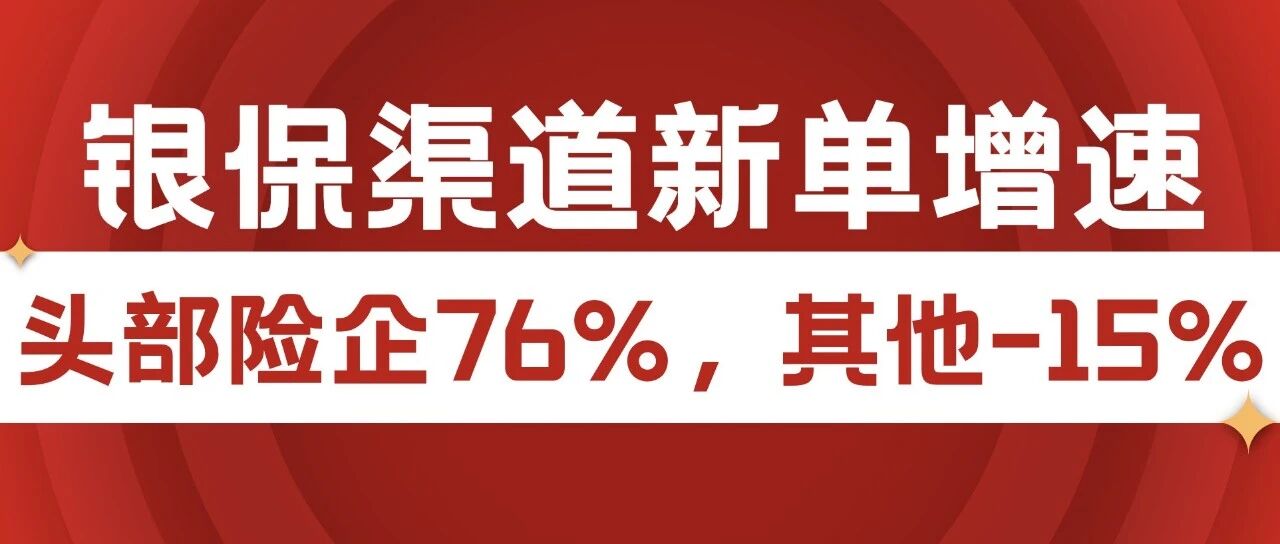
个代vs银保!头部险企银保新单增速超70%:合作网点大增,价值率上升,其他公司怎么办?
13个精算师· 2025-09-18 15:19
Core Viewpoint - The insurance industry is experiencing a significant recovery in premium growth, primarily driven by the rapid development of the bancassurance channel, which has outpaced other distribution channels like individual agents and brokers [3][4][5]. Group 1: Bancassurance Channel Performance - In the first half of 2025, the bancassurance channel's premium income reached approximately 1 trillion, with a year-on-year growth of about 9%, significantly surpassing the overall industry growth and other channels [7][8]. - The new premium growth rate for the bancassurance channel among leading insurers exceeded 70%, while other channels experienced negative growth [28][31]. - The bancassurance channel has become the largest contributor to premium growth for major insurers, with companies like China Life and New China Insurance reporting new premium growth rates exceeding 100% [18][14]. Group 2: Competitive Landscape - The removal of the "one-to-three" restriction has allowed leading insurers to accelerate strategic partnerships with banks, enhancing their market presence [15][27]. - The competitive environment for smaller insurers has become increasingly challenging, as they must compete not only on product pricing but also on brand influence and reputation against larger firms [30][31]. - The disparity in new premium growth rates is stark, with leading insurers achieving a 76% growth in the bancassurance channel compared to a 15% decline for smaller firms [28][31]. Group 3: Product Strategy and Market Trends - The shift towards participating insurance products is evident, with major insurers like China Life and Taikang reporting that over 50% of their premium income from individual agent channels comes from floating income products [35]. - The focus on high-quality growth is reflected in the increasing new business value rates for leading insurers in the bancassurance channel, indicating a strategic pivot towards more profitable product offerings [33][35]. - The overall trend in the insurance industry is moving towards a higher quality of development, with an emphasis on transforming product offerings to include more dividend-based insurance products [36].
港股公告精选|中国太保年内原保费收入约3600亿元 大唐新能源8月发电量同比增近三成
Xin Lang Cai Jing· 2025-09-18 11:53
Company News - China Pacific Insurance (02601.HK) reported original insurance premium income of 217.05 billion yuan for the first eight months, a year-on-year increase of 13.2%. The original insurance premium income for Taiping Property Insurance was 142.809 billion yuan, a year-on-year increase of 0.4%. The total original insurance premium income is approximately 360 billion yuan [2] - Datang Renewable (01798.HK) achieved a cumulative power generation of approximately 23.53 million megawatt-hours in the first eight months, an increase of 13.04% year-on-year. In August, the power generation was 2.169 million megawatt-hours, a year-on-year increase of 27.5% [2] - Green Energy Technology Group (00979.HK) issued a profit warning, expecting an annual net loss of approximately 15 to 18 million Hong Kong dollars [2] - Timekeeper (02033.HK) issued a profit warning, expecting a loss attributable to shareholders of approximately 17 million Hong Kong dollars for the fiscal year 2025 [2] - Fuhong Hanlin (02696.HK) completed the administration of the first patient in Australia for the international multi-center phase II clinical study of HLX43 for the treatment of advanced non-small cell lung cancer (NSCLC) [2] - IFBH (06603.HK) entered into a foreign exchange contract with Citibank [2] Buyback Activities - Tencent Holdings (00700.HK) repurchased 848,000 shares at a cost of 550 million Hong Kong dollars, with buyback prices ranging from 636 to 664 Hong Kong dollars [3] - HSBC Holdings (00005.HK) repurchased 1.48 million shares at a cost of approximately 158 million Hong Kong dollars, with buyback prices between 106.4 and 106.9 Hong Kong dollars [3] - Hang Seng Bank (00011.HK) repurchased 200,000 shares at a cost of approximately 23.8 million Hong Kong dollars, with buyback prices ranging from 118.5 to 119.6 Hong Kong dollars [3] - MGM China (02282.HK) repurchased 1.2 million shares at a cost of 18.758 million Hong Kong dollars, with buyback prices between 15.50 and 15.77 Hong Kong dollars [3]



【财闻联播】中国新能源汽车爆卖超4000万辆!不法分子冒充,DeepSeek紧急声明
券商中国· 2025-09-18 10:33
Macro Dynamics - China's cumulative sales of new energy vehicles have surpassed 40 million, maintaining the world's leading position in production and sales for ten consecutive years, contributing to global carbon reduction goals [2] Government Response - The Ministry of Commerce of China responded to the EU's imposition of anti-subsidy taxes on Chinese electric vehicles, urging the EU to avoid weaponizing tariffs and to eliminate market barriers, promoting fair competition and cooperation in the industry [3] Financial Institutions - China Pacific Insurance announced the completion of the issuance of HKD 15.556 billion zero-coupon convertible bonds, which will be listed on the Hong Kong Stock Exchange [8] - HSBC Hong Kong announced a reduction in the annual interest rates for Hong Kong dollar and US dollar savings accounts, effective September 19, 2025 [9] - UBS predicts that the Federal Reserve may further cut interest rates by 75 basis points by the first quarter of 2026, following a recent 25 basis point reduction [10] Market Data - As of September 18, A-share indices experienced a decline, with the Shanghai Composite Index down 1.15%, Shenzhen Component down 1.06%, and ChiNext down 1.64%, with a total market turnover of approximately CNY 3.16 trillion [12] - The financing balance of the two markets increased by CNY 12.646 billion, with the Shanghai Stock Exchange reporting CNY 1.209727 trillion and the Shenzhen Stock Exchange CNY 1.170886 trillion [13] - The Hang Seng Index fell by 1.35%, while Huahong Semiconductor rose over 8% [14] Company Dynamics - Huawei expressed confidence in providing sufficient computing power for the development of artificial intelligence, emphasizing its role in the future of AI in China [15] - DeepSeek issued a statement warning against fraudsters impersonating the company, clarifying that it has never requested payments to personal or unofficial accounts [16] - *ST Chuangxing announced that its chairman is under investigation, but the company’s operations remain normal [17] - Tianpu Co., which has seen a 12-day stock price increase, warned that its stock price has significantly deviated from its fundamentals, indicating potential risks of a rapid decline [18] - Changan Automobile confirmed the fulfillment of its 60-day payment commitment and is exploring new technologies and products [20] - Shenzhen Huaqiang stated that it provides electronic components to Yushu Technology [21] - Fulim Precision signed a prepayment agreement with CATL for CNY 1.5 billion to secure lithium iron phosphate supply, enhancing strategic cooperation [22]




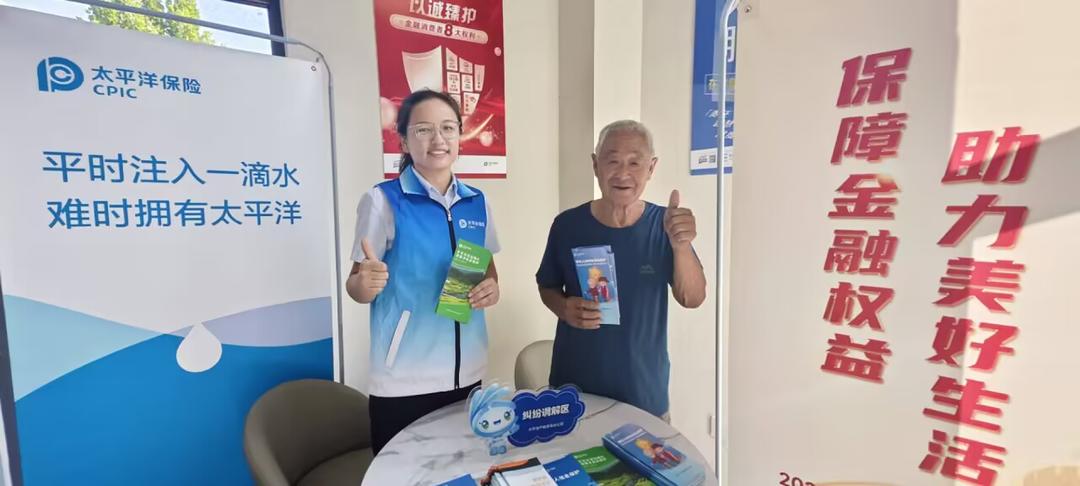
五方联动!中国太保产险青岛分公司首个金融消保乡村服务站揭牌
Qi Lu Wan Bao Wang· 2025-09-18 10:29
Group 1 - The core viewpoint of the article emphasizes the establishment of a financial consumer protection service station in Qixinghe Village, aimed at safeguarding the rights of rural financial consumers through a collaborative effort involving multiple stakeholders [1][3]. - The financial consumer protection service station is located in a key rural revitalization demonstration area, which allows it to serve as a model for broader implementation and guidance in the region [3]. - The service station integrates various functions, including consumer education, dispute mediation, and policy consultation, to create a comprehensive financial service platform for rural residents [3][5]. Group 2 - The service station has formed a volunteer service team consisting of an expert station manager, an industry mediator, a liaison officer, and multiple volunteers to enhance its outreach and effectiveness [3]. - The station aims to provide immediate assistance for simple procedures and facilitate follow-up for more complex issues, ensuring that financial services are accessible to all, including vulnerable groups [3][5]. - The company plans to further develop a grid-based financial education and outreach network, enhancing the presence and effectiveness of financial consumer protection services in rural areas [5][6].
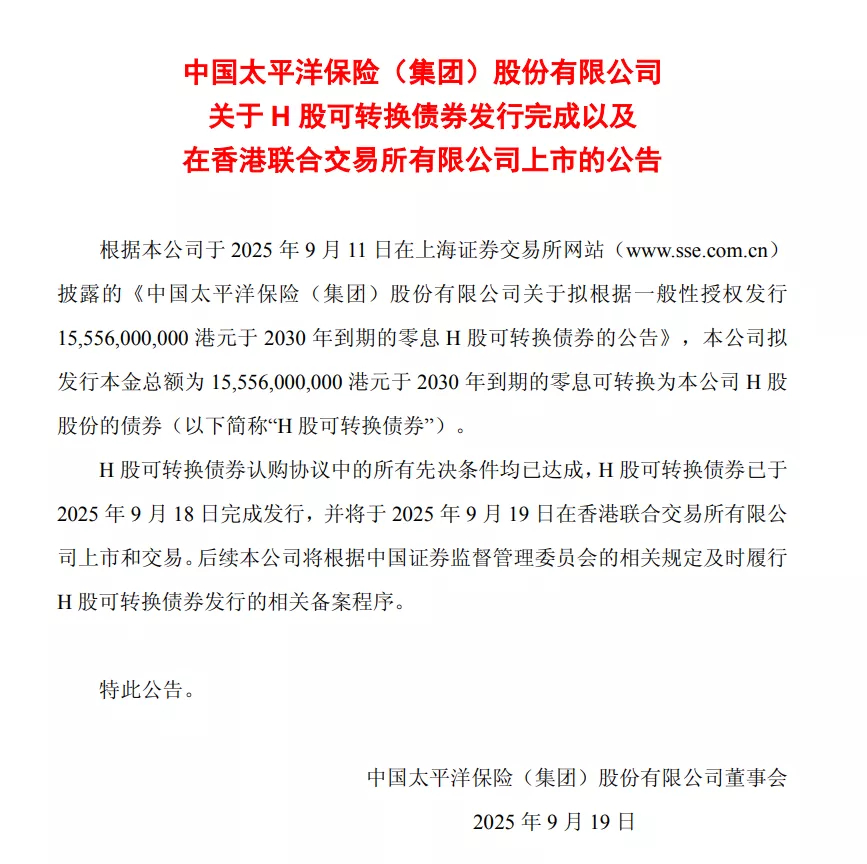
中国太保:155.56亿港元零息H股可转换债券完成发行
Cai Jing Wang· 2025-09-18 10:19
Core Viewpoint - China Pacific Insurance (Group) Co., Ltd. plans to issue zero-coupon convertible bonds totaling HKD 15.556 billion, maturing in 2030, to be converted into H-shares [1] Group 1 - The company announced the issuance of zero-coupon convertible bonds on September 18, 2025, with a total principal amount of HKD 15.556 billion [1] - The bonds are set to mature in 2030 and will be convertible into the company's H-shares [1] - All preconditions for the subscription agreement of the convertible bonds have been met, and the issuance was completed on September 18, 2025 [1] Group 2 - The bonds will be listed and traded on the Hong Kong Stock Exchange starting September 19, 2025 [1] - The company will comply with the relevant filing procedures as required by the China Securities Regulatory Commission [1]
中国太保:前8个月子公司中国太平洋人寿保险股份有限公司人寿保费收入同比增长13.2%
Mei Ri Jing Ji Xin Wen· 2025-09-18 10:05
每经AI快讯,中国太保(601601)9月18日晚间公告,2025年1月1日至8月31日期间,公司子公司中国 太平洋人寿保险股份有限公司累计实现原保险保费收入2170.5亿元,同比增长13.2%。此外,子公司中 国太平洋财产保险股份有限公司累计原保险保费收入为1428.09亿元,同比增长0.4%。上述数据未经审 计。 ...

中国太保:完成155.56亿港元H股可转换债券发行
Zheng Quan Shi Bao Wang· 2025-09-18 10:04
Group 1 - The company, China Pacific Insurance (601601), announced the issuance of H-share convertible bonds totaling HKD 15.556 billion [1] - All conditions precedent in the subscription agreement for the bonds have been fulfilled [1] - The H-share convertible bonds were issued on September 18 and will be listed and traded on the Hong Kong Stock Exchange starting September 19 [1]
中国太保(02601) - 保费收入公告
2025-09-18 10:04
香港交易及結算所有限公司及香港聯合交易所有限公司對本公告的內 容 概 不 負 責,對 其 準 確 性 或 完 整 性 亦 不 發 表 任 何 聲 明,並 明 確 表 示,概 不對因本公告全部或任何部分內容而產生或因倚賴該等內容而引致的 任 何 損 失 承 擔 任 何 責 任。 (股份代號:02601) 保費收入公告 於2025年1月1日 至2025年8月31日 期 間,中 國 太 平 洋 保 險(集 團)股 份 有 限 公 司(「本公司」)子 公 司 中 國 太 平 洋 人 壽 保 險 股 份 有 限 公 司 累 計 原 保 險 保費收入為人民幣2,170.50億 元,同 比 增 長13.2%,本 公 司 子 公 司 中 國 太 平洋財產保險股份有限公司累計原保險保費收入為人民幣1,428.09億 元, 同比增長0.4%。 上 述 累 計 原 保 險 保 費 收 入 數 據 未 經 審 計,提 請 投 資 者 注 意。 特 此 公 告。 註: 中國太平洋保險(集團)股份有限公司 CHINA PACIFIC INSURANCE (GROUP) CO., LTD. 承董事會命 (於中華人民共和國註冊成立的股份有限 ...
中国太保(601601) - 中国太保关于H股可转换债券发行完成以及在香港联合交易所有限公司上市的公告
2025-09-18 10:02
特此公告。 中国太平洋保险(集团)股份有限公司董事会 2025 年 9 月 19 日 本公司董事会及全体董事保证本公告内容不存在任何虚假记载、误导性陈述 或者重大遗漏,并对其内容的真实性、准确性和完整性承担法律责任。 中国太平洋保险(集团)股份有限公司 关于 H 股可转换债券发行完成以及 在香港联合交易所有限公司上市的公告 根据本公司于 2025 年 9 月 11 日在上海证券交易所网站(www.sse.com.cn) 披露的《中国太平洋保险(集团)股份有限公司关于拟根据一般性授权发行 15,556,000,000 港元于 2030 年到期的零息 H 股可转换债券的公告》,本公司拟 发行本金总额为 15,556,000,000 港元于 2030 年到期的零息可转换为本公司 H 股 股份的债券(以下简称"H 股可转换债券")。 H 股可转换债券认购协议中的所有先决条件均已达成,H 股可转换债券已于 2025 年 9 月 18 日完成发行,并将于 2025 年 9 月 19 日在香港联合交易所有限公 司上市和交易。后续本公司将根据中国证券监督管理委员会的相关规定及时履行 H 股可转换债券发行的相关备案程序。 证券 ...