
CCB(601939)

Search documents
砸35亿向林百欣之子买下中环建设银行大厦50%股权!刘强东重仓香港?
Sou Hu Cai Jing· 2025-12-11 11:45
Core Viewpoint - JD.com has acquired a 50% stake in the China Construction Bank Tower located in Central Hong Kong for approximately HKD 3.498 billion, marking a significant investment in the Hong Kong market and a strategic move to enhance its presence in the region [2][4][11]. Group 1: Acquisition Details - The acquisition involves a total consideration of approximately HKD 3.498 billion, with the transaction expected to be completed by January 2026 [2][10]. - The China Construction Bank Tower, a prominent commercial property in Hong Kong, has a total area of 229,200 square feet and is directly connected to the Central MTR station [6][10]. - The property was previously owned by Lisi Development, which had restructured the site from a hotel to a Grade A office building in collaboration with China Construction Bank [6][10]. Group 2: Strategic Implications for JD.com - JD.com views this acquisition as a critical step in its ongoing development in Hong Kong, aiming to integrate retail, logistics, and technology into the local market [4][11]. - The company has been actively expanding its operations in Hong Kong since 2015, with recent investments in logistics and retail, including the establishment of a logistics center and partnerships with local businesses [11][13]. - Analysts suggest that JD.com's strategy in Hong Kong is driven by the need to explore new markets as domestic e-commerce growth plateaus, positioning Hong Kong as a gateway to Southeast Asia [15][16]. Group 3: Seller Background - The seller, Lisi Development, is part of a larger conglomerate founded by Lin Baixin, which has faced liquidity challenges due to the prolonged downturn in the Hong Kong real estate market [10][8]. - The sale of the property is part of Lisi's strategy to improve liquidity and manage its debt obligations, with the transaction expected to generate a net cash inflow of approximately HKD 2.4 billion [10].

建行亮相2025全球数商大会
Xin Lang Cai Jing· 2025-12-11 11:28
Core Viewpoint - The 2025 Global Digital Business Conference focuses on the deep integration of the real economy and the digital economy, showcasing various practices and explorations in the digital economy field by China Construction Bank [1][4]. Group 1: Digital Economy Integration - The conference theme is "Connecting the World through Data, Business for the Future, and Boundless Multiplication," emphasizing the importance of integrating digital and real economies [1][4]. - China Construction Bank participated in the opening ceremony and multiple sub-forums, highlighting its efforts in blockchain, data element circulation, and digital business ecosystem services [1][4]. Group 2: Blockchain Innovations - A blockchain credit letter application scenario was launched at the conference, with China Construction Bank's Shanghai branch as one of the first financial institutions to implement a fully on-chain credit letter process, addressing traditional cross-border settlement challenges [1][4]. - The bank's participation in forums like the Blockchain Innovation Summit showcased its innovative practices and shared experiences in public data development [1][4]. Group 3: Data Element Financialization - China Construction Bank is focusing on the circulation of data elements as a key path for digital transformation, aiming to empower the real economy through innovative data services [2][5]. - The bank has developed a "Data Shelf" and "Data Alliance" to facilitate resource sharing and business cooperation within the digital economy ecosystem [2][5]. Group 4: Financing Innovations - Shanghai Weipu Testing Technology Group received a financing service of 10 million yuan for its data product intellectual property, marking the first large-scale enterprise data product financing in Shanghai [3][6]. - The bank's Shanghai branch has created a specialized "Data Aggregation Loan" service plan for digital business enterprises, providing comprehensive financial services based on data elements and technology [3][6].
喜娜AI速递:今日财经热点要闻回顾|2025年12月11日
Xin Lang Cai Jing· 2025-12-11 11:26
Group 1: Federal Reserve and Economic Outlook - The Federal Reserve announced a 25 basis point cut to the federal funds rate, bringing it to a target range of 3.50%-3.75%, marking the third cut of the year [2][7] - The decision faced dissent with three members voting against it, and the dot plot indicates one more rate cut is expected next year, with inflation projected to slow to around 2.4% [2][7] - The World Bank raised its 2025 economic growth forecast for China by 0.4 percentage points, attributing this to supportive fiscal and monetary policies, as well as a diversified export market [2][7] Group 2: Industry Developments - The wholesale price of Moutai liquor reached a historical low of 1500 yuan per bottle, just 1 yuan below the official guidance price, indicating ongoing pressure in the liquor industry [2][7] - The merger between Zhongke Shuguang and Haiguang Information was terminated, resulting in a market value loss of approximately 146 billion yuan for Zhongke Shuguang [3][8] - A significant number of A-share companies are expected to distribute cash dividends, with total dividends exceeding last year's total, marking a historical high [3][8] Group 3: Emerging Markets and Technologies - The low-altitude economy is projected to grow rapidly, with market size estimates reaching 1.5 trillion yuan by 2025 and 3.5 trillion yuan by 2035 [4][9] - The robotics industry is seeing active investment, with companies like Yushu Technology and Zhiyuan Robotics competing for high-profile sponsorships, although concerns about industry bubbles persist [3][8] - Over 200 A-share companies have been surveyed by brokerages, with a focus on storage chip companies, as the technology sector is viewed as a key investment area for 2026 [3][8]





建行永城支行:“裕农通”下乡 村民家门口办业务
Sou Hu Cai Jing· 2025-12-11 10:58
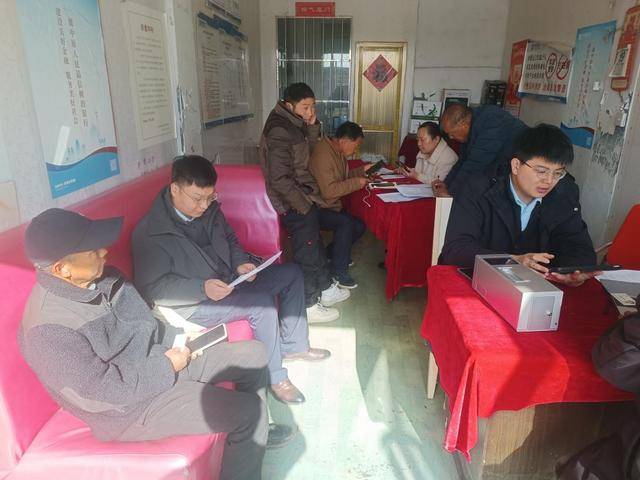
Group 1 - The core idea of the article is that the Bank of China is actively promoting financial services in rural areas to support rural revitalization through initiatives like the "Yunong Tong" service [1][3][4] Group 2 - The focus of the recent initiative is to assist villagers with social security payments and banking services, allowing them to complete these tasks locally without traveling to distant bank branches [3] - The service team utilized local "Yunong Tong" service points to facilitate on-site banking services, including card applications and customer information registration [3] - The initiative not only provided efficient financial services at the doorstep of villagers but also strengthened the relationship between the Bank of China and local communities, enhancing the bank's brand image in supporting rural revitalization [4] Group 3 - The service team engaged with farmers and small business owners to understand their funding needs, collecting information for potential loan applicants and explaining the "Yunong Loan" application process [3][4] - The Bank of China plans to follow up on the potential clients identified during this initiative to convert their needs into actual loan support, and will continue to conduct similar rural outreach services [4]

现代化新广东,金融正在场
盐财经· 2025-12-11 10:30
Group 1 - The article emphasizes Guangdong's role as a pioneer in reform and opening up, focusing on the integration of technological and industrial innovation to build a modern industrial system and promote high-quality development [2] - The article highlights the importance of financial support in facilitating technological advancements and the transformation of industries, particularly through the example of Guangdong Stanno Intelligent Equipment Co., which has benefited from innovative financing solutions [4][6] - The Construction Bank of Guangdong Province has actively engaged in providing financial resources to key industries, with a focus on technology-driven enterprises, resulting in significant loan disbursements and support for modernization projects [9] Group 2 - The article discusses the impact of financial products like "High-Quality Technology Quick Loan" on companies facing funding challenges, showcasing a case where a loan led to a 23% increase in production efficiency [7] - It mentions the bank's efforts to support the manufacturing sector, with over 3,000 billion yuan in loans allocated to manufacturing enterprises, and highlights specific projects that have improved energy efficiency and reduced costs [9] - The article outlines the bank's initiatives to stimulate consumer spending through various financial products and promotional activities, contributing to economic growth and enhancing consumer experiences [12][15] Group 3 - The article details the bank's commitment to rural development and agricultural modernization, with significant loan allocations to support local agricultural enterprises and infrastructure projects [18][20] - It highlights the bank's role in promoting the integration of agriculture, culture, and tourism, which has led to increased income for local farmers and the establishment of modern agricultural practices [19] - The bank's financial services have expanded to cover a wide range of sectors, ensuring comprehensive support for both urban and rural development, with a focus on enhancing living conditions and economic opportunities [20]

A股大额分红,来了
Zhong Guo Zheng Quan Bao· 2025-12-11 09:45
Core Viewpoint - A-share companies are significantly increasing cash dividends, with total dividends exceeding last year's amount, setting a new historical high [1][3]. Group 1: Bank Dividends - On December 11, China Bank and Construction Bank are distributing cash dividends, with China Bank distributing approximately 35.25 billion yuan and Construction Bank distributing about 48.61 billion yuan [3]. - Industrial and Agricultural Banks will distribute over 76 billion yuan in cash dividends on December 15, reflecting a stable dividend rate among banks [3][4]. - The number of banks implementing mid-term dividends is increasing, with some banks raising their dividend rates, indicating strong dividend value in the banking sector [3][4]. Group 2: Other Companies' Dividends - Kweichow Moutai announced a cash dividend of 23.957 yuan per share, totaling approximately 30 billion yuan, with the ex-dividend date set for December 19, 2025 [6]. - Wuliangye will distribute 25.78 yuan for every 10 shares, amounting to about 10 billion yuan, with the ex-dividend date on December 18, 2025 [6]. - Regulatory measures are being strengthened to support cash dividends, aiming to enhance investor returns and company value [6][7].
注册资本升至2616亿元,建设银行增资获批
Huan Qiu Lao Hu Cai Jing· 2025-12-11 09:32
Group 1 - China Construction Bank has received approval from the National Financial Regulatory Administration to increase its registered capital by 11.589 billion yuan, raising it from 250.011 billion yuan to 261.6 billion yuan [1] - Bank of China has also announced an increase in its registered capital by approximately 27.825 billion yuan, changing from about 294.388 billion yuan to approximately 322.212 billion yuan [1] - The recent wave of capital increases in the banking sector is driven by favorable policy support, including a plan to issue special government bonds worth 500 billion yuan to support state-owned banks in capital replenishment [2] Group 2 - In March, several major banks, including China Construction Bank, Bank of China, and others, announced fundraising plans totaling no more than 520 billion yuan [2] - China Construction Bank completed a targeted issuance of 11.589 billion A-shares, raising a total of 105 billion yuan, which will be used to enhance its core Tier 1 capital [2] - As of the end of Q3 this year, China Construction Bank's core Tier 1 capital adequacy ratio and total capital adequacy ratio were 14.36% and 19.24%, respectively, both exceeding regulatory requirements [3] Group 3 - The issuance of special government bonds is seen as a proactive measure to enhance capital strength and improve risk resilience amid the dual pressures of credit expansion needs and stricter TLAC regulations [3] - In addition to the targeted capital increase, China Construction Bank has also issued 200 billion yuan in subordinated debt to supplement its capital, with the final tranche of 40 billion yuan being a 10-year fixed-rate bond with a coupon rate of 2.24% [3]
银行行业资金流入榜:浦发银行、交通银行等净流入资金居前
Zheng Quan Shi Bao Wang· 2025-12-11 09:27
Core Viewpoint - The banking sector showed resilience with a slight increase of 0.17% on December 11, despite a broader market decline, indicating potential strength in this industry amidst overall market challenges [2][3]. Market Performance - The Shanghai Composite Index fell by 0.70% on the same day, with only one sector, banking, experiencing an increase [2]. - The banking sector was the top performer among industries, while the comprehensive and communication sectors faced significant declines of 4.31% and 3.14%, respectively [2]. Capital Flow - There was a net outflow of 744.67 billion yuan from the two markets, with only the banking sector seeing a net inflow of 67.49 million yuan [2]. - The electronic industry faced the largest net outflow of 13.586 billion yuan, followed by the communication sector with 11.340 billion yuan [2]. Individual Stock Performance - Within the banking sector, 42 stocks were tracked, with 21 stocks rising and 20 stocks falling [3]. - The top three banks by net inflow were: - Shanghai Pudong Development Bank with a net inflow of 119 million yuan [4]. - Bank of Communications with 80.991 million yuan [4]. - Nanjing Bank with 67.811 million yuan [4]. - The banks with the highest net outflows included: - China Merchants Bank with a net outflow of 303 million yuan [6]. - Minsheng Bank with 45.949 million yuan [6]. - Hangzhou Bank with 40.973 million yuan [6]. Detailed Capital Flow in Banking Sector - The following banks had notable capital flows: - Shanghai Pudong Development Bank: +1.42% with a turnover rate of 0.32% and a capital flow of 118.58 million yuan [4]. - Bank of Communications: +0.68% with a turnover rate of 0.45% and a capital flow of 80.99 million yuan [4]. - Agricultural Bank of China: +1.41% with a turnover rate of 0.09% and a capital flow of 49.85 million yuan [5].





A股大额分红,来了!
Zhong Guo Zheng Quan Bao· 2025-12-11 08:37
Core Viewpoint - A-share listed companies in China have significantly increased cash dividends in 2023, surpassing the total amount distributed in the previous year, marking a historical high [1][3]. Group 1: Bank Dividends - On December 11, China Bank and Construction Bank distributed cash dividends, with China Bank paying approximately 35.25 billion yuan (tax excluded) and Construction Bank distributing around 48.61 billion yuan [3]. - Industrial and Agricultural Banks are set to distribute over 76 billion yuan in cash dividends on December 15, 2025, indicating a growing trend in mid-term dividend distributions among banks [3][4]. - Analysts note that the number of banks implementing mid-term dividends is increasing, with many maintaining stable dividend rates and some even raising them, reflecting the banking sector's robust dividend value [3][4]. Group 2: Other Companies' Dividends - Kweichow Moutai announced a cash dividend of 23.957 yuan per share, totaling approximately 30 billion yuan (tax included), with the ex-dividend date set for December 19, 2025 [6]. - Wuliangye announced a cash dividend of 25.78 yuan for every 10 shares, amounting to about 10 billion yuan (tax included), with the ex-dividend date on December 18, 2025 [6]. - Regulatory measures are increasingly supporting dividend distributions, with proposed regulations aimed at enhancing investor returns and promoting cash dividends among listed companies [6][7].
建设银行济宁西城支行:金融活水精准滴灌,助推医药产业攀高向新
Qi Lu Wan Bao· 2025-12-11 08:16
Core Insights - The modern pharmaceutical industry in Jining has been identified as one of the 15 key industrial chains and 7 key industrial clusters, with a target to exceed 50 billion yuan by 2027 [1] Group 1: Financial Innovation - China Construction Bank's Jining Xicheng Branch has introduced differentiated financial solutions to address the unique challenges faced by pharmaceutical companies, such as high R&D costs and long capital recovery cycles [2][3] - The bank has transformed intangible assets like drug registration certificates and patents into core credit assets, enabling companies to leverage these for financing [2] - A "supply chain finance" service has been launched to improve cash flow for pharmaceutical distribution companies by converting long payment terms into quicker turnover [2] Group 2: Digital Transformation - The bank has optimized service processes by creating an online financing platform that streamlines loan applications, approvals, and disbursements, significantly reducing the time and materials required [3] - Customized financial solutions are provided based on the different stages of pharmaceutical companies, including R&D loans for early-stage firms and fixed asset loans for those in industrialization [3] Group 3: Resource Integration - The bank is actively building a financial ecosystem for the pharmaceutical industry by organizing investment and financing matchmaking events that connect pharmaceutical companies with investors and industry experts [4] - Collaborations with government and industry associations have been established to create risk compensation mechanisms, lowering financing barriers for pharmaceutical companies [4] - Joint efforts with research institutions are aimed at providing technical assessments and facilitating the commercialization of innovations [4] Group 4: Case Study and Impact - A local high-tech pharmaceutical company received a 6 million yuan intellectual property pledge loan, which significantly accelerated its R&D progress and is expected to bring new veterinary drugs to market sooner [5][6] - Over 5 billion yuan in credit support has been provided to more than 20 local pharmaceutical companies, contributing to the industry's development and upgrade [6] - The bank plans to continue enhancing financial services for the pharmaceutical sector, focusing on effective resource allocation and expanding the "supply chain finance + digital" model [6]