
CCB(601939)

Search documents
多家银行调整代销基金产品风险等级 强化投资者适当性管理
Jin Rong Shi Bao· 2025-11-27 03:30
Core Viewpoint - Several banks in China, including Minsheng Bank and China Construction Bank, have adjusted the risk ratings of certain publicly offered mutual funds to enhance investor protection and comply with regulatory requirements [1][2][3]. Group 1: Risk Rating Adjustments - Minsheng Bank announced on November 18 that it would change the risk ratings of eight mutual fund products from low risk to medium risk, effective November 19 [1]. - China Construction Bank has adjusted the risk ratings of 87 mutual fund products, with 32 products moving from "R2 - Medium-Low Risk" to "R3 - Medium Risk" and 55 products from "R3 - Medium Risk" to "R4 - Medium-High Risk" [1][2]. - Other banks, such as Postal Savings Bank and Citic Bank, have also made similar adjustments, with Postal Savings Bank raising the risk ratings of 80 mutual fund products and Citic Bank adjusting 17 asset management products [2][3]. Group 2: Regulatory Compliance - The adjustments are based on regulatory requirements, including the "Measures for the Management of Investor Suitability in Securities and Futures" and the "Implementation Guidelines for Investor Suitability Management by Fund Raising Institutions" [2]. - Banks are required to adhere to the principle of "higher risk rating" for similar products and must continuously evaluate product risk ratings in response to market and policy changes [3]. Group 3: Market Considerations - The adjustments reflect banks' responses to current market volatility, with increased net asset value fluctuations and liquidity risks in certain equity funds due to concentrated holdings [3]. - The changes are seen as proactive measures to enhance investor suitability management and do not indicate a general increase in risk across the mutual fund market [4].




多家银行调整代销基金产品风险等级
Jin Rong Shi Bao· 2025-11-27 02:22
Core Viewpoint - Several banks in China, including Minsheng Bank and China Construction Bank, have recently adjusted the risk ratings of certain publicly offered mutual funds, reflecting a broader industry trend towards stricter investor suitability management and compliance with regulatory requirements [1][2][3] Group 1: Risk Rating Adjustments - Minsheng Bank announced on November 18 that it would adjust the risk ratings of eight mutual fund products from low risk to medium risk, effective November 19 [1] - China Construction Bank has adjusted the risk ratings of 87 mutual fund products, with 32 products moving from "R2 - Medium-Low Risk" to "R3 - Medium Risk" and 55 products from "R3 - Medium Risk" to "R4 - Medium-High Risk" [1][2] - Other banks, such as Postal Savings Bank and Citic Bank, have also made similar adjustments, with Postal Savings Bank raising the risk ratings of 80 mutual fund products and Citic Bank adjusting 17 asset management products [2][3] Group 2: Regulatory Compliance - The adjustments made by banks are primarily based on regulatory requirements, including the "Securities and Futures Investor Suitability Management Measures" and the "Commercial Bank Agency Sales Business Management Measures" [2] - Banks are required to adhere to the principle of "higher risk rating" for similar products and must continuously evaluate product risk ratings in response to market and policy changes [2][3] Group 3: Market Considerations - The increase in risk ratings is driven by current market volatility, with certain equity funds showing increased net asset value fluctuations and liquidity risks due to concentrated holdings [3] - The adjustments are seen as proactive measures by banks to enhance investor suitability management and do not necessarily indicate a general increase in risk across the mutual fund market [3]
商业银行共绘未来五年发展新蓝图
Jin Rong Shi Bao· 2025-11-27 02:22
Core Viewpoint - Agricultural Bank of China is inviting employees and the public to contribute ideas for its 15th Five-Year Plan, aligning with the national economic and social development strategy outlined by the Communist Party [1] Group 1: National Strategy Alignment - State-owned banks are prioritizing national strategies, focusing on supporting the real economy, expanding domestic demand, and facilitating foreign trade during the 15th Five-Year Plan [2] - Agricultural Bank will enhance rural financial services and support agricultural modernization while promoting domestic consumption and effective investment [2] - China Bank aims to improve its global competitiveness and service capabilities, supporting the internationalization of the Renminbi and the Belt and Road Initiative [2] - Construction Bank will support infrastructure development and modern industrial systems, focusing on new industrialization and productivity [2] Group 2: Strategic Planning and Implementation - Transportation Bank emphasizes a seamless transition between the 14th and 15th Five-Year Plans, refining strategic focus and priorities [3] - Postal Savings Bank is committed to implementing its unique financial strategies and responding to the evolving financial needs of the public [3] Group 3: Differentiated Transformation - Joint-stock and local banks are identifying their unique positions and competitive advantages to create a multi-tiered financial service structure during the 15th Five-Year Plan [4] - Industrial Bank, as a leader in green finance, will enhance its services to support carbon reduction goals and promote green operations [4] - Citic Bank is focusing on technology finance, providing comprehensive financial services to support industrial upgrades and innovation [4] Group 4: Future Development Planning - The 15th Five-Year Plan is guided by the goal of building a strong financial nation, with banks actively developing their strategic plans [6] - Construction Bank is engaging with grassroots feedback to address high-priority issues and enhance operational efficiency [6] - Transportation Bank is incorporating public and expert opinions into its planning process for the 15th Five-Year Plan [6] - Regional banks are also developing their plans, focusing on key performance indicators like ROE and adjusting their business structures to enhance revenue [7]





科技金融:体系化推进的江西路径
Jin Rong Shi Bao· 2025-11-27 02:07
Core Viewpoint - The development of technology finance is essential for promoting the deep integration of technological innovation and industrial development, as well as achieving high-quality economic growth in Jiangxi province [3][12]. Group 1: Financing Initiatives - Jiangxi Xunkang Technology Co., Ltd. and Kruit Software Group Co., Ltd. received loans of 14 million yuan and 12 million yuan respectively, under the "Qianfei Loan" program, which aims to address the financing challenges faced by technology-oriented enterprises [1]. - The "Qianfei Loan" program has provided a total of 2.099 billion yuan in loans to 127 technology-oriented enterprises in Jiangxi within just six months [1][2]. Group 2: Policy and System Innovation - The Jiangxi financial system is focusing on technology finance as a priority, implementing innovative measures to create a financial service system that meets the high-quality development needs of local technology innovation [2][5]. - A multi-dimensional approach is being taken to innovate the technology finance system, including institutional, product, and service model innovations [6][8]. Group 3: Performance Metrics - In 2023, Jiangxi's total R&D investment exceeded 60 billion yuan, and the transaction volume of technology contracts reached 258.8 billion yuan, marking a 10.1-fold increase compared to the end of the 13th Five-Year Plan [3]. - As of September, the balance of technology loans in Jiangxi reached 1.05 trillion yuan, with a year-on-year growth of 14%, surpassing the national average growth rate of 2.2% [10]. Group 4: Collaborative Efforts - The establishment of a technology finance alliance has seen participation from 50 financial institutions, providing a range of financial products and services to technology enterprises [10]. - The "Yiqi Growth" model aims to align loan pricing and future financial services with the growth potential of technology enterprises, fostering long-term partnerships between banks and companies [8][11].
下架五年期 短期也“告急” 银行弃旧爱:“大额存单”去哪了
Shen Zhen Shang Bao· 2025-11-26 23:04
Core Viewpoint - The trend of large-denomination certificates of deposit (CDs) disappearing from the market is evident, with major banks removing long-term products to manage net interest margin pressures and adapt to changing monetary policies [1][2][3] Group 1: Market Changes - Major state-owned banks and national joint-stock banks have removed five-year large-denomination CDs from their offerings, with only short-term products available [1] - The availability of three-year large-denomination CDs is also tightening, with some banks halting new issuances [1][2] - The current offerings are primarily focused on one-year or shorter terms, with some banks only providing three-month or six-month products [2] Group 2: Reasons for Changes - The primary reason for banks discontinuing long-term large-denomination CDs is to alleviate the increasing pressure on net interest margins due to declining loan rates [2] - By reducing high-cost liabilities associated with long-term CDs, banks aim to optimize their liability structure and control overall funding costs [2][3] - This adjustment is seen as a proactive measure by banks in response to macroeconomic conditions and regulatory guidance [2] Group 3: Future Outlook - The role and form of large-denomination CDs are expected to undergo significant changes, with a shift towards shorter-term products becoming more common [3] - The interest rate advantage of large-denomination CDs is likely to diminish, aligning more closely with regular fixed-term deposits [3] - A long-term downward trend in deposit rates is anticipated, driven by monetary policy aimed at reducing financing costs for the real economy [3]

建行四川省分行:锚定高质量发展目标 为服务大局多作贡献
Si Chuan Ri Bao· 2025-11-26 22:22
Core Viewpoint - The China Construction Bank Sichuan Branch has actively aligned its operations with national strategies during the "14th Five-Year Plan" period, contributing significantly to the economic development and transformation of Sichuan province [1][3]. Group 1: Strategic Alignment and Support - The bank has enhanced its capabilities to support major national strategies, including the construction of the Chengdu-Chongqing economic circle, by providing over 280 billion yuan in credit support for key projects [4]. - It has established a mechanism for project promotion and launched various supportive measures to ensure the successful implementation of significant initiatives [4]. Group 2: Financial Services and Innovations - The bank has focused on providing comprehensive financial services, including the establishment of seven private equity investment funds with a total commitment exceeding 30 billion yuan, and has invested over 26 billion yuan in more than 50 projects in Sichuan [4]. - It has developed a three-year action plan for technology finance, becoming the first bank in Sichuan to be recognized as a "Technology Finance Innovation Base" [5]. Group 3: Green Finance and Infrastructure Development - The bank has prioritized financing for clean energy and green infrastructure projects, actively supporting the construction of transportation projects and renewable energy initiatives [6]. - It has collaborated with local state-owned enterprises to revitalize existing assets and enhance funding for critical infrastructure [6]. Group 4: Inclusive Finance and Community Support - The bank has implemented an "active empowerment" credit model, providing nearly 178.8 billion yuan in credit and 144.6 billion yuan in disbursements to support small and micro enterprises [6]. - It has also focused on enhancing financial services for the elderly and other vulnerable groups through innovative digital solutions [7]. Group 5: Digital Finance and Consumer Support - The bank has successfully integrated digital currency applications in various sectors, including housing provident fund services and retail payments, covering over 6,600 stores [8]. - It has supported consumer spending through interest subsidies in key service sectors, with nearly 10 billion yuan in loans for the hospitality and entertainment industries [9]. Group 6: Social Responsibility and Rural Development - The bank has actively participated in rural revitalization efforts, with new loans in key counties exceeding the average growth rate of total loans [10]. - It has contributed to local community projects and provided scholarships to students, demonstrating its commitment to social responsibility [10].

多家银行年末加码推广个人养老金缴存业务
Zheng Quan Ri Bao Zhi Sheng· 2025-11-26 16:10
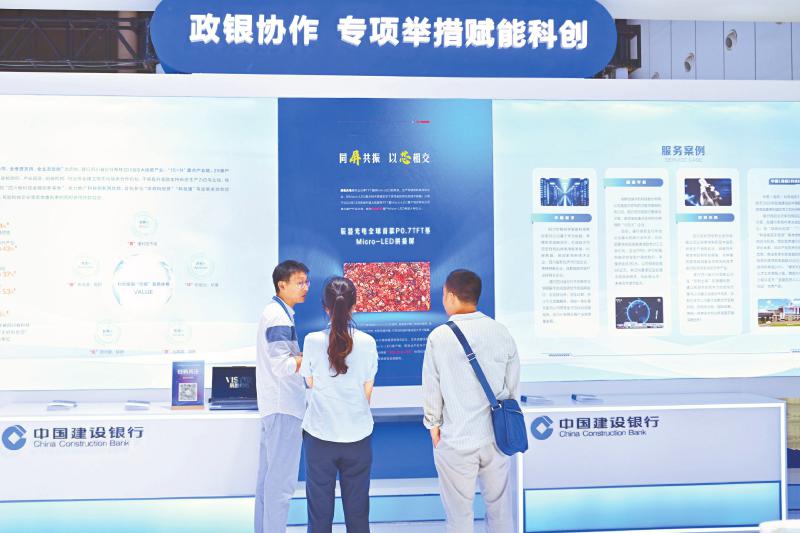
Group 1 - The core viewpoint of the article highlights that banks are intensifying their promotional efforts for individual pension contributions as the year-end deadline approaches, offering various incentives to attract customers to open accounts and make contributions [1][2][3] - Banks are shifting their marketing focus from merely acquiring new customers to retaining and activating existing ones, implementing more incentives for first-time and cumulative contributions to encourage actual deposits [1][2] - For example, Citic Bank has introduced a dual benefit program combining tax incentives and rewards for customers who open accounts and contribute by December 31, 2025, with potential tax savings ranging from 360 yuan to 5400 yuan based on income tax rates [1] Group 2 - The individual pension system is a crucial part of China's multi-tiered pension security framework, with tax benefits making it an attractive option for residents to optimize personal income tax and supplement retirement savings [3] - The industry is experiencing a shift from initial strategies focused on account openings to strategies aimed at increasing customer engagement and contribution activity, addressing the issue of inactive accounts [3] - Banks are innovating contribution methods and building a comprehensive pension financial ecosystem, including features like scheduled contributions and a transition from being mere account providers to offering holistic pension financial services [3][4] Group 3 - The competition among banks is increasingly centered on internal capabilities, focusing on deepening account management and extracting customer value, with banks that excel in innovation having a competitive edge [4] - Future competition will focus on three main areas: building a diverse pension financial product system, creating a pension financial ecosystem that integrates with retirement services, and enhancing personalized planning services for comprehensive retirement support [4]
中国建设银行行长张毅会见英国审慎监管局执行董事瑞贝卡·杰克森
Xin Lang Cai Jing· 2025-11-26 13:02
Core Viewpoint - The meeting between China Construction Bank (CCB) President Zhang Yi and Rebecca Jackson, Executive Director of the UK Prudential Regulation Authority, focused on macroeconomic conditions and CCB's operational development, emphasizing the bank's commitment to enhancing its international competitiveness and participating in the UK-China financial services dialogue [1] Group 1: International Engagement - CCB aims to strengthen its international competitiveness and deepen integrated operations in both domestic and foreign currencies [1] - The bank will actively participate in the construction of the London offshore RMB center and promote UK-China economic and trade exchanges [1] Group 2: Regulatory Support - The UK Prudential Regulation Authority expressed continued support for CCB's operations in the UK [1] Group 3: Technological and Risk Management Discussions - In-depth discussions were held on topics such as cybersecurity management, the application of artificial intelligence, and asset quality in related fields [1]

银行为何纷纷上调代销公募基金风险等级?对投资者影响几何?
Nan Fang Du Shi Bao· 2025-11-26 12:21
Core Viewpoint - Several banks, including China Construction Bank, have raised the risk levels of 87 mutual fund products, indicating a proactive response to regulatory requirements rather than a signal of overall market risk increase [2][5][6]. Group 1: Risk Level Adjustments - China Construction Bank announced adjustments to the risk levels of 87 mutual fund products, with 32 products moving from "R2 - Low to Medium Risk" to "R3 - Medium Risk" and 55 products from "R3 - Medium Risk" to "R4 - Medium to High Risk" [3]. - Postal Savings Bank and Citic Bank have also made similar adjustments to their mutual fund products, with Postal Savings Bank adjusting 80 products on October 29 and 6 products on November 6 [3][4]. - The adjustments are part of a broader trend among banks to comply with the "Commercial Banks' Agency Sales Business Management Measures" and to enhance investor protection [5][6]. Group 2: Market Implications - Experts assert that the increase in risk levels does not indicate a rise in overall market risk but is a necessary response to regulatory pressures and market volatility [5][6]. - The adjustments focus on high-volatility products, particularly equity funds, reflecting a more precise disclosure of specific product risk characteristics rather than systemic market risk changes [6]. Group 3: Long-term Benefits for Investors - In the short term, investors may face limited investment choices, but the long-term benefits include clearer risk warnings and more rational investment decisions, particularly for low-risk preference groups [7]. - The shift in focus from selling products to providing services is expected to enhance the investment research capabilities of fund companies and promote a healthier market ecosystem [7].
建行取得主备机异常恢复方法、装置、设备及存储介质专利
Sou Hu Cai Jing· 2025-11-26 10:30
来源:市场资讯 天眼查资料显示,中国建设银行股份有限公司,成立于2004年,位于北京市,是一家以从事货币金融服 务为主的企业。企业注册资本25001097.7486万人民币。通过天眼查大数据分析,中国建设银行股份有 限公司共对外投资了1038家企业,参与招投标项目5000次,财产线索方面有商标信息1908条,专利信息 5000条,此外企业还拥有行政许可149个。 声明:市场有风险,投资需谨慎。本文为AI基于第三方数据生成,仅供参考,不构成个人投资建议。 国家知识产权局信息显示,中国建设银行股份有限公司取得一项名为"一种主备机的异常恢复方法、装 置、设备及存储介质"的专利,授权公告号CN 115695154 B,申请日期为2022年9月。 ...