CCB(601939)

Search documents
用心用力陪伴实体经济成长(深度观察)
Ren Min Wang· 2025-12-28 22:33
Core Insights - The central theme of the article emphasizes the importance of financial institutions in supporting key sectors such as domestic demand, technological innovation, and small and medium-sized enterprises (SMEs) to bolster the real economy [3] Group 1: Focus Areas - Financial institutions are encouraged to provide targeted support rather than a broad approach, ensuring resources are allocated to critical areas and weak links in the economy [4][6] - The Industrial Bank has developed a specialized financing plan for green factory equipment updates, providing 137 million yuan in loans to support the transformation of enterprises like Luozhou Group [5][6] Group 2: Innovative Services - The Construction Bank has introduced a "Technology Transformation Loan" of 10 million yuan for high-tech enterprises, which does not require traditional collateral, addressing the unique financing challenges faced by technology companies [8][10] - The bank's approach includes comprehensive services beyond credit support, such as assisting with payroll and connecting businesses with industry partners to enhance market access [10][11] Group 3: Technological Assistance - Financial technology advancements are reshaping banking services, allowing for digital approvals and online operations that cater to the needs of small and micro enterprises [12][13] - The digital banking model enables faster and more efficient service delivery, reducing the reliance on physical branches and traditional collateral requirements [15][16] Group 4: Collaborative Efforts - The article highlights the importance of multi-party collaboration in providing financial services tailored to the needs of technology-driven enterprises, moving away from traditional collateral-based lending [17][19] - Beijing Bank has established a collaborative mechanism to link various resources, including equity investment institutions and research institutes, to support the growth of technology companies [19][20]





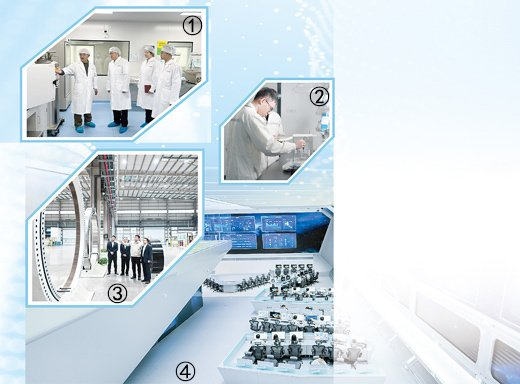
金融机构与企业深度对话——用心用力陪伴实体经济成长(深度观察)
Ren Min Ri Bao· 2025-12-28 22:02
Core Viewpoint - The Central Economic Work Conference emphasizes guiding financial institutions to enhance support for expanding domestic demand, technological innovation, and small and micro enterprises, highlighting the importance of precise financial resource allocation to key sectors and weak links in the economy [1]. Group 1: Focus Areas - Financial institutions are adopting a "precision drip irrigation" approach rather than a "flood irrigation" method to support major sectors and weak links, ensuring targeted financial assistance [2][4]. - The Industrial and Commercial Bank of China (ICBC) has developed a specialized financing plan for green factory equipment updates, providing 137 million yuan in loans to support enterprises like Luozhou Group in their green transformation efforts [2][3]. - The emphasis on financial support for the real economy has increased, with financial institutions like ICBC providing tailored project loans that facilitate equipment upgrades and technological advancements for companies [3][4]. Group 2: Innovative Services - Financial institutions are addressing the core pain points of financing for technology enterprises by offering customized products and precise services, such as the "Technology Transformation Loan" from China Construction Bank, which provides funding without requiring traditional collateral [6][7]. - The focus on "full-cycle companionship" in service innovation includes not only credit support but also comprehensive services that assist enterprises in daily operations and market expansion [7][8]. - The need for flexible support from banks, such as repayment plan adjustments and renewals, is crucial for technology enterprises facing cash flow pressures [8]. Group 3: Technology Empowerment - The advancement of financial technology is reshaping the service philosophy, models, and boundaries of banks, enabling them to provide 24/7 online services and integrate various financial services into a comprehensive ecosystem [12]. - Digital financial products, like the "Micro Business Loan" from WeBank, allow enterprises to access funds quickly and efficiently, reflecting the growing reliance on digital solutions in the financing landscape [10][11]. - The integration of AI and digital technologies in banking operations enhances efficiency and customer service, marking a significant shift towards AI-native banking [12]. Group 4: Collaborative Efforts - Multi-party collaboration is essential for effectively implementing technology finance services, moving beyond traditional collateral-based lending to accommodate the unique characteristics of technology enterprises [15]. - Beijing Bank has established a collaborative mechanism to link various resources, including partnerships with equity investment institutions and research institutes, to provide comprehensive support for technology enterprises [15]. - The approach of integrating financing with intelligence and resources creates a supportive ecosystem for technology enterprises, facilitating their growth and development [15].
2025年A股上市公司分红2.64万亿
Jin Rong Jie· 2025-12-28 09:29
Group 1 - The core point of the article highlights that a record number of listed companies in China have implemented cash dividends, totaling 2.64 trillion yuan as of December 28, with 3,766 companies participating in the distribution [1] - Among the listed companies, 37 have distributed dividends exceeding 10 billion yuan, with the Industrial and Commercial Bank of China leading at 160.17 billion yuan, followed by China Construction Bank at 149.36 billion yuan [1] - Agricultural Bank of China ranks third with a dividend of 126.48 billion yuan, while China Bank and China Mobile both exceeded 100 billion yuan, ranking fourth and fifth respectively [1] Group 2 - The sixth to tenth positions in dividend distribution are held by China Petroleum, Kweichow Moutai, China Shenhua, China National Offshore Oil Corporation, and China Merchants Bank [1]




银行理财代销加速扩张,有农商行年内产品数量暴增两倍
Di Yi Cai Jing· 2025-12-28 05:22
合规压力同步上行,多家银行因理财、代销业务被罚。 业内人士指出,理财代销正从"规模竞争"迈入"能力竞争"阶段。如何在抢占市场窗口期的同时守住风险 底线,成为摆在银行面前的一道现实考题。 理财规模创新高,中小银行加速入场 2025年以来,银行理财代销市场明显升温。一方面,多家银行代销理财产品数量和规模快速扩张,理财 代销成为不少银行在息差收窄背景下的重要"发力点";另一方面,随着业务加速推进,理财、代销等环 节的管理漏洞也逐步暴露,监管罚单密集落地,合规压力同步上行。年内多家银行因理财、代销等业务 管理不审慎等被处罚。 业内人士普遍认为,中小银行加码理财代销,既是应对息差持续收窄、压降负债成本的现实选择,也是 在资管新规全面落地背景下,对自营理财空间受限的一种"转向式布局"。 扩张背后罚单频现,监管持续加码 在理财代销快速扩张的同时,部分银行在理财、代销及相关业务环节的管理短板逐渐显现。 银行业理财登记托管中心发布的《中国银行业理财市场季度报告(2025年三季度)》显示,截至今年9 月末,全市场存续理财产品规模达32.13万亿元,首次突破32万亿元大关,创下历史新高;持有理财产 品的投资者数量达1.39亿,同比 ...
超半数上市银行完成中期分红,还有“红包”在路上
Huan Qiu Wang· 2025-12-28 01:34
Core Viewpoint - The mid-term dividend distribution among listed banks is progressing steadily, with half of the banks having completed their 2025 mid-year dividend payouts, characterized by an earlier distribution schedule and an increase in dividend rates [1] Group 1: State-owned Banks - The five major state-owned banks, including Industrial and Commercial Bank of China, Agricultural Bank of China, Bank of China, China Construction Bank, and Bank of Communications, successfully completed their mid-term dividend payouts in December, distributing a total of 189.885 billion yuan to shareholders [3] - Bank of Communications announced a cash dividend of 0.1563 yuan per share (including tax) on December 25, totaling 13.811 billion yuan [3] - Industrial and Commercial Bank of China and Agricultural Bank of China initiated their mid-term dividends on December 15, with Industrial Bank distributing 0.1414 yuan per share (approximately 50.396 billion yuan) and Agricultural Bank distributing 0.1195 yuan per share (approximately 41.823 billion yuan) [3] - China Construction Bank and Bank of China completed their payouts on December 11, with China Construction Bank distributing 0.1858 yuan per share (approximately 48.605 billion yuan) and Bank of China distributing 0.1094 yuan per share (approximately 35.250 billion yuan) [3] Group 2: Joint-stock and City Commercial Banks - Among the A-share joint-stock banks that have implemented mid-term dividends, CITIC Bank, Minsheng Bank, and Ping An Bank completed their payouts in August 2025, with total cash dividends of 10.461 billion yuan, 5.954 billion yuan, and 4.580 billion yuan respectively [4] - Additionally, 13 A-share listed city commercial banks and rural commercial banks completed their mid-term dividends for 2025, including Shanghai Bank and Nanjing Bank, with a total distribution exceeding 18.5 billion yuan [4] - According to Guotai Junan Securities, the dividend rates for most banks that have disclosed their plans for 2025 mid-term dividends are consistent with those of 2024, while six banks, including Suzhou, Minsheng, Shanghai, Hangzhou, Huaxia, and CITIC, have increased their rates by 0.9 to 4.5 percentage points compared to 2024 [4] Group 3: Upcoming Dividend Plans - Postal Savings Bank plans to distribute 1.230 yuan (including tax) for every 10 ordinary shares, totaling approximately 14.8 billion yuan [4] - Industrial Bank intends to distribute 5.65 yuan (including tax) for every 10 shares, amounting to 11.957 billion yuan [4] - China Merchants Bank has confirmed that its mid-term cash dividend distribution will occur between January and February 2026, with a distribution ratio of 35% [4]


A股分红生态焕新:规模攀升、行业亮点频现
Huan Qiu Wang· 2025-12-28 01:31
Group 1 - Over 3,700 listed companies have implemented cash dividends this year, with a total amount of 2.64 trillion yuan, setting a new historical record [1] - The top three companies by dividend amount are Industrial and Commercial Bank of China (ICBC) with 160.169 billion yuan, China Construction Bank with 149.359 billion yuan, and Agricultural Bank of China with 126.484 billion yuan [3] - China Mobile and Bank of China also exceeded 100 billion yuan in dividends, ranking fourth and fifth respectively [3] Group 2 - The demand for high dividend and strong cash flow assets is increasing due to low interest rates and asset scarcity, highlighting their investment value [3] - The distribution of companies with dividends exceeding 10 billion yuan is concentrated in the banking, telecommunications, and oil sectors, with some industries significantly increasing their dividend levels [3] - Coal companies are expected to continue raising their dividend levels, with China Shenhua planning to maintain a minimum cash dividend ratio of 65% from 2025 to 2027 [3]

建设银行取得业务处理方法专利提升身份认证效率
Sou Hu Cai Jing· 2025-12-27 14:48
Group 1 - The core point of the article is that China Construction Bank has obtained a patent for a business processing method, device, equipment, storage medium, and program product, with the authorization announcement number CN119363447B, and the application date is October 2024 [1] Group 2 - China Construction Bank, established in 2004 and located in Beijing, primarily engages in monetary financial services, with a registered capital of 26,160,038.1459 thousand RMB [1] - The bank has invested in 36 companies, participated in 5,000 bidding projects, and holds 1,908 trademark records and 5,000 patent records, along with 149 administrative licenses [1] Group 3 - Jianxin Financial Technology Co., Ltd., founded in 2018 and based in Shanghai, focuses on software and information technology services, with a registered capital of 172,972.9729 thousand RMB [1] - The company has invested in 6 enterprises, participated in 4,222 bidding projects, and possesses 297 trademark records and 5,000 patent records, in addition to 10 administrative licenses [1]
2026年起,三年期定存利率:建行、邮储、农商银行,哪个银行最高?
Sou Hu Cai Jing· 2025-12-27 10:13
Core Viewpoint - The choice of bank for three-year fixed deposits among China Construction Bank (CCB), Postal Savings Bank (PSB), and rural commercial banks (RCBs) depends on individual preferences for safety and yield, with RCBs currently offering the highest interest rates [1] Interest Rates Comparison - CCB and PSB both offer a three-year fixed deposit interest rate of 1.25%, resulting in a total interest income of 3,750 yuan for a deposit of 100,000 yuan over three years [4] - PSB provides an upgraded interest rate of 1.55% for deposits of 50,000 yuan or more, yielding 4,650 yuan for a 100,000 yuan deposit over three years, which is 900 yuan more than CCB [4] - Some RCBs offer a three-year fixed deposit interest rate of 1.70% and a rate of 1.75% for large deposits, leading to an interest income of 5,100 yuan for a 100,000 yuan deposit, which is 1,350 yuan more than CCB [6] Safety Considerations - The safety of deposits in CCB and PSB is significantly higher than that of RCBs, as they are part of the six major state-owned banks [6] - It is crucial for depositors to ensure that the RCB they choose participates in deposit insurance, which provides compensation in case of bank failure [8] - Depositors should limit their total deposits and interest in any RCB to 500,000 yuan to ensure full compensation in the event of a bank collapse [8] Alternative Investment Options - The current interest rates for three-year government bonds are 1.85% and 1.90% for five-year bonds, which exceed the rates offered by most three-year fixed deposits [8] - Government bonds also allow for interest calculation based on the nearest fixed deposit rate, providing flexibility for depositors who may need to access their funds early [8] Conclusion - RCBs offer the highest interest rates for three-year fixed deposits, but their safety is lower compared to CCB and PSB. Depositors should consider their risk tolerance and whether the RCB participates in deposit insurance before making a decision [10]

信用债周度观察(20251222-20251226):信用债发行量环比上升,各行业信用利差涨跌互现-20251227
EBSCN· 2025-12-27 08:28
1. Report Industry Investment Rating - Not provided in the given content 2. Core View of the Report - From December 22 to December 26, 2025, the issuance volume of credit bonds increased month - on - month, and the credit spreads of various industries showed mixed trends [1] 3. Summary by Directory 3.1 Primary Market 3.1.1 Issuance Statistics - During the week from December 22 to December 26, 2025, 267 credit bonds were issued, with a total issuance scale of 427.702 billion yuan, a month - on - month increase of 15.42%. Among them, 117 industrial bonds were issued, with a scale of 219.258 billion yuan (a 34.26% month - on - month increase, accounting for 51.26% of the total); 110 urban investment bonds were issued, with a scale of 71.364 billion yuan (an 18.87% month - on - month decrease, accounting for 16.69% of the total); 40 financial bonds were issued, with a scale of 137.08 billion yuan (a 14.92% month - on - month increase, accounting for 32.05% of the total) [1][11] - The average issuance term of credit bonds this week was 2.74 years. The average issuance term of industrial bonds was 2.36 years, urban investment bonds was 3.25 years, and financial bonds was 2.35 years [1][14] - The average issuance coupon rate of credit bonds this week was 2.26%. The average issuance coupon rate of industrial bonds was 2.12%, urban investment bonds was 2.41%, and financial bonds was 2.23% [2][19] 3.1.2 Cancellation of Issuance Statistics - Five credit bonds were cancelled for issuance this week [2][23] 3.2 Secondary Market 3.2.1 Credit Spread Tracking - By industry, in the Shenwan primary industries, the largest upward movement of the AAA - rated industry credit spread was in the pharmaceutical and biological industry (up 5.1BP), and the largest downward movement was in the real estate industry (down 1.3BP); the largest upward movement of the AA + - rated industry credit spread was in the household appliances industry (up 6.4BP), and the largest downward movement was in the textile and clothing industry (down 9.8BP); the largest upward movement of the AA - rated industry credit spread was in the building materials industry (up 11BP), and the largest downward movement was in the commercial trade industry (down 1BP) [3] - By region for urban investment bonds, this week, the largest upward movement of the AAA - rated credit spread was in Gansu (up 8.7BP), and the largest downward movement was in Jilin (down 2.9BP); the largest upward movement of the AA + - rated credit spread was in Liaoning (up 6.7BP), and the largest downward movement was in Fujian (down 3.2BP); the largest upward movement of the AA - rated credit spread was in Jiangxi (up 4.5BP), and the largest downward movement was in Anhui (down 3.3BP) [3] 3.2.2 Trading Volume Statistics - The total trading volume of credit bonds was 1.782747 trillion yuan, a month - on - month increase of 28.47%. The top three in terms of trading volume were commercial bank bonds, corporate bonds, and medium - term notes. Specifically, the trading volume of commercial bank bonds was 630.894 billion yuan (a 38.88% month - on - month increase, accounting for 35.39% of the total); the trading volume of corporate bonds was 521.309 billion yuan (a 15.93% month - on - month increase, accounting for 29.24% of the total); the trading volume of medium - term notes was 347.636 billion yuan (a 40.63% month - on - month increase, accounting for 19.50% of the total) [4][28] 3.2.3 Actively Traded Bonds This Week - According to DM client data, the top 20 urban investment bonds, industrial bonds, and financial bonds in terms of trading volume this week are provided for investors' reference [30]


太豪爽!中期分红近2300亿元,A股半数上市银行发“红包”
券商中国· 2025-12-27 07:17
Core Viewpoint - The article discusses the recent trend of mid-term dividends among listed banks in China, highlighting the significant cash distributions made by state-owned banks and the increasing participation of smaller banks in dividend payouts [1][2][3]. Group 1: Mid-term Dividends Overview - As of December 26, 21 A-share listed banks have implemented mid-term dividends, totaling nearly 230 billion yuan, with an observed trend of earlier dividend announcements and increased payout ratios [2]. - State-owned banks are the primary contributors to mid-term dividends, with five major banks distributing a total of approximately 189.89 billion yuan in cash dividends [3]. - The Agricultural Bank of China and Industrial and Commercial Bank of China led the mid-term dividend payouts, with 41.82 billion yuan and 50.40 billion yuan respectively [3]. Group 2: Participation of Smaller Banks - More small and medium-sized banks are joining the mid-term dividend trend, with 13 local listed banks announcing their plans, collectively distributing over 18.5 billion yuan [6]. - Qilu Bank and Zijin Bank have recently disclosed their mid-term dividend plans, with Qilu Bank proposing a payout of 0.121 yuan per share, totaling 745 million yuan [6]. - The trend indicates that many banks are maintaining or increasing their dividend payout ratios compared to the previous year, with some banks showing increases of 0.9% to 4.5% [6]. Group 3: Future Dividend Plans - Postal Savings Bank has outlined a clear plan for mid-term dividends, proposing a payout of 1.23 yuan per 10 shares, amounting to approximately 14.8 billion yuan, which represents 30% of its net profit [4]. - China Merchants Bank has indicated that its mid-term cash dividend distribution will occur between January and February 2026, with a proposed payout ratio of 35% [6]. - Several other banks, including Industrial Bank and Everbright Bank, have also announced their mid-term dividend plans, with payout ratios exceeding 25% [5].