BANK OF CHINA(601988)

Search documents
关于2025深圳金融创新大赛拟获奖项目的公示
Xin Lang Cai Jing· 2025-12-26 12:21
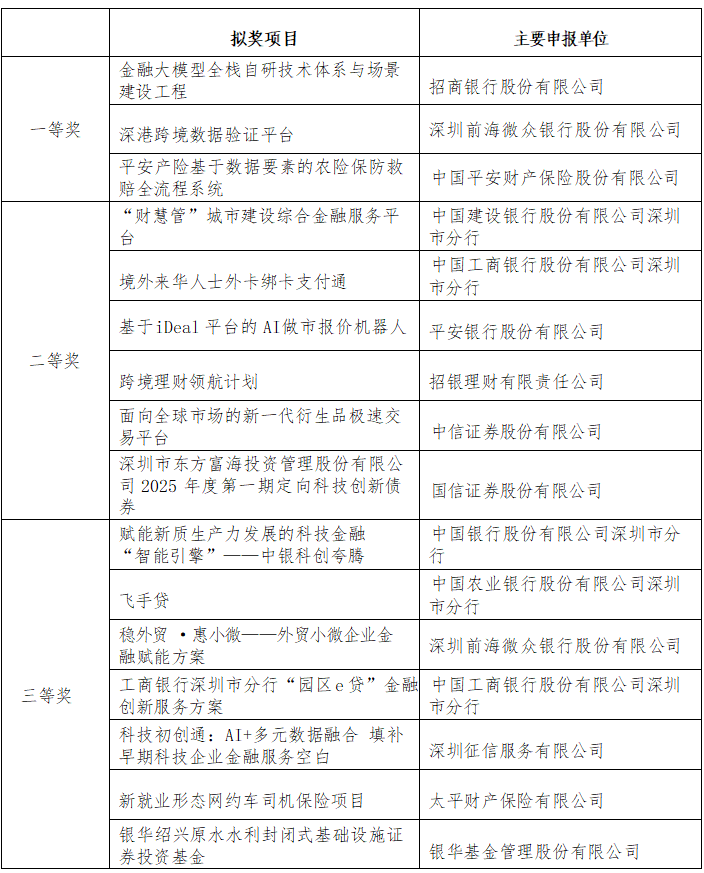
Core Viewpoint - The 2025 Shenzhen Financial Innovation Competition aims to enhance the financial services of local institutions and promote Shenzhen as a globally influential financial center, showcasing the innovation level of the financial industry in Shenzhen [1][4]. Summary by Category Competition Overview - The competition was announced in September 2025, receiving submissions from 113 units with a total of 173 projects [4]. - After various evaluation stages, 30 projects were selected for awards, including 3 first prizes, 6 second prizes, 12 third prizes, 3 most potential awards, 3 best growth awards, and 3 innovation breakthrough awards [4]. Awarded Projects - **First Prize Projects**: - Financial model full-stack self-research technology system and scenario construction project by China Merchants Bank and WeBank [6]. - Hong Kong-Shenzhen cross-border data verification platform [6]. - Agricultural insurance prevention and rescue system based on data elements by Ping An Property & Casualty Insurance [6]. - **Second Prize Projects**: - Cross-border wealth management navigation plan by China Merchants Bank Wealth Management [6]. - New generation derivative rapid trading platform for global markets by CITIC Securities [6]. - Technology financial empowerment plan for new quality productivity development by Bank of China Shenzhen Branch [6]. - **Third Prize Projects**: - AI and multi-data integration service for early-stage technology enterprises by Shenzhen Credit Service [6]. - New employment form ride-hailing driver insurance project by Taiping Property Insurance [6]. - **Most Potential Award Projects**: - "Housing Dream" project for large-scale urban village renovation by the National Development Bank Shenzhen Branch [7]. - New energy "technology + insurance" model construction by Ping An Property & Casualty Insurance Shenzhen Branch [7]. - **Best Growth Award Projects**: - New model for marine pastoral + insurance + N by Taiping Property Insurance [7]. - **Innovation Breakthrough Award Projects**: - "WeChat Quick Compensation" proactive claim model by Weimin Insurance Agency [7]. - Online self-service tax refund mini-program "Xing Shui Tong" by Guangdong Huaxing Bank Shenzhen Branch [7].




中国银行业协会发布《中国银行业中间业务发展报告暨创新案例选编》
Xin Lang Cai Jing· 2025-12-26 12:21
Core Viewpoint - The report highlights the trends, characteristics, significant changes, and achievements in the development of intermediary business in China's banking sector, while also analyzing the challenges faced and forecasting future directions [1][5] Group 1: Service National Strategy and Improve Service Quality - Due to factors such as slowing economic growth and policy interest rate cuts, commercial banks are experiencing a continuous narrowing of net interest margins, necessitating a shift towards intermediary business with lighter capital and assets [2][6] - Commercial banks are actively serving key sectors like advanced manufacturing, strategic emerging industries, and the elderly care industry, while enhancing product innovation and accelerating business transformation [2][6] - The implementation of fee reduction policies aims to improve financial service quality and optimize customer financial experiences, thereby supporting high-quality economic development [2][6] Group 2: Strengthen Management Capabilities and Solidify Operational Foundation - Intermediary business is crucial for commercial banks to serve the real economy and promote their own high-quality development [7] - In the context of narrowing net interest margins and tightening capital constraints, banks are enhancing refined management and professional capabilities to achieve cost reduction and efficiency improvement [7] - The report emphasizes the need for product and service innovation, building a versatile talent pool, deepening technological empowerment, and strengthening compliance management to enhance value creation capabilities [7] Group 3: Learn from International Experience to Promote Transformation and Upgrading - The report reviews the overall development and structural characteristics of intermediary business in European and American banks over the past three years, comparing income structure, product service innovation, and management models [3][7] - By integrating China's national conditions and policy guidance, the report suggests adopting mature practices from international banks in terms of management philosophy, operational models, and technological innovation to facilitate the transformation and upgrading of intermediary business in China [3][7] Group 4: Select Excellent Cases to Showcase Good Practices - The report selects exemplary cases of intermediary business product innovation from various banks, including the China Development Bank, Agricultural Development Bank of China, and others, showcasing innovation models, service effectiveness, significance, and specific application scenarios [4][7] - This selection aims to demonstrate the innovative development of intermediary business in commercial banks and the effective practices in addressing key issues [4][7]

2025回顾| 猛涨450%,逼近万亿,定增大爆发!
Guo Ji Jin Rong Bao· 2025-12-26 12:02
Core Viewpoint - The A-share market has seen a significant increase in the scale and performance of private placements in 2025, with a total fundraising amount of 959.38 billion yuan, marking a 454.4% increase compared to the entire year of 2024 [2][6]. Group 1: Fundraising Activity - As of December 25, 2025, 164 A-share companies have implemented private placements, raising a total of 959.38 billion yuan, which is a substantial increase from the previous year [2][6]. - The approval rate for private placement projects has reached 100%, with nearly 90% of projects currently showing profits [2][12]. - The fundraising scale in 2025 is approaching the 1 trillion yuan mark, with the total exceeding 950 billion yuan, a significant recovery from the low of 173.05 billion yuan in 2024 [5][6]. Group 2: Sector and Company Distribution - The financial sector leads in fundraising, with 11 companies raising a total of 659.47 billion yuan, including major banks like China Bank and Postal Savings Bank [7][8]. - Among the 164 companies that have completed private placements, 118 are from the manufacturing sector, raising 189.66 billion yuan, indicating a strong demand for long-term funding in this industry [6][19]. - The top four state-owned banks have collectively raised 520 billion yuan, accounting for 52.5% of the total private placement fundraising this year [8][10]. Group 3: Market Performance - Approximately 88% of the private placement projects this year have shown profits, with 33 projects experiencing price increases exceeding 100% [12][16]. - Notable performers include companies like AVIC Chengfei, which has a premium rate of 820.23% [13]. - The overall enthusiasm for private placements is high, with public funds participating significantly, leading to a floating profit amount of 10.74 billion yuan for public funds [16]. Group 4: Approval and Regulatory Environment - The approval process for private placements has accelerated, with 133 projects approved by the end of 2025, reflecting a significant increase in efficiency compared to previous years [17][18]. - The "Six Merger Policies" have notably increased the proportion of financing for mergers and acquisitions, with 45 cases related to asset acquisitions [19]. - The reduction in the average review cycle for private placements has improved the responsiveness of the capital market to the needs of the real economy [18][19].



中国银行设立专项资金池锚定硬科技,首期600亿元
2 1 Shi Ji Jing Ji Bao Dao· 2025-12-26 10:44
Core Viewpoint - Technological innovation is identified as a core element of national competition, with a focus on enhancing self-reliance and strength in technology as outlined in the "14th Five-Year Plan" [1] Group 1: Financial Support for Technological Innovation - The Ministry of Science and Technology, the People's Bank of China, and other regulatory bodies have proposed 15 specific measures to provide comprehensive financial support for technological innovation across seven key areas [1] - China Bank has launched the "Integrated Customer Cultivation Plan" with an initial funding pool of 60 billion yuan, aimed at supporting the growth of key technology enterprises [1][4] Group 2: Integrated Cultivation Concept - The "Integrated Cultivation" concept aims to provide a seamless service model for high-growth potential technology companies, transitioning from fragmented services to a one-stop service approach [2] - The plan includes a comprehensive service package covering equity, loans, bonds, and investment banking, tailored to the development stages of enterprises over a 3-5 year period [2] Group 3: Funding Structure and Focus Areas - The initial funding pool consists of 10 billion yuan for equity investment and 50 billion yuan for credit support, with a focus on key hard technology sectors such as integrated circuits, artificial intelligence, and biomedicine [4] - The plan will first be implemented in five key regions: Beijing, Shanghai, Jiangsu, Shenzhen, and Hangzhou, targeting the cultivation of at least 100 high-quality enterprises with core technologies [4] Group 4: Case Study of Successful Support - The example of GPU company Moore Threads illustrates the effectiveness of the plan, with China Bank providing over 100 million yuan during the A-round financing and leading a consortium to support a 1 billion yuan project [3]
谁是银行贵金属之王?
Xin Lang Cai Jing· 2025-12-26 10:11
Core Viewpoint - The global market is experiencing a rare super cycle in precious metals, driven by a reassessment of the dollar's credibility and real demand from new industrial revolutions such as AI and hydrogen energy [2][24]. Group 1: Market Dynamics - As of December 24, spot gold reached $4500 per ounce, with international silver and platinum increasing over 140% for the year [2][24]. - The demand for precious metals has shifted from traditional safe-haven assets to being driven by monetary credit, geopolitical factors, and green technology [10][34]. Group 2: Banking Sector Adjustments - Major banks like ICBC, CCB, and CITIC are cleaning up personal precious metal accounts that have been inactive, indicating a strategic shift towards focusing on quality clients rather than quantity [3][26]. - This move is not a retreat but a strategic adjustment to enhance service quality, risk control, and long-term trust [27][36]. Group 3: Asset Growth and Competition - By Q3 2025, ICBC led the market with precious metal assets of 385.43 billion yuan, followed by Bank of China, China Construction Bank, Agricultural Bank of China, and Shanghai Pudong Development Bank, all surpassing 100 billion yuan [29][31]. - The growth in precious metal assets is built on a solid foundation from 2024, with ICBC showing consistent expansion from 254.30 billion yuan in Q1 to 385.43 billion yuan in Q3 2025 [32][33]. Group 4: Future Outlook - Goldman Sachs predicts that gold prices may reach $4900 per ounce by 2026, with several financial institutions forecasting gold to potentially hit $5000 per ounce [21][41]. - The competition in the precious metals sector will focus on compliance, customer trust, and long-term strategies, with the true "king of precious metals" being the bank that retains the most engaged and trusting clients after account clean-ups [42].



证监会:核准中国银行(香港)有限公司合格境外投资者资格
Xin Lang Cai Jing· 2025-12-26 09:51
Group 1 - The China Securities Regulatory Commission (CSRC) has approved the qualification of Bank of China (Hong Kong) Limited as a qualified foreign institutional investor [1] - The company is required to strictly adhere to relevant regulations while conducting its qualified foreign institutional investor business [1] - The company must fulfill its responsibilities and obligations in accordance with the law [1]

日常金融纠纷何解?多地建立第三方纠纷调解机构
Xin Lang Cai Jing· 2025-12-26 09:28
Core Viewpoint - The rise of financial products and services has led to an increase in consumer disputes, prompting the establishment of third-party mediation institutions to resolve these issues efficiently and improve the allocation of judicial resources [1][7]. Group 1: Third-Party Mediation Institutions - The establishment of third-party mediation institutions is growing, with the Beijing Bingzheng Center being one example that facilitates dispute resolution for credit card holders [2]. - Various types of third-party mediation institutions exist, including independent organizations under the guidance of the central bank, court-affiliated mediation bodies, and internal mediation organizations within financial institutions [3]. - As of December 2024, there are 192 financial dispute mediation organizations in China, with 13,000 mediators involved, having resolved 41,000 cases involving a total dispute amount of 10.2 billion [4]. Group 2: Mediation Process - Third-party mediation can occur through online or offline methods, where mediators clarify the rights and obligations of both parties and work towards a resolution [5]. - A case example illustrates how a customer, unable to access their frozen bank account, sought mediation, leading to a resolution where the bank assisted in paying the child's school fees [6]. Group 3: Financial Institutions' Reflection - The complexity and diversity of financial disputes have highlighted the need for financial institutions to reflect on their service shortcomings, as consumers often lack the knowledge to effectively advocate for their rights [7]. - The establishment of a non-litigation dispute resolution mechanism has been emphasized by regulatory bodies to alleviate the burden on courts and improve consumer trust in financial institutions [7][8]. - Third-party mediation institutions serve as a neutral bridge between consumers and financial institutions, helping to mitigate risks and improve service processes [8].
商业银行出海,谁在悄然发力
21世纪经济报道· 2025-12-26 09:17
Core Viewpoint - Chinese banks are expanding their global presence, establishing a comprehensive service network that supports domestic enterprises going abroad, particularly in emerging markets along the Belt and Road Initiative [1][2]. Group 1: Global Expansion Strategy - Chinese banks are transitioning from focusing primarily on traditional markets in Europe and the US to diversifying their operations in emerging markets such as Southeast Asia, the Middle East, and Latin America [1]. - The overseas expansion strategy of Chinese banks has evolved from rapid growth through new branches and acquisitions before 2019 to a more focused approach on strategic value and risk control since 2020 [11]. Group 2: Bank Performance and Revenue - As of June 2025, Bank of China leads with 783.13 billion yuan in overseas revenue, marking a 14.4% increase from the previous year, with overseas revenue accounting for 23.77% of its total [14]. - Agricultural Bank of China reported a 21.03% increase in overseas revenue, while Construction Bank's overseas revenue grew by 40.92% [14][15]. - In contrast, Everbright Bank experienced a 12.72% decline in overseas revenue, indicating varying performance among banks [16]. Group 3: Regional Distribution and Focus - The distribution of overseas institutions varies among banks, with Bank of China having the most extensive network, followed by Industrial and Commercial Bank of China, which has a significant presence in 49 countries [4][5]. - Joint-stock banks tend to focus their internationalization efforts on key financial hubs like Hong Kong and London, aiming for niche markets in cross-border finance and wealth management [9]. Group 4: Challenges and Opportunities - Chinese banks face challenges in compliance with differing regulatory environments, cultural integration, and brand recognition in international markets [18]. - The demand for diversified financial services is increasing among Chinese enterprises going abroad, with a shift towards high-value industries and a need for localized services [19][20]. Group 5: Future Directions - To enhance competitiveness, Chinese banks must focus on global collaboration, local market adaptation, compliance risk management, and financial technology innovation [22]. - The future of internationalization for Chinese banks will hinge on their ability to create value in a complex global environment, moving from broad network expansion to deep operational excellence [22].

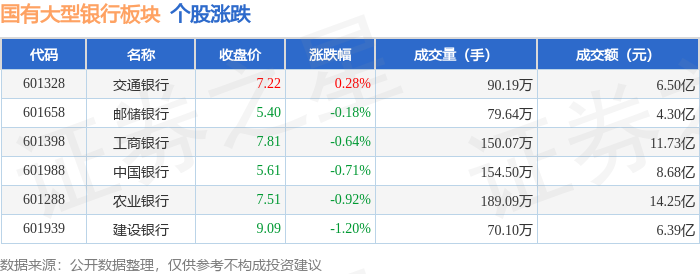
国有大型银行板块12月26日跌0.71%,建设银行领跌,主力资金净流出5.13亿元
Zheng Xing Xing Ye Ri Bao· 2025-12-26 09:07
证券之星消息,12月26日国有大型银行板块较上一交易日下跌0.71%,建设银行领跌。当日上证指数报 收于3963.68,上涨0.1%。深证成指报收于13603.89,上涨0.54%。国有大型银行板块个股涨跌见下表: 从资金流向上来看,当日国有大型银行板块主力资金净流出5.13亿元,游资资金净流入1.74亿元,散户资 金净流入3.39亿元。国有大型银行板块个股资金流向见下表: | 代码 | 名称 | 主力净流入 (元) | 主力净占比 游资净流入 (元) | | 游资净占比 散户净流入 (元) | | 散户净占比 | | --- | --- | --- | --- | --- | --- | --- | --- | | 601939 建设银行 | | > 664.58万 | 1.04% | 494.59万 | 0.77% | -1159.17万 | -1.82% | | 601658 邮储银行 | | -2904.10万 | -6.75% | 643.13万 | 1.50% | 2260.97万 | 5.26% | | 601988 中国银行 | | -5258.09万 | -6.06% | 2974.07万 ...
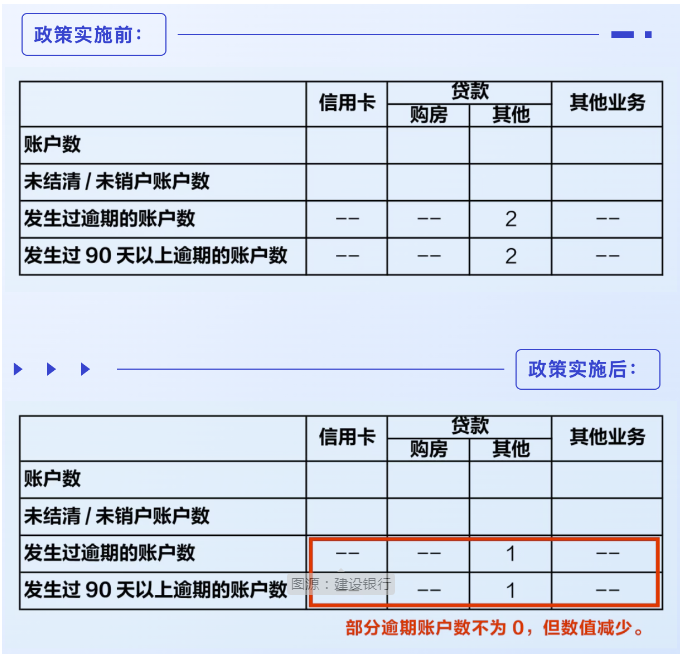
国开行、工行、农行、中行、建行、交行、邮储银行等迅速响应!
Jin Rong Shi Bao· 2025-12-26 04:46
Core Viewpoint - The People's Bank of China has announced a one-time credit repair policy that allows individuals with overdue debts of up to 10,000 RMB to have their overdue information removed from the credit reporting system if they repay their debts in full by March 31, 2026 [1] Group 1: Policy Details - The policy applies to all types of personal credit, including credit cards, housing loans, and consumer loans, as long as they meet the specified conditions [1] - Individuals must fully repay overdue debts, including principal, interest, and penalties, and make timely payments for the current month to qualify for the credit repair [2] - The overdue information in credit reports will be adjusted, changing the repayment status from overdue to normal and the overdue amount from a non-zero value to zero [3][4] Group 2: Implementation and Support - Banks, including major institutions like Industrial and Commercial Bank of China and Agricultural Bank of China, are actively preparing to implement the policy and provide guidance to the public [6][7] - The central bank will offer an additional two free credit report inquiries in the first half of 2026 to accommodate increased demand for credit report checks following the policy implementation [5] - The policy is not to be viewed as a means of "credit washing," but rather as a special arrangement to address public concerns while maintaining the principle of punishing dishonesty [7]