BANK OF CHINA(601988)

Search documents
举牌、重组!银行业十大关键词,看这里!
券商中国· 2025-12-26 03:37
Core Viewpoint - In 2025, the Chinese banking industry is characterized by resilience amidst economic challenges, focusing on serving the real economy, embracing transformation, and maintaining a balance between national strategy and sustainable development [1] Group 1: Regulatory Indicators - Total assets of commercial banks are projected to grow from 380.52 trillion yuan at the end of 2024 to 409.63 trillion yuan by September 2025 [2] - The non-performing loan ratio is expected to fluctuate slightly, starting at 1.50% in December 2024 and reaching 1.52% by September 2025 [2] - The core tier one capital adequacy ratio is anticipated to decrease from 11% in 2024 to around 10.87% by September 2025 [2] Group 2: Industry Trends - The banking sector is shifting from aggressive expansion to a more cautious approach, emphasizing the need to avoid "involution" or excessive competition [3] - Regulatory bodies are actively working to curb harmful competition, leading to a collective industry effort to reduce risks and improve operational efficiency [3] Group 3: Interest Margin Protection - The banking industry is facing significant pressure on net interest margins, prompting banks to optimize asset allocation and diversify revenue sources [7][9] - Banks are focusing on cost control by reducing deposit rates and managing high-cost long-term deposits [8] Group 4: Deposit Migration - A trend of "deposit migration" is emerging as residents seek better investment channels due to low deposit rates, with bank wealth management products seeing significant growth [10] - The shift in deposit behavior is driven by a "price comparison effect," leading to a decline in demand for traditional long-term deposits [10] Group 5: Mergers and Restructuring - Over 400 banking institutions are expected to exit the market through mergers, dissolutions, or consolidations, marking a significant increase compared to previous years [11] - The restructuring efforts are focused on improving the quality of financial services rather than merely reducing the number of institutions [13] Group 6: Technological Finance - The banking sector is prioritizing technological finance, with a focus on supporting innovation and providing tailored financial products for tech companies [14][15] - The proportion of technology loans in total new loans has reached 28.8%, indicating a strong push towards financing technology-driven enterprises [15] Group 7: Capital Increases - A notable "capital increase wave" is occurring, with major state-owned banks raising 520 billion yuan through stock issuance to bolster capital adequacy [17] - Smaller banks are also responding by exploring various capital-raising methods, including targeted issuance and local state-owned capital participation [17] Group 8: Shareholder Engagement - The banking sector has seen a surge in insurance capital participation, with several banks experiencing significant shareholding increases from insurance companies [18] - Asset management companies are also actively increasing their stakes in various banks, indicating strong investor interest in the banking sector [18] Group 9: Corporate Governance Changes - A significant shift in corporate governance is underway, with many banks abolishing or not establishing supervisory boards, transitioning to a single board system [21][22] - This change aims to enhance efficiency and reduce governance costs while maintaining oversight through audit committees [22][24] Group 10: AI Integration - The banking industry is undergoing a transformation driven by artificial intelligence, with major banks adopting an "AI-first" strategy to enhance their operations [25][26] - AI applications are expanding from customer service to core business processes, indicating a shift towards value creation through technology [26]



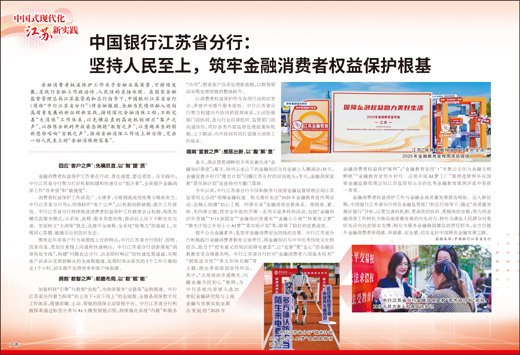
中国银行江苏省分行:坚持人民至上,筑牢金融消费者权益保护根基
Ren Min Wang· 2025-12-26 01:19
金融消费者权益保护工作重在行动、贵在速度、要在质效。在实践中,中行江苏省分行聚力打好机制构 建和快速反应"组合拳",全面提升金融消保工作"效率值"和"敏捷度"。 消费者权益保护工作涉及广、头绪多,为做到既高效统筹又精准发力,中行江苏省分行用心用情聆 听"客户之声",以机制创新破题,提升工作质效。中行江苏省分行持续推进消费者权益保护工作联席会 议机制,构筑先横后直服务模式,从系统、流程、服务角度治理,推动自上而下不断优化完善。牢固树 立"大消保"理念,在提升全流程、全系统"统筹力"的基础上,实现同心答题、敏捷反应的良好生态。 聚焦近年来客户行为高度线上化的特点,中行江苏省分行因时、因势、因客而变,更加注重线上沟通和 快速响应。中行江苏省分行创新落地"消保快处专线",构建"问题直达分行、诉求即时响应"的快速处置 通道,实现客户诉求从受理到解决的全流程提速,处理时效由原先的3个工作日缩短至1个小时,切实提 升处理效率和客户体验感。 金融消费者权益保护工作关乎金融业高质量、可持续发展,是践行金融工作政治性、人民性的直接体 现。在国家金融监督管理总局江苏监管局和总行指导下,中国银行江苏省分行(简称"中行江苏省分行") ...
继中国银行后,邮储银行也调整这一服务!今年来,江西银行、北京农商行等多家银行已纷纷出手
Mei Ri Jing Ji Xin Wen· 2025-12-25 23:56
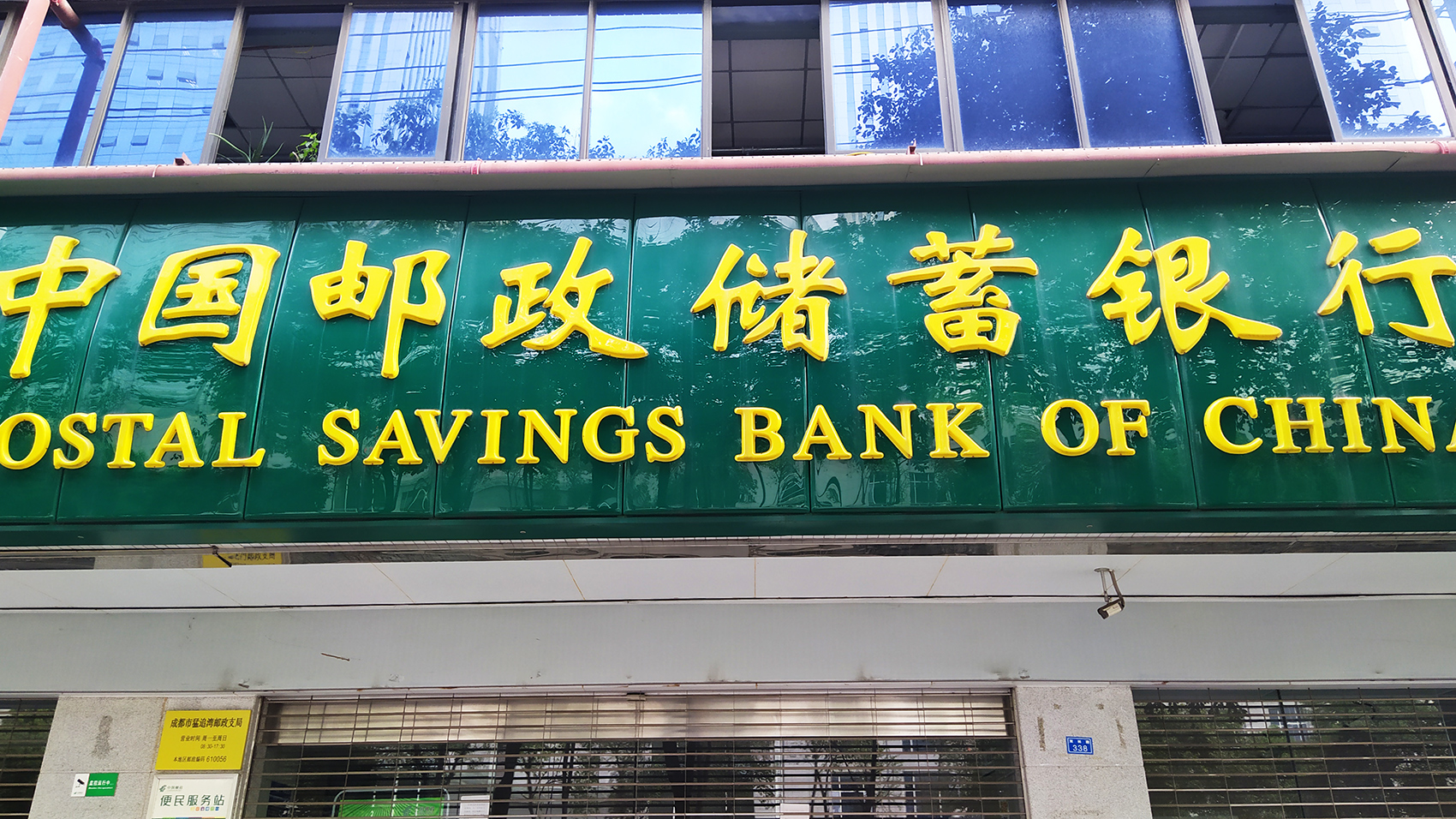
Core Viewpoint - Postal Savings Bank of China is adjusting its credit card online channel services to integrate credit card functions into the "Postal Savings Bank App," discontinuing the "Postal Credit Card App" while ensuring that customer services remain unaffected [1][3]. Group 1: Company Actions - Postal Savings Bank announced the integration of credit card services into its main app, ceasing the use of the "Postal Credit Card App" [1]. - China Bank has also initiated a similar migration of credit card functions to the "China Bank App," with plans to stop the original app's download and registration [3]. - Other banks, including Jiangxi Bank and Beijing Rural Commercial Bank, have also closed or integrated their credit card apps into their main mobile banking platforms [5]. Group 2: Industry Trends - The integration of credit card services into main banking apps is part of a broader digital transformation strategy in the banking industry, driven by the need for efficiency and improved user experience [3][5]. - Financial institutions are responding to regulatory guidance to optimize or terminate underperforming mobile applications, which is leading to a trend of consolidating services into fewer apps [3]. - The shift towards a "main app + diversified lightweight touchpoints" model is expected to enhance user experience by reducing the need for multiple app logins and passwords [3].

活跃度显著提升 今年以来A股市场定增融资超7800亿元
Zhong Guo Zheng Quan Bao· 2025-12-25 23:35
Core Viewpoint - The A-share market has seen significant activity in private placements this year, with a total of 148 companies completing placements, raising a total of 788.9 billion yuan, marking a year-on-year increase of 455.31% [1][2][3]. Group 1: Market Activity - As of December 24, 2023, 438 A-share companies announced private placement plans, with 148 successfully completed, raising 788.9 billion yuan compared to 142.1 billion yuan in the same period last year [2]. - Major banks such as China Bank, Postal Savings Bank, and others raised over 100 billion yuan each, primarily for liquidity support [2]. - The private placement market has transitioned from a simple financing tool to a crucial platform for industrial upgrades and integration [3]. Group 2: Industry Focus - The majority of companies engaging in private placements are from the technology sector, particularly electronics, power equipment, and communications [4]. - The electronics industry is highlighted as a key area of interest, driven by its strategic importance and the need for technological advancements [4][5]. - The demand for funds in the AI and semiconductor sectors is particularly strong, supported by favorable policies and market preferences [5]. Group 3: Future Outlook - The private placement market is expected to remain active in 2026, with a focus on mergers and acquisitions, and an increase in institutional participation [7][8]. - The market is anticipated to evolve towards higher quality developments, with a shift from discount-driven to profit-supported valuations [8]. - Continuous policy support is expected to enhance the role of private placements in resource integration and value discovery, making it a key capital market hub for fostering new productive forces [8].

今年以来A股市场定增融资超7800亿元
Zhong Guo Zheng Quan Bao· 2025-12-25 21:11
Core Insights - The A-share market has seen significant activity in private placements this year, with 148 companies completing placements, raising a total of 788.9 billion yuan, a year-on-year increase of 455.31% [1][2] Group 1: Market Activity - As of December 24, 2023, 438 companies announced private placement plans, with 148 successfully completed, totaling 1,010.2 million shares issued [1][2] - In comparison to the same period in 2024, the number of companies completing placements increased by 20, and the total amount raised surged from 142.1 billion yuan to 788.9 billion yuan [1][2] Group 2: Sector Focus - The electronics, basic chemicals, and power equipment sectors led the number of companies engaging in private placements, with 23, 17, and 15 companies respectively [3] - The technology sector has been a major focus, with companies seeking funds to address urgent needs for technological upgrades and capacity expansion [3][4] Group 3: Institutional Participation - Major banks such as Bank of China, Postal Savings Bank, and others raised over 1 billion yuan each, primarily for liquidity support, while the majority of other companies raised less than 30 billion yuan for various purposes [2] - The active participation of institutional investors has been driven by favorable policies and the attractive pricing of private placements, enhancing the appeal of investments in the technology sector [4][5] Group 4: Future Outlook - The private placement market is expected to remain active in 2026, with a focus on mergers and acquisitions, and an increasing concentration in sectors like semiconductors, AI, and high-end manufacturing [5][6] - The market is anticipated to evolve towards a more institutionalized and long-term focus, with a potential narrowing of discount rates on popular projects due to high investor enthusiasm [5][6]
中国银行在新加坡完成数字人民币海外充值测试,明年1月起可试用
Sou Hu Cai Jing· 2025-12-25 12:25
据IT之家昨天的报道,中国人民银行、国家发展改革委、财政部、交通运输部、商务部、金融监管总 局、中国证监会、国家外汇局当日联合印发《关于金融支持加快西部陆海新通道建设的意见》。 IT之家 12 月 25 日消息,今天晚间,中国银行公众号发文宣布:12 月 24 日,中国银行在新加坡成功完 成数字人民币海外充值测试。2026 年 1 月起,中国银行将邀请当地客户参与试用体验。届时,新加坡 居民可使用本地手机号注册数字人民币钱包,通过中国银行手机银行实现数字钱包便捷充值,在赴华旅 游、商务等场景下,即可使用数字人民币体验线下消费支付。 根据介绍,数字人民币项目是中新双边合作联合委员会(JCBC)第二十一次会议达成的六项金融成果 之一。中国银行作为首批被授权运营机构,充分发挥全球化优势,致力于打造更加便捷、高效、安全的 跨境支付生态,为两国金融互联互通注入强劲动能。 《意见》提到探索数字金融国际合作。支持沿线省(区、市)参与多边央行数字货币桥项目,推动与泰 国、香港、阿联酋、沙特阿拉伯等跨境支付使用央行数字货币。支持探索推进内地与新加坡数字人民币 跨境支付试点。支持沿线有条件的省(区、市)建设跨境电商数字服务平台, ...

中国银行党委召开扩大会议 认真传达学习习近平总书记对中央企业工作作出的重要指示精神
Xin Lang Cai Jing· 2025-12-25 12:17
Core Viewpoint - The meeting of the Bank of China’s Party Committee emphasized the importance of central enterprises in the national economy and outlined strategic directives for their future responsibilities and missions, reflecting the central government's high expectations and focus on these enterprises [1][4]. Group 1: Strategic Importance and Responsibilities - Central enterprises are recognized as the backbone and pillar of the national economy, with a clear mandate for their roles in the new journey ahead [1][4]. - The meeting highlighted the need for central enterprises to focus on their primary responsibilities, serving as the main force in supporting the real economy and maintaining financial stability [2][5]. Group 2: Financial Services and Development Goals - The meeting called for enhancing core functions and competitiveness of financial institutions, aiming to build world-class enterprises [2][5]. - Emphasis was placed on supporting the construction of a modern industrial system, major infrastructure projects, and ensuring the self-sufficiency of supply chains [2][5]. Group 3: Governance and Leadership - The importance of integrating party leadership with corporate governance was stressed, ensuring that party directives are implemented across decision-making and supervisory processes [3][6]. - The meeting underscored the need for a correct view of performance, focusing on delivering results for the people and maintaining a clean political environment through strict party discipline [3][6]. Group 4: Future Directions and Reforms - The meeting outlined the necessity for comprehensive reforms to enhance the modern enterprise system with Chinese characteristics, aiming to improve operational efficiency [2][5]. - It was noted that there should be a coordinated approach to development and safety, effectively managing risks in key areas to ensure stable growth [2][5].
上市银行,密集出手!9家赎回,超1000亿!
券商中国· 2025-12-25 11:55
Core Viewpoint - The motivation for listed banks to redeem existing "high-interest" preferred shares is increasing in a low-interest-rate environment, aiming to save on interest costs [1][4]. Group 1: Redemption of Preferred Shares - Changsha Bank announced the redemption of 6 billion yuan of its preferred shares "Changyin You 1" on December 25, 2025, marking it as the fifth bank to redeem preferred shares in December [1][4]. - A total of 9 banks have redeemed preferred shares since 2025, with a cumulative redemption amount exceeding 1,000 billion yuan [4][5]. - The redemption actions include banks such as Nanjing Bank (4.9 billion yuan), Shanghai Bank (20 billion yuan), and Beijing Bank (4.9 billion yuan) [3][4]. Group 2: Market Trends and Supply - The total outstanding preferred shares of banks is 6,453.5 billion yuan, accounting for 99.58% of the preferred share market [5]. - Since 2020, the issuance of new preferred shares has nearly halted, leading to a gradual reduction in the outstanding volume [5][6]. - The introduction of perpetual bonds in 2019 has diversified the capital supplement tools available to banks, reducing the attractiveness of preferred shares [5][6]. Group 3: Investment Dynamics - Preferred shares are becoming increasingly scarce, making them a valuable asset for asset management institutions, including public funds and insurance funds [8][9]. - As of June 2025, approximately 3,079 billion yuan of bank preferred shares were held by wealth management products, representing 40.66% of the total outstanding preferred shares [8]. - The liquidity of bank preferred shares remains low compared to other capital supplement tools, with a low turnover rate in the market [9].







解密主力资金出逃股 连续5日净流出466股



Zheng Quan Shi Bao Wang· 2025-12-25 09:51
Group 1 - As of December 25, a total of 466 stocks in the Shanghai and Shenzhen markets have experienced net outflows of main funds for five consecutive days or more [1] - The stock with the longest continuous net outflow is YunSai ZhiLian, with 23 days of outflows, followed by ZhiFei Bio with 20 days [1] - The largest total net outflow amount is from HeErTai, with a cumulative outflow of 5.034 billion yuan over 15 days [1] Group 2 - MoEr XianCheng-U follows with a net outflow of 4.095 billion yuan over 10 days [1] - The stock with the highest proportion of net outflow relative to trading volume is *ST BaoYing, which has seen a 6.31% decline over the past five days [1] - The cumulative decline in stock prices for HeErTai is 26.54%, while MoEr XianCheng-U has declined by 33.18% [1] Group 3 - Other notable stocks with significant net outflows include SaiWei Electronics (2.759 billion yuan), HangTian JiDian (1.928 billion yuan), and SanLiuLing (1.855 billion yuan) [1] - The data indicates a trend of sustained selling pressure in the market, particularly in the technology and healthcare sectors [1][2]
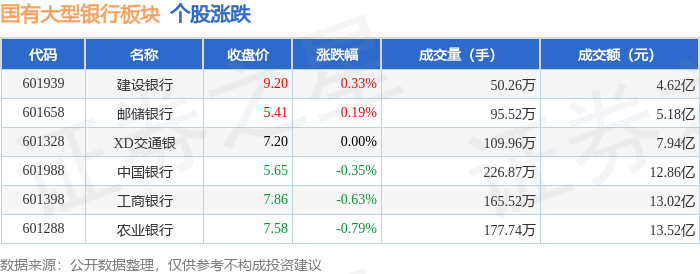
国有大型银行板块12月25日跌0.63%,农业银行领跌,主力资金净流出7.75亿元
Zheng Xing Xing Ye Ri Bao· 2025-12-25 09:03
Group 1 - The core viewpoint of the news is that the state-owned large bank sector experienced a decline of 0.63% on December 25, with Agricultural Bank leading the drop [1] - The Shanghai Composite Index closed at 3959.62, up 0.47%, while the Shenzhen Component Index closed at 13531.41, up 0.33% [1] - The trading performance of individual stocks in the state-owned large bank sector showed mixed results, with Agricultural Bank down 0.79% and Industrial and Commercial Bank down 0.63% [1] Group 2 - The net outflow of main funds from the state-owned large bank sector was 775 million yuan, while retail investors saw a net inflow of 515 million yuan [1] - The detailed fund flow data indicates that Construction Bank had a net inflow of 49.54 million yuan from main funds, while Agricultural Bank had a net outflow of 289.7 million yuan [2] - The overall trend shows that retail investors are more active in the state-owned large bank sector, with significant net inflows compared to the outflows from main and speculative funds [2]