BANK OF CHINA(601988)

Search documents
打实打好金融稳外贸“组合拳”
Su Zhou Ri Bao· 2025-11-26 00:38
Core Insights - The Bank of China Suzhou Branch has played a crucial role in supporting regional foreign trade by leveraging its global advantages and optimizing financial services, contributing over 140 billion yuan in financing for import and export enterprises from January to October this year [1] Group 1: Credit Support and Financial Innovation - The Suzhou Branch has intensified its "Stabilizing Foreign Trade Special Visits" initiative, effectively addressing diverse financial needs of enterprises and continuously innovating financing products and services [2] - A manufacturing company in Suzhou received 100 million yuan in financing support for its overseas factory's raw material procurement through a customized cross-border RMB trade financing solution [2] - The "BOC Cross-Border E-Commerce Exclusive Loan" product was launched to assist small and micro enterprises in cross-border e-commerce, offering credit limits up to 30 million yuan and special interest rate discounts [2] Group 2: Risk Management and Service Enhancement - The Suzhou Branch has issued over 4.2 billion yuan in foreign-related guarantees to support enterprises in bidding for international projects, covering 61 countries and regions involved in the Belt and Road Initiative [3] - The bank has established multiple "Exchange Rate Risk Neutral Demonstration Outlets" to provide tailored hedging products, enhancing foreign trade enterprises' risk management capabilities [3] - The branch has processed cross-border RMB transactions exceeding 190 billion yuan and international settlement business for Belt and Road countries amounting to nearly 18 billion US dollars [4] Group 3: Support for Trade Stability - The bank has implemented a detailed action plan to stabilize foreign trade, serving nearly 600 high-quality enterprises involved in cross-border trade, ranking first among regional peers [6] - The Suzhou Branch has facilitated over 200,000 cross-border online product transactions, amounting to more than 22 billion US dollars from January to October [6] - The bank has organized various events to enhance trade connections, including cross-border e-commerce development forums and policy briefings for enterprises [7]
《2025中国银行业竞争力研究报告》在京发布
Xin Hua Cai Jing· 2025-11-25 14:23
Core Insights - The "2025 China Banking Industry Competitiveness Research Report" focuses on the high-quality development of the banking sector amid macroeconomic transformation and global financial changes, providing a professional and authoritative reference for understanding the industry's competitiveness [1][3]. Group 1: Overall Industry Trends - The report highlights the resilience of the Chinese banking industry, noting that by 2025, global economic growth will exhibit a "fragmented" characteristic, with increasing external uncertainties due to diverging central bank policies [1]. - Despite challenges such as insufficient effective demand, the domestic economy is expected to remain stable, with signs of stabilization in the net interest margin of listed banks and a rapid recovery in non-interest income [1]. - The financial regulatory framework is being enhanced under the guiding principles of "risk prevention, strong regulation, and promoting development," establishing a solid institutional foundation for the industry's steady growth [1]. Group 2: Competitiveness Rankings - The report includes a comprehensive ranking of the top 100 banks in China for 2025, based on four key indicators: scale, profitability, stability, and growth [2]. - The core ranking, "China Banking Industry Competitiveness Top 100," is supported by sub-rankings for scale, profitability, and growth, which assess banks based on total assets, total liabilities, operating income, ROA, and other critical metrics [2]. - The growth sub-ranking evaluates banks on revenue growth rate, core tier one capital adequacy ratio, and cost-to-income ratio, providing a multidimensional view of their growth capabilities [2]. Group 3: Sectoral Developments - The report covers five key areas: fintech, digital finance, pension finance, green finance, and inclusive finance, showcasing various advancements and practices within these sectors [3]. - It notes significant developments such as the upgrade of technology financial organizational structures in major banks, rapid growth in technology loans by small and medium-sized banks, and the entry of five banks into the "trillion club" for green credit [3]. - The report emphasizes the importance of high-quality development as a mainline for the banking industry to explore its core competitiveness in a complex environment [3].
增持不停歇!银行股成“香饽饽”,大股东、高管“真金白银”组团力挺
Bei Jing Shang Bao· 2025-11-25 13:37
Core Viewpoint - A surge in share buybacks by listed banks in China's A-share market is observed, driven by strong confidence from major shareholders and management teams in the banks' future prospects and the current undervaluation of bank stocks [1][5][6] Group 1: Share Buyback Activities - Numerous listed city commercial banks and rural commercial banks, including Nanjing Bank, Suzhou Rural Commercial Bank, Chengdu Bank, and others, have disclosed their share buyback progress since November [1][3] - Chengdu Bank reported that its major shareholders, Chengdu Industrial Capital Holding Group and Chengdu Xintianyi Investment, have cumulatively increased their holdings by 14.04 million shares, amounting to 253 million yuan [3][4] - Nanjing Bank's major shareholder, BNP Paribas, increased its stake by 128 million shares, raising its total holding from 17.02% to 18.06% [4] Group 2: Financial Performance and Market Sentiment - The banking sector's fundamentals remain robust, with commercial banks achieving a net profit of 1.9 trillion yuan in the first three quarters, and 24 listed banks announcing a total cash dividend of 263.79 billion yuan [5][6] - The stock prices of several banks have reached historical highs, with Agricultural Bank of China seeing a year-to-date increase of nearly 60% [6][7] - Analysts suggest that the current buyback trend reflects internal confidence in the banks' future and signals to the market that their value is underestimated [5][7] Group 3: Future Outlook - The ongoing recovery in the macroeconomic environment is expected to support the banking sector's performance, with analysts highlighting the importance of sustained economic recovery, interest rate changes, and long-term capital inflows for future stock performance [7][8] - Investors are advised to maintain a long-term perspective and focus on banks with strong fundamentals, emphasizing the importance of asset quality, profitability, and dividend policies [7][8]





高息优先股密集退场 银行优先股投资逻辑生变
Zhong Guo Jing Ying Bao· 2025-11-25 13:12
Core Viewpoint - Recent announcements from multiple commercial banks regarding the redemption of preferred shares indicate a shift in capital management strategies within the banking sector [1][2]. Group 1: Redemption of Preferred Shares - Several banks, including Ping An Bank and Nanjing Bank, have announced plans to redeem preferred shares issued over five years ago, with Ping An Bank set to redeem 200 million shares worth 20 billion yuan by March 2026 and Nanjing Bank planning to redeem 49 million shares worth 4.9 billion yuan by December 2025 [1]. - Since July, at least nine banks, including Industrial and Commercial Bank of China and Bank of Beijing, have disclosed similar redemption plans, creating a notable trend in the market [1]. Group 2: Reasons for Redemption - The high dividend rates set at the time of issuance, combined with declining market interest rates, incentivize banks to redeem high-cost preferred shares and replace them with lower-cost perpetual bonds [2]. - Regulatory changes and the need for banks to optimize their capital structures are also significant factors driving the decision to redeem high-cost preferred shares [2]. Group 3: Capital Management Strategies - The banking sector is transitioning from a focus on scale expansion to a cost-efficiency-centered model, emphasizing the need for banks to balance the redemption of high-interest preferred shares with the issuance of low-cost capital tools [3]. - Banks are adopting more diversified and flexible capital supplement tools, allowing them to respond to market conditions effectively, such as redeeming high-interest preferred shares when interest rates are low [3].




中国银行河南省分行举办外汇政策宣讲会,助力豫企开拓国际市场
Sou Hu Cai Jing· 2025-11-25 11:55
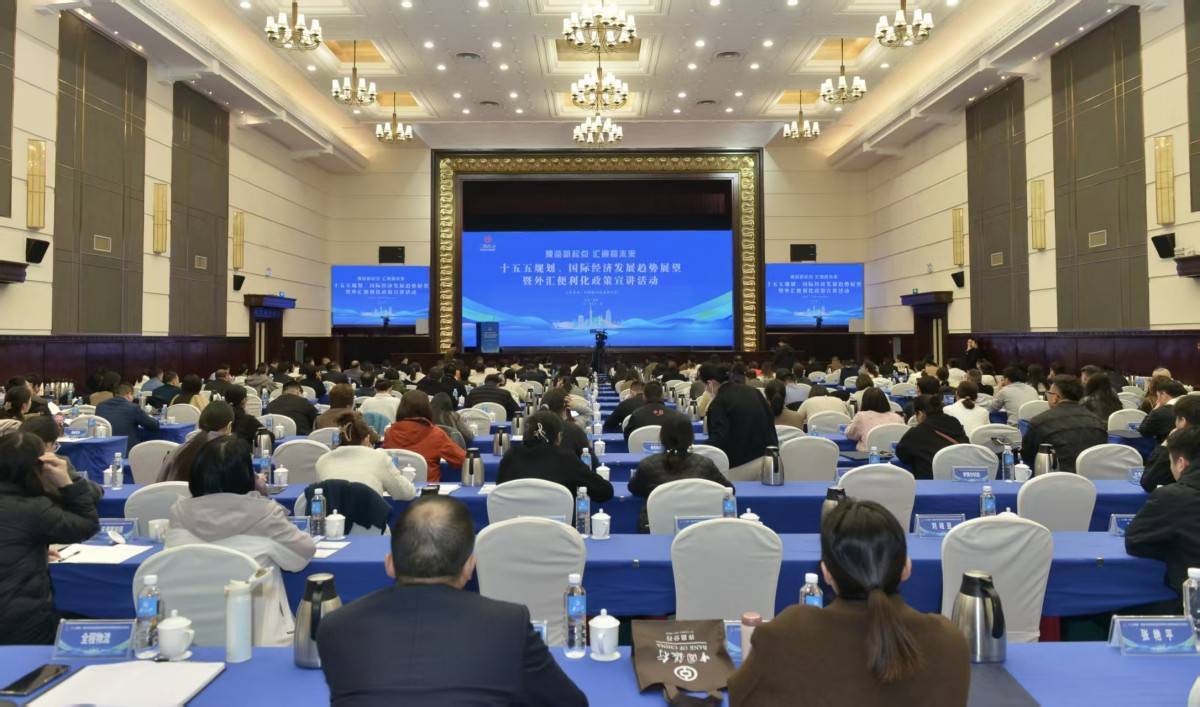
Core Insights - The event "豫鉴新起点 汇通赢未来" organized by the Bank of China Henan Branch aimed to promote foreign exchange policies to over 300 foreign trade enterprises in Zhengzhou [1][3] - Experts from the provincial foreign exchange administration provided insights on foreign exchange facilitation policies, helping businesses understand practical processes and policy benefits [3] - The event included in-depth analysis of the "14th Five-Year Plan," global economic conditions, and industrial chain restructuring, while also highlighting risks such as exchange rate fluctuations and cross-border fraud [3] Group 1 - The Bank of China Henan Branch will implement the spirit of the 20th National Congress, actively supporting high-level opening-up and optimizing cross-border financial services covering settlement, financing, and risk hedging [3] - The event was well-received by participating enterprises, which found the content detailed and instructive, aiding in grasping macro trends and effectively utilizing foreign exchange policies [3] - The bank aims to support enterprises in expanding international markets and contribute to building a new highland of inland openness in the province [3]
中国银行(601988) - H股公告-海外监管公告-中国银行股份有限公司400亿美元中期票据计划下通过迪拜分行发行的票据于纳斯达克迪拜交易所上市之通告
2025-11-25 09:48
香港交易及結算所有限公司及香港聯合交易所有限公司對本公告之內容概不負責,對其準確性 或完整性亦不發表任何聲明,並明確表示,概不對因本公告全部或任何部分內容而產生或因倚 賴該等內容而引致之任何損失承擔任何責任。 本公告僅供參考之用,並不構成收購、購買或認購證券的邀請或要約。根據計劃將予發行的票 據(定義如下)將不會根據經修訂的1933年美國聯邦證券法登記。受制於某些例外情形,根據計 劃將予發行的票據有可能不得在美國境內或向任何美國人士(如證券法S規例定義)或為美國人 士的利益提出要約出售或者進行出售。本公告不得直接或間接於或向美國境內進行分發。 中國銀行股份有限公司 BANK OF CHINA LIMITED (於中華人民共和國註冊成立的股份有限公司) (「本行」) (股份代號:3988) 海外監管公告 中國,北京 2025年11月25日 於本公告刊發日期,本行董事會成員包括葛海蛟、張輝、劉進、張勇*、黃秉華*、劉輝*、 師永彥*、樓小惠*、李子民*、讓•路易•埃克拉 # 、喬瓦尼•特里亞 # 、劉曉蕾 # 、張然 # 、高美懿 # 、 胡展雲 # 。 * 非執行董事 # 獨立非執行董事 中國銀行股份有限公司迪 ...
中国银行(03988.HK):迪拜分行发行的票据于纳斯达克迪拜交易所上市
Ge Long Hui· 2025-11-25 09:31
Core Viewpoint - Bank of China has announced the issuance of $500 million floating rate notes under its $40 billion medium-term note program, set to mature in 2028, and these notes have been approved for listing on the official securities list managed by the Dubai Financial Services Authority and for trading on Nasdaq Dubai [1] Group 1 - The issuance amount is $500 million [1] - The notes are part of a larger $40 billion medium-term note program established by Bank of China [1] - The maturity date for the notes is set for 2028 [1] Group 2 - The notes have received approval for listing on the official securities list of the Dubai Financial Services Authority [1] - The notes are also approved for trading on Nasdaq Dubai [1]
中国银行(03988) - 海外监管公告-中国银行股份有限公司400亿美元中期票据计划下通过迪拜分行...
2025-11-25 09:20
香港交易及結算所有限公司及香港聯合交易所有限公司對本公告之內容概不負責,對其準確性 或完整性亦不發表任何聲明,並明確表示,概不對因本公告全部或任何部分內容而產生或因倚 賴該等內容而引致之任何損失承擔任何責任。 本公告僅供參考之用,並不構成收購、購買或認購證券的邀請或要約。根據計劃將予發行的票 據(定義如下)將不會根據經修訂的1933年美國聯邦證券法登記。受制於某些例外情形,根據計 劃將予發行的票據有可能不得在美國境內或向任何美國人士(如證券法S規例定義)或為美國人 士的利益提出要約出售或者進行出售。本公告不得直接或間接於或向美國境內進行分發。 中國銀行股份有限公司 BANK OF CHINA LIMITED (於中華人民共和國註冊成立的股份有限公司) * 非執行董事 (「本行」) (股份代號:3988) 海外監管公告 中國銀行股份有限公司迪拜分行(「發行人」) 在本行建立的40,000,000,000美元 中期票據計劃下發行 於2028年到期的500,000,000美元浮動利率票據(「票據」) 本公告乃根據香港聯合交易所有限公司證券上市規則第13.10B條而作出。 發行人在本行建立的40,000,000,00 ...
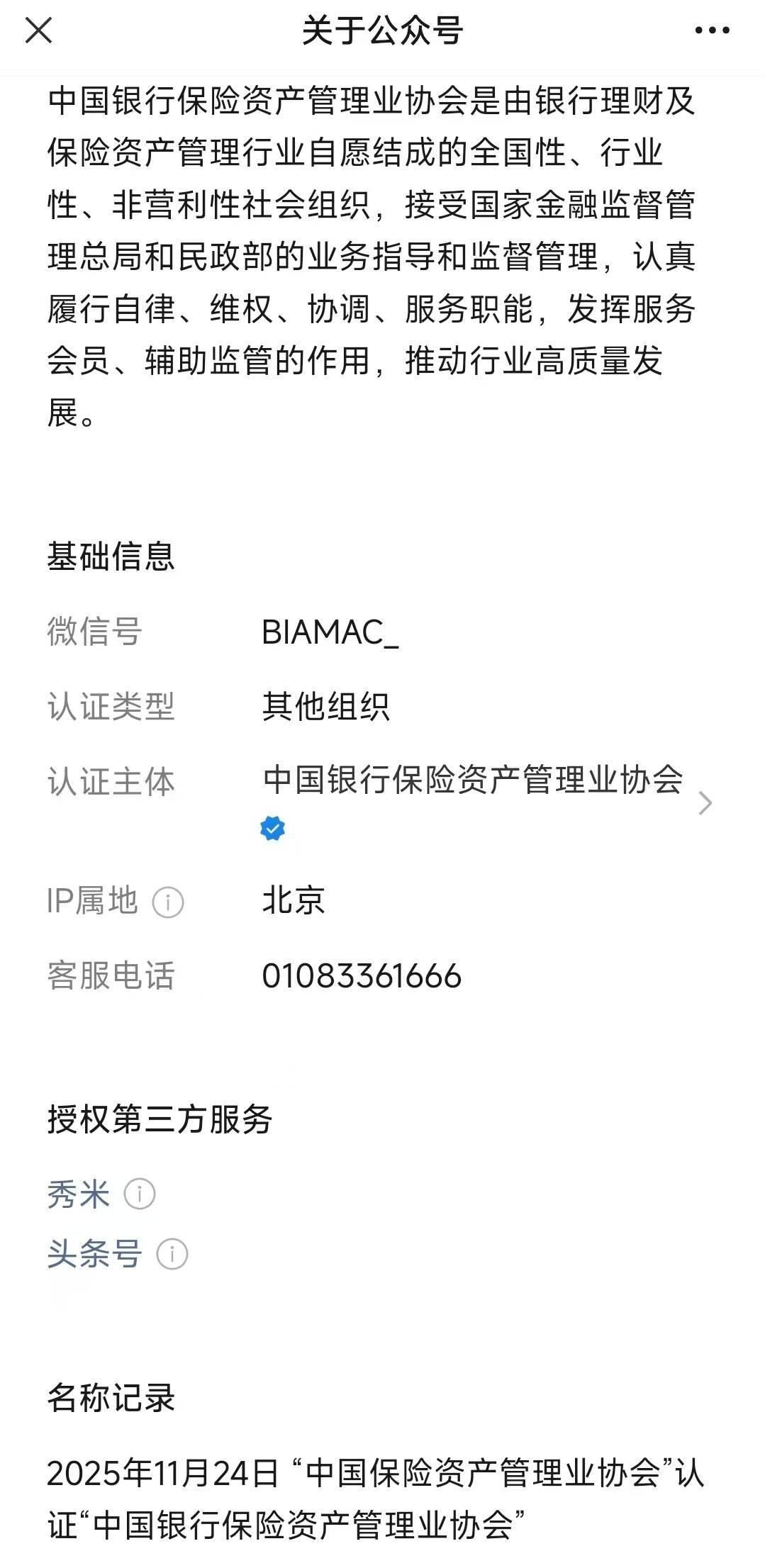
“中国银行保险资产管理业协会”完成更名,30家银行理财公司已加入
Sou Hu Cai Jing· 2025-11-25 09:10
【大河财立方消息】11月24日,"中国保险资产管理业协会"官方微信公众号正式更名为"中国银行保险资产管理业协会"。这意味着银行理财行业又新增一 家自律监管组织。 目前,该协会共有561名会员单位,涵盖了我国金融市场所有细分领域。其中,已有农银理财、中银理财、交银理财、建信理财等30家银行理财子公司成 为协会会员。在全国32家银行理财子公司中,仅信银理财和汇华理财尚未入会。 不过,目前"中国保险资产管理业协会"官网尚未完成更名。 这一变更早在今年8月就已启动。当时,中国保险资产管理业协会召开会员大会,审议并通过更名议案。此外,天眼查显示,中国保险资产管理业协会已 于10月完成工商信息变更。 官网显示,中国保险资产管理业协会成立于2014年9月,是经国务院同意,民政部批准,国家金融监督管理总局直接领导,保险资产管理行业自愿结成, 专门履行保险资产管理自律职能的全国性金融自律组织。 责编:史健 | 审核:李震 | 监审:古筝 ...
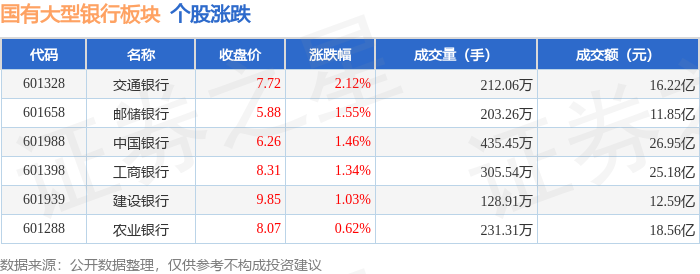
国有大型银行板块11月25日涨1.12%,交通银行领涨,主力资金净流入6.31亿元
Zheng Xing Xing Ye Ri Bao· 2025-11-25 09:09
Core Insights - The state-owned large bank sector saw an increase of 1.12% on November 25, with Bank of Communications leading the gains [1] - The Shanghai Composite Index closed at 3870.02, up 0.87%, while the Shenzhen Component Index closed at 12777.31, up 1.53% [1] Group 1: Stock Performance - Bank of Communications (601328) closed at 7.72, with a rise of 2.12% and a trading volume of 2.12 million shares, totaling a transaction value of 16.22 billion yuan [1] - Postal Savings Bank (601658) closed at 5.88, increasing by 1.55% with a trading volume of 2.03 million shares, totaling 11.85 billion yuan [1] - China Bank (601988) closed at 6.26, up 1.46% with a trading volume of 4.35 million shares, totaling 26.95 billion yuan [1] - Industrial and Commercial Bank (601398) closed at 8.31, rising by 1.34% with a trading volume of 3.06 million shares, totaling 25.18 billion yuan [1] - China Construction Bank (601939) closed at 9.85, increasing by 1.03% with a trading volume of 1.29 million shares, totaling 12.59 billion yuan [1] - Agricultural Bank (601288) closed at 8.07, up 0.62% with a trading volume of 2.31 million shares, totaling 18.56 billion yuan [1] Group 2: Capital Flow - The state-owned large bank sector experienced a net inflow of 631 million yuan from institutional investors, while retail investors saw a net outflow of 245 million yuan [1] - The capital flow for China Bank (601988) showed a net inflow of 218 million yuan from institutional investors, but a net outflow of 116 million yuan from retail investors [2] - Industrial and Commercial Bank (601398) had a net inflow of 182 million yuan from institutional investors, with a net outflow of 41.54 million yuan from retail investors [2] - Bank of Communications (601328) recorded a net inflow of 108 million yuan from institutional investors, alongside a net outflow of 40.15 million yuan from retail investors [2] - Agricultural Bank (601288) had a net inflow of 105 million yuan from institutional investors, with a net outflow of 36.90 million yuan from retail investors [2] - Postal Savings Bank (601658) experienced a net outflow of 49.43 million yuan from institutional investors, but a net inflow of 25.04 million yuan from retail investors [2]