
BANK OF CHINA(601988)

Search documents
回购增持再贷款超1500亿元
21世纪经济报道· 2025-10-24 13:49
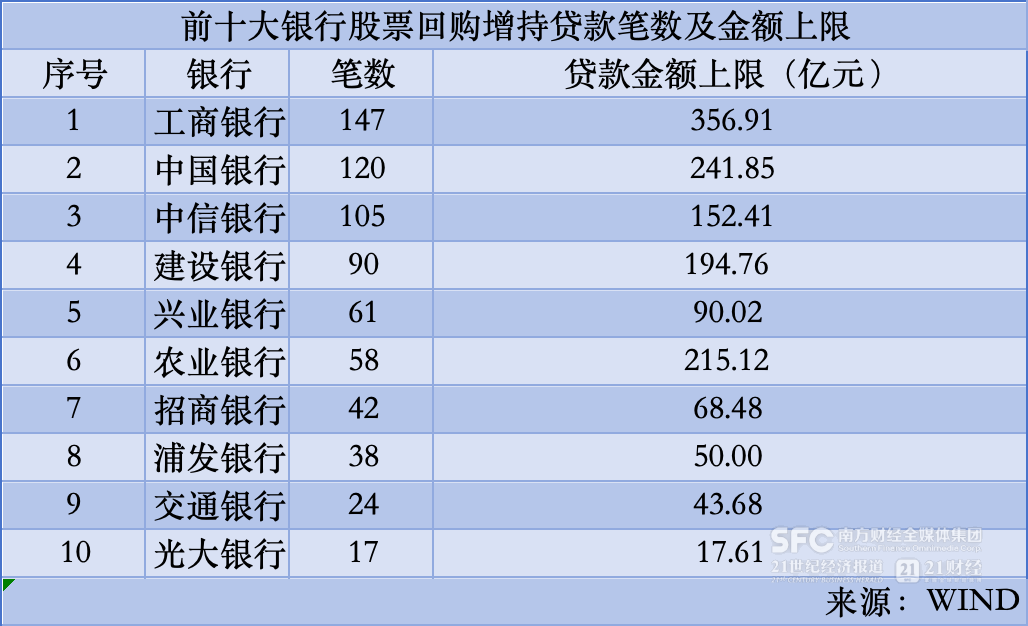
Core Viewpoint - The article discusses the implementation and impact of the stock repurchase and increase loan policy established by the central bank and other departments, highlighting its role as a stabilizing mechanism in the capital market over the past year [1][8][10]. Summary by Sections Policy Implementation - The policy was officially launched on October 18, 2024, allowing 21 national financial institutions to provide loans specifically for stock repurchase and increase, with a total re-loan quota of 300 billion yuan at an interest rate of 1.75% [8][9]. - As of October 18, 2025, 712 listed companies have disclosed 754 repurchase or increase loan plans, with a total loan amount of 1,524.84 billion yuan [1][9]. Participation and Impact - Major banks have actively participated, with Industrial and Commercial Bank of China leading with 147 loan plans totaling 356.91 billion yuan, followed by Bank of China and CITIC Bank [2][3]. - The policy has shown significant effectiveness in stabilizing the market, especially during periods of volatility, with the A-share market indices showing substantial gains [10][11]. Market Response and Future Outlook - The policy has encouraged participation from various market players, including state-owned and private enterprises, and has been responsive to market conditions [9][10]. - Analysts suggest that while the policy has been effective, there are challenges in its widespread implementation, including the need for better risk assessment and flexibility in loan amounts [14][15].








中国银行宁波市分行落地回购式票据再贴现业务
Zhong Guo Jin Rong Xin Xi Wang· 2025-10-24 12:10
Core Viewpoint - The Bank of China Ningbo Branch has successfully implemented a repurchase bill rediscounting business amounting to 77.6051 million yuan, responding to the People's Bank of China's initiative to enhance the efficiency of rediscounting policies [1] Group 1: Business Performance - The Bank of China Ningbo Branch has focused on the demand for bill financing from local enterprises, achieving a cumulative bill financing issuance of 33.5 billion yuan as of September 2025, representing a year-on-year increase of 52% [1] - The balance of bill financing has surpassed 20 billion yuan for the first time, indicating significant growth in the bank's operations [1] Group 2: Economic Impact - The use of rediscounting funds from the People's Bank of China has effectively reduced financing costs for enterprises, supporting the development of the manufacturing sector and private enterprises [1] - The bank plans to further leverage rediscounting and other monetary policy tools to expand the application scenarios of bill financing and deepen service offerings, contributing to the stability of regional industrial and supply chains [1]
回购增持再贷款超1500亿元:工行发放最多,机构期待名单扩容
2 1 Shi Ji Jing Ji Bao Dao· 2025-10-24 12:09
Core Insights - The People's Bank of China and multiple departments issued a notification regarding the establishment of stock repurchase and increase loans, marking one year since its implementation, with significant participation from listed companies and state-owned enterprises [1][6][8] Summary by Sections Policy Overview - The policy was officially launched on October 18, 2024, with a total re-loan quota of 300 billion yuan and an interest rate of 1.75%, aimed at providing low-cost credit support for stock repurchase and increase activities [6][7] - Over the past year, 712 listed companies have disclosed 754 repurchase or increase loan plans, with a total loan amount ceiling of 1,524.84 billion yuan [1][8] Participation and Impact - Major state-owned banks have been the primary participants, with Industrial and Commercial Bank of China leading with 147 loan plans totaling 356.91 billion yuan, followed by Bank of China and CITIC Bank [2][3] - The policy has effectively acted as a stabilizer in the capital market, particularly during periods of market volatility, enhancing investor confidence and liquidity [8][9] Market Response and Future Directions - The market has shown a positive response, with significant increases in stock indices, indicating the effectiveness of the policy in stabilizing market sentiment [9][10] - There is a growing demand for expanding the participant base to include local small and medium-sized banks, which could enhance service coverage and efficiency [5][11] - Future improvements are suggested, including optimizing loan mechanisms, expanding the range of eligible participants, and ensuring compliance and risk management [6][11]
中国银行山东省分行:护航“三秋”生产,守护粮食安全
Zhong Guo Jin Rong Xin Xi Wang· 2025-10-24 11:54
Core Viewpoint - The article highlights the proactive measures taken by the Bank of China Shandong Branch to support the agricultural sector during the critical autumn harvest period, ensuring financial services are effectively provided to secure food safety and enhance grain production efficiency [1][4]. Group 1: Financial Support for Grain Production - The Bank of China Shandong Branch is enhancing credit support for grain-related enterprises, focusing on the entire supply chain from production to trade [1]. - A specific case involves the Dezhou Zhonghang Bank providing a special loan of 6 million yuan to a local agricultural company to purchase large drying equipment, significantly increasing drying capacity and storage capabilities [2]. - The bank's efforts have resulted in a daily drying capacity exceeding 1,000 tons and increased storage from 8,000 tons to 17,000 tons, addressing the storage needs of over 10,000 acres of autumn grain [2]. Group 2: Addressing Financing Challenges - Many grain storage merchants face financing difficulties due to low profit margins and insufficient collateral, leading to limited access to funds during peak harvest seasons [3]. - The Heze Zhonghang Bank introduced a "Grain Storage Loan" to meet the financial needs of local grain merchants, providing 1 million yuan to a prominent grain buyer to facilitate timely purchases [3]. - The Chatou Zhonghang Bank also provided 1 million yuan in just three days to another grain merchant, ensuring sufficient funds for grain purchases [4]. Group 3: Specialized Financial Services - The Shandong Bank is developing tailored financial products to support agricultural production, leveraging local agricultural service enterprises' strengths [5]. - A case study of a large-scale farmer receiving a 1 million yuan credit loan illustrates the effectiveness of these specialized services in ensuring timely procurement of agricultural inputs [6]. - By the end of September, the bank had issued 32 million yuan in loans to 84 farmers under this program, supporting key agricultural activities such as land leasing and equipment upgrades [6].
“专项贷款”助力秋粮归仓
Qi Lu Wan Bao· 2025-10-24 09:32
Core Insights - The article highlights the financial support provided by China Bank to an agricultural development company in Dezhou, which received a special loan of 6 million yuan to purchase large drying equipment, ensuring the effective storage of autumn grain amidst adverse weather conditions [1][2] Group 1: Company Overview - The agricultural development company, established in 2015, focuses on crop planting, storage, drying, and grain trading [1] - The company has introduced an innovative "Grain Merchant +" business model and has formed a modern agricultural industry chain consortium, earning multiple provincial honors and training over 20 agricultural technicians [1] Group 2: Financial Support and Impact - China Bank's Dezhou branch responded quickly to the company's needs, conducting on-site assessments and providing a loan of 6 million yuan to upgrade existing drying equipment [2] - With the financial support, the company's drying efficiency significantly improved, achieving a daily drying capacity of over 1,000 tons and increasing storage capacity from 8,000 tons to 17,000 tons, addressing storage issues for over 10,000 acres of autumn grain [2] Group 3: Future Plans - China Bank plans to continue supporting key agricultural activities such as autumn harvest and sowing, enhancing policy guidance, and innovating financial services to strengthen credit support for agricultural production and industry revitalization [2]
开展“金融知识进景区”宣传活动
Qi Lu Wan Bao· 2025-10-24 09:32
Core Points - The article highlights a financial literacy campaign organized by the Bank of China in Le Ling, aimed at enhancing financial safety awareness among local farmers and tourists [1] - The initiative includes on-site activities such as setting up information booths, distributing brochures, and providing real-time Q&A sessions to educate participants about financial risks and safe banking practices [1] - The campaign specifically addresses concerns related to agricultural loans and safe payment methods, while also warning against common financial traps like low-cost tourism and fraudulent investments [1] Summary by Categories - **Financial Literacy Campaign** - The Bank of China Le Ling branch organized a "Financial Knowledge into Scenic Areas" campaign to improve financial safety awareness among the elderly and local farmers [1] - The campaign was well-received, with participants expressing appreciation for the information provided [1] - **Educational Activities** - Activities included setting up promotional points, distributing illustrated manuals, and answering questions on-site [1] - Topics covered included prevention of telecom and online fraud, safe use of mobile banking, and personal credit protection [1] - **Focus on Local Needs** - The campaign tailored its content to the specific needs of local farmers, addressing issues like agricultural loan applications and the safe use of payment codes [1] - The initiative aims to integrate financial services with local industries and public needs, contributing to economic development and a secure financial environment [1]
新刊速读 | 银行资产配置对债券市场影响的动态传导
Xin Hua Cai Jing· 2025-10-24 09:01
Core Insights - The article emphasizes the significant role of banks in the bond market, highlighting that their asset allocation behavior not only determines their own profit models and risk preferences but also profoundly influences bond market trends and pricing mechanisms [1][9] - It identifies a need for more granular analysis of banks' asset-liability management and how their allocation behaviors evolve dynamically with economic cycles, regulatory constraints, and risk management strategies [2][9] Group 1: Static Relationship Between Bank Balance Sheets and Bond Markets - The logic of bank asset allocation is embedded within the framework of their balance sheets, where the liability side determines funding costs and stability, while the asset side reflects the trade-off between credit issuance and financial investments [3] - An increase in deposit growth and a decrease in funding costs lead banks to favor long-term government and local bonds, while weak deposit growth or rising interest rates push banks towards higher volatility, shorter-term assets [3][4] Group 2: Dynamic Transmission of Credit Issuance to Bond Markets - Empirical analysis from 2016 to 2025 using VAR models reveals that household short-term loans have a leading effect on bond markets, with their growth leading to rising ten-year government bond yields within four months [5] - In contrast, household medium- to long-term loans, primarily reflecting real estate demand, influence bond yields with a lag of 8 to 12 months, while corporate loans have a less significant and sustained impact on bond yields [6] Group 3: Heterogeneous Impact of Bond Investment Categories - The study categorizes bond investments into three types based on accounting treatment and finds that different types of banks exhibit varying impacts on government bond yields [7] - State-owned banks' investments in FVOCI accounts tend to lower government bond yields, while smaller banks, facing higher funding costs, often engage in strategies that increase market volatility [7] Group 4: Comprehensive Conclusions and Policy Implications - The research reveals that credit issuance is pro-cyclical while bond investment is counter-cyclical, reflecting the macro-regulatory function of bank asset allocation [8] - It suggests optimizing bond asset allocation, improving internal fund transfer pricing mechanisms, and strengthening risk management frameworks to enhance the sustainability of smaller banks [8][9]
中银集团深度赋能山东滨州企业“出海”
Zhong Guo Jin Rong Xin Xi Wang· 2025-10-24 08:50
Group 1 - The event "New Opportunities for Global Layout of Binzhou Enterprises" was successfully held in Binzhou, aimed at connecting local enterprises with Hong Kong and international capital, optimizing the global competitive landscape [1] - The event was organized by the United Front Work Department of the Binzhou Municipal Committee, with participation from Bank of China Hong Kong, Bank of China International, and local branches of Bank of China [1] - The seminar gathered representatives from local government departments, key enterprises, and financial institutions to inject "financial momentum" into the global development of Binzhou enterprises [1] Group 2 - Bank of China Hong Kong and Bank of China International provided four customized financial support solutions focusing on the full-cycle needs of enterprises going abroad [2] - The "Bank of China Hong Kong · Safeguarding Going Abroad" comprehensive financial service plan was introduced, covering cross-border settlement, financing support, and risk hedging [2] - Trade products were detailed to facilitate efficient settlement tools for import and export scenarios, helping to break down international market barriers [2] - Cash management services were introduced to enhance cross-border fund utilization efficiency through global fund collection and liquidity management [2] - The seminar also covered policies and exclusive financial services related to listing in Hong Kong, establishing a bridge for enterprises to connect with international capital markets [2] Group 3 - In recent years, Bank of China Binzhou Branch has actively facilitated domestic and foreign enterprises, providing comprehensive financial service solutions for enterprises "going out" and attracting investments [3] - The branch supported projects like the Weiqiao Group's alumina project in Indonesia and provided financing solutions for local enterprises going abroad [3] - Since 2025, the branch has completed the first offshore financing CCS hedging transaction in Binzhou amounting to 42.29 million USD, expanded the number of clients for exchange rate hedging, and increased the volume of trade foreign exchange facilitation [3] - The Bank of China Shandong Branch plans to deepen cooperation with local enterprises, leveraging its global service network and expertise to provide high-quality financial support for international market expansion [3]

国有大型银行板块10月24日涨0.13%,中国银行领涨,主力资金净流出8504.6万元
Zheng Xing Xing Ye Ri Bao· 2025-10-24 08:27
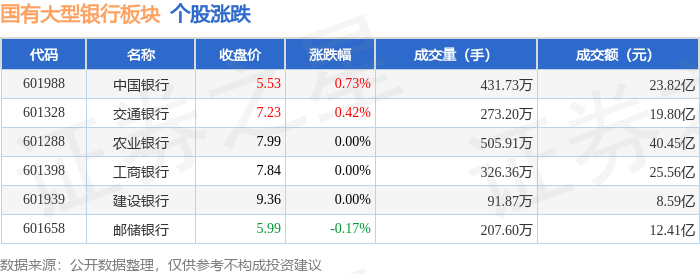
Market Performance - On October 24, the state-owned large bank sector increased by 0.13% compared to the previous trading day, with Bank of China leading the gains [1] - The Shanghai Composite Index closed at 3950.31, up 0.71%, while the Shenzhen Component Index closed at 13289.18, up 2.02% [1] Individual Bank Performance - Bank of China (601988) closed at 5.53 with a gain of 0.73%, trading volume of 4.3173 million shares, and a transaction value of 2.382 billion [1] - Agricultural Bank of China (601288) remained unchanged at 7.99, with a trading volume of 5.0591 million shares [1] - Industrial and Commercial Bank of China (601398) also remained unchanged at 7.84, with a trading volume of 3.2636 million shares [1] - Postal Savings Bank of China (601658) saw a slight decline of 0.17% to close at 5.99, with a trading volume of 2.0760 million shares [1] Fund Flow Analysis - The state-owned large bank sector experienced a net outflow of 85.046 million from institutional investors and 51.2904 million from retail investors, while retail investors saw a net inflow of 136 million [1] - Bank of China had a net inflow of 13 million from institutional investors but a net outflow of 132 million from speculative funds [2] - Agricultural Bank of China had a net inflow of approximately 19.87 million from institutional investors, while it faced a net outflow of 37 million from retail investors [2] - Postal Savings Bank of China experienced a significant net outflow of 137 million from institutional investors, despite a net inflow of 77.09 million from retail investors [2]

多家银行发布公告:这些账户将被清理
Xin Lang Cai Jing· 2025-10-24 05:28
Core Viewpoint - Multiple banks are initiating the cleanup of long-dormant accounts, which include both personal and corporate accounts, to mitigate risks associated with fraud and money laundering [1][3]. Group 1: Bank Actions - Several banks, including Industrial Bank and Bank of China, have announced measures to restrict transactions on accounts identified as long-dormant starting from October 15 [2]. - Industrial Bank has adjusted its criteria for identifying long-dormant accounts, changing the balance threshold from 100 yuan to 10 yuan and extending the inactivity period from 180 days to 365 days [2]. - Other local banks, such as Fengtai Rural Commercial Bank and Huludao Bank, have also issued warnings regarding the cleanup of long-dormant accounts [2]. Group 2: Reasons for Cleanup - The cleanup of long-dormant accounts is driven by regulatory requirements and aims to prevent risks related to telecom fraud and money laundering [3]. - Long-dormant accounts, often referred to as "sleeping accounts," can lead to wasted financial resources and expose consumers to increased risks of fraud [3]. Group 3: Consumer Recommendations - Industry experts recommend that consumers regularly monitor and manage their bank accounts, including closing any accounts that are no longer in use [4]. - Consumers are advised to use services like the "one-click card check" feature in the Cloud Flash Payment app to track their bank accounts [4]. - If an account is identified as long-dormant but still needed, consumers should conduct at least one transaction before the bank's restrictions take effect to avoid complications [4]. Group 4: Account Recovery Process - If a bank account is frozen due to being classified as long-dormant, account holders can visit bank branches with their identification and bank card to reactivate their accounts [5]. - Banks emphasize that they will not request sensitive information such as passwords or verification codes through phone calls or messages during the cleanup process [5].