BANK OF CHINA(601988)

Search documents
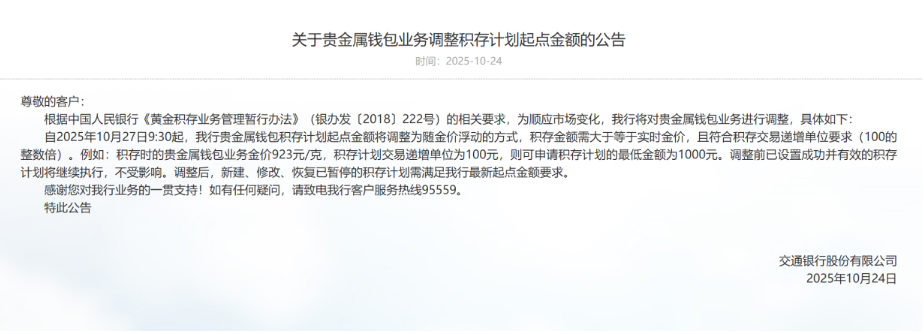
买金门槛变了!多家银行出手
Zhong Guo Zheng Quan Bao· 2025-10-25 14:35
Core Viewpoint - The Bank of Communications announced a change in its precious metals wallet accumulation plan, linking the minimum investment amount to real-time gold prices starting from October 27, 9:30 AM, in response to market fluctuations [1][4]. Group 1: Changes in Accumulation Plan - The minimum investment amount for the precious metals wallet will now be at least equal to the real-time gold price, with increments required to be in multiples of 100 [1][2]. - For example, if the gold price is 923 CNY per gram, the minimum amount for the accumulation plan would be 1000 CNY, based on a trading increment of 100 CNY [2]. Group 2: Market Context - Gold prices have experienced significant volatility, with the London gold price closing at 4111.555 USD per ounce on October 24, despite a recent pullback from a peak on October 20 [4]. - Since late August, gold prices have risen sharply, with a cumulative increase of 24% compared to the closing price on August 19 [4]. Group 3: Industry Trends - Several banks, including ICBC, Bank of China, Ping An Bank, and Industrial Bank, have raised their minimum investment thresholds for gold accumulation plans in October [5][6]. - For instance, ICBC increased its minimum investment for the "Ruyi Gold" accumulation business from 850 CNY to 1000 CNY starting October 13 [6]. - The new floating pricing mechanism adopted by the Bank of Communications is seen as advantageous compared to the fixed amount model used by most banks, as it addresses the issue of delayed pricing adjustments during periods of significant gold price fluctuations [6].





这个“双11”,你“薅银行羊毛”了吗?
Sou Hu Cai Jing· 2025-10-25 12:04
Core Insights - The annual shopping festival "Double 11" has commenced, with banks actively participating by offering cashback, installment benefits, and exclusive discount coupons to capture consumer spending [1][2] - Banks aim to enhance both business and user value while strengthening long-term customer loyalty through differentiated welfare strategies [1] Group 1: Bank Promotions - Major banks such as Bank of China, China Merchants Bank, and Ping An Bank have launched promotional activities during "Double 11" [1][2] - Bank of China is offering a random discount of 5-20 yuan for payments over 1000 yuan on platforms like Taobao and Tmall [1] - China Merchants Bank's "Smash the Golden Egg for Daily Cashback" campaign runs from October 10 to November 15, offering up to 1111 yuan in cashback vouchers [2] Group 2: Payment Activation Strategies - Experts suggest that banks' promotional activities are a strategic move to create a closed-loop system for acquiring, activating, and retaining customers [7] - The fourth quarter is crucial for retail and credit card loan balances, with banks using interest-free installments to boost transaction volumes and fee income [7] - Banks are embedding their payment tools into consumer shopping processes through various incentives, aiming to increase usage frequency and user engagement [7][8] Group 3: Policy and Market Context - Recent policies from the Ministry of Commerce emphasize reducing personal consumption credit costs, with banks substituting subsidies for interest rate cuts to alleviate pressure on their operations [8] - The collaboration model among banks, platforms, and merchants is evolving, indicating that promotional subsidies will become a regular tool for retail banking [8]


八方共进,智启新程——第八届进博会倒计时10天,中国银行蓄势待发
Di Yi Cai Jing· 2025-10-25 02:45
Core Insights - The eighth China International Import Expo (CIIE) is approaching, marking the eighth year of collaboration between the Bank of China and the CIIE [1] - The Bank of China has signed a new strategic cooperation agreement with the CIIE Bureau and the National Exhibition and Convention Center (Shanghai) [1] Group 1: Service Upgrades - The Bank of China will launch an upgraded comprehensive financial service plan for the CIIE, enhancing services throughout the entire process from pre-exhibition to post-exhibition [2] - The bank has successfully held nearly 30 overseas promotional events in countries such as Germany, Malaysia, Thailand, Peru, and Switzerland [2] - The bank will support various activities, including the "CIIE Goes to Hubei" series and supply-demand matching meetings for global enterprises [2] Group 2: Innovation and Ecosystem - The Bank of China aims to contribute financial wisdom and strength to the CIIE, with a signed exhibition area exceeding 2,000 square meters, the largest in history [3] - Key areas include a cross-border e-commerce zone and an artificial intelligence experience zone, showcasing innovative applications and financial technology [3] - The bank will also establish a national comprehensive exhibition service area to provide various services, including investment promotion and financial consulting [3] Group 3: Thematic Activities - During the expo, the Bank of China will host several thematic events, including a sub-forum on "Financial Support for Global Economic Development" [4] - The bank will co-host a cooperation meeting for domestic and foreign business associations to enhance bilateral economic exchanges [4] - A global payroll product launch will provide exhibitors with cutting-edge policy information and efficient cross-border financial solutions [4] Group 4: Payment Solutions - This year's CIIE is the first major event following the relaxation of visa policies and the promotion of "buy and refund" services for foreign visitors [5] - The Bank of China has introduced various payment measures to enhance the payment experience for foreign visitors [5] - The bank will support 36 currencies, with cash exchange services available at all branches, catering to the needs of international exhibitors [6] Group 5: Global Connectivity - Since 2018, the Bank of China has collaborated with the CIIE Bureau and the National Exhibition and Convention Center to host trade and investment matchmaking events [7] - Over the years, the bank has recruited more than 31,000 domestic and foreign enterprises, facilitating approximately 5,300 cooperation intentions worth over $50 billion [7] - The bank aims to provide a comprehensive service platform for trade negotiations, investment promotion, and financial services, fostering global economic cooperation [7]
重磅!工行、农行、中行、建行、交行、邮储等国有六大行,集体发声!
Zhong Guo Ji Jin Bao· 2025-10-25 01:59
Core Points - The six major state-owned banks in China, including ICBC, ABC, BOC, CCB, BC, and PSBC, collectively emphasized the importance of implementing the spirit of the 20th Central Committee's Fourth Plenary Session, which is crucial for advancing China's modernization and national rejuvenation [1][7][26]. Group 1: Meeting Highlights - The meetings held by the banks focused on the significance of the 20th Central Committee's Fourth Plenary Session, which aims to unify the strength of the party and the people for the construction of a modern socialist country [2][26]. - The banks recognized the importance of Xi Jinping's leadership and the guiding principles of Xi Jinping's Thought on Socialism with Chinese Characteristics for a New Era in achieving significant accomplishments during the 14th Five-Year Plan [3][14][27]. - The banks are tasked with deeply understanding and implementing the strategic goals and major tasks outlined for the 15th Five-Year Plan, which is seen as a critical period for achieving socialist modernization [4][15][24]. Group 2: Implementation Strategies - The banks are required to prioritize the study and dissemination of the Plenary Session's spirit, integrating it into their training programs and ensuring it reaches all levels of staff [5][9][28]. - There is a strong emphasis on maintaining the centralized leadership of the Party over financial work, ensuring that the Party's directives are effectively implemented across all operations [4][11][20]. - The banks are expected to align their development plans with the national economic and social development strategies, focusing on high-quality growth and supporting the real economy [10][19][29]. Group 3: Future Directions - The banks will focus on enhancing their financial services to support the modernization of agriculture and rural areas, as well as promoting common prosperity [10][18][29]. - They are encouraged to actively participate in international financial cooperation and contribute to the global economic landscape, including the Belt and Road Initiative [20][24]. - The banks are tasked with strengthening risk management frameworks to prevent systemic financial risks while ensuring compliance with regulatory requirements [15][21][25].



重磅!工行、农行、中行、建行、交行、邮储等国有六大行,集体发声!
中国基金报· 2025-10-25 01:25
Core Viewpoint - The article emphasizes the significance of the 20th Central Committee's Fourth Plenary Session in guiding the financial sector towards achieving the goals of the 15th Five-Year Plan and advancing China's modernization efforts [2][12][27]. Group 1: Importance of the 20th Central Committee's Fourth Plenary Session - The session is deemed crucial for uniting the party and the nation in the pursuit of modernization and national rejuvenation [2][26]. - It provides a strategic framework for the next five years, highlighting the importance of the 15th Five-Year Plan in ensuring decisive progress towards socialist modernization [2][12][22]. Group 2: Implementation of the Session's Spirit - Financial institutions are tasked with deeply understanding and implementing the session's spirit as a major political responsibility [3][9][23]. - There is a call for comprehensive learning and promotion of the session's principles across all levels of the financial sector [4][18][28]. Group 3: Strategic Focus Areas - Financial institutions must align their operations with the major tasks outlined in the 15th Five-Year Plan, focusing on high-quality development and risk management [5][10][19]. - Emphasis is placed on serving the real economy and supporting initiatives that promote common prosperity and sustainable development [5][10][29]. Group 4: Strengthening Party Leadership - The meetings stress the necessity of maintaining strong party leadership within financial institutions to ensure effective implementation of policies [11][20][24]. - Continuous efforts are required to enhance the political responsibility of party organizations within the financial sector [11][20][25].

资本市场“稳定器”持续发力 A股回购增持贷款超1500亿元
2 1 Shi Ji Jing Ji Bao Dao· 2025-10-24 23:25
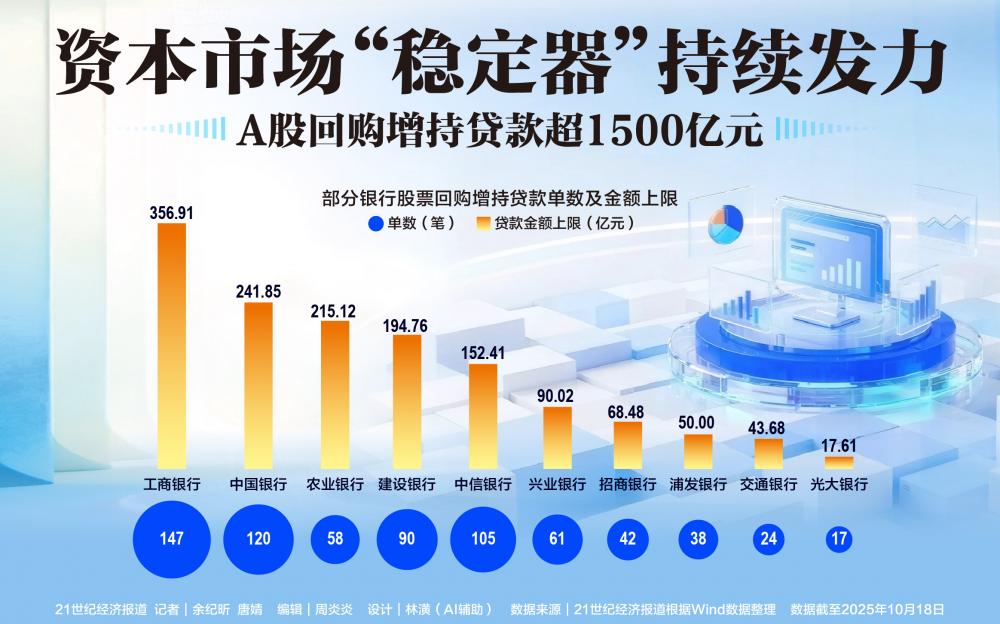
Core Insights - The People's Bank of China and multiple departments issued a notification regarding the establishment of stock repurchase and increase loans, which has been in effect for one year as of October 18, 2024 [1] - A total of 712 listed companies have disclosed 754 repurchase or increase loan plans, with a cumulative loan amount of 152.48 billion yuan [1][5] - The policy aims to stabilize the capital market and enhance investor confidence by providing low-cost, dedicated credit support for stock repurchase and increase [4][6] Summary by Sections Policy Implementation - The policy allows 21 national financial institutions to provide loans specifically for stock repurchase and increase, with a total re-loan quota of 300 billion yuan at an interest rate of 1.75% [4] - The maximum loan term was extended from 1 year to 3 years, and the self-funding ratio was reduced from 30% to 10% to improve accessibility [5] Market Participation - As of October 18, 2025, Industrial and Commercial Bank of China had the highest number of loan implementations, totaling 147 loans amounting to 35.69 billion yuan [2] - There is a demand for expanding the participant base to include more local banks to better meet market needs [2][3] Risk Management - Commercial banks face credit and market risks when engaging in this business, necessitating robust risk control measures [3] - The policy requires strict adherence to fund usage, ensuring that funds are used solely for the intended purpose [4] Market Impact - The tool has effectively played a counter-cyclical role during market fluctuations, helping to stabilize A-share market volatility [6][7] - As of October 24, 2024, the three major A-share indices showed significant annual increases, indicating positive market sentiment [6] Future Considerations - The long-term effectiveness and normalization of the operation mechanism still require further development [8][9] - Suggestions include expanding the support scope, simplifying approval processes, and enhancing policy sustainability to ensure broader market benefits [9]

股票回购增持贷款超1500亿元:工行发放最多,机构期待名单扩容
2 1 Shi Ji Jing Ji Bao Dao· 2025-10-24 23:15
Core Viewpoint - The People's Bank of China and multiple departments have established a stock repurchase and increase loan program, which has been in effect for one year, significantly impacting the capital market by providing low-cost financing for listed companies to stabilize stock prices and enhance investor confidence [5][6][7]. Group 1: Policy Implementation and Impact - As of October 18, 2025, 712 listed companies have disclosed 754 stock repurchase or increase loan plans, with a total loan amount limit of 1524.84 billion yuan [1]. - The program has seen participation from over 18 central enterprises, with China Chengtong Holdings Group planning to use 100 billion yuan and China Guoxin Holdings Limited planning to use 80 billion yuan for stock repurchase [1]. - The program has effectively acted as a stabilizer in the capital market, particularly during periods of market volatility, helping to mitigate negative feedback loops in stock price declines [7][8]. Group 2: Financial Institutions Involvement - Industrial and Commercial Bank of China has the highest number of repurchase and increase loan transactions, totaling 147 transactions with a loan amount limit of 356.91 billion yuan [2]. - There is a growing demand for expanding the list of participating financial institutions, with local banks seeking to gain access to the program to better meet market needs [2][3]. - The program is currently limited to 21 national financial institutions, which can provide loans to eligible listed companies and their major shareholders [1][5]. Group 3: Risk and Operational Challenges - Commercial banks face dual challenges of credit risk and market risk when engaging in this program, necessitating robust risk management measures [3][9]. - The fluctuating nature of stock prices complicates the accurate estimation of required loan amounts, leading to potential inefficiencies in fund utilization [9][10]. - The long-term effectiveness and normalization of this program require further refinement in operational mechanisms and risk management strategies [10][11]. Group 4: Future Directions - To enhance the program's sustainability, there is a need to broaden the range of eligible participants, streamline approval processes, and extend loan terms [11]. - Collaboration with other capital market stability tools is essential to create a synergistic effect that balances market stability with resource allocation efficiency [11].
中小银行密集下调存款利率 四季度降息预期升温
Zhong Guo Jing Ying Bao· 2025-10-24 18:53
Core Viewpoint - The recent adjustments in deposit rates by small and medium-sized banks reflect a response to ongoing pressure on net interest margins and the need for cost control in a competitive banking environment [1][2][3]. Group 1: Deposit Rate Adjustments - Since October, several small and medium-sized banks have announced reductions in deposit rates, particularly for long-term deposits, following similar moves by large banks [1][4]. - The adjustments include the cancellation of automatic renewal for notice deposits, aimed at optimizing the liability structure and reducing funding costs [2][3]. - Some banks have reduced three-year and five-year deposit rates by as much as 80 basis points, indicating a significant shift in the market [4]. Group 2: Reasons for Adjustments - The adjustments are driven by three main factors: cost control needs, liquidity management, and customer structure optimization [2][3]. - Regulatory pressures have also played a role, as authorities seek to curb excessive competition in deposit pricing and ensure a stable financial market [3][6]. Group 3: Future Outlook - Analysts predict that the ongoing adjustments may lead to a potential easing of net interest margin pressures, especially if further interest rate cuts occur [7][9]. - However, long-term challenges remain, including limited room for further reductions in deposit rates and continued downward pressure on asset yields [9][10]. - The banking sector may need to diversify its strategies, focusing on business transformation and non-interest income expansion to maintain profitability [9][10].
金融赋能惠东“百千万工程”,一场帮扶活动签署亿元金融授信
Nan Fang Du Shi Bao· 2025-10-24 17:05
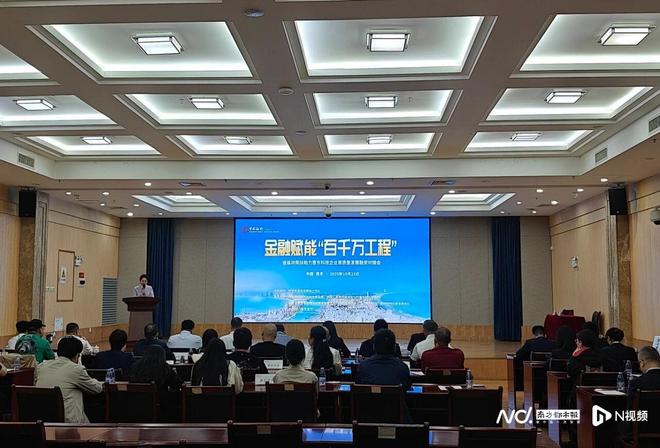
Core Insights - The financing matchmaking event is seen as a timely opportunity for technology enterprises in Huizhou, with a total credit limit of 107 million yuan provided to 30 companies [1][3]. Group 1: Event Overview - The financing matchmaking event was organized by various local financial and governmental institutions, including the Huizhou branch of the People's Bank of China and China Bank Huizhou branch [3]. - The event specifically targeted the financing challenges faced by technology enterprises, aiming to inject financial momentum into these companies [3]. Group 2: Company Support - Huizhou currently has 103 national high-tech enterprises and 59 technology-based small and medium-sized enterprises [3]. - The event facilitated the signing of financing cooperation agreements between China Bank Huizhou branch and representatives from technology companies, such as Qimao Precision Technology (Huizhou) Co., Ltd. [3]. Group 3: Call to Action - The Deputy Secretary of Huizhou County Committee urged financial institutions to innovate their financial products and services to better support technology enterprises [5]. - Technology enterprises were encouraged to actively engage with financial institutions and leverage the support policies to accelerate their high-quality development [5].
回购增持再贷款超1500亿元
21世纪经济报道· 2025-10-24 13:49
Core Viewpoint - The article discusses the implementation and impact of the stock repurchase and increase loan policy established by the central bank and other departments, highlighting its role as a stabilizing mechanism in the capital market over the past year [1][8][10]. Summary by Sections Policy Implementation - The policy was officially launched on October 18, 2024, allowing 21 national financial institutions to provide loans specifically for stock repurchase and increase, with a total re-loan quota of 300 billion yuan at an interest rate of 1.75% [8][9]. - As of October 18, 2025, 712 listed companies have disclosed 754 repurchase or increase loan plans, with a total loan amount of 1,524.84 billion yuan [1][9]. Participation and Impact - Major banks have actively participated, with Industrial and Commercial Bank of China leading with 147 loan plans totaling 356.91 billion yuan, followed by Bank of China and CITIC Bank [2][3]. - The policy has shown significant effectiveness in stabilizing the market, especially during periods of volatility, with the A-share market indices showing substantial gains [10][11]. Market Response and Future Outlook - The policy has encouraged participation from various market players, including state-owned and private enterprises, and has been responsive to market conditions [9][10]. - Analysts suggest that while the policy has been effective, there are challenges in its widespread implementation, including the need for better risk assessment and flexibility in loan amounts [14][15].