
Bank Of Guiyang(601997)

Search documents
贵阳银行连续三个年中报“双降”:不良贷款率创历史新高
Guan Cha Zhe Wang· 2025-09-01 06:52
Core Viewpoint - Guiyang Bank's mid-year report for 2025 reveals a significant decline in both revenue and net profit, marking the third consecutive year of such performance, alongside a record high in non-performing loan ratio, indicating severe challenges in asset quality and profitability [1][2]. Financial Performance - Guiyang Bank reported a revenue of 6.5 billion yuan, a year-on-year decrease of 12.2%, and a net profit attributable to shareholders of 2.474 billion yuan, down 7.2% year-on-year [2]. - The bank's net interest margin fell to 1.53%, down 0.28 percentage points from the previous year and down 0.66 percentage points from 2023 [2]. - Net interest income for the period was 4.92 billion yuan, a decrease of 15.26%, with 1.6 billion yuan attributed to scale factors and 7.26 billion yuan to interest factors [2]. Comparison with Peers - In contrast to Guiyang Bank, several listed city commercial banks reported growth in net interest income, such as Jiangsu Bank with a 19.1% increase [3]. - Despite a higher net interest margin than Chongqing Bank, Guiyang Bank's significant drop in net interest income suggests potential internal structural or operational efficiency issues [3]. Asset Quality Concerns - As of June 30, Guiyang Bank's total assets reached 741.54 billion yuan, with total loans increasing to 343.46 billion yuan, a growth of 1.27% [4]. - The non-performing loan balance rose to 5.824 billion yuan, with a non-performing loan ratio climbing to 1.7%, the highest in its history [4]. - The bank's loan distribution shows real estate loans at 52.76 billion yuan, with a non-performing rate of 1.75%, while the wholesale and retail sector had the highest non-performing balance [4]. Loan Classification and Coverage - The proportion of normal loans decreased by 0.27 percentage points, while the shares of special mention, substandard, and loss loans increased [5]. - The provision coverage ratio stood at 238.64%, down 18.43 percentage points from the previous year, indicating a declining trend despite a slight increase from the first quarter [6]. - The capital adequacy ratio was reported at 14.97%, with tier 1 and core tier 1 capital ratios at 13.77% and 12.73%, respectively, showing a slight decline but remaining at a relatively high level among listed city commercial banks [7].
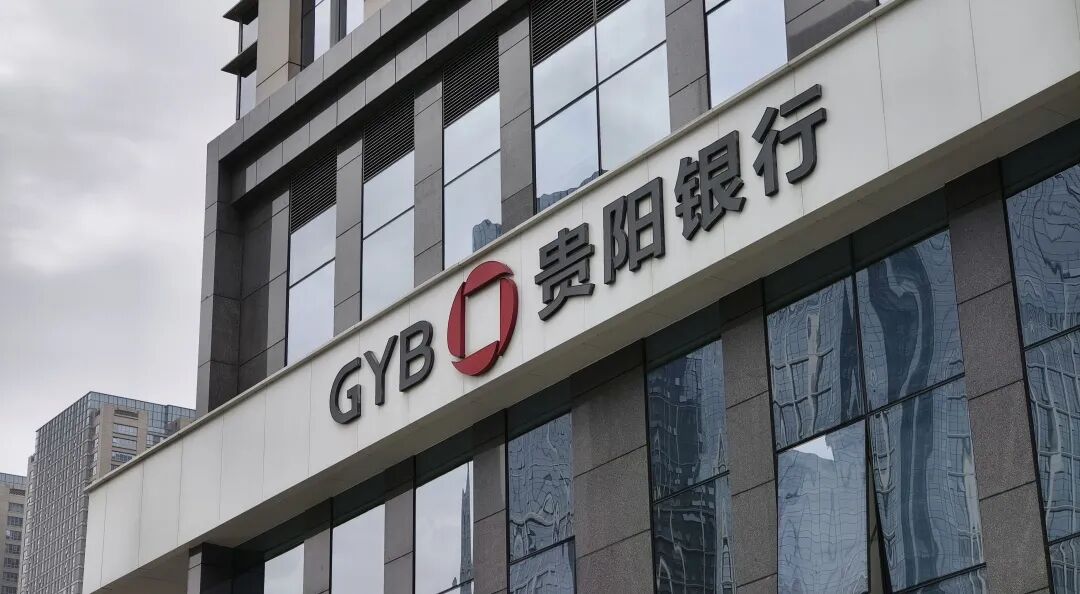
贵阳银行营收再降12%增速垫底上市银行 不良贷款率升至1.7%
Chang Jiang Shang Bao· 2025-09-01 05:23
Core Viewpoint - Guiyang Bank's performance continues to be under pressure due to declining interest rates and bond market volatility, resulting in a decrease in both revenue and net profit for the first half of 2025 [1][3][4]. Financial Performance - In the first half of 2025, Guiyang Bank achieved operating income of 6.5 billion yuan, a year-on-year decrease of 12.22% [1][3]. - The net profit attributable to shareholders was 2.474 billion yuan, down 7.2% year-on-year [1][3]. - This marks the continuation of a downward trend in revenue and net profit for two and a half years since 2023 [3]. Revenue Breakdown - Net interest income for the first half of 2025 was 4.92 billion yuan, a decrease of 15.26% year-on-year [4]. - Non-interest income was 1.58 billion yuan, a decline of 1.22% compared to the previous year [4][5]. - The bank's fee and commission income increased by 5.7% to 191 million yuan [5]. Asset Quality - As of June 30, 2025, the non-performing loan (NPL) ratio was 1.70%, an increase of 0.12 percentage points from the beginning of the year, the highest level since the bank's listing [7][8]. - The NPL ratio for loans to the real estate sector rose from 1.05% at the end of 2024 to 1.75% [8]. Loan and Deposit Growth - Total assets reached 741.54 billion yuan, an increase of 5.08% from the beginning of the year [7]. - Total loans amounted to 343.46 billion yuan, growing by 1.27% [7]. - Total deposits were 433.77 billion yuan, up 3.47% from the start of the year [7]. Operational Efficiency - The bank managed to reduce operating costs, with business and management expenses decreasing by 4.53% to 1.754 billion yuan [5]. - Employee wages and benefits decreased by 2.68% to 1.17 billion yuan [5].

贵阳银行营收再降12%增速垫底上市银行 不良贷款率升至1.7%达上市九年最高
Chang Jiang Shang Bao· 2025-08-31 22:40
Core Viewpoint - Guiyang Bank's performance continues to be under pressure due to declining interest rates and bond market volatility, resulting in a decrease in both revenue and net profit for the first half of 2025 [2][3][4]. Financial Performance - In the first half of 2025, Guiyang Bank reported operating income of 6.5 billion yuan, a year-on-year decrease of 12.22% [2][3]. - The net profit attributable to shareholders was 2.474 billion yuan, down 7.2% year-on-year [2][3]. - The bank's net interest income was 4.92 billion yuan, reflecting a decline of 15.26% compared to the previous year [4]. Comparison with Peers - Guiyang Bank has experienced a continuous decline in revenue and net profit for two and a half years, with the lowest revenue growth rate among A-share listed banks in the first half of 2025 [2][3]. - Among 42 listed banks, 30 reported positive revenue growth, while Guiyang Bank's performance lagged behind, with only a slight improvement over Huaxia Bank [3]. Loan Quality and Risk - As of June 30, 2025, the non-performing loan (NPL) ratio was 1.70%, an increase of 0.12 percentage points from the beginning of the year, marking the highest level since the bank's listing [7][9]. - The bank's loans to the real estate sector amounted to 52.763 billion yuan, accounting for 15.36% of total loans, with the NPL ratio for real estate loans rising from 1.05% to 1.75% [8]. Non-Interest Income and Cost Management - Non-interest income for the first half of 2025 was 1.58 billion yuan, a decrease of 1.22% year-on-year, while net income from fees and commissions increased by 5.7% to 191 million yuan [5]. - The bank managed to reduce operating costs, with total business and management expenses decreasing by 4.53% to 1.754 billion yuan [5]. Asset and Deposit Growth - As of June 30, 2025, total assets reached 741.536 billion yuan, an increase of 5.08% from the beginning of the year, while total loans grew by 1.27% to 343.461 billion yuan [7]. - Total deposits amounted to 433.770 billion yuan, reflecting a growth of 3.47%, with savings deposits contributing significantly to the total [7].
超17家银行将派发2375亿“红包”,国有大行成绝对主力
Bei Jing Shang Bao· 2025-08-31 14:05
Core Viewpoint - The mid-term profit distribution plans of listed banks in A-shares for 2025 show a significant increase in total dividends, reaching 237.54 billion yuan, with state-owned banks being the primary contributors [2][3][4]. Group 1: Dividend Distribution Overview - Among 42 listed banks, 17 have announced their mid-term dividend plans for 2025, with a total dividend amount of 237.54 billion yuan [2][3]. - The six major state-owned banks contributed 204.66 billion yuan, accounting for 86% of the total dividends announced by the 17 banks [3][4]. - Industrial and Commercial Bank of China leads with a dividend of 50.40 billion yuan, followed by China Construction Bank and Agricultural Bank of China with 48.61 billion yuan and 41.82 billion yuan respectively [3][4]. Group 2: Factors Influencing Dividend Decisions - The ability of state-owned banks to distribute dividends is supported by their strong capital strength, stable profitability, and ample cash flow, allowing them to maintain high dividend payouts [4][9]. - The decision to distribute dividends is influenced by a balance of capital adequacy, business expansion needs, regulatory requirements, and shareholder return expectations [4][9][10]. - Some banks, such as Zhengzhou Bank and Qingdao Rural Commercial Bank, have explicitly stated they will not distribute dividends for the first half of 2025, citing performance pressures and capital replenishment needs [8][9]. Group 3: Trends in Dividend Distribution - The trend of increasing mid-term and quarterly dividends among listed banks has been noted since the introduction of the new "National Nine Articles" policy, which encourages multiple dividend distributions within a year [2][4]. - Several joint-stock banks, including CITIC Bank and Minsheng Bank, have announced their mid-term dividend plans, with CITIC Bank aiming for a dividend payout ratio of 30.7% [4][6]. - The distribution landscape shows a clear differentiation, with some banks actively pursuing dividends while others pause due to various operational challenges [8][9].





上市银行探路转型新增长极:扩资产规模 增非息收入
Zhong Guo Jing Ying Bao· 2025-08-29 19:36
Core Viewpoint - The 2025 A-share banking mid-year report reveals significant profit differentiation among banks, with some city commercial banks achieving double-digit profit growth while others face negative growth due to narrowing interest margins and market volatility [1] Group 1: Profit Growth of City Commercial Banks - City commercial banks have emerged as the main contributors to profit growth among listed banks in the first half of 2025, with Hangzhou Bank reporting a net profit of 11.662 billion yuan, a year-on-year increase of 16.66% [2] - Factors contributing to the rapid profit growth of city commercial banks include stable asset scale growth, continuous optimization of asset-liability structure, and a recovery in fee and commission income driven by low base and wealth management growth [2][3] - Other city commercial banks such as Jiangyin Bank, Qilu Bank, and Qingdao Bank reported net profit growth rates of 16.63%, 16.48%, and 16.05% respectively [2] Group 2: Challenges Faced by Some Banks - In contrast, some banks like Guiyang Bank experienced negative profit growth, with a net profit of 2.474 billion yuan, a decrease of 7.20% year-on-year, attributed to declining interest income and weaker bond market performance [4] - The differentiation in profit performance among banks is largely due to variations in customer base, financing capabilities, risk preferences, and asset quality [4] Group 3: Interest Income and Margin Trends - The net interest margin for commercial banks narrowed to 1.42% in the first half of 2025, reflecting ongoing pressure on interest margins [7] - Strategies to manage interest margins include increasing the proportion of low-cost deposits and optimizing asset-liability management to improve net interest income [8][9] Group 4: Non-Interest Income and Business Diversification - Expanding non-interest income is seen as a crucial strategy for banks to mitigate the impact of declining interest margins, with a focus on enhancing middle business services such as custody, agency sales, and settlement [9] - Currently, non-interest income accounts for less than 30% of major listed banks in China, which is significantly lower than that of large international banks [9]




信用卡“缩量”背后:加速出清不良谋转型
Zhong Guo Jing Ying Bao· 2025-08-29 19:16
Core Insights - The credit card business of banks is undergoing a significant contraction, with a shift from expansion to value reconstruction, indicating a transformation in the industry [1][5][7] Group 1: Industry Trends - The overall credit card loan scale is declining across multiple banks, despite some growth in personal loan business [1][2] - Many banks are closing credit card centers, signaling a move towards a more refined and high-value development phase [1][4] - The total number of credit cards and combined credit and loan cards has decreased, with a notable drop of 6 million cards in Q2 compared to the previous quarter [4][9] Group 2: Bank Performance - CITIC Bank reported a credit card issuance of 126 million cards, with a loan balance of 458.45 billion yuan, but a 12.54% decline in transaction volume and a 14.61% drop in business revenue [2] - Ping An Bank's credit card receivables decreased by 9.2% to 394.87 billion yuan, with a significant drop in the number of active credit card users [3] - Smaller banks like Jiangsu Bank and Chongqing Bank also reported declines in credit card loan scales, with reductions of 7.51% and 10.23% respectively [3][4] Group 3: Strategic Shifts - Banks are focusing on improving asset quality and risk management, with CITIC Bank emphasizing a shift from scale to quality in its credit card business [5][6] - The trend of integrating credit card and consumer loan products is emerging, with banks like Chongqing Bank adapting their strategies to maintain competitiveness [6][9] - Experts suggest that the future of credit card business will focus on high-end customer needs and basic customer demands, moving away from merely acquiring new customers [7][8]




城商行板块8月29日跌0.92%,苏州银行领跌,主力资金净流出17.93亿元
Zheng Xing Xing Ye Ri Bao· 2025-08-29 08:48
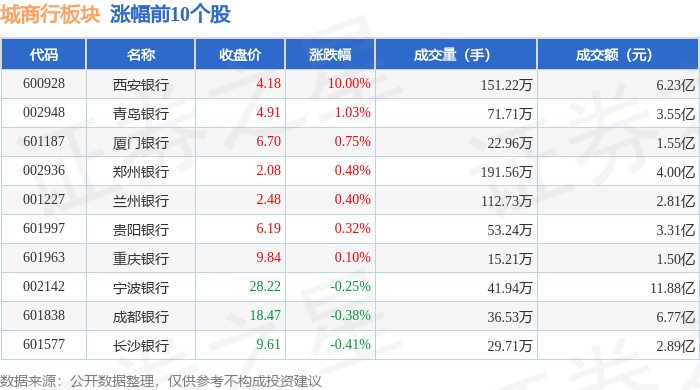
Market Overview - The city commercial bank sector experienced a decline of 0.92% on August 29, with Suzhou Bank leading the drop [1] - The Shanghai Composite Index closed at 3857.93, up 0.37%, while the Shenzhen Component Index closed at 12696.15, up 0.99% [1] Individual Stock Performance - Xi'an Bank saw a significant increase of 10.00%, closing at 4.18, with a trading volume of 1.51 million shares and a transaction value of 623 million yuan [1] - Qingdao Bank and Xiamen Bank also reported slight increases of 1.03% and 0.75%, respectively [1] - Conversely, Suzhou Bank experienced a decline of 2.40%, closing at 8.12, with a trading volume of 744,000 shares and a transaction value of 612 million yuan [2] Capital Flow Analysis - The city commercial bank sector had a net outflow of 1.793 billion yuan from institutional investors, while retail investors saw a net inflow of 913 million yuan [2] - The capital flow data indicates that retail investors are showing interest in the sector despite the overall decline [2] Detailed Capital Flow by Stock - Xi'an Bank had a net inflow of 99.76 million yuan from institutional investors, while it faced a net outflow of 42.89 million yuan from retail investors [3] - Hangzhou Bank also saw a net inflow of 61.29 million yuan from institutional investors, but retail investors withdrew 35.94 million yuan [3] - In contrast, Qilu Bank experienced a significant net outflow of 62.93 million yuan from institutional investors, while retail investors had a net inflow of 35.68 million yuan [3]


城商行板块8月28日涨1.22%,成都银行领涨,主力资金净流入4.7亿元
Zheng Xing Xing Ye Ri Bao· 2025-08-28 08:43
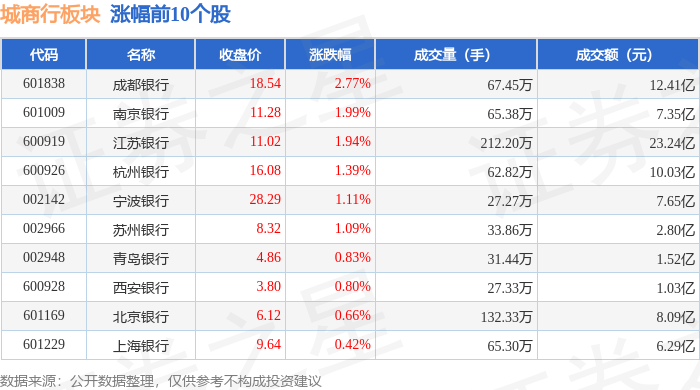
Market Performance - The city commercial bank sector increased by 1.22% on August 28, with Chengdu Bank leading the gains [1] - The Shanghai Composite Index closed at 3843.6, up 1.14%, while the Shenzhen Component Index closed at 12571.37, up 2.25% [1] Individual Bank Performance - Chengdu Bank's closing price was 18.54, with a rise of 2.77% and a trading volume of 674,500 shares, amounting to a transaction value of 1.241 billion yuan [1] - Nanjing Bank closed at 11.28, up 1.99%, with a trading volume of 653,800 shares and a transaction value of 735 million yuan [1] - Jiangsu Bank closed at 11.02, up 1.94%, with a trading volume of 2.122 million shares and a transaction value of 2.324 billion yuan [1] - Other notable banks include Hangzhou Bank (closing price 16.08, up 1.39%), Ningbo Bank (closing price 28.29, up 1.11%), and Suzhou Bank (closing price 8.32, up 1.09%) [1] Capital Flow Analysis - The city commercial bank sector saw a net inflow of 470 million yuan from main funds, while retail funds experienced a net outflow of 383 million yuan [2] - The individual stock capital flow indicates that Jiangsu Bank had a net inflow of 111 million yuan from main funds, while it faced a net outflow of 10.2 million yuan from retail funds [3] - Hangzhou Bank also reported a net inflow of 108 million yuan from main funds, with a net outflow of 81.36 million yuan from retail funds [3]
A股城商行半年报业绩分化:零售贷款收入下滑,对公业务成胜负手
Zhong Guo Zheng Quan Bao· 2025-08-28 01:02
Core Insights - The performance of listed city commercial banks in A-shares shows divergence, with Jiangsu Bank, Chengdu Bank, and Chongqing Bank achieving steady growth, while Guiyang Bank's performance declined [1][2] Group 1: Financial Performance - Jiangsu Bank reported operating income of 44.864 billion yuan, a year-on-year increase of 7.78%, and net profit attributable to shareholders of 20.238 billion yuan, up 8.05% [2] - Chengdu Bank achieved operating income of 12.27 billion yuan, a 5.91% increase, and net profit of 6.617 billion yuan, up 7.29% [2] - Chongqing Bank's operating income reached 7.659 billion yuan, a 7% increase, with net profit of 3.190 billion yuan, up 5.39% [2] - Guiyang Bank's operating income was 6.501 billion yuan, a decrease of 12.22%, and net profit of 2.474 billion yuan, down 7.2% [2] Group 2: Stock Performance - Jiangsu Bank's stock price increased by 25.54%, ranking fourth among A-share listed banks, while Chongqing Bank and Chengdu Bank saw stock price increases of 21.98% and 17.48%, respectively [2] Group 3: Business Growth Drivers - Corporate business significantly boosted net interest income for Jiangsu Bank, Chengdu Bank, and Chongqing Bank, serving as a key pillar for their positive performance [3] - Chongqing Bank's average corporate loan balance increased by 82.149 billion yuan year-on-year, contributing to a rise in interest income by 1.393 billion yuan [3] - Chengdu Bank also experienced a 17.87% year-on-year increase in average corporate loans, leading to a 10.12% rise in interest income [3] Group 4: Credit Structure Optimization - As of June 30, Chongqing Bank's small and micro enterprise loan balance reached 182.248 billion yuan, an increase of 33.119 billion yuan from the previous year [4] - Jiangsu Bank's small micro loan balance exceeded 750 billion yuan, with a significant increase in inclusive small micro loans [4] - Guiyang Bank issued 17.577 billion yuan in new inclusive small micro loans, with a weighted average interest rate of 4.20%, down 43 basis points year-on-year [5]
A股城商行半年报业绩分化: 对公业务成胜负手
Zhong Guo Zheng Quan Bao· 2025-08-27 20:25
Core Viewpoint - The performance of listed city commercial banks in A-shares shows divergence, with Jiangsu Bank, Chengdu Bank, and Chongqing Bank achieving steady growth, while Guiyang Bank's performance declined [1][2]. Performance Divergence - Jiangsu Bank reported operating income of 44.864 billion yuan, a year-on-year increase of 7.78%, and net profit attributable to shareholders of 20.238 billion yuan, up 8.05%. The non-performing loan ratio was 0.84%, down 0.05 percentage points from the end of last year [2]. - Chengdu Bank achieved operating income of 12.27 billion yuan, a 5.91% increase year-on-year, and net profit of 6.617 billion yuan, up 7.29%, with a low non-performing loan ratio of 0.66% [2]. - Chongqing Bank's operating income was 7.659 billion yuan, a 7% year-on-year increase, and net profit was 3.190 billion yuan, up 5.39%, with a non-performing loan ratio of 1.17%, down 0.08 percentage points [2]. - In contrast, Guiyang Bank's operating income was 6.501 billion yuan, a decrease of 12.22% year-on-year, and net profit was 2.474 billion yuan, down 7.2% [2]. - Stock performance reflected this divergence, with Jiangsu Bank's stock price increasing by 25.54%, Chongqing Bank by 21.98%, Chengdu Bank by 17.48%, and Guiyang Bank by 9.16% [2]. Corporate Business as Growth Engine - Corporate business growth significantly boosted the net interest income of Jiangsu Bank, Chengdu Bank, and Chongqing Bank, serving as a key pillar for their positive performance [3]. - Chongqing Bank's average corporate loan balance increased by 82.149 billion yuan year-on-year, contributing to a rise in interest income by 1.393 billion yuan, while retail loan interest income declined despite an increase in scale [3]. - Chengdu Bank also saw a 17.87% year-on-year increase in average corporate loans, leading to a 10.12% rise in interest income, while personal loan interest income decreased [3]. - Jiangsu Bank's net interest income reached 32.939 billion yuan, a 19.10% year-on-year increase, driven by a 3.33 billion yuan rise in debt instrument investment interest income [3]. Continuous Optimization of Credit Structure - As of June 30, Chongqing Bank's small and micro enterprise loan balance was 182.248 billion yuan, an increase of 33.119 billion yuan from the end of last year, with record high loan increments [4]. - Jiangsu Bank's small micro loan balance exceeded 750 billion yuan, with a 25.3 billion yuan increase in inclusive small micro loans [4]. - Guiyang Bank issued 17.577 billion yuan in new inclusive small micro loans, with a weighted average interest rate of 4.20%, down 43 basis points year-on-year [5].