CNCB(601998)

Search documents
华瑞银行下调存款利率,各地小银行也在下调,零利率时代已到来?
Sou Hu Cai Jing· 2025-10-26 23:09
Core Viewpoint - The report from the Bank of China Research Institute indicates that more banks, particularly small and medium-sized banks, are expected to lower deposit interest rates in the last quarter of 2025, especially for medium- and long-term deposits [1] Group 1: Deposit Rate Changes - In the second quarter, the six major state-owned banks lowered their deposit rates, with the current deposit rate dropping to an unprecedented 0.05%, meaning a deposit of 10,000 yuan yields only 5 yuan in annual interest [3] - The one-year fixed deposit rate is now at 0.95%, while the three-year fixed deposit rate is only 1.25%, aligning with the zero-interest rate environment seen in developed economies [3] - Joint-stock banks have also joined the trend of lowering interest rates, with one-year fixed deposit rates around 1.15%, while some city commercial banks and provincial rural commercial banks have rates between 1% and 1.1% [4] Group 2: Comparison of Bank Rates - A table shows various banks' deposit rates, with state-owned banks offering rates of 0.95% for one-year fixed deposits and 1.25% for three-year fixed deposits, while some smaller banks still maintain higher rates [6] - Smaller banks like Shanghai Huari Bank have begun to lower their deposit rates, but their rates remain higher than those of the six major state-owned banks, with one-year fixed deposit rates at 1.5% and three-year rates at 2.3% [12] Group 3: Economic Context - The decline in deposit rates is attributed to banks' varying operational conditions and the need to lower costs in a competitive lending environment, particularly affecting smaller banks that rely heavily on interest rate spreads [7] - The People's Bank of China has not adjusted the benchmark deposit rates since July 2011, leading to a situation where the rates set by the six major banks effectively replace the central bank's rates [12] - The financial system's structural changes have resulted in deposit rates for major banks nearing zero, with current rates at 0.05% for current accounts and 0.9% for one-year fixed deposits [13]







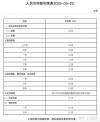
又有银行开启“随金价浮动”机制!业内人士:怕追高可以这样做
Xin Lang Cai Jing· 2025-10-26 22:35
Core Viewpoint - The recent adjustments by multiple banks in China to their gold accumulation plans reflect a response to the volatile gold market, with banks shifting to a pricing mechanism linked to real-time gold prices to better align with market fluctuations [5][10]. Group 1: Bank Adjustments - Bank of Communications announced that starting from October 27, 2025, the starting amount for its "Gold Wallet" accumulation plan will no longer be fixed but will instead fluctuate with gold prices, requiring the set amount to be at least equal to the real-time gold price [1][2]. - Agricultural Bank of China has also adjusted its gold accumulation plan to a floating pricing model, effective from September, to comply with regulatory requirements and enhance customer convenience [4]. - Several banks, including Industrial and Commercial Bank of China and China Bank, have raised their minimum investment thresholds for gold accumulation plans in October, indicating a trend among banks to increase entry barriers [6][7][8]. Group 2: Market Dynamics - The recent surge in gold prices is attributed to three main factors: the inverse relationship between gold prices and real interest rates, rising geopolitical tensions increasing demand for gold as a safe-haven asset, and central banks in emerging markets increasing their gold reserves [10]. - Analysts suggest that the floating pricing mechanism adopted by banks helps avoid delays in adjusting entry thresholds during periods of significant price volatility, thus providing a more responsive investment environment [8][9]. Group 3: Investor Guidance - Financial institutions have issued risk warnings to investors regarding the heightened volatility in precious metal prices, urging them to assess their risk tolerance and manage their investment positions carefully [9]. - Experts recommend that investors focus on long-term strategies for gold accumulation, emphasizing the importance of gradual investment rather than attempting to capitalize on short-term price movements [11].

招商基金王平旗下招商中证红利ETF三季报最新持仓,重仓宁波华翔
Sou Hu Cai Jing· 2025-10-26 21:39
Core Viewpoint - The report from the招商中证红利交易型开放式指数基金 indicates a net value growth rate of 9.21% over the past year, with significant changes in the top ten holdings compared to the previous quarter [1]. Group 1: Fund Performance - The fund achieved a net value growth rate of 9.21% over the last year [1]. - The report highlights the addition of new stocks to the top ten holdings, including 潞安环能, 中谷物流, 农业银行, 南钢股份, and 建设银行 [1]. Group 2: Changes in Top Holdings - New entries in the top ten holdings include: - 潞安环能 (669709): 7.7764 million shares valued at 1.11 billion - 中谷物流 (603560): 10.0744 million shares valued at 1.1 billion - 农业银行 (601288): 161.424 million shares valued at 1.08 billion - 南钢股份 (600282): 199.957 million shares valued at 1.05 billion - 建设银行 (601939): 117.632 million shares valued at 1.01 billion [2]. - 宁波华翔 (002048) saw an increase in holdings by 56.7 thousand shares, making it the largest holding at 2.73 billion [1][2]. - Other stocks that exited the top ten holdings include 成都银行, 兴业银行, 大秦铁路, 江苏银行, and 交通银行 [1][2].





关注信贷需求修复:银行业周报-20251026
Xiangcai Securities· 2025-10-26 14:50
Investment Rating - The industry investment rating is maintained at "Overweight" [4][7]. Core Insights - The new policy financial tools have been implemented to boost credit demand, with over 330 billion yuan allocated by three policy banks [3][27]. - A total of 500 billion yuan in new policy financial tools has been initiated, with 250 billion yuan already invested in 12 major economic provinces, focusing on infrastructure, foreign trade, and emerging sectors like digital economy and AI [4][5]. - The expected leverage effect of the 500 billion yuan policy financial tools could generate approximately 5 trillion yuan in investments and 4 trillion yuan in loans [4][29]. - The rapid deployment of these financial tools is anticipated to enhance credit demand in the fourth quarter, particularly benefiting regional banks due to the demonstration effect from major economic provinces [5][29]. Summary by Sections Market Review - The banking index increased by 1.40% during the period from October 20 to October 26, 2025, underperforming the CSI 300 index by 1.84 percentage points [9]. - The performance of major banks was relatively strong, with Agricultural Bank of China leading with a 4.86% increase [9]. Financial Market - The central bank's net injection in the open market was 198.1 billion yuan, maintaining a loose monetary environment [18]. - The average issuance rates for one-year interbank certificates of deposit were 1.68% for state-owned banks and 1.74% for regional banks, with a notable increase in net financing of 425.3 billion yuan in October [22][26]. Industry Dynamics - The policy financial tools are expected to support long-term public loans and improve loan term structures, with a focus on sustainable credit demand release during project operation cycles [29]. - Investment in emerging industries, particularly AI, is projected to maintain strong financing demand, with technology innovation loans expected to grow rapidly [5][29]. Investment Recommendations - The report suggests focusing on state-owned banks for their stable high dividend yields and potential valuation recovery opportunities for joint-stock and regional banks amid improving economic expectations [7][30].

中信银行郑州分行为企业海外项目保驾护航
Sou Hu Cai Jing· 2025-10-25 16:40
Core Viewpoint - CITIC Bank Zhengzhou Branch has successfully opened a cross-border RMB guarantee for a cable enterprise, facilitating the company's international cooperation opportunities and demonstrating the bank's commitment to supporting the real economy through financial services [1] Group 1: Financial Services and Support - The cable enterprise is an outward-oriented company that previously won a bid for a cable procurement project in a South American country, requiring the issuance of bid guarantees, advance payment guarantees, and performance guarantees [1] - CITIC Bank Zhengzhou Branch provided a tailored cross-border RMB financial service plan after multiple visits to understand the enterprise's financial needs during its internationalization process [1] - The bank's services align with the national "dual circulation" development strategy and the ongoing push for enterprises to expand internationally, highlighting the increasing importance of foreign exchange financial services as a link between domestic and international markets [1] Group 2: Strategic Initiatives - CITIC Bank aims to create a comprehensive cross-border financial service system by developing a full account, full scenario, and full lifecycle product map for foreign exchange business [1] - The bank actively collaborates with various channels, including CITIC Insurance, to enhance services for enterprises in import and export trade, cross-border settlement, foreign exchange trading, and exchange rate risk management [1] - The bank plans to continue its customer-centric service philosophy and leverage its professional advantages and innovative capabilities in the foreign exchange business to provide high-quality and innovative financial services for enterprises [2]
中信专场招聘会走进中南大学
Chang Sha Wan Bao· 2025-10-25 11:18
Group 1 - The core viewpoint of the news is the collaboration between CITIC Group and Central South University to enhance talent recruitment and create a talent development platform through a joint campus recruitment event [1][2] - The recruitment event involved CITIC Bank Changsha Branch and six other subsidiaries, aiming to provide more job opportunities for graduates from Central South University, a prestigious "Double First-Class" university [1][2] - The event attracted over 200 graduates, with a significant turnout for the presentations and interviews, indicating strong interest in the job opportunities offered [1][2] Group 2 - The joint campus recruitment is a key initiative to implement the strategic cooperation between CITIC Group and Central South University, focusing on the recruitment of versatile talents [2] - CITIC Bank Changsha Branch has actively engaged with Central South University throughout the year, visiting various engineering colleges to strengthen the recruitment of composite talents [2] - The recruitment effort was supported by Central South University's career services, which sent nearly 10,000 recruitment messages to graduates, contributing to the successful outcome of the event [2]

济南圣都整装资金存管服务上线 客企银三方共建家装安全生态
Huan Qiu Wang· 2025-10-25 05:59
Core Viewpoint - The launch of the renovation fund custody service by Beike's direct home decoration brand, Shengdu, aims to rebuild consumer trust in home decoration transactions through a three-party fund supervision system involving customers, banks, and enterprises [1][3]. Group 1: Fund Custody System - The fund custody system introduced by Shengdu includes three main measures: establishing a third-party supervision account, releasing funds based on construction milestones, and ensuring that interest during the frozen period belongs to consumers [3][5]. - This system addresses risks associated with the traditional "pay first, then construct" model, which has led to consumer concerns over construction delays and quality issues [3][5]. Group 2: Industry Impact - The initiative reflects Shengdu's commitment to social responsibility and sets a new benchmark for the healthy development of the home decoration industry, contributing to the "reassured consumption in Jinan" city brand [3][5]. - The introduction of the fund custody model is seen as a significant step in mitigating fund misappropriation risks and enhancing consumer confidence in the home decoration sector [5][7]. Group 3: Strategic Goals - Beike's overall strategy includes integrating products, delivery, technology, and services, with fund custody being a starting point for enhancing customer satisfaction [9][11]. - The company aims to leverage technology, such as lightweight BIM and smart construction sites, to improve efficiency and consumer trust in the industry [9][11]. Group 4: Performance Metrics - Since the launch of the fund custody model in November last year, it has been implemented in over 30 cities, safeguarding 3.3 billion yuan for more than 20,000 users, with a completion release rate exceeding 99% [15]. - In Jinan, since the service went live on September 27, it has provided fund custody services for over 80 families, amounting to 4.3 million yuan [15].


资本市场“稳定器”持续发力 A股回购增持贷款超1500亿元
2 1 Shi Ji Jing Ji Bao Dao· 2025-10-24 23:25
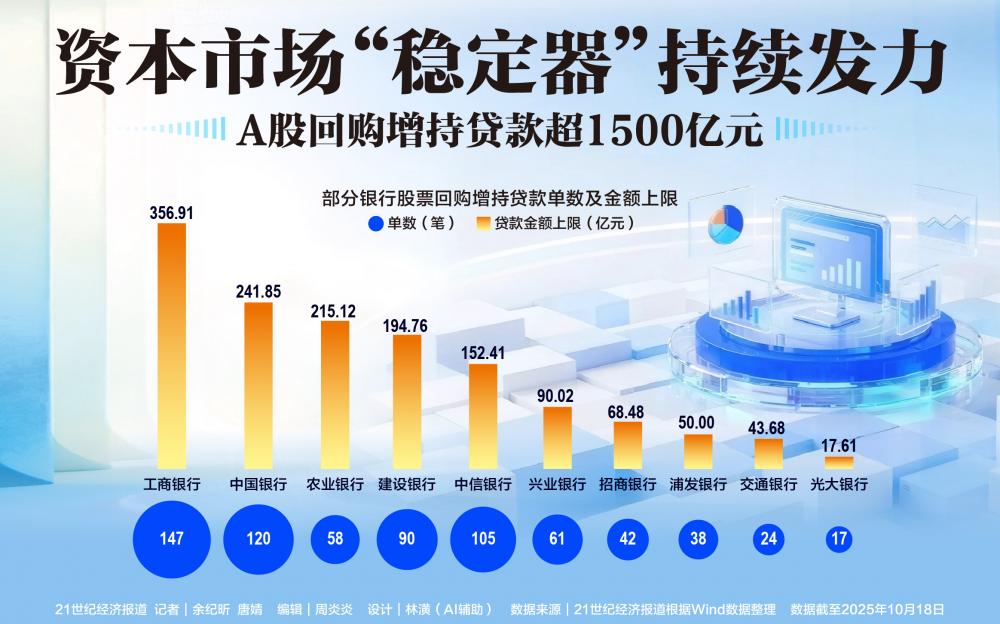
Core Insights - The People's Bank of China and multiple departments issued a notification regarding the establishment of stock repurchase and increase loans, which has been in effect for one year as of October 18, 2024 [1] - A total of 712 listed companies have disclosed 754 repurchase or increase loan plans, with a cumulative loan amount of 152.48 billion yuan [1][5] - The policy aims to stabilize the capital market and enhance investor confidence by providing low-cost, dedicated credit support for stock repurchase and increase [4][6] Summary by Sections Policy Implementation - The policy allows 21 national financial institutions to provide loans specifically for stock repurchase and increase, with a total re-loan quota of 300 billion yuan at an interest rate of 1.75% [4] - The maximum loan term was extended from 1 year to 3 years, and the self-funding ratio was reduced from 30% to 10% to improve accessibility [5] Market Participation - As of October 18, 2025, Industrial and Commercial Bank of China had the highest number of loan implementations, totaling 147 loans amounting to 35.69 billion yuan [2] - There is a demand for expanding the participant base to include more local banks to better meet market needs [2][3] Risk Management - Commercial banks face credit and market risks when engaging in this business, necessitating robust risk control measures [3] - The policy requires strict adherence to fund usage, ensuring that funds are used solely for the intended purpose [4] Market Impact - The tool has effectively played a counter-cyclical role during market fluctuations, helping to stabilize A-share market volatility [6][7] - As of October 24, 2024, the three major A-share indices showed significant annual increases, indicating positive market sentiment [6] Future Considerations - The long-term effectiveness and normalization of the operation mechanism still require further development [8][9] - Suggestions include expanding the support scope, simplifying approval processes, and enhancing policy sustainability to ensure broader market benefits [9]

股票回购增持贷款超1500亿元:工行发放最多,机构期待名单扩容
2 1 Shi Ji Jing Ji Bao Dao· 2025-10-24 23:15
Core Viewpoint - The People's Bank of China and multiple departments have established a stock repurchase and increase loan program, which has been in effect for one year, significantly impacting the capital market by providing low-cost financing for listed companies to stabilize stock prices and enhance investor confidence [5][6][7]. Group 1: Policy Implementation and Impact - As of October 18, 2025, 712 listed companies have disclosed 754 stock repurchase or increase loan plans, with a total loan amount limit of 1524.84 billion yuan [1]. - The program has seen participation from over 18 central enterprises, with China Chengtong Holdings Group planning to use 100 billion yuan and China Guoxin Holdings Limited planning to use 80 billion yuan for stock repurchase [1]. - The program has effectively acted as a stabilizer in the capital market, particularly during periods of market volatility, helping to mitigate negative feedback loops in stock price declines [7][8]. Group 2: Financial Institutions Involvement - Industrial and Commercial Bank of China has the highest number of repurchase and increase loan transactions, totaling 147 transactions with a loan amount limit of 356.91 billion yuan [2]. - There is a growing demand for expanding the list of participating financial institutions, with local banks seeking to gain access to the program to better meet market needs [2][3]. - The program is currently limited to 21 national financial institutions, which can provide loans to eligible listed companies and their major shareholders [1][5]. Group 3: Risk and Operational Challenges - Commercial banks face dual challenges of credit risk and market risk when engaging in this program, necessitating robust risk management measures [3][9]. - The fluctuating nature of stock prices complicates the accurate estimation of required loan amounts, leading to potential inefficiencies in fund utilization [9][10]. - The long-term effectiveness and normalization of this program require further refinement in operational mechanisms and risk management strategies [10][11]. Group 4: Future Directions - To enhance the program's sustainability, there is a need to broaden the range of eligible participants, streamline approval processes, and extend loan terms [11]. - Collaboration with other capital market stability tools is essential to create a synergistic effect that balances market stability with resource allocation efficiency [11].
回购增持再贷款超1500亿元
21世纪经济报道· 2025-10-24 13:49
Core Viewpoint - The article discusses the implementation and impact of the stock repurchase and increase loan policy established by the central bank and other departments, highlighting its role as a stabilizing mechanism in the capital market over the past year [1][8][10]. Summary by Sections Policy Implementation - The policy was officially launched on October 18, 2024, allowing 21 national financial institutions to provide loans specifically for stock repurchase and increase, with a total re-loan quota of 300 billion yuan at an interest rate of 1.75% [8][9]. - As of October 18, 2025, 712 listed companies have disclosed 754 repurchase or increase loan plans, with a total loan amount of 1,524.84 billion yuan [1][9]. Participation and Impact - Major banks have actively participated, with Industrial and Commercial Bank of China leading with 147 loan plans totaling 356.91 billion yuan, followed by Bank of China and CITIC Bank [2][3]. - The policy has shown significant effectiveness in stabilizing the market, especially during periods of volatility, with the A-share market indices showing substantial gains [10][11]. Market Response and Future Outlook - The policy has encouraged participation from various market players, including state-owned and private enterprises, and has been responsive to market conditions [9][10]. - Analysts suggest that while the policy has been effective, there are challenges in its widespread implementation, including the need for better risk assessment and flexibility in loan amounts [14][15].