
BeiGene(688235)

Search documents
未知机构:创新药大牛市分支思路—PD-(L)1 Plus成为海外药企必争之地 -202506-20250610
未知机构· 2025-06-10 01:55
Summary of Conference Call Notes Industry Overview - The conference focuses on the innovative pharmaceutical sector, particularly the PD-(L)1 Plus treatment landscape, which is becoming a competitive area for overseas pharmaceutical companies [1][2]. Key Insights and Arguments - **Market Performance**: The pharmaceutical sector has shown strong performance recently, with significant volatility in innovative drugs. The core stocks have remained relatively stable during adjustments, driven by short-term trading dynamics [3]. - **Investment Outlook**: There is a strong bullish sentiment towards the innovative drug market, supported by solid underlying logic and clear industry trends. Key innovative drug targets, especially those with BD expectations or PD-1 Plus logic, are expected to perform well even during market corrections [3]. - **Investment Strategy**: Four main investment lines are recommended: Chinese supermarkets, generic drug opportunities, re-evaluation of small-cap pipelines, and large overseas pharmaceuticals. The strategy includes a combination of buying and random rotation for explosive growth [3]. - **Focus Areas**: Attention is drawn to the PD-1 Plus logic, particularly the potential upgrade from PD-1/VEGF to PD-1/IL-2. Upcoming opportunities related to the ADA conference in late June and advancements in medical technology (brain-computer interfaces, rehabilitation robots, AI in healthcare) are highlighted [3]. - **2025 Outlook**: Optimism prevails for the pharmaceutical sector, with expectations of a structural bull market. Focus areas include innovative drugs, new technologies, and industry restructuring [3]. Clinical Data Insights - **Sinda's PD-1/IL-2 (IBI363) Data**: - In non-small cell lung cancer (wild-type), the 1-1.5 mg/kg group showed an ORR of 25.9% and a median OS of 15.3 months, while the 3 mg/kg group had an ORR of 36.7% and a median PFS of 9.3 months, suggesting a potential median OS of 20-25+ months [3]. - In lung adenocarcinoma (wild-type), the low-dose group (0.6/1.5 mg/kg) had an ORR of 13.08% and a median PFS of 2.7 months, while the high-dose group (3 mg/kg) showed an ORR of 24% and a median PFS of 5.6 months, with a potential median OS of 25-30 months [3]. - The data indicates a high OS/PFS ratio, particularly in lung adenocarcinoma, which is rare and suggests a potential to limit metastatic tumors [3][4]. Competitive Landscape - **PD-1 Plus Market**: The PD-(L)1 market is substantial, estimated at around $40 billion, and is undergoing innovation. Major multinational corporations are actively investing in PD-1 Plus, contributing to rising upfront payments in business development [6]. - **Key Companies to Watch**: Notable companies in the PD-1 Plus space include Sinda, Hengrui, BeiGene, Kangfang Biotech, Rongchang Biotech, Aosaikang, and Zhimeng Junshi [6]. Sector-Specific Updates - **Innovative Drugs**: The index for innovative drugs rose by 0.34% last week, with a positive long-term outlook driven by clinical data and business development catalysts [6]. - **Generic Drugs**: The index increased by 1.69%, outperforming the pharmaceutical index. Key events include the approval of a compound release tablet by Shenda and the acceptance of a conditional listing application for a hemophilia drug [6]. - **Traditional Chinese Medicine & Pharmacies**: The Chinese medicine index rose by 0.39%, while pharmacies increased by 1.67%, with a focus on policy impacts and operational strategies [6]. - **Medical Devices**: The medical device index rose by 1.11%, with attention on equipment updates and market recovery [6]. - **Life Sciences**: The life sciences sector saw an average increase of 1.47%, with a focus on operational recovery and investment trends [6]. Additional Considerations - **Stock Selection**: Emphasis on companies with clean shareholding structures, low stock prices, and positive future operational trends. Monitoring monthly operational data and overall consumption data is crucial [7].



药品产业链周度系列(三):浅谈CEACAM5ADC-20250609
Changjiang Securities· 2025-06-09 15:30
Investment Rating - The investment rating for the industry is "Positive" and is maintained [9] Core Insights - CEACAM5 is a member of the immunoglobulin superfamily adhesion molecules, highly expressed in various malignancies such as colorectal cancer, gastrointestinal cancer, and lung cancer, playing a significant role in tumor occurrence, invasion, and metastasis [2][6][18] - With the first clinical trial of SAR408701 by Sanofi entering Phase III, CEACAM5 ADC has become a popular development direction for targeted therapy drugs [2][28] - Currently, there are 8 CEACAM5-targeted ADCs in development globally, with 6 having entered clinical stages, showcasing a trend of diverse technological pathways and distinctive mechanisms among major pharmaceutical companies [2][8] Summary by Sections CEACAM5 as a Target - CEACAM5 is recognized as a high-expression tumor target, with its drug development potential accelerating due to the emergence of various therapeutic approaches, including ADCs, monoclonal antibodies, bispecific antibodies, CAR-T cell therapies, and therapeutic vaccines [6][28] CEACAM5 ADC Development - The heat around CEACAM5 ADC is rising, with the design of effective connections being key to overcoming challenges related to its weak internalization capacity [7][32] - The development focus is shifting towards optimizing linkers and payload systems to enhance stability and ensure precise release in the tumor microenvironment [7][32] Competitive Landscape - Major pharmaceutical companies are actively positioning themselves in the CEACAM5 ADC space, with notable developments from Sanofi, Merck, Innovent, and BeiGene, each showcasing unique design strategies and therapeutic potentials [8][50][58][61] - Sanofi's SAR408701, despite facing setbacks, continues to explore its potential in other cancer types, while Merck's M9140 is the first to utilize a topoisomerase I inhibitor in this context [8][50] Investment Perspective - The report suggests that the ongoing innovation in drug development, particularly in the context of CEACAM5-targeted therapies, presents significant investment opportunities, especially for companies with strong cash flows and innovative capabilities [64]


6月9日工银医疗保健股票净值增长1.79%,今年来累计上涨19.66%
Sou Hu Cai Jing· 2025-06-09 12:32
Group 1 - The core viewpoint of the news is the performance and holdings of the Industrial and Commercial Bank of China Medical Healthcare Stock Fund, which has shown positive returns in various time frames [1] - The latest net value of the fund is 2.7270 yuan, with a growth of 1.79% [1] - The fund's performance over the past month has yielded a return of 8.91%, ranking 96 out of 1025 in its category [1] - Over the last six months, the fund has achieved a return of 13.01%, ranking 146 out of 989 [1] - Year-to-date, the fund has returned 19.66%, ranking 96 out of 999 [1] Group 2 - The top ten holdings of the fund account for a total of 39.79%, with significant positions in companies such as Heng Rui Pharmaceutical (8.90%) and WuXi AppTec (5.12%) [1] - The fund was established on November 18, 2014, and as of March 31, 2025, it has a total scale of 2.724 billion yuan [1] - The fund is managed by Zhao Bei and Ding Yang, both of whom have extensive experience in the healthcare sector [2]



A股:值得长期持有的“创新药”公司名单,谁是下一个“创新药茅台”?
Sou Hu Cai Jing· 2025-06-09 11:02
Core Viewpoint - The Chinese pharmaceutical industry is transitioning from "generic drugs" to "innovative drugs," creating a golden development period for companies with core R&D capabilities, driven by policy support, capital influx, and market demand [1] Group 1: Reasons for Optimism in the "Innovative Drug" Sector - Policy Benefits: National strategic support for the shift from "generic" to "innovative" drugs [1] - Market Demand: Aging population and consumption upgrades ensure strong long-term growth [1] - Technological Breakthroughs: Chinese innovative drugs are gradually moving towards global markets, with companies like BeiGene achieving overseas licensing [1] Group 2: Notable A-Share Innovative Drug Companies - Hengrui Medicine (600276): Leading innovative drug company with the highest R&D investment in China, exceeding 6 billion in 2023, covering oncology, autoimmune diseases, and metabolic diseases [3] - BeiGene (688235): A benchmark for Chinese innovative drugs going global [5] - Innovent Biologics (01801.HK): One of the "PD-1 Four Little Dragons" with a rich pipeline [5] - Rongchang Biologics (688331): Leader in the ADC sector [7] - Kelun Pharmaceutical (002422): Transitioning from an infusion leader to innovative drugs [7] - East China Pharmaceutical (000963): Driven by both medical aesthetics and innovative drugs [7] - Kangfang Biologics (09926.HK): Leader in the dual antibody sector [7] Group 3: Market Trends and Dynamics - Accelerated inclusion of innovative drugs in medical insurance, leading to explosive sales growth [4] - New listing regulations for the Sci-Tech Innovation Board/B-shares allow unprofitable biotech companies to go public, improving the financing environment [4] - The aging population in China exceeds 280 million, with increasing treatment demands for diseases like cancer, diabetes, and cardiovascular issues [4] - Rising per capita medical expenditure and enhanced patient payment capabilities for high-end innovative drugs [4] Group 4: Investment Recommendations - Long-term holding of core leaders like Hengrui and BeiGene is advised [9] - Attention to emerging players in niche sectors such as ADC, dual antibodies, and GLP-1 drugs [9] - Monitoring of R&D risks, including clinical failures and price reductions in medical insurance [9]



2025下半年港股医药投资策略:以创新药为主线,关注出海机会
Shenwan Hongyuan Securities· 2025-06-09 08:46
Group 1 - The report emphasizes the active overseas commercialization of innovative drugs, with several domestic innovative drugs presenting excellent data at the ASCO conference, highlighting ongoing business development (BD) opportunities and clinical progress of key pipelines [3][39]. - Key companies such as BeiGene, Innovent Biologics, and others are expected to achieve significant milestones, including BeiGene's projected non-GAAP operating profit of $45 million in 2024 and a positive cash flow in 2025 [3][4]. - The report notes that the Hong Kong pharmaceutical sector has shown strong performance, with the Hang Seng Healthcare Index rising approximately 42% year-to-date, driven by the successful execution of BD transactions and the internationalization of domestic innovative drugs [14][39]. Group 2 - The report outlines the financial forecasts for key companies, indicating that BeiGene's revenue is expected to grow from 36.69 billion HKD in 2025 to 44.36 billion HKD in 2026, with a significant increase in net profit from 1.25 billion HKD to 4.56 billion HKD [4]. - The innovative drug sector is projected to see a revenue increase of 30% year-on-year in 2024, with total revenue reaching 71.88 billion HKD, while the overall loss for innovative drug companies is expected to narrow by 29% [35][36]. - The report highlights the increasing number of license-out transactions, with 81 transactions in 2024 totaling $45 billion, reflecting a 28% year-on-year growth, and a notable deal between 3SBio and Pfizer involving a $1.25 billion upfront payment [43][44]. Group 3 - The report indicates that the pharmaceutical sector is undergoing a transformation, with leading companies like Hansoh Pharmaceutical and China National Pharmaceutical Group achieving revenue growth rates of 21% and 10% respectively in 2024 [35]. - The medical services sector is facing pressure due to the impact of healthcare insurance policies and macroeconomic conditions, which may affect growth in consumer medical services [39]. - The CXO sector is showing signs of improvement, with a focus on the recovery of orders, indicating a potential rebound in performance [39]. Group 4 - The report provides a comparative analysis of valuations, noting that the overall valuation of Hong Kong pharmaceuticals is lower than that of A-share and overseas pharmaceuticals, with a median PE of 15x for Hong Kong compared to 24.7x for A-share [12][14]. - The report highlights the significant performance disparity among sub-sectors, with innovative drugs and pharma benefiting from ongoing BD transactions and a favorable valuation correction, while medical services are under pressure [18][39]. - The report also mentions the increasing trend of dual-listed pharmaceutical companies, with the number rising from 5 in 2017 to 20 currently, indicating a growing interest in the Hong Kong market [23].
生物医药企业集体大涨,中国生物药原创时代来了吗?
Di Yi Cai Jing· 2025-06-09 06:53
Core Viewpoint - The innovation speed and cost-effectiveness of Chinese biopharmaceutical companies have surpassed that of American companies, leading to a surge in stock prices for several Chinese biopharma firms [1][2]. Group 1: Market Performance - On June 9, 2023, Chinese biopharmaceutical companies saw a collective stock price increase, with Kelun-Botai (6990.HK) rising nearly 6% to a market cap exceeding HKD 80 billion, BeiGene (688235.SH) up over 8%, and Junshi Biosciences (688180.SH) up over 5% [1]. - The optimism surrounding original drug licensing contributed to the stock price increases, particularly following data presentations from Chinese companies at the recent ASCO annual meeting [1]. Group 2: International Interest - In recent months, American and European pharmaceutical companies have invested billions in acquiring Chinese-developed drugs, yielding returns for these companies [2]. - During the ASCO conference, BioNTech's resale of a tumor dual-antibody drug acquired from China's Pumice Biotech for over USD 10 billion to Bristol-Myers Squibb (BMS) highlighted the market's excitement [2]. - BMS is betting on a dual-antibody drug targeting PD-L1 and VEGF for treating various solid tumors, which shows potential to replace Merck's leading cancer drug, Keytruda [2]. Group 3: Competitive Landscape - The valuation of Chinese innovative drugs is considered reasonable by multinational companies, as they seek products with patent protection for lifecycle management [4]. - China has surpassed the U.S. in the number of clinical trials and has seen a significant increase in patent filings, attracting multinational pharmaceutical companies [4]. - AstraZeneca announced a USD 2.5 billion investment to establish a research center in Beijing, reflecting the growing interest in China's biopharmaceutical sector [4]. Group 4: Innovation and Development - Chinese biopharmaceutical companies have made rapid advancements in innovation over the past decade, although they still have a long way to go in achieving "original innovation" [4]. - The PD-L1/VEGF dual-antibody drug represents a significant innovation compared to traditional combination therapies, offering easier administration and potential cost reductions [4]. - Local companies like Kelun-Botai and InnoCare Pharma are actively investing in the development of antibody-drug conjugates (ADCs) in the competitive oncology market [4]. Group 5: Clinical Achievements - On June 6, 2023, Kelun-Botai's ADC drug, SKB264, received approval from the National Medical Products Administration (NMPA) and became the first TROP2 ADC drug approved for lung cancer indications globally [5]. - InnoCare Pharma presented data at ASCO indicating that its HER3-targeting ADC drug has potential comparable to Kelun-Botai's SKB264 for treating EGFR-resistant non-small cell lung cancer [5].

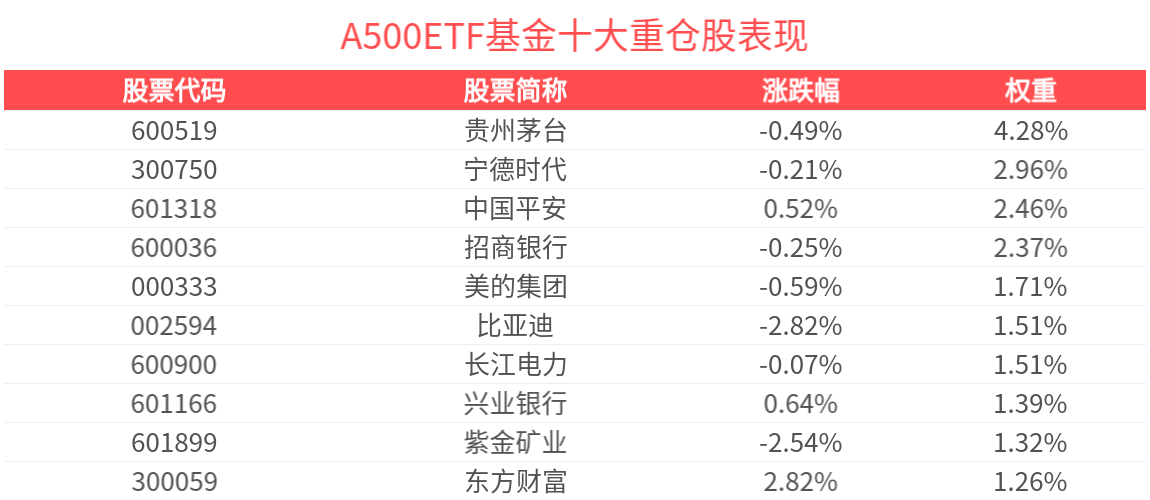
消费与投资驱动经济温和复苏,A500ETF基金(512050)冲击4连涨,成交额超15亿元
Sou Hu Cai Jing· 2025-06-09 03:31
Group 1 - The core viewpoint of the articles indicates that the Chinese economy is experiencing a mild recovery, driven by consumption and investment, with strong performance in service consumption and high-tech manufacturing investment [2] - The A500 ETF fund closely tracks the CSI A500 Index, which selects 500 securities with large market capitalization and good liquidity from various industries to reflect the overall performance of representative listed companies [2][3] - As of May 30, 2025, the top ten weighted stocks in the CSI A500 Index account for 21.21% of the index, with notable companies including Kweichow Moutai, CATL, and Ping An Insurance [3][5] Group 2 - Recent monetary policies in China, including interest rate cuts and structural tools, aim to support technology innovation, inclusive finance, and consumption, injecting liquidity confidence into the market [2] - The A500 ETF fund has shown a strong trading volume, with a turnover rate of 9.83% and a transaction value of 1.556 billion yuan, indicating robust investor interest [1] - The industrial profits of large-scale enterprises in April increased by 3.0% year-on-year, with significant improvements noted in sectors such as steel, agricultural products, transportation equipment, and TMT manufacturing [2]




创新药行情火热不断,创新药企ETF(560900)盘中涨近4%,众生药业涨停
Sou Hu Cai Jing· 2025-06-09 03:26
Group 1: Innovation Drug Sector Performance - The Innovation Drug ETF (560900) increased by 3.86%, with a turnover of 9.64% and a transaction volume of 3.1137 million yuan [1] - The CSI Innovation Drug Industry Index (931152) rose by 3.77%, with notable increases in constituent stocks such as Baili Tianheng (688506) up by 10.71%, Zhongsheng Pharmaceutical (002317) up by 9.99%, and BeiGene (688235) up by 8.14% [1] - The ADA conference is highlighted as a significant platform for Chinese innovative drug companies to showcase their GLP-1 research capabilities, potentially boosting the GLP-1 industry chain [1] Group 2: Investment Opportunities in Technology - Morgan Asset Management is integrating its "Global Vision Investment Technology" product line to assist investors in identifying quality technology companies globally amid a new wave of AI-driven technological advancements [2] - The actively managed Morgan Emerging Power Fund aims to capture emerging industry trends, while the Morgan Smart Connectivity Fund focuses on opportunities in the AI sector [2] - The Morgan Pacific Technology Fund selects quality technology companies in the Pacific region, indicating a strategic focus on high-growth sectors [2] Group 3: Passive Investment Products - The Morgan Hang Seng Technology ETF (QDII) allows for easy exposure to Hong Kong tech assets, while the Morgan CSI Innovation Drug Industry ETF (560900) provides access to Chinese innovative drug companies [3] - The Morgan NASDAQ 100 Index Fund (QDII) offers a straightforward way to invest in global technology leaders [3]



稀土永磁板块异动走高,A500指数ETF(159351)成交额暂居同标的产品第一,机构:预计稀土价格有望继续温和上涨
2 1 Shi Ji Jing Ji Bao Dao· 2025-06-09 02:58
Group 1 - The core viewpoint of the news highlights the recent surge in the rare earth permanent magnet sector, driven by export control measures and market dynamics [1][2] - The A500 Index ETF (159351) has shown a positive performance, with a 0.62% increase and a trading volume exceeding 2 billion yuan, indicating strong investor interest [1][2] - The rare earth industry is experiencing a supply tightening and price stabilization, with expectations for moderate price increases benefiting equity sector profitability [2] Group 2 - The A500 Index ETF closely tracks the CSI A500 Index, which includes 500 representative stocks across various industries, balancing large-cap stocks with core industry leaders [2] - The A-share market is seen as having the potential for a bull market, driven by increasing household asset allocation towards equities and improvements in corporate governance and shareholder returns [3] - The overall profitability of Chinese enterprises is expected to rise, with a historical supply clearing cycle anticipated, indicating a shift towards higher value sectors [3]

百济神州20250608
2025-06-09 01:42
Summary of the Conference Call for BeiGene Company Overview - **Company**: BeiGene - **Industry**: Biotechnology, specifically focused on innovative drug development Key Points and Arguments 1. **Profitability Outlook**: BeiGene expects to achieve positive operating profit under GAAP by 2025, with a projected net profit margin exceeding 10% in the next 3-5 years, highlighting the importance of sustainable profitability [2][5][8] 2. **Core Product Performance**: The sales of the core product, Zanubrutinib, are anticipated to reach $3.7 billion in 2025, representing a 50% year-over-year growth. The market is particularly focused on the future sales strategy and value changes of this product [2][5][6] 3. **Competitive Landscape**: The impact of Pirtobrutinib on Zanubrutinib is considered limited, with new patient share exceeding 50%. Future expectations suggest that the market share could reach $7.5 billion [2][5][6] 4. **Pipeline Development**: In the hematology field, BeiGene has multiple products including BCL-2 and BTK inhibitors, with BCL-2 inhibitors rapidly advancing for frontline CLL indications, potentially becoming significant global treatments [2][7] 5. **Solid Tumor Research**: Data on CDK4 inhibitors will be shared on June 26, which may establish their best-in-class potential, showcasing the company's strong early-stage research capabilities [2][7] 6. **Stock Performance**: Since July 2024, BeiGene's stock has performed strongly, with expectations of profitability under Non-GAAP measures in 2025, boosting market confidence [2][8] 7. **Short-term Catalysts**: The upcoming R&D day on June 26 is expected to be a catalyst for short-term performance, with anticipated data on CDK4 inhibitors and possibly other surprise data [3][4][9] Additional Important Insights - **Sales Growth Trends**: Historically, the second quarter has shown the steepest sales growth for Zanubrutinib in the U.S., and this trend is expected to continue in 2025 [4][9] - **Clinical Trials**: The company plans to initiate two Phase III clinical trials, including a head-to-head comparison with a non-covalent BTK inhibitor, indicating strong global clinical operational capabilities [6][7] - **Market Positioning**: BeiGene is positioned as a significant representative in the Chinese innovative drug sector, driven by the rapid growth of Zanubrutinib and advancements in major indications [2][8]