BLT(688333)

Search documents
马斯克:将推动特斯拉转型为估值25万亿美元的机器人公司;安克创新与飞书发布AI录音豆;黄仁勋称AI时代蓝领更吃香丨AI周报
创业邦· 2026-01-25 03:07
Core Insights - The article highlights significant developments in the AI industry, including new product launches, funding rounds, and strategic partnerships, reflecting the rapid evolution and investment in AI technologies globally. Group 1: AI Product Developments - Baidu's Wenxin App is introducing a social feature with "multi-agent group chat" capabilities, aiming to enhance user interaction without directly competing with WeChat [8] - Anker Innovation and Feishu launched the AI hardware product "Anker AI Recording Bean," which features advanced audio recording capabilities and integrates with Feishu's AI functionalities [9] - Baidu released the official version of Wenxin Model 5.0, which supports multi-modal understanding and has 2.4 trillion parameters [17] - Baichuan Intelligence launched the M3 Plus model, which significantly reduces factual hallucinations to 2.6% [19] - Alibaba Health introduced the AI product "Hydrogen Ion," aimed at clinical and research applications with a focus on low hallucination rates [27] Group 2: AI Company Funding and Valuation - OpenEvidence, a medical AI startup, completed a $250 million Series D funding round, valuing the company at $12 billion [22] - OpenAI's CFO announced that the company's annual revenue for 2025 is projected to exceed $20 billion, a significant increase from $6 billion in 2024 [38] - ElevenLabs is negotiating new funding that could raise its valuation to $11 billion [29] - The AI startup Anthropic is seeking to raise at least $25 billion, with Sequoia Capital expected to participate [28] Group 3: AI Industry Trends and Insights - Nvidia's CEO highlighted the increasing demand for skilled tradespeople, suggesting that roles like plumbers and electricians could see six-figure salaries due to the AI-driven infrastructure boom [11] - The global AI financing events decreased by 13 compared to the previous period, with a total disclosed financing amount of 9.57 billion RMB [42] - The distribution of AI funding in China is concentrated in Guangdong and Jiangsu provinces, indicating regional investment trends [47] Group 4: AI Market Competition and Strategic Moves - Google DeepMind's CEO praised ByteDance as a leading AI company in China, suggesting they are only six months behind the cutting edge [11] - Apple plans to significantly revamp Siri into an AI chatbot, aiming to enhance its competitive position in the AI market [36] - Tesla's CEO Elon Musk is pushing for a transformation into a robotics company, with the Optimus robot as a key focus, despite production challenges [8]






铂力特:公司将在定期报告中披露激光器数量
Zheng Quan Ri Bao· 2026-01-23 11:16
(文章来源:证券日报) 证券日报网讯 1月23日,铂力特在互动平台回答投资者提问时表示,公司将在定期报告中披露激光器数 量,届时请关注公司定期报告。 ...

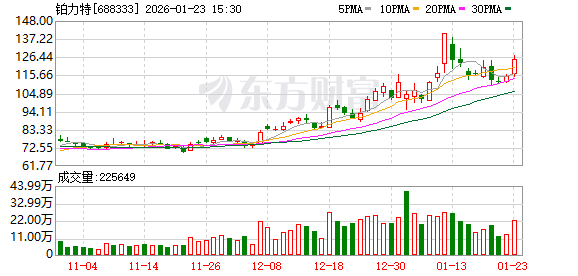
铂力特:公司通过自有金属增材设备为客户提供金属3D打印定制化产品的设计、生产及相关技术服务
Zheng Quan Ri Bao Wang· 2026-01-23 11:00
Core Viewpoint - The company, Plater, provides customized metal 3D printing products and related technical services using its own metal additive manufacturing equipment, targeting various industries such as aerospace, industrial machinery, energy, scientific research, medical research, automotive manufacturing, and electronics [1] Industry Applications - The primary applications of the company's services include aerospace, industrial machinery, energy power, scientific research institutions, medical research, automotive manufacturing, and electronics [1]
3D 打印行业系列报告(一):工业级与消费级应用双轮驱动,行业迈入快速发展期
Southwest Securities· 2026-01-23 10:30
Investment Rating - The report maintains an "Outperform" rating for the 3D printing industry as of January 22, 2026 [1] Core Insights - The 3D printing industry is entering a rapid development phase driven by both industrial and consumer applications, with significant market potential projected to reach hundreds of billions [8] - The global additive manufacturing market is expected to grow to $21.9 billion by 2024, with a CAGR of 18% projected until 2034 [8] - Domestic policies in China are increasingly supportive, indicating a maturing industry with substantial growth potential [8] Summary by Sections 1. 3D Printing Technology and Development - Seven core processes facilitate the development of 3D printing across multiple fields, including powder bed fusion and directed energy deposition [16][22] - The technology has evolved from rapid prototyping in the 1980s to widespread commercial applications in various sectors, including aerospace and healthcare [18][20] 2. Industry Growth and Applications - The 3D printing industry is experiencing rapid growth, with applications expanding across various sectors such as aerospace (17.7%), medical (17.6%), and automotive (10.3%) [8][71] - The global market for aerospace 3D printing is projected to reach $2.88 billion by 2025, with a CAGR of 20% until 2035 [8] 3. Market Dynamics and Competitive Landscape - Domestic manufacturers are leading in desktop applications, while industrial-grade 3D printing is seeing increased competition from local firms [8] - Key players in the industrial-grade market include EOS, which holds over 40% market share, followed by other significant companies [8] 4. Investment Opportunities - The report suggests focusing on companies that are well-positioned to benefit from technological advancements and expanding applications, including equipment manufacturers like Huazhu High-Tech and service providers like Jingyan Technology [8]

3D打印与商业航天
2026-01-22 02:43
3D 打印与商业航天 20260121 摘要 3D 打印技术已广泛应用于商业航天领域,尤其在火箭发动机和卫星制造 中,解决了传统加工周期长、精度低及复杂结构难以加工的问题,显著 缩短生产周期并提高良品率。 商业航天领域常用的 3D 打印材料包括钢、铝合金、钛合金等,其中钢 粉价格已降至每公斤五六十元,铝合金约为每公斤三四十元,钛合金降 至两三百元,成本降低促进了应用。 铂力特和华曙是国内金属 3D 打印机服务商的领军企业,华曙在西南地 区投入上百台设备,产能巨大,基本能满足航天需求,设备销售量在金 属打印机领域领先。 商业航天领域对金属 3D 打印机的需求量巨大,未来增量市场预计年需 求量可达 6,000 到 8,000 台,若考虑卫星制造需求,可能超过上万台。 目前商业航天领域应用最成熟的 3D 打印设备是 350 型号,均价为 260 万到 300 万元,未来增量市场主要集中在 350 和 450 这两个尺寸。 新能源汽车和消费电子是 2026 年增长最快的 3D 打印应用市场,手机 厂商和汽车行业广泛采用 3D 打印技术制造核心零部件,模具行业也大 量使用金属 3D 打印机。 国内 3D 打印企业如铂力 ...
中美竞逐万亿美元新赛道,五层解构下的投资蓝图
Tebon Securities· 2026-01-21 04:07
Investment Rating - The report maintains an "Outperform" rating for the commercial aerospace industry [1] Core Insights - The aerospace sector is transitioning from being viewed as a "cost center" driven by national will to a "growth engine" driven by commercial demand, with significant investments and strategic planning from both the US and China [6][9] - The global aerospace economy is projected to reach $613 billion in 2024, with commercial aerospace contributing 78%, and is expected to exceed $1 trillion by 2032 [6][9] - The value chain of commercial aerospace is divided into five core levels: "space, ground, terminal, rocket, and application," each presenting unique market opportunities and technical challenges from 2026 to 2030 [10][29] Summary by Sections 1. Space: Satellite Manufacturing - The satellite manufacturing market in China is expected to grow from approximately 7.1 billion yuan in 2025 to about 39.4 billion yuan by 2030, reflecting a shift from sporadic research models to continuous, batch engineering deliveries [16][18] 2. Ground: Ground Systems - The ground systems market is projected to increase from around 1.2 billion yuan in 2025 to approximately 39.1 billion yuan by 2030, evolving from a supporting role to a core infrastructure essential for stable satellite constellation operations [21][22] 3. Terminal: Key Variable for Commercial Aerospace - The terminal market is anticipated to grow from 500 million yuan in 2025 to about 141.9 billion yuan by 2030, driven by multiple vertical industries and potential consumer scenarios [23][24] 4. Rocket: Core Constraint - The cost of rocket launches is a critical constraint, with reusable technology expected to reduce costs by 80%-90% compared to traditional expendable rockets. The market for rocket launch services is projected to grow from approximately 10.7 billion yuan in 2025 to about 34.3 billion yuan by 2030 [25][26] 5. Application: Final Value Realization - The application market is expected to expand from 200 million yuan in 2025 to 525 billion yuan by 2030, with the revenue share from applications projected to rise from single digits to over 67% by around 2030 [27][28] 6. Investment Opportunities - Investment opportunities in commercial aerospace can be categorized into three main tracks: 1. Launch and manufacturing segments, which are expected to benefit directly from increased orders and visibility 2. Core components and systems, characterized by high technical barriers and critical for long-term competitiveness 3. Downstream applications and operational services, which, while currently limited in scale, hold the greatest long-term potential for value realization [29][30]


晚点独家丨禾赛科技三位创始人再创新公司 Sharpa,目标是造通用机器人
晚点LatePost· 2026-01-20 06:09
Core Viewpoint - The article discusses the establishment of a new robotics company, Sharpa, by the co-founders of Hesai Technology, highlighting the significant potential and challenges in the robotics industry compared to the electric vehicle sector [4][10]. Company Overview - Sharpa was founded by Hesai's co-founders, including CTO Xiang Shaoqing and CEO Li Yifan, focusing on developing general-purpose robots and core components [4][6]. - The company operates independently from Hesai, with a team of over 100 members primarily recruited externally [4]. Market Potential - The general robotics market is estimated to have a trillion-dollar potential, with the founders aiming to create a world-class AI company [7]. - The founders believe that the AI era presents opportunities similar to those seen in the internet and new energy sectors, potentially leading to the creation of companies with valuations in the hundreds of billions [7]. Product Development - Sharpa's first product, the SharpaWave dexterous hand, is set to be mass-produced by October 2025, featuring 22 degrees of freedom and priced at several tens of thousands of dollars [8]. - The second product will be a general humanoid robot named Sharpa North, with a focus on versatility and operational capabilities [8][9]. Industry Challenges - The founders acknowledge that while the opportunity in robotics is ten times greater than in new energy vehicles, the difficulty of development is a hundred times higher [10]. - The robotics industry is still in its exploratory phase, with over 300 startups working on various applications and technologies [9]. Strategic Vision - The founders intend for the AI company to enhance Hesai's market reach and capabilities, potentially increasing its market ceiling by tenfold [8]. - They emphasize the importance of creating robots that can handle complex tasks and adapt to changing environments, bridging the gap between human capabilities and automation [9].


独家丨禾赛科技三位创始人再创新公司 Sharpa,目标是造通用机器人
晚点Auto· 2026-01-19 07:12
Core Viewpoint - The founders of Hesai Technology have established a new robotics company, Sharpa, which aims to develop general-purpose robots and core components, indicating a significant shift in focus from automotive lidar technology to robotics, which they believe has a much larger market potential [2][3][5]. Company Overview - Sharpa was founded by Hesai's co-founders, who will not hold operational roles but will guide the strategic direction. The company operates independently and has over 100 employees, primarily recruited externally [3][5]. - The first product, SharpaWave, is set to launch in October 2025 and features 22 degrees of freedom, allowing it to perform tasks like playing table tennis and origami, with a price tag of several tens of thousands of dollars [6][7]. Market Potential - The general robotics market is projected to have a trillion-dollar potential, with the founders aiming to create a world-class AI company. They believe that the opportunities in robotics are ten times greater than those in the electric vehicle sector, but the challenges are also significantly higher [5][8]. - The founders anticipate that the robotics lidar market could surpass the automotive lidar market, and they plan to develop additional components needed for robotics beyond just lidar [6]. Industry Landscape - There are over 100 startups in China focused on humanoid robots, with at least 300 entrepreneurs exploring various key components and applications in robotics [7]. - The technology roadmap for general-purpose robots is still evolving, with many companies exploring commercial applications [7]. Future Outlook - The first generation of Sharpa's products will primarily target research and experimental applications, with plans to enter service-oriented scenarios and eventually the household market, aiming for a cost below $5,000 for consumer models [7]. - The founders believe that the current moment in the robotics industry lacks a transformative breakthrough akin to the emergence of ChatGPT in the tech sector [8].

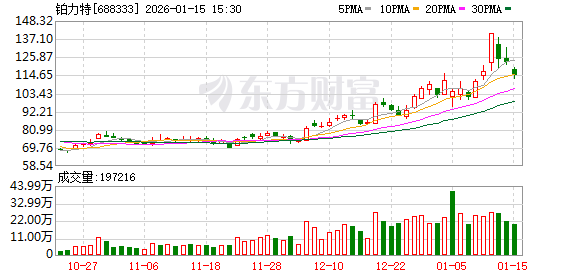
铂力特:目前公司各项生产经营活动正常有序开展
Zheng Quan Ri Bao Zhi Sheng· 2026-01-16 15:17
Core Viewpoint - The company, Plutotech, is actively cooperating with the China Securities Regulatory Commission (CSRC) in an ongoing investigation and is committed to fulfilling its information disclosure obligations in accordance with relevant laws and regulations [1] Group 1 - The company has stated that all production and operational activities are currently proceeding normally and in an orderly manner [1]
一年两触监管红线 铂力特涉嫌信披违规遭证监会立案调查
Zhong Guo Jing Ying Bao· 2026-01-15 14:21
Core Viewpoint - Xi'an Bolet Technology Co., Ltd. (referred to as "Bolet") is under investigation by the China Securities Regulatory Commission (CSRC) for suspected violations of information disclosure laws, following previous regulatory warnings regarding financial reporting inaccuracies [2][8]. Group 1: Regulatory Warnings - Bolet has faced regulatory scrutiny twice in the past year, first in January 2025 for prematurely recognizing revenue on certain products before control was transferred, leading to inaccurate financial statements [3][4]. - The company received a warning from the Shaanxi Securities Regulatory Bureau, which identified that Bolet's chairman and CFO bore primary responsibility for the violations [3][4]. Group 2: Financial Adjustments - Following regulatory warnings, Bolet announced a comprehensive review and adjustment of its financial reports, including the 2023 annual report and the first three quarterly reports of 2024 [6][7]. - The adjustments revealed that Bolet had overstated its 2023 revenue by 79.94 million yuan, which accounted for 6.48% of total revenue, and overstated profits by 33.54 million yuan, representing 24.80% of total profits [6][7]. Group 3: Investigation and Consequences - On January 1, 2026, Bolet announced it had received a formal notice of investigation from the CSRC, which may relate to the previous regulatory warnings and could involve undisclosed violations [8][9]. - The company has committed to cooperating with the investigation and fulfilling its disclosure obligations, although specific details regarding the investigation have not been disclosed [8][9].