
PAB(000001)

Search documents
24.6万亿私人银行进入存量时代
3 6 Ke· 2025-07-23 05:47
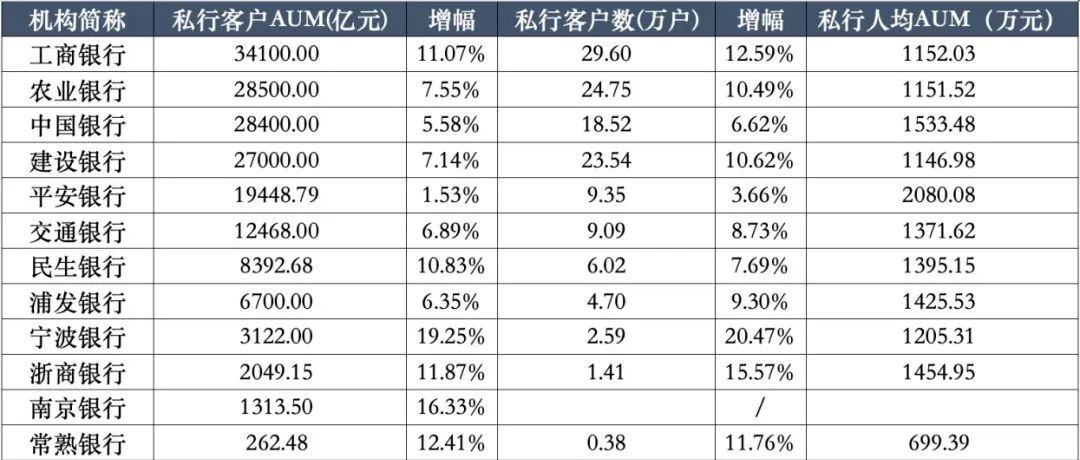
Core Insights - The private banking sector is experiencing intense competition among major banks, with a focus on high-net-worth clients and asset management growth [2][19] - Recent developments, including the "internship monetization" controversy involving Industrial Bank, have sparked discussions about the boundaries of value-added services in private banking [1][7] Group 1: Private Banking Market Overview - The total Assets Under Management (AUM) in the private banking sector has reached 24.6 trillion yuan, with many banks reporting double-digit growth in client numbers and AUM [2][6] - Major banks like Industrial Bank, Agricultural Bank, and Bank of China have surpassed 3 trillion yuan in AUM, with significant year-on-year growth rates of 18.87% and 16.73% respectively [6][12] Group 2: Client Growth and Performance - As of the end of 2024, Industrial Bank had 289,000 private banking clients, an increase of 9.9% from the previous year, while Agricultural Bank and Bank of China also reported substantial client growth [4][6] - The average AUM per private banking client varies, with Industrial Bank at 11.52 million yuan and Agricultural Bank at 11.51 million yuan [3][6] Group 3: Competitive Strategies - Banks are adopting differentiated strategies to attract high-net-worth clients, with a focus on comprehensive services that include financial and non-financial resources [9][12] - The competition is not only about asset size but also about the quality of services offered, with banks like Industrial Bank and Construction Bank emphasizing tailored solutions for entrepreneurs [14][18] Group 4: Challenges and Future Directions - The private banking sector faces challenges such as product homogenization and intense competition, which may impact the effectiveness of non-interest income growth [4][19] - Moving forward, the industry is expected to shift from a scale-oriented approach to one focused on the health of client assets, aiming for a transformation from "scale competition" to "value management" [20]





“鑫心惠邻‘携手银行’宣传”被近20家银行辟谣,监管警示贷款中介乱象风险
Hua Xia Shi Bao· 2025-07-23 04:20
Core Viewpoint - A newly established loan intermediary, Xin Xin Hui Lin, has sparked collective statements from nearly 20 banks in Shenzhen, indicating potential disruption to financial order and consumer rights due to misleading advertising practices [2][3]. Company Summary - Xin Xin Hui Lin (Shenzhen) Consulting Service Co., Ltd. was founded in November 2024 and has quickly established nine subsidiaries, focusing on community-based financing solutions [3][4]. - The company promotes its services through community-centric slogans, aiming to assist local residents in overcoming financing challenges [4]. Industry Summary - The shift of loan intermediaries towards residential communities reflects a transformation in the industry, driven by rising online customer acquisition costs and intensified market competition [4]. - This "community financing" model poses risks such as information asymmetry, lack of service transparency, and potential for excessive debt among consumers [5]. - Banks are encouraged to enhance financial education within communities and establish transparent service channels to mitigate the risks posed by unscrupulous intermediaries [5][6]. - Regulatory bodies are increasingly vigilant against illegal loan intermediary activities, emphasizing the need for clear boundaries in intermediary services and the establishment of transparent fee structures [6][7]. - Collaboration among regulatory agencies, industry associations, banks, and intermediaries is essential for standardizing practices and ensuring consumer protection [7].


A股上市银行2024年度分红全景图
Sou Hu Cai Jing· 2025-07-23 02:13
Core Viewpoint - The cash dividend distribution among 42 A-share listed banks for the fiscal year 2024 has been substantial, with state-owned banks dominating the total amount, which exceeds 630 billion yuan, reflecting a balance between shareholder returns and the banks' own development needs [3][4][9]. Group 1: Dividend Distribution Overview - As of July 17, 2025, 37 banks have completed their dividend distributions, with major state-owned banks like Industrial and Commercial Bank of China and China Construction Bank each distributing over 100 billion yuan [3][4]. - The total cash dividends from the six major state-owned banks reached 420.64 billion yuan, with Agricultural Bank of China, Bank of China, and others also contributing significantly [4][8]. - The progress of dividend distribution is nearing completion, with most banks having implemented their plans, and some, like Bank of Communications, having completed distributions as early as April 2025 [4][5]. Group 2: Differentiated Performance Among Banks - State-owned banks are the main contributors to dividends, providing stable returns to investors, while also supporting national strategies and economic development [8][9]. - Among joint-stock banks, China Merchants Bank stands out with a dividend of 50.44 billion yuan, showcasing strong profitability, while others adjust their dividends based on strategic development and capital planning [4][8]. - City commercial banks and rural commercial banks have varied dividend performances based on regional economic conditions and their own profitability, with those in economically developed areas generally offering higher dividends [8][9]. Group 3: Future Outlook - The overall dividend situation for A-share listed banks in 2024 reflects a robust development in the banking sector and a commitment to shareholder interests [9]. - Future challenges and opportunities may arise as banks balance regulatory requirements, capital replenishment, and dividend distribution, especially with the evolving financial landscape and technological advancements [9].




关于调整招商安盈债券型证券投资基金大额申购(含定期定额投资) 和转换转入业务的公告
Zhong Guo Zheng Quan Bao - Zhong Zheng Wang· 2025-07-22 23:17
Group 1 - The company announced adjustments to the large subscription (including regular investment) and conversion transfer business for the招商安盈债券型证券投资基金, effective from July 23, 2025, with a limit of 100,000 yuan for regular investments [1] - The company will refuse any single or cumulative application amount exceeding 100,000 yuan for the aforementioned fund [1] - Other business such as conversion and redemption will continue as usual during this period [2] Group 2 - The company announced similar adjustments for the招商成长量化选股股票型证券投资基金, effective from July 24, 2025, with a limit of 200,000 yuan for regular investments [5] - The company reserves the right to refuse any single or cumulative application amount exceeding 200,000 yuan for this fund [5] - Other business such as conversion and redemption will also continue as usual during this period [6] Group 3 - The招商利安新兴亚洲精选交易型开放式指数证券投资基金 (QDII) will suspend subscription and redemption services from July 25 to July 28, 2025, due to holidays in major overseas investment markets, resuming on July 29, 2025 [9] - The company will adjust and announce any changes to the holiday schedule if necessary [10] Group 4 - The招商智安稳健配置1年持有期混合型基金中基金 (FOF) may trigger contract termination if the net asset value falls below 50 million yuan for 50 consecutive trading days [12][15] - As of July 21, 2025, the fund has already experienced 30 consecutive trading days with a net asset value below 50 million yuan [15] - If the termination condition is met, the fund will enter liquidation without the need for a shareholder meeting [16] Group 5 - The company has added 财通证券股份有限公司 as a broker for on-site subscription and redemption services starting July 23, 2025 [18][19] - Investors are encouraged to consult the company's website for detailed information regarding the new broker and related procedures [20]


外汇展业改革参与银行增至22家 建设银行等6家入列
2 1 Shi Ji Jing Ji Bao Dao· 2025-07-22 09:07
Core Insights - The State Administration of Foreign Exchange (SAFE) has reported significant progress in foreign exchange business reform, with 22 banks now participating in the initiative, which aims to enhance cross-border trade and investment facilitation [1][2] Group 1: Bank Participation - The 22 participating banks include 4 large banks, 9 joint-stock banks, 4 city commercial banks, and 5 foreign banks, indicating a diverse representation across the banking sector [2] - New entrants to the foreign exchange business reform this year include major banks such as China Construction Bank and foreign banks like Standard Chartered and JPMorgan [2] Group 2: Reform Impact - The foreign exchange business reform has streamlined processes, reducing the average time for quality clients to complete foreign exchange transactions by over 50%, thus providing tangible benefits to enterprises [3] - The number of classified quality clients has increased by 23% compared to the end of 2024, with over $200 billion in cross-border payment transactions processed based on client instructions this year [3] Group 3: Policy Framework - The foreign exchange business reform is a key component of the "more integrity, more convenience" policy framework, which aims to enhance foreign exchange services for the real economy [4] - The reform includes a focus on supporting technology-driven and small enterprises, optimizing due diligence processes, and establishing evaluation mechanisms for foreign exchange management policies [4]

平安银行海口分行成功落地海南天然橡胶集团离岸外债贷款
Zhong Guo Jin Rong Xin Xi Wang· 2025-07-22 03:56
Group 1 - The core viewpoint of the news is that Ping An Bank's Haikou branch successfully issued a 100 million RMB offshore debt loan to Hainan Natural Rubber Group, demonstrating the effectiveness of Hainan Free Trade Port's financial policies in facilitating cross-border financing for local enterprises [1][2]. - The offshore debt loan serves as an innovative cross-border financing tool, allowing domestic banks to provide foreign currency loans to qualified domestic enterprises, thereby reducing financing costs and enhancing capital efficiency [1][2]. - The successful issuance of this loan is a significant practical example of the financial openness policies in Hainan Free Trade Port, showcasing the ability to attract and utilize foreign capital to support the local economy [2][3]. Group 2 - The loan's success is rooted in the ongoing financial openness policies of Hainan Free Trade Port, particularly those aimed at promoting the free flow of cross-border funds [2]. - This financing initiative is seen as a "test stone" for policy implementation, proving that financial openness can effectively guide foreign capital to serve the domestic economy [2]. - The Haikou branch of Ping An Bank plans to continue exploring innovative services in cross-border financing, green finance, and trade settlement facilitation to better serve Hainan enterprises [3].

平安银行获得发明专利授权:“一种音视频兼容性测试方法及装置”
Zheng Quan Zhi Xing· 2025-07-21 21:13
Group 1 - The core point of the article is that Ping An Bank has recently obtained a new invention patent for an audio-video compatibility testing method and device, with the patent application number CN202211611381.8 and an authorization date set for 2025 [1] - The patent provides a method that involves installing the application to be tested on both user devices and a testing cabinet's display, playing a test video through the application on the display [1] - In 2023, Ping An Bank has received a total of 134 new patent authorizations, which represents a decrease of 58.77% compared to the same period last year [1] Group 2 - According to Tianyancha data, Ping An Bank has invested in 45 companies and participated in 1,179 bidding projects [1] - The bank holds a total of 753 trademark information entries, 4,531 patent information entries, and 191 copyright information entries [1]
中金-银行:国有大行基本面分析手册
中金· 2025-07-21 14:26
Investment Rating - The report maintains an "Outperform" rating for major state-owned banks, including China Postal Savings Bank, Agricultural Bank of China, and China Bank [3][7][10]. Core Insights - The report emphasizes that state-owned banks exhibit strong asset return rates despite lower ROE, with a RORWA of 1.43%, outperforming joint-stock and regional banks [4][14]. - It highlights the stability of credit demand due to a higher proportion of safe assets, with over 60% of loans in infrastructure and mortgages [5][4]. - The report suggests that the valuation of banks is expected to recover, with a potential upside of 30%-50% from current levels [10]. Summary by Sections Profitability - State-owned banks have a lower leverage ratio, with an average ROE of 11.34% and an average ROA of 0.84%, comparable to the industry average [14]. - The average RORWA for state-owned banks is 1.43%, higher than joint-stock banks (1.16%) and regional banks (1.26%) [4][14]. - The net interest margin is expected to stabilize as deposit rates decrease, benefiting from a high proportion of deposits in liabilities [9][10]. Performance - The net profit growth of state-owned banks is slightly lower than peers due to cautious provisioning [12]. - Non-interest income accounts for 23% of total revenue, which is below the industry average of 25% [12][9]. - The asset composition is heavily weighted towards loans, particularly mortgages, which have lower risk weights [16]. Asset Quality - The report notes that state-owned banks have a stricter risk recognition standard, with a non-performing loan ratio close to the industry average but a higher ratio of overdue loans [5][12]. - The average provision coverage ratio exceeds 250%, indicating potential for profit release [5][12]. Capital Adequacy - State-owned banks maintain a higher core Tier 1 capital adequacy ratio, averaging 11.69%, which is significantly above the regulatory minimum [14][16]. - The new capital regulations are expected to further benefit these banks, potentially increasing their capital ratios by about 1 percentage point [9][10]. Valuation - The report anticipates a long-term recovery in bank valuations, with forward P/B ratios expected to stabilize around 0.7-0.8x, compared to the current 0.5x [10]. - Catalysts for this recovery include macroeconomic recovery, lower deposit costs, and supportive fiscal policies [10].

2025Q2末银行股机构筹码追踪:主动筹码增幅有限
ZHESHANG SECURITIES· 2025-07-21 10:08
Investment Rating - The industry investment rating is "Positive" (maintained) [8] Core Viewpoints - As of Q2 2025, institutional holdings in bank stocks have increased, primarily driven by passive investments, with limited growth in active public fund holdings. The overall chip structure remains healthy, with shares of state-owned banks and city commercial banks favored due to their low valuations or strong fundamentals [1][2] - The report suggests a continued positive outlook for the banking sector, emphasizing a long-term bullish trend rather than a mid-cycle correction. It recommends focusing on state-owned banks in 2024 and improving banks in economically developed regions in 2025, while also highlighting value-oriented banks with state-owned enterprise backgrounds in the Hong Kong market [5][6] Summary by Sections Overall Holdings - By the end of Q2 2025, the proportion of bank stocks held by public funds and northbound funds increased by 8.5% compared to Q1 2025, with a 0.7 percentage point rise in the proportion of free-floating shares. The main contributors to this increase were passive funds, while active public funds showed limited growth [1] - The holdings of small and medium-sized banks increased, with state-owned banks, joint-stock banks, city commercial banks, and rural commercial banks seeing respective increases of 0.1, 1.2, 1.0, and 0.6 percentage points in their institutional holdings [1] Individual Bank Performance - The banks with the largest increases in institutional holdings include Minsheng, CITIC, Ping An, Chongqing, and Yunnan Agricultural Bank, with respective increases in the proportion of free-floating shares of 3.2, 2.9, 2.7, 2.6, and 2.6 percentage points [2] Northbound Funds - Northbound funds maintained stable holdings, with a 2.3% increase in the number of shares held by the end of Q2 2025. The proportion of holdings in state-owned banks and joint-stock banks increased, while rural commercial banks experienced a notable outflow [3] Passive Public Funds - Passive holdings continued to rise, with a 39.0% increase in the number of bank stocks held by index funds by the end of Q2 2025, driven by index expansions and weight adjustments [4] Active Public Funds - Active public fund holdings increased by 6.3%, with a slight rise in the proportion of free-floating shares. However, the overall growth was below expectations, with significant increases in holdings of low-valuation or fundamentally strong joint-stock banks and city commercial banks [5]



沪深300商业银行指数报7780.10点,前十大权重包含招商银行等
Jin Rong Jie· 2025-07-21 08:46
Group 1 - The Shanghai Composite Index opened high and the CSI 300 Commercial Banks Index reported 7780.10 points, with a 3.00% increase over the past month, 11.10% over the past three months, and a 15.30% increase year-to-date [1] - The CSI 300 Index is categorized into 11 primary industries, 35 secondary industries, over 90 tertiary industries, and more than 200 quaternary industries, providing a comprehensive analysis tool for investors [1] - The top ten weights in the CSI 300 Commercial Banks Index are: China Merchants Bank (16.86%), Industrial Bank (12.27%), Industrial and Commercial Bank of China (8.23%), Bank of Communications (6.49%), Agricultural Bank of China (6.0%), Jiangsu Bank (5.23%), Shanghai Pudong Development Bank (4.78%), Minsheng Bank (4.08%), Ping An Bank (3.73%), and Shanghai Bank (3.32%) [1] Group 2 - The CSI 300 Commercial Banks Index consists of 76.30% comprehensive banks and 23.70% regional banks [2] - The index sample is adjusted biannually, with adjustments occurring on the next trading day after the second Friday of June and December [2] - Weight factors are generally fixed until the next scheduled adjustment, with temporary adjustments made in response to changes in the CSI 300 Index samples or significant events affecting sample companies [2]