
PAB(000001)

Search documents
为什么联名信用卡越来越少?
3 6 Ke· 2025-07-21 04:38
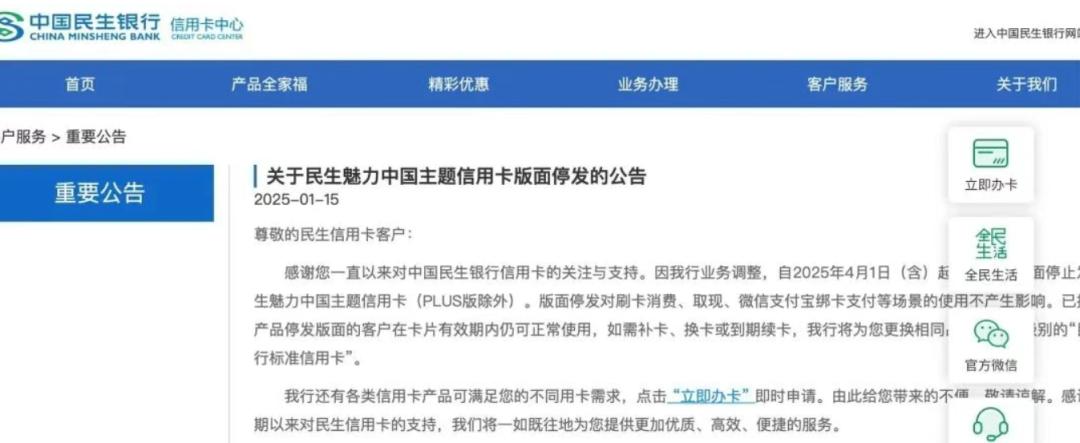
Core Viewpoint - The credit card industry in China is experiencing a significant transformation, shifting from expansion to a focus on quality and efficiency, as evidenced by the increasing number of banks discontinuing co-branded credit card products [12][19]. Group 1: Market Trends - Since January 1, 2025, at least seven major banks have announced the discontinuation of at least 22 co-branded credit card products, indicating a trend of product adjustments in the credit card market [2][6]. - Major banks, including China Bank and Citic Bank, have stopped issuing various co-branded credit cards, with reasons primarily cited as "business adjustments" or "contract expiration" [4][6]. Group 2: Product Adjustments - Co-branded credit cards, which are partnerships between banks and profit-oriented institutions, are being phased out due to their unsustainable cooperation models and imbalanced overall returns [9][10]. - Banks are transitioning to standard credit cards for existing co-branded cardholders, with changes in reward structures and benefits [4][6]. Group 3: Regulatory Environment - The regulatory framework has tightened, with new guidelines from the former CBIRC and the People's Bank of China mandating banks to focus on quality over quantity in credit card issuance [10][12]. - The new regulations require banks to limit the ratio of dormant credit cards to no more than 20%, prompting a reevaluation of credit card strategies [10][12]. Group 4: Consumer Behavior - The credit card market is increasingly catering to younger consumers, who have diverse interests and consumption needs, necessitating banks to innovate and tailor products accordingly [18][19]. - The decline in credit card issuance and usage reflects a broader trend of market saturation and the need for banks to refine their customer engagement strategies [12][13]. Group 5: Future Outlook - The discontinuation of co-branded credit cards is seen as a necessary step towards a more refined and efficient credit card business model, focusing on high-value customer segments and innovative product offerings [15][19]. - The industry is expected to evolve towards precision marketing and enhanced customer experiences, leveraging digital technologies and data analytics [7][19].




机构论后市丨出海依旧是强劲的业绩超预期线索之一;7月A股将呈现小幅震荡上行态势
Di Yi Cai Jing· 2025-07-20 09:49
Group 1 - The performance of A-shares is expected to benefit from overseas expansion, which is a strong indicator of exceeding expectations in earnings [1] - The market is transitioning to seek new scenarios as the mid-year earnings forecast season comes to an end [2] - A-shares are anticipated to show a slight upward trend in July, supported by stable export conditions and potential breakthroughs in technology sectors [3] Group 2 - The domestic economic recovery path is becoming clearer, with factors such as anti-involution policies and the relative advantage of A-shares compared to other markets [2] - The equity market is likely to maintain a strong oscillating trend due to positive signals from domestic policies and improving earnings in certain sectors [4] - Key investment areas include technology growth sectors, traditional cyclical industries benefiting from policy changes, and financial sectors with high dividend yields [4]




宝盈中债0-5年政策性金融债指数A,宝盈中债0-5年政策性金融债指数C: 宝盈中债0-5年政策性金融债指数证券投资基金2025年第2季度报告
Zheng Quan Zhi Xing· 2025-07-19 01:24
Group 1 - The fund aims to achieve total returns similar to the benchmark index while minimizing tracking deviation and tracking error [2][3] - The fund's investment strategy includes sampling replication and dynamic optimization, focusing on liquid bonds to construct a portfolio that mirrors the risk-return characteristics of the benchmark index [2][3] - The fund's performance benchmark is set at 95% of the yield of the China Bond 0-5 Year Policy Financial Bond Index plus 5% of the after-tax interest rate of bank demand deposits [3][4] Group 2 - As of the end of the reporting period, the total fund shares amounted to 763,935,345.62 shares, with the A share net value at 1.0210 yuan and a growth rate of 0.91% [5][10] - The C share net value was 1.0203 yuan with a growth rate of 0.88%, while the benchmark yield was 0.69% during the same period [5][10] - The fund's investment portfolio was primarily composed of bonds, accounting for 97.62% of total assets, with policy financial bonds making up 94.60% of the net asset value [10][11] Group 3 - The fund's management strictly adheres to legal regulations and fair trading practices, ensuring no harm to the interests of fund holders [8][9] - The macroeconomic environment showed signs of weakening due to trade tensions, with a decline in exports and investments, although consumption improved under policy support [9][10] - The People's Bank of China lowered the 7-day reverse repurchase rate by 10 basis points and reduced the reserve requirement ratio by 0.5 percentage points during the reporting period [9]
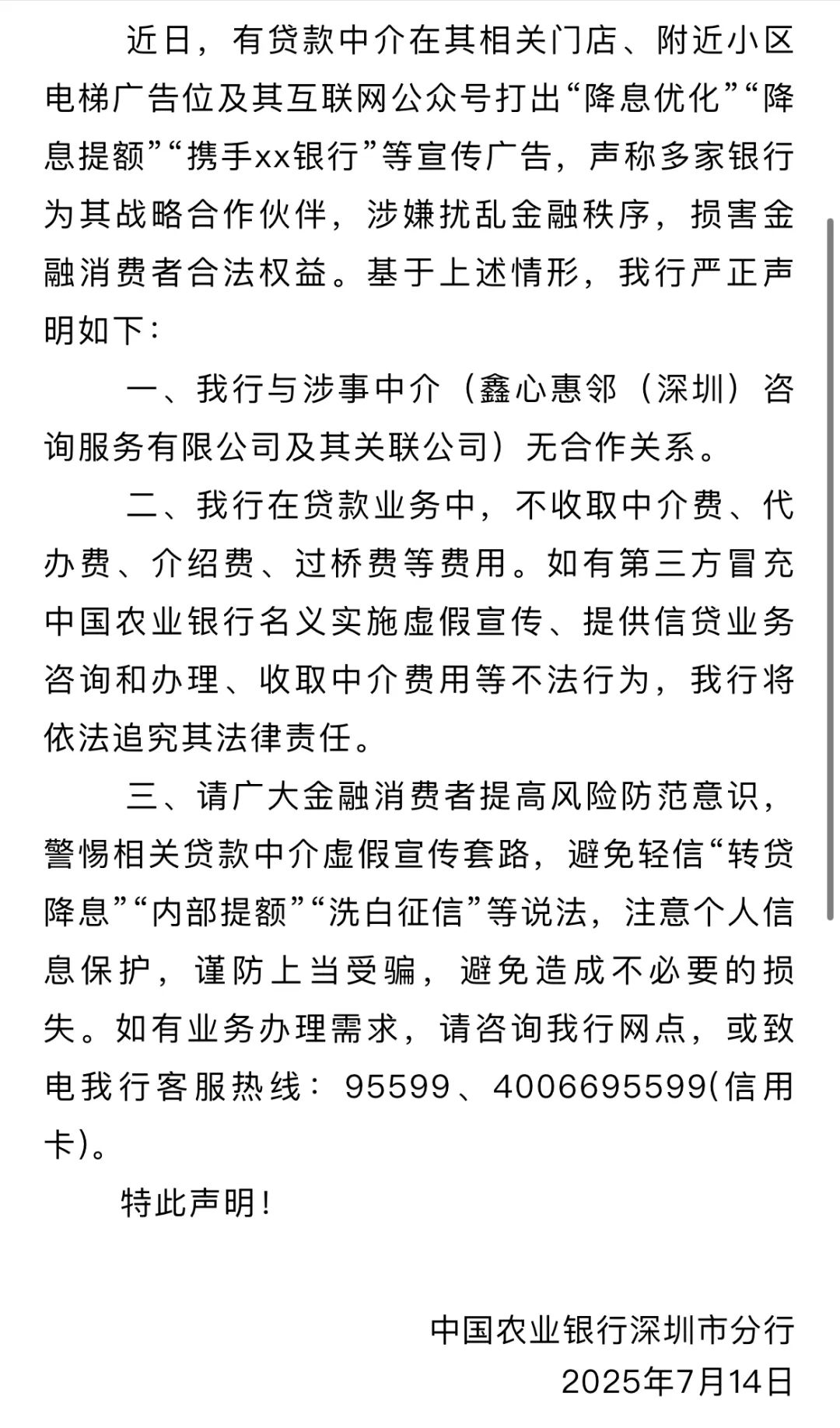
近20家银行密集声明:未与这家机构合作!
新华网财经· 2025-07-18 12:42
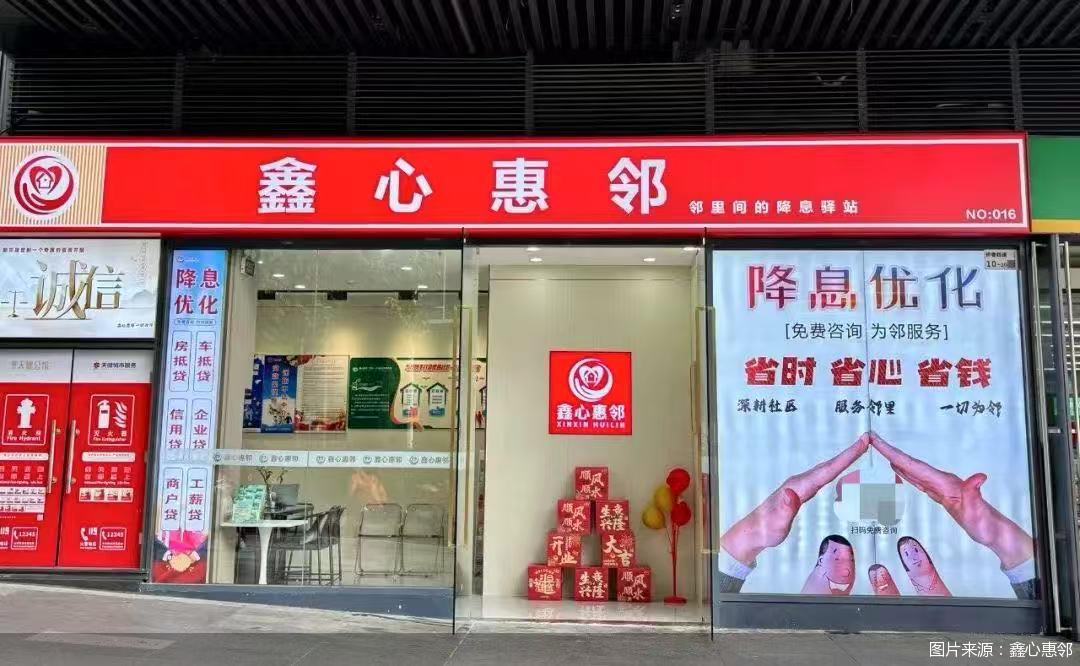
Core Viewpoint - Recently, nearly 20 banks in Shenzhen issued statements warning against a loan intermediary, Xin Xin Hui Lin (Shenzhen) Consulting Service Co., Ltd, which falsely claimed to be affiliated with these banks [2][5][10]. Group 1: Bank Responses - Multiple banks, including major institutions like China Construction Bank and Industrial and Commercial Bank of China, explicitly named Xin Xin Hui Lin in their statements, clarifying that they have no partnership with the intermediary [2][5]. - The banks urged consumers to be cautious of misleading claims such as "internal interest rate reductions" and "credit score improvement" [3][5]. Group 2: Xin Xin Hui Lin's Operations - Xin Xin Hui Lin has been promoting itself through advertisements claiming partnerships with various banks, offering services like interest rate reductions and charging high service fees [6][8]. - The company was established only six months ago, with a registered capital of 10 million yuan, and has rapidly expanded by being a shareholder in nine other consulting firms [7]. Group 3: Regulatory Context - The collective action by banks to issue warnings is unprecedented in recent years, reflecting a strong commitment to compliance and consumer protection amid ongoing regulatory crackdowns on financial misconduct [9][10]. - Regulatory bodies have intensified efforts to combat illegal financial practices, particularly in the loan, insurance, and credit card sectors [10][11]. Group 4: Consumer Awareness - Experts highlight the issue of information asymmetry in the financial sector, which leaves consumers vulnerable to scams by loan intermediaries [12][13]. - It is recommended that consumers apply for loans directly through legitimate financial institutions or their official online channels to avoid potential fraud [14].



近20家银行密集声明:未与这家机构合作
Jin Rong Shi Bao· 2025-07-18 07:00
Core Viewpoint - Recently, nearly 20 banks in Shenzhen issued statements regarding a loan intermediary, Xin Xin Hui Lin (Shenzhen) Consulting Service Co., Ltd., which allegedly impersonated these banks to attract customers [1][6]. Group 1: Bank Responses - Multiple banks, including major institutions like China Construction Bank, Industrial and Commercial Bank of China, and Agricultural Bank of China, publicly clarified that they have no partnership with Xin Xin Hui Lin and have not authorized it to conduct any business on their behalf [1][6]. - The banks warned consumers about the deceptive advertising practices employed by the intermediary, which falsely claimed to be strategic partners with several banks [6][7]. Group 2: Xin Xin Hui Lin's Operations - Xin Xin Hui Lin was established only six months prior to the incident, with a registered capital of 10 million yuan, and has rapidly expanded by being a shareholder in nine other consulting service companies [6][8]. - The intermediary has been promoting services such as "interest rate optimization" and "loan consulting" while charging high service fees, misleading consumers into believing they are affiliated with banks [6][7]. Group 3: Regulatory Environment - The collective action by banks reflects a strong commitment to compliance, consumer protection, and ongoing regulatory efforts to combat financial "black and gray industries" [9][10]. - Regulatory bodies have intensified their crackdown on illegal loan intermediary services and other financial misconduct, indicating a broader effort to enhance oversight in the financial sector [9][10].
新晋两融标的银行AH优选ETF(517900)重拾升势,杭州银行、民生银行领衔
Sou Hu Cai Jing· 2025-07-18 02:25
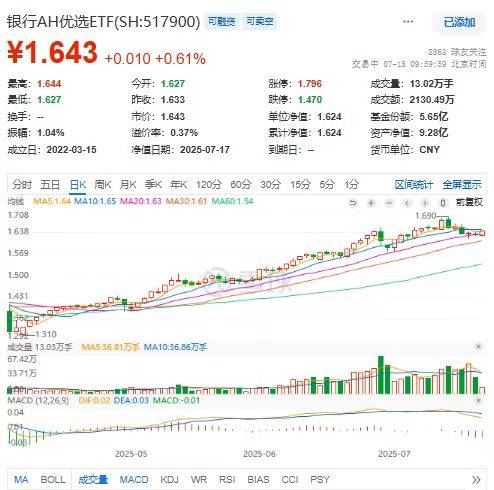
Group 1 - The banking sector has regained momentum, with the newly added margin trading target bank AH Preferred ETF (517900) increasing by 0.55% as of 9:56 AM on July 18, 2025, with significant gains from constituent stocks such as Hangzhou Bank, Minsheng Bank, Nanjing Bank, Industrial Bank, and Ping An Bank [1] - The ETF has seen a continuous net inflow of funds for 12 consecutive days, with a year-to-date growth in fund size of 758.91%, reaching a historical high [1] - Hangzhou Bank Co., Ltd. reported a semi-annual performance summary for the first half of 2025, showing a steady improvement in operational efficiency and asset quality [1] Group 2 - For the first half of 2025, Hangzhou Bank achieved an operating income of 20.093 billion yuan, a year-on-year increase of 3.89%, and a net profit attributable to shareholders of 11.662 billion yuan, up 16.67% [1] - The bank's basic earnings per share rose to 1.75 yuan, reflecting a growth of 6.71% [1] - As of June 30, 2025, Hangzhou Bank's total assets reached 223.5595 billion yuan, a 5.83% increase from the end of the previous year, with total loans of 100.9418 billion yuan (up 7.67%) and total deposits of 133.8282 billion yuan (up 5.17%) [1] - The bank maintained a non-performing loan ratio of 0.76% and a provision coverage ratio of 520.89%, indicating a strong risk compensation capability [1]




鹏华弘安混合A,鹏华弘安混合C: 鹏华弘安灵活配置混合型证券投资基金2025年第2季度报告
Zheng Quan Zhi Xing· 2025-07-18 01:42
Core Viewpoint - The report outlines the performance and investment strategy of the Penghua Hong'an Flexible Allocation Mixed Securities Investment Fund for the second quarter of 2025, emphasizing its focus on asset allocation and risk management to achieve capital preservation and appreciation. Group 1: Fund Overview - The fund is managed by Penghua Fund Management Co., Ltd. and is custodied by Ping An Bank Co., Ltd. [1] - The total number of fund shares at the end of the reporting period is 637,343,128.42 shares [1]. - The fund aims to select investment targets with high safety margins, including stocks and bonds, under a scientifically rigorous asset allocation framework [1]. Group 2: Investment Strategy - The fund employs a dynamic asset allocation strategy based on macroeconomic variables and national policies, aiming for flexible allocation among stocks, bonds, and currencies [2]. - A combination of top-down and bottom-up approaches is used to identify quality companies, focusing on industry growth prospects and company fundamentals [3]. - The fund's bond investment strategy includes duration management, yield curve strategies, and credit strategies to enhance returns while controlling risks [4]. Group 3: Performance Metrics - For the reporting period from April 1, 2025, to June 30, 2025, the net value growth rate for Class A shares is 0.55%, while the benchmark growth rate is 1.69% [5]. - Class C shares show a net value growth rate of 0.48%, also against a benchmark growth rate of 1.69% [5]. - The fund's performance is benchmarked against a composite index consisting of 70% of the China Bond Composite Index and 30% of the CSI 300 Index [5]. Group 4: Financial Indicators - The fund's total assets include approximately 1,074,721,341.47 RMB in bonds, representing 99.50% of the total assets [9]. - The fund's investment in policy financial bonds amounts to 69,946,653.42 RMB, accounting for 7.54% of the fund's net asset value [9]. - The fund's investment strategy includes the use of stock index futures for hedging purposes, aiming to stabilize the net asset value of the investment portfolio [10].
20家银行与一贷款中介撇清关系!冒用金融机构名义揽客何时休
Bei Jing Shang Bao· 2025-07-17 14:41
Core Viewpoint - The incident involving the loan intermediary "Xin Xin Hui Lin" has prompted a collective response from multiple banks in Shenzhen, emphasizing the need for consumer awareness against false advertising and the importance of regulatory compliance in the financial sector [1][3][12]. Group 1: Incident Overview - Multiple banks, including Bank of China, Agricultural Bank of China, and others, have publicly distanced themselves from the loan intermediary "Xin Xin Hui Lin," clarifying that there is no partnership and warning consumers about misleading advertisements [1][3]. - As of July 17, a total of 20 banks have issued statements against "Xin Xin Hui Lin," which falsely claimed partnerships with these banks and advertised services such as "interest rate optimization" [3][12]. - "Xin Xin Hui Lin" acknowledged its lack of authorization from banks and stated that it has completed a comprehensive rectification of its advertising practices following warnings from banks and regulatory bodies [1][4]. Group 2: Business Practices and Consumer Risks - The intermediary's advertisements included claims of low-interest rates and partnerships with multiple banks, which were found to be misleading, as the banks confirmed no such collaborations existed [3][4]. - The company offered services that included "debt optimization" and "interest rate reduction," which are not widely endorsed in the financial industry due to potential risks to consumers [9][10]. - Consumers were often charged additional fees for services that were not clearly disclosed, leading to concerns about the transparency of the intermediary's business practices [9][10]. Group 3: Regulatory and Industry Response - The incident has highlighted the ongoing issues with illegal loan intermediaries misrepresenting themselves as banks, prompting regulatory bodies to take action against such practices [12][13]. - Experts suggest that the collective statements from banks serve as a necessary measure for compliance and brand protection, potentially deterring future misconduct by intermediaries [13][14]. - The need for a collaborative approach between regulators and financial institutions is emphasized to establish a monitoring and enforcement mechanism against fraudulent practices in the loan intermediary sector [13][14].

贷款中介假冒合作、推广转贷降息,深圳多家银行罕见点名澄清
第一财经· 2025-07-17 13:57
Core Viewpoint - Recent statements from multiple banks in Shenzhen clarify that they have no cooperation with illegal loan intermediaries, specifically naming Xin Xin Hui Lin as a problematic entity, amid intensified regulatory actions against financial "black and gray industries" [1][3][6]. Group 1: Bank Statements and Regulatory Actions - Approximately 15 banks, including major institutions like Bank of China and Agricultural Bank of China, issued statements denying any collaboration with illegal intermediaries [3][6]. - The collective statements from banks are closely linked to ongoing regulatory efforts to combat financial "black and gray industries," with a focus on illegal loan intermediaries and debt evasion [7][9]. - Regulatory bodies have intensified their crackdown on illegal financial practices, with specific actions targeting loan intermediaries, insurance fraud, and improper debt collection [7][9]. Group 2: Issues with Xin Xin Hui Lin - Xin Xin Hui Lin has been accused of misleading advertising, claiming to lower loan interest rates from 4.5% to 2.5%, which raises concerns about exaggerated marketing tactics [1][11]. - The company has been reported to use aggressive marketing strategies, including misleading advertisements in community areas, to create a false impression of partnerships with banks [11][13]. - Despite its claims of cooperation with several major banks, Xin Xin Hui Lin's assertions have been contradicted by the banks' public denials [13][14]. Group 3: Emerging Trends in the Loan Intermediary Market - New trends in the loan intermediary market include the use of deceptive marketing practices, such as false claims of bank partnerships and exaggerated loan benefits [15][16]. - There is a notable increase in "high appraisal, high loan" operations, where intermediaries artificially inflate property valuations to secure larger loans for clients [16][17]. - This practice has created a complete industry chain, allowing clients to obtain loans significantly exceeding the actual property value, leading to potential financial risks [16][17].

侃股:核心资产轮动是大趋势
Bei Jing Shang Bao· 2025-07-17 11:02
Core Viewpoint - The core assets represented by bank stocks have led a slow bull market, but other high-quality, reasonably valued blue-chip stocks also exhibit core asset characteristics. The rotation among core asset sectors is expected to contribute to the stable development of the A-share market [1][2]. Group 1: Bank Stocks as Core Assets - Bank stocks are traditional core assets, attracting long-term capital due to their stable operations, good cash flow, and relatively low valuations. They provide a safe haven for investors and demonstrate the value of core assets through continuous dividends and steady price increases [1][2]. - The stability and high yield of bank stocks have drawn many long-term value investors, reinforcing their role as core assets in the market [1]. Group 2: Emergence of Other High-Quality Stocks - Other high-quality stocks are quietly rising, possessing strong brand influence, stable customer bases, and continuous growth potential. These undervalued blue-chip stocks are gradually being discovered by the market, becoming new candidates for valuation re-evaluation [1][2]. - The rise of these stocks enriches investment choices and provides new momentum for the stable development of the A-share market [1]. Group 3: Rotation Mechanism of Core Assets - The rotation among core assets is a natural result of optimizing market resource allocation. In a limited funding environment, the market seeks investment targets with higher cost-effectiveness and more stable growth prospects [2]. - This rotation mechanism helps avoid excessive concentration in any one sector or stock, reducing the risk of rapid price corrections and stimulating market vitality [2]. Group 4: Implications for A-share Market - The rotation of core assets signifies an optimization of market structure and an improvement in quality. As more high-quality blue-chip stocks are included in the core asset category, the overall valuation level of the market will become more reasonable, enhancing investor confidence [2]. - This trend is beneficial for attracting more long-term capital into the market and improving the international competitiveness of the A-share market, laying a solid foundation for its long-term development [2]. Group 5: Investor Strategy - Investors are encouraged to grasp the rhythm of blue-chip stock hot spots, either by diversifying across multiple high-quality blue-chip stocks or by pursuing emerging hot spots within blue-chip stocks to seek long-term asset preservation and appreciation [3].
