DEEJ(000423)

Search documents
东阿阿胶(000423) - 关于变更审计项目合伙人、签字注册会计师的公告
2025-11-28 12:16
证券代码:000423 证券简称:东阿阿胶 公告编号:2025-68 东阿阿胶股份有限公司 近日,公司收到毕马威华振《关于变更东阿阿胶股份有限公司 2025 年度审 计项目合伙人、签字注册会计师的函》,现将有关情况公告如下: 一、本次变更项目合伙人及签字注册会计师的情况 毕马威华振作为公司 2025 年度财务报告和内部控制的审计机构,原指派项 目合伙人为张杨女士,签字注册会计师为徐未然先生。 现因工作调整,毕马威华振指派具有同等职级及胜任能力的徐未然先生接替 张杨女士作为本项目合伙人,指派李应先生作为签字注册会计师,继续完成公司 2025 年度财务报告和内部控制审计相关工作。变更后的财务报告和内部控制审计 项目合伙人为徐未然先生,签字注册会计师为李应先生。 二、本次变更审计项目合伙人、签字注册会计师的信息 1.基本信息 本次变更的项目合伙人为徐未然先生,2014 年取得中国注册会计师资格, 2009 年开始在毕马威华振执业,2014 年开始从事上市公司审计,从 2023 年开始 关于变更审计项目合伙人、签字注册会计师的公告 本公司及董事会全体成员保证信息披露的内容真实、准确、完整,没有 虚假记载、误导性陈述或 ...

东阿阿胶(000423) - 2025年第一次临时股东大会决议公告
2025-11-28 12:15
证券代码:000423 证券简称:东阿阿胶 公告编号:2025-67 东阿阿胶股份有限公司 2025 年第一次临时股东大会决议公告 本公司及董事会全体成员保证信息披露的内容真实、准确、完整,没有 虚假记载、误导性陈述或重大遗漏。 特别提示: 1.本次股东大会无否决议案。 2.本次股东大会不涉及变更以往股东大会已通过的决议。 (七)会议出席情况:出席会议的股东(或股东代理人)共计766人,代表 股份256,601,704股,占公司有表决权股份总数的39.8807%。其中: 通过现场投票的股东6人,代表股份217,316,671股,占公司有表决权股份总 数的33.7751%。 通过网络投票的股东760人,代表股份39,285,033股,占公司有表决权股份 总数的6.1056%。 一、会议召开和出席情况 (一)现场会议召开时间:2025 年 11 月 28 日 09:30 (二)现场会议召开地点:公司会议室 (三)网络投票时间:通过深圳证券交易所交易系统投票的时间为2025年11 月28日上午9:15—9:25、9:30—11:30,下午13:00-15:00;通过深圳证券交易所 互联网投票系统投票的时间为2025 ...
东阿阿胶(000423) - 北京金诚同达律师事务所关于东阿阿胶股份有限公司2025年第一次临时股东大会的法律意见书
2025-11-28 12:15
北京金诚同达律师事务所 关于 东阿阿胶股份有限公司 2025 年第一次临时股东大会的 法律意见书 北京市朝阳区建国门外大街 1 号国贸大厦 A 座 10 层 电话:010-5706 8585 传真:010-6518 5057 金诚同达律师事务所 法律意见书 北京金诚同达律师事务所 关于东阿阿胶股份有限公司 2025 年第一次临时股东大会的 法律意见书 金证法意[2025]字 1128 第 0997 号 致:东阿阿胶股份有限公司 北京金诚同达律师事务所(以下简称"本所")接受东阿阿胶股份有限公司 (以下简称"东阿阿胶"或"公司")的聘请,指派本所律师出席公司 2025 年 第一次临时股东大会(以下简称"本次股东大会")并对会议的相关事项出具法 律意见书。 本所律师根据《中华人民共和国公司法》(以下简称"《公司法》")、《中 华人民共和国证券法》《上市公司股东会规则》(以下简称"《股东会规则》")、 《律师事务所从事证券法律业务管理办法》《律师事务所证券法律业务执业规则 (试行)》等有关法律、法规和规范性文件的要求以及《东阿阿胶股份有限公司 章程》(以下简称"《公司章程》")的规定,对本次股东大会的召集、召开程 ...
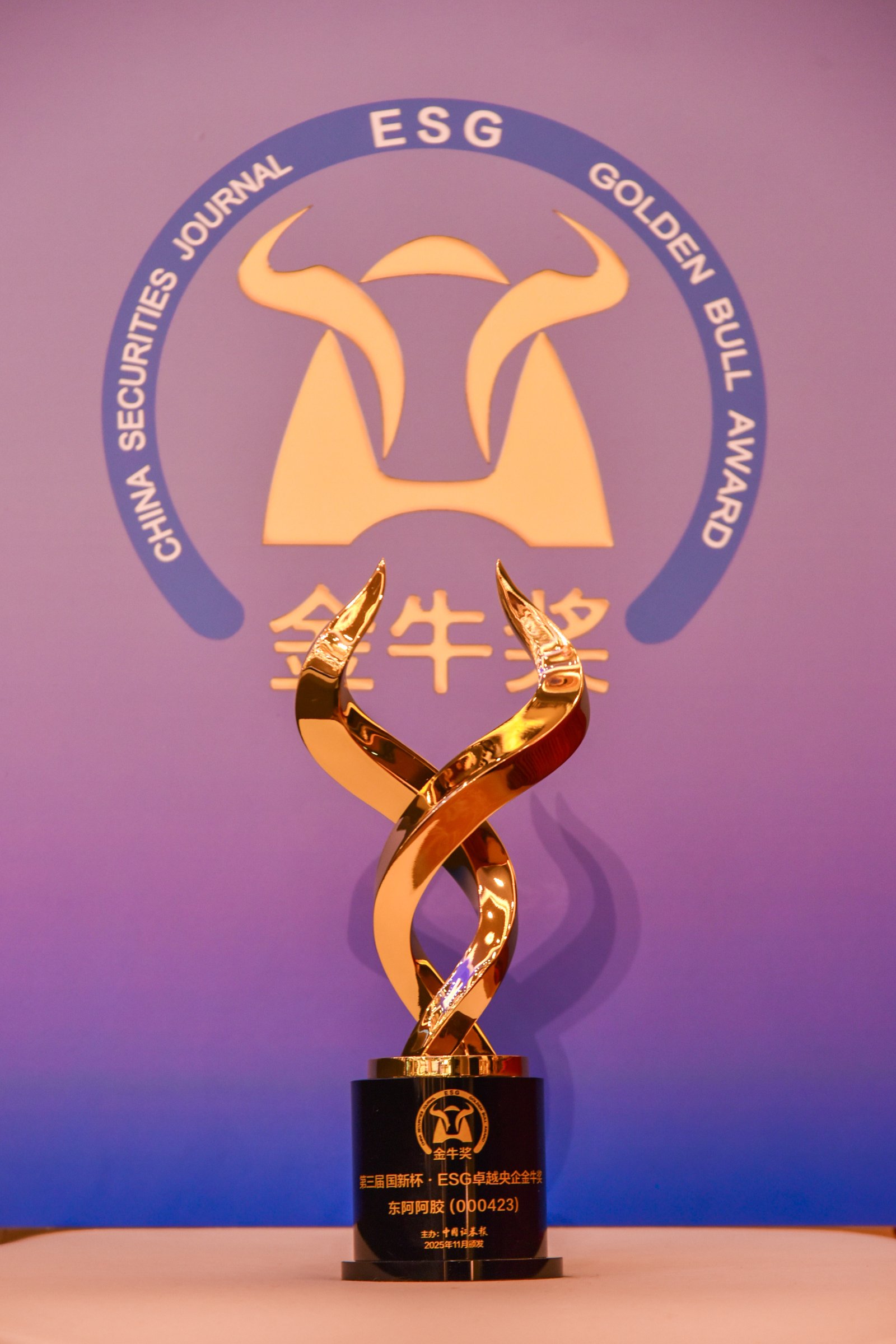
东阿阿胶荣获“ESG卓越央企金牛奖”
Zhong Zheng Wang· 2025-11-27 10:52
Group 1 - The 2025 Golden Bull Enterprise Sustainable Development Forum and the third National New Cup ESG Golden Bull Award ceremony were held in Suzhou, Jiangsu, focusing on the theme "Governance for a Sustainable Future" [1] - Dong-E E-Jiao was awarded the "ESG Excellent Central Enterprise Golden Bull Award" for its innovative practices and outstanding performance in the ESG field [1][4] - The ESG Golden Bull Award is a brand evaluation and award initiative by China Securities Journal, aimed at recognizing leading enterprises in ESG practices and promoting sustainable development [4] Group 2 - The third National New Cup ESG Golden Bull Award includes seven categories: "Top 100 ESG Golden Bull Awards," "ESG Excellent Central Enterprise Golden Bull Award," "ESG Carbon Neutrality Golden Bull Award," "ESG Technology Leading Golden Bull Award," "ESG Governance Golden Bull Award," "ESG Rural Revitalization Golden Bull Award," and "ESG New Star Golden Bull Award" [4] - The evaluation committee utilized a rigorous and scientific evaluation system, incorporating financial significance and impact importance to assess corporate ESG performance [4] - The award selection process followed principles of "classification selection, diverse coverage, and avoidance of duplication," ensuring a comprehensive assessment of ESG performance [4]

第十五届全运会闭幕,东阿阿胶支持山东代表团全运征程
Zhong Guo Zhi Liang Xin Wen Wang· 2025-11-26 05:42
Core Insights - Dong-E E-Jiao Co., Ltd. has been designated as a strategic partner by the Shandong Sports Bureau, providing comprehensive support to the Shandong delegation during the 15th National Games [1][2] - The company’s three core products—Dong-E E-Jiao, Compound E-Jiao Syrup, and Peach Blossom E-Jiao Cake—were awarded the title of "Designated Products for the Shandong Sports Delegation" [1][2] - Dong-E E-Jiao emphasizes its commitment to supporting local sports development as part of its corporate social responsibility, aligning its growth with regional sports initiatives [1] Company Initiatives - During the current National Games cycle, Dong-E E-Jiao has focused on enhancing its research system, product quality management, and supply chain capabilities to support sports initiatives [2] - The inclusion of its three core products in the designated product matrix reflects the company's comprehensive strength in quality systems, standard management, and supply chain capabilities [2] - Dong-E E-Jiao aims to continue integrating traditional Chinese medicine with modern sports health, driving innovation and expanding its collaboration with the sports health system [2]
2025长三角健康大会共绘中医药协同发展新篇章
Xin Hua Ri Bao· 2025-11-25 23:51
Core Insights - The 2025 Yangtze River Delta Health Conference aims to promote high-quality development in health and wellness in the region, aligning with national strategies for "Healthy China" and regional integration [1][2][3] Group 1: Conference Overview - The conference is themed "Co-construction and Sharing, Inheritance and Innovation," focusing on collaborative health development and the promotion of traditional Chinese medicine (TCM) [1][2] - The event is organized by various health and media organizations, highlighting the importance of TCM as a unique health resource and economic asset [1][2] Group 2: Keynote Addresses and Insights - Notable speakers, including Chinese Academy of Engineering member Zhang Boli, emphasized the significance of TCM in modern health services and its role in achieving a "Healthy China" [2][3] - The conference highlighted the need for institutional alignment in regional cooperation and the integration of TCM into modern health systems [3] Group 3: Innovation and Collaboration - The conference facilitated the signing of several key TCM research projects, marking a significant step in translating research into clinical applications [4] - A collaborative mechanism for the inheritance of traditional TCM skills was established, aiming to integrate resources and cultivate talent in the region [4] Group 4: Publications and Academic Exchange - The launch of the book "The Health Code in Medicinal Paste" aims to make TCM knowledge accessible to the public, promoting understanding and benefits of TCM practices [5] - The conference also initiated the 2025 Jiangsu Province TCM Academic Annual Conference, fostering further academic exchange [5] Group 5: Industry Participation and Innovations - The event showcased a diverse range of industry leaders and innovations, including companies like Kangyuan Pharmaceutical and Huazhong Sanjiu, highlighting a complete industry chain from drug development to specialized medical foods [7] - The conference featured a technology transfer area where innovative TCM products were presented, demonstrating the transition from traditional remedies to modern healthcare solutions [7]


中药ETF(159647)早盘收涨1%,上海市发文鼓励中药研发
Sou Hu Cai Jing· 2025-11-25 03:57
Group 1 - The core viewpoint of the news highlights the strong performance of the Traditional Chinese Medicine (TCM) sector, driven by supportive government policies aimed at innovation and industrial transformation [1][2] - The Shanghai government has issued a document encouraging collaboration among medical institutions, research units, and pharmaceutical companies to create platforms for TCM innovation and industrial transformation [1] - The document supports the development of major TCM varieties and the secondary development of classic varieties, as well as the establishment of mechanisms for collecting and organizing human experience data for drug registration [1] Group 2 - China Galaxy Securities anticipates that policy-driven changes will continue to propel the pharmaceutical industry towards innovation and upgrades, with a focus on finding incremental opportunities in niche markets [2] - The report indicates that domestic innovative drugs are expected to yield results, with several second-generation I/O drugs and ADCs entering phase three clinical trials, which is promising for future developments [2] - The TCM prescription drug market is facing clinical re-evaluation, which may reshape the market landscape and potentially lead to a turning point in TCM gross margins [2] Group 3 - The TCM ETF closely tracks the Zhongzheng TCM Index, which selects listed companies involved in TCM production and sales to reflect the overall performance of TCM concept stocks [2] - As of October 31, 2025, the top ten weighted stocks in the Zhongzheng TCM Index account for 54.92% of the index, including companies like Yunnan Baiyao and Tongrentang [2]



INC指数均值578,山东上市公司10月传播影响力前十揭晓
Sou Hu Cai Jing· 2025-11-25 01:59
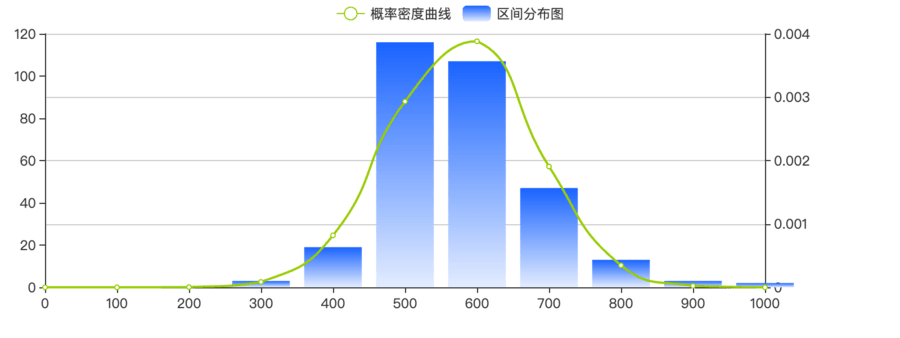
Core Insights - The overall brand communication effectiveness of Shandong listed companies in October 2025 shows a slight decline in the average Network Communication Influence Index (INC Index) to 578.32, down 0.78% from September [1][3] - The company with the most significant increase in ranking is Dezhou United Petroleum Technology Co., Ltd., which rose by 222 positions, while Gome Communication Equipment Co., Ltd. saw the largest drop, falling by 168 positions [1] - The top ten companies in the INC Index include Dong'e Ejiao Co., Ltd., Qingdao Beer Co., Ltd., and Haier Smart Home Co., Ltd., among others, with Huaxi Biotechnology Co., Ltd. showing the most significant improvement, rising 5 places [1] Industry Overall Analysis - The average INC Index of 578.32 indicates that most brands in the industry are maturing and gaining more attention, with brand voice and social concern on the rise [3] - The skewness coefficient of the INC Index is 0.866, indicating a moderate right-skewed distribution, where a few units perform exceptionally well, enhancing the overall industry INC level [3] Communication Breadth Analysis - The average communication breadth score is 2.67, categorized as "standard level," suggesting that the overall voice of Shandong listed companies is at a moderate level [5] - 11 companies achieved the highest level (5), while 72 companies reached level 4, indicating a strong performance in communication breadth [5] - 34 companies are at level 2, indicating potential for improvement, and 1 company is at the lowest level [5] Communication Heat Analysis - The average communication heat score is 2.33, also at the "standard level," reflecting moderate engagement on media platforms [6] - 7 companies reached the highest level (5), while 44 companies achieved level 4, indicating strong activity and engagement [7] - 101 companies are at level 2, and 3 companies are at the lowest level, suggesting a need for improved content planning [7] Network Attention Analysis - The average network attention score is 1.52, categorized as "regional attention," indicating that most companies have some recognition within local areas [8] - 80 companies achieved level 3 or above, while 114 companies are at level 2, showing varying degrees of brand awareness [9] - 116 companies are at the lowest level, indicating low search frequency for brand keywords [9] Official Website Presentation Analysis - The average official website presentation score is 1.05, below the "standard level," indicating low frequency and quality of information published on company websites [10] - 2 companies achieved the highest level (5), while 3 companies reached level 4, showing some companies excel in their online presence [11] - 174 companies are at the lowest level, highlighting a significant area for improvement in website quality and content [11]



山东“团校企”携手让中医药文化浸润校园
Zhong Guo Qing Nian Bao· 2025-11-18 23:01
Core Insights - The article highlights the integration of traditional Chinese medicine (TCM) culture into modern education, emphasizing the importance of cultural confidence and health literacy among youth [1][2][4]. Group 1: Cultural Promotion - The "Youth So Much 'Gel'" campaign aims to spread TCM culture across universities in Shandong, fostering a connection between ancient wisdom and modern health concerns [1][3]. - The TCM culture market at Shandong University attracted many students, who engaged with herbal materials and learned about their health benefits, showcasing the appeal of TCM [2][3]. Group 2: Educational Initiatives - The collaboration between enterprises like Dong'e Ejiao and universities is designed to create new pathways for TCM culture dissemination, combining resources from both sectors [3][5]. - Students expressed increased interest in TCM careers, recognizing diverse opportunities in cultural promotion, product development, and market outreach [5][6]. Group 3: Employment Opportunities - The employment guidance session at Yantai University revealed a growing demand for professionals who understand both design and TCM culture, indicating a shift in job market dynamics [5][6]. - The initiative by the Youth League to connect students with industry professionals is enhancing the visibility of TCM career paths, making it more accessible to the younger generation [6].
【兴证策略】25Q3险资持仓权益比例接近历史新高
Xin Lang Cai Jing· 2025-11-18 11:57
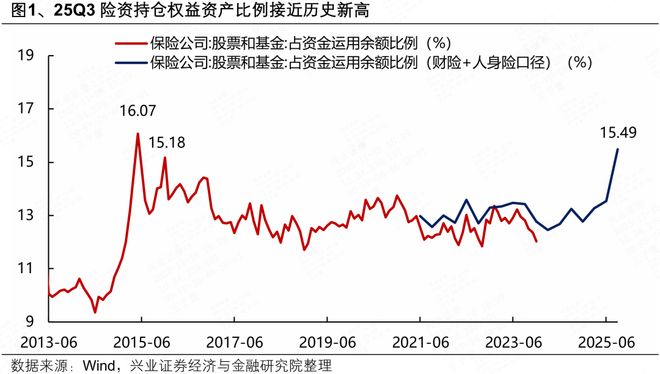
Core Insights - Insurance capital continues to increase its allocation to equity assets, with the proportion of equity assets reaching near historical highs in Q3 2025 [1] - The allocation structure shows a significant increase in technology and a reduction in high-end manufacturing sectors [5][6] - Insurance capital has accelerated its stake acquisitions in listed companies, particularly in Hong Kong stocks, with a notable increase in the number of acquisitions compared to previous years [9] Allocation Trends - In Q3 2025, the allocation of insurance capital to various asset classes is as follows: bank deposits (7.9%), bonds (50.3%), stocks (10.0%), funds (5.5%), long-term equity investments (7.9%), and other assets (18.4%) [1] - The investment proportions in bank deposits and bonds decreased by 0.7 percentage points and 0.8 percentage points, respectively, while the investment in stocks and funds surged to 15.5%, approaching the historical peak of 16.1% in H1 2015 [1] Sector and Stock Preferences - Insurance capital has significantly increased its allocation to banks, steel, and textile sectors, while reducing holdings in high-end manufacturing sectors such as new energy and military [5] - Key stocks that saw increased investment include Agricultural Bank of China, Postal Savings Bank, Industrial and Commercial Bank of China, and Hikvision, while reductions were noted in stocks like Goldwind Technology and Aviation Industry Corporation of China [6][8] Shareholding Activities - In 2025, insurance capital has made 30 stake acquisitions in listed companies, surpassing the total for the entire years of 2020 and 2024, with 25 of these acquisitions in Hong Kong stocks [9] - The trend indicates a shift towards acquiring dividend-yielding assets in Hong Kong due to declining bond yields and rising traditional dividend assets [9]