
GF SECURITIES(000776)

Search documents
调研速递|南矿集团接待广发证券等8家机构 30亿元订单及海外轻资产战略引关注
Xin Lang Cai Jing· 2025-12-30 14:33
Group 1 - The company held a specific object research meeting on December 30, 2025, attracting eight institutions including Guangfa Securities and Zhongou Fund, with company executives participating in discussions [1] - The company signed a significant order worth 3 billion yuan for equipment needed for an iron ore project, with an expected operational period of 10 years and corresponding operational costs of approximately 3 billion yuan [2] - The company is focusing on a "light asset operation" strategy for overseas business, emphasizing technology output and after-market services rather than heavy asset factory construction [3] Group 2 - The Brownhill gold mine project in Zimbabwe serves as a benchmark for the company's overseas light asset cooperation, with expected revenue sharing of approximately 27.3 million USD from gold sales [4] - Future growth is anticipated through the implementation of the "Three Transformations and One Optimization" strategy and the "One Body and Two Wings" strategic layout, focusing on after-market business and overseas light asset expansion [5]
南矿集团:接受广发证券等投资者调研

Mei Ri Jing Ji Xin Wen· 2025-12-30 14:32
Group 1 - The company, Nanmin Group, announced that it will hold an investor meeting on December 30, 2025, from 9:30 to 11:30 AM, where it will accept inquiries from investors [1] - The meeting will be attended by the company's Vice President and Chief Financial Officer, Wen Jinsong, and the Secretary of the Board, Miao Yun, who will respond to questions from investors [1] Group 2 - The news highlights the release of the top ten financial news stories for 2025, indicating significant events categorized as safeguarding, fierce battles, changes, and rapid growth [1]
券业重磅!2025年三项业务成绩单出炉,12家券商获投行业务评价A类
券商中国· 2025-12-30 14:10
Core Viewpoint - The 2025 evaluation results of the investment banking business of securities companies in China show a significant distribution of ratings, with 12 firms rated as A-class, 66 as B-class, and 15 as C-class, reflecting the quality of their investment banking practices and internal controls [2][3][4]. Group 1: A-Class Firms - A total of 12 securities firms received an A-class rating, including Huatai United, CITIC Securities, and others, with Huatai United and CITIC Securities maintaining their A-class status for four consecutive years [2][3]. - The A-class firms are recognized for their high-quality practices in stock sponsorship, bond underwriting, and financial advisory services [10]. Group 2: B-Class and C-Class Firms - 66 firms were rated B-class, accounting for approximately 70% of the evaluated companies, including Dongfang Fortune and GF Securities [4]. - 15 firms received a C-class rating, including Debon Securities and Hengtai Changcai, indicating a decline in their investment banking quality [4]. Group 3: Changes in Ratings - 23 firms improved their ratings compared to 2024, with seven firms moving from B-class to A-class, while others like Century Securities dropped from A-class to C-class [11]. - The evaluation reflects both advancements and setbacks in the firms' investment banking practices, with specific firms facing penalties or negative events impacting their ratings [11][12]. Group 4: Evaluation Methodology - The evaluation criteria focus on the quality of investment banking services, internal control systems, and support for high-level technology and mergers and acquisitions [10]. - Recent revisions to the evaluation methodology include clearer scoring standards for negative events and enhanced focus on internal control and conflict of interest management [13][14]. Group 5: Future Directions - The China Securities Association emphasizes the importance of these evaluations in guiding firms to enhance their service capabilities and align with national strategic goals [15]. - The association aims to shift the focus from price competition to value competition, encouraging firms to improve their professional capabilities in investment banking [15].






广发证券刘晨明:A股和港股的盈利研判框架需重大调整
Zhong Zheng Wang· 2025-12-30 13:40
Group 1 - The core viewpoint is that the profitability assessment framework for A-shares and Hong Kong stocks needs significant adjustment, especially in light of the current market environment where traditional economic sectors like real estate, infrastructure, and domestic consumption have not shown improvement [1] - A-shares' non-financial sector ROE has stabilized for three consecutive quarters, which is historically unprecedented for A-shares to achieve a continuous valuation increase over three years [1] - The potential for valuation contributions in 2024 and 2025 raises questions about whether 2026 can break historical patterns, making it a point of interest for investors [1] Group 2 - Historically, the only instance of A-shares having the top five industry performance for three consecutive years occurred in the food and beverage sector from 2016 to 2020, raising questions about whether the communication and electronics sectors can break this trend in 2026 [2] - The electronic sector has reached a historical peak in institutional holdings, surpassing the "20% holding indicates a peak" threshold, indicating a significant shift in market dynamics [2] - The TMT sector's trading volume has exceeded historical limits during each industrial cycle bull market, with this year's DeepSeek period seeing TMT trading volume surpassing previous records [2]
最新投行评价结果出炉,A类12家
第一财经· 2025-12-30 13:38
Core Viewpoint - The Securities Association of China released the performance evaluation results for investment banking, bond underwriting, and financial advisory services for the year 2024, indicating a total of 93 securities firms engaged in investment banking, with 12 classified as A-level, 66 as B-level, and 15 as C-level [1][10]. Investment Banking - Among the 93 securities firms involved in investment banking, 12 firms received an A classification, including Dongwu Securities, Guojin Securities, Guotai Junan, and CITIC Securities [1][3]. - The majority of firms, 66, were classified as B, while 15 firms were rated C [1][10]. Bond Underwriting - For the bond underwriting and entrusted management business, 95 securities firms were evaluated, with 14 classified as A, 62 as B, and 19 as C [5][7]. - A-level firms in this category include Caixin Securities, Dongwu Securities, and Guotai Junan [5][7]. Financial Advisory - In the financial advisory sector, 30 securities firms were evaluated, with 5 classified as A, 19 as B, and 6 as C [5][10]. - A-level firms in financial advisory include Huatai United and Galaxy Securities [8][9]. Overall Evaluation - The evaluation results reflect the overall quality of practice among the firms and align with market expectations, promoting improvements in operational quality, internal control, and service capabilities [10].



广发证券刘晨明:投资黄金关键在于“拿得住”
Zhong Zheng Wang· 2025-12-30 13:36
Core Viewpoint - The key insight from the discussion is that gold prices typically exhibit a pattern of rapid increases followed by slow declines, suggesting that investors should be prepared for prolonged periods of stagnation or gradual declines before experiencing significant price surges [1] Investment Strategy - Investors are advised to recognize the importance of holding onto gold investments, as frequent trading may lead to missing out on major upward trends [1] - A systematic investment approach, such as dollar-cost averaging, is recommended to mitigate timing risks and human behavioral weaknesses, allowing investors to accumulate positions at lower prices over time [1] - The strategy of patiently waiting for price surges through regular investments is highlighted as a prudent method for achieving long-term gains in gold assets [1]
张宁:券商出海迎来机遇窗口期,叩开新增长的希望之门
Xin Lang Cai Jing· 2025-12-30 09:50
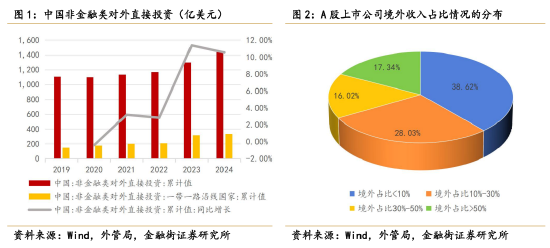
Core Viewpoint - The globalization of China's industrial chain and the increasing demand for cross-border asset allocation by domestic institutions and residents, along with the deepening of China's capital market opening policies, provide favorable opportunities and strong momentum for the development of international business by domestic securities firms [1] Group 1: Historical Development Opportunities for Securities Firms - The internationalization of China's industrial chain has significantly increased the demand for cross-border financial services, with non-financial direct investment by domestic investors abroad expected to reach USD 143.9 billion in 2024, a year-on-year growth of 10.54% [2] - Over 50% of A-share companies have disclosed overseas business income, indicating that going global is now a common phenomenon, with 33.36% of listed companies having over 30% of their income from overseas [2] Group 2: Growth in Cross-Border Investment Demand - The cross-border investment demand from institutions and residents has been strong, with foreign securities investment assets increasing from USD 1019.6 billion to USD 1694.1 billion from mid-2022 to mid-2025, reflecting an annual compound growth rate of 18.44% [6] - Foreign institutions' investment in domestic securities has also grown, with the market value of foreign holdings in domestic stocks and securities rising from USD 737.5 billion to USD 1071.8 billion from mid-2020 to mid-2025, with a compound annual growth rate of 7.76% [6] Group 3: Capital Market Opening and Securities Firms' Internationalization - China's accelerated financial market opening has created a favorable policy environment for the internationalization of securities firms, with various mutual recognition and cross-border financial policies being implemented [7] - The trading volume of the Hong Kong Stock Connect has increased from CNY 620.4 billion in 2015 to CNY 16.27 trillion by the end of 2025, reflecting a compound annual growth rate of 38.64% [7] Group 4: Market Landscape and Development Prospects of Securities Firms' International Business - Securities firms' international business encompasses various lines, including cross-border brokerage, wealth management, asset management, proprietary trading, and emerging digital asset businesses, with significant growth potential [9] Group 5: Cross-Border Brokerage and Trading Business - Chinese securities firms provide cross-border trading channels for clients, utilizing overseas subsidiaries to offer access to foreign stocks, bonds, and derivatives [10] Group 6: Cross-Border Wealth Management Business - The cross-border wealth management business is becoming a key development direction for securities firms, driven by the increasing demand for diversified asset allocation among Chinese residents [15] - The cross-border wealth management products of leading firms like CITIC Securities have seen rapid growth, with overseas product sales reaching USD 8.7 billion in 2024, a year-on-year increase of 151% [17] Group 7: Cross-Border Asset Management Business - The global asset management industry is increasingly focusing on cross-border asset management to capture growth cycles and interest rate differentials across different economies [19] Group 8: Overseas Investment Banking Business - Hong Kong serves as a critical hub for domestic securities firms' overseas investment banking activities, with supportive policies for mainland companies listing in Hong Kong [24] - The scale of equity financing in Hong Kong has significantly increased, with the total equity financing amount reaching HKD 590.6 billion in 2025, 3.26 times that of 2024 [25] Group 9: Overseas Proprietary Business - The overseas proprietary business has become a core profit source for leading securities firms, with a significant portion of their fixed-income investments being allocated to overseas markets [29] Group 10: Second Growth Curve for Securities Firms' International Business - The international business of securities firms is becoming an important revenue component, with firms like Huatai Securities and CITIC Securities showing strong growth in overseas business income [32] - The return on equity (ROE) for international subsidiaries of firms like CITIC Securities is significantly higher than their overall ROE, indicating better profit generation capabilities [34]


自上而下构建全天候多元配置ETF组合
GF SECURITIES· 2025-12-30 05:43
- The report introduces the construction of four ETF portfolios: A-share market asset allocation ETF portfolio, overseas equity index QDII-ETF portfolio, A-share relative return ETF portfolio, and A-share absolute return ETF portfolio, which are combined to form the All-weather diversified allocation ETF portfolio[7][12][13] - The A-share market asset allocation ETF portfolio is constructed using strategic allocation models (fixed ratio, volatility control, and risk parity) and tactical dynamic adjustment models based on macro and technical indicators. Monthly frequency scoring is applied to adjust weights[17][21][29] - Macro indicators for the A-share market asset allocation ETF portfolio include PMI, CPI YoY, social financing stock YoY, 10-year government bond yield, and USD index, with scoring ranges of -1, 0, 1 based on trends and impact directions[24][31][29] - Technical indicators for the A-share market asset allocation ETF portfolio are derived from trend, valuation, and fund flow dimensions, with scoring ranges of -1, 0, 1 for trend and fund flow, and -2, -1, 0, 1, 2 for valuation[32][34] - The A-share relative return ETF portfolio is constructed using six dimensions: historical fundamentals, fund flow, consensus expectations, macro, momentum, and style. Indicators are weighted and scored using Z-values[61][67][68] - The relative return ETF portfolio incorporates crowding indicators such as turnover ratio, beta, financing balance ratio, financing increment ratio, fund holdings ratio, and active buy-in ratio, with thresholds based on historical percentiles[69][72][73] - The A-share absolute return ETF portfolio focuses on stability, dividend yield, and low correlation with market volatility. Indicators include ROE TTM mean/standard deviation, net profit growth TTM standard deviation, dividend yield, cash dividend/net profit ratio, beta, semi-beta, and average correlation[84][90][89] - The All-weather diversified allocation ETF portfolio combines the above four portfolios, using fixed ratio models for strategic allocation and macro/technical indicators for tactical adjustments. It sets specific weight ranges for A-share relative and absolute return ETF portfolios[100][101] - Backtesting results for the A-share market asset allocation ETF portfolio show annualized returns of 9.75%, 8.41%, and 8.31% for fixed ratio, volatility control, and risk parity models respectively, with maximum drawdowns of 4.85%, 6.42%, and 2.77%[38][42] - The QDII-ETF portfolio achieves an annualized return of 18.51%, maximum drawdown of 16.78%, and annualized volatility of 11.64% during the backtesting period[59][56] - The relative return ETF portfolio with crowding indicators achieves an annualized return of 19.32%, maximum drawdown of 25.69%, and annualized volatility of 21.87%[82][78] - The absolute return ETF portfolio achieves an annualized return of 12.33%, maximum drawdown of 26.11%, and annualized volatility of 17.53%[98][94] - The All-weather diversified allocation ETF portfolio achieves an annualized return of 9.36%, maximum drawdown of 3.64%, and annualized volatility of 3.82%, with monthly win rates of 82.41%, 3-month rolling win rates of 98.11%, and 1-year rolling win rates of 100%[105][100]
广发证券:料底部看好开发板块绝对收益机会 轻资产+商业核心资产价值将持续修复
智通财经网· 2025-12-30 03:06
Group 1 - The core viewpoint of the report is that the real estate sector is expected to see absolute return opportunities in the development segment in 2026, with light asset and core commercial assets continuing to recover in value [1] - In 2025, the A-share real estate sector underperformed the market by over 25 percentage points, while Hong Kong's development also lagged behind the market [1] - The report anticipates a policy adjustment window in 2026, with mainstream development companies likely to present absolute return opportunities [1] Group 2 - Total demand for real estate is supported, but real estate assets lack attractiveness; the estimated total area of new and second-hand residential transactions in 2025 is around 1.33 billion square meters, with strong support at the 1.2-1.3 billion square meter level [1] - The decline in new housing prices has narrowed compared to 2024, and the transaction volume of second-hand homes has slowed down, with prices facing significant pressure [1] - The current burden rate for homebuyers has decreased to 48%, but the annualized net asset return rate for homes purchased with a 20% down payment over the past four years is -62% [1] Group 3 - The necessity for policy implementation in 2026 is gradually increasing, with "risk prevention" as the bottom line and stabilizing the real estate market as the main goal [2] - The industry faces severe challenges in 2026, including the expansion of negative asset scales among residents and the economic drag from real estate [2] Group 4 - New housing transactions, land acquisition, and construction are sensitive to market changes, with expectations for a narrowing of declines or even positive year-on-year growth [3] - In a neutral expectation environment, new residential sales area is projected to decline by 9%, new construction by 9%, completed area by 21%, real estate investment by 12%, and construction area by 8% [3] Group 5 - The supply-demand relationship in the domestic housing market is being reshaped, with the top ten real estate companies' land market share exceeding 30% [4] - In 2025, the land acquisition market share of the top ten real estate companies reached 32%, which is 13 percentage points higher than their sales market share [4] - In a neutral scenario, sales revenue for the top ten real estate companies is expected to grow by 5% year-on-year in 2026 [4]
广发证券股份有限公司关于持股5%以上股东非公开发行可交换公司债券(第二期)发行完成的公告
Shang Hai Zheng Quan Bao· 2025-12-29 18:44
Core Viewpoint - The announcement details the completion of the second phase of a non-public issuance of exchangeable bonds by a major shareholder, Liaoning Chengda Co., Ltd., with a total issuance scale of RMB 1 billion and specific terms outlined for the bonds [2]. Group 1 - The exchangeable bonds, referred to as "25 Chengda E2," have a total issuance scale of RMB 1 billion and a maturity period of 3 years [2]. - The coupon rate for the bonds is set at 0.01%, with an initial conversion price of RMB 24.58 per share [2]. - The conversion period for the bonds will commence six months after the issuance date and will last until the day before the bond's maturity, specifically from June 30, 2026, to December 28, 2028 [2]. Group 2 - The company will disclose any subsequent developments regarding the non-public issuance of exchangeable bonds by Liaoning Chengda in accordance with relevant regulatory requirements [3].
