ZGXT(000831)

Search documents
摆脱中国稀土?日本正进行一场代价高昂的供应链突围
Jin Tou Wang· 2025-10-31 10:31
Core Insights - Sojitz Corporation has begun importing rare earth elements from Australia, marking Japan's first procurement of these critical materials from outside China [1][3] - The imported materials, specifically dysprosium and terbium from the Mount Weld mine in Western Australia, will be processed in Southeast Asia before being shipped to Japan [1][3] Group 1: Investment and Supply Chain - Lynas Rare Earths, the operator of the Mount Weld mine, received a 200 million AUD investment from a joint venture between Sojitz and the Japan Oil, Gas and Metals National Corporation (JOGMEC) [3] - Lynas will supply up to 65% of dysprosium and terbium from the Mount Weld mine to Japan [3] Group 2: Economic Security Concerns - Japan's move to diversify its rare earth supply chain is driven by deep concerns over "economic security," particularly after China announced export restrictions on dysprosium, terbium, and other rare earth elements [3][5] - The reliance on Chinese rare earths has led to production halts in Japanese factories, including those of Suzuki and Ford [3] Group 3: Strategic Initiatives - Japan is actively working to establish a supply chain that does not depend on Chinese rare earths, with recent agreements made during the Japan-U.S. meeting to create a stable rare earth procurement framework [5] - JOGMEC has also invested approximately 100 million euros in a rare earth processing project planned by French company Caremag [5] Group 4: Challenges and Costs - China controls nearly 70% of global rare earth production, and in the more technologically advanced heavy rare earth sector, this figure approaches 100%, indicating significant challenges for Japan in terms of technology and cost [5] - The logistics of transporting rare earths from Australia and the U.S. to Southeast Asia for processing before returning to Japan will increase costs significantly compared to direct imports from China [5] - The low concentration of heavy rare earths in ores and the complexity of the extraction process further elevate the final product prices [5]



有色金属行业双周报(2025、10、17-2025、10、30):能源金属持续回暖,贵金属板块高位震荡-20251031
Dongguan Securities· 2025-10-31 09:37
Investment Rating - The report maintains a standard rating for the non-ferrous metals industry, indicating a positive outlook for investment opportunities in this sector [2][17]. Core Insights - The non-ferrous metals industry has shown a significant increase, with a 3.70% rise over the past two weeks, outperforming the CSI 300 index by 1.72 percentage points, ranking 4th among 31 industries [3][13]. - The energy metals sector has experienced a notable increase of 8.72%, while precious metals have seen a decline of 9.37% [19][22]. - The report highlights the impact of macroeconomic factors, such as the Federal Reserve's interest rate cuts, which have contributed to the upward trend in metal prices [51][67]. Market Review - As of October 30, 2025, the non-ferrous metals industry has risen by 79.55% year-to-date, leading the market performance among all sectors [13][19]. - The industrial metals segment is benefiting from a global easing cycle, with copper and aluminum prices gradually recovering [68]. - Precious metals, particularly gold and silver, have shown volatility, influenced by changes in investor sentiment and central bank purchasing trends [37][67]. Price Analysis - Key prices as of October 30, 2025: - LME Copper: $10,930/ton - LME Aluminum: $2,870/ton - LME Lead: $2,022/ton - LME Zinc: $3,044.50/ton - LME Nickel: $15,250/ton - LME Tin: $35,720/ton [26][68]. - For precious metals: - COMEX Gold: $4,038.30/oz (up $145.7 since early October) - COMEX Silver: $48.73/oz (up $1.31 since early October) [37][67]. Sector Performance - The report suggests focusing on specific companies within the industry: - Western Mining (601168) and Luoyang Molybdenum (603993) in the industrial metals sector [70]. - Xiamen Tungsten (600549) in the small metals sector [68][70]. - The energy metals sector, particularly lithium carbonate, is highlighted for its potential growth due to advancements in energy storage and solid-state battery technologies [69].



欧盟要猛砸钱?“只要中国稀土更便宜,欧洲生产商就无胜算”
Guan Cha Zhe Wang· 2025-10-31 07:55
Core Viewpoint - The European Union (EU) is striving to reduce its dependence on China for rare earth materials amid geopolitical tensions, but faces significant challenges in funding and execution [1][3][4]. Group 1: EU's Strategic Plans - The EU Commission is accelerating a new plan named "RESourceEU" aimed at diversifying supply sources for critical minerals by the end of the year [1][3]. - This plan will focus on recycling, joint procurement, reserves, and investments in critical mineral sectors [1][3]. - The new initiative is modeled after the "REPowerEU" plan, which aimed to invest €225 billion to diversify energy supply routes post-Russia-Ukraine conflict [3]. Group 2: Industry Concerns - Industry leaders express skepticism that the EU's new plan is merely a rehash of previous initiatives without sufficient funding to address the core issues of supply chain diversification [3][6]. - Experts highlight that as long as Chinese materials remain cheaper, European producers will struggle to compete [6][7]. - The EU's goal is to ensure that by the end of the decade, at least 10% of its selected mineral consumption is sourced domestically, with no single country supplying more than 65% of certain raw materials [6][7]. Group 3: Challenges and Obstacles - Funding is identified as a critical bottleneck for the EU's raw materials agenda, affecting mining, processing, recycling, and storage efforts [6][7]. - The EU's plans may face local resistance due to environmental and social concerns associated with new mining projects, complicating investment decisions [6][7]. - The EU is also exploring emergency plans to enhance local production, diversify supplier networks, and establish strategic reserves [7][9].
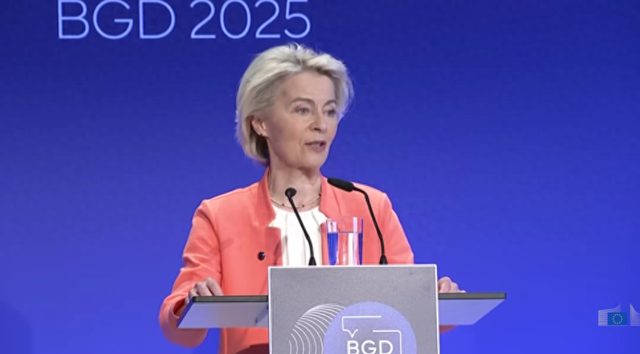
中国稀土出口管制如何影响外贸?商务部回应
Di Yi Cai Jing· 2025-10-31 04:33
Core Viewpoint - The recent export controls on rare earths are primarily focused on security issues, emphasizing the relationship between safety and development in the context of China's green technology exports [1] Group 1 - The export controls are aimed at addressing safety concerns, which are deemed essential for better development [1] - The relationship between safety and development is highlighted, indicating that improved safety can lead to stronger development outcomes [1] - The discussion reflects a broader strategy where ensuring safety is seen as a prerequisite for advancing green technology exports [1]
中国稀土出口管制如何影响外贸?李成钢回应
Guan Cha Zhe Wang· 2025-10-31 04:17
Core Viewpoint - The recent export control measures on rare earths by the Ministry of Commerce are primarily focused on security issues, emphasizing the relationship between safety and development in the context of green technology products' foreign trade [1] Group 1 - The Ministry of Commerce's export control measures aim to address safety concerns [1] - The concept of "green" is framed as a development philosophy, highlighting its importance in trade [1] - The relationship between safety and development is underscored, suggesting that ensuring safety is essential for achieving better development outcomes [1]
稀土板块盘初调整,中国稀土跌超4%
Mei Ri Jing Ji Xin Wen· 2025-10-31 01:53
Core Viewpoint - The rare earth index experienced a significant adjustment on October 31, with notable declines in several component stocks [1] Company Performance - China Rare Earth saw a decline of 4.57% [1] - Guangsheng Nonferrous dropped by 4.37% [1] - Northern Rare Earth decreased by 4.13% [1] - Huahong Technology fell by 3.88% [1] - Shenghe Resources declined by 3.20% [1]

研判2025!中国稀土顺丁橡胶行业产业链、市场规模及重点企业分析:凭借其卓越特性,在新能源汽车等领域的应用需求持续攀升[图]
Chan Ye Xin Xi Wang· 2025-10-31 01:20
Core Insights - The market for rare earth butadiene rubber is experiencing significant growth, driven by the booming electric vehicle and high-end automotive markets, with a projected market size of 4.958 billion yuan in 2024, representing a year-on-year increase of 15.30% [1][4]. Industry Overview - Rare earth butadiene rubber, also known as neodymium-based butadiene rubber, is characterized by a high cis content of over 98%, offering superior tensile strength, low rolling resistance, and excellent aging resistance [2][4]. Industry Development History - The development of rare earth butadiene rubber began in the 1960s, with significant advancements made in the 1990s and 2000s, leading to the establishment of industrial production capabilities and the achievement of international certifications [4][5]. Market Size - The demand for rare earth butadiene rubber is expected to continue growing, particularly in high-performance applications such as aerospace and electronics, due to its unique properties that meet stringent material requirements [1][4]. Key Enterprises - Major players in the rare earth butadiene rubber industry include state-owned enterprises like China Petroleum and China Petrochemical, which dominate the market due to their resource and production capacity advantages [9][10]. Industry Development Trends 1. **Market Demand Expansion**: The global electric vehicle boom is driving exponential growth in demand for rare earth butadiene rubber, particularly for high-performance tires [15]. 2. **Technological Innovation**: Advances in rare earth catalyst systems and molecular design are key to performance breakthroughs and green transformation in the industry [16]. 3. **Policy Regulation**: Stricter environmental regulations are reshaping the competitive landscape, with China implementing total control over rare earth mining and export quotas [17][18].



上游利润丰沛、中游韧性但有隐忧 稀土产业链三季报“答卷”冷暖有别
Shang Hai Zheng Quan Bao· 2025-10-30 23:19
Core Viewpoint - The rare earth permanent magnet industry has shown varied performance in Q3, with upstream companies benefiting from strong price increases, while midstream magnet manufacturers face challenges despite demonstrating resilience in growth [1] Group 1: Upstream Performance - Rare earth product prices have significantly increased, with the average price of praseodymium and neodymium oxide reaching 561.5 yuan per kilogram by September 30, marking a 41% increase since the beginning of the year [2] - Major rare earth resource companies reported substantial profit growth in Q3, with Guangxi Chuangsheng Nonferrous Metals, Shenghe Resources, and Northern Rare Earth seeing net profit increases of 240.56%, 166.31%, and 85.91% respectively [2] - Cash flow analysis indicates that upstream companies have stronger bargaining power and cash flow compared to downstream magnet manufacturers, reflecting higher profit quality [2] Group 2: Midstream Magnet Manufacturers - Despite facing policy uncertainties and market volatility, leading domestic magnet companies exhibited strong profit resilience in Q3, with significant growth in non-recurring net profits [4] - Companies like Ningbo Yunsheng, Jinli Permanent Magnet, and Zhenghai Magnetic Materials reported impressive non-recurring net profit growth rates of 621.23%, 254.98%, and 165.39% respectively [4] - The performance improvement in magnet companies is attributed to the release of new production capacity and the exploration of emerging markets [4][5] Group 3: Operational Challenges - Many companies experienced longer inventory turnover days compared to previous years, indicating potential operational challenges [6] - Some companies reported cash flow pressures, with net cash ratios falling below 1 or even negative, highlighting financial strain despite positive profit levels [6] - The overall performance of magnet companies in Q3 serves as evidence of their ability to grow amidst a complex environment [6]

A股三季报勾勒产业新图景 电子、有色、储能行业业绩亮眼
Zhong Guo Zheng Quan Bao· 2025-10-30 22:10
Core Insights - The A-share market's Q3 2025 reports reveal significant growth across multiple industries, with notable reversals in performance for some sectors, particularly electronics, non-ferrous metals, and energy storage [1] Electronics Industry - The electronics sector, led by major player Industrial Fulian, reported a revenue of 603.93 billion yuan for the first three quarters, marking a 38.4% year-on-year increase, and a net profit of 22.49 billion yuan, up 48.52% [2] - AI-driven demand has significantly boosted growth in various electronic applications, including servers and communication devices, with companies like Zhongji Xuchuang and Xinyi achieving revenue increases of 44.43% and 221.7% respectively [2] - PCB companies also showed strong performance, with Shengyi Electronics reporting a staggering 497.61% increase in net profit [2] Non-Ferrous Metals Industry - The non-ferrous metals sector experienced substantial growth due to rising product prices and increased downstream demand, with several rare earth companies reporting over 100% growth in net profit [4] - For instance, Shenghe Resources achieved a net profit growth rate of 748.07%, driven by favorable market conditions and effective management strategies [4] - Other companies like Zijin Mining and Baiyin Nonferrous Metals also reported significant revenue increases, with Zijin Mining's revenue reaching approximately 254.2 billion yuan, up 10.33% [4] Energy Storage Industry - The energy storage sector is witnessing robust demand, with global lithium battery storage installations exceeding 170 GWh, reflecting a 68% year-on-year growth [5] - Companies like Sungrow Power reported a revenue of 66.40 billion yuan, up 32.95%, with a notable 70% increase in energy storage shipments [6] - Kelu Electronics also experienced growth, with a revenue increase of 23.42% and a net profit surge of 251.1%, highlighting the expanding applications and technological advancements in the energy storage market [6]




电子、有色、储能行业业绩亮眼
Zhong Guo Zheng Quan Bao· 2025-10-30 21:11
Core Insights - The A-share market's Q3 2025 reports reveal significant growth across multiple industries, particularly in electronics, non-ferrous metals, and energy storage, driven by strong downstream demand [1] Electronics Industry - The electronics sector, led by major player Industrial Fulian, reported a revenue of 603.93 billion yuan for the first three quarters, marking a 38.4% year-on-year increase, with net profit rising by 48.52% to 22.49 billion yuan [1] - The growth in cloud computing is attributed to the large-scale delivery of AI cabinet products and sustained demand for AI computing power, positively impacting various electronic applications [1] - In the optical module sector, companies like Zhongji Xuchuang and Xinyi Sheng reported substantial revenue increases of 44.43% and 221.7%, respectively, with net profits soaring by 90.05% and 284.37% [2] - PCB companies, including Shenghong Technology and Shunyi Electronics, also experienced significant profit growth, with Shengyi Electronics' net profit increasing by 497.61% [2] - Dongwei Technology, specializing in PCB plating equipment, reported a net profit of 85.37 million yuan, up 24.8%, with Q3 net profit surging by 236.93% [2] Non-Ferrous Metals Industry - The non-ferrous metals sector saw substantial profit growth, with companies like Northern Rare Earth and China Rare Earth reporting over 100% year-on-year increases in net profit, and Shenghe Resources achieving a remarkable 748.07% growth [3] - Silver Industry's Q3 revenue reached 72.64 billion yuan, a 5.21% increase, with Q3 alone showing a 70.72% rise [3] - Zijin Mining reported approximately 254.2 billion yuan in revenue, up 10.33%, and a net profit of 37.86 billion yuan, reflecting a 55.45% increase [3] Energy Storage Industry - The global lithium battery energy storage installations exceeded 170 GWh in the first three quarters of 2025, representing a 68% year-on-year growth, indicating a robust market expansion [4] - Sunshine Power achieved a revenue of 66.40 billion yuan, a 32.95% increase, with net profit rising by 56.34% to 11.88 billion yuan, driven by strong performance in photovoltaic inverters and energy storage [4] - Kelu Electronics reported a revenue of 3.59 billion yuan, up 23.42%, with net profit soaring by 251.1% to 23.2 million yuan, benefiting from the growing share of renewable energy in the new power system [4] - Hunan Yuren, a supplier of lithium-ion battery cathode materials, reported revenue and net profit growth rates of 46.27% and 31.51%, respectively, due to increased demand in the energy storage sector [5]