
稀土ETF嘉实(516150)

Search documents
聪明钱涌入细分赛道 嘉实基金ETF前瞻布局把握高质量发展机遇
Zhong Guo Jing Ji Wang· 2026-01-23 03:22
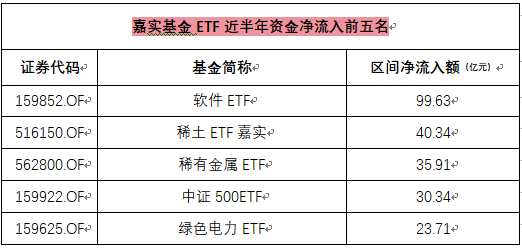
Core Insights - The year 2025 marks a milestone for China's ETF market, with the overall scale surging from 3.73 trillion yuan at the end of 2024 to 6.02 trillion yuan, reflecting a growth rate of 61.4% [1] - The fund flow shows significant characteristics, with industry-themed ETFs and broad-based ETFs leading the way, highlighting a dual strategy of technology innovation and high dividend yields [1] Group 1: ETF Market Growth - By the end of 2025, the ETF market in China is projected to reach 6.02 trillion yuan, a substantial increase from 3.73 trillion yuan in 2024 [1] - The growth is driven by favorable policies and market recognition, indicating a robust future for ETF investments [1] Group 2: Performance of Jiashi Fund - Jiashi Fund's ETF products have diversified, with a total scale exceeding 369.6 billion yuan and 61 ETF products, of which 24 rank first in their respective categories [1] - The flagship product, the CSI 300 ETF, has a scale of 197.12 billion yuan, ranking first among similar products on the Shenzhen Stock Exchange [2] - The Jiashi Fund's innovative bond ETFs, particularly the Sci-Tech Bond ETF, have surpassed 43.67 billion yuan, becoming the largest in its category [2] Group 3: Thematic and Sector ETFs - Jiashi Fund's software ETF has reached a scale of nearly 14.5 billion yuan, becoming the largest in its index category, reflecting the growth potential of the software industry in the digital economy [3] - The rare metals ETF and rare earth ETF have also seen significant growth, with scales of 6.36 billion yuan and 9.26 billion yuan respectively, providing crucial links for investments in new energy and high-end manufacturing [3] - The Sci-Tech Chip ETF has a scale of 46.91 billion yuan, leading in its category and showcasing Jiashi Fund's strategic positioning in the semiconductor industry [3] Group 4: Cross-Border ETF Development - By the end of 2025, Jiashi Fund's cross-border ETF products have expanded, with the NASDAQ ETF reaching 10.07 billion yuan and the Germany ETF exceeding 2 billion yuan [4] - These products facilitate investments in U.S. tech stocks and European core economies, enhancing the fund's global investment matrix [4] Group 5: Future Outlook - Jiashi Fund aims to refine its index investment capabilities and continuously optimize its ETF product line to align with national strategies and technological innovations [5] - The focus is on providing efficient, precise, and high-quality investment tools to help investors seize market opportunities and achieve long-term wealth growth [5]

供需缺口+政策催化共振,稀土ETF嘉实(516150)领涨有色赛道
Jin Rong Jie· 2026-01-07 04:05
Group 1 - The core viewpoint of the news highlights the increasing demand and supply constraints in the rare earth industry, leading to price increases and investment opportunities [2][3]. Group 2 - As of January 7, the Shanghai Composite Index fell by 0.02%, while the rare earth industry index rose by 2.55%, with several stocks experiencing significant gains, including Zhong Rare Earth and Greenland Technology [1]. - The rare earth ETF managed by Jiashi (516150) increased by 2.66%, with a trading volume of 228 million yuan and a turnover rate of 2.79%. Over the past six months, this fund has seen a growth of 64.35% [1]. Group 3 - China is considering tightening export license reviews for medium and heavy rare earths, which could significantly impact Japan, as it relies almost entirely on China for these materials. If restrictions last for three months, Japan could face a loss of 660 billion yen, escalating to 2.6 trillion yen if prolonged for a year [2]. - Myanmar's Kachin State plans to halt all rare earth mining activities by December 31, 2025, which previously contributed about 40% of the global supply of medium and heavy rare earths. This will lead to an 80% year-on-year decline in rare earth exports to China [2]. Group 4 - The domestic mining quota for medium and heavy rare earths has been frozen at 19,200 tons per year for five consecutive years, with no increase planned for 2026. The global demand for medium and heavy rare earths is projected to exceed 40,000 tons in 2026, while supply is estimated at around 24,000 tons, resulting in a supply gap of 16,000 to 20,000 tons [2]. Group 5 - Prices for rare earth elements are rising due to supply constraints, with the average price of dysprosium reported at 1,762,500 yuan per ton, increasing by 10,000 yuan in a single day. The average price of dysprosium oxide is 1,352,500 yuan per ton, up by 2,500 yuan [2]. Group 6 - Demand for rare earths is surging in sectors such as electric vehicles, wind power, and humanoid robots, with projected demand for rare earth permanent magnets in the electric vehicle sector reaching 88,000 tons by 2026, and 44,000 tons in the wind power sector [3]. - The overall strength in the non-ferrous metals sector is expected to create a synergistic effect, with upward adjustments in economic growth forecasts for major global economies and a weaker US dollar providing a favorable macro environment for rising prices [3].
从热门指数透视2025 谁是产业“新王”
Xin Lang Cai Jing· 2025-12-31 08:06
Core Insights - The A-share market experienced significant growth in 2025, with the Shanghai Composite Index returning to 4000 points for the first time in ten years and total trading volume exceeding 410 trillion yuan, reflecting a record high in market capitalization [1][9]. Market Performance - The Shanghai Composite Index rose by 18.30%, the Shenzhen Component Index increased by 30.62%, and the ChiNext Index surged by 51.42% throughout the year [9]. - Nearly 500 stocks doubled in value, marking an increase of over 460% compared to 2024, indicating heightened market enthusiasm and growth [9]. Sector Performance - The market exhibited a "structural market" where funds were concentrated in sectors with strong growth certainty, rather than a broad-based rally [10]. - The top three performing sectors were: - Non-ferrous metals with a 92.64% increase - Communication sector with an 87.27% rise - Electronics sector with a 49.40% growth [10]. Non-Ferrous Metals - The non-ferrous metals sector led the market with a 92.64% increase, driven by global liquidity, supply constraints, and surging demand from new energy and AI sectors [11]. - Related products, such as rare metal ETFs, also saw significant gains, with a rare metal ETF rising by 89.16% and net inflows of 1.704 billion yuan [11]. Communication Sector - The communication sector achieved an 87.27% annual increase, supported by ongoing 5G construction and strong demand for AI computing power [12]. - A communication ETF rose by 85.08%, reflecting investor confidence in the sector's long-term value [12]. Electronics and Chips - The electronics sector grew by 49.40%, bolstered by AI computing and domestic semiconductor production [13]. - The Sci-Tech Chip Index surged by 63.41%, with a chip ETF reaching a scale of 39.6 billion yuan and net inflows of 2.621 billion yuan [13]. Power Equipment - The power equipment sector increased by 43.12%, driven by the "dual carbon" goals and investment in energy transition technologies [15]. - A battery ETF rose by 70.61%, with a scale of 1.465 billion yuan and net inflows of 779 million yuan [15]. Machinery Equipment - The machinery equipment sector saw a 41.83% increase, with a focus on smart manufacturing and industrial robots [16]. - A robotics ETF rose by 31.03%, indicating market optimism towards advanced robotics [16]. Future Outlook - The structural opportunities in high-growth sectors are expected to continue, driven by the rapid expansion of AI infrastructure, ongoing energy transitions, and strategic layouts in high-end manufacturing [16].
嘉实基金:新兴产业引领成长 深度把握多元机遇
Di Yi Cai Jing· 2025-12-26 09:03
Core Viewpoint - The "14th Five-Year Plan" emphasizes the importance of emerging and future industries, identifying key sectors such as new energy, new materials, aerospace, and low-altitude economy, which are crucial for building a modern industrial system and fostering new productive forces [3][4]. Emerging Industries - The four major emerging industries highlighted are new energy, new materials, aerospace, and low-altitude economy, while six future industries include quantum technology, biomanufacturing, hydrogen and nuclear fusion, brain-computer interfaces, embodied intelligence, and sixth-generation mobile communication [3]. - Emerging industries have established clear industrial forms and development models, transitioning from "quantitative accumulation" to "qualitative leaps," presenting significant growth opportunities [3]. Investment Insights - Investment in emerging industries requires a deep understanding of the entire cycle from technological emergence to commercial realization, focusing on pioneering companies that can define the future and build competitive barriers [3]. - The core themes of advanced manufacturing revolve around "development, safety, and low carbon," indicating a strategic focus for investors [3]. New Energy and New Materials - New energy is essential for economic operation, with the "14th Five-Year Plan" introducing the "Energy Power" strategy to accelerate the construction of a new energy system and expand green electricity applications [6]. - New materials are critical for modern economies and high-end manufacturing, with increasing demand driven by technological advancements and applications in AI and new energy [6]. - The investment landscape includes over 15 actively managed funds focused on new energy and new materials, with notable performance metrics indicating substantial returns [8]. Aerospace and Low-altitude Economy - The aerospace sector is becoming a strategic focal point for national competition, with significant market opportunities emerging from commercial space exploration and advancements in green aviation and smart manufacturing [11]. - The low-altitude economy is recognized as a new growth engine, with a clear market scale and timeline outlined by the government, presenting investment opportunities across various sectors [11]. Fund Performance - Several funds have shown exceptional performance, such as the Jia Shi Environmental Low Carbon Fund, which has achieved a net value growth of 223.4% since its inception, significantly outperforming its benchmark [8]. - The Jia Shi New Energy and New Materials Fund has also demonstrated strong returns, with a net value increase of 173.43% since its establishment [8]. Product Offerings - Jia Shi Fund has systematically laid out a range of products in the new energy and new materials sectors, including ETFs that cover upstream materials, power generation, and energy storage, ensuring comprehensive market coverage [9]. - The high-end equipment ETF tracks a specialized index, providing investors with targeted exposure to the aerospace and high-end manufacturing sectors [12].

资源品价值重估,“新周期”启幕
Sou Hu Cai Jing· 2025-12-23 11:32
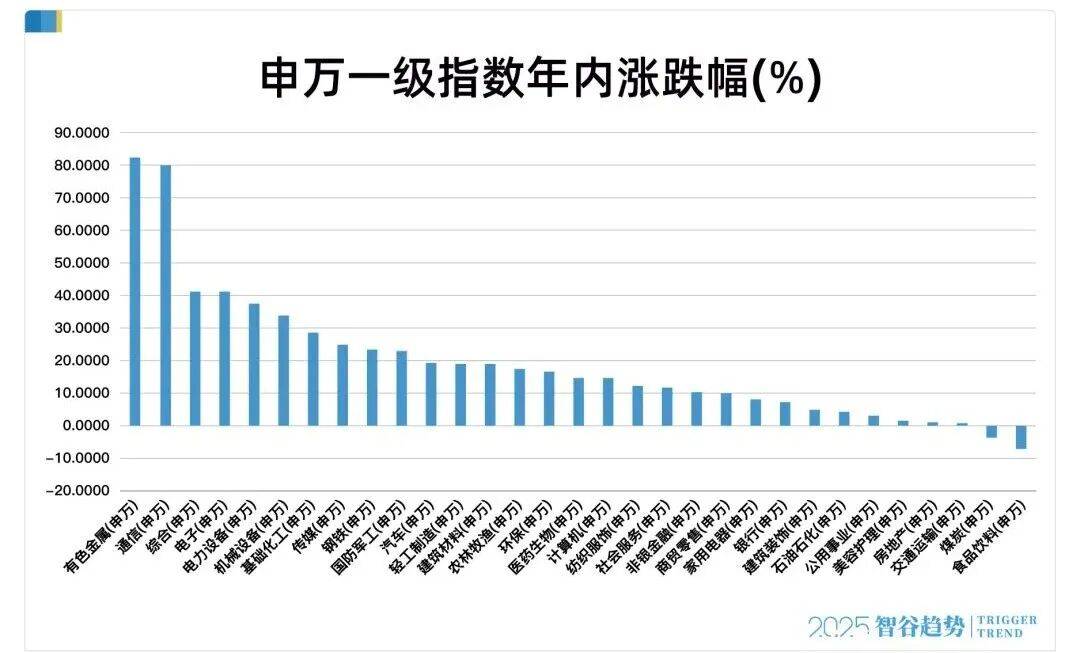
Core Viewpoint - The market is experiencing structural differentiation, with resource sectors like non-ferrous metals showing strong performance while some growth sectors face volatility [1][3]. Group 1: Market Performance - The Shenyin Wanguo Non-ferrous Metals Index has increased by 82.23% year-to-date as of December 19, 2025, outperforming other sectors including technology [1]. - Gold, silver, and copper prices have reached multiple historical highs within the year [1]. Group 2: Driving Forces Behind Resource Pricing - Three main driving forces are reshaping the pricing logic of resource products: global macro liquidity environment, new industrial demand driven by technological revolutions, and changes in pricing logic due to supply constraints [3][11]. - The Federal Reserve's monetary policy, particularly interest rate cuts, is a significant variable affecting global resource prices [4][5]. Group 3: New Industrial Demand - A new industrial revolution centered on AI and green energy is creating long-term growth opportunities for resource products [7]. - Metals like copper, aluminum, rare earths, lithium, and cobalt are transitioning from ordinary industrial materials to critical strategic resources for future industries [8]. Group 4: Investment Themes - Four main investment themes are emerging in the resource sector: - Precious metals, particularly gold, are benefiting from global liquidity shifts and geopolitical uncertainties [12]. - Industrial metals like copper and aluminum are becoming essential for green transitions [15][16]. - Energy metals and minor metals such as lithium and cobalt are closely tied to the growth of new energy vehicles and advanced industries [18]. - The chemical industry is recovering and upgrading, driven by domestic demand and new material needs [19]. Group 5: Investment Strategies - Investors are encouraged to utilize professional fund management and diversified products to navigate the complex market landscape [20][23]. - ETFs focused on strategic metals and resource sectors are highlighted as effective tools for investors looking to capitalize on specific trends [21].
嘉实基金深研多元ETF赛道,与您共赴投资新时代!
Sou Hu Cai Jing· 2025-12-17 08:15
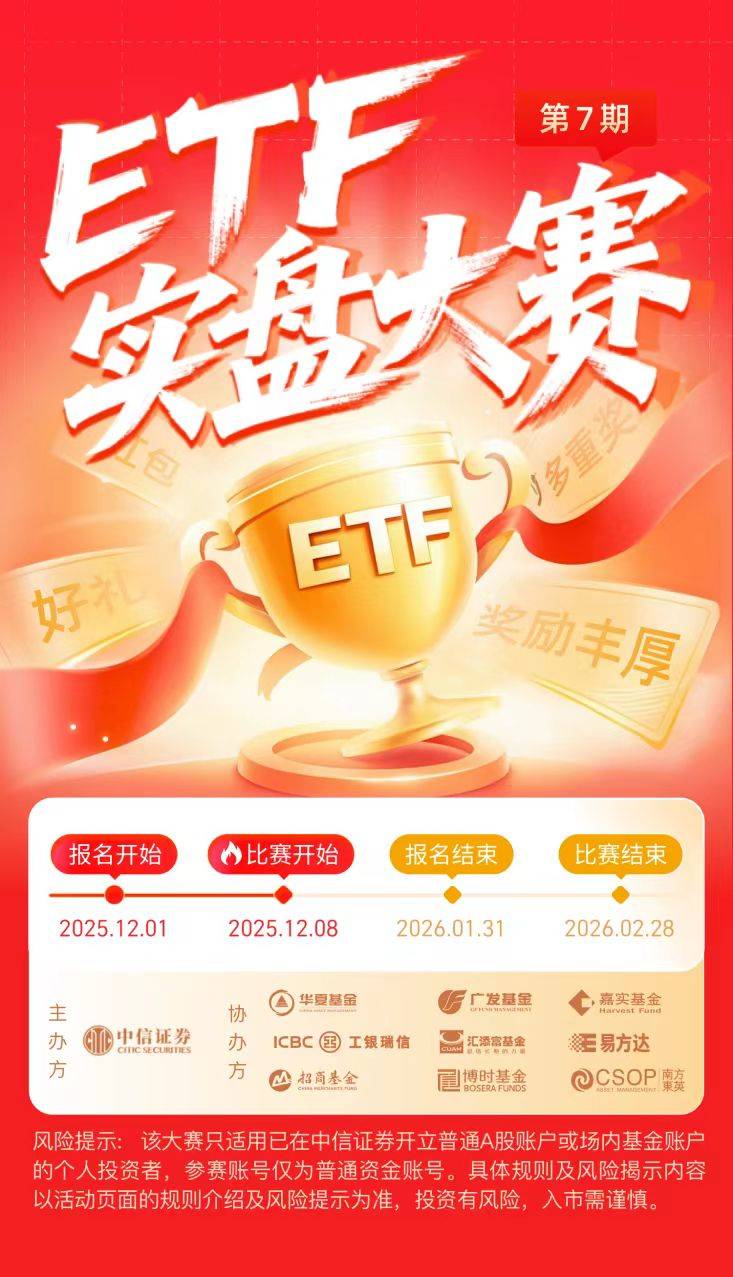
Core Insights - The article highlights the proactive role of Jiashi Fund in the ETF market, emphasizing its early entry and leadership in index investment since launching the first CSI 300 index fund in August 2005 [1] - Jiashi Fund is collaborating with CITIC Securities to host the 7th ETF live trading competition, which aims to engage investors and promote rational investment culture [1][5] Group 1: ETF Products - Jiashi Fund has selected four distinctive ETF products for the competition, providing participants with effective tools for their strategy combinations [4] - The Cash Flow ETF (159221) closely tracks the National Securities Free Cash Flow Index, focusing on companies with strong cash flow generation capabilities, making it a convenient tool for long-term value investors [4] - The Hong Kong Stock Connect Consumer ETF (520620) tracks the Hang Seng Consumer Index, encompassing various sectors of daily consumption in Hong Kong, thus offering an efficient way to invest in core consumer assets amid economic recovery and consumption upgrades [4] - The CSI 500 ETF (159922) tracks the CSI 500 Index, representing mid-cap growth stocks in A-shares, providing a quality tool for investors looking to invest in mid-cap core assets [4] - The Rare Earth ETF (516150) tracks the CSI Rare Earth Industry Index, facilitating investment in the domestic rare earth industry chain, which is crucial for sectors like new energy and high-end manufacturing [5] Group 2: Investment Culture and Strategy - Jiashi Fund's participation in the ETF live trading competition is a significant practice aimed at providing diverse investment tools and fostering a rational investment culture among investors [5] - The competition serves as a platform for investors to explore ETF allocation strategies in various market environments, promoting collaboration and knowledge exchange [5]
稀土战略价值突出,概念股集体爆发!稀土ETF嘉实(516150)大涨近7%,价格创历史新高
Mei Ri Jing Ji Xin Wen· 2025-10-13 07:18
Core Viewpoint - The A-share market experienced a significant rally in rare earth stocks, driven by strong performances from key companies and the strategic importance of rare earth elements highlighted by recent government policies [1] Group 1: Market Performance - A-share market opened lower but closed higher, with rare earth concept stocks collectively surging, including Jiuling Technology up over 26% and Galaxy Magnetics up 20% [1] - The rare earth ETF, Jia Shi (516150), saw a nearly 7% increase at closing, reaching a historical high in secondary market prices, with a year-to-date increase exceeding 89% [1] - The trading volume of the rare earth ETF surpassed 1.3 billion yuan, marking a new high since its listing [1] Group 2: Strategic Importance - The Ministry of Commerce's recent decision to implement export controls on rare earth-related technologies underscores the strategic value of rare earth elements [1] - Analysts indicate that rare earths are core resources for high-end manufacturing and strategic emerging industries, showing a resonant supply-demand dynamic [1] - China's quota management and export controls are enhancing the strategic autonomy of the industry chain, ensuring resources are directed towards high-end applications [1] Group 3: Demand and Supply Dynamics - The global green transition and dual carbon goals are driving demand for key elements like praseodymium and neodymium, leading to rapid expansion in new applications such as permanent magnet materials [1] - The strategic position of the rare earth industry chain is expected to strengthen further, providing long-term driving forces for high-end manufacturing development [1]
降息周期开启、反内卷政策助力,稀有金属布局正当时!
Sou Hu Cai Jing· 2025-09-22 08:33
Core Viewpoint - The article discusses the rising prices of lithium and rare earth metals amid the "anti-involution" trend, highlighting the performance of rare metal ETFs, particularly the 嘉实中证稀有金属ETF (562800) [1][16]. Group 1: Market Performance - The technology sector, particularly communication and electronics, has seen significant gains, with ETFs like the communication ETF (159695) and the Sci-Tech Chip ETF (588200) both exceeding 50% year-to-date [3]. - The non-ferrous metals sector has also performed well, with an annual increase of 51.05% [4]. - The rare earth ETF 嘉实 (516150) and the rare metal ETF (562800) have recorded year-to-date increases of 64.2% and 51.9%, respectively [4]. Group 2: Economic Factors - The Federal Reserve's recent interest rate cut of 25 basis points marks the beginning of a new easing cycle, which is expected to enhance liquidity and stimulate demand in the downstream sectors [6]. - The "anti-involution" policy is addressing structural supply-side issues, particularly in industries like new energy vehicles, photovoltaics, and lithium batteries [8]. Group 3: Lithium Market Insights - Lithium carbonate prices have been on the rise, with futures prices increasing over 20% since July [8]. - The lithium sector's listed companies reported a 54% year-on-year increase in net profit, totaling 37.26 billion yuan in the first half of the year [10]. - Demand for lithium is projected to reach 1.386 million tons of LCE by 2025, with a year-on-year growth of 20.4% [11]. Group 4: Rare Earth Market Insights - China holds over one-third of the global rare earth reserves and has a significant share of the global production and processing capacity [15]. - The rare earth prices have surged due to supply chain concerns and increased inventory accumulation by foreign manufacturers [15]. - Companies like 北方稀土 have reported substantial revenue growth, with a 45.2% increase in revenue and a 19-fold increase in net profit year-on-year [15]. Group 5: ETF Overview - The 嘉实中证稀有金属ETF (562800) strategically allocates 40% of its weight to small metals, including rare earths, and 20% to energy metals like lithium, nickel, and cobalt [22]. - The ETF has seen a significant increase in fund size, reaching 2.73 billion yuan, with a 119.7% increase in fund shares this year [27].






稀土ETF嘉实(516150)连续3天净流入超6.6亿元,规模创成立以来新高!
Sou Hu Cai Jing· 2025-08-26 02:38
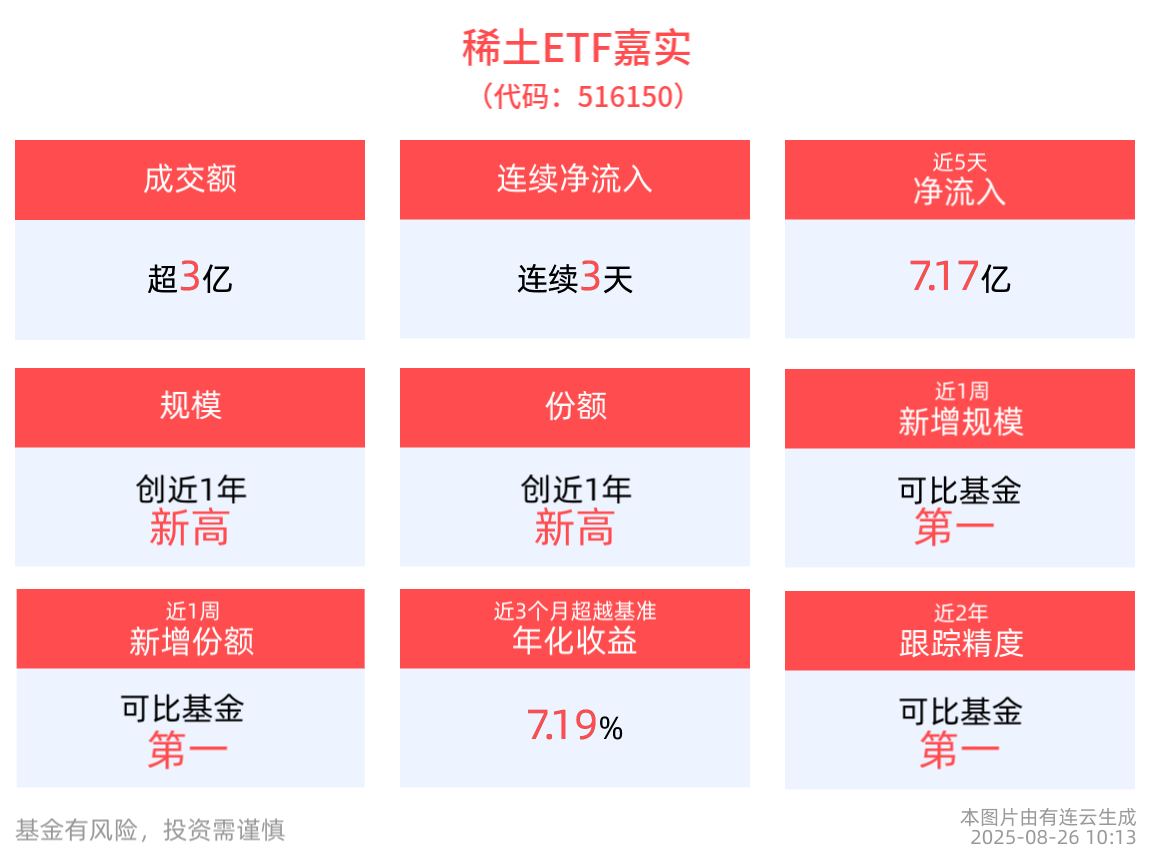
Group 1 - The core viewpoint of the news highlights the fluctuations in the rare earth industry, with the China Rare Earth Industry Index declining by 1.69% as of August 26, 2025, while the rare earth ETF managed by Harvest has seen a significant increase of 9.77% over the past week [1][4] - The rare earth ETF has recorded a trading volume of 3.78 billion yuan with a turnover rate of 5.95%, and its latest scale reached 6.436 billion yuan, marking a new high since its inception [4] - The top ten weighted stocks in the China Rare Earth Industry Index account for 59.32% of the index, with notable companies including Northern Rare Earth, Baotou Steel, and China Rare Earth [4][7] Group 2 - The recent policy issued on August 22, 2025, regarding the total quantity control management of rare earth mining and separation indicates a stricter regulatory environment, which is expected to impact production levels [5] - Analysts from Guotai Junan Securities and Everbright Securities suggest that the price increase in rare earths is driven by tightening supply and structural demand surges, leading to potential excess profits for rare earth companies [5]
稀土板块拉升 稀土ETF嘉实(516150)、稀有金属ETF(562800)强势上涨
Zhong Zheng Wang· 2025-08-07 12:24
Group 1 - The A-share market showed mixed performance on August 7, with the Shanghai Composite Index rising by 0.16% to 3639.67 points, while the ChiNext Index fell by 0.68% [1] - The rare earth sector experienced significant gains in the afternoon, with key stocks such as Zhenghai Magnetic Materials and Zhongke Magnetic Materials seeing increases of 20% and over 13% respectively [1] - The rare earth ETFs, specifically the Jiashi Rare Earth ETF (516150) and the Rare Metals ETF (562800), reported daily gains of 3.14% and 2.54%, with trading volumes of 5.81 billion yuan and 1.20 billion yuan, respectively, leading their respective categories [1] Group 2 - Recent analysis indicates that the rare earth sector is expected to maintain an upward trend due to sustained supply tightness and steady demand growth, with strong price support in the short term [2] - Long-term projections suggest that the integration of rare earth production capacity and tightening supply will make price increases more likely, while high refining costs overseas are expected to support price differentials and enhance price increase expectations [2]