
NEW HOPE(000876)

Search documents
ESG信披观察 | 预制菜概念股ESG相关报告披露率为45% 专家认为提高透明度是关键
Mei Ri Jing Ji Xin Wen· 2025-09-16 11:42
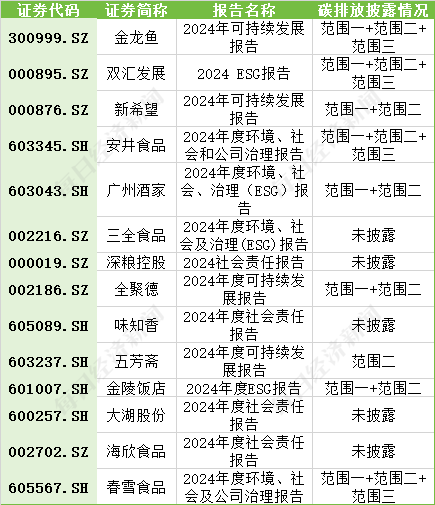
Core Viewpoint - The recent controversy surrounding pre-prepared meals has highlighted the importance of transparency and ESG (Environmental, Social, and Governance) disclosures in the food industry, particularly in relation to food safety and consumer trust [1][3][8] Group 1: Industry Overview - The A-share market has 31 companies in the pre-prepared meal sector, with 14 of them disclosing ESG reports, resulting in a disclosure rate of 45% [1] - Key issues of concern for these companies include product safety and quality, supply chain management, and climate change response [3] Group 2: ESG Disclosure and Transparency - Among the 14 companies that disclosed ESG reports, 8 reported on Scope 1 (direct emissions) and Scope 2 (indirect emissions), while only 4 reported on Scope 3 (value chain emissions) [4] - The distribution of ESG ratings among the 31 companies shows 9 rated A, 9 rated B, 8 rated C, and 5 rated D, indicating a relatively even spread [4] Group 3: Food Safety and Quality Management - The food industry is shifting focus from food safety to nutritional health, with new standards being implemented to enhance product safety [5] - Companies like New Hope and Golden Dragon Fish emphasize quality management and sustainable practices, with specific targets for reducing harmful ingredients in their products [5][6] Group 4: Supply Chain Management - Effective supply chain management is crucial for ensuring food safety, with companies implementing digital platforms for supplier lifecycle management and sustainability [7] - New Hope has established a Supplier Management Committee to oversee supplier relations, while Anji Food emphasizes the importance of small and medium enterprises in its supply chain [7] Group 5: Consumer Trust and Market Dynamics - The controversy reflects a broader food safety crisis, where transparency is essential for maintaining consumer trust and fair competition [8] - The principle of transparency is seen as a key factor in preventing market malpractices and ensuring that consumers are not misled [8]



猪肉概念下跌1.93% 主力资金净流出26股
Zheng Quan Shi Bao Wang· 2025-09-16 09:21
Market Overview - The pork concept sector declined by 1.93%, ranking among the top losers in the market, with Tianyu Biological hitting the limit down, while companies like Aonong Biological, Xinwufeng, and Juxing Agriculture also saw significant declines [1][2] - In contrast, the top gainers included Bangji Technology, Roniu Mountain, and Jingji Zhino, which rose by 2.91%, 0.46%, and 0.40% respectively [1] Capital Flow - The pork concept sector experienced a net outflow of 1.314 billion yuan, with 26 stocks seeing net outflows, and 7 stocks exceeding 50 million yuan in outflows [1] - Leading the outflows was Muyuan Foods with a net outflow of 395 million yuan, followed by Wens Foodstuffs and Aonong Biological, each with 166 million yuan in outflows [1][2] Stock Performance - The stocks with the highest net outflows included: - Muyuan Foods: -2.42% with a turnover rate of 1.66% and a net outflow of 395 million yuan - Wens Foodstuffs: -1.99% with a turnover rate of 1.21% and a net outflow of 166 million yuan - Aonong Biological: -4.30% with a turnover rate of 12.87% and a net outflow of 166 million yuan [1][2] - Conversely, stocks with net inflows included: - Roniu Mountain: +0.46% with a net inflow of 1.554 million yuan - Shennong Group: -3.22% with a net inflow of 837,650 yuan - Guangming Meat Industry: -0.81% with a net inflow of 763,560 yuan [1][2]


猪肉概念下跌1.93%,主力资金净流出26股
Sou Hu Cai Jing· 2025-09-16 09:16
Group 1 - The pork concept sector declined by 1.93%, ranking among the top declines in the concept sector, with Tianyu Biological hitting the limit down, while Aonong Biological, Xinwufeng, and Juxing Agricultural also saw significant declines [1][2] - Among the pork concept stocks, five stocks experienced price increases, with Bangji Technology, Ronioushan, and Jingji Zhino rising by 2.91%, 0.46%, and 0.40% respectively [1][2] - The pork concept sector saw a net outflow of 1.314 billion yuan from main funds, with 26 stocks experiencing net outflows, and seven stocks seeing outflows exceeding 50 million yuan [2] Group 2 - The top net outflow stock was Muyuan Foods, with a net outflow of 395 million yuan, followed by Wens Foodstuffs and Aonong Biological, each with a net outflow of 166 million yuan [2] - The stocks with the highest net inflow included Ronioushan, Shennong Group, and Guangming Meat, with net inflows of 15.54 million yuan, 8.37 million yuan, and 7.64 million yuan respectively [2][3] - The pork concept sector's outflow list included stocks like Muyuan Foods, Wens Foodstuffs, and Aonong Biological, all showing significant declines in their stock prices [2][3]
农林牧渔行业点评报告:8月大猪持续出栏去化,后市猪价不悲观
KAIYUAN SECURITIES· 2025-09-16 09:14
Investment Rating - The industry investment rating is "Positive" (maintained) [1] Core Viewpoints - The report indicates that the pig price is expected to remain stable in the future despite a decline in August due to factors such as heavy weight slaughtering and the spread of African swine fever [3][13] - The average national pig sales price in August 2025 was 13.77 yuan/kg, down 5.35% month-on-month and down 32.35% year-on-year [3][13] - The report highlights that the supply of pigs may gradually tighten in the future due to a decrease in the proportion of large pigs in stock and an increase in the proportion of large pigs being slaughtered [4][17] Summary by Sections Industry Overview - In August 2025, the national pig slaughter volume was 4.3388 million heads, an increase of 4.34% month-on-month and 5.66% year-on-year [3][13] - The report notes that the completion rate of pig slaughtering plans was 100.04% in August, with a planned increase of 3.92% in September compared to actual slaughter in August [3][13] Market Dynamics - The structure of pig slaughtering shows an increase in the proportion of large pigs (over 150kg) being slaughtered, while the proportion of large pigs in stock has decreased [4][17] - The average profit for self-breeding and self-raising pigs in August was 36.80 yuan/head, a decrease of 63.80% month-on-month [5][20] Company Performance - A total of 12 listed pig farming companies reported a combined slaughter of 15.116 million heads in August, an increase of 29.79% year-on-year [6][23] - The average sales price of pigs for major listed companies decreased month-on-month, with specific companies reporting the following prices: - Muyuan Foods: 13.51 yuan/kg, down 5.5% - Wens Foodstuffs: 13.90 yuan/kg, down 6.5% - New Hope Liuhe: 13.54 yuan/kg, down 6.9% [7][28]


畜牧ETF(159867)连续6日净流入,黄羽鸡行情逐渐升温
Xin Lang Cai Jing· 2025-09-16 07:44
Group 1 - The core viewpoint indicates that the poultry industry, particularly the yellow-feathered chicken sector, has returned to profitability since August, with individual chicken profits estimated at 3-4 yuan, potentially offsetting earlier losses in the year [1] - The Pacific Securities report highlights a significant turnaround in the yellow chicken industry's integrated breeding model, which has led to substantial profits in August, contrasting with previous losses [1] - The recent increase in yellow chicken prices is attributed to low production capacity and a recovery in consumer demand, with expectations for continued price rebounds as the autumn and winter consumption peak approaches [1] Group 2 - As of August 29, 2025, the top ten weighted stocks in the China Securities Livestock Breeding Index account for 65.57% of the index, including major companies such as Muyuan Foods, Wens Foodstuff Group, and Haida Group [2]


新希望金融科技CEO徐志华:零售信贷风险释放天然呈现“非匀速”特性,盲目叫停会浪费早期风险成本
Mei Ri Jing Ji Xin Wen· 2025-09-16 07:13
Core Insights - The "Future Banking Conference 2025" hosted by New Hope Financial Technology focused on key issues in the banking industry such as net interest margin, risk management, interbank competition, and digital transformation, attracting over 600 executives from more than 200 banks nationwide [1] Group 1: Retail Credit Risk Management - New Hope Financial Technology's CEO, Xu Zhihua, emphasized that retail credit does not exist in a "zero-risk" state but rather has characteristics of "small amounts, dispersion, and allowance for a certain level of risk" [1][2] - Xu's observations are based on the 1.2 trillion yuan in loans facilitated by New Hope Financial Technology, primarily consisting of small loans of 10,000, 20,000, and 30,000 yuan [2] - A mathematical model presented by Xu identified three key characteristics of retail credit risk: asset distribution shows a left-skewed distribution of approved customers, bad debts spread linearly from low to high-risk customers, and a stable inverse relationship between final bad debt rates and model scores [2][3] Group 2: Risk Release Characteristics - Xu noted that the risk release of retail credit assets is inherently "non-uniform," with a rapid increase in risk typically occurring between 18 to 24 months after business initiation [3] - Many banks have historically paused operations during this critical phase due to rising risk indicators, potentially missing out on development opportunities [3] Group 3: Long-term Strategy and Profitability - A simulation of a single batch of credit assets revealed that in certain pricing and risk scenarios, losses could occur in the third year, leading to a potential short-term focus that could overlook long-term strategic value [3][4] - Continuous lending and borrowing processes over a 10-year period showed that net yield curves fluctuate in the first few years but stabilize later, highlighting the importance of maintaining business development for long-term profitability [4] - Xu likened the management of retail credit to riding a bicycle, where initial instability gives way to steady progress once momentum is achieved, underscoring the need for a long-term, stable development strategy [4]
2025中国企业500强发布!四川17家公司榜上有名
Sou Hu Cai Jing· 2025-09-16 03:28
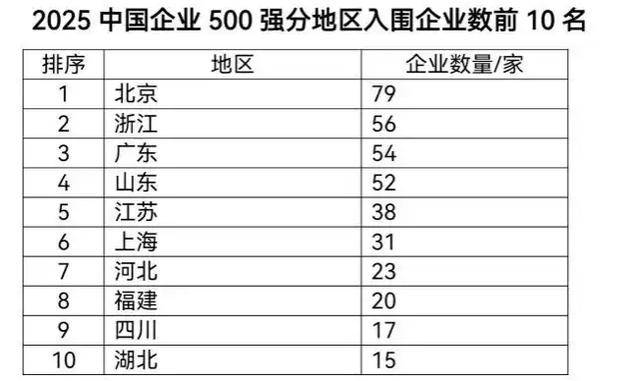
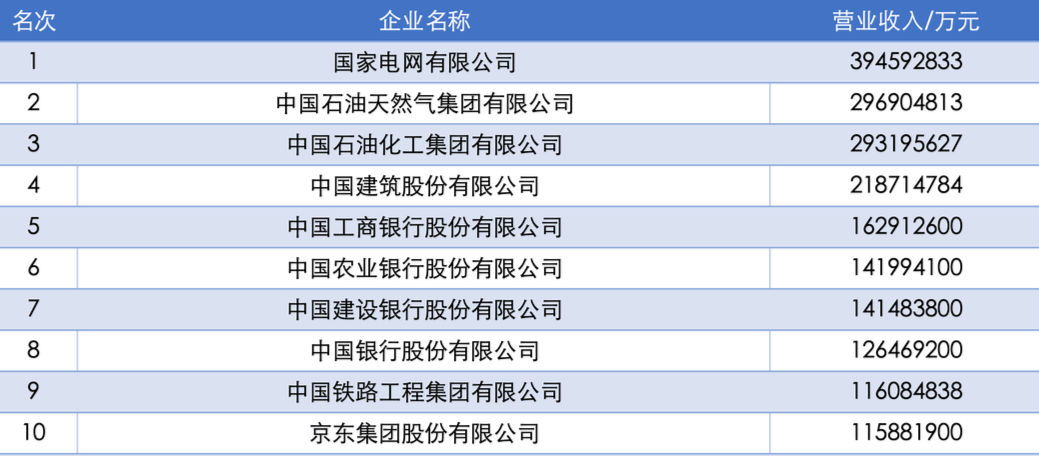
Core Insights - The "China Top 500 Enterprises" list was released for the 24th consecutive time, highlighting growth in total scale, improved economic efficiency, increased innovation, optimized industrial structure, and enhanced development coordination [1] Group 1: Overall Performance - The total revenue of the top 500 enterprises reached 110.15 trillion yuan, an increase from the previous year [1] - The threshold for entry into the list rose for the 23rd consecutive time to 47.96 billion yuan, an increase of 579 million yuan [1] - Total assets amounted to 460.85 trillion yuan, reflecting a growth of 7.46% [1] - The number of enterprises with revenues exceeding 100 billion yuan increased to 267, with 15 companies surpassing 100 billion yuan in revenue [1] Group 2: Regional Distribution - The top five regions with the highest number of enterprises in the list are Beijing (79), Zhejiang, Guangdong (54), Shandong (52), and Jiangsu (38) [2] - A total of 30 provinces (autonomous regions and municipalities) are represented in the top 500 enterprises list [2] Group 3: Notable Companies from Sichuan - Sichuan has 17 companies listed in the top 500, with notable rankings including New Hope Group (ranked 103), Shudao Investment Group (ranked 110), and Tongwei Group (ranked 118) [3] - New Hope Group is the highest-ranked company from Sichuan, with a revenue of 26.83 billion yuan [3]



中国企业500强出炉!这些成都企业上榜
Sou Hu Cai Jing· 2025-09-16 01:13
Group 1 - The "China Top 500 Enterprises" list was released on September 15, with 17 companies from Sichuan making the list, highlighting the region's economic strength [1][2] - New Hope Group ranked highest among Sichuan companies at 103rd with a revenue of approximately 268.27 billion yuan [1][4] - The total revenue of the 2025 China Top 500 Enterprises reached 11.015 trillion yuan, with the entry threshold rising to 47.96 billion yuan, an increase of 579 million yuan [2][3] Group 2 - The number of enterprises with revenues exceeding 100 billion yuan increased to 267, accounting for 53.4% of the list [2][3] - The total assets of the 2025 China Top 500 Enterprises amounted to 46.085 trillion yuan, reflecting a growth of 7.46% [3] - The list indicates a steady improvement in the quality of development among large enterprises, which are actively responding to complex external environments [3]
直播预告:神经纤维瘤病的精准治疗与新希望
Ren Min Wang· 2025-09-15 07:50
Core Viewpoint - Neurofibromatosis (NF) is a genetic tumor syndrome affecting the nervous system, characterized by symptoms such as café-au-lait spots, hearing loss, and physical lumps, significantly impacting patients' quality of life. Current treatment primarily involves surgery, which is challenging and risky, leading to a demand for more effective therapies [1]. Group 1: Expert Insights - Li Wenbin, the director of the Tumor Comprehensive Treatment Center at Beijing Tiantan Hospital, is a key expert in the field, specializing in the comprehensive treatment of neuro-oncological conditions, including gliomas and brain metastases [2]. - Li Wenbin has been involved in two national key innovative drug Phase I clinical trials, indicating a focus on advancing treatment options for neurofibromatosis and related conditions [2]. Group 2: Live Broadcast Information - The live session featuring Li Wenbin will take place on September 16 from 14:00 to 15:00, providing insights into the scientific understanding of neurofibromatosis, the latest treatment methods, and standardized interventions [1]. - Viewers can access the live broadcast by downloading the People's Good Doctor App and navigating to the "Famous Doctor Live" section [3].
固态电池,凝聚行业未来发展新希望
Zhong Guo Qi Che Bao Wang· 2025-09-15 07:31
Core Insights - The 21st China Automotive Industry Development (Teda) International Forum was held in Tianjin from September 11 to 14, 2025, focusing on the theme "Increasing Momentum, Opening New Chapters, and Going Global" [1] - A specialized forum on "Green New Solutions: Solid-State Battery Industrialization and Next-Generation Battery Technology Layout" was conducted, where industry experts discussed technological trends and key breakthroughs [1] Group 1: Battery Technology Development - The current types of power batteries include liquid batteries, solid-liquid hybrid batteries, and all-solid-state batteries, with most vehicles using liquid or solid-liquid hybrid batteries [3] - The transition to all-solid-state batteries is seen as a significant trend, requiring innovation to address new challenges in the industry [3] - All-solid-state batteries face production challenges and high costs, with current costs being 5-10 times higher than liquid batteries, indicating a need for cost control and mass production solutions [4] Group 2: Industry Perspectives - The development of all-solid-state batteries is aligned with national strategies and customer demands, representing an important direction for technological advancement [5] - The global focus on all-solid-state battery development is increasing, with various countries and sectors pushing for multiple technological routes [5] - The application scenarios for power batteries are expanding beyond electric vehicles to include low-altitude travel and humanoid robots, necessitating higher safety standards [6] Group 3: Strategic Consensus - The "Green New Solutions Think Tank Consensus" emphasizes the need for multi-technology routes to advance key technologies in electric and hybrid vehicles [8] - It calls for strengthening core technology breakthroughs in solid-state batteries and building a collaborative industrial ecosystem [8] - The consensus also highlights the importance of supportive industrial policies to facilitate the green transformation of the automotive industry [8]
