
SANHUA(002050)

Search documents
从通道到枢纽:中资券商的港股大航海时代
市值风云· 2026-02-11 10:12
Core Viewpoint - The Hong Kong stock market has become the most comprehensive market for foreign capital to allocate Chinese assets, providing a "one-stop" opportunity for international investors to access China's growth [3][4]. Group 1: Market Dynamics - In 2024, the Hong Kong stock market raised approximately HKD 87.6 billion, a year-on-year increase of 89% [4]. - In 2025, the market saw a significant surge in IPO fundraising, reaching HKD 2,856.93 billion, a year-on-year increase of 224%, reclaiming the top position globally for IPO fundraising [4]. - The number of companies waiting for IPOs in Hong Kong has exceeded 350, indicating sustained capital vitality in the market [4]. Group 2: Sectoral Trends - In 2025, 117 companies successfully listed on the Hong Kong stock market, with new economy sectors like hard technology (27%), healthcare (23%), and new consumption (25%) becoming the main contributors [5][7]. - The traditional sectors such as infrastructure and real estate are gradually declining in proportion [5]. Group 3: Role of Chinese Securities Firms - The A+H listing model became a powerful engine for the Hong Kong IPO market in 2025, with 19 A-share companies raising nearly HKD 1.4 billion, contributing to nearly half of the total fundraising [8]. - Chinese securities firms have transitioned from participants to dominant players in the market, with a market share of approximately 56% among the top ten IPO underwriters [8][10]. - The number of licensed Chinese securities firms in Hong Kong has increased from 8 in 2007 to 111 by 2024, indicating significant growth in the sector [10]. Group 4: Competitive Advantages - Chinese securities firms leverage their "home advantage" and offer comprehensive end-to-end solutions, from identifying new economy companies for listing to providing seamless A+H share services [10]. - The case of CATL's secondary listing in Hong Kong exemplifies the shift of Chinese firms from "supporting roles" to "pricing leaders" in major IPOs [11][13]. - The independent service capability of Chinese securities firms is highlighted by the successful IPO of Sanhua Intelligent Controls, which did not hire foreign underwriters [13]. Group 5: Financial Performance - The brokerage industry is expected to see significant profit increases in 2026, with CITIC Securities projected to earn HKD 30.051 billion, a year-on-year increase of 38.46% [18]. - Other firms like Guotai Junan and GF Securities are also expected to report substantial profit growth [18]. Group 6: Strategic Transformation - A trend of capital increase among Chinese securities firms is evident, with at least five firms announcing capital increases totaling nearly HKD 20 billion, marking a new high [20][21]. - This capital influx indicates a strategic shift towards higher-yield capital business, moving from a low-risk, low-return model to a more integrated service provider role [21][22]. - The Hong Kong market serves as a strategic training ground for Chinese securities firms to enhance their capabilities in pricing, market-making, and risk management [22][23].





主力个股资金流出前20:新易盛流出30.50亿元、中际旭创流出29.64亿元
Jin Rong Jie· 2026-02-11 07:17
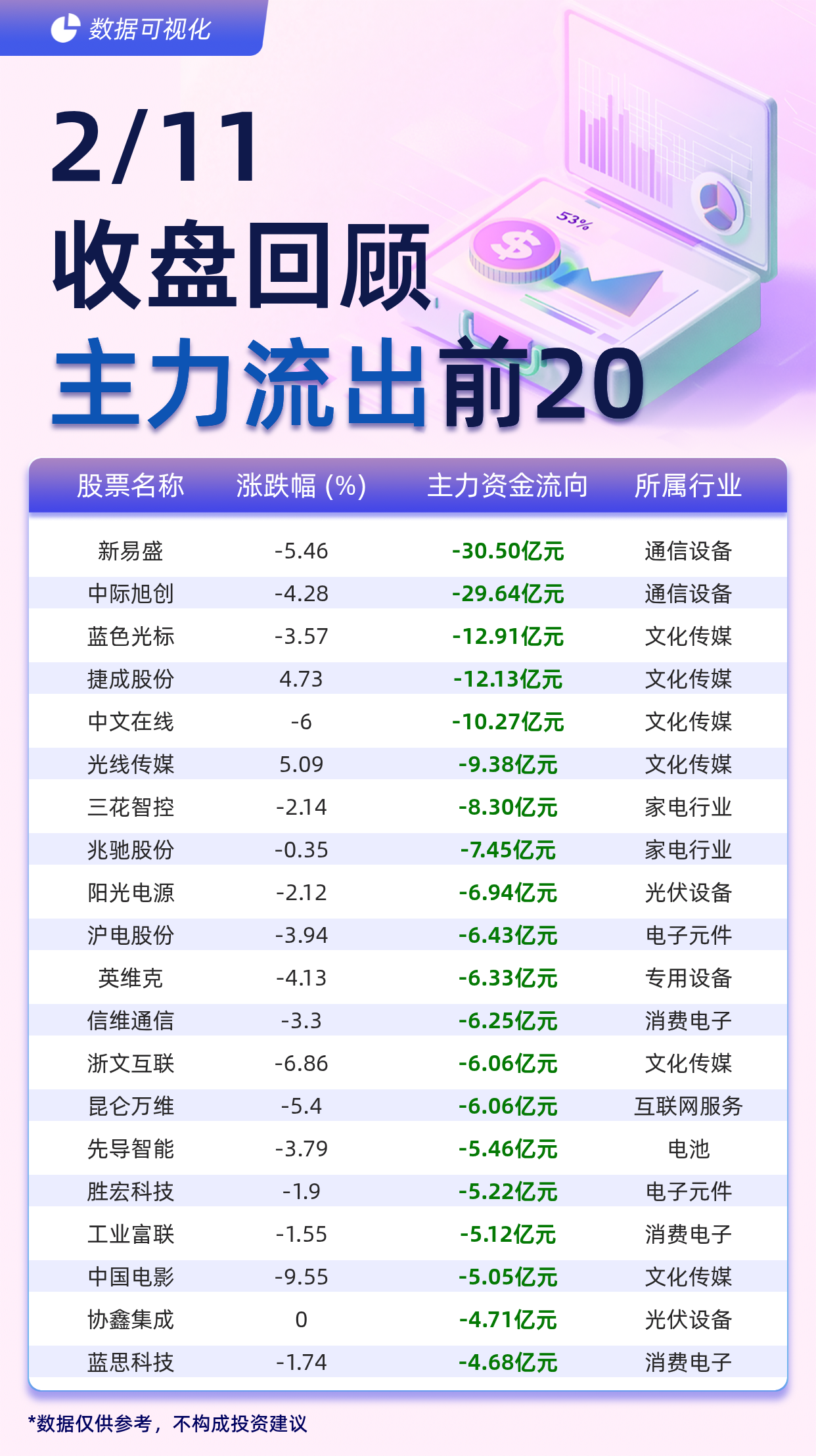
Core Viewpoint - The data indicates significant outflows of main funds from various stocks, particularly in the communication equipment and cultural media sectors, highlighting potential investment risks in these areas [1][2][3] Group 1: Stock Performance and Fund Flow - The stock with the highest outflow is Xinyiseng, with a fund outflow of 30.50 billion yuan and a decline of 5.46% [2] - Zhongji Xuchuang follows closely with a fund outflow of 29.64 billion yuan and a decrease of 4.28% [2] - Other notable stocks with significant outflows include BlueFocus with 12.91 billion yuan and a drop of 3.57%, and Jiecheng Co. with 12.13 billion yuan but an increase of 4.73% [2] - Cultural media stocks such as Chinese Online and Guanghua Media also experienced outflows of 10.27 billion yuan (down 6%) and 9.38 billion yuan (up 5.09%), respectively [2][3] Group 2: Sector Analysis - The communication equipment sector is heavily impacted, with both Xinyiseng and Zhongji Xuchuang showing substantial fund outflows [2] - The cultural media sector also shows mixed performance, with some stocks like Guanghua Media gaining while others like Chinese Online are declining [2][3] - The home appliance industry, represented by Sanhua Zhikong and Zhao Chi Co., shows minor outflows of 8.30 billion yuan and 7.45 billion yuan, respectively, with slight declines in stock prices [2][3]



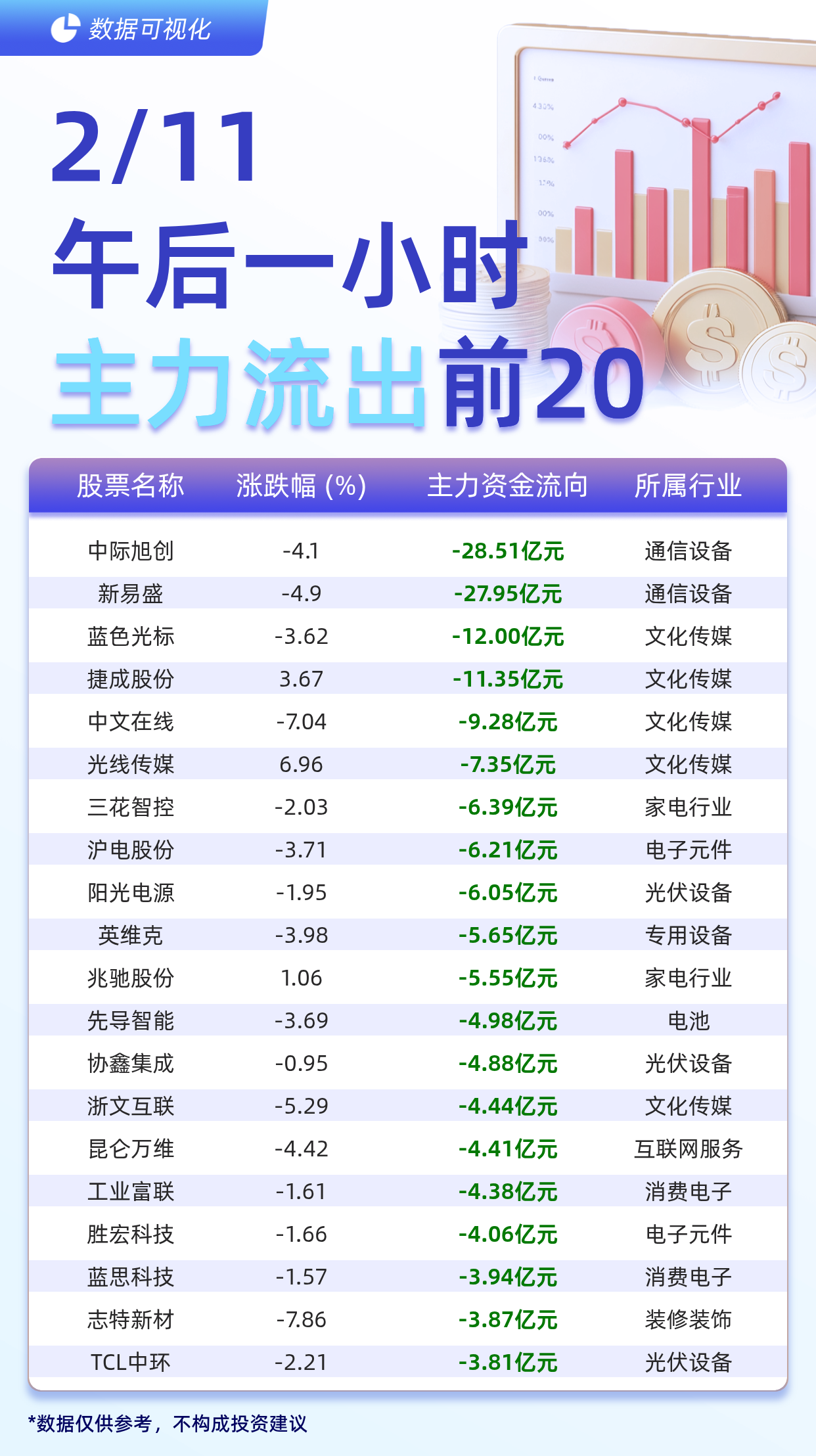
主力个股资金流出前20:中际旭创流出28.51亿元、新易盛流出27.95亿元
Jin Rong Jie· 2026-02-11 06:20
Core Viewpoint - The data indicates significant outflows of capital from various stocks, particularly in the communication equipment and cultural media sectors, suggesting potential investor concerns or market volatility [1][2][3] Group 1: Major Stocks with Capital Outflows - Zhongji Xuchuang experienced a capital outflow of 2.851 billion yuan, with a decline of 4.1% in stock price [2] - Xinyi Sheng saw a capital outflow of 2.795 billion yuan, with a stock price drop of 4.9% [2] - BlueFocus Media had a capital outflow of 1.2 billion yuan, with a decrease of 3.62% in stock price [2] - Jiecheng Co. reported a capital outflow of 1.135 billion yuan, with a stock price increase of 3.67% [2] - Zhongwen Online faced a capital outflow of 0.928 billion yuan, with a decline of 7.04% in stock price [2] Group 2: Sector Analysis - The communication equipment sector, represented by Zhongji Xuchuang and Xinyi Sheng, shows significant capital outflows, indicating potential challenges in this industry [2][3] - The cultural media sector, including companies like BlueFocus Media and Zhongwen Online, also reflects notable capital outflows, suggesting investor caution in this area [2][3] - The home appliance industry, represented by Sanhua Intelligent Control and Zhaochi Co., shows mixed performance with capital outflows, indicating varying investor sentiment [2][3]


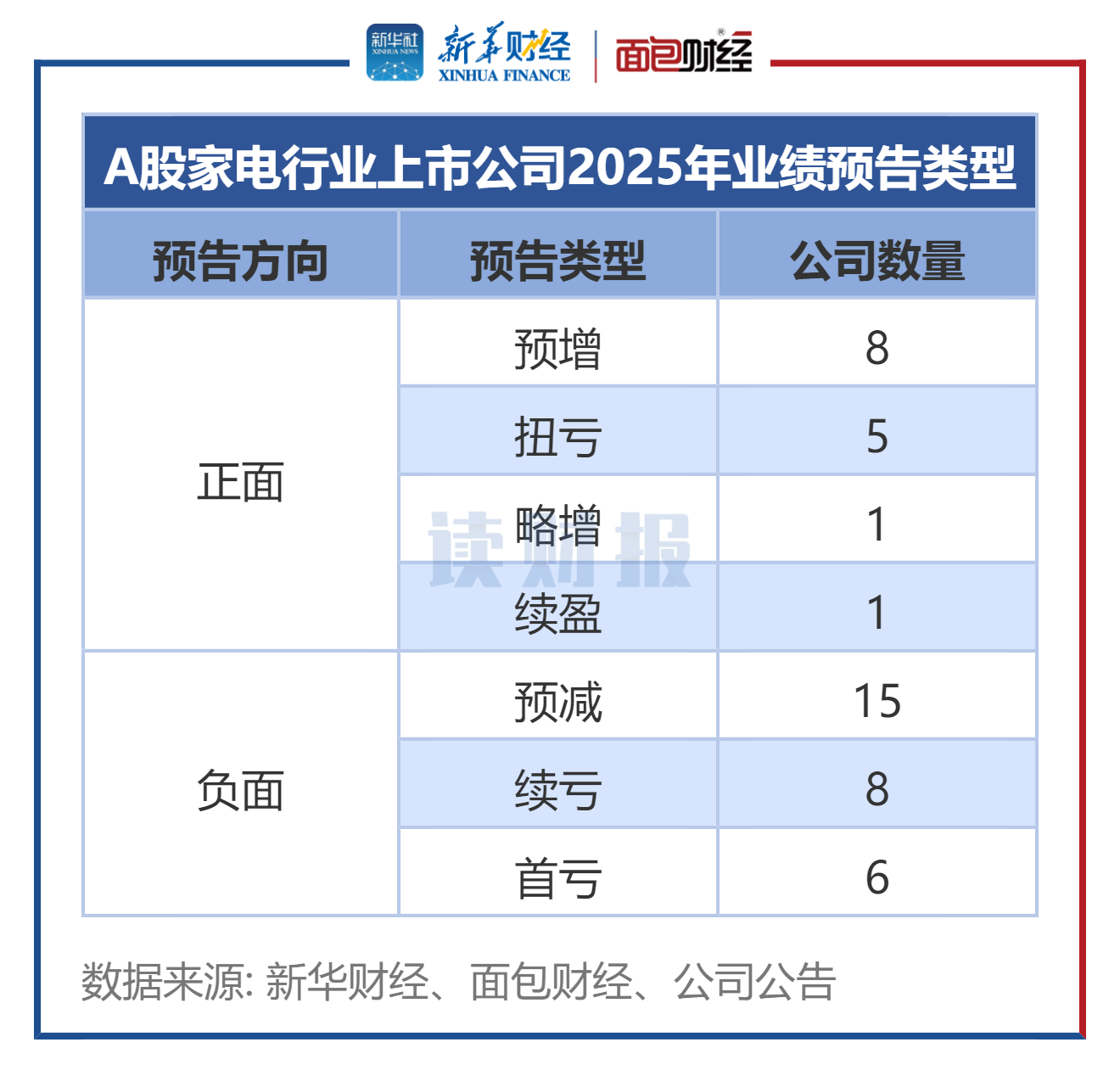
家电行业2025年业绩预告透视:近七成公司预盈,三花智控、科沃斯利润超10亿元
Xin Hua Cai Jing· 2026-02-11 00:44
Core Viewpoint - The A-share home appliance industry shows a mixed performance in the 2025 earnings forecasts, with 44 out of 103 listed companies having disclosed their projections, indicating both positive and negative trends in profitability [1][2]. Group 1: Positive Earnings Forecasts - Among the 44 companies that disclosed their 2025 earnings forecasts, 15 companies are expected to have positive performance, including profit increases, slight increases, turnaround from losses, and continued profitability [1][2]. - Specifically, 8 companies forecast profit increases, 5 companies expect to turn losses into profits, 1 company anticipates a slight increase, and 1 company expects to maintain profitability [2]. - Approximately 68.18% of the 30 companies that are expected to be profitable, with 2 companies, Sanhua Intelligent Controls and Ecovacs, projecting net profits exceeding 1 billion yuan [3]. Group 2: Leading Companies in Profit Forecasts - Sanhua Intelligent Controls is expected to achieve a net profit of 3.874 billion to 4.649 billion yuan in 2025, representing a year-on-year growth of 25% to 50% [7]. - The growth for Sanhua is attributed to its strong market position in the refrigeration and air conditioning components sector and its expansion in the automotive parts business [7]. - Ecovacs anticipates a net profit of 1.7 billion to 1.8 billion yuan, with a year-on-year increase of 110.90% to 123.30%, driven by product innovation and market expansion strategies [10]. Group 3: Negative Earnings Forecasts - A total of 14 companies are expected to report losses in 2025, with the top three companies projected to incur the largest losses being Deep Kangjia A, Qinsun Shares, and Marsman [11][13]. - Deep Kangjia A forecasts a net loss of 12.581 billion to 15.573 billion yuan, primarily due to significant impairment provisions and a decline in revenue from its consumer electronics business [13][14]. - Other companies like Marsman and Aishida are also expected to report substantial losses, indicating a challenging environment for certain segments within the home appliance industry [14].

家电行业2025年报业绩前瞻:以旧换新催化延续,海外产能陆续达产出口链盈利改善
Shenwan Hongyuan Securities· 2026-02-10 09:31
Investment Rating - The report maintains a positive outlook on the home appliance industry, particularly for major players in the white goods sector, indicating a favorable investment environment for 2025 [3][5][6]. Core Insights - The home appliance sector is expected to benefit from the continuation of the "trade-in" policy and improvements in overseas production capacity, leading to enhanced profitability in the supply chain [2][5]. - The report highlights three main investment themes: 1. **Dividend**: Major white and black appliance companies are characterized by low valuations, high dividends, and stable growth, providing a high margin of safety and significant elasticity in stock prices [6][7]. 2. **Technology**: Core component manufacturers are transitioning into emerging tech fields such as robotics and semiconductor cooling, seeking cross-industry growth [7]. 3. **Export**: Recovery in export demand and sustained domestic sales of new products, particularly in the small appliance sector, are expected to drive growth [7]. Summary by Sections 1. White Goods and Components - In 2025, the air conditioning sector is projected to produce 195.37 million units, a 3% year-on-year decline, while sales are expected to reach 198.39 million units, down 1% year-on-year, with domestic sales increasing by 1% [5][13]. - The average price of white goods is declining due to high base effects from the trade-in policy, with air conditioning prices dropping by 13% year-on-year [23][24]. 2. Kitchen Appliances - The kitchen appliance sector is experiencing a recovery driven by real estate and trade-in policies, with online sales of range hoods and gas stoves increasing by 7.9% and 1.7% respectively in 2025 [33][34]. - Major companies like Boss Electric and Vatti are leveraging trade-in policies to boost sales, with Boss Electric maintaining a leading market share in range hoods [35][36]. 3. Small Appliances - The small appliance sector is seeing a revival due to the trade-in policy, with significant growth in cleaning appliances, although overall market consumption remains subdued [6][7]. - Companies like Roborock and Ecovacs are expected to benefit from high demand for new products, with projected revenue growth of 34% and 12% respectively in Q4 2025 [5][7]. 4. New Displays and Lighting - The emerging display sector is at a turning point, while the lighting industry is anticipated to see growth as it awaits market recovery [6][7]. - Companies like Hisense and OP Lighting are expected to experience revenue declines in Q4 2025, with projections of -10% and -2% respectively [6][7]. 5. Investment Highlights - The report recommends a combination of leading white goods companies such as Haier, Midea, and Gree, along with Hisense, as they are currently undervalued and offer stable growth prospects [6][7]. - The report also emphasizes the importance of component manufacturers adapting to new technologies and markets, with companies like Huaxiang and Sanhua expected to see significant growth in their respective sectors [7][29][30].





收盘丨创业板指跌0.37%,传媒板块全线爆发
Di Yi Cai Jing· 2026-02-10 07:20
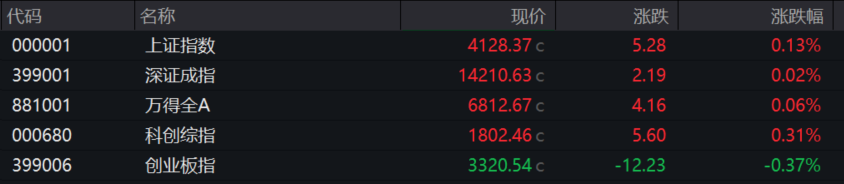
Market Performance - The film and television, media, and short drama game sectors saw significant gains, while cultivated diamonds, gold concepts, liquor, and photovoltaic equipment sectors declined [1] - The media sector experienced a surge with over 10 stocks hitting the daily limit up, including Duoke Culture, Zhongwen Online, and Rongxin Culture [1] Stock Performance - Notable gainers included: - Duoke Culture: +20.03% at 13.90 - Zhongwen Online: +20.01% at 42.34 - Rongxin Culture: +20.00% at 50.69 - Liujin Technology: +16.82% at 16.25 - Zhongxin Publishing: +10.93% at 34.70 [2] - Conversely, the photovoltaic equipment sector saw declines, with Guosheng Technology down over 9% and Shuangliang Energy down over 7% [3][4] Market Activity - The total trading volume in the Shanghai and Shenzhen markets was 2.11 trillion, a decrease of 143.9 billion from the previous trading day, with over 3,100 stocks declining [5] - As of the market close, the Shanghai Composite Index rose by 0.13%, the Shenzhen Component Index increased by 0.02%, while the ChiNext Index fell by 0.37% [6] Capital Flow - Main capital inflows were observed in the media, computer, and pharmaceutical sectors, while there were outflows from power equipment, non-bank financials, and retail sectors [7] - Specific stocks with significant net inflows included: - Light Media: 2.957 billion - Zhongwen Online: 2.079 billion - Sanhua Intelligent Control: 1.444 billion [7] Institutional Insights - CITIC Securities maintains an optimistic outlook on precious and non-ferrous metal prices through 2026 [8] - China Galaxy Securities views the current moment as a new starting point for the storage chip sector [8] - Huatai Securities is optimistic about the continued global market share growth of domestic engineering machinery manufacturers [8]


2025年全球人形机器人行业竞争分析 中国领跑硬件与集成端【组图】
Qian Zhan Wang· 2026-02-10 07:12
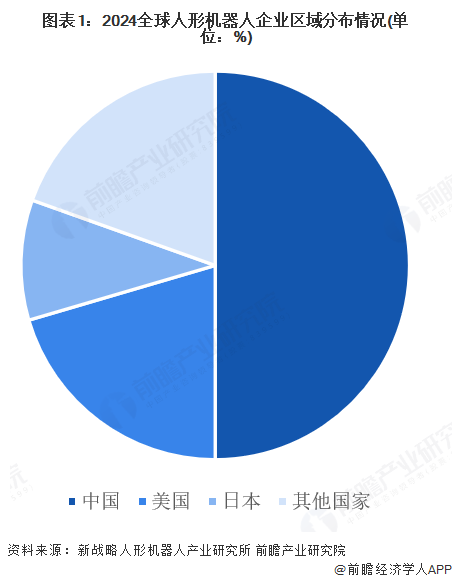
Core Insights - The global humanoid robot industry is predominantly led by China, which houses over 110 companies, accounting for more than 50% of the total 220 humanoid robot manufacturers worldwide [1] - China excels in hardware and integration segments, while the US leads in the "brain" segment, focusing on AI models and software [4][5] - China has filed approximately five times more humanoid robot patents than the US, with a total of 7,705 patents, indicating a strong emphasis on innovation and technology development [6] - The competition among China, the US, and Japan in the humanoid robot industry is characterized by distinct strategies and market focuses [9] Industry Overview - Major listed companies in China's humanoid robot sector include Huichuan Technology, Sanhua Intelligent Control, Lens Technology, Hengli Hydraulic, Top Group, Linying Intelligent Manufacturing, Zoomlion Heavy Industry, and Jinli Permanent Magnet [1] - The global humanoid robot industry is expected to reach a market size of 861 billion yuan by 2027, with China aiming for a fully controllable supply chain and over 70% localization of core components [9][11] Competitive Landscape - Chinese companies like Zhiyuan Robotics and UTree Technology are rapidly advancing in mass production and cost control, while US firms like Boston Dynamics and Tesla focus on core technology breakthroughs [11][12] - The strategic direction for Chinese firms includes low-cost strategies to expand into consumer and industrial markets, while US companies are investing heavily in AI and technology development [11] - Japan's approach is centered on precision manufacturing and specialized components, targeting healthcare and industrial applications [9][11] Patent and Innovation - China leads in humanoid robot patent applications, with 7,705 patents compared to the US's 1,561 and Japan's 1,102, showcasing its dominance in core technology areas [6] - The focus of Chinese patents includes body structure, intelligent perception, and drive control, indicating a comprehensive approach to technology development [6] Market Projections - By 2027, the humanoid robot market is projected to achieve significant growth, with China aiming for a market scale of 861 billion yuan and the US targeting over 40% of the global market share [9][11]




智驾、机器人双周报1:Tesla物理AI战略全面提速
HTSC· 2026-02-09 13:35
Investment Rating - The report maintains an "Overweight" rating for the automotive and technology sectors [5]. Core Insights - Tesla's Q4 gross margin exceeded expectations at 20.1%, marking a significant recovery in profitability despite a decline in vehicle deliveries [10][12]. - The company is accelerating its transition towards a "physical AI" strategy, with a focus on autonomous driving and robotics [10][13]. - The FSD (Full Self-Driving) subscription model is set to replace the one-time purchase option, reflecting confidence in the technology's future penetration [14][15]. - Tesla's energy business continues to show strong growth, with a record gross profit margin of 28.6% [12]. Summary by Sections Industry Perspective - Tesla's Q4 performance highlights a shift towards physical AI, with a focus on autonomous driving and robotics [10]. - The automotive sector is facing delivery pressures, but profitability is recovering, particularly in the energy business [10][12]. - The global regulatory framework for L4 autonomous driving is evolving, which may benefit companies with global compliance capabilities [19]. Key Recommendations - Recommended stocks include Xpeng Motors, Coboda, SOTON, Horizon Robotics, Top Group, Hesai Technology, Minth Group, and Yinlun [7]. - The report emphasizes the potential for companies with overseas production capacity and mass delivery capabilities to gain a stronger market position [10]. Financial Performance - Tesla's Q4 revenue was $24.9 billion, slightly above market expectations, with a year-over-year decline of 3% [10][12]. - The energy segment achieved a record gross profit of $1.1 billion, contributing to a 25% year-over-year revenue increase [12]. - The company plans to invest over $20 billion in capital expenditures in 2026, the highest in its history, focusing on new factories and AI infrastructure [13]. Robotics and Autonomous Driving - The Optimus robot is entering mass production, with the Fremont production line being repurposed for this purpose [18]. - The Robotaxi initiative is progressing, with plans for Cybercab production to start in April [13][18]. - The report notes the increasing importance of the robotics software ecosystem and the potential for public showcases, such as the Spring Festival, to enhance visibility [23]. Market Trends - The report highlights the trend of platformization in the Robotaxi sector, with companies like Uber and Alipay entering the market [21]. - Significant capital movements and strategic integrations are occurring in the L4 commercial vehicle sector, indicating a rapid acceleration towards commercialization [22].




绿的谐波:公司与三花智控合作的项目请以上市公司公告为准

Zheng Quan Ri Bao· 2026-02-09 12:19
证券日报网讯 2月9日,绿的谐波在互动平台回答投资者提问时表示,公司与三花智控合作的项目请以 上市公司公告为准。 (文章来源:证券日报) ...
智驾、机器人双周报1:Tesla物理AI战略全面提速-20260209
HTSC· 2026-02-09 11:50
Investment Rating - The report maintains an "Overweight" rating for the automotive and technology sectors [5]. Core Insights - Tesla's Q4 gross margin exceeded expectations at 20.1%, driven by a strong performance in the energy business, despite a decline in net profit due to Bitcoin devaluation and increased stock-based compensation [2][10]. - The report emphasizes the acceleration of Tesla's physical AI transformation strategy, with a focus on autonomous driving and robotics [10][13]. - The global regulatory framework for Level 4 (L4) autonomous driving is rapidly forming, which is expected to benefit companies with global compliance capabilities [3][19]. Summary by Sections Industry Perspective - Tesla's Q4 performance shows a gross margin of 20.1%, significantly above the expected 17.0%, marking the highest level in two years [10][12]. - The automotive delivery faced pressure, with a total of 418,000 vehicles delivered in Q4, a year-over-year decline of 16% [12]. - The energy business continues to thrive, with a record gross profit of $1.1 billion and a gross margin of 28.6% [12]. Autonomous Driving - Tesla's Full Self-Driving (FSD) will transition to a subscription model, eliminating the one-time purchase option, reflecting confidence in the FSD experience and future penetration [14]. - The Robotaxi fleet in Austin has begun operating with a small number of vehicles without safety drivers, marking a significant step towards fully autonomous operation [16]. - Tesla has established a data center in China to support the FSD rollout without the need for data to leave the country [17]. Robotics - The Optimus Gen3 robot is set to debut in Q1 2026, with production lines being repurposed from Model S/X to focus on robotics [18]. - The robotics software ecosystem is evolving, with significant advancements in control systems that enhance autonomous capabilities [23]. - The report highlights the increasing attention on the robotics supply chain as companies prepare for mass production [18]. Market Recommendations - Key stock recommendations include Xiaopeng Motors, Coboda, SOTON, Horizon Robotics, Top Group, Hesai Technology, Minth Group, and Yinlun [7]. - The report suggests a focus on companies with strong production capabilities and those positioned to benefit from the shift towards robotics and autonomous driving [10][18].