IFLYTEK(002230)

Search documents
科技赋能残障群体多领域项目落地,2025年AI助残创新创意大赛圆满收官
Hua Xia Shi Bao· 2025-09-05 08:52
Group 1 - The AI Assistive Innovation and Creativity Competition 2025, hosted by the China Disabled Persons' Federation and iFlytek, concluded with a focus on integrating AI technology with the needs of disabled individuals, covering areas such as hearing, vision, mobility, employment, and barrier-free environment construction, attracting 76 outstanding projects [1] - The competition featured dual tracks for innovation and creativity, encompassing all stages from concept design to practical application, with 16 teams advancing to the finals showcasing significant technological achievements, including AI-based hearing assistance systems and vocational training platforms for disabled individuals [1] - iFlytek aims to create a better world for disabled individuals through AI technology, emphasizing the importance of collaboration with disabled users in the development of technology to ensure precise adaptation [1] Group 2 - iFlytek's projects not only achieved important technological breakthroughs but also demonstrated broad application prospects in business models and social benefits, reflecting the government's ongoing support for assistive technology for disabled individuals [2] - The awarded projects will be showcased at the China International Welfare Expo, with plans for incubation and application through the national-level joint laboratory platform to help build an intelligent barrier-free social environment [2] - iFlytek, established in December 1999 and listed on the Shenzhen Stock Exchange in 2008, reported a revenue of 10.911 billion yuan in the first half of 2025, representing a year-on-year growth of 17.01%, with contributions from smart education and open platforms accounting for 32.36% and 24.96% of revenue, respectively [2]

科大讯飞(002230)2025年中报点评:智慧教育驱动增长 讯飞星火应用放量
Xin Lang Cai Jing· 2025-09-05 08:45
Core Viewpoint - The company is expected to improve its performance in the first half of 2025, with significant narrowing of losses driven by AI-enabled digital transformation in government and enterprise sectors, a rebound in smart education demand, and growth in consumer AI business [1] Financial Performance - The company maintains a "Buy" rating and raises the target price to 66.75 yuan (+6.20) due to steady revenue growth and a substantial reduction in losses, with the education business continuing to drive overall performance with a growth rate of over 20% [2] - In the first half of 2025, the company achieved operating revenue of 10.911 billion yuan, a year-on-year increase of 17.01%, and a net profit loss of 239 million yuan, narrowing losses by 40.37% year-on-year [2] - The company’s Q2 revenue was 6.253 billion yuan, a year-on-year increase of 10.12%, with a net loss of 46 million yuan, narrowing losses by 54.41% year-on-year [2] Business Segments - The smart education segment generated revenue of 3.531 billion yuan, a year-on-year increase of 23.47%, with a gross margin of 51.92%, supported by digital education and smart terminal growth [3] - The open platform revenue reached 2.724 billion yuan, a year-on-year increase of 16.18%, with a gross margin of 16.58% [3] - The enterprise AI solutions segment saw a remarkable revenue increase of 349.92% to 439 million yuan, indicating strong demand resilience and structural upgrades across various industries [3] Product Development - The "Spark" model continues to iterate, demonstrating competitive capabilities against leading models, with significant advancements in hallucination governance accuracy and coverage of over 130 languages [4] - The "iFlytek Spark" app has achieved over 300 million downloads on Android, ranking among the top 5 general-purpose large model applications in China, indicating strong user penetration and retention [4] - The office product line has seen a doubling in sales of the Air2 series, contributing to long-term growth certainty [4] International Expansion - The company reported overseas revenue of 179 million yuan in the first half of 2025, a year-on-year increase of 212.08%, driven by multi-point international expansion [3]
AI助力机器人产业突破,人工智能AIETF(515070)持仓股中际旭创大涨超11%
Mei Ri Jing Ji Xin Wen· 2025-09-05 06:52
Group 1 - A-shares experienced a strong rebound in the afternoon, with the ChiNext Index rising by 6%, and companies like Zhongji Xuchuang and Xinyi Sheng both increasing by over 12% [1] - The AI ETF (515070) surged over 5.6% during trading, with significant gains from companies such as Jingsheng Electronics, Xiechuang Data, Cambricon, and Lanke Technology [1] - The trading volume of the AI ETF exceeded 470 million yuan, and its fund size surpassed 8 billion yuan [1] Group 2 - Yushu Technology announced plans to submit an IPO application to the stock exchange between October and December 2025, with sales from quadruped robots, humanoid robots, and component products expected to account for approximately 65%, 30%, and 5% of revenue, respectively, in 2024 [1] - Guotai Junan believes that the AI-driven semiconductor cycle recovery is resonating with new demand, highlighting unprecedented needs for high-performance GPUs, HBM storage, and advanced packaging, which are becoming significant demand drivers beyond mobile phones and PCs [1] - The traditional chip inventory destocking is nearing completion, and the synergy between AI and the recovery of traditional demand in consumer electronics, automotive, and industrial sectors is driving the semiconductor industry into a new prosperity cycle [1] Group 3 - The AI ETF (515070) tracks the CS AI Theme Index (930713), selecting component stocks that provide technology, basic resources, and applications for artificial intelligence, focusing on the midstream and upstream of the AI industry chain [2] - The top ten weighted stocks in the AI ETF include leading domestic technology companies such as Zhongji Xuchuang, Xinyi Sheng, Cambricon-U, Zhongke Shuguang, Keda Xunfei, Hoya Group, Hikvision, Lanke Technology, Kingsoft, and Unisplendour [2] Group 4 - Related products include the AI ETF (515070), the ChiNext AI ETF from Huaxia (159381), and the Sci-Tech Innovation AI ETF from Huaxia (589010) [3]


光模块强势反弹,AI人工智能ETF(512930)涨超5.1%
Sou Hu Cai Jing· 2025-09-05 06:50
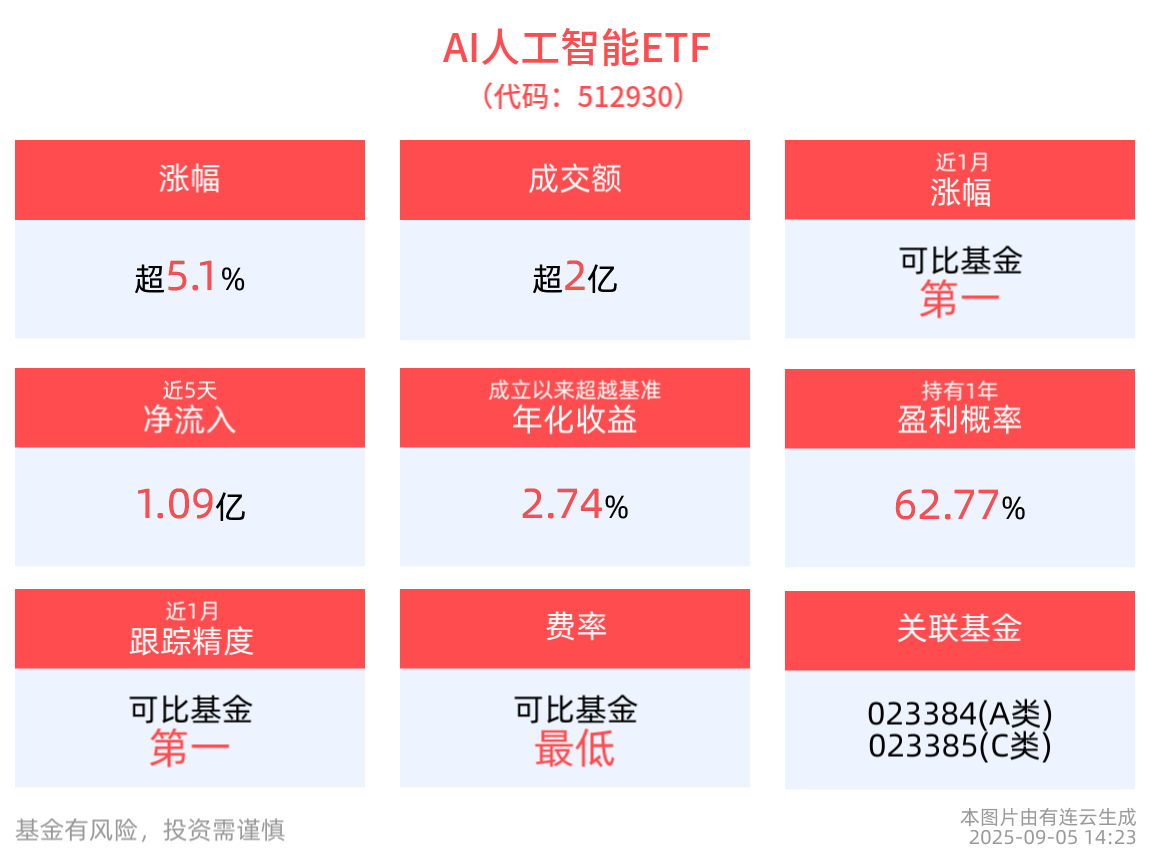
Core Insights - The AI Artificial Intelligence ETF (512930) has shown a strong performance, rising by 5.10% recently, with a current price of 1.98 yuan [3] - The underlying index, the CSI Artificial Intelligence Theme Index (930713), has increased by 5.25%, with notable gains from constituent stocks such as Xinyi Sheng (300502) and Zhongji Xuchuang (300308) [3][4] - The ETF has demonstrated high liquidity, with a turnover rate of 10.23% and a trading volume of 283 million yuan [3] Performance Metrics - The AI Artificial Intelligence ETF has accumulated a 7.18% increase over the past two weeks, ranking in the top 25% among comparable funds [3] - The ETF's management fee is 0.15% and the custody fee is 0.05%, making it the lowest among comparable funds [3] - The tracking error for the ETF over the past month is 0.006%, indicating the highest tracking precision among similar funds [3] Index Composition - The CSI Artificial Intelligence Theme Index comprises 50 listed companies involved in providing foundational resources, technology, and application support for artificial intelligence [4] - As of August 29, 2025, the top ten weighted stocks in the index account for 60.82% of the total index weight, with Xinyi Sheng (300502) and Zhongji Xuchuang (300308) being the top two [4][6]


热门股票中际旭创、新易盛大涨,人工智能AIETF(515070)盘中大涨超5.6%
Xin Lang Cai Jing· 2025-09-05 06:49
Core Viewpoint - The A-share market experienced a strong rebound, particularly in the ChiNext index, which surged by 6%, driven by significant gains in technology stocks related to artificial intelligence (AI) [1] Group 1: Market Performance - The ChiNext index rose by 6%, with Shenghong Technology hitting a 20% limit up, marking a new historical high [1] - Zhongji Xuchuang and Xinyi Sheng both increased by over 12% [1] - The AI ETF (515070) saw an intraday increase of over 5.6%, indicating strong investor interest in AI-related stocks [1] Group 2: AI ETF and Industry Focus - The AI ETF (515070) tracks the CS Artificial Intelligence Theme Index (930713) and includes stocks that provide technology, basic resources, and applications in the AI sector [2] - The top ten weighted stocks in the AI ETF include major domestic technology leaders such as Zhongji Xuchuang, Xinyi Sheng, and Hanwha Technology [2] Group 3: Government Initiatives and Industry Outlook - The Shanghai Municipal Economic and Information Commission announced a notification to implement the national "Artificial Intelligence +" action plan, focusing on project applications for 2025 [1] - By the end of 2027, the goal is to establish at least 10 public service platforms for industrial innovation and achieve breakthroughs in at least 100 core technologies [1] - CITIC Construction Investment believes that the current AI user penetration rate is still low, and the development of large models is in its early to mid-stages, indicating a long industrialization cycle ahead [1]

涨超2.7%,线上消费ETF基金(159793)近6个月超越基准年化收益达2.79%
Sou Hu Cai Jing· 2025-09-05 06:28
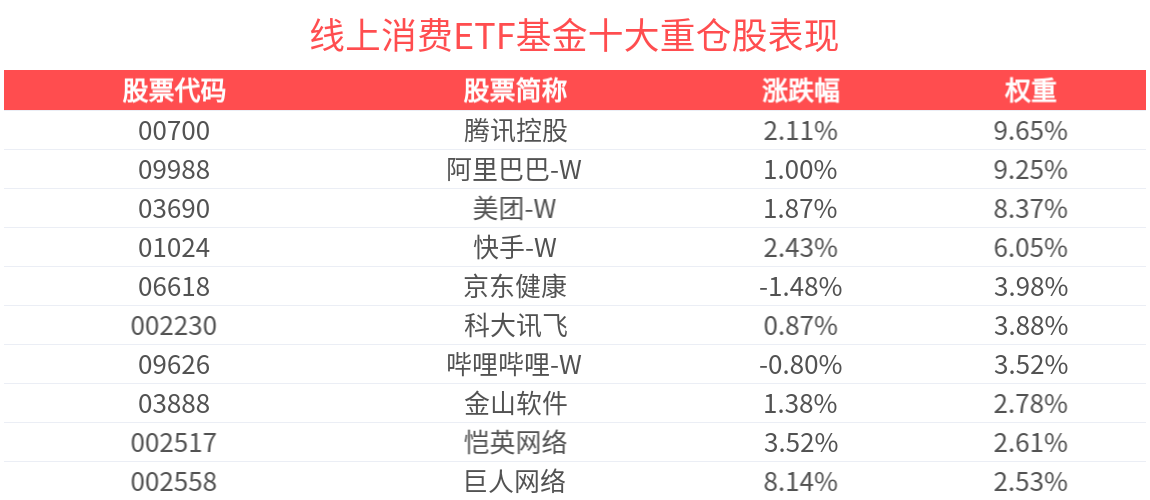
Core Insights - The China Securities Index for online consumption (931481) has shown a strong increase of 1.45% as of September 5, 2025, with notable gains in constituent stocks such as China Film (600977) up by 10.04% and Giant Network (002558) up by 8.14% [1] - The online consumption ETF (159793) has risen by 2.71%, currently priced at 1.06 yuan, and has accumulated a 5.62% increase over the past month [1] - The ETF is positioned as an AI application ETF, closely tracking the online consumption index, which is expected to benefit from the explosion of AI applications [1] - The current price-to-earnings ratio (PE-TTM) of the online consumption ETF is 22.7, indicating it is at a historical low, being below 84.38% of the time over the past five years [1] Company and Industry Summary - The top ten weighted stocks in the online consumption index account for 51.84% of the total index, with Tencent Holdings (00700) and Alibaba-W (09988) being the largest contributors [2] - The performance of the top ten stocks includes Tencent Holdings up by 2.11% and Alibaba-W up by 1.00%, while JD Health (06618) has decreased by 1.48% [4] - The index includes companies involved in online shopping, digital entertainment, online education, and telemedicine, reflecting the overall performance of online consumption-related companies in the mainland and Hong Kong markets [1]



科大讯飞董事长刘庆峰:在重庆打造全国人社合作示范基地
Sou Hu Cai Jing· 2025-09-05 06:17
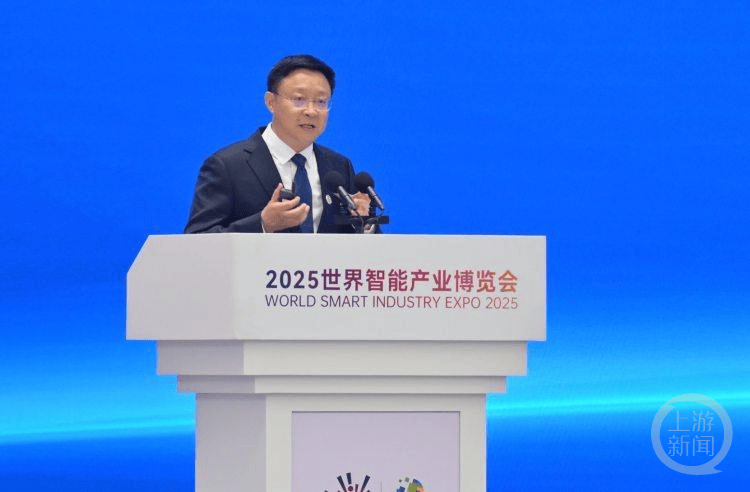
Core Insights - The chairman of iFlytek, Liu Qingfeng, emphasized the importance of artificial intelligence (AI) in liberating productivity and fostering creativity across various industries [1][3] - iFlytek is collaborating with the Chongqing Human Resources and Social Security Bureau to establish a national demonstration base for human resources cooperation, focusing on AI job replacement analysis, talent cultivation, and high-quality data set construction [1] Group 1 - iFlytek's partnership with Chongqing aims to create a model for AI integration in human resources, which is expected to have significant social value and industrial promotion potential [1] - Liu highlighted the advancements in China's large models over the past two years, noting that iFlytek's fully autonomous Spark model has a significantly lower hallucination rate compared to competitors like OpenAI and DeepSeek [3] - The company has developed a model in collaboration with PetroChina, which addresses the needs of over 5,000 grassroots employees, showcasing the practical application of AI in enhancing productivity [3] Group 2 - The development of AI and intelligent platforms allows ordinary individuals to leverage artificial intelligence, positioning it as a new driving force for productivity [3] - Liu stated that the integration of AI into various sectors is not only of major industrial significance but also a necessary response to societal needs in the era of artificial intelligence [3]
运机集团子公司与科大讯飞等签署战略合作协议 共筑数智化产业标杆
Zheng Quan Ri Bao Wang· 2025-09-05 06:14
Group 1 - Sichuan Zigong Transportation Machinery Group Co., Ltd. (运机集团) signed a cooperation framework agreement with iFlytek (科大讯飞) and its subsidiary Zhejiang Tidal Power Technology Co., Ltd. (潮汐力) on September 4 [1] - The strategic cooperation focuses on emerging technologies such as acoustic large models, visual large models, predictive large models, and multi-modal large models, as well as intelligent products like optical fiber voiceprint diagnosis and industrial intelligent robots [1][2] - The collaboration aims to develop and share results in industries including mining, bulk material transportation ports, cement and building materials, metallurgy, electricity, intelligent equipment, and intelligent operations [1] Group 2 - The three parties will work together to seek technology projects, market resources, and business opportunities, establishing a joint development mechanism to address customer needs and industry pain points [1][2] - The partnership emphasizes principles of resource sharing, joint responsibility for results, and win-win cooperation, focusing on AI technology breakthroughs and project development [2] - Future efforts will center on AI large models, AI sensing instruments, and industrial intelligent robots, aiming to create a smarter, safer, and more efficient industrial production system [2]
国产AI翻译更“智慧”
Ren Min Ri Bao· 2025-09-04 22:20
今年以来,中国人工智能大模型等为代表的数字技术迅速发展,国产AI逐渐赋能千行百业,让人有了 切切实实的感受。 "传统模式下,机器翻译要经历'源语音—源文字—翻译—目标文字—目标语音'五段跳,因此效率低、 延时长。"科大讯飞副总裁、安徽听见科技有限公司总经理王玮介绍,"不少人可能有这样的体验,用手 机软件语音翻译时,先在屏幕上识别出中文,再花时间翻译成外语。而现在,我们的技术能实现源语音 到目标语音的端到端翻译。" 当前,中国已发布超1500个大模型,在全球已发布的大模型中数量位居首位。从"边听边说"到"语音同 传",背后离不开讯飞星火语音同传大模型的支撑。 更进一步,有没有可能让机器从单项语言的识别翻译,到多项语言混合的识别和翻译? 今年7月,香港立法会正式推出与科大讯飞联合打造的智慧誊录系统"智识听"AI实时字幕功能。公众可 以通过立法会网站的网上广播等平台收看带有实时字幕的立法会大会会议直播。该功能受到香港特区立 法会主席梁君彦的线上"点赞"。 "'智识听'建设历时近三年,其间,遇到最棘手的技术问题就是如何提高三语混读引擎识别率。"王玮介 绍说,会议中可能出现普通话、粤语、英语三种语言,英语识别率下降到8 ...
韩国老人迷上“电子乖孙”,能唠嗑还能救命?
AI研究所· 2025-09-04 11:57
Core Viewpoint - The collaboration between the South Korean government and the startup Hyodol to distribute AI companion dolls to elderly individuals highlights the growing trend of AI integration in the toy industry, addressing the challenges of an aging population and caregiver shortages [2][3][6]. Group 1: Aging Population and Caregiver Shortage - South Korea is rapidly aging, with one in five individuals aged 65 and older, and is expected to enter a "super-aged society" by the end of 2024 [2]. - The country faces a significant shortage of caregivers, with a projected need for an additional 990,000 caregivers by 2043, while the pension fund is expected to peak in 2041 and potentially run out by 2056 [2][3]. Group 2: AI Dolls as a Solution - AI dolls serve as a cost-effective alternative to caregivers, with their costs being a fraction of a caregiver's annual salary, providing continuous companionship and basic care [3]. - The AI dolls are equipped with advanced technology, including ChatGPT, enabling them to engage in conversations, remind users about meals and medications, and monitor the elderly's health status [5][6]. Group 3: Global AI Toy Market Growth - The AI toy market is experiencing rapid growth, with the global market size surpassing $11 billion in 2024 and projected to reach $58 billion by 2030, reflecting an annual growth rate of over 20% [9]. - In China, the AI toy market is expected to exceed 10 billion yuan by 2030, with a compound annual growth rate of over 70% [9]. Group 4: Diverse Consumer Base - Unlike traditional toys, AI toys appeal to a broad demographic, including parents seeking educational support for their children, young adults looking for companionship, and elderly individuals desiring safety and emotional comfort [10][11]. Group 5: Competitive Landscape in China - The Chinese AI toy market is becoming increasingly competitive, with traditional players like Shifeng Culture and Aofei Entertainment embracing smart technology and leveraging their established supply chains and IP resources [12][13]. - Emerging tech companies like YueRan Innovation are focusing on emotional companionship and education, utilizing AI and IP collaborations to create innovative products [16][18]. - Major tech firms such as ByteDance and iFLYTEK are also actively participating in the market, integrating their technological capabilities with traditional toy manufacturers [19][20]. Group 6: Redefining Companionship - AI is redefining the concept of companionship, serving various roles from guardians for elderly individuals to educational aids for children and emotional support for urban dwellers [21].