
HIKVISION(002415)

Search documents
《政务领域人工智能大模型部署应用指引》印发,AI政务前景广阔
Haitong Securities International· 2025-10-15 05:51
Investment Rating - The report maintains a positive outlook on the computer industry, particularly in the context of AI applications in government affairs, with key targets identified for investment [3][7]. Core Insights - The issuance of the "Guidelines for the Deployment and Application of AI Foundation Models in Government Affairs" by the Central Cyberspace Affairs Commission and the National Development and Reform Commission is expected to accelerate the demand for AI in governance [3][7]. - The report highlights the broad market potential for AI applications in government, with the AI+government service market in China projected to reach 2.54 billion RMB in 2024 [3][7]. Summary by Sections Investment Recommendations - Key investment targets include Guotai Epoint Software, Hikvision, Zhejiang Dahua Technology, Beijing eGOVA, Geovis Technology, and Piesat Information Technology, with related targets being Fujian Boss Software, Zhiyang Innovation Technology, Linewell Software, and CHINA INFORMATION DEVELOPMENT INC. [3][7]. Guidelines Overview - The guidelines emphasize the use of "East Data West Computing" and integrated computing networks, promoting a unified model reuse approach and enhancing data governance to support AI model training [3][7]. - Four high-frequency scenarios for AI model application are identified: government services, social governance, office work, and decision support [3][7]. Financial Support and Market Potential - The guidelines propose strengthening financial support for AI applications in government, indicating a broad market potential for AI+government applications [3][7]. - The report notes that since 2025, domestic AI models like Deepseek have seen increased engagement from various regions and departments, indicating a positive trend in technology deployment and system development [3][7].




海康威视跌2.05%,成交额21.70亿元,主力资金净流出1.04亿元
Xin Lang Cai Jing· 2025-10-15 03:40
Core Viewpoint - Hikvision's stock has experienced fluctuations, with a recent decline of 2.05%, while the company has shown a year-to-date increase of 10.02% in stock price [1] Group 1: Stock Performance - As of October 15, Hikvision's stock price was 32.57 CNY per share, with a market capitalization of 298.5 billion CNY [1] - The stock has increased by 4.66% over the last five trading days, 9.37% over the last twenty days, and 18.31% over the last sixty days [1] Group 2: Financial Performance - For the first half of 2025, Hikvision reported revenue of 41.818 billion CNY, reflecting a year-on-year growth of 1.48%, and a net profit of 5.657 billion CNY, which is an increase of 11.71% year-on-year [2] - Cumulatively, since its A-share listing, Hikvision has distributed a total of 68.502 billion CNY in dividends, with 25.048 billion CNY distributed over the last three years [3] Group 3: Shareholder Information - As of June 30, 2025, the number of shareholders increased to 413,900, while the average number of circulating shares per person decreased to 22,019 shares [2] - The top ten circulating shareholders include Huatai-PB CSI 300 ETF and E Fund CSI 300 ETF, with the former increasing its holdings by 5.4817 million shares [3]
美国又对数百万中国电子产品做“大扫除”了
虎嗅APP· 2025-10-14 13:39
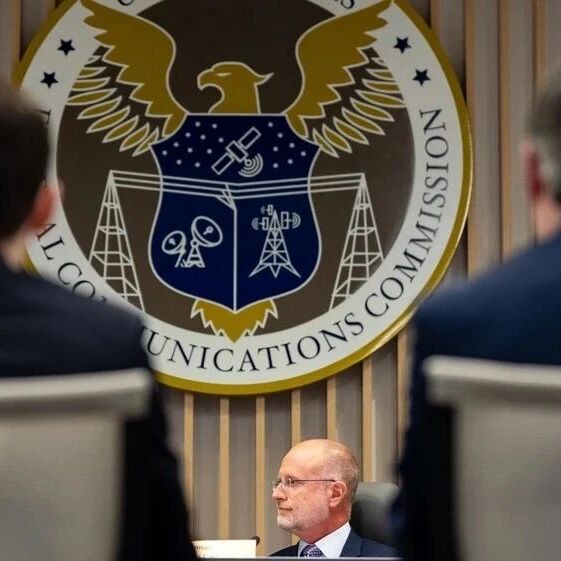
Core Viewpoint - The article discusses the recent "clean shopping cart action" initiated by the FCC, which has led to the removal of millions of Chinese electronic products from major U.S. e-commerce platforms, significantly impacting companies like Hikvision and Dahua [4][10]. Group 1: Impact of FCC Actions - The FCC has declared that millions of products containing banned brand keywords or lacking proper authorization have been removed from e-commerce platforms [6][10]. - Hikvision and Dahua have already seen a decline in their U.S. business, with Hikvision reporting that U.S. revenue accounts for less than 3% of its overseas income [4][10]. - The FCC's tightening regulations may also affect overseas companies that use components from blacklisted firms, potentially leading to broader market disruptions [14][20]. Group 2: Market Dynamics - The U.S. remains the largest single market for surveillance equipment, with approximately 30 million units shipped annually, compared to 20 million in China and 10 million in Europe [19]. - Chinese security brands face challenges in the U.S. market due to local competitors like Ring and Arlo, which benefit from better software services and localized support [20][21]. - The tightening of FCC regulations adds further pressure on Chinese brands, which must adapt to maintain market presence [20][26]. Group 3: Strategic Responses - Chinese security companies are exploring new strategies, such as adopting local storage solutions to reduce costs and address privacy concerns [22][23]. - There is a growing focus on expanding into emerging markets in Southeast Asia, South America, and Africa, where demand for surveillance solutions is increasing [24][25]. - Hikvision's 2024 annual report indicates that developing countries now account for over 70% of its overseas revenue, highlighting a shift in focus due to regulatory pressures in the U.S. [26].

美国又对数百万中国电子产品做“大扫除”了
Hu Xiu· 2025-10-14 12:49
Core Viewpoint - The recent "clean shopping cart action" led by the FCC has resulted in the removal of millions of banned Chinese electronic products from major U.S. e-commerce platforms, significantly impacting the market dynamics for Chinese brands in the U.S. [2][3][10] Group 1: Regulatory Actions - The FCC has declared that millions of products have been removed, which either fall under the banned device list or lack FCC authorization [2][3] - The FCC's tightening regulations began with the NDAA ban in 2019, which initially only affected federal procurement, but has since expanded to include consumer markets following the 2022 Security Equipment Act [12][13] - A vote scheduled for October 28 could further restrict any devices containing components from blacklisted companies, potentially affecting previously authorized products [13][14] Group 2: Impact on Chinese Brands - Major Chinese brands like Hikvision and Dahua have already seen a decline in their U.S. market presence, with Hikvision reporting that U.S. business accounts for less than 3% of its overseas revenue [4][10] - The removal of products is primarily targeting those that use banned brand keywords or lack complete FCC documentation, complicating the re-listing process for affected products [5][9] - The tightening regulations pose significant challenges for Chinese security brands, which already struggle against local competitors that benefit from better software services and localized support [22][23] Group 3: Market Dynamics - The U.S. remains the largest single market for surveillance equipment, with an annual shipment of approximately 30 million units, compared to 20 million in China and 10 million in Europe [20][21] - The demand for surveillance cameras in the U.S. is driven by the prevalence of single-family homes, which require multiple camera setups [21] - As domestic infrastructure development peaks and population declines in China, overseas expansion has become a primary strategy for Chinese security companies [19][24] Group 4: Future Strategies - Chinese security brands are exploring new strategies, such as adopting local storage solutions to reduce costs and address privacy concerns, particularly in the U.S. market [25][26] - There is a growing interest in expanding into emerging markets like Southeast Asia, South America, and Africa, where demand for surveillance solutions is increasing [27][28] - Hikvision's 2024 annual report indicates that developing countries now account for over 70% of its overseas revenue, highlighting a shift in focus for these companies [29] Group 5: Broader Implications - The FCC's actions are seen as a pressure test for the export strategies of Chinese manufacturers, determining which companies can withstand the regulatory challenges [30]
今年以来上市公司回购总额超1000亿元 回购增持再贷款提供低成本资金
Sou Hu Cai Jing· 2025-10-14 10:49
Core Insights - A-share listed companies are experiencing a surge in stock buybacks, with 17 companies announcing buyback progress on October 14 alone [1] - From January 1 to October 14, 2023, 1,374 A-share companies have executed buybacks, totaling over 11.25 billion yuan in repurchased shares [1] - The trend of "cancellation buybacks" is gaining attention, driven by policy guidance and market logic [2] Group 1: Buyback Trends - 1374 A-share listed companies have repurchased over 11.25 billion shares, amounting to 112.596 billion yuan [1] - 13 companies have repurchased over 1 billion yuan, with Midea Group leading at 6.769 billion yuan [1] - The number of companies disclosing buyback plans and implementing them is increasing, indicating a growing trend [1] Group 2: Policy Support - The People's Bank of China has optimized stock buyback financing policies, reducing the self-funding ratio from 30% to 10% and extending loan terms from 1 year to 3 years [2] - A total of 750 companies or major shareholders have accessed buyback financing, amounting to approximately 151.854 billion yuan [3] - The merger of financing tools aims to enhance flexibility and efficiency in utilizing policy funds [3] Group 3: Market Impact - The stock buyback financing has provided low-cost capital to companies, boosting investor confidence and market attention [3] - The ongoing support for buybacks is expected to evolve from a temporary measure to a more permanent mechanism, stabilizing the market [3]





计算机设备板块10月14日跌3.04%,凯旺科技领跌,主力资金净流出30.36亿元
Zheng Xing Xing Ye Ri Bao· 2025-10-14 08:46
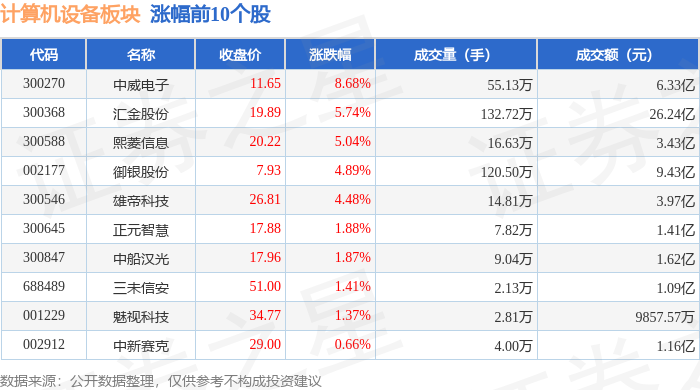
Market Overview - On October 14, the computer equipment sector declined by 3.04%, with Kaiwang Technology leading the drop [1] - The Shanghai Composite Index closed at 3865.23, down 0.62%, while the Shenzhen Component Index closed at 12895.11, down 2.54% [1] Stock Performance - Notable gainers in the computer equipment sector included: - Zhongwei Electronics (300270) with a closing price of 11.65, up 8.68% [1] - Huijin Co., Ltd. (300368) with a closing price of 68.61, up 5.74% [1] - Xiling Information (300588) with a closing price of 20.22, up 5.04% [1] - Major decliners included: - Kaiwang Technology (301182) with a closing price of 37.15, down 10.57% [2] - Zhongke Shuguang (603019) with a closing price of 105.50, down 8.00% [2] - Yutong Optical (300790) with a closing price of 28.52, down 6.00% [2] Capital Flow - The computer equipment sector experienced a net outflow of 3.036 billion yuan from institutional investors, while retail investors saw a net inflow of 2.121 billion yuan [2][3] - Notable capital flows included: - Hikvision (002415) with a net inflow of 205 million yuan from institutional investors [3] - Huijin Co., Ltd. (300368) with a net inflow of 86.09 million yuan from institutional investors [3] - Yuyin Co., Ltd. (002177) with a net inflow of 50.34 million yuan from institutional investors [3]


信息技术ETF(159939)开盘涨1.09%,重仓股立讯精密涨1.82%,中芯国际涨0.36%
Xin Lang Cai Jing· 2025-10-14 01:34
Core Viewpoint - The Information Technology ETF (159939) opened with a gain of 1.09%, priced at 0.930 yuan, indicating positive market sentiment towards the technology sector [1] Group 1: ETF Performance - The Information Technology ETF (159939) has a benchmark performance index of the CSI All Share Information Technology Index [1] - Since its inception on January 8, 2015, the ETF has achieved a return of 84.10% [1] - Over the past month, the ETF has recorded a return of 6.95% [1] Group 2: Major Holdings - Key stocks in the ETF include: - Luxshare Precision: up 1.82% - SMIC: up 0.36% - BOE Technology Group: up 0.24% - Northern Huachuang: up 1.23% - Haiguang Information: up 1.97% - Cambricon: up 0.78% - iFlytek: up 1.05% - OmniVision Technologies: up 0.35% - Zhongke Shuguang: up 0.96% - Hikvision: up 0.48% [1]





海康威视20251012
2025-10-13 14:56
Summary of Hikvision Conference Call Company Overview - **Company**: Hikvision - **Industry**: Intelligent Security and AIoT (Artificial Intelligence of Things) Key Points Industry and Company Transformation - Hikvision has transformed into an intelligent IoT platform company, establishing a full-stack technology system to provide digital solutions across various industries [2][5] - The company has invested heavily in R&D, with nearly 12 billion RMB annually, significantly enhancing its technological competitiveness in the AIoT sector [3][4] Financial Performance - In the first half of the year, Hikvision's innovative business revenue grew approximately 14% year-on-year, accounting for nearly 30% of total revenue, becoming a major growth driver [2][5] - The company expects a net profit growth of over 10% for the full year 2025, with a higher growth rate in non-recurring net profit in the second half compared to the first half [2][7] International Market Expansion - Hikvision's overseas revenue increased by 7% year-on-year, with international revenue now accounting for 37% of total revenue [2][6] - The company has established localized operations in various countries, enhancing supply chain resilience, particularly in regions like the Middle East, Africa, Southeast Asia, and Latin America [6] Technological Advancements - The company has developed the "Guanlan" large model, a multi-modal AI platform that improves the efficiency and accuracy of anomaly detection in security monitoring [3][8] - Hikvision is exploring next-generation video surveillance technologies, including 4K/8K ultra-high-definition and 3D perception, to enhance product competitiveness [8] Innovation and Business Segments - Hikvision has successfully incubated several innovative business platforms, including Yingshi Network and Hikrobot, which are expanding the company's business boundaries and driving growth [10][11] - The innovative business segment is expected to achieve a steady net profit level of around 20% in the future, indicating strong growth potential [4][12] Financial Health and Cost Management - The company has improved its financial health, with accounts receivable showing significant improvement and effective cost management [7][16] - Hikvision's total revenue for 2024 was approximately 92.5 billion RMB, with a year-on-year growth of 3.53% [16] Future Outlook - The company is well-positioned for future growth, leveraging its strong technological foundation, comprehensive business layout, and brand influence in the security and intelligent IoT sectors [19] - Hikvision's stock is currently valued at around 310 billion RMB, with a projected PE ratio of about 20 times for 2026, indicating significant upside potential [20] Strategic Adjustments - Hikvision has shifted its focus from revenue growth to profit management, implementing measures to enhance the efficiency of mature product lines and improve the profitability of emerging product lines [13][15] Market Challenges - Despite facing increased market competition and rising costs, Hikvision is expected to maintain resilience and growth through continuous innovation and optimization of internal management [19] This summary encapsulates the key insights from the conference call, highlighting Hikvision's strategic direction, financial performance, technological advancements, and market positioning.
合作升级!海尔集团与海康威视签署全面战略合作协议
Sou Hu Cai Jing· 2025-10-13 10:54
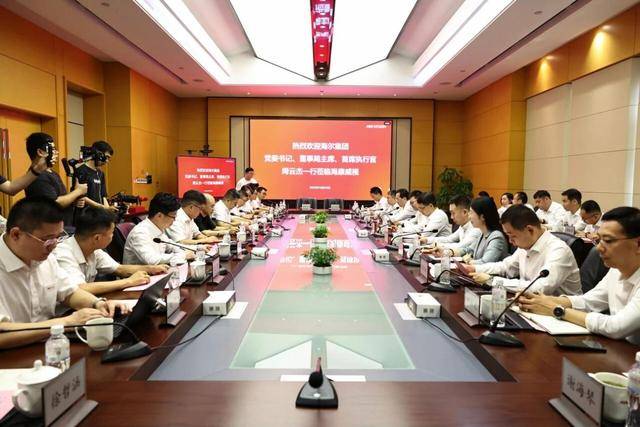
Core Insights - Haier Group and Hikvision have signed a comprehensive strategic cooperation agreement, marking an upgrade in their collaboration focused on full-scenario ecological construction and deep cooperation in three major areas [1][3] Group 1: Areas of Cooperation - The partnership will focus on green development by implementing smart building solutions to create low-carbon buildings, maximizing energy savings and emissions reduction through an integrated solution of source-network-load-storage [3] - In supply chain management, both companies will explore comprehensive supply chain solutions and provide Hikvision with global cross-border customs clearance services [3] - The collaboration in intelligent manufacturing will integrate Haier's industrial internet platform capabilities with Hikvision's advancements in robotics, enhancing technological synergy and joint innovation in smart manufacturing [3] Group 2: Company Background - Haier Group is a global leader in providing solutions for a better life and digital transformation, having ranked first in global retail volume of large home appliance brands for 16 consecutive years [3] - Hikvision, established in 2001, focuses on technological innovation and has developed a core technology system centered on IoT perception, artificial intelligence, and big data over more than two decades [3] Group 3: Recent Strategic Moves - Recently, Haier Group has been active in forming strategic partnerships, including agreements with Alibaba, Ant Group, and Wuzhou Zhongheng Group, to deepen cooperation in areas such as AI+cloud, advanced manufacturing, e-commerce, globalization, digital technology, bulk supply chain, and new energy [4]
杭州海康威视数字技术股份有限公司入围《经济观察报》2024—2025年度受尊敬企业
Jing Ji Guan Cha Wang· 2025-10-13 09:32
2025年10月13日,杭州海康威视(002415)数字技术股份有限公司在优质运营、创新突破、社会贡献等 指标中表现优异,入围《经济观察报》2024—2025年度受尊敬企业。根据经观中国上市公司综合价值评 估体系,营业收入、研发费用连续三年实现正增长。 ...