LONGSHINE(300682)

Search documents
朗新集团(300682) - 第五届董事会第二次会议决议公告
2026-01-16 11:00
朗新科技集团股份有限公司 证券代码:300682 证券简称:朗新集团 公告编号:2026-001 朗新科技集团股份有限公司 第五届董事会第二次会议决议公告 本公司及董事会全体成员保证信息披露内容真实、准确、完整,没有虚假 记载、误导性陈述或重大遗漏。 二、审议通过《关于变更证券简称的议案》 朗新科技集团聚焦"能源数智化、能源互联网"双轮发展战略,致力于成为 1 朗新科技集团股份有限公司(以下简称"公司")第五届董事会第二次会议 已于 2026 年 1 月 16 日在无锡市新吴区净慧东道 118 号朗新科技产业园以现场 结合通讯方式召开,会议通知于 2026 年 1 月 4 日以邮件方式发出。会议应出席 董事 8 名,实际出席董事 8 名。本次会议的召开符合《中华人民共和国公司法》 (以下简称《公司法》)、《中华人民共和国证券法》以及《朗新科技集团股份有 限公司章程》(以下简称《公司章程》)的规定。本次董事会决议合法有效。 会议根据《公司法》与《公司章程》的规定,全体董事审议通过如下决议: 一、审议通过《关于修订<公司章程>并变更法定代表人的议案》 根据《公司法》、《上市公司章程指引(2025年修订)》等现行监 ...
朗新集团:新电途目前经营状况良好,充电量保持快速增长
Zheng Quan Ri Bao Wang· 2026-01-16 10:19
证券日报网讯1月16日,朗新集团(300682)在互动平台回答投资者提问时表示,新电途作为第三方聚 合充电服务平台,以接入合作充电运营商充电桩为主,截至三季度末,公司新电途聚合充电平台注册用 户数突破2500万,接入充电设备数量超过220万,累计充电量近50亿度。新电途目前经营状况良好,充 电量保持快速增长,业绩持续改善,不存在运营困难等情形。 ...
朗新集团股价跌5.01%,华泰保兴基金旗下1只基金重仓,持有1.41万股浮亏损失1.34万元
Xin Lang Cai Jing· 2026-01-16 03:30
Group 1 - The core point of the news is that Langxin Group's stock price dropped by 5.01% to 18.02 CNY per share, with a trading volume of 819 million CNY and a turnover rate of 4.20%, resulting in a total market capitalization of 19.43 billion CNY [1] - Langxin Technology Group Co., Ltd. is located in Wuxi, Jiangsu Province, and was established on May 7, 2003, with its listing date on August 1, 2017 [1] - The company's main business involves information technology and services in the public utility sector, as well as home internet business, technology research and development, system construction, and business operations [1] Group 2 - According to data, Huatai Baoxing Fund has one fund heavily invested in Langxin Group, specifically the Huatai Baoxing Kairui One-Year Holding Mixed Fund A (018250), which held 14,100 shares, accounting for 2.43% of the fund's net value, making it the fourth-largest holding [2] - The fund was established on May 23, 2023, with a latest scale of 11.31 million CNY, and has a year-to-date return of 1.09%, ranking 7263 out of 8847 in its category [2] - The fund has experienced a loss of 1.78% over the past year, ranking 8044 out of 8094, and a cumulative loss of 1.27% since its inception [2] Group 3 - The fund manager of Huatai Baoxing Kairui One-Year Holding Mixed Fund A is Zhou Yongmei, who has a tenure of 7 years and 347 days, with the fund's total asset scale at 7.89 billion CNY and a best return of 47.57% during her tenure [3] - The co-manager, Huang Junqing, has a tenure of 254 days, with a total asset scale of 77.35 million CNY and a best return of 12.26% during his tenure [3]
朗新集团跌2.01%,成交额6.05亿元,主力资金净流出1513.93万元
Xin Lang Cai Jing· 2026-01-15 02:55
Group 1 - The core viewpoint of the news is that Langxin Group's stock has experienced fluctuations, with a recent decline of 2.01% and a current price of 19.02 CNY per share, while the company has seen a year-to-date increase of 25.05% [1] - As of January 9, 2025, Langxin Group reported a total revenue of 2.446 billion CNY for the first nine months, reflecting a year-on-year decrease of 9.38%, and a net profit attributable to shareholders of 106 million CNY, down 33.95% year-on-year [2] - The company has a market capitalization of 20.508 billion CNY and a trading volume of 605 million CNY, with a turnover rate of 3.03% [1] Group 2 - Langxin Group's main business segments include platform operations (60.91% of revenue), software services (35.11%), and other businesses (3.98%) [1] - The company has distributed a total of 1.028 billion CNY in dividends since its A-share listing, with 658 million CNY distributed over the past three years [3] - As of September 30, 2025, the number of shareholders increased to 41,000, with an average of 25,177 circulating shares per person, a decrease of 0.69% from the previous period [2]
朗新集团:截至2025年12月31日股东人数为40708户
Zheng Quan Ri Bao· 2026-01-14 12:09
证券日报网讯 1月14日,朗新集团在互动平台回答投资者提问时表示,截至2025年12月31日,公司股东 人数为40708户。 (文章来源:证券日报) ...

我国新增超20万颗卫星申请,4月起取消光伏产品增值税出口退税
Shanxi Securities· 2026-01-14 10:43
Investment Rating - The report maintains an investment rating of "Synchronize with the market - A" for the electric equipment and new energy industry [1]. Core Viewpoints - The report highlights that China has submitted applications for over 200,000 new satellites, marking the largest international frequency and orbit resource application in the country's history [3]. - Starting from April 2026, the export tax rebate for photovoltaic products will be canceled, which may impact the industry dynamics [4]. - The photovoltaic power generation utilization rate for January to November 2025 was reported at 94.8%, indicating strong performance in the sector [4]. Summary by Relevant Sections Preferred Stocks - The report lists several preferred stocks with ratings: - Aishuo Co., Ltd. (600732.SH) - Buy - B - Daqian Energy (688303.SH) - Buy - B - Fulete (601865.SH) - Buy - A - Haibo Sichuang (688411.SH) - Buy - A - Sunshine Power (300274.SZ) - Buy - A - Langxin Group (300682.SZ) - Buy - B - Quartz Co., Ltd. (603688.SH) - Buy - A [2]. Price Tracking - The average price of dense polysilicon is reported at 54.0 CNY/kg, up 3.8% from the previous week, while granular silicon is at 52.0 CNY/kg, up 4.0% [5]. - The average price for 182-183.75mm N-type battery cells is 0.39 CNY/W, reflecting a 2.6% increase [6]. - The price for 182*182-210mm TOPCon double-glass modules is 0.70 CNY/W, showing a 0.3% increase [7]. Investment Suggestions - The report recommends focusing on companies in various sectors: - BC new technology: Aishuo Co., Ltd. - Supply-side: Daqian Energy, Fulete - Light storage: Haibo Sichuang, Sunshine Power - Power marketization: Langxin Group - Domestic substitution: Quartz Co., Ltd. - Additional companies to watch include Longi Green Energy, Hongdian East Magnet, and others [8].



朗新集团:截至1月9日公司股东人数为40992户
Zheng Quan Ri Bao Wang· 2026-01-14 09:41
证券日报网讯1月14日,朗新集团(300682)在互动平台回答投资者提问时表示,截至1月9日,公司股 东人数为40992户。 ...
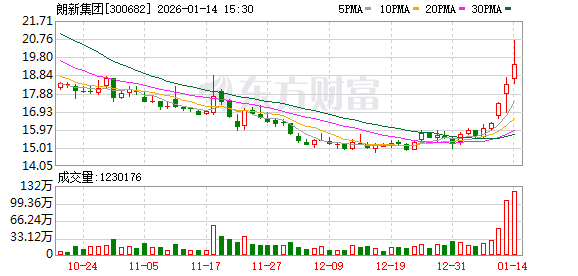
充电桩指数盘中涨超2%,多股涨超5%
Xin Lang Cai Jing· 2026-01-14 04:03
Core Viewpoint - The charging pile index experienced a rise of over 2% on January 14, indicating positive market sentiment in the electric vehicle infrastructure sector [1] Company Performance - Longxin Group saw its stock price increase by over 9% [1] - Galaxy Electronics reported a stock price increase of over 9% [1] - Nengke Technology's stock rose by over 8% [1] - Houpu Co. and Xiangshan Co. both experienced stock price increases of over 5% [1]


AI应用商业化拐点已至!GEO崛起重构流量逻辑,豆包元宝等APP普及,2026行业赛道迎来爆发式增长
Xin Lang Cai Jing· 2026-01-13 11:27
Group 1 - Tongdahai, located in Chongqing, is a core service provider in the court informationization sector, focusing on judicial AI applications with over 2,000 courts using its products nationwide [1] - The company's intelligent document generation system improves judges' work efficiency by over 50%, while its intelligent case allocation system meets the smart management needs of courts [1] - As demand for judicial AI continues to grow, the company is expected to enhance its market coverage and commercialization capabilities, becoming a key beneficiary in the judicial AI sector [1] Group 2 - Tianlong Group, based in Shantou, Guangdong, operates in digital marketing and ink chemicals, with a strong focus on AI applications in digital marketing [2] - The company’s advertising optimization through AI technology has increased conversion rates by over 30% compared to traditional methods [2] - AI applications are driving the company's performance growth, leveraging its technical expertise and channel resources to meet advertisers' needs [2] Group 3 - Guangyun Technology, a leading player in the e-commerce SaaS sector based in Hangzhou, focuses on AI application development for e-commerce scenarios [3] - Its AI selection system provides precise product recommendations based on comprehensive e-commerce data analysis [3] - The company is expected to maintain its leading position in the e-commerce AI sector as demand for intelligent solutions increases [3] Group 4 - Zhangqu Technology, located in Beijing, is an established player in the mobile gaming industry, innovating AI applications in game development [4] - AI-generated content tools reduce development cycles by 20%-30% and costs by over 15% [4] - The company is positioned to leverage AI applications for intelligent transformation in the gaming business [4] Group 5 - Zhuoyi Information, based in Wuxi, Jiangsu, specializes in cloud computing infrastructure and AI computing power services [5] - The company optimizes AI computing power scheduling efficiency, supporting large model training and inference [5] - As demand for AI computing power continues to grow, the company is set to benefit significantly from its foundational role in AI application deployment [5] Group 6 - Dian Diagnostics, a leading third-party medical diagnostics company in Hangzhou, focuses on AI applications in the medical field [6] - Its AI diagnostic systems achieve over 95% accuracy in identifying cancer cells and enhance diagnostic efficiency [6] - The company is expected to expand its AI application scenarios in the medical sector, driving intelligent transformation in diagnostics [6] Group 7 - Zhidema, based in Beijing, operates a consumer content and shopping guide platform, integrating AI technology for consumer decision-making [7] - The platform's conversion rate is 40% higher than the industry average due to its AI recommendation system [7] - AI applications are crucial for enhancing user experience and monetization in the consumer sector [7] Group 8 - Yidian Tianxia, located in Xi'an, focuses on AI marketing applications for cross-border e-commerce and overseas enterprises [8] - The company’s AI creative platform generates multilingual advertising materials, adapting to various cultural contexts [8] - As demand for cross-border AI marketing grows, the company is positioned as a key bridge for enterprises entering AI applications [8] Group 9 - Weishidun, a digital transformation service provider, specializes in AI applications for the financial and government sectors [9] - Its intelligent risk control system effectively identifies financial risks, reducing bad debt rates [9] - The company is expected to expand its market share in financial and government AI solutions as demand increases [9] Group 10 - Xinlicheng, based in Zhengzhou, focuses on AI applications in grassroots medical services and health management [10] - The company’s AI-assisted diagnostic systems enhance the capabilities of grassroots doctors [10] - As the government promotes improvements in grassroots medical capabilities, the company is set to enhance service accessibility and quality through AI [10] Group 11 - Waifu Holdings, located in Shanghai, is a leader in human resources services, integrating AI technology into its applications [11] - The AI recruitment system improves hiring efficiency by over 60% [11] - The company is positioned to expand its AI applications in human resources, driving the sector's digital transformation [11] Group 12 - Zhonggong Education, based in Wuhu, is a leading vocational education company focusing on AI applications [12] - Its AI learning platform generates personalized study plans, enhancing learning efficiency [12] - The company is expected to solidify its leading position in vocational education through innovative AI applications [12] Group 13 - Zhizhen Technology, located in Beijing, focuses on AI applications in the telecommunications sector [13] - Its AI network operation system enhances network stability and reduces operational costs [13] - The company is set to expand its market share in telecommunications AI solutions as demand grows [13] Group 14 - Visual China, based in Chongqing, is a leader in visual content services, leveraging AI to transform content production and transaction [14] - The company’s AI content generation platform supports efficient visual content creation [14] - As demand for AI-generated visual content increases, the company is positioned to benefit significantly in this sector [14] Group 15 - Yiyuan Media, located in Beijing, is an integrated marketing service provider focusing on AI marketing applications [15] - The company’s AI marketing creative platform generates advertising materials quickly, adapting to short video marketing needs [15] - AI is a core technology driving innovation in the marketing sector, positioning the company as a leader in AI marketing [15] Group 16 - Shenguang Group, based in Guangzhou, is a leading advertising marketing company that integrates AI technology into its global marketing applications [16] - The company’s AI creative center generates multilingual advertising content, catering to overseas market needs [16] - As cross-border AI marketing demand grows, the company is expected to strengthen its position in the marketing industry [16]



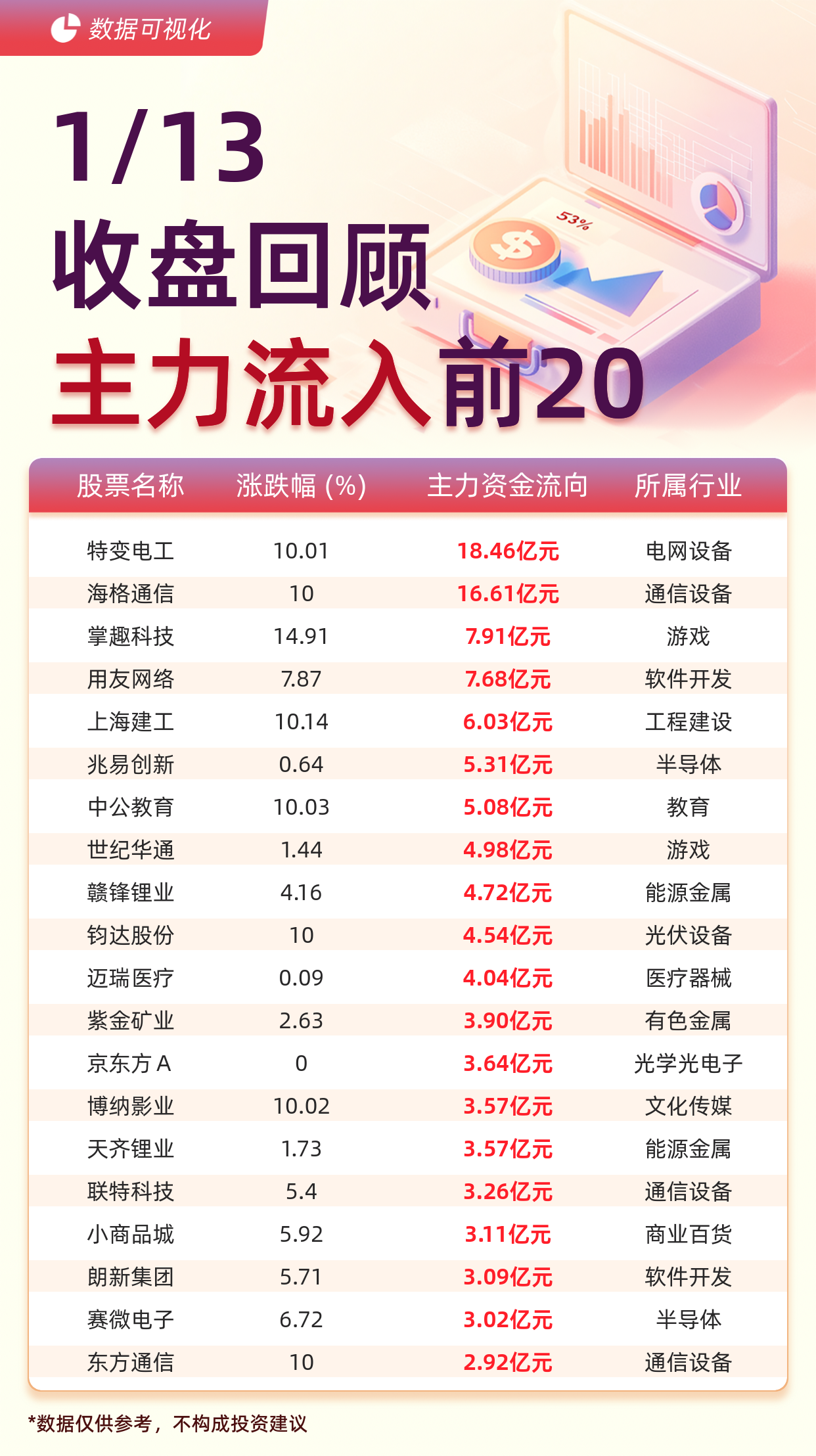
主力资金流入前20:特变电工流入18.46亿元、海格通信流入16.61亿元
Jin Rong Jie· 2026-01-13 07:25
Core Viewpoint - The data indicates significant capital inflows into various stocks, highlighting investor interest in specific sectors such as power equipment, communication devices, and gaming [1][2][3] Group 1: Stock Performance and Capital Inflows - TBEA (特变电工) saw a capital inflow of 1.846 billion, with a price increase of 10.01% [2] - Haige Communication (海格通信) experienced a capital inflow of 1.661 billion, with a price increase of 10% [2] - ZQ Game (掌趣科技) had a capital inflow of 0.791 billion, with a notable price increase of 14.91% [2] - Yonyou Network (用友网络) attracted 0.768 billion in capital, with a price increase of 7.87% [2] - Shanghai Construction (上海建工) received 0.603 billion, with a price increase of 10.14% [2] Group 2: Sector Analysis - The power equipment sector, represented by TBEA, shows strong investor confidence with significant capital inflows [2] - The communication device sector, including Haige Communication and Lian Te Technology (联特科技), also reflects positive investor sentiment [2][3] - The gaming industry, represented by ZQ Game and Century Huaman (世纪华通), demonstrates robust growth potential with substantial capital inflows [2][3] - The education sector, represented by Zhonggong Education (中公教育), shows a healthy capital inflow of 0.508 billion, indicating investor interest [2] - The energy metal sector, represented by Ganfeng Lithium (赣锋锂业) and Tianqi Lithium (天齐锂业), continues to attract investment, reflecting ongoing demand in the market [2][3]