Yunnan Botanee Bio-Technology (300957)

Search documents
深度 | CDA2025观察:美妆医研共创迈向新高度
FBeauty未来迹· 2025-11-13 14:44
Core Insights - The beauty industry is undergoing a technological transformation, with the integration of medical research driving value upgrades in cosmetics. This dual integration of medicine and beauty is defining a new competitive logic in the industry [3][6][24]. Industry Trends - The 20th China Dermatology Association (CDA) conference showcased over 10,000 dermatologists and more than 100 companies, including both domestic and international beauty brands, highlighting the industry's focus on scientific collaboration [3][4]. - The concept of "medical-research co-creation" emerged as a key theme, with brands actively participating in discussions on how to contribute to the skin science system, moving from mere users of research to active participants in scientific understanding and industry standards [7][24]. Brand Innovations - Winona, a brand known for its scientific foundation, showcased its "NUTE" principle at CDA 2025, which emphasizes clinical needs, unique mechanisms, technology empowerment, and credible evidence in product development [10]. - HBN, a domestic skincare brand, initiated the establishment of a group standard for "Cosmetic Efficacy Evidence Weight Assessment Guidelines," aiming to shift the industry from experience-driven to evidence-based competition [11][13]. - Estee Lauder's Clinique presented a white paper on the causes and distribution patterns of post-inflammatory hyperpigmentation, demonstrating the brand's commitment to scientific validation [14][16]. Research and Development - The integration of research and clinical application is evident in the initiatives taken by brands like Giant Bio and Zhenyan Bio, which are expanding the boundaries of medical-research co-creation through innovative collagen products and clinical studies [20][22]. - The collaboration between brands and medical experts is evolving, with companies like Ximu Yuan conducting extensive research on sensitive skin, showcasing a shift from being mere users of research to contributors to scientific inquiry [24][25]. Future Outlook - The CDA conference highlighted a significant shift in the beauty industry towards a more scientific and collaborative approach, with brands, medical institutions, and research organizations forming a new ecosystem that emphasizes shared data and mutual advancement [47][48]. - The focus on original ingredient research is becoming a core strategy for leading domestic brands, as they aim to differentiate themselves from homogenized competition [38][39].



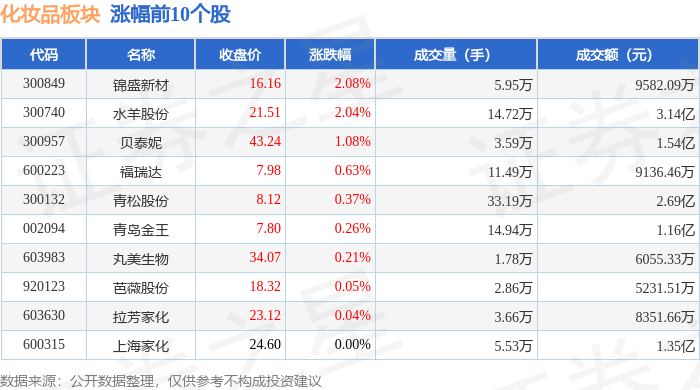
化妆品板块11月13日涨0.2%,锦盛新材领涨,主力资金净流出5656.82万元
Zheng Xing Xing Ye Ri Bao· 2025-11-13 08:51
Market Overview - The cosmetics sector increased by 0.2% on November 13, with Jinsheng New Materials leading the gains [1] - The Shanghai Composite Index closed at 4029.5, up 0.73%, while the Shenzhen Component Index closed at 13476.52, up 1.78% [1] Individual Stock Performance - Jinsheng New Materials (300849) closed at 16.16, up 2.08% with a trading volume of 59,500 shares and a transaction value of 95.82 million yuan [1] - Shuiyang Co. (300740) closed at 21.51, up 2.04% with a trading volume of 147,200 shares and a transaction value of 314 million yuan [1] - Beitaini (300957) closed at 43.24, up 1.08% with a trading volume of 35,900 shares and a transaction value of 154 million yuan [1] - Other notable stocks include Furuida (600223) at 7.98 (+0.63%), Qingsong Co. (300132) at 8.12 (+0.37%), and Qingdao Kingway (002094) at 7.80 (+0.26%) [1] Capital Flow Analysis - The cosmetics sector experienced a net outflow of 56.57 million yuan from institutional investors and 32.11 million yuan from retail investors, while individual investors saw a net inflow of 88.67 million yuan [2] - The capital flow for individual stocks shows that Shuiyang Co. had a net inflow of 21.64 million yuan from institutional investors, while other stocks like Huaye Fragrance (300886) and Kesheng Co. (300856) faced net outflows [3]


贝泰妮:贝芙汀目前处于孵化阶段
Bei Jing Shang Bao· 2025-11-12 14:07
Core Viewpoint - Beitaini emphasizes the professional development of its acne treatment brand, Beifuting, leveraging a team of dermatology experts and AI consultation technology to provide a comprehensive acne treatment solution [1] Group 1: Brand Development - Beifuting is positioned as a specialized acne treatment brand under Beitaini, focusing on integrating food, medicine, and cosmetics for precise acne treatment [1] - The brand is currently in the incubation stage, with a strong emphasis on professional development and continuous technological iteration [1] Group 2: Research and Technology - The brand's approach is based on research accumulated from over one million cases, showcasing a commitment to evidence-based treatment [1] - AI consultation technology is utilized to enhance the user experience and treatment accuracy [1] Group 3: Future Planning - Future resource planning for the brand will be based on market feedback and strategic considerations, allowing for dynamic deployment [1] - The company aims to provide a more scientific and systematic acne treatment plan through ongoing service optimization [1]
贝泰妮:贝芙汀是公司旗下专业祛痘品牌,目前品牌处于孵化阶段
Mei Ri Jing Ji Xin Wen· 2025-11-12 13:19
Core Viewpoint - The company emphasizes the importance of its acne treatment brand, Beifutin, despite its low revenue since listing and limited growth observed on e-commerce platforms. The company is committed to developing Beifutin through a comprehensive treatment approach and ongoing technological improvements [1]. Group 1 - Beifutin is positioned as a professional acne treatment brand, leveraging a team of dermatology experts and AI consultation technology to provide integrated solutions for acne treatment [1]. - The brand is currently in the incubation stage, with the company prioritizing its professional development path and aiming to offer more scientific and systematic acne treatment solutions through continuous technological iteration and service optimization [1]. - Future resource allocation for the brand will be based on market feedback and strategic considerations, allowing for dynamic deployment and comprehensive evaluation [1].
化妆品板块11月12日涨0.24%,嘉亨家化领涨,主力资金净流出6685.81万元
Zheng Xing Xing Ye Ri Bao· 2025-11-12 08:51
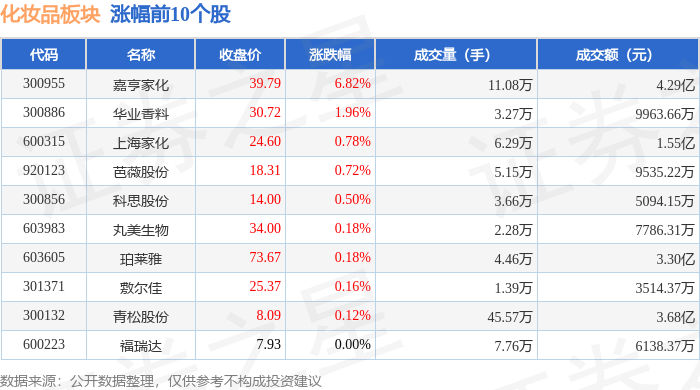
Market Overview - The cosmetics sector increased by 0.24% on November 12, with Jiaheng Jiahua leading the gains [1] - The Shanghai Composite Index closed at 4000.14, down 0.07%, while the Shenzhen Component Index closed at 13240.62, down 0.36% [1] Individual Stock Performance - Jiaheng Jiahua (300955) closed at 39.79, up 6.82% with a trading volume of 110,800 shares and a turnover of 429 million yuan [1] - Huaye Fragrance (300886) closed at 30.72, up 1.96% with a trading volume of 32,700 shares and a turnover of 99.64 million yuan [1] - Shanghai Jahwa (600315) closed at 24.60, up 0.78% with a trading volume of 62,900 shares and a turnover of 15.5 million yuan [1] - Other notable stocks include Bawei Co. (920123) at 18.31, up 0.72%, and Kesheng Co. (300856) at 14.00, up 0.50% [1] Capital Flow Analysis - The cosmetics sector experienced a net outflow of 66.86 million yuan from institutional investors, while retail investors saw a net inflow of 2.95 million yuan [2] - The overall capital flow indicates a mixed sentiment, with institutional investors withdrawing funds while retail investors are entering the market [2] Detailed Capital Flow by Stock - Qing Song Co. (300132) had a net inflow of 5.60 million yuan from institutional investors, while it faced a net outflow of 7.23 million yuan from speculative funds [3] - Shanghai Jahwa (600315) saw a net inflow of 5.19 million yuan from institutional investors but a net outflow of 8.56 million yuan from retail investors [3] - Other stocks like Huaye Fragrance (300886) and Kesheng Co. (300856) also showed varied capital flows, indicating differing investor sentiments across the sector [3]

上海家化的转机,福瑞达们的困局
Xin Lang Cai Jing· 2025-11-12 05:46
Core Insights - The Chinese beauty industry is at a critical juncture, transitioning from rapid growth driven by channels and traffic to a focus on brand value and operational excellence [1] - Recent financial reports from leading domestic beauty companies reveal a divide: some are struggling with transformation pains, while others are rebounding due to strong brand value [1] Group 1: Performance Challenges - Beitaini reported a revenue of 3.464 billion yuan for the first three quarters of 2025, a year-on-year decline of 13.78%, with a net profit of 272 million yuan, down 34.45% [2] - In Q3, Beitaini's revenue was 1.092 billion yuan, a decline of 9.95%, but net profit increased by 136.55% to 25.22 million yuan due to cost-cutting and a shift to high-quality growth [3] - Beitaini's operating costs decreased by 15.75% to 889 million yuan, while sales expenses were 1.838 billion yuan, down 8.55% [6] - Furuida's revenue for the first three quarters was 2.597 billion yuan, down 7.34%, with a net profit of 142 million yuan, a decrease of 17.19% [7] - The brand Yailabo's revenue fell by 28.93% in Q3, indicating a significant decline from its peak performance in 2023 [11] Group 2: Successful Turnarounds - Shanghai Jahwa achieved a revenue of 4.961 billion yuan in the first three quarters of 2025, a 10.8% increase, with net profit soaring by 149.1% to 405 million yuan [12] - The company reported a Q3 revenue of 1.482 billion yuan, up 28.3%, reversing a previous decline [12] - The turnaround is attributed to a strategic focus on core brands and effective brand activation under new CEO Lin Xiaohai, emphasizing brand value as a growth strategy [15][18] Group 3: Industry Trends - The beauty industry is shifting towards a focus on brand value and ecosystem building, moving away from reliance on external factors like channels and marketing [19][23] - New brands face challenges due to the fragmentation of channels and rising costs, leading to a need for deeper brand connections with consumers [19][21] - Established brands like Shanghai Jahwa demonstrate resilience through strong brand recognition and emotional connections with consumers, allowing for rapid recovery when strategic adjustments are made [22] - The industry must prioritize building a multi-brand ecosystem and sustainable financial practices, as seen in Beitaini's recent focus on profitability [24]

贝泰妮(300957):跟踪点评:渠道优化与产品聚焦并举,期待多品牌破局
Western Securities· 2025-11-11 06:12
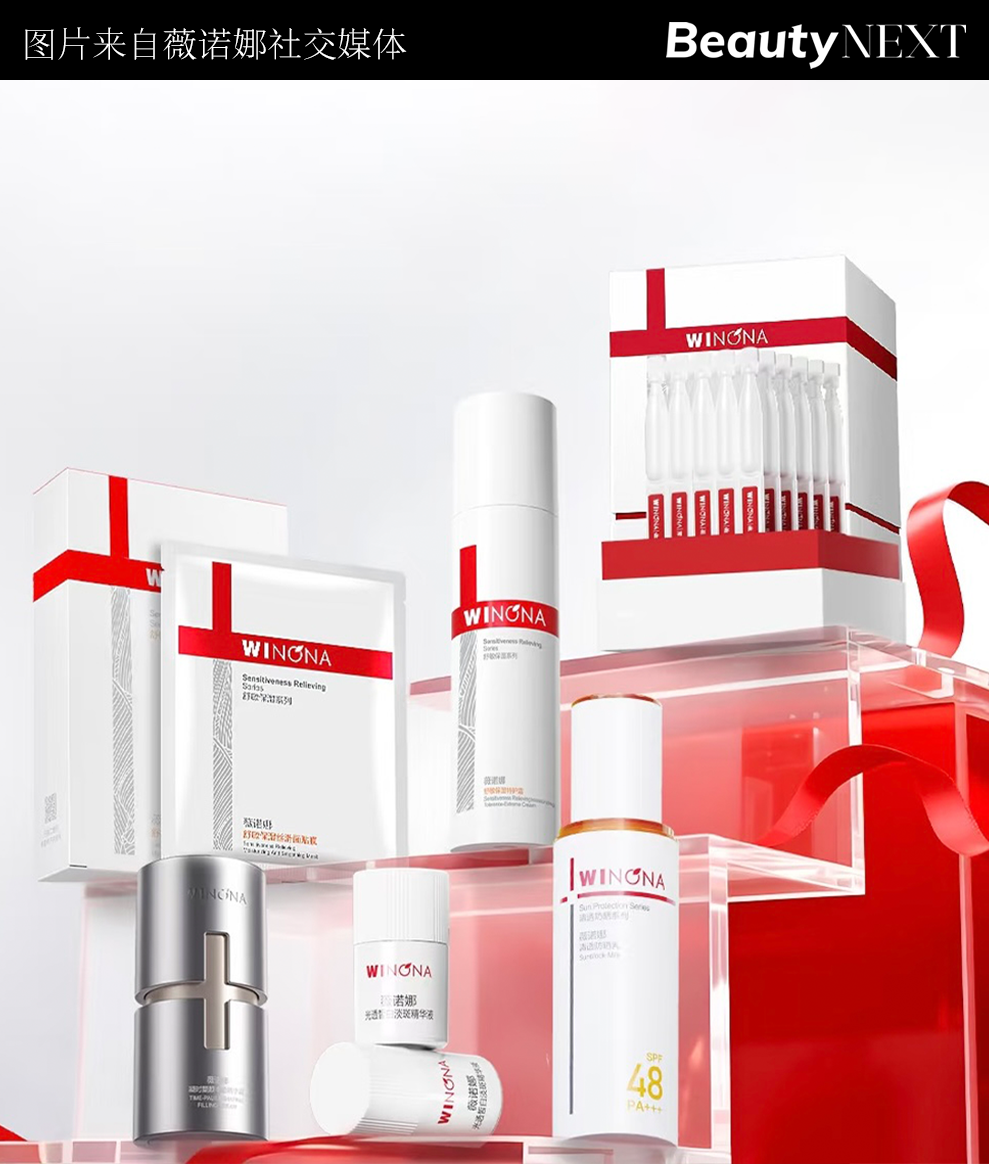
Investment Rating - The report maintains a "Buy" rating for the company [4] Core Insights - The company is experiencing a steady recovery in growth momentum through channel optimization and product focus, with a 13.78% year-on-year decline in revenue for the first three quarters of 2025, totaling 3.464 billion yuan [1][4] - The third quarter revenue reached 1.092 billion yuan, showing a reduced decline of 9.95% compared to the previous quarter, indicating initial effectiveness of channel and product adjustments [1] - Key initiatives contributing to revenue improvement include the simplification of SKU and reduced promotions on low-margin products, alongside enhanced online channel operations [1] - The main brand, Winona, has shown stable performance, particularly during the Double Eleven pre-sale period, while the high-end anti-aging brand, Aikeman, has seen strong growth [1] Summary by Sections Revenue and Growth - The company achieved a total revenue of 3.464 billion yuan in the first three quarters of 2025, down 13.78% year-on-year, with a third-quarter revenue of 1.092 billion yuan, down 9.95% [1][3] - The revenue decline is narrowing, suggesting that operational adjustments are beginning to yield results [1] Profitability - The gross margin for Q3 2025 was 70.68%, a decrease of 5.67 percentage points year-on-year [2] - The net profit margin improved to 2.52%, indicating a significant enhancement in profitability compared to the same period last year [2] Future Outlook - The company is expected to continue its operational adjustments, with the performance during the Double Eleven sales event being a critical indicator of the effectiveness of its strategies [2] - The multi-brand matrix, anchored by Winona and supported by Aikeman and the newly introduced TriPollar brand, is anticipated to create a second growth curve [2] - EPS forecasts for 2025, 2026, and 2027 are projected at 1.02, 1.22, and 1.43 yuan respectively [2][3]
深度|功效护肤迈入“千亿时代”,NUTE原则含金量还在上升
FBeauty未来迹· 2025-11-10 10:17
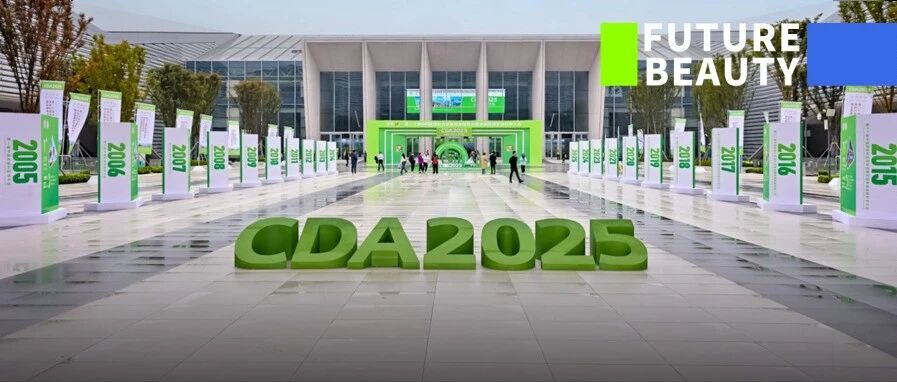
Core Viewpoint - The article highlights the significance of the NUTE principle in the development of functional skincare products, emphasizing its role in ensuring clinical relevance, unique mechanisms, technological empowerment, and credible evidence in the rapidly growing Chinese functional cosmetics market [12][22][31]. Group 1: Event Overview - The 20th Chinese Medical Association Dermatology Physician Annual Conference (CDA 2025) was held in Chongqing from November 6 to 9, attracting numerous dermatologists and beauty companies, with over 20 participating beauty enterprises [3][4]. - Notable foreign brands such as L'Oréal, Procter & Gamble, and Unilever, along with domestic brands like Betaini and HBN, showcased their products at the event [3][4]. Group 2: Winona's Presentation - Winona made a strong impression at CDA 2025 with 15 academic reports covering hot topics in dermatology, presented by renowned experts [6]. - The exhibition area was themed "Time Research Archive," featuring multiple sections that systematically displayed the brand's research achievements [6][7]. Group 3: NUTE Principle - The NUTE principle consists of four components: Clinical Need, Unique Mechanism, Technology, and Evidence [13][17]. - Winona's development of sensitive skin products is based on clinical needs, identifying key genes like CLDN-5, and utilizing innovative technologies for effective ingredient delivery [17][18]. Group 4: Market Growth and Challenges - The Chinese functional cosmetics market is projected to reach 105.4 billion yuan by 2025, with a compound annual growth rate of 36.03% from 2021 to 2025, significantly outpacing the overall cosmetics market [22]. - However, the market faces challenges with exaggerated claims and varying levels of evidence supporting product efficacy, leading to consumer confusion [25][29]. Group 5: Winona's Achievements - Winona has collaborated with 63 top-tier hospitals for clinical observations, covering over 19,000 individuals, and has published 493 papers in SCI and core journals [9]. - The brand has maintained its position as the top seller in the sensitive skin care market in China for five consecutive years from 2020 to 2024 [9].
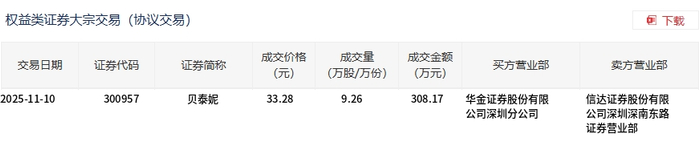
贝泰妮今日大宗交易折价成交9.26万股,成交额308.17万元
Xin Lang Cai Jing· 2025-11-10 08:52
Group 1 - On November 10, Betaini executed a block trade of 92,600 shares, with a transaction value of 3.0817 million yuan, accounting for 0.85% of the total trading volume for the day [1][2] - The transaction price was 33.28 yuan, representing a discount of 22.51% compared to the market closing price of 42.95 yuan [1][2]
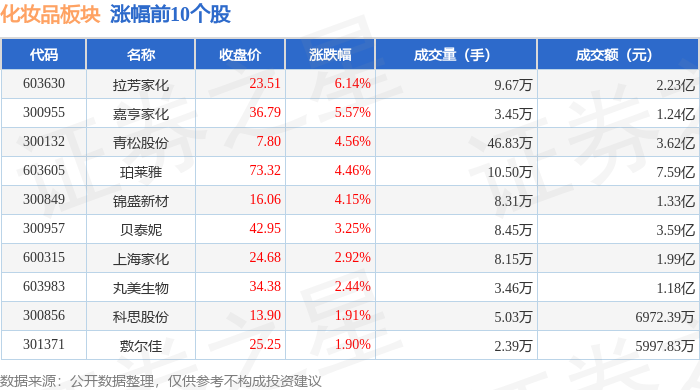
化妆品板块11月10日涨3.13%,拉芳家化领涨,主力资金净流入1.52亿元
Zheng Xing Xing Ye Ri Bao· 2025-11-10 08:49
Core Viewpoint - The cosmetics sector experienced a notable increase of 3.13% on November 10, with Lafang Jiahua leading the gains [1] Group 1: Market Performance - The Shanghai Composite Index closed at 4018.6, up 0.53%, while the Shenzhen Component Index closed at 13427.61, up 0.18% [1] - Lafang Jiahua's stock price rose by 6.14% to 23.51, with a trading volume of 96,700 shares and a transaction value of 223 million [1] - Other notable performers included: - Jiahen Jiahua: 5.57% increase, closing at 36.79 with a transaction value of 124 million [1] - Qingsong Co.: 4.56% increase, closing at 7.80 with a transaction value of 362 million [1] - Proya: 4.46% increase, closing at 73.32 with a transaction value of 759 million [1] Group 2: Fund Flow Analysis - The cosmetics sector saw a net inflow of 152 million from institutional investors, while retail investors experienced a net outflow of 179 million [1] - Key fund flows for selected companies included: - Lafang Jiahua: 22.32 million net inflow from institutional investors, with a net outflow of 11.42 million from retail investors [2] - Beitaini: 34.32 million net inflow from institutional investors, with a net outflow of 13.48 million from retail investors [2] - Shanghai Jahwa: 24.72 million net inflow from institutional investors, with a net outflow of 30.62 million from retail investors [2]