Yunnan Botanee Bio-Technology (300957)

Search documents
喜报!贝泰妮集团荣获“2025 年上市公司董事会办公室最佳实践”称号
Sou Hu Cai Jing· 2025-12-04 11:29
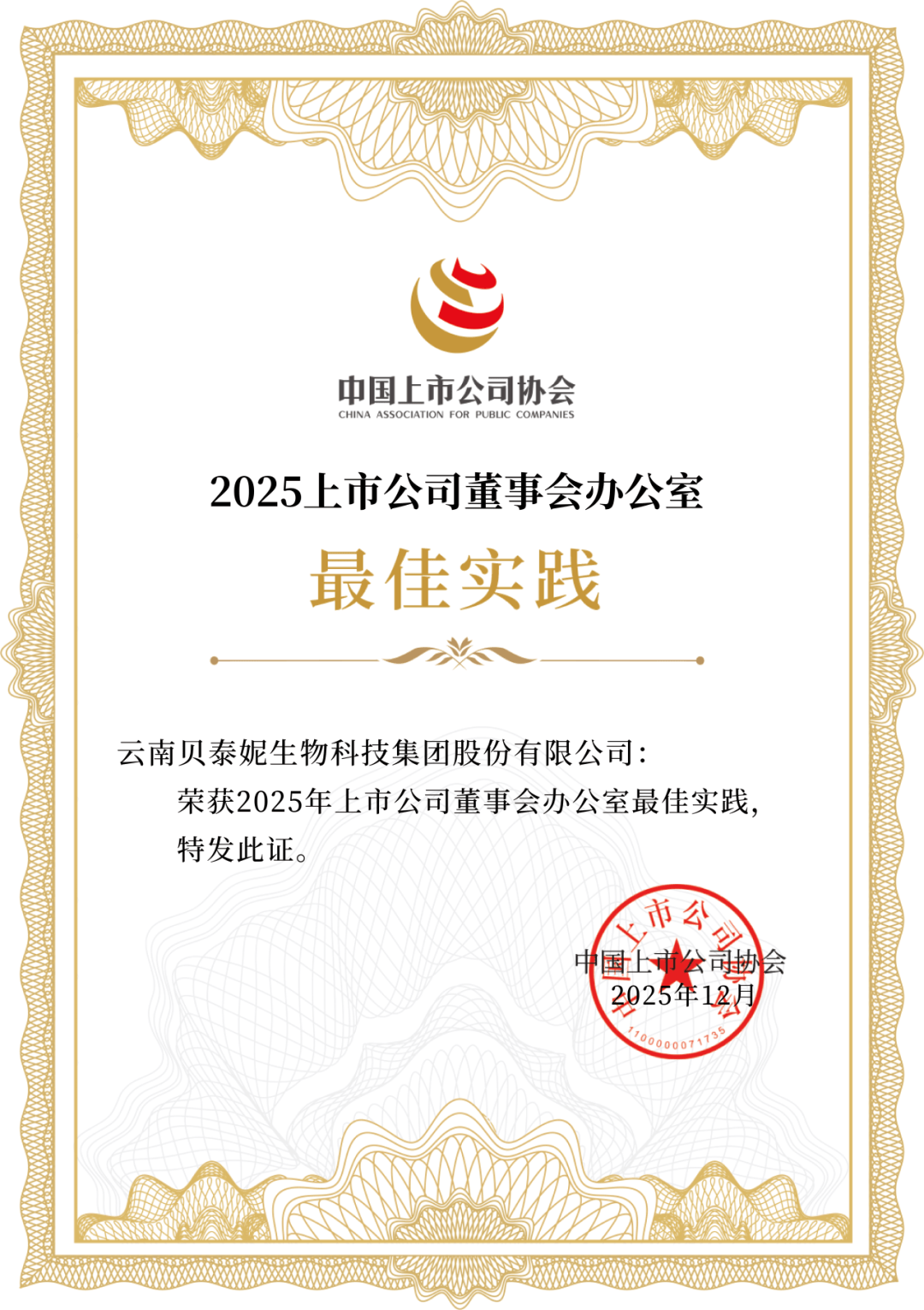
(来源:贝泰妮集团) 转自:贝泰妮集团 近日,中国上市公司协会"2025上市公司董办最佳实践"评选结果正式揭晓,贝泰妮集团董事会办公室凭借在公司治理领域的系统性创新与卓越实践,荣 获"2025 年上市公司董办最佳实践"称号。这一荣誉不仅是对贝泰妮董办团队专业能力的高度认可,也体现了其在推动上市公司治理现代化、以创新引擎 驱动企业长效价值增长方面的标杆作用。 2025上市公司董事会办公室 最佳实践 云南贝泰妮生物科技集团股份有限公司: 荣获2025年上市公司董事会办公室最佳实践, 特发此证。 关注@青刺果雪山小院 直达旷野之外的自然世界 在治理结构创新上,董办团队通过优化成员结构、深度挖掘提升专业委员会职能、打通治理边界,推动董事会从"会议机构"向"行动中枢"转型,显著提升 了决策的科学性与前瞻性。在ESG治理领域,团队助力董事会构建了"顶层设计—执行落地—价值传递"的三级ESG治理体系,推动贝泰妮ESG从"软性约 束"升级为"硬性战略",将ESG深度融入企业战略与运营。在风控体系建设中,董办团队组织实施董事会制定的"数字化、系统化、前置化"方向及策略, 成功推动了公司风控体系从"成本中心"向"价值创造中心"转 ...

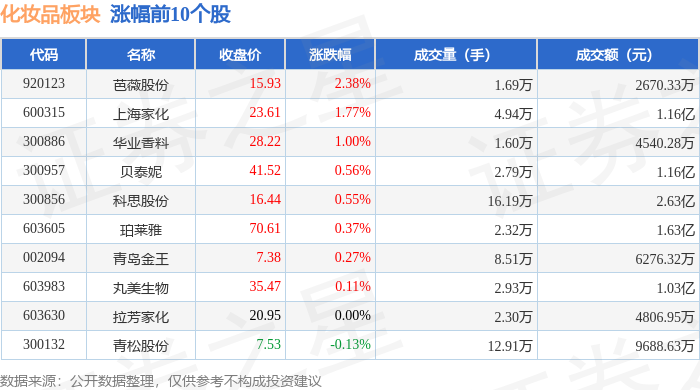
化妆品板块12月1日涨0.26%,芭薇股份领涨,主力资金净流出4951.61万元
Zheng Xing Xing Ye Ri Bao· 2025-12-01 09:16
Market Overview - On December 1, the cosmetics sector rose by 0.26% compared to the previous trading day, with BAWI leading the gains [1] - The Shanghai Composite Index closed at 3914.01, up 0.65%, while the Shenzhen Component Index closed at 13146.72, up 1.25% [1] Individual Stock Performance - BAWI shares closed at 15.93, up 2.38% with a trading volume of 16,900 lots and a transaction value of 26.70 million yuan [1] - Shanghai Jahwa closed at 23.61, up 1.77% with a trading volume of 49,400 lots and a transaction value of 116 million yuan [1] - Huachun Color closed at 28.22, up 1.00% with a trading volume of 16,000 lots and a transaction value of 45.40 million yuan [1] - Betaini closed at 41.52, up 0.56% with a trading volume of 27,900 lots and a transaction value of 116 million yuan [1] - Kohn shares closed at 16.44, up 0.55% with a trading volume of 161,900 lots and a transaction value of 263 million yuan [1] - Proya closed at 70.61, up 0.37% with a trading volume of 23,200 lots and a transaction value of 163 million yuan [1] - Qingdao King closed at 7.38, up 0.27% with a trading volume of 85,100 lots and a transaction value of 6.28 million yuan [1] - Marubi closed at 35.47, up 0.11% with a trading volume of 29,300 lots and a transaction value of 103 million yuan [1] - Lafang closed at 20.95, unchanged with a trading volume of 23,000 lots and a transaction value of 4.81 million yuan [1] - Qingsong shares closed at 7.53, down 0.13% with a trading volume of 129,100 lots and a transaction value of 96.89 million yuan [1] Fund Flow Analysis - The cosmetics sector experienced a net outflow of 49.52 million yuan from institutional funds, while retail investors saw a net inflow of 51.08 million yuan [2] - The overall fund flow indicates a mixed sentiment, with institutional investors pulling back while retail investors are increasing their positions [2] Detailed Fund Flow by Stock - Jiahen Home's main funds saw a net inflow of 7.25 million yuan, while retail funds had a net outflow of 19.70 million yuan [3] - Shanghai Jahwa experienced a net inflow of 3.64 million yuan from main funds, with retail investors contributing a net inflow of 348.90 million yuan [3] - Kohn shares had a net inflow of 3.35 million yuan from main funds, but retail investors saw a net outflow [3] - BAWI experienced a net outflow of 0.50 million yuan from main funds, while retail investors had a net inflow of 164.42 million yuan [3] - Qingdao King saw a net outflow of 0.83 million yuan from main funds, but retail investors contributed a net inflow of 238.25 million yuan [3]


贝泰妮集团入选中国上市公司协会双项最佳实践案例
Zheng Quan Ri Bao Zhi Sheng· 2025-11-30 12:35
Core Insights - The conference "2025 Listed Companies Sustainable Development Exchange Meeting" was held in Beijing, focusing on the theme "Practicing Corporate Mission, Co-creating a Sustainable Future" [1] - Yunnan Betaini Biotechnology Group Co., Ltd. was recognized in two categories: "2025 Best Practice Case for Sustainable Development of Listed Companies" and "2025 Best Practice Case for Board of Directors of Listed Companies" [1] - The dual recognition highlights Betaini's leadership in integrating board governance with sustainable development strategies [1] Company Initiatives - Betaini plans to enhance green innovation, biodiversity protection, and improve its ESG governance framework [1] - The company aims to deeply integrate sustainable development with its core business innovation [1] - Betaini's mission is to "create a healthy skin ecosystem in China," and it seeks to collaborate with various stakeholders for high-quality industrial development [1]
商贸零售行业周报:品牌建设+科技美学,谱写国货美妆增长答案-20251130
KAIYUAN SECURITIES· 2025-11-30 07:11
Investment Rating - The investment rating for the retail industry is "Positive" (maintained) [1] Core Views - The retail industry is experiencing a shift towards quality growth and long-term strategies, moving away from reliance on traffic bonuses [25][26] - The industry is focusing on emotional consumption themes, with high-quality companies in sectors like gold jewelry, offline retail, cosmetics, and medical aesthetics being highlighted as investment opportunities [5][29][30] Summary by Sections Retail Market Review - The retail industry index rose by 3.45% during the week of November 24-28, 2025, outperforming the Shanghai Composite Index by 2.05 percentage points [4][13] - The multi-format retail sector showed the highest growth this week, with a 6.18% increase, while the jewelry sector led the year-to-date performance with a 22.11% increase [18][19] Retail Insights: Brand Building and Technological Aesthetics - The 2025 Cosmetics Annual Conference highlighted the importance of brand building and technological aesthetics for domestic beauty brands to achieve growth [25][26] - Companies like Shiseido and Shanghai Jahwa are focusing on quality and profitability, while Elysian Group is transitioning from operational to technological drivers [26][27] Investment Recommendations - **Gold Jewelry**: Focus on brands with differentiated product offerings and consumer insights, recommending companies like Chow Tai Fook and Lao Pu Gold [5][29] - **Offline Retail**: Highlighting companies adapting to trends and exploring AI-enabled cross-border e-commerce, with recommendations for Yonghui Supermarket and Aiyingshi [5][30] - **Cosmetics**: Emphasizing brands that meet emotional value and safety innovation, recommending companies like Maogeping and Proya [5][30] - **Medical Aesthetics**: Targeting differentiated product manufacturers and expanding medical chains, recommending companies like Aimeike and Kedi-B [5][30] Company-Specific Insights - **Chow Tai Fook**: Achieved revenue of HKD 38.986 billion in FY2026H1, with a slight decline in revenue but a stable profit margin [36][37] - **潮宏基 (Chao Hong Ji)**: Reported a revenue increase of 28.4% in Q1-Q3 2025, with a strong performance in Q3 [39][40] - **永辉超市 (Yonghui Supermarket)**: Experienced a revenue decline of 22.2% in Q1-Q3 2025, but is undergoing a transformation towards quality retail [43][44]



7家消费公司拿到新钱;霸王茶姬三季度GMV79.3亿元;2026年我国即时零售规模将破万亿|创投大视野
36氪未来消费· 2025-11-29 12:23
Group 1: Investment and Financing Activities - "Bixing Coffee" completed a Series B financing round of several tens of millions, led by Suzhou Agricultural Development Industry Science and Technology Fund, following previous rounds in 2022 and 2024 [4][5] - "Tuozhu Technology" is nearing completion of a new financing round with a valuation potentially reaching $10 billion, although the company has denied the accuracy of this information [6] - "Ruiyun Cold Chain" recently completed an A+ round financing of nearly 100 million RMB, aimed at enhancing cold chain logistics efficiency through digitalization [7] - "TianTian BaiYing" completed a Series A financing round of several tens of millions, focusing on providing intelligent maintenance services to B-end clients [8] - "Laimou Technology" completed a Series A+ financing round of several tens of millions, marking its fourth round of financing since 2025 [9] - "Hypershell" completed two financing rounds totaling $70 million, with a post-investment valuation approaching $400 million [10] - "Smart Doubling Digital Human" received strategic investment from Zhiyuan Robotics [11][12] Group 2: Company Performance and Market Trends - "Bawang Tea Ji" reported a GMV of 79.3 billion RMB in Q3 2025, with a year-on-year decline of 4.5%, while overseas GMV grew by 75.3% [13][14] - "Mandi International" submitted an IPO application to Hong Kong Stock Exchange, aiming to become the first stock focused on hair loss prevention, with a projected revenue growth from 9.82 billion RMB in 2022 to 14.55 billion RMB in 2024 [15] - "Jasmine Milk White" has expanded its overseas presence, opening new stores in Indonesia and the US, with total stores exceeding 2000 globally [16][17] - "Lucky Coffee" announced its global store count surpassed 10,000, achieving rapid growth in the coffee market [18] Group 3: Industry Insights and Future Projections - The instant retail market in China is projected to exceed 1 trillion RMB by 2026, with a compound annual growth rate of 12.6% during the 14th Five-Year Plan period [21] - Global luxury goods consumption is expected to grow at a rate between -1% and 1% in 2025, with a recovery anticipated in 2026 [22] - High-net-worth individuals are shifting their gift-giving behavior, with travel becoming the preferred way to celebrate success, rising from 50% in 2024 to 64% in 2025 [23]

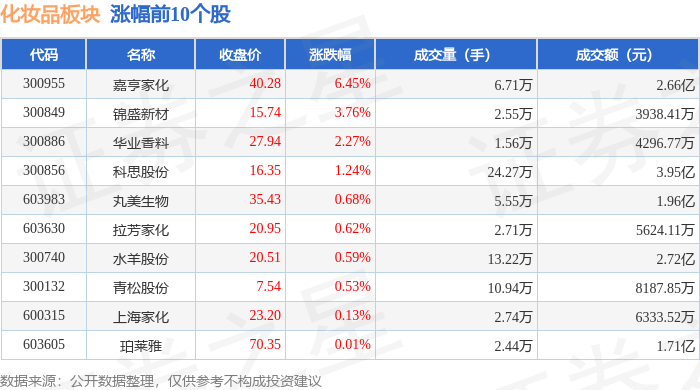
化妆品板块11月28日涨0.29%,嘉亨家化领涨,主力资金净流出6103.78万元
Zheng Xing Xing Ye Ri Bao· 2025-11-28 09:15
Group 1 - The cosmetics sector increased by 0.29% on November 28, with Jiaheng Jiahua leading the gains [1] - The Shanghai Composite Index closed at 3888.6, up 0.34%, while the Shenzhen Component Index closed at 12984.08, up 0.85% [1] - Jiaheng Jiahua's stock price rose by 6.45% to 40.28, with a trading volume of 67,100 shares and a transaction value of 266 million yuan [1] Group 2 - The cosmetics sector experienced a net outflow of 61.04 million yuan from institutional investors, while retail investors saw a net inflow of 76.64 million yuan [2] - Among individual stocks, Marubi Biological had a net outflow of 9.46 million yuan from institutional investors, while Shanghai Jahwa saw a net inflow of 5.63 million yuan [3] - The overall trading activity in the cosmetics sector indicates a mixed sentiment, with some stocks experiencing significant outflows while others attracted retail interest [2][3]


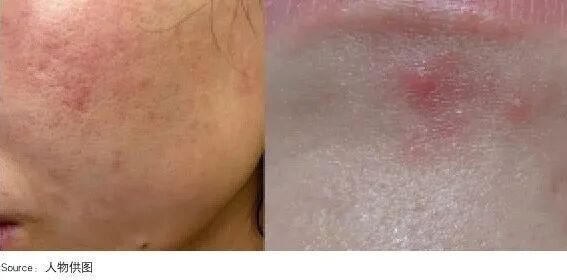
“烂脸”的年轻人,买爆药妆
3 6 Ke· 2025-11-28 00:33
Core Insights - The article discusses the rising demand for sensitive skin care products in China, driven by a significant portion of the population experiencing skin sensitivity issues, with estimates suggesting that 30% of individuals are affected [3][4][6]. - The sensitive skin care market in China is projected to reach a scale of 66.44 billion yuan by June 2025, indicating a robust growth trajectory [4]. - Domestic brands, particularly those focusing on sensitive skin, have gained substantial market share, with brands like Winona and Huaxi Biological showing remarkable growth in sales and market presence [6][11][17]. Market Dynamics - The sensitive skin care market is characterized by a high incidence of skin sensitivity, with a daily occurrence rate of 64.1% among consumers [3]. - The demand for sensitive skin care products has led to the emergence of a billion-dollar market, with brands capitalizing on the need for effective solutions [4][6]. - The competitive landscape is shifting, with domestic brands outperforming international counterparts in terms of market share, reaching nearly 49.1% by 2022 [17]. Consumer Behavior - Consumers are increasingly willing to invest in skin care products to address their skin issues, often resorting to multiple purchases and trying various products to find effective solutions [6][25]. - The article highlights the psychological impact of skin conditions on consumers, leading to a cycle of purchasing and dissatisfaction as they seek effective remedies [9][28]. - The trend of "medical beauty" is on the rise, with a growing number of individuals seeking cosmetic procedures to enhance their appearance, further fueling the demand for sensitive skin care products [8][9]. Brand Strategies - Domestic brands have shifted their strategies from affordability to premium pricing, with significant price increases observed in their product lines [20][21]. - The article notes that brands are increasingly focusing on innovation and technology to differentiate themselves in a crowded market, with a notable increase in patent applications related to sensitive skin care [32]. - Marketing strategies have evolved, with brands now emphasizing product efficacy and scientific backing rather than solely relying on influencer endorsements [32][33].
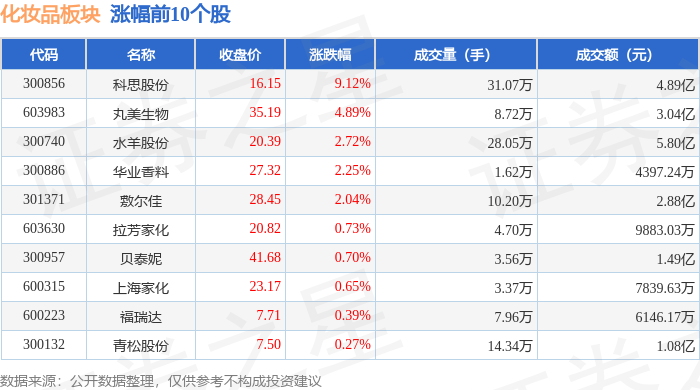
化妆品板块11月27日涨1.6%,科思股份领涨,主力资金净流出2533.51万元
Zheng Xing Xing Ye Ri Bao· 2025-11-27 09:13
Core Viewpoint - The cosmetics sector experienced a 1.6% increase on November 27, with Keshare leading the gains, while the overall market showed mixed results with the Shanghai Composite Index rising by 0.29% and the Shenzhen Component Index declining by 0.25% [1] Group 1: Market Performance - The Shanghai Composite Index closed at 3875.26, up 0.29% [1] - The Shenzhen Component Index closed at 12875.19, down 0.25% [1] - The cosmetics sector's individual stock performance is detailed in a table, highlighting significant gainers such as Keshare with a 9.12% increase [1] Group 2: Individual Stock Performance - Keshare (300856) closed at 16.15 with a 9.12% increase and a trading volume of 310,700 shares, amounting to a transaction value of 489 million yuan [1] - Marubi Biological (603983) closed at 35.19, up 4.89%, with a trading volume of 87,200 shares and a transaction value of 304 million yuan [1] - Other notable performers include Water Sheep (300740) with a 2.72% increase and a transaction value of 580 million yuan [1] Group 3: Capital Flow Analysis - The cosmetics sector saw a net outflow of 25.34 million yuan from institutional investors and 82.57 million yuan from retail investors, while individual investors contributed a net inflow of 108 million yuan [2] - A detailed table shows the capital flow for individual stocks, indicating that LaFang (603630) had a net inflow of 5.96 million yuan from institutional investors [3] - Other stocks like Shanghai Jahwa (600315) and Huaye Fragrance (300886) also experienced varying degrees of net inflow and outflow from different investor categories [3]


研判2025!中国爽肤水行业发展历程、市场政策、产业链图谱、市场规模、竞争格局及发展趋势分析:国产品牌加速突围,抢滩步伐加速[图]
Chan Ye Xin Xi Wang· 2025-11-27 01:48
Overview - The consumption of toner in China is expanding beyond female consumers as male skincare awareness increases, leading to a new growth point in the market [1][9] - The sales revenue of toner in China reached 20.863 billion yuan in 2021, with a year-on-year growth of 2.98%, but is projected to decline to 17.865 billion yuan in 2024, a decrease of 3.25% [1][10] - High-end toners account for approximately 55.47% of the market, while mass-market toners make up about 44.53% [1][10] Industry Development - The toner industry in China has evolved from basic cleansing products to a mature category with diverse sub-segments, entering a phase of high-quality development characterized by multiple innovations [4] - The rise of "ingredient-focused" consumers has led to the popularity of natural plant extracts and additive-free formulations, while new technologies like micro-ecological skincare and nano-encapsulation enhance product efficacy [4] - Online channels such as e-commerce and live streaming have emerged, allowing both domestic and international brands to expand their reach, while offline stores upgrade consumer experiences through smart skin testing [4] Market Policies - The Chinese government has implemented a series of regulations to enhance the development of the cosmetics industry, including guidelines for production quality management and safety assessments, pushing the toner industry towards standardization and sustainability [6] Industry Chain - The upstream of the toner industry includes suppliers of raw materials like glycerin, hyaluronic acid, and packaging materials, while the midstream involves research and production, and the downstream encompasses various sales channels including e-commerce and retail [4][8] Consumer Insights - The core consumer group for toners in China is predominantly female, accounting for 87.6%, but the male consumer segment is growing, with increasing acceptance of refreshing and non-greasy products [8] - The age demographic shows that consumers aged 18-35 represent over 68.3% of the market, with younger consumers particularly influenced by online marketing and product safety [8] Competitive Landscape - The toner market in China is highly competitive, featuring both international brands like L'Oréal and Shiseido, and domestic players such as Proya and Beitaini, with the latter gaining market share through high cost-performance ratios [10][11] - Proya, for instance, focuses on technology-driven skincare targeting young professional women, while Beitaini offers a range of skincare and cosmetic products, achieving significant revenue growth [11][12] Future Trends - The toner market is expected to move towards more specialized products catering to specific skin types and conditions, with a focus on "no-additive" formulations and the use of gentle, natural ingredients [14] - Brands will increasingly emphasize ingredient transparency and safety, enhancing consumer trust through clear sourcing and testing information [14]

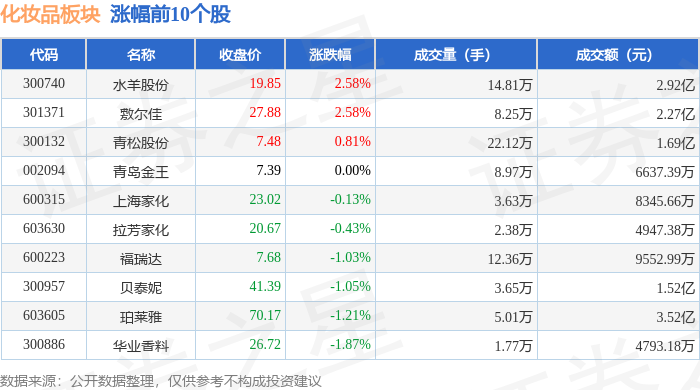
化妆品板块11月26日跌1.1%,科思股份领跌,主力资金净流入795.52万元
Zheng Xing Xing Ye Ri Bao· 2025-11-26 09:12
Market Overview - The cosmetics sector experienced a decline of 1.1% on November 26, with Kesheng Co. leading the drop [1] - The Shanghai Composite Index closed at 3864.18, down 0.15%, while the Shenzhen Component Index closed at 12907.83, up 1.02% [1] Individual Stock Performance - Notable gainers included: - Shuiyang Co. (300740) with a closing price of 19.85, up 2.58% [1] - Fulejia (301371) also rose by 2.58% to 27.88 [1] - Major decliners included: - Kesheng Co. (300856) fell by 4.88% to 14.80 [2] - Marubi Bio (603983) decreased by 2.95% to 33.55 [2] - Jiahen Home (300955) dropped by 2.85% to 37.84 [2] Trading Volume and Capital Flow - The cosmetics sector saw a net inflow of 7.95 million yuan from institutional investors, while retail investors contributed a net inflow of 7.35 million yuan [2] - However, there was a net outflow of 15.30 million yuan from speculative funds [2] Detailed Capital Flow Analysis - Key stocks with significant capital flow: - Jiahen Home (300955) had a net inflow of 18.65 million yuan from institutional investors, but a net outflow of 19.54 million yuan from retail investors [3] - Fulejia (301371) saw a net inflow of 12.12 million yuan from speculative funds, despite a net outflow from retail investors [3] - Other stocks like Qingdao King (002094) and Shanghai Jahwa (600315) also experienced mixed capital flows, indicating varied investor sentiment [3]