ASML Holding(ASML)

Search documents
反转!荷兰光刻机要“凉”?日本光刻机在中国卖疯,利润暴涨82%
Sou Hu Cai Jing· 2025-11-05 14:27
Core Viewpoint - The semiconductor equipment market in China is experiencing a significant shift, with Japanese companies like Nikon and Canon capitalizing on the restrictions faced by ASML, leading to a dramatic increase in their sales in the Chinese market [2][4][16]. Group 1: ASML's Market Position - In 2023, ASML delivered 225 lithography machines to China, generating over €6.4 billion, making China its second-largest market, accounting for 29% of total sales [4]. - By Q3 2023, Chinese orders constituted 46% of ASML's global revenue, driven by the rapid growth of China's chip industry [4]. - Following U.S. pressure, ASML faced export restrictions starting January 2024, predicting a 10% to 15% impact on sales in China for that year [6][8]. Group 2: Japanese Competitors' Strategy - Nikon and Canon have shifted their focus to mature technologies, such as DUV and i-line, which are suitable for the majority of Chinese chip manufacturers producing 28nm and above chips [8][10]. - Nikon launched a new i-line lithography machine in 2024, its first in 25 years, priced 20% to 30% lower than Canon's offerings, aiming to penetrate the Chinese market [12]. - Canon expanded its service network in China, increasing technical staff by 50% to support its lithography equipment [14]. Group 3: Market Dynamics and Trends - In Q1 2024, Japan's semiconductor equipment exports to China surged to ¥521.2 billion, a staggering 82% increase year-on-year, marking the highest level since 2007 [16]. - By 2024, Japan's semiconductor equipment exports to China reached $9.63 billion, a 28.23% increase, with Japan becoming the largest supplier to China [16][20]. - The overall semiconductor equipment market is projected to grow by 25.4% in 2024, with China's semiconductor manufacturing equipment market expected to reach $23.89 billion [20][22]. Group 4: Future Outlook - ASML has lowered its sales target for 2025 from €3-4 billion to €3-3.5 billion due to a weakening Chinese market [22]. - Nikon and Canon have also adjusted their forecasts, with Nikon expecting a decline in net profit by 22% to ¥35 billion [18][24]. - The Chinese market is anticipated to grow at a compound annual growth rate of 14.63% from 2025 to 2035, indicating a long-term shift in the semiconductor equipment landscape [22].



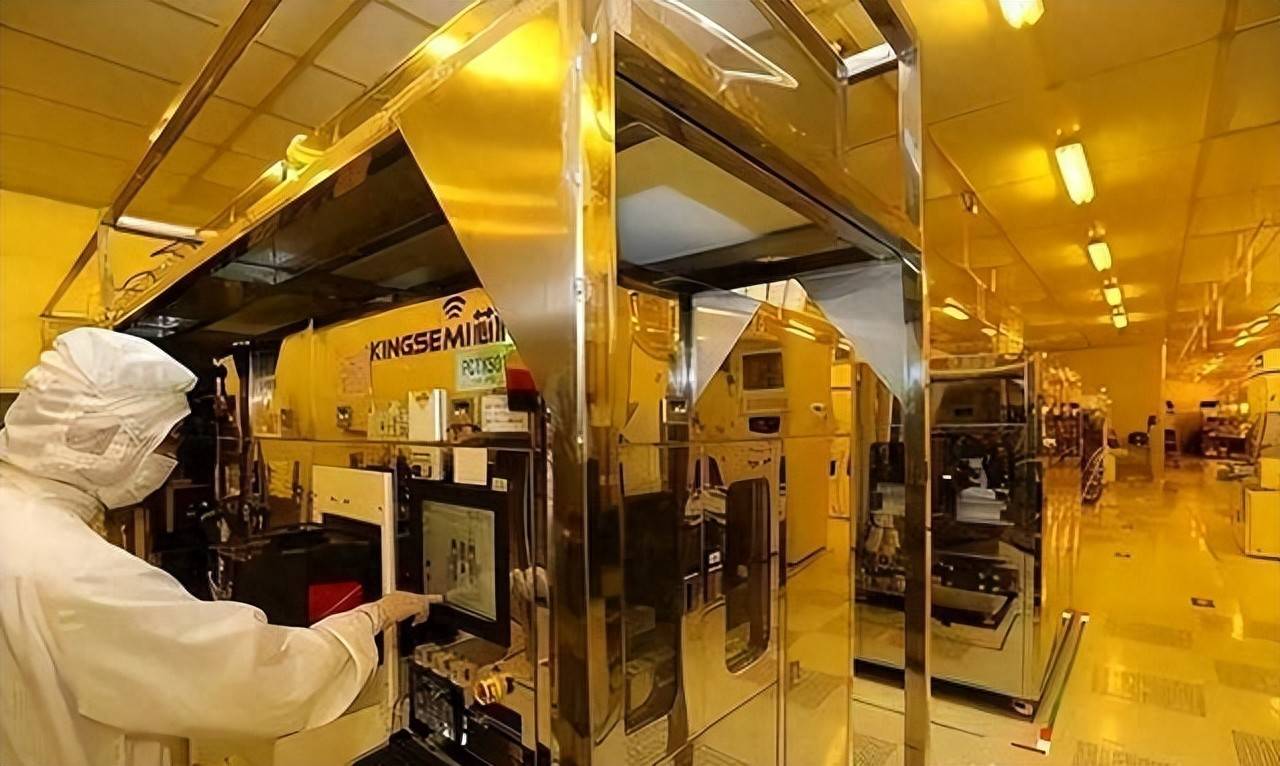
(第八届进博会)ASML中国区总裁沈波:半导体产业的主旋律是开放合作
Zhong Guo Xin Wen Wang· 2025-11-04 17:19
Core Insights - ASML's participation in the China International Import Expo is driven by a spirit of open cooperation rather than commercial motives, aligning with the semiconductor industry's emphasis on collaboration [2] - The company views the current semiconductor industry as being in a slow upward cycle, with a focus on showcasing technological innovations and insights related to AI opportunities and challenges [2][3] Group 1: Industry Perspective - ASML's executive emphasizes the importance of global competition and encourages Chinese equipment manufacturers to integrate into the international supply chain with a global perspective [2] - The company maintains a revenue forecast of €44 billion to €60 billion by 2030, based on optimism regarding long-term developments in AI and other technologies [3] Group 2: AI and Semiconductor Demand - Despite the booming AI sector, the demand for semiconductor equipment has not yet fully materialized, as the benefits of AI will only be realized when it is integrated into consumer electronics [3] - AI is identified as a significant driver for the semiconductor industry, following the impacts of personal computers, the internet, and smartphones, with McKinsey predicting a contribution of approximately $10 trillion to global GDP by 2030 [3] Group 3: Challenges in the Industry - The industry faces two major challenges due to AI: insufficient computing power and increased energy consumption [4] - Solutions proposed include enhancing AI model efficiency and advancing chip technology through 2D scaling and 3D integration techniques [4]
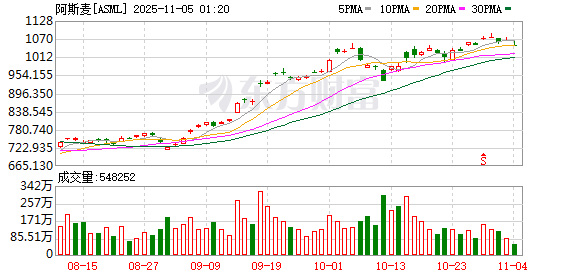
今夜!美股下跌 大空头做空英伟达
Zhong Guo Ji Jin Bao· 2025-11-04 16:25
Market Overview - US stock market experienced a significant drop on November 4, with the Dow Jones down approximately 150 points, Nasdaq down about 1%, and S&P 500 down around 0.6% [3] - Concerns over the valuation of AI-related stocks, particularly Palantir, have contributed to the market decline [4] Company Performance - Palantir reported third-quarter earnings exceeding Wall Street expectations, with projected revenue of $1.33 billion, surpassing analyst estimates of $1.19 billion, and a 63% increase in revenue from the previous quarter [4] - Despite strong earnings, Palantir's stock fell approximately 7%, reflecting market disappointment regarding visibility into future growth [4] - The forward P/E ratio for Palantir has exceeded 200, with current P/E nearing 700, raising concerns among investors about sustaining high valuations [4] Sector Trends - Technology stocks generally declined, with Intel down about 5%, Nvidia and Oracle down nearly 3% [4][5] - The S&P 500's forward P/E ratio has risen above 23, approaching the highest level since 2000, driven by the performance of AI stocks [6] Investor Sentiment - High-profile executives from Goldman Sachs and Morgan Stanley expressed concerns about potential market pullbacks of 10% to 20% in the next 12 to 24 months [6] - Michael Burry's Scion Asset Management disclosed bearish positions on Nvidia and Palantir, indicating rising investor anxiety regarding the sustainability of the AI boom [7]


荷兰光刻机卡脖子?中国反手一个稀土锁喉!
Xin Lang Cai Jing· 2025-11-04 03:28
Core Viewpoint - The Netherlands' recent decision to tighten export controls on lithography machines to China has backfired, significantly impacting its own semiconductor industry, particularly ASML, which is heavily reliant on the Chinese market [1][2][4]. Group 1: Export Control Changes - On October 31, the Dutch government announced a reduction in export limits for DUV lithography machines from 7nm to 14nm, requiring licenses for mid-range models like the 1970i and 1980i, with an extended approval period of 90 days [2]. - The justification provided by the Dutch government for this decision was based on "military security" concerns, although no substantial evidence was presented to support this claim [2]. Group 2: Impact on ASML - ASML, the largest supplier of DUV equipment, is significantly affected as China accounts for 35% of its global DUV sales, with projected revenue from China making up 28% of ASML's total in 2024, and nearly 90% of that from DUV equipment [4]. - Following the announcement of the new regulations, ASML's stock price plummeted by 8.2% on the same day [4]. Group 3: ASML's Strategic Responses - In response to the export restrictions, ASML has initiated strategies to mitigate the impact, including the introduction of the NX2000 model, which adjusts parameters to bypass the new regulations, requiring clients to invest an additional $8 million for adaptation [6]. - ASML is also establishing a technical service center in Suzhou, investing $500 million in spare parts to reduce maintenance turnaround from 45 days to 15 days [7]. Group 4: China's Countermeasures - In retaliation to the Netherlands' actions, China has implemented stricter regulations on rare earth materials, requiring licenses for any lithography machine containing 0.1% rare earths sourced from China, regardless of where the machine is produced [9]. - ASML's lithography machines utilize over 10 kilograms of rare earth magnets, with 90% of the world's rare earth refining capacity located in China, leading to concerns about ASML's ability to maintain inventory, which could last only 8 weeks [10]. Group 5: Broader Implications - The situation illustrates that in a globalized economy, no country can remain unaffected by geopolitical maneuvers [11]. - The Netherlands' attempt to restrict China has inadvertently jeopardized its own economic interests, particularly in the semiconductor sector [12]. - The market dynamics are proving to be more influential than political interventions, as ASML's need to adapt highlights the necessity for companies to prioritize profitability [13][14]. - China's advancements in semiconductor technology and partnerships with Japanese manufacturers indicate a shift towards self-sufficiency, challenging the notion that it can be easily constrained by external pressures [16].
进博前瞻|ASML展示新款i-line光刻机 中国区总裁沈波:3D集成是芯片行业未来趋势之一
Mei Ri Jing Ji Xin Wen· 2025-11-03 15:00
Core Viewpoint - ASML emphasizes the importance of collaboration and innovation in the semiconductor industry, particularly in the context of AI development and advanced packaging technologies [2][3][5]. Group 1: ASML's Participation in the Expo - ASML is participating in the China International Import Expo for the seventh time, showcasing its advanced lithography solutions, including the TWINSCAN NXT:870B and TWINSCAN XT:260 systems [2]. - The company aims to promote the spirit of open cooperation and share insights on industry developments rather than pursuing commercial objectives [2]. Group 2: AI and Semiconductor Demand - AI is projected to contribute approximately $13 trillion to global GDP by 2030, indicating a significant increase in demand for various semiconductor chips beyond just high-end GPUs and HBM [3]. - The demand for semiconductors will encompass a wide range of chips, including mature process logic chips and sensors, as AI applications expand into consumer and industrial sectors [3]. Group 3: Technological Innovations in Chip Development - The semiconductor industry is expected to focus on two core innovation routes: 2D scaling through transistor size reduction and 3D integration for stacking and packaging [6]. - ASML's XT:260 lithography system supports advanced packaging applications, which are crucial in the post-Moore's Law era [5][6]. Group 4: Advanced Packaging and 3D Integration - The XT:260 system utilizes a unique dual-stage technology and is designed for large field exposure, which enhances efficiency and yield in advanced packaging processes [6][7]. - ASML's solutions also support core bonding processes for 3D integration, reducing wafer deformation and alignment errors, thus meeting the growing demands in emerging application areas [7].
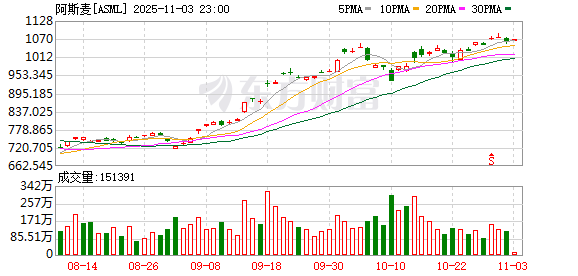
中美贸易暂歇,中国对荷兰实施稀土出口逐案审批等新规
Sou Hu Cai Jing· 2025-11-03 11:09
Group 1 - The meeting between Chinese leaders and US President Trump resulted in the cancellation of a 10% tariff on fentanyl and the suspension of multiple export controls and investigations, which has been positively received as it avoids a destructive trade war [1] - Starting December 1, China will implement stricter export controls on rare earth elements to the Netherlands, requiring export licenses for goods containing ≥0.1% Chinese-sourced rare earths, and case-by-case approval for 14nm chip production equipment [1] Group 2 - ASML, a key player in advanced lithography machines, is facing a critical inventory shortage, with neodymium-iron-boron magnets only sufficient for 8 weeks of production, risking a monthly production decrease of 15 to 20 EUV lithography machines and an annual loss of €3.2 to €4.3 billion [2] - The core components of lithography machines rely heavily on rare earth elements, with the EUV lithography machine's magnetic levitation stage requiring neodymium-iron-boron magnets doped with dysprosium and terbium to achieve high coercivity, ensuring wafer positioning accuracy within ±2 nanometers [2] - The lens systems produced by Zeiss also depend on high-purity lanthanum glass, with 90% of this supply sourced from China, highlighting the critical nature of rare earth elements in the semiconductor manufacturing process [2]
ChatGPT lists Five Stocks that could be the ‘Next Nvidia’, here’s why experts remain skeptical
The Economic Times· 2025-11-03 10:32
Core Insights - The article discusses the potential for certain technology companies to replicate Nvidia's extraordinary growth, highlighting the debate among analysts regarding this possibility [1][4][13] - ChatGPT identified five companies—AMD, ASML, Broadcom, TSMC, and Oracle—as potential candidates for high growth, based on their relevance to AI, semiconductor design, and data infrastructure [2][14] Company Analysis - Nvidia's revenue has surged to approximately USD 130 billion over the last five years, marking an increase of over 1,000 percent, with a market capitalization exceeding USD 5 trillion [7][10] - The company's strategic positioning of GPUs as essential hardware for AI applications has allowed it to dominate the high-performance computing market [6][10] - Recent investments by Nvidia include a USD 1 billion stake in Nokia and a USD 5 billion collaboration with Intel, indicating a diversification strategy beyond graphics chips [9][10] Industry Context - The AI and semiconductor sectors are experiencing significant growth, with Nvidia's success serving as a benchmark for other companies [15] - Analysts caution that being in the same industry does not guarantee similar success, emphasizing the unique timing and vision that contributed to Nvidia's rise [4][13] - The "Nvidia effect" is influencing equity markets, prompting investors to seek smaller firms that may replicate Nvidia's growth trajectory [10][12]



反转竟然如此之快!ASML突然改口,外媒:这风格太欧洲了
Sou Hu Cai Jing· 2025-11-03 08:51
Core Insights - ASML reported a significant revenue from China, reaching €10.195 billion in 2024, accounting for 36.1% of total revenue, surpassing South Korea, the US, and Taiwan [1] - The company plans to upgrade its existing maintenance center in Beijing, which will enhance its service capabilities and reduce repair times from weeks to days [3][5] - The geopolitical landscape, particularly US restrictions on chip technology, heavily influences ASML's operations and strategy in China [5][10] Group 1: Financial Performance - ASML's revenue from China is critical, with projections indicating that 2024 will see the delivery of 418 machines, including 44 EUV and 374 DUV, with China consuming a significant portion [10] - The company's Q1 report showed China contributing 36% of revenue, which increased to 42% in Q3, highlighting the importance of the Chinese market [10][12] - Despite strong performance, ASML anticipates a 25% reduction in demand from China by 2026 due to the rise of domestic competitors [10] Group 2: Strategic Developments - The upgrade of the Beijing center is part of a broader strategy to localize supply chains and mitigate risks associated with US sanctions [10][12] - ASML's cautious approach reflects the delicate balance it must maintain between serving the Chinese market and adhering to US regulations [5][12] - The company is investing €12 million in the Beijing center, which is expected to generate €200 million in services in its first year [10] Group 3: Market Dynamics - The competitive landscape is shifting, with Chinese companies like SMIC and Yangtze Memory Technologies advancing in domestic chip production, posing a long-term threat to ASML's market share [5][10] - ASML's after-sales service contributes significantly to its revenue, with a profit margin exceeding 60%, making maintenance a crucial aspect of its business model [5] - The geopolitical tensions and the need for local alternatives in China are driving ASML to adapt its strategies while trying to maximize profits [12][14]

Deutsche Bank Raises ASML Holding (ASML) Price Target to EUR1,000 After Strong Q3 and Bullish Outlook
Yahoo Finance· 2025-11-03 03:10
Core Insights - ASML Holding N.V. is recognized for its strong earnings growth potential over the next five years, with Deutsche Bank maintaining a Buy rating and increasing the price target from EUR900 to EUR1,000 [1] Group 1: Financial Performance - ASML reported third-quarter bookings of EUR5.4 billion, surpassing the consensus estimate of EUR4.9 billion, driven by EUV technology for DRAM memory chips [2] - The company has upgraded its forecast for 2026, now expecting 54 units of low NA EUV to ship, an increase from the previous estimate of 46 units for 2025, reflecting improved confidence despite earlier concerns about a decline in its China business [3] Group 2: Company Overview - ASML Holding N.V. is a Dutch multinational that designs, manufactures, and sells advanced equipment systems, primarily lithography machines, crucial for semiconductor chip production used in modern electronic devices [4]
The Latest Thoughts From American Technology Companies On AI (2025 Q3) : The Good Investors %
The Good Investors· 2025-11-02 23:18
Core Insights - The rapid advancement of artificial intelligence (AI) has significantly impacted various industries, particularly in technology and cloud services, with companies like Alphabet and Amazon leading the charge in AI integration and product offerings [1][2]. Alphabet - Alphabet's AI models, including Gemini, are processing 7 billion tokens per minute, with the Gemini App boasting 650 million monthly active users and a 3x increase in queries since Q2 2025 [3][6]. - The company has seen a 20x increase in monthly tokens processed, from 980 trillion in May 2025 to 1.3 quadrillion [3]. - Google Cloud's backlog grew 46% sequentially to $155 billion in Q3 2025, with a 34% year-on-year increase in new customers [6]. - Revenue from products built on Alphabet's generative AI models increased by over 200% year-on-year in Q3 2025 [6]. - AI is driving significant growth in Google Search, with AI Mode achieving 75 million daily active users and doubling queries since its launch [9][10]. - Alphabet's management plans to launch Waymo services in London and Tokyo by 2026, integrating AI to enhance user experience [14][15]. Amazon - AWS experienced a 20.2% year-on-year growth in Q3 2025, with a run rate of $132 billion and a backlog of $200 billion [22][23]. - The AI segment of AWS's growth is driven by both training and inference, with significant contributions from cloud migrations by enterprises [22]. - Amazon's AI shopping assistant, Rufus, has 250 million active customers, with a 140% year-on-year increase in monthly users and is projected to generate $10 billion in incremental annualized sales [35]. - AWS has launched several AI agents, including Strands and AgentCore, to facilitate the creation and deployment of AI solutions for businesses [24][26]. - Project Rainier, an AI compute cluster with 500,000 Trainium 2 chips, is now operational, supporting AI model development for companies like Anthropic [31][32]. Apple - Apple's management emphasizes the importance of its silicon, particularly the A19 Pro and M5 chips, in enhancing AI capabilities across its products [40]. - The company has introduced numerous AI features, including Live Translation and Visual Intelligence, and is working on a more personalized version of Siri [41][42]. - Apple is investing in its Private Cloud Compute (PCC) to support AI functionalities, including Siri's queries [41][42].