Broadcom(AVGO)

Search documents
大行评级丨美银:上调博通目标价至460美元 谷歌外销TPU对其构成明显利好
Ge Long Hui A P P· 2025-12-02 03:57
格隆汇12月2日|美银证券发表报告,基于谷歌顺利推出基于TPU训练的Gemini 3,且公司未来有望向 外部客户出租TPU,该行认为TPU使用比例持续提升,对其核心设计合作伙伴博通构成明显利好。目前 TPU的平均售价约在5000至6000美元,预计2025年出货量约200万颗;到2026年,平均售价有望提升至 12000至15000美元,出货量进一步增长至300万颗以上。若需求持续超预期,出货量甚至有望达到360万 至380万颗,取决于供应能力。基于上述展望,该行重申对博通的"买入"评级,并将目标价从400美元上 调至460美元。 ...

SCHD: Tops Dividend Competitors On Value, Yield, And Sustainability
Seeking Alpha· 2025-12-02 03:56
Group 1 - The core focus of Wilson Research is to provide insights on exchange-traded funds (ETFs) that balance growth potential and dividend yield [1] - The analysis incorporates fundamental analysis along with macro-level factors such as industry trends, economics, and geopolitics [1] - The team includes an MBA graduate and an independent financial coach, aiming to deliver actionable information for long-term investors who prioritize diversification and low fees [1] Group 2 - Wilson Research draws inspiration from the investment philosophies of Warren Buffett and the entrepreneurial philosophies of Robert Kiyosaki [1]


大摩亚洲调研:客户最大焦虑是买不到足够英伟达芯片,存储短缺是“30年最严重之一”!博通为谷歌设计的TPU供应链预期上调
Ge Long Hui· 2025-12-02 03:08
Core Insights - Morgan Stanley's latest report indicates that Nvidia's market dominance is more robust than previously perceived, with customers' primary concern over the next 12 months being the inability to secure sufficient Nvidia products, particularly the Vera Rubin chip [1] - The shortage of memory chips has reached one of the most severe levels in 30 years, with a buying frenzy from cloud computing customers leading to product shortages for PC and server OEMs [1] - Morgan Stanley has raised the target prices and earnings expectations for Nvidia and Broadcom based on this research, noting that the intensity of AI is testing the limits of the entire semiconductor ecosystem, with supply constraints affecting everything from front-end wafers to back-end packaging and memory [1]


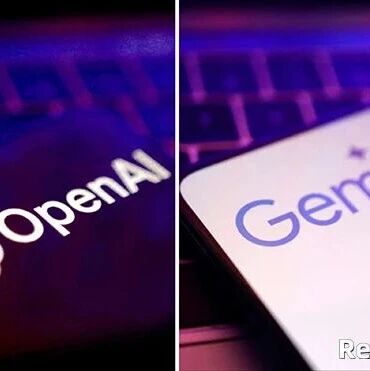
AI股龙头易主,谷歌动摇OpenAI优势
日经中文网· 2025-12-02 02:56
谷歌自主设计并用于自身AI开发的半导体"TPU(张量处理单元,Tensor Processing Unit)"的推广也做出贡献。10月23日,谷歌宣布将向涉足AI开发的美国新兴公司Anthropic 提供产品。11月下旬,有消息称Meta正在考虑将其应用于数据中心。 据称与几乎垄断市场的英伟达GPU相比,TPU的成本更低,因此抢夺市场份额的预期加强。 美国摩根士丹利推算,如果TPU的销量增加50万个,将把Alphabet的2027年每股收益 (EPS)推高3%左右。 (Reuters) 谷歌11月18日发布了生成式AI的最新大语言模型(LLM)"Gemini 3"。新模型之一"Gemini 3 Pro"在比拼LLM性能的主要指标上居首,成为ChatGPT的强有力竞争对手。 人工智能(AI)行情正在发生异变。以曾经拉动行情的美国英伟达为中心,很多股票价格下 跌。另一方面,旗下拥有谷歌的Alphabet股价明显上涨。这是因为谷歌11月发表的生成式AI 基础模型受到了高度评价。市场嗅到了一直领先的美国OpenAI的ChatGPT的优势地位发生动 摇的可能性。 Alphabet股票11月上涨14%。总市值接近4万亿美 ...


大摩亚洲调研:客户最大焦虑是买不到足够英伟达芯片 存储短缺是“30年最严重之一”
Ge Long Hui A P P· 2025-12-02 02:36
Group 1 - Morgan Stanley's latest report indicates that Nvidia's market dominance is more robust than market perception, with customers' primary concern over the next 12 months being the inability to obtain sufficient Nvidia products, particularly the Vera Rubin chip [1] - The shortage of memory chips has reached one of the most severe levels in 30 years, with a buying frenzy from cloud computing customers leading to product shortages for PC and server OEMs [1] - Morgan Stanley has raised the target prices and earnings expectations for Nvidia and Broadcom based on this research, noting that the intensity of AI is testing the limits of the entire semiconductor ecosystem, with supply constraints affecting everything from front-end wafers to back-end packaging and memory [1]


AI 供应链:台积电 CoWoS 产能扩张、ASIC 动态、亚洲实地考察-Asia-Pacific Technology-AI Supply Chain TSMC CoWoS Expansion; ASIC Dynamics; Asia Field Trip
2025-12-02 02:08
Summary of TSMC CoWoS Capacity and AI Semiconductor Market Insights Industry Overview - The report focuses on the **Asia-Pacific Technology** sector, specifically the **AI semiconductor** market and **TSMC's** CoWoS (Chip on Wafer on Substrate) capacity expansion for 2026 [1][2]. Key Insights on TSMC and CoWoS Capacity - TSMC is expected to increase its CoWoS capacity by **79%** to **125k wafers per month (kwpm)** by 2026, up from an estimated **70k kwpm** at the end of 2025 [3][12]. - The additional capacity will primarily support **NVIDIA** and **Broadcom**, with some allocation to **MediaTek** [3][12]. - NVIDIA's CoWoS-L capacity is revised upward to **700k wafers**, aligning with its forecast of **US$500 billion** in AI GPU revenue through the end of 2026 [4][12]. AI Semiconductor Demand Dynamics - **NVIDIA** is experiencing strong AI demand, but production of the **B40 chip** has been cut from an expected **1.5-2 million units** in the second half of 2025 to **900k units**, indicating potential pricing issues in the Chinese market [4]. - **Google's TPU** is identified as a significant growth driver in the ASIC market, with Broadcom's CoWoS bookings increasing to **230k units** [5][13]. - The competition for **AWS's Trainium ASIC** involves Broadcom and Marvell, with expectations of increased production capacity for AWS [6]. Market Trends and Projections - The report highlights key players in the AI semiconductor space, including **TSMC**, **MediaTek**, **KYEC**, **Aspeed**, **Alchip**, **GUC**, **SMIC**, **Naura**, **AMEC**, and **ASMPT** [7]. - The demand for CoWoS capacity is projected to grow significantly, with NVIDIA, Broadcom, and AMD leading the charge [23][24]. - The overall demand for CoWoS is expected to reach **1,329k wafers** in 2026, up from **680k wafers** in 2025, indicating a robust growth trajectory [24]. Financial Implications - The report notes that **AMD** anticipates an **18% CAGR** in data center CPU demand from 2025 to 2030, with AI contributing an additional **US$30 billion** in revenue by 2030 [14]. - The AI semiconductor market is projected to see quarterly revenue increases, with significant contributions from both NVIDIA and AMD [42][44]. Additional Considerations - TSMC's capacity expansion may face challenges due to clean room space limitations, potentially impacting its ability to meet rising demand [33]. - The report emphasizes the importance of understanding the supply chain dynamics and the implications of power deployment plans on CoWoS demand [36][38]. Conclusion - The AI semiconductor market is poised for substantial growth, driven by increasing demand for advanced chips from major players like NVIDIA and Google. TSMC's strategic capacity expansion will be crucial in meeting this demand, although operational challenges may arise. Investors should closely monitor these developments for potential investment opportunities in the sector [1][2][3][4][5][6][7][12][14][23][24][36][38].


大摩上调英伟达(NVDA.US)、博通(AVGO.US)目标价,断言AI需求明年将“实质性”加速
Zhi Tong Cai Jing· 2025-12-02 01:36
Group 1 - Morgan Stanley analysts raised the target prices for Nvidia (NVDA.US) from $235 to $250 and Broadcom (AVGO.US) from $409 to $443, citing strong momentum in artificial intelligence likely to accelerate significantly next year [1] - The analyst team, led by Joseph Moore, believes Nvidia will maintain its dominant market share, stating that concerns about threats to its position are overstated, although uncertainty remains about what could shift market sentiment [1] - The models predict that by fiscal year 2026, revenue growth for Broadcom and AMD (AMD.US) in AI processors will slightly outpace Nvidia, primarily due to supply chain constraints limiting revenue potential to $205 billion before 2026 [1] Group 2 - Analysts noted that clients' biggest concern over the next 12 months is their ability to procure sufficient Nvidia products, particularly the latest Vera Rubin chips [2] - While alternatives like Google's TPU (Tensor Processing Unit) are seen as reliable options with good economic benefits in certain applications, Nvidia recently achieved $51 billion in data center revenue, approximately 14 times that of TPU revenue, with a quarter-over-quarter revenue increase of $10 billion, which is about three times TPU revenue [2]
Why Jim Cramer thinks the AI trade is breaking up
CNBC· 2025-12-01 23:31
Core Viewpoint - Stocks related to artificial intelligence and data centers are beginning to diverge in performance, with companies linked to OpenAI facing challenges while those associated with Alphabet are thriving [1][2]. Group 1: Performance Divergence - The performance of AI companies linked to OpenAI, such as Nvidia, Oracle, Microsoft, and AMD, has been weaker compared to those affiliated with Alphabet, like Broadcom and Celestica, which are benefiting from investor interest in the new Gemini platform over ChatGPT [2]. - Wall Street is increasingly concerned about OpenAI's significant spending commitments, which may impact its stock performance [2]. Group 2: Financial Health of Companies - Hyperscalers with strong balance sheets, including Alphabet, Meta, and Amazon, are better positioned to invest heavily in AI, while companies like Oracle, CoreWeave, and Nebius are facing financial strain [3]. - The ability of companies to sustain spending on AI initiatives is becoming a critical factor in their market performance [3]. Group 3: Market Volatility and Competition - The AI sector is characterized by volatility, with the potential for new platforms to emerge and surpass existing ones like Gemini [4]. - Nvidia's recent strong quarterly performance contrasts with concerns about competition and its ties to OpenAI, highlighting the mixed signals in the market [4]. Group 4: Investor Sentiment and Market Dynamics - The diversification of the AI trade is viewed positively, as it indicates that investors are becoming more discerning about which companies are likely to succeed [5]. - The previous trend of the entire AI cohort rallying together is seen as unsettling, suggesting a healthier market dynamic as companies are evaluated on their individual merits [5].



Indexes Stumble To Start December Trade As Investors Hunt For Upside Catalysts
Investors· 2025-12-01 23:04
Group 1 - Wall Street's major stock indexes finished lower on Monday, marking the beginning of a historically strong month for the market [1] - With third-quarter earnings mostly reported, the focus is shifting to economic reports and the Federal Reserve's final meeting of 2025 for potential market catalysts [1] - Signs of contraction in the manufacturing sector are emerging, which may impact market sentiment [1] Group 2 - The Trillion-Dollar Club now includes 11 stocks, with Google ranking as the third-largest [4] - Notable stock movements included Apple, Broadcom, Nvidia, and Shopify, which were significant movers on the day [2][4] - Nvidia's recent $2 billion investment in Synopsys has positively influenced Synopsys stock performance [4]



AI sector: Bubble concerns, deal making, demand, and 2 stocks to watch
Youtube· 2025-12-01 22:25
Group 1: AI Deal Making - OpenAI is expanding its investments by taking an ownership stake in Thrive Holdings, a company launched by one of its investors [1] - OpenAI has also partnered with Accenture as one of its primary AI partners, indicating a strategic move to enhance its market presence [2] - Nvidia announced a $2 billion investment in Synopsis, showcasing its commitment to the AI sector [2] Group 2: Market Dynamics and Projections - The hyperscaler capital expenditure is projected to exceed $500 billion by 2026, indicating strong demand and spending capabilities among major players [4] - There is no anticipated slowdown in demand for AI chips, particularly GPUs and AI ASIC chips, with visibility extending into the first half of 2027 [5] - The second half of 2026 is expected to be a critical inflection point for AMD as it ramps up its server rack solutions in data centers [6] Group 3: Competitive Landscape - The AI market is seeing a diversification in spending, with both established hyperscalers and emerging players like OpenAI contributing to the growth [7] - Companies such as Broadcom and Marvell are highlighted as underappreciated winners in the AI space, with potential for significant growth [9] - The current AI cycle is characterized by a mix of established players and new entrants, leading to varied paths for growth and investment [6][7] Group 4: Valuation and Execution Concerns - Current valuations for major AI companies do not appear excessively high, but they reflect strong growth expectations for 2026 [11] - Execution risks are a concern, particularly regarding the ramp-up of new programs like AMD's server rack and ASIC initiatives [11][12] - The AI sector is described as experiencing an "air pocket" phase, supported by earnings and fundamentals, with potential volatility due to execution timing [13]