
Bank of America(BAC)

Search documents
奥本海默:动量因子短期回调提供买入良机 看好工业、金融及科技板块
智通财经网· 2025-09-03 04:07
Group 1 - The recent underperformance of momentum factors due to market breadth expansion is viewed as a "bullish top-down signal" [1] - Tactical pullbacks are seen as opportunities to buy high-momentum stocks, reaffirming their attractiveness as late-cycle factors [1] - The analysis indicates that the industrial, financial, and technology sectors have the highest momentum scores, while healthcare, real estate investment trusts, and energy rank the lowest [1] Group 2 - Low market-weighted sectors suggest that momentum factors are expected to perform well in the coming months [1] - Capital goods, aerospace and defense, construction, and electrical equipment have reestablished their positions in momentum scores at the expense of commercial services [1] - Top-rated capital goods stocks include General Dynamics (GD.US), Parker-Hannifin (PH.US), United Rentals (URI.US), and Xylem (XYL.US) [1] Group 3 - Within the banking sector, large banks and brokers maintain a preferred position over deteriorating insurance companies, with regional banks also seeing a rise due to small-cap recovery [1] - Top-rated bank stocks include Bank of America (BAC.US), Citigroup (C.US), JPMorgan Chase (JPM.US), and Morgan Stanley (MS.US) [2] Group 4 - In the semiconductor and technology sectors, the semiconductor segment has expanded beyond selected large-cap stocks, indicating meaningful strength [2] - Top-rated semiconductor stocks include KLA Corporation (KLAC.US), Lam Research Corporation (LRCX.US), Monolithic Power Systems (MPWR.US), and NXP Semiconductors (NXPI.US) [2]


美股异动 | 银行股走低 高盛(GS.US)跌超2%
智通财经网· 2025-09-02 15:22
Group 1 - Bank stocks declined on Tuesday, with notable drops in major institutions [1] - Bank of America (BAC.US) fell by 0.88% [1] - Goldman Sachs (GS.US) experienced a decline of over 2% [1] - Citigroup (C.US) dropped by 2.8% [1] - JPMorgan Chase (JPM.US) decreased by over 1.3% [1] - Morgan Stanley (MS.US) fell by over 1.6% [1] - Montreal Bank (BMO.US) saw a decline of 0.47% [1]


流媒体让美国人更沉迷电视
财富FORTUNE· 2025-09-02 13:05
Core Viewpoint - The article highlights a significant shift in how Americans consume television, with streaming platforms surpassing traditional cable TV in viewership share, indicating a historic change in leisure activities [2][4]. Group 1: Shift in Viewing Habits - Streaming platforms have officially overtaken traditional "linear" television in viewership share, reflecting a major transformation in leisure time consumption [2]. - Despite the shift to streaming, Americans still spend about 5 hours daily on leisure activities, with over half of that time dedicated to watching television [4]. Group 2: Spending Trends and Challenges - As of July, spending on streaming video and audio has exceeded 10% of income across all income levels, with growth rates surpassing other entertainment categories like live events and theme parks [6]. - The industry faces challenges such as "content decline," where content providers are reducing the number of original series and films, focusing instead on fewer, higher-quality projects [6][10]. Group 3: User Behavior and Loyalty - Approximately two-thirds of households spend less than $40 monthly on streaming services, while about one-sixth spend over $80, indicating a rising cost trend [11]. - User loyalty is not guaranteed, with nearly one-fifth of Americans either canceling or starting new streaming subscriptions in July, suggesting flexible consumption strategies based on content availability [13]. Group 4: Future Growth Areas - Streaming platforms are focusing on two growth engines: live sports events and music integration, with over one-third of sports fans willing to subscribe to new services for exclusive event access [15]. - Artificial intelligence is seen as a key variable that could lower content creation costs and enable personalized content, potentially disrupting current business models in the streaming industry [17].


Billionaire Warren Buffett Sold 41% of Berkshire's Stake in Bank of America and Is Piling Into 2 Magnificent Stocks for a 4th Straight Quarter
The Motley Fool· 2025-09-02 07:51
Core Insights - Warren Buffett continues to invest in industry-leading companies with strong capital-return programs, despite selling off a significant portion of his holdings in Bank of America [2][5][6] Group 1: Bank of America (BofA) - Buffett has sold over 427 million shares of Bank of America, reducing his stake by 41% over the past year, with the current holding exceeding 1.03 billion shares [6][9] - The selling may be influenced by a favorable corporate income tax rate, as indicated by Buffett's comments during the 2024 annual shareholder meeting [7][10] - BofA's stock is currently trading at a 36% premium to its book value, which may lead Buffett to reassess its attractiveness as a value investment [9] Group 2: Domino's Pizza - Buffett has consistently purchased shares of Domino's Pizza for four consecutive quarters, building a 7.8% stake in the company [12][14] - Domino's has a strong capital-return program, with a history of growing dividends and share repurchases, having retired over half of its outstanding shares since going public [15][16] - The company's innovative initiatives, such as the "Hungry for MORE" program leveraging artificial intelligence, contribute to its growth potential and customer loyalty [16] Group 3: Pool Corp. - Buffett has also increased his stake in Pool Corp. for four consecutive quarters, now holding a 9.3% stake, benefiting from its strong operating cash flow predictability [17][18] - Pool Corp. has seen significant growth since its public debut, with a nearly 47,000% gain including dividends [17] - The company has doubled its share buyback spending in the first half of 2025 compared to the previous year and has consistently raised its dividend for two decades [21]



华尔街再吹“黄金号角”:目标直指4000美元,牛市将延续多年!
Jin Shi Shu Ju· 2025-08-29 05:28
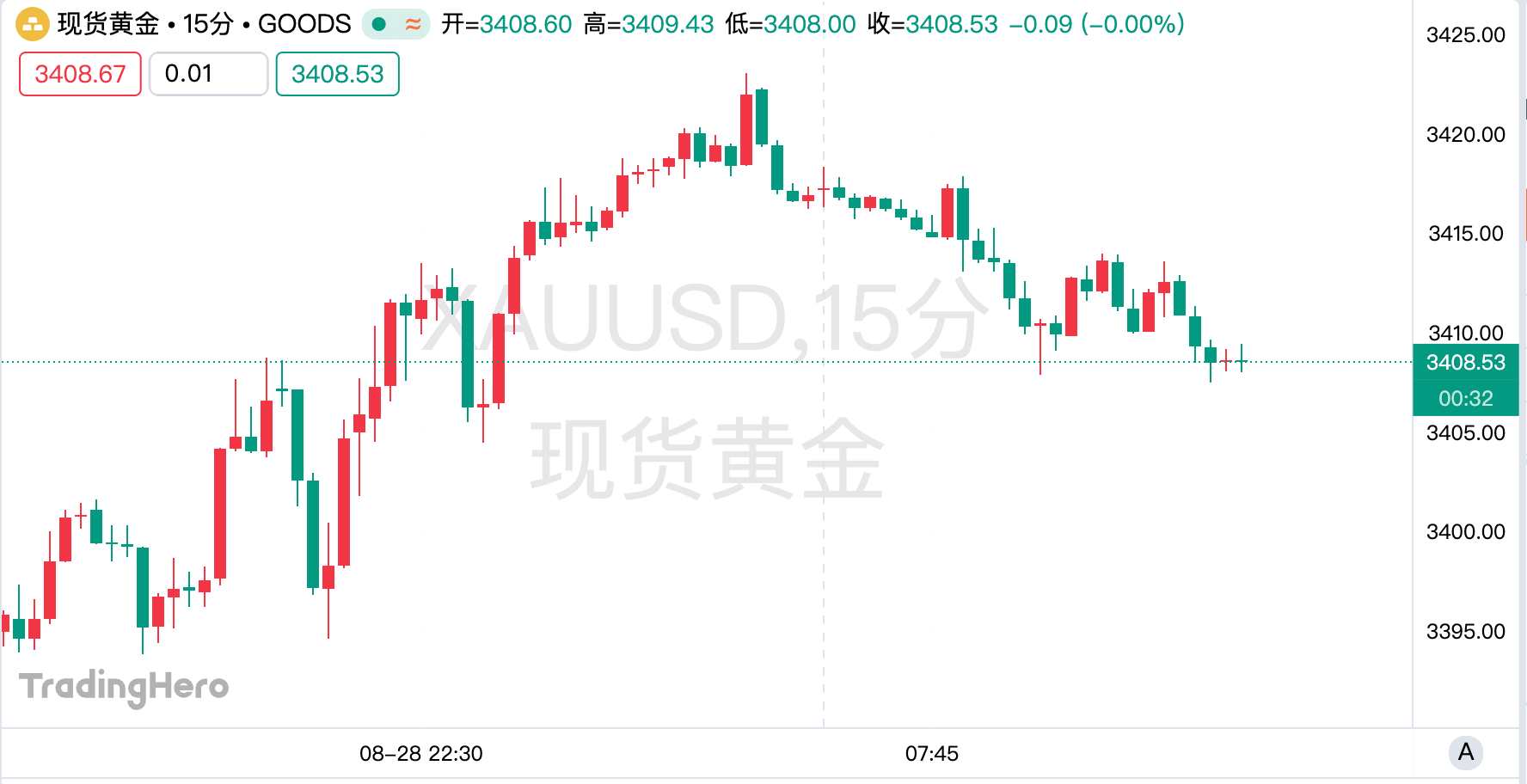
Core Viewpoint - The recent rise in spot gold prices, reaching $3408 per ounce, is driven by expectations of interest rate cuts and a weakening dollar, with projections suggesting gold could reach $4000 per ounce by mid-2026 [1][6]. Group 1: Market Analysis - Spot gold prices have recently hit a one-month high, supported by declining interest rate expectations and a weaker dollar [1]. - Multiple Wall Street institutions, including Fidelity International and Bank of America, maintain a bullish outlook on gold, citing a favorable environment for sustained price increases [1][6]. Group 2: Fidelity International Insights - Ian Samson from Fidelity International emphasizes the likelihood of stagflation in the U.S., suggesting investors should maintain their gold positions [4]. - Gold has performed well in Fidelity's portfolio, with a 27% increase last year and nearly 30% this year [4]. - The combination of declining interest rates, persistent inflation, and low growth is expected to support gold prices [4][5]. Group 3: Bank of America Insights - Bank of America forecasts that declining interest rates and a weaker dollar will bolster gold prices, particularly in an inflationary environment [6]. - The market anticipates that the Federal Reserve may begin cutting rates as early as September, with a 25 basis point cut expected [6]. - Political pressures and concerns over the independence of the Federal Reserve may further weaken the dollar, impacting gold positively [6][7].
华尔街最近在忙的RWA:货币基金、日内回购、商业票据
Hua Er Jie Jian Wen· 2025-08-28 03:54
Core Insights - The integration of traditional finance and digital assets is undergoing a structural transformation, with major financial institutions rapidly tokenizing real-world assets (RWA) and incorporating them into core financial operations [1][2]. Group 1: Innovations in Financial Instruments - Three key areas of innovation include custom money market funds for stablecoins, blockchain-based intraday repurchase agreements, and fully digital commercial paper issuance [2]. - Traditional financial institutions are actively entering the stablecoin market, viewing it as a crucial bridge between the digital and real worlds. Notably, BNY Mellon is preparing to launch a stablecoin reserve money market fund, following BlackRock and Goldman Sachs [3][4]. - The BNY Dreyfus Stablecoin Reserves Fund will primarily invest in U.S. Treasury securities, repos, and cash, with a focus on compliant reserve assets for stablecoin issuers [3]. Group 2: Blockchain in Liquidity Management - The report highlights two significant advancements in the repurchase market utilizing blockchain technology to address liquidity needs outside traditional trading hours [4][5]. - A standard repurchase transaction was completed on the Canton Network, showcasing instant settlement without intermediaries, involving major institutions like Citadel [4]. - A collaboration between JPMorgan, HQLAx, and Ownera has led to a cross-ledger repurchase solution, allowing precise settlement times and enhancing intraday liquidity management [5]. Group 3: Digital Transformation of Commercial Paper - The application of blockchain technology has penetrated the core processes of traditional debt instruments, exemplified by the issuance of $100 million in U.S. commercial paper by OCBC Bank using JPMorgan's digital debt services [6][7]. - State Street purchased the entire issuance, becoming the first third-party custodian to utilize digital debt services, enhancing efficiency and transparency in the process [8]. Group 4: Regulatory Landscape - The intersection of digital assets and traditional finance is just the beginning, with the development of regulatory frameworks being crucial for widespread adoption. The CLARITY Act aims to establish a comprehensive regulatory framework for all digital assets in the U.S. [9]. - The CLARITY Act has passed the House but is yet to pass the Senate, with expectations that it will not reach the President's desk until early 2026 [9].


史上最快破万亿!美企以创纪录速度官宣股票回购,为美股注入强心剂
智通财经网· 2025-08-27 23:25
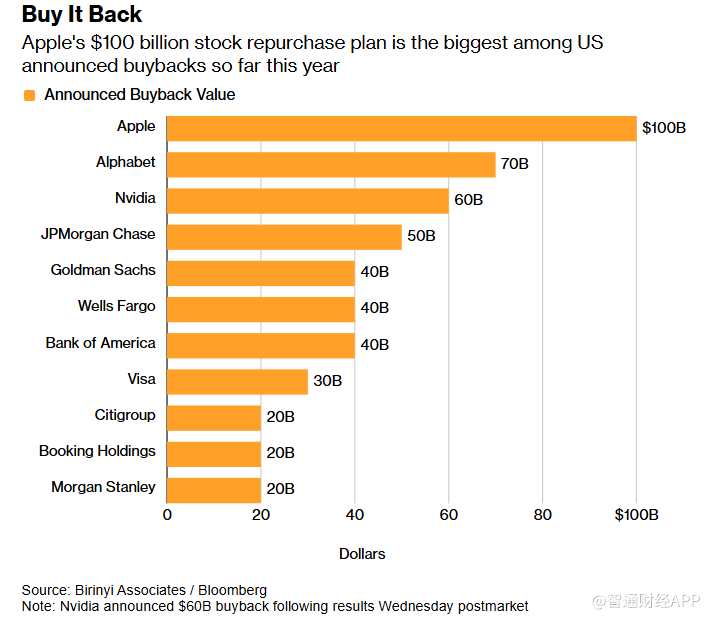
Group 1 - U.S. companies are planning record stock buybacks, indicating strong confidence in the economy, with Nvidia being the latest to announce a buyback plan worth $60 billion [1][3] - As of August 20, announced stock buybacks have exceeded $1 trillion, marking the fastest time to reach this level, surpassing the previous record set in October of the previous year [1] - Major companies, particularly in the financial and technology sectors, have approved large-scale buyback plans, including Apple with $100 billion, and others like Alphabet, JPMorgan, Goldman Sachs, Wells Fargo, and Bank of America committing at least $40 billion [1] Group 2 - In July, the total announced stock buybacks reached $166 billion, the highest amount recorded for that month, providing significant support to the U.S. stock market, with the S&P 500 index recently hitting a new all-time high [3] - The momentum of stock buybacks is expected to continue until the end of the year, with predictions of announced buybacks reaching $1.3 trillion and completed buybacks setting a historical record [4] - If the economy does not experience a significant slowdown, completed buybacks in 2026 are projected to reach $1.2 trillion, establishing a new record [4]




X @Bloomberg
Bloomberg· 2025-08-27 18:58
Market Trends - Remittances to Mexico have fallen to a three-year low [1] - This trend may put downward pressure on the peso in the short term [1]
今年美国企业回购规模达到1万亿美元,创历史最快
Hua Er Jie Jian Wen· 2025-08-27 17:51
Core Viewpoint - As of August 20, 2023, U.S. companies are projected to reach $1 trillion in stock buybacks by 2025, surpassing the previous record set in October 2024 [1] Group 1: Stock Buyback Trends - Apple has announced a $100 billion stock buyback plan, while Alphabet, JPMorgan Chase, Goldman Sachs, Wells Fargo, and Bank of America have collectively announced buyback plans totaling at least $40 billion [1] - Jeffrey Yale Rubin, president of Birinyi Associates, indicates that companies will continue to "buy the dip" in the market, supported by strong performance and sufficient funds for capital expenditures [1]

信用卡资金炒股风险巨大
Zheng Quan Ri Bao· 2025-08-27 16:20
Core Viewpoint - The use of credit card funds for stock trading is prohibited by banks and regulatory authorities due to the inherent risks and misalignment with the intended purpose of credit cards, which is for consumer spending rather than investment [1][4]. Group 1: Risks of Using Credit Card Funds for Stock Trading - Using credit card funds for stock trading significantly amplifies the debt risk for cardholders due to high borrowing costs and short repayment periods, making it unsuitable for investment purposes [2]. - Credit card funds are often accessed through cash advances or other means that incur fees several times higher than brokerage financing rates, creating a burden that requires excessive returns to cover costs [2]. - The mismatch between the short repayment cycle of credit cards and the uncertain duration of stock investments can lead to financial distress for investors [2]. Group 2: Impact on Banking and Risk Management - The diversion of credit card funds into the stock market undermines the established risk management frameworks of banks, which are based on predictable consumer behavior and spending patterns [3]. - This shift necessitates increased operational costs for banks as they must invest more resources to meet compliance requirements and manage the heightened risk associated with stock market volatility [3]. - The potential for increased default rates and bad debts due to stock market investments poses a threat to the asset quality of banks [3]. Group 3: Broader Financial Market Implications - The speculative nature of using credit card debt for stock trading can disrupt normal market operations, leading to irrational price fluctuations and undermining the price discovery process [4]. - Such practices transfer stock market risks to the banking system, increasing the overall risk exposure of the financial system [4]. - The consequences of investment losses can lead to a cycle of debt for cardholders, potentially impacting the stability of the credit market and the broader financial ecosystem [4].