Bank of America(BAC)

Search documents
美银:The Flow -A Game of Two HalvesShow
美银· 2025-06-30 01:02
Investment Rating - The report maintains an "Overweight" position on "BIG" (Bonds, International, Gold) and suggests cyclical buying of Treasuries [19] Core Insights - The S&P 500 is on the verge of its 7th major breakout since 1990, with only 22 stocks at all-time highs, indicating a narrow market participation [3][21] - The BofA Bull & Bear Indicator has risen to 5.8, reflecting a neutral sentiment but indicating potential for profit-taking as inflows to equities and high-yield bonds approach 1.0% of AUM [13][56] - The report highlights significant inflows across various asset classes, with $427 billion to cash, $325 billion to stocks, and record inflows of $40 billion to gold in H1 2025 [12][34] Summary by Sections Market Performance - Year-to-date performance shows gold at 26.2%, stocks at 8.4%, and commodities at 0.4%, while oil and crypto have declined by 7.8% and 14.1% respectively [1][2] Economic Indicators - The report notes that the US dollar has decreased by 10.4% year-to-date, while the 12-month forward EPS expectations are 11% in the US, 8% in China, and 6% in Europe [18] Investment Flows - Weekly flows indicate $26.1 billion to cash, $12.1 billion to bonds, and $3.5 billion to equities, with a notable outflow of $4.4 billion from US small-cap stocks [11][16] Policy Outlook - The report anticipates potential Fed rate cuts and a shift in fiscal policy under Trump, which could support equity markets and lead to a US dollar bear market [19][20] Sector Analysis - The report suggests long positions in airlines and small-cap value stocks while shorting defense and momentum stocks, reflecting a tactical approach to sector allocation [17][20]

惊曝金价将破4000!美银说:别盯着打仗,政府欠债多才是主因!
Sou Hu Cai Jing· 2025-06-29 00:06
Group 1 - The core viewpoint of the article is that the future of gold is being driven by a restructuring of the global monetary system due to significant U.S. fiscal deficits, with predictions of gold prices soaring to $4,000 per ounce within a year [1] - The U.S. fiscal deficit is identified as a key driver behind the bullish outlook for gold, with projections of trillions in new deficits due to government spending plans, leading to increased issuance of U.S. Treasury bonds [1][3] - Central banks, particularly in emerging economies, are shifting their reserve strategies by selling U.S. Treasuries and increasing their gold holdings, reflecting a decline in trust in the dollar [3] Group 2 - Geopolitical tensions, such as the ongoing conflict in the Middle East, are causing short-term fluctuations in gold prices driven by investor sentiment, rather than being a long-term price driver [5] - Historical patterns show that gold prices often rise temporarily during the onset of conflicts but tend to revert to economic fundamentals as the situation stabilizes [5] - The long-term potential of gold is seen as undervalued, with current market allocations to gold at only 3.5%, indicating a lack of recognition of its value among investors [7] Group 3 - The persistent U.S. fiscal deficit is expected to lead to a series of repercussions, including increased Treasury yields to attract investors, which could further worsen the deficit and weaken the dollar, thereby benefiting gold [9] - The demand for gold as an alternative asset is anticipated to grow as central banks reduce their dollar reserves, with gold being viewed as a hedge against inflation due to potential quantitative easing measures by the Federal Reserve [10] - The article concludes that the true long-term trajectory of gold will be shaped by the restructuring of the global monetary system in response to U.S. fiscal challenges, marking the beginning of a new era for gold [11]


美银Hartnett:美股接近“卖出信号”,但下半年泡沫风险高,黄金依旧是弱美元最佳对冲
Hua Er Jie Jian Wen· 2025-06-28 04:22
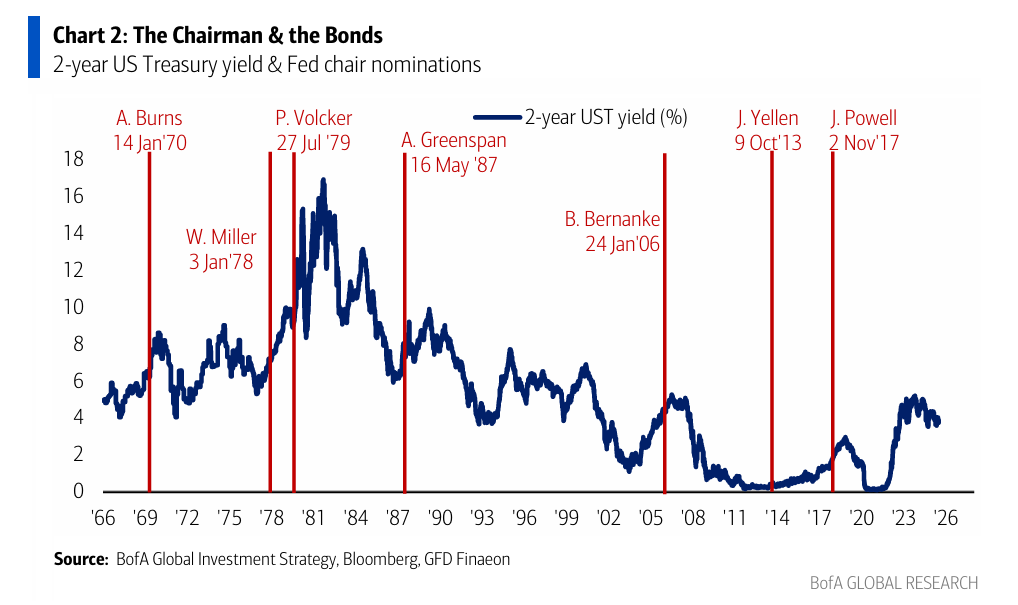
Core Viewpoint - The U.S. stock market is approaching a technical "sell signal," but potential changes in the policy environment could create a market bubble in the second half of the year [1][4]. Group 1: Technical Indicators - Multiple technical indicators from Bank of America show that the U.S. stock market is nearing critical thresholds, with 73% of MSCI global country indices trading above their 50-day and 200-day moving averages, while the critical point is 88% [5]. - The S&P 500 index could trigger a "sell signal" if it breaks through 6300 points in July [5]. - The global fund flow indicator is also cautious, with the ratio of funds flowing into global stocks and high-yield bonds reaching 0.99%, close to the 1.0% "greed" threshold [5]. Group 2: Policy Environment - Despite the technical sell signals, the policy environment is expected to provide support in the second half of the year, with global central banks having cut rates 64 times this year [7]. - The Federal Reserve may join in rate cuts to address slowing economic growth in the U.S. [7]. - The anticipated nomination of a new Federal Reserve Chair by Trump in the fall could lead to a decline in the dollar, as historical data suggests such nominations typically result in a weaker dollar [1][13]. Group 3: Investment Strategy - Bank of America recommends investors adhere to the "BIG" strategy, which includes bonds, international stocks, and gold, with gold being the best hedge against a weakening dollar [4][15]. - The firm suggests that while technical indicators are nearing sell signals, the risk of a bubble remains high if policies shift from tariffs to tax cuts and rate reductions [4][15]. Group 4: Fund Flows - Recent fund flows show a divergence, with $26 billion flowing into cash, $12.1 billion into bonds, $3.5 billion into stocks, $2.8 billion into gold, and $2.1 billion into cryptocurrencies [10]. - Emerging market bonds saw a record inflow of $5.8 billion in a single week, while U.S. small-cap stocks experienced an outflow of $4.4 billion, the largest since December 2024 [10]. Group 5: Market Participation - The current market rally is primarily driven by a narrow group of stocks, with only 22 S&P 500 constituents at all-time highs, significantly lower than previous major breakouts [6]. - The "Mag7" stocks account for 14.8% of the assets under management in Bank of America's private client portfolios, indicating a high concentration in large tech stocks [6].
X @Bloomberg
Bloomberg· 2025-06-27 10:10
Market Risk - Speculative stock-market bubble risk is increasing due to expectations of US interest-rate cuts [1] - Massive investment flows are being drawn into equities [1] Analyst Opinion - Bank of America's Michael Hartnett suggests the increasing bubble risk [1]
Fed Proposes Easing Capital Requirements for Major Banks
ZACKS· 2025-06-26 16:10
Core Viewpoint - The Federal Reserve has proposed easing the enhanced Supplementary Leverage Ratio (SLR) to significantly reduce capital requirements for major U.S. banks, including JPMorgan Chase, Bank of America, Goldman Sachs, and Morgan Stanley, potentially freeing billions in capital currently tied up due to post-2008 leverage requirements [1][6]. Group 1: Proposed Plan Details - The Fed's proposal aims to lower capital requirements for Global Systemically Important Banks (GSIBs) by 1.4%, equating to $13 billion, and reduce capital requirements for their depository institution subsidiaries by 27%, or $213 billion [2]. - The new rule will replace the current 2% enhanced SLR buffer with a buffer equal to half of each bank's GSIB surcharge, and similarly adjust the 3% ESLR buffer for global bank subsidiaries [3]. Group 2: Impact on Banks - The easing of capital requirements is expected to directly benefit major banks by reducing the amount of capital they must hold in reserve, providing them with more flexibility to expand operations, particularly in lending and Treasury trading [4]. - The proposed plan could also support Treasury trading during market stress while maintaining adequate capital for financial stability, potentially enhancing bank profitability by freeing funds for investment or business expansion [5].

JPM, Others Likely to Hike Dividends After Clearing 2025 Stress Test
ZACKS· 2025-06-26 15:20
Core Insights - Major banks such as JPMorgan, Goldman Sachs, and Bank of America are expected to easily pass the 2025 stress test due to a less severe scenario compared to last year [1][8] - The less stressful conditions will allow banks to return more capital to investors through share repurchases and dividends [1][8] Group 1: Stress Test Overview - The Federal Reserve conducts an annual stress test to evaluate the largest U.S. banks' ability to endure significant economic downturns, determining minimum capital requirements and influencing share repurchases and dividends [2][3] - The assessment includes a baseline scenario and a severely adverse scenario, which estimates banks' financial resilience under hypothetical economic conditions [3] Group 2: 2025 Stress Test Scenario - The 2025 severely adverse scenario features a smaller increase in the unemployment rate and less severe declines in house prices compared to the previous year, with commercial real estate prices expected to fall 10% less than in 2024 [5] - The favorable regulatory environment under the Trump administration is anticipated to enhance the flexibility of the 22 tested banks in managing capital and increasing dividends [5][6] Group 3: Historical Context and Recent Developments - Following last year's more stressful scenarios, major banks returned excess capital to shareholders through dividends and repurchases after successfully passing the test [6][8] - JPMorgan raised its quarterly dividend by 8.7% to $1.25 per share and authorized a $30 billion share repurchase program, while Goldman Sachs and Bank of America also increased their dividends [7][8] Group 4: Future Outlook - While this year's outlook is more favorable, banks are expected to remain somewhat conservative in the near term due to ongoing tariff-related uncertainties and geopolitical concerns [9]



美银展望下半年全球债券收益率三大驱动因素
news flash· 2025-06-26 14:27
Group 1 - The core theme of the report is that three key factors will drive global bond yields in the second half of the year [1] - The first factor is the impact of significant global policy shifts, including increased tariffs and defense spending, on economic growth and inflation [1] - The second factor is the changing structure of global sovereign bond issuance, with a greater shift towards short-term bond issuance [1] - The third factor is the demand from global investors, with expectations of significant changes in global bond issuance by the second half of 2025 [1] - The report highlights that the market's heightened focus on de-dollarization may support higher financing needs outside the United States [1]
Bank of America or Wells Fargo: Which Big Bank Offers More Upside?
ZACKS· 2025-06-26 14:10
Core Viewpoint - Bank of America (BAC) and Wells Fargo (WFC) are two major U.S. banks with significant net interest income (NII) and consumer banking exposure, making them sensitive to interest rate trends and economic conditions [1][2]. Group 1: Bank of America (BAC) - BAC is focusing on organic domestic growth by expanding its physical and digital presence, planning to open over 150 financial centers by 2027, and expects NII to grow by 6-7% in 2025 [3][11]. - The bank is enhancing digital engagement through tools like Zelle and AI assistant Erica, which supports cross-selling of products such as mortgages and credit cards [4]. - BAC's investment banking (IB) business is expected to rebound as macroeconomic conditions improve, with a strong IB pipeline despite current challenges [5]. - However, prolonged high interest rates have weakened BAC's credit quality, and asset quality is expected to remain subdued in the near term [6]. Group 2: Wells Fargo (WFC) - The lifting of the asset cap imposed by the Federal Reserve has restored WFC's growth flexibility, allowing for an increase in deposits, loan portfolio growth, and broader securities holdings, which will enhance NII [7][8]. - WFC is adopting a balanced operational approach, reducing headcount while investing in branch network and digital upgrades, targeting $2.4 billion in gross expense reductions by 2025 [9][10]. - The bank is strategically modernizing its branch network, reducing total branches by 3% year over year to 4,177 in 2024, while upgrading 730 branches last year [10][11]. Group 3: Performance and Valuation Comparison - In 2025, BAC shares gained 6.6%, while WFC shares increased by 12.5%, both outperforming the S&P 500 Index [12]. - BAC is trading at a forward P/E of 11.83X, while WFC is at 12.79X, both below the industry average of 14.21X, indicating BAC is relatively inexpensive [13][14]. - BAC's dividend yield is 2.22%, higher than WFC's 2.02%, and both exceed the S&P 500 average of 1.22% [14]. - WFC has a higher return on equity (ROE) of 12.15% compared to BAC's 10.25%, indicating more efficient use of shareholder funds [17]. Group 4: Growth Prospects - The Zacks Consensus Estimate for BAC indicates revenue growth of 6.1% and 5.8% for 2025 and 2026, respectively, with earnings expected to rise by 12.5% and 16.3% [19]. - In contrast, WFC's revenue growth is projected at 1.7% and 5.4% for 2025 and 2026, with earnings growth of 9.1% and 14.4% [20]. - Overall, while WFC is positioned for near-term growth due to its regained flexibility, BAC's long-term growth potential is supported by its digital strategy and expanding footprint [22][23].


A Closer Look at Q2 Earnings: What Can Investors Expect?
ZACKS· 2025-06-25 23:40
Core Insights - The S&P 500 index is expected to see Q2 earnings increase by +4.9% year-over-year, driven by a +3.9% rise in revenues [3][4] - Earnings estimates for Q2 have faced significant downward revisions, particularly in the Tech and Finance sectors, which together account for 51% of total S&P 500 earnings [4][6] - Despite the overall pressure on estimates, three sectors are projected to achieve double-digit earnings growth: Aerospace (+15.1%), Tech (+11.8%), and Consumer Discretionary (+105.6%) [4][5] Sector Performance - 13 out of 16 Zacks sectors have seen earnings estimates decline since the start of Q2, with notable drops in Transportation, Autos, Energy, Construction, and Basic Materials [5] - The only sectors with upward revisions are Aerospace, Utilities, and Consumer Discretionary [5] - The Tech sector's earnings are expected to grow by +11.8% in Q2, although this is a reduction from earlier estimates [6][11] Future Outlook - The Q2 earnings season is anticipated to gain momentum with major financial institutions like JPMorgan, Bank of America, and Wells Fargo reporting [4] - While current estimates for 2025 Q2 have been under pressure, there have not been significant changes to estimates for the following two years [16] - The macroeconomic environment remains uncertain, particularly regarding tariff impacts, which could continue to influence earnings estimates [16]

Fed Votes to Advance Proposal to Ease Banks' Capital Requirements
PYMNTS.com· 2025-06-25 21:59
Core Viewpoint - The Federal Reserve has voted to advance a proposal that would ease the "enhanced supplementary leverage ratio," impacting the capital banks must hold against low-risk assets [1][2]. Group 1: Proposal Details - The Fed board voted 5-2 to advance the proposal, which will now be open for public comment for 60 days [2]. - Under the proposed reform, the capital banks must set aside will depend on their role in the global financial system, equaling half of their "GSIB surcharge" [3]. - Currently, banks are required to hold a flat percentage of capital against all assets, treating lower-risk assets similarly to high-yield ones, which penalizes banks for holding Treasuries [4]. Group 2: Background and Rationale - The current requirement was established after the 2008 financial crisis and has been increased over the years, with banks arguing it restricts their ability to trade in lower-risk assets like Treasury bonds [5]. - Fed officials supporting the change believe the current requirement discourages large banks from facilitating trading in the Treasury market [5]. - Fed Chairman Jerome Powell stated it was "prudent" to reconsider the rule, while some governors oppose the changes, citing concerns over the size of the capital requirement decrease [6]. Group 3: Industry Response - The banking industry has lobbied for reform, claiming the current rule limits their ability to extend credit and participate in the government debt market [7]. - Critics argue that recent market volatility makes it an inappropriate time to roll back capital requirements [7].