BMW(BMWYY)

Search documents
SMMT discloses figures for September 2025 UK new car pre-registrations
Yahoo Finance· 2025-10-23 14:48
Core Insights - The Society of Motor Manufacturers and Traders (SMMT) has published pre-registration figures for the UK new car market for September 2025, detailing the number of cars disposed of by manufacturers and the gross income from these transactions [1][5]. Volume of Pre-Registrations - Volvo leads the pre-registered car sales with 528 units, followed by MG with 107 units, Audi with 10 units, and Volkswagen with 8 units. Other manufacturers include Seat (88), Skoda (20), Renault (7), and Vauxhall (2) [2]. Market Share and Revenue - In the 2024 market landscape, Volkswagen holds an 8.52% market share, Audi at 6.27%, MG at 4.18%, Vauxhall at 4.04%, Skoda at 4.03%, Volvo at 3.40%, Renault at 2.97%, and Seat at 1.88% [3]. - Revenue generated from pre-registrations shows Volvo leading with £20.9 million, followed by MG with £2,009,409, Audi with £385,685, Skoda with £578,350, Vauxhall with £38,175, Renault with £31,383.33, Seat with £1,868,421, and Volkswagen with £213,603 [3][4]. Industry Opportunities - SMMT has indicated that the UK's automotive remanufacturing sector presents opportunities for economic advancement and enhanced resource self-reliance [4].


宝马集团董事长齐普策出席清华经管顾问委员会2025年会议
Sou Hu Cai Jing· 2025-10-23 04:12
Core Viewpoint - BMW Group's Chairman, Zipser, emphasizes the importance of international cooperation and dialogue in the evolving global landscape, highlighting the company's commitment to long-term investment and innovation in China [3][4]. Group 1: International Cooperation and Market Dynamics - Zipser calls for enhanced international collaboration to promote green and low-carbon development while maintaining fair market competition [3]. - BMW Group opposes the European Commission's anti-subsidy tariffs on Chinese electric vehicles and has filed a lawsuit in the EU court, advocating for free trade and open markets [3][4]. - The company believes that open markets and clear rules are more beneficial for shared prosperity than trade barriers [3]. Group 2: Commitment to China and Innovation - BMW Group has established the largest R&D network outside Germany in China, investing over 116 billion RMB in its Shenyang production base since 2010 [4]. - The company is focused on a dual strategy of "independent innovation and open cooperation," enhancing product digitalization and intelligent driving systems through partnerships with Chinese firms like Alibaba and Huawei [4]. Group 3: Green Development and Sustainability Goals - Zipser highlights that green development is a common goal for both Europe and China, advocating for a comprehensive assessment of carbon emissions across the entire value chain in the automotive industry [6]. - BMW aims to reduce carbon emissions by at least 40 million tons by 2030 compared to 2019 levels and achieve carbon neutrality across its value chain by the end of 2050 [8]. - The new generation BMW iX3, set to be produced in Shenyang in 2026, will be the most localized model and contribute to green and intelligent mobility [8]. Group 4: Competitive Environment in China - Zipser notes that constructive competition should reward quality, safety, and innovation, while destructive competition based solely on price is detrimental to the industry's long-term health [8]. - The company supports the Chinese government's initiatives to establish clear rules for fair and orderly competition, which will protect consumer rights and enhance supplier confidence [8].


MINI COOPER突然“趴窝” 1.7万的维修费谁来出
Mei Ri Shang Bao· 2025-10-22 22:21
Core Viewpoint - The incident involving a MINI COOPER highlights the challenges consumers face when dealing with vehicle malfunctions after the warranty period, raising questions about manufacturer responsibility and consumer rights [1][2][3]. Group 1: Incident Details - A consumer experienced a sudden engine failure while driving her MINI COOPER, leading to a costly repair estimate of 17,000 yuan due to a damaged engine control module [1][2]. - The vehicle, purchased for 300,000 yuan, had only been driven 30,000 kilometers over five years, raising concerns about the vehicle's safety and quality [2][3]. Group 2: Manufacturer and Dealer Response - The dealership maintained that the vehicle was out of warranty, thus the repair costs were the consumer's responsibility, despite acknowledging the engine issue [4]. - The dealership initially quoted 19,000 yuan for repairs but later reduced it to 17,000 yuan after considering the consumer's situation, while applying for a "goodwill repair" policy to cover part of the costs [4]. Group 3: Consumer Advice - Industry experts suggest consumers consider extending warranties for critical components before the original warranty expires to mitigate repair costs [6]. - Consumers are encouraged to explore brand-specific goodwill repair policies that may offer partial or full coverage for legitimate component failures beyond the warranty period [6]. - It is advised that consumers maintain thorough documentation of purchase contracts, maintenance records, and any related communications to support their claims in case of disputes [7].
应对车市变局,宝马、丰田、福特齐掀渠道革命
Hua Xia Shi Bao· 2025-10-22 06:36
Core Viewpoint - Traditional automotive giants such as BMW, Toyota, and Ford are undergoing significant channel transformations to adapt to changing market dynamics and competition from domestic brands [1][2][3] Group 1: Channel Transformation Trends - BMW plans to abandon the traditional dealership model by 2027, shifting to a direct sales approach that emphasizes control over the sales process [2][3] - Toyota is implementing a "single city, single store" strategy, consolidating its dealerships to enhance efficiency and reduce costs while maintaining dual-brand service [2][3] - Ford has established a wholly-owned sales service company in Shanghai to unify its sales channels, aiming to maximize efficiency and reduce internal conflicts among dealers [3] Group 2: Market Impact and Consumer Experience - The channel transformations are improving consumer experiences by allowing customers to view multiple vehicle types in a single location, thus eliminating the need to visit multiple dealerships [4] - Ford's channel integration has led to increased profitability for dealers by offering a wider range of vehicles, enhancing customer attraction and retention [4] Group 3: Industry-Wide Characteristics - The industry is moving towards a "light asset, heavy operation" model, with companies like Lincoln reducing store sizes and investment requirements significantly [5] - Companies are adopting a "fill-in layout" strategy, adjusting dealership numbers based on regional market conditions to optimize resource allocation [5] - The traditional 4S dealership model is being re-evaluated, with a focus on sales and after-sales services rather than the previous all-in-one approach [5] Group 4: Strategic Recommendations - Manufacturers are encouraged to enhance product competitiveness through technological innovation and to explore new channel models for better collaboration with dealers [6] - Dealers should adapt to channel changes by improving service capabilities and operational efficiency, including staff training and expanding business areas like used car sales and automotive finance [6]
应对车市变局,宝马丰田福特齐掀渠道革命
Hua Xia Shi Bao· 2025-10-21 23:15
Core Viewpoint - Traditional automotive giants such as BMW, Toyota, and Ford are undergoing significant channel transformations in response to the aggressive competition from domestic brands, indicating a critical shift in the automotive market landscape [2][3]. Group 1: Channel Transformation Trends - The channel transformation in China's automotive market has moved from tentative reforms to substantial progress, driven by the rapid adoption of electric vehicles and changing consumer expectations for direct sales, transparent pricing, and personalized services [3][4]. - BMW plans to abandon the traditional dealership model by 2027, aiming for full control over the sales process, where dealers will transition to service intermediaries focusing on vehicle display, delivery, and after-sales service [3][4]. - Toyota is implementing a more pragmatic approach by consolidating its dealerships to a single store per city, allowing for the simultaneous sale of multiple models and shared after-sales services, thereby reducing costs and enhancing service efficiency [3][4]. Group 2: Ford's Strategy and Market Impact - Ford's strategy involves establishing a wholly-owned sales service company to unify its sales channels in China, which aims to eliminate internal competition among dealers and maximize efficiency under a unified command [4][5]. - The channel integration has improved consumer experience by allowing customers to view multiple vehicle types in one location, thus enhancing sales opportunities for dealers and broadening their customer base [5][6]. Group 3: Common Characteristics of Channel Transformation - The automotive industry is shifting towards a "light asset, heavy operation" model, exemplified by Lincoln's plan to reduce dealership size and investment requirements significantly [5][6]. - Companies are adopting a "city-specific strategy" to optimize dealership locations based on market capacity and competition, avoiding blind expansion and ensuring resource efficiency [6][7]. - The traditional 4S dealership model is being redefined, focusing on sales and after-sales services while separating product experience and delivery processes, as demonstrated by Dongfeng Nissan's successful N7 model [6][7]. Group 4: Recommendations for Manufacturers and Dealers - Automotive manufacturers should enhance technological innovation and product competitiveness while exploring new channel models and fostering closer, mutually beneficial relationships with dealers [7]. - Dealers are encouraged to adapt to channel changes by improving service capabilities, optimizing store layouts, and expanding into used car and automotive finance businesses to diversify revenue streams [7].
“隐形冠军”神话终破灭
Hu Xiu· 2025-10-21 04:59
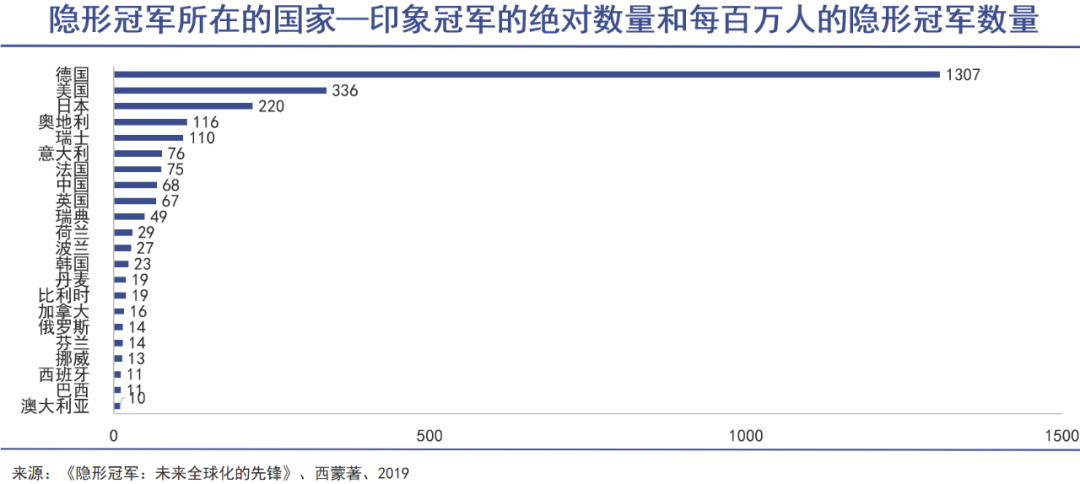
Core Insights - The article discusses the concept of "hidden champions," small and medium-sized enterprises (SMEs) that dominate niche markets but remain largely unknown to the public, particularly in Germany, Japan, and the U.S. [2][3][4] - The number of hidden champions has significantly increased in China, with a unique survival and operational philosophy that differs from Western companies [5][54] - However, the myth of hidden champions is facing challenges due to structural economic issues in Germany and Japan, leading to a decline in their prominence [6][23][36] Group 1: Definition and Characteristics of Hidden Champions - Hermann Simon defines hidden champions as companies that hold the top two global market shares, have annual sales below $1 billion, and are not widely recognized [8] - The number of hidden champions globally is estimated at 3,406, with Germany accounting for 1,573, nearly half of the total [9][13] - These companies often operate in overlooked industries, focusing on specialized products like fasteners and pet leashes, and maintain a low profile as part of their business model [14][15] Group 2: Economic Context and Decline - Germany's economy is experiencing a structural crisis, with GDP shrinking for two consecutive years, a rare occurrence since 1950 [27][28] - The automotive industry, a cornerstone of Germany's manufacturing sector, is facing systemic decline, with a reported 80% increase in bankruptcies since 2021 [28][30] - Major automotive suppliers are also struggling, with significant layoffs announced by companies like Bosch and ZF [28][29] Group 3: Comparison with China - In contrast to the decline of hidden champions in Germany and Japan, China's hidden champions are on the rise, with over 14,000 specialized small and medium enterprises identified [53][54] - Chinese companies are increasingly entering the global market, with 15 firms listed among the top 100 automotive parts suppliers, showcasing higher profit margins than their European counterparts [52] - The article notes that the number of identified hidden champions in China has tripled in the past five years, indicating a robust growth trajectory [54][55] Group 4: Future Outlook - The article suggests that the traditional manufacturing powerhouses of Germany and Japan are losing their competitive edge due to slow digital transformation and a lack of innovation [39][42][46] - The rise of Chinese technology and manufacturing capabilities is reshaping the global industrial landscape, with a notable absence of German and Japanese firms in the emerging sectors like AI and renewable energy [36][37] - The future of hidden champions in Germany and Japan appears uncertain as they struggle to adapt to changing market dynamics and increasing competition from China [58]


齐普策今年四访中国:宝马锚定创新与绿色机遇,笃定长期合作
Bei Ke Cai Jing· 2025-10-21 02:12
Core Insights - BMW Group's Chairman, Zipser, emphasizes the company's strong commitment to the Chinese market, highlighting the importance of deepening cooperation and innovation in the region [1][3][11] Group 1: Strategic Commitment - Zipser's frequent visits to China reflect BMW's high regard for the market and its determination to enhance collaboration [1] - The concept of "home in China" signifies a deep partnership beyond manufacturing and sales, focusing on mutual growth and cooperation [3] - BMW's 30-year localization story demonstrates the viability of multilateral cooperation amidst rising protectionism and trade barriers [3] Group 2: Investment and Innovation - Since 2010, BMW has invested approximately 116 billion RMB in its Shenyang production base, significantly boosting local employment and economic development [6] - The Shenyang facility has become a global leader in manufacturing and innovation, utilizing AI and digital technologies to enhance production efficiency and product quality [6][7] - BMW has established the largest and most comprehensive R&D network outside Germany in China, with over 3,000 team members focused on various automotive technologies [6] Group 3: Digitalization and Sustainability - BMW's collaboration with Chinese partners has entered a 2.0 phase, focusing on digitalization and green development as dual drivers of innovation [7][9] - The company has implemented a comprehensive AI strategy in China, with over 200 AI applications enhancing production processes [7] - BMW is a pioneer in battery lifecycle management in China, achieving 100% recycling of retired batteries and recovering over 2,100 tons of raw materials in 2024 [9] Group 4: Competitive Landscape - Zipser advocates for healthy competition that rewards quality, safety, and innovation, contrasting it with destructive price-based competition [9] - The company supports government initiatives that ensure fair and orderly competition, benefiting consumer rights and supply chain resilience [9] Group 5: Future Outlook - BMW remains committed to growing alongside the Chinese market, aiming to deliver high-quality products and services while contributing to the sustainable development of the automotive industry [11]

BBA“转身”求变 中国“智”造借势赋能
Zhong Guo Qi Che Bao Wang· 2025-10-20 00:48
Group 1 - The core focus of competition in the global luxury car sector is shifting from "mechanical performance" to "intelligent experience," particularly in the Chinese market [2] - Mercedes-Benz is accelerating its efforts in automotive intelligence by collaborating with Momenta to develop a combined driving assistance system for the upcoming pure electric CLA model [2][3] - Mercedes-Benz (Shanghai) Digital Technology Co., Ltd. acquired 136 million shares of Qianli Technology at a price of 9.87 yuan per share, totaling 1.339 billion yuan [2] Group 2 - The strategic adjustments of luxury car manufacturers like Mercedes-Benz, BMW, and Audi (BBA) are driven by the need to adapt to the rapidly changing market demands in China [3] - Mercedes-Benz plans to launch at least four new models featuring the jointly developed system between 2025 and 2027, utilizing local data for training [3][4] - BMW is collaborating with Momenta to develop a new generation of driving assistance systems for the Chinese market, with the first model expected in 2026 [4] Group 3 - The integration of luxury car manufacturers with China's intelligent automotive supply chain signifies a new phase of global output for Chinese companies [5] - China's automotive supply chain is evolving from traditional components to high-value intelligent solutions, driven by a skilled engineering workforce and cost advantages [6][7] - The collaboration with BBA enhances the global recognition and influence of Chinese automotive suppliers, marking a significant shift in the competitive landscape [8][9] Group 4 - The partnerships with BBA are expected to elevate the capabilities of Chinese automotive suppliers, leading to improvements in compliance, quality control, and intellectual property management [9][10] - The first round of industry consolidation is characterized by Chinese suppliers moving from secondary to primary supplier roles, enhancing their bargaining power [10] - The second round of consolidation will see resources concentrating among leading firms, creating a more competitive and efficient industry ecosystem [10]

宝马齐普策年内第四次访华:坚决反对欧盟对中国电动车加征反补贴关税
Zhong Guo Jing Ying Bao· 2025-10-17 09:19
Core Viewpoint - BMW Group's Chairman, Zipser, emphasizes the company's strong opposition to the EU Commission's anti-subsidy tariffs on Chinese electric vehicles and has filed a lawsuit against the EU court, highlighting the need for fair market competition and international cooperation [2][3]. Group 1: Company Strategy and Market Position - BMW Group is committed to long-term investment in China, focusing on high-quality products, leading technology, and uncompromising safety standards to gain consumer trust [2][3]. - The company has established the largest R&D network outside Germany in China and has invested over 116 billion RMB in its Shenyang production base since 2010 [3][4]. - BMW's collaboration with Chinese tech firms like Alibaba and Huawei in AI and autonomous driving significantly enhances its product digitalization and intelligent driving assistance systems [3]. Group 2: Environmental Commitment - BMW aims to reduce carbon emissions by at least 40 million tons by 2030 compared to 2019 levels and achieve carbon neutrality across its entire value chain by the end of 2050 [4]. - The upcoming new generation BMW iX3, set to be produced in Shenyang in 2026, represents the highest level of localization for BMW in China and will contribute to green and intelligent mobility [4]. Group 3: Industry Perspective - Zipser argues that competition based solely on low prices is destructive and detrimental to the long-term health of the industry, advocating for quality, safety, and innovation as the foundation of constructive competition [4]. - The company supports the Chinese government's initiatives to establish clear rules for fair and orderly competition, which would protect consumer rights and enhance supplier confidence [4].

宝马集团董事长齐普策:开放的市场比贸易壁垒更能带来共同繁荣,只比拼低价不利于行业长期健康发展
Xin Lang Ke Ji· 2025-10-17 04:05
Core Viewpoint - BMW Group's Chairman, Oliver Zipse, emphasizes the importance of international cooperation and dialogue in the evolving global landscape, highlighting the company's commitment to long-term investment and innovation in China [3][4]. Group 1: International Cooperation and Market Dynamics - Zipse calls for enhanced international collaboration to promote green and low-carbon development while maintaining fair market competition [3]. - BMW Group opposes the European Commission's anti-subsidy tariffs on Chinese electric vehicles and has filed a lawsuit with the EU court, advocating for free trade and open markets [3][4]. Group 2: Technological Innovation and Local Partnerships - BMW Group is entering a "2.0 era" in its cooperation with China, focusing on technological innovation to drive high-quality development in the automotive industry [4]. - The company has established significant partnerships with Chinese firms like Alibaba, Huawei, and Momenta in AI and autonomous driving, enhancing product digital interaction and intelligent driving assistance systems [4]. Group 3: Commitment to Green Development - Zipse highlights that green development is a common goal for both Europe and China, advocating for comprehensive evaluation metrics that cover the entire value chain in the automotive sector [5]. - BMW aims to reduce carbon emissions by at least 40 million tons by 2030 compared to 2019 levels and achieve carbon neutrality across its value chain by the end of 2050 [5]. Group 4: Competitive Environment in China - The company views constructive competition based on quality, safety, and innovation as beneficial, while price-based competition is seen as detrimental to the long-term health of the industry [5][6]. - BMW appreciates the Chinese government's efforts to establish clear rules for fair and orderly competition, which helps protect consumer rights and enhances supply chain resilience [6].