BMW(BMWYY)

Search documents
世界主流车企赴约 智慧出行和新能源科技亮相进博会
Shang Hai Zheng Quan Bao· 2025-11-05 18:41
Core Insights - The 8th China International Import Expo (CIIE) opened in Shanghai on November 5, showcasing major global automotive companies and their advancements in smart mobility and new energy technologies [1] Group 1: International Automotive Companies' Participation - Major global automotive companies, including Volkswagen, Tesla, BMW, and Nissan, have participated in all eight editions of the CIIE, indicating their commitment to the Chinese market [1] - The term "full attendance" was frequently mentioned by executives from international car manufacturers, highlighting their ongoing engagement with the Chinese market [4] Group 2: Technological Innovations and Collaborations - Tesla showcased its latest electric vehicle models, including the Cybercab, which features a fully autonomous driving system without a steering wheel or pedals, set to begin mass production in Q2 2026 [2] - Volkswagen presented its new generation of smart connected vehicles, developed in collaboration with Chinese partner XPeng Motors, emphasizing its commitment to local development [2] - BMW introduced its new generation models equipped with advanced AI capabilities and is collaborating with Chinese tech firms to enhance user experience and smart driving solutions [3] - Nissan unveiled the world's first fuel vehicle equipped with Huawei's HarmonyOS cockpit, aiming to create a "smart fuel vehicle" [3] Group 3: Commitment to the Chinese Market - Volkswagen's chairman emphasized the company's long-term investment strategy in China, aiming to strengthen local R&D capabilities and promote high-quality industry development [4] - BMW's CEO highlighted the importance of the CIIE as a platform for global companies to innovate and collaborate with Chinese partners, focusing on sustainable and high-quality development [4] - Bosch's president in China reiterated the company's commitment to integrating with China's industrial development and supporting local innovations to connect with global markets [5] Group 4: New Developments - Nissan is set to establish its first joint venture vehicle import and export company in China, marking a significant step in its strategy to enhance local operations and global outreach [6]


BMW Expects Strong Demand in 2026 After Earnings Boosted by Lower Costs
WSJ· 2025-11-05 07:08
Core Viewpoint - The carmaker is on track to meet its full-year targets, driven by strong demand for the new iX3 model, which is expected to contribute to growth next year [1] Group 1 - The company anticipates strong demand for the new iX3 model [1] - The growth from the iX3 model is expected to positively impact the company's performance next year [1]

德国汽车业将迎20万个就业岗位流失 究竟做错了什么?
凤凰网财经· 2025-11-04 12:38
Core Insights - The German automotive industry, once a global leader, is facing significant layoffs due to declining demand, high production costs, and challenges in the transition to electric vehicles [1][2] - An estimated 200,000 jobs may be lost in the coming years, with 51,500 layoffs reported in the past year alone, representing 6.7% of the workforce in the automotive sector [1] - Major automakers like Volkswagen, Mercedes-Benz, and BMW have reported substantial profit declines, with Volkswagen's net profit down 61.5% year-on-year [1][2] Group 1: Industry Challenges - The automotive sector's struggles are attributed to insufficient profitability, with Volkswagen reporting a net profit of only €3.4 billion in the first three quarters of the year [1] - The transition to electric vehicles has been slow, with German manufacturers lagging behind competitors, particularly from China, which have gained market share due to better designs and technology [4][5] - The industry's historical reliance on brand image is becoming less effective against competitors focused on technological innovation [5] Group 2: Policy and Political Factors - Recent political decisions, including the German Chancellor's commitment to delay the EU's ban on new internal combustion engine vehicles, may disrupt the industry's transition to electric vehicles [2][9] - The cancellation of subsidies for electric vehicles has increased consumer costs and suppressed demand, further complicating the industry's recovery [6][10] - The political instability and inconsistent policies have led to a cautious investment climate, with many suppliers planning layoffs and postponing investments [10] Group 3: Future Outlook - The automotive industry is at a crossroads, needing to balance traditional manufacturing with the urgent need for innovation in electric vehicles and autonomous driving technology [8][9] - The competitive landscape is intensifying, with external pressures such as tariffs from the U.S. and the rise of Chinese electric vehicle manufacturers posing significant threats [10] - A unified policy approach is essential for the industry to regain its footing and navigate the challenges ahead [10]
向地下2900米“借”热:宝马“取热不取水”技术守护碧水蓝天
Xin Hua Wang· 2025-11-04 09:22
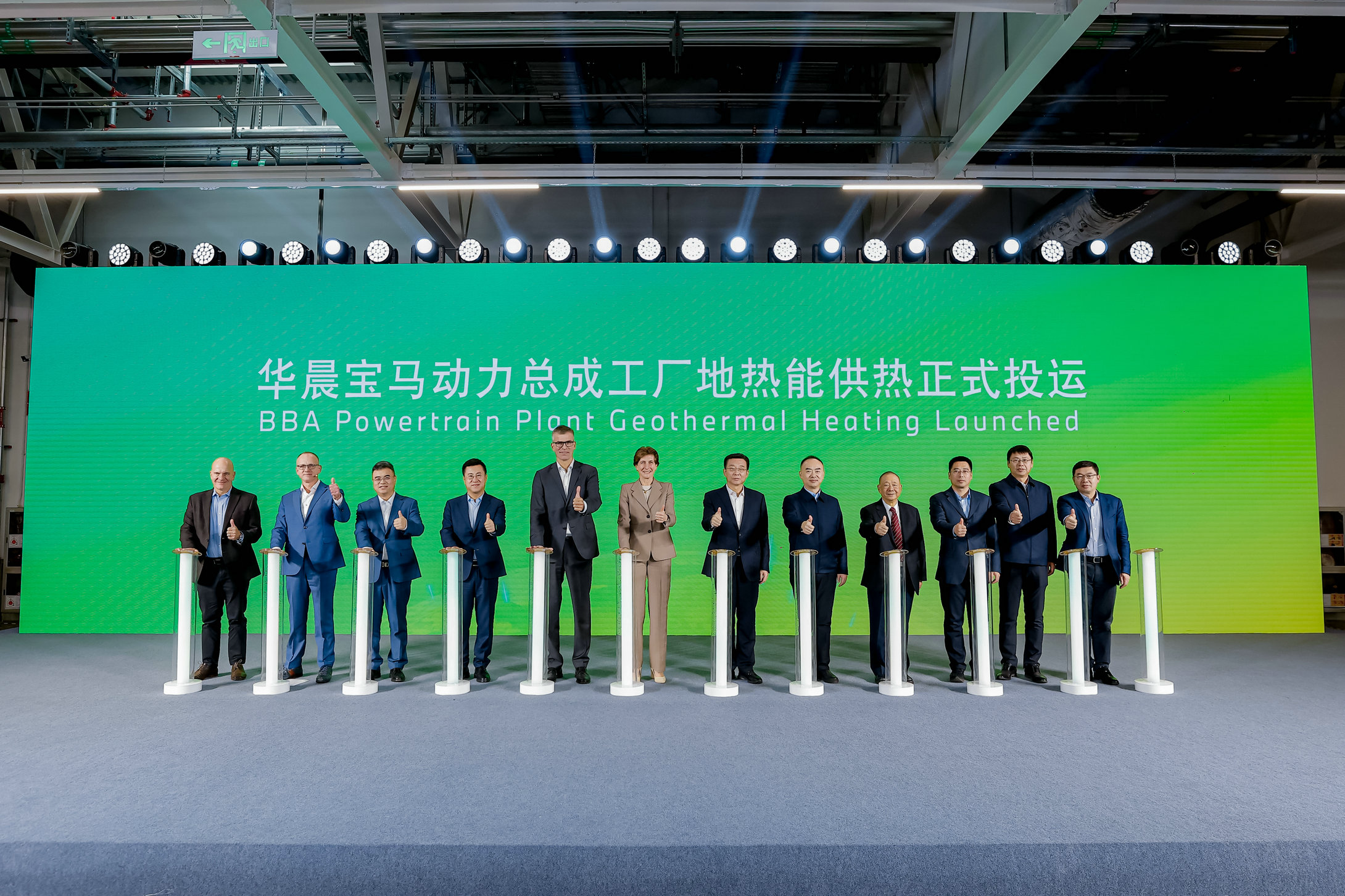
Core Viewpoint - BMW Group has launched a geothermal energy project in Shenyang, China, marking a significant milestone in its global energy strategy, aimed at reducing the carbon footprint of its new generation vehicles and enhancing its green competitiveness in the Chinese market [1][3]. Group 1: Project Overview - The geothermal heating project utilizes 100% non-fossil energy, contributing to low-carbon transformation in production and providing a replicable model for clean heating in northern industrial regions [1][5]. - The project is a collaboration with local partners, including China Huaneng Group and Wanjiang New Energy Co., Ltd., and aims to optimize the regional energy structure while supporting the construction of a zero-carbon industrial park [5][9]. Group 2: Technical Details - The project employs coaxial heat exchangers to extract geothermal energy from a depth of 2,900 meters, utilizing a closed-loop system that protects local water and soil [7][9]. - It includes the drilling of 28 geothermal wells, covering a heating area of approximately 580,000 square meters, and is expected to reduce carbon emissions by 18,000 tons annually, equivalent to the emissions from a car circling the Earth 3,000 times [7][9]. Group 3: Strategic Implications - This geothermal project is a key component of BMW Group's strategy to build a diverse renewable energy matrix, which includes deep geothermal energy, wind power development, and exploring hydrogen commercialization [9]. - The energy transition represented by this project aims to lower the carbon footprint of products from the source, providing consumers with a more responsible electric mobility experience [9].
【快讯】每日快讯(2025年11月4日)
乘联分会· 2025-11-04 08:43
Domestic News - Guangdong government offers one-time subsidies for personal consumers purchasing new energy passenger vehicles during the "Yue Enjoy Warm Winter" consumption season from November 2025 to March 2026 [6] - Geely and Renault Group sign a strategic cooperation agreement in Brazil, with Geely acquiring 26.4% of Renault Brazil, enhancing market access for electric vehicles in Latin America [7] - GAC Toyota launches new policies to address battery degradation, promising quick battery testing and replacement services, and sets high standards for battery performance [8] - Lynk & Co introduces a cross-year purchase tax subsidy plan, offering up to 15,000 yuan for customers affected by delivery delays [9][10] - Audi E5 Sportback announces a similar cross-year purchase tax subsidy plan, providing up to 15,000 yuan for delayed deliveries [11] - Autohome launches a new e-commerce platform, integrating various automotive services and addressing transparency issues in the car buying process [12] - BMW's geothermal energy project in China becomes operational, expected to reduce carbon emissions by 18,000 tons annually [13] - Amap announces the international version of AutoSDK, supporting navigation services for Chinese car brands in over 170 countries [14][15] International News - Japan aims to deploy 10,000 L4 autonomous vehicles by the fiscal year 2030, marking a significant push for advanced automotive technology [16] - Hyundai plans to establish a clean mobility hub in Malaysia, focusing on renewable energy projects [17] - Mazda showcases a new technology that can recycle up to 20% of vehicle emissions, aiming for net negative carbon emissions [18] - Honda announces plans to produce a new electric SUV in India by 2027, targeting cost competitiveness in the global market [20] Commercial Vehicles - Jiangsu Province's innovation center for new energy commercial vehicle power and control systems receives approval, focusing on key technological advancements [21] - A new 4MW ultra-fast charging solution is launched, enabling heavy trucks to charge in just 10 minutes, achieving "oil-electric same speed" [22] - Chery Commercial Vehicle's Zero Meter light truck achieves the highest market share in Shanghai [23] - Kaiwo Group and Hyundai unveil the first 8.5-meter hydrogen fuel cell bus, marking a significant step in zero-carbon transportation [24]



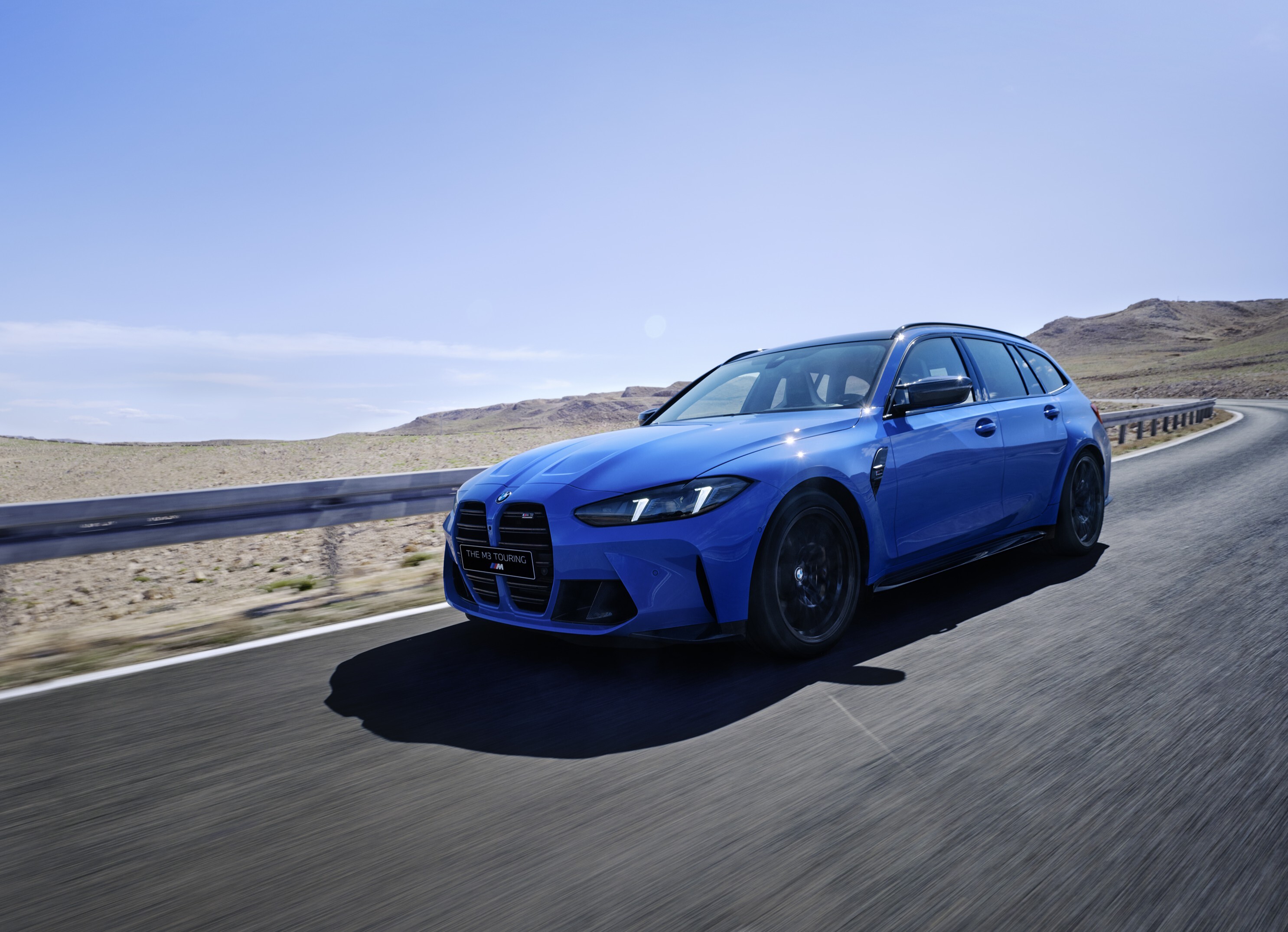
全新BMW M3旅行版上市开拓新细分市场,M加速迈入“新世代”
Zhong Guo Jing Ji Wang· 2025-11-03 10:43
Core Insights - The launch of the new BMW M3 Touring marks the introduction of the first high-performance touring car in China, showcasing BMW's commitment to pure driving pleasure [1][11] - The new BMW M3 Touring is priced at 943,900 yuan and was unveiled at the 2025 M Festival, attended by thousands of M fans [2] - BMW M's product lineup in China has expanded to 25 models, reflecting a strong market presence and consumer interest [5] Product Highlights - The new BMW M3 Touring combines practicality with high performance, featuring the M xDrive intelligent all-wheel drive system and an active M differential for improved traction [11] - The BMW M2 CS, also launched, has achieved a remarkable lap time of 7 minutes and 25.534 seconds at the Nürburgring, earning the title of the fastest compact car [8] - The M2 CS has undergone extensive testing, including over 8,000 kilometers on the Nürburgring, ensuring exceptional performance in both everyday and track conditions [8] Market Performance - BMW M has experienced a nearly 30% year-on-year sales increase in the high-performance vehicle segment in China during the first nine months of 2025, leading the market [5] - The brand's strong product offensive and comprehensive model range have contributed to its growing popularity among Chinese consumers [5] Future Outlook - BMW M aims to maintain its competitive edge in internal combustion engine technology while enhancing its capabilities in electric and plug-in hybrid vehicles [14] - By 2027, it is projected that half of BMW M's models will be electric, with a steady increase in the share of electric and plug-in hybrid vehicles in total sales expected through 2030 [14]
华晨宝马地热能供热项目投入运营
Liao Ning Ri Bao· 2025-11-03 01:09
Core Insights - The geothermal energy project launched by BMW Brilliance aims to provide 100% fossil-free heating for its powertrain factory and sixth-generation battery center, marking a significant step towards low-carbon transformation and clean heating solutions in northern industrial regions [1][2] Group 1: Project Overview - The geothermal project utilizes innovative technology to harness deep geothermal energy, implementing a closed-loop system that extracts heat from 2,900 meters underground without depleting water resources [1] - The project involves drilling 28 medium-deep geothermal wells, covering a heating area of approximately 580,000 square meters, and is expected to reduce carbon emissions by 18,000 tons annually [1] Group 2: Strategic Importance - This initiative is part of BMW Group's broader strategy to build a diverse renewable energy matrix, including deep geothermal energy, wind power collaboration, and hydrogen commercialization [2] - The energy transition represented by this project aims to lower the carbon footprint of products from the source, enhancing the responsible electric mobility experience for consumers [2]

宝马“新世代”车型电池工厂实现100%非化石能源供热
Mei Ri Jing Ji Xin Wen· 2025-10-31 11:07
Core Insights - BMW Group announced the official operation of a geothermal energy project for the Huachen BMW powertrain plant and the sixth-generation battery center, covering an area of approximately 580,000 square meters and expected to reduce carbon emissions by 18,000 tons annually [1] Company Overview - The Huachen BMW powertrain plant is one of BMW's core production bases globally [1] - The sixth-generation battery center is designated for the production of batteries for BMW's "new generation" vehicles, which are planned to be domestically produced next year [1]
华晨宝马动力总成工厂地热能系统正式投入运营
Yang Shi Wang· 2025-10-31 10:14
Core Insights - BMW Group has launched a geothermal energy project in Shenyang, marking a significant milestone in its global energy strategy aimed at reducing the carbon footprint of its new generation vehicles and enhancing its green competitiveness in the Chinese market [1][3] Group 1: Project Overview - The geothermal project utilizes 100% non-fossil energy for heating, facilitating a low-carbon transformation in production and providing a replicable model for clean heating in northern industrial regions [3] - The project is a collaboration with local partners, including China Huaneng Group and Wanjiang New Energy Co., Ltd., and aims to leverage Shenyang's abundant geothermal resources to create an energy-efficient and environmentally friendly benchmark project [3][5] Group 2: Technical Details - The project employs downhole heat exchange technology, reaching a depth of 2,900 meters, which is equivalent to stacking nearly 10 Eiffel Towers, to collect geothermal energy while protecting local water and soil [5] - A total of 28 medium-deep geothermal wells will be drilled, covering a heating area of approximately 580,000 square meters, with an expected annual reduction in carbon emissions of 18,000 tons, equivalent to the emissions from a car circling the Earth 3,000 times [5]

宝马的“零碳”账本:以地热为支点,撬动“新世代”车型源头减碳
Di Yi Cai Jing· 2025-10-31 05:07
Core Insights - BMW Group has officially launched a geothermal energy system at its Brilliance BMW powertrain plant in Shenyang, marking a significant milestone in its global energy strategy [3][4] - The project utilizes innovative underground heat exchange technology, with 28 deep geothermal wells planned to cover approximately 580,000 square meters, expected to reduce carbon emissions by 18,000 tons annually [1][6] Group 1: Project Overview - The geothermal energy project is powered entirely by non-fossil energy, contributing to the low-carbon transformation of production and providing a replicable model for clean heating in northern industrial regions [3][4] - The project is a collaboration with local partners, including China Huaneng Group and Wanjiang New Energy Co., showcasing a commitment to local resource utilization and environmental protection [6][8] Group 2: Technical Details - The geothermal system employs coaxial heat exchangers to extract heat from underground at a depth of 2,900 meters, utilizing a closed-loop system that protects local water resources [6][8] - Compared to traditional shallow geothermal heat pumps, this system is more space-efficient, stable in operation, and has higher energy efficiency, particularly suited for the heating demands of northern regions [6][8] Group 3: Strategic Implications - This geothermal project is a key component of BMW Group's strategy to build a diverse renewable energy matrix, including deep geothermal energy, wind power, and hydrogen commercialization [8] - The energy transition represented by this project aims to reduce the carbon footprint of BMW's new generation vehicles from the source, enhancing the responsible electric mobility experience for consumers [8]