
Citi(C)

Search documents
花旗集团对中兴通讯H股的多头持仓比例降至7.6%
Xin Lang Cai Jing· 2025-12-29 09:13
Group 1 - Citigroup's long position in ZTE Corporation's H-shares decreased from 8.79% to 7.6% as of December 19, 2025 [1]


美国经济- 经济活动增速快于就业-US Economics_ The Daily Update – Activity powers ahead of jobs
2025-12-29 01:04
Summary of Key Points from the Conference Call Industry Overview - The report discusses the **US Economics** and highlights the performance of the economy in Q3 2023, particularly focusing on GDP growth and consumer spending trends [6][7]. Core Insights - **GDP Growth**: The real GDP registered a strong annualized growth of **4.3%** in Q3, surpassing the **3.8%** growth in Q2. This growth was supported by a reduction in imports, which contributed significantly to the shrinking trade deficit [6]. - **Consumer Spending**: Consumer spending is expected to play a crucial role in the growth outlook, with a notable increase in services spending, particularly in healthcare, during early Q3. The revised data indicates a stronger advance in consumer spending than previously anticipated [7][8]. - **Job Market Discrepancy**: There is a notable contrast between strong economic activity and softer job market data. Despite robust GDP growth, payroll job growth was only modestly positive, suggesting a potential slowdown in job and income growth, which may lead to reduced consumer spending in the future [8][9]. - **Q4 Projections**: A slowdown in consumer spending is anticipated in Q4, with a projected real GDP growth of just **1%** due to factors such as the government shutdown and overall weaker consumer spending [9]. Additional Important Points - **AI Investment**: AI-related business investments have been contributing positively to growth this year and are expected to continue doing so in the next year [7]. - **Retail Sales**: Retail control group sales were strong in October, although overall goods spending was weak, particularly affected by the automotive sector [9]. - **Long-term Outlook**: For 2026, a real GDP growth of around **2%** is projected, indicating a more moderate growth environment compared to the current year [9]. This summary encapsulates the key insights and projections regarding the US economy, focusing on GDP growth, consumer spending, and the job market dynamics.
年内调研近万次!外资巨头盯上这些标的
Shang Hai Zheng Quan Bao· 2025-12-27 10:18
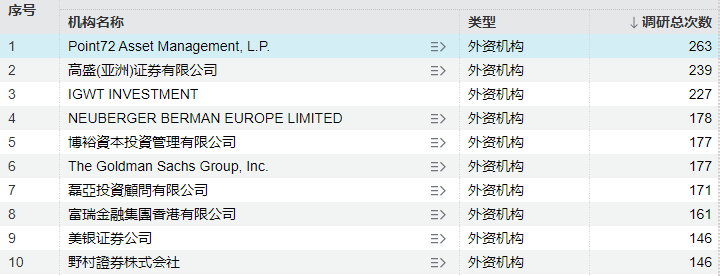
Group 1 - Nearly 800 foreign institutions have conducted approximately 9,308 research visits to A-share listed companies since 2025, with Point 72 Asset Management leading with 263 visits [1][2] - Major international banks such as Goldman Sachs and Bank of America have also conducted over 100 research visits this year [2][3] - The primary focus of foreign institutions is on the technology and pharmaceutical sectors, indicating strong interest in these areas [3][5] Group 2 - The top three companies receiving the most foreign institution research visits are Huichuan Technology (733 visits), Mindray Medical (404 visits), and Optoelectronics (331 visits) [3][4] - The technology sector, particularly AI, is expected to drive significant growth in corporate profits, with an estimated annual increase of 3% over the next decade due to cost savings and productivity improvements [5] - The pharmaceutical sector in China is gaining international recognition, with local innovative drug companies entering the global first tier in terms of research pipeline quantity [6]






受监管放松推动,今年美国六大银行市值增加6000亿美元
Ge Long Hui A P P· 2025-12-26 15:21
Core Viewpoint - The article highlights that the six largest banks in the U.S. are projected to gain a combined market value of $600 billion by 2025, driven by regulatory rollbacks under the Trump administration and a recovery in investment banking [1] Group 1: Market Value Growth - The combined market value of the six largest U.S. banks—JPMorgan Chase, Bank of America, Citigroup, Wells Fargo, Goldman Sachs, and Morgan Stanley—rose to $2.37 trillion as of Tuesday's close, up from $1.77 trillion at the end of last year [1]


美国各大银行首席执行官谈人工智能对员工规模的影响
Xin Lang Cai Jing· 2025-12-26 09:20
Core Viewpoint - The CEOs of major U.S. banks are optimistic about the transformative efficiency changes that artificial intelligence (AI) can bring to the industry, but there are concerns about potential job reductions for bank employees [1][16]. Group 1: Statements from JPMorgan Chase - Jamie Dimon, CEO of JPMorgan Chase, stated that job cuts are inevitable due to the AI wave, emphasizing that AI will eliminate certain positions [3][17]. - Dimon mentioned that AI could serve as a "work assistant" and take over tedious tasks, potentially leading to job losses [3][17]. - In the short term, if AI implementation goes smoothly, JPMorgan Chase's employee count may remain stable or even slightly increase [3][17]. - The core goal of JPMorgan Chase's AI strategy is to enhance operational efficiency, with expectations of a 40% to 50% increase in productivity in the operations department over the next five years [4][19]. - The company is focusing on controlling hiring and shifting towards efficiency improvements [5][19]. Group 2: Statements from Goldman Sachs - David Solomon, CEO of Goldman Sachs, indicated that AI will be a key driver for efficiency improvements, which may lead to a slowdown in hiring and the streamlining of certain roles [6][20]. - Solomon believes that while AI will reduce manpower in some areas, it will also allow the firm to focus on attracting high-value talent for customer service [7][21]. - Goldman Sachs expects to see employee growth by the end of 2025, despite the current focus on optimizing recruitment structures [6][20]. Group 3: Statements from Citigroup - Jane Fraser, CEO of Citigroup, expressed that AI is expected to significantly enhance work efficiency in the short term and reshape all business segments in the long term [9][24]. - Fraser reported that AI has already led to over 1 million automated code reviews this year, saving approximately 100,000 hours of work per week [10][25]. - She acknowledged concerns that AI might initially compress job positions before the industry realizes its benefits, noting that the current AI penetration rate is only 10% [10][25][11][26]. Group 4: Statements from Wells Fargo - Charles Scharf, CEO of Wells Fargo, indicated that the bank's workforce has already decreased by nearly 25% since he took over in 2019, and this trend is likely to continue [12][27]. - Scharf emphasized that the potential of AI is undeniable and that many in the industry are aware that it will lead to job reductions [13][28]. - He noted that AI tools have improved the efficiency of engineers by 30% to 35%, allowing the bank to accomplish more with fewer employees [13][28]. Group 5: Statements from Bank of America - Brian Moynihan, CEO of Bank of America, stated that the implementation of AI has already led to reductions in workforce in certain departments [14][29]. - The bank's strategy focuses on employee training to prepare them for roles that AI cannot replace, emphasizing the importance of skill development [15][30]. - Moynihan highlighted that the bank's digital interactions reached 1.4 billion in November, which has saved approximately 11,000 full-time equivalent positions [15][30].
“AI裁员潮”即将到来!华尔街大行掌门人坦承,岗位削减不可避免
智通财经网· 2025-12-26 09:08
Core Insights - The discussion around artificial intelligence (AI) by CEOs of major banks indicates a significant shift in the financial industry, with predictions that generative AI will enhance or replace human jobs, impacting nearly 200 million employees in the banking sector [1] Group 1: CEO Perspectives on AI and Employment - Jamie Dimon, CEO of JPMorgan Chase, openly acknowledges that AI will eliminate jobs, stating that people should not avoid this reality. He emphasizes that AI will change job roles and improve efficiency, potentially stabilizing or even increasing the workforce if managed well [2] - Mary Erdoes, President of JPMorgan Chase, predicts a 40% to 50% productivity increase in operational departments over the next five years, but clarifies that this will not lead to mass layoffs, rather a slowdown in net workforce growth [3] - David Solomon, CEO of Goldman Sachs, indicates that AI will drive efficiency improvements, leading to slower hiring and job reductions. He believes that while some roles may be significantly reduced, the economy will adapt and create new jobs [5][6] Group 2: Company Strategies and AI Implementation - Goldman Sachs is focusing on controlling workforce growth and enhancing efficiency through AI, with a goal to find the best team structure and agility. The company expects to increase its total employee count by the end of 2025, despite slowing hiring [5] - Jane Fraser, CEO of Citigroup, highlights that generative AI will greatly enhance productivity in the short term and could fundamentally change various banking functions in the long term. She notes that AI-driven automation has already saved approximately 100,000 work hours weekly [6][7] - Charlie Scharf, CEO of Wells Fargo, acknowledges that the bank has reduced its workforce by nearly a quarter since 2019 and anticipates this trend will continue, emphasizing that AI will create significant opportunities for efficiency [8] Group 3: Training and Workforce Adaptation - Brian Moynihan, CEO of Bank of America, recognizes that while AI has led to some departmental reductions, the focus is on retraining employees for roles that AI cannot replace. The bank is prioritizing multi-dimensional training to adapt to the changing landscape [9]
The Zacks Analyst Blog Wells Fargo, Bank of America and Citigroup
ZACKS· 2025-12-26 08:26
Core Viewpoint - The Federal Reserve has begun cutting interest rates in response to slowing economic activity and easing inflation, which is expected to benefit the banking sector, particularly Wells Fargo, Bank of America, and Citigroup [2][3]. Group 1: Impact of Interest Rate Cuts on Banks - Lower interest rates stimulate loan demand from both consumers and businesses, leading to increased lending activity, which can help banks grow loan volumes despite pressure on net interest margins [4]. - Improved credit quality due to lower debt servicing costs reduces the risk of delinquencies and defaults, allowing banks to focus on growth rather than balance-sheet defense [5]. - Falling rates enhance fee-based income streams as capital markets activity increases, benefiting investment banking, trading, and wealth management divisions [6][7]. Group 2: Company-Specific Insights Wells Fargo (WFC) - WFC aims to stabilize funding costs and grow loan assets aggressively, expecting stable net interest income (NII) in 2025 due to increased loan origination [8][10]. - The bank plans to diversify its revenue streams by expanding fee-rich franchises in investment banking, trading, and wealth management [9]. - The Zacks Consensus Estimate projects WFC's earnings growth rates of 16.8% for 2025 and 11.9% for 2026 [11]. Bank of America (BAC) - BAC is positioned to benefit from fixed-rate asset repricing and expects NII growth of 5-7% in 2026, following similar growth in 2025 [12]. - The bank is focusing on organic growth through the expansion of its physical and digital presence, planning to open over 150 financial centers by 2027 [13]. - The Zacks Consensus Estimate indicates earnings growth of 15.9% for 2025 and 14% for 2026 [14]. Citigroup - Citigroup has experienced a compound annual growth rate (CAGR) of 8.4% in NII over the past three years, with expectations for a 5.5% year-over-year increase in 2025 [15]. - The company is streamlining its consumer banking operations globally, which will free up capital for investments in wealth management and investment banking [16]. - The Zacks Consensus Estimate forecasts earnings growth of 27.6% for 2025 and 32.4% for 2026 [17].

日本经济:2026 年展望 - 稳定局面下是否会浮现不稳定因素-Japan Economics_ Prospects for 2026 _ Will seeds of destabilization emerge amidst stability_
2025-12-26 02:18
Summary of Key Points from the Conference Call Industry Overview - **Industry**: Japan's Economic Outlook - **Focus**: Economic growth, inflation, monetary policy, and fiscal policy for 2026 Core Insights and Arguments 1. **GDP Growth**: Japan's GDP is expected to grow at +1.0% in 2026, a slight decrease from +1.3% in 2025, indicating resilience despite challenges [1][4] 2. **Inflation Trends**: Headline inflation is projected to temporarily fall below 2%, with strong wage growth expected to ease consumer purchasing power headwinds [1][4] 3. **Monetary Policy**: The Bank of Japan (BoJ) is anticipated to implement semiannual rate hikes, with the terminal rate expected to reach +1.5% by 2027 [5][6] 4. **Fiscal Policy Constraints**: Fiscal leeway is limited due to high government debt/GDP ratio and the JGB market's exit from quantitative easing, leading to moderate fiscal impulses [1][4][13] 5. **Wage Growth**: A base pay increase of approximately 3.3% is expected in spring wage negotiations, supported by labor shortages and corporate profits [20] 6. **Consumer Spending**: Real wage growth is expected to turn positive YoY early in 2026, which should support consumer spending growth [38][39] 7. **Inflation Forecast**: Core CPI is projected to decelerate to +1.7% in 2026 from +3.1% in 2025, influenced by government anti-inflation measures [22][23] 8. **Investment Trends**: Companies are increasingly investing in differentiating and developing value-added products to manage rising costs [44] Additional Important Points 1. **FX Risks**: Foreign exchange movements pose significant risks to the economic outlook, potentially affecting the timing of rate hikes [5][8] 2. **Public Sector Price Hikes**: The government is considering public sector price adjustments in line with inflation, which may impact CPI [25][26] 3. **Defense Spending**: PM Takaichi's administration is expected to increase defense spending, which may affect fiscal policy and market confidence [18] 4. **Tourism Risks**: Recent tensions with China could negatively impact services exports, particularly tourism, which is a significant contributor to GDP [56] 5. **Long-term Growth Potential**: The potential growth rate may improve due to structural reforms and investments under the Takaichi administration [10][17] This summary encapsulates the key insights and arguments presented in the conference call regarding Japan's economic outlook for 2026, highlighting growth expectations, inflation trends, monetary and fiscal policies, and potential risks.
黄金“暴利”下华尔街为之疯狂:广招贵金属交易员、金库成了“香饽饽”
Feng Huang Wang· 2025-12-25 08:04
Core Insights - The banking and trading sectors are expanding their precious metals trading and storage capabilities to capitalize on the record surge in gold prices this year, marking a significant opportunity in the financial industry [1] - Gold and silver prices have recently accelerated, with spot gold surpassing $4,500 per ounce and silver crossing $70 per ounce, resulting in year-to-date increases of 71% and 150%, respectively [1] Group 1: Revenue Growth - Major banks' precious metals trading departments have seen a 50% increase in revenue in the first nine months of this year compared to the same period in 2024 [2] - The revenue from precious metals trading for 12 leading banks reached approximately $1.4 billion from January to September, indicating that 2025 could be the second-best year for bank gold trading, following 2020 [2] Group 2: Market Participation and Competition - Banks that previously closed their precious metals trading departments, such as Société Générale, Morgan Stanley, and Sumitomo Mitsui Banking Corporation, are re-entering the market and expanding their teams [3] - Non-bank competitors, including Swiss refiner MKS Pamp and financial platform StoneX, are also enhancing their precious metals trading operations, indicating increased competition in the sector [3] Group 3: Storage Business Revival - The storage business, once considered dull and low-margin, is regaining popularity among banks, with many exploring or already engaged in this area [4] - Citigroup is reportedly considering opening a vault, while MKS Pamp has expanded its operations and aims to become a leading player in the precious metals industry [4] Group 4: Advantages and Challenges - Wall Street banks possess significant advantages due to their large balance sheets, which have become crucial as smaller traders face funding challenges amid rising gold prices [5] - Non-bank competitors have specialized advantages in physical gold procurement, which is complex due to compliance with "good delivery" standards, making banks hesitant to engage early in the supply chain [6]




华尔街强势回归:2025年六大行市值激增逾1/3 监管放松与投行业务成增长引擎
Zhi Tong Cai Jing· 2025-12-25 07:05
Group 1 - The total market capitalization of the six major U.S. banks has increased by $600 billion, reaching $2.37 trillion, a growth of over one-third in less than 12 months, attributed to the regulatory relaxation under President Trump and a recovery in investment banking [1] - The European banks' total market capitalization stands at $1 trillion, highlighting a significant disparity resulting from years of uneven regulations [1] - U.S. banks have finally shed the constraints imposed after the 2008 financial crisis, outperforming the broader S&P 500 index for the second consecutive year [1] Group 2 - The Trump administration has allowed major lending institutions to increase leverage by modifying annual stress test requirements and eliminating guidelines that restrict high-risk lending [2] - Analysts note that the regulatory changes are crucial for stock prices, as banks had previously seen profitability decline due to increased capital requirements following the financial crisis [2] - Major banks have accumulated excess capital, which can now be utilized for stock buybacks, dividends, and business growth rather than merely being held as a safety net [3] Group 3 - Citigroup's stock has surged nearly 70%, the best performer among the six banks, due to significant internal restructuring and cost-cutting measures [4] - Goldman Sachs' stock has risen by 60%, benefiting from a resurgence in large investment banking transactions and setting historical highs in 2025 [4] - Record revenues are anticipated in stock trading at $92 billion and fixed income trading at $163 billion, surpassing previous records [4] Group 4 - Concerns have been raised by Senator Elizabeth Warren regarding the extent of regulatory relaxation and the potential risks for banks [4] - Despite these concerns, investors remain optimistic, with analysts suggesting that banks have room to take on more risk given the modest growth in their balance sheets [4] - The current positive sentiment in the market is noted to feel almost unreal, with a solid fundamental backdrop, although questions remain about how much of this has already been priced in [4]