Deutsche Bank AG(DB)

Search documents
德意志银行:科技股引发股市全线下跌的可能性不大
Sou Hu Cai Jing· 2025-11-25 09:32
Core Viewpoint - Concerns about an AI bubble are unlikely to lead to a broad market decline, with recent pullbacks seen as a result of "extreme position unwinding" [1] Group 1: Market Sentiment - The report by Deutsche Bank strategists, including Maximilian Uleer and Carolin Raab, indicates that worries regarding investment cycles and AI monetization will persist but are not seen as urgent [1] - The adjustment of earnings expectations for the seven major tech stocks is viewed positively, suggesting resilience in their financial outlook [1] Group 2: Economic Outlook - Should the economic outlook worsen, these tech giants have the capacity to adjust their capital expenditures accordingly [1] - If concerns about a bubble continue, the Federal Reserve retains the option for further interest rate cuts [1]

德意志银行策略师:科技股引发股市全线下跌的可能性不大
Xin Lang Cai Jing· 2025-11-25 09:16
Core Viewpoint - Concerns about an artificial intelligence (AI) bubble are unlikely to lead to a broad market decline, with recent pullbacks seen as a "deleveraging of extreme positions" [1] Group 1: Market Sentiment - The team led by Maximilian Uleer and Carolin Raab indicates that worries regarding investment cycles and AI monetization will persist but are not seen as urgent [1] - Adjustments in earnings expectations for the seven major tech stocks are viewed positively, suggesting they can manage capital expenditures if the outlook worsens [1] Group 2: Monetary Policy and Tactical Positioning - If bubble concerns continue, the Federal Reserve retains the option for further interest rate cuts [1] - A tactical preference for European stocks over U.S. stocks is recommended, as issues related to technology, private credit, and the U.S. budget are more pronounced in the U.S. [1] Group 3: Regional Economic Factors - Clarity in the UK budget and the expected approval of Germany's 2026 budget on Friday are anticipated to positively impact European stock markets [1]
ECB scrutinising claims Deutsche Bank underplayed financial risks, FT reports
Reuters· 2025-11-25 05:14
Core Insights - The European Central Bank is investigating allegations against Deutsche Bank regarding the misrepresentation of risks in its balance sheet and its financial strength [1] Group 1 - Allegations suggest that Deutsche Bank may have downplayed risks associated with its financial position [1] - The investigation by the European Central Bank indicates potential regulatory scrutiny on Deutsche Bank's financial disclosures [1] - The situation could impact investor confidence and market perception of Deutsche Bank's stability [1]


德银:“五重冲击”齐袭!本轮比特币暴跌的逻辑,和过去完全不一样
美股IPO· 2025-11-25 03:40
Core Viewpoint - Deutsche Bank believes that the recent decline in Bitcoin is driven by five major shocks, including macroeconomic headwinds, hawkish signals from the Federal Reserve, stagnation in regulatory progress, outflows of institutional funds, and profit-taking by long-term holders, indicating a fundamental shift in Bitcoin's investment logic and an unprecedented emphasis on risk management [1][2][4]. Group 1: Five Major Shocks - **Shock One: High Correlation with Tech Stocks** The recent decline in Bitcoin is synchronized with the drop in U.S. stocks, indicating that Bitcoin has not yet established its function as a defensive hedge [3]. - **Shock Two: Increased Uncertainty in Monetary Policy** The uncertainty surrounding the Federal Reserve's monetary policy is a key driver of Bitcoin's decline, with a strong negative correlation between Bitcoin prices and Fed interest rates [10][11]. - **Shock Three: Stagnation of Regulatory Key Legislation** The momentum for regulatory frameworks has stalled, hindering the integration of Bitcoin into investment portfolios and liquidity deepening [13][15]. - **Shock Four: Institutional Fund Outflows and Liquidity Drain** A vicious cycle of liquidity drain and institutional fund outflows has exacerbated the price drop, with significant net outflows from Bitcoin ETFs recently [17][18]. - **Shock Five: Profit-Taking by Long-Term Holders** Unlike previous crashes driven by new or leveraged traders, this adjustment has seen long-term holders selling off over 800,000 Bitcoins, marking the highest level since January 2024 [20][21]. Group 2: Market Dynamics and Future Outlook - **Market Dynamics** The correlation between Bitcoin and major stock indices has surged, reaching levels similar to those during the market stress of the COVID-19 pandemic [5][6]. - **Future Outlook** The ability of Bitcoin to stabilize post-adjustment remains uncertain, but regulatory reforms and increased interest from governments and central banks may enhance institutional confidence and market liquidity [23]. - **Risk Management Importance** As the cryptocurrency market evolves, implementing strict risk management measures is crucial due to the potential for increased price volatility driven by uncertainty and leverage effects [23].
Forget Magic 8 Balls. Strategists See S&P 8000 in 2026.
Barrons· 2025-11-24 20:51
Jim Reid, global head of macro and thematic research at Deutsche Bank, writes that 2026 will be "anything but dull.†...

德意志银行预计,2026年美国GDP增长率为2.4%,2026年全球GDP增长率为3.1%
Xin Hua Cai Jing· 2025-11-24 14:51
Group 1 - Deutsche Bank projects a GDP growth rate of 2.4% for the United States in 2026 [1] - The global GDP growth rate is expected to be 3.1% in 2026 according to Deutsche Bank [1]
德意志银行预测标普500指数到2026年底将升至8000点
Xin Lang Cai Jing· 2025-11-24 14:41
Core Viewpoint - Deutsche Bank predicts that the S&P 500 index will rise to 8000 points by the end of next year, driven by strong corporate earnings and AI-driven growth, making it the most optimistic among major global brokerages [1] Group 1: Predictions and Targets - Deutsche Bank's target implies a potential increase of up to 21% from the previous closing price of 6602.99 points [1] - HSBC sets a target for the S&P 500 index at 7500 points by the end of 2026, also optimistic about AI's strong development [1] - Morgan Stanley forecasts that the U.S. stock market will outperform other global markets next year, estimating the index will reach 7800 points by the end of 2026 [1] Group 2: Market Drivers - The S&P 500 index has risen approximately 12.3% this year, primarily due to investor optimism regarding AI, strong corporate profits, and expectations of declining interest rates [1] - Major tech companies like Nvidia, Microsoft, and Google are the main drivers of this upward trend, with AI-driven spending supporting record capital expenditure levels [1] - Deutsche Bank strategists emphasize that rapid investment and application of AI will continue to dominate market sentiment [1] Group 3: Investor Sentiment - HSBC analysts suggest that regardless of potential market bubbles, historical trends indicate that bullish markets can last for several years, recommending an expansion of AI-related trades [1] - Active investors' portfolio allocations are seen as a potential source for market uptrends [1]




Deutsche Bank may have just set a holy-grail goal for the S&P 500
MarketWatch· 2025-11-24 14:11
Core Viewpoint - Deutsche Bank has set an ambitious forecast for the S&P 500, projecting a target of 8,000 by 2026 [1] Summary by Relevant Categories - **Forecasts** - The S&P 500 target of 8,000 by 2026 represents a significant bullish outlook from Deutsche Bank [1]
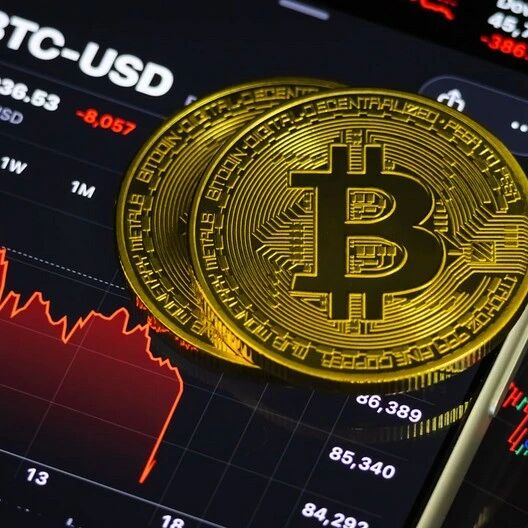
Bitcoin’s trading around $86,000 as ‘Tinkerbell’ effect haunts crypto, in Deutsche Bank’s view
Yahoo Finance· 2025-11-24 11:44
Core Insights - Investor belief is currently a critical factor influencing bitcoin valuations, with wavering confidence among investors posing a significant challenge for the cryptocurrency [1][2] - The "Tinkerbell effect" theory suggests that bitcoin's value is heavily influenced by investor sentiment, which has resurfaced due to recent market dynamics [2] Market Performance - Bitcoin experienced its worst weekly loss since late February, with a current price of $86,022, down 1.6% on Monday and a total decline of 31% from its record high of $126,272 on October 6 [3] Regulatory and Market Dynamics - Regulatory uncertainty has stalled momentum since summer, impacting bitcoin's portfolio integration and contributing to liquidity issues [5] - Institutional outflows have increased, leading to reduced liquidity in the market, while long-term holders are taking profits, a behavior not seen in previous downturns [5] Institutional Participation - The current downturn differs from previous crashes, as it is characterized by significant institutional participation, alongside policy developments and global macro trends [6]
Bitcoin's trading around $86,000. The ‘Tinkerbell' effect is haunting crypto, says Deutsche Bank
MarketWatch· 2025-11-24 11:44
Core Insights - Deutsche Bank identifies fading investor belief as a significant challenge for bitcoin to overcome [1] Group 1 - The decline in investor confidence is seen as a major obstacle for the future growth of bitcoin [1]