Alphabet(GOOG)
Search documents
SK海力士将向员工发放创纪录巨额年终奖;台积电或在美国追加投资5家工厂;王腾新公司完成数千万种子轮融资
Sou Hu Cai Jing· 2026-01-20 05:35
Group 1 - SK Hynix will distribute a record annual bonus of over 136 million KRW (approximately 640,000 RMB) per employee, the highest in the company's history, due to a historic labor agreement that removed the previous cap on profit-sharing bonuses [4] - TSMC plans to invest a record high of up to $56 billion in equipment for 2026, focusing on expanding semiconductor production in Arizona and Taiwan, with a commitment to potentially add five more factories in the U.S. [5] - Elon Musk announced the design of Tesla's AI5 chip is nearing completion, with AI6 in early development, aiming for a nine-month design cycle for future AI chips [6] Group 2 - OpenAI plans to launch its first hardware device in the second half of 2026, in collaboration with former Apple designer Jony Ive [7] - OpenAI's annual revenue is projected to exceed $20 billion in 2025, a significant increase from $6 billion in 2024, driven by an expansion in computing power [8] - Google's Gemini AI model has seen explosive growth in licensing business, which is expected to boost revenue for Google's cloud services [9] Group 3 - Sequoia Capital is planning a significant investment in Anthropic, aiming to raise hundreds of billions, with the company seeking a total of $25 billion or more in funding [10] - Moonshot AI, backed by Alibaba, has reached a valuation of $4.8 billion in its latest funding round, up from $4.3 billion just weeks prior [11] - The new company "Today is a Good Day," founded by Wang Teng, has completed a seed funding round of several million, with plans to release a series of software and hardware products [12] Group 4 - Honor launched the Magic8 Pro Air smartphone, priced from 4,999 RMB, featuring a 6.31-inch display and a 5,500 mAh battery [13] - TCL Technology announced that Li Dongsheng will no longer serve as CEO, with Wang Cheng appointed as the new CEO [14] - Zhongwei Semiconductor is set to launch its first non-volatile memory chip, a low-power SPI NOR Flash with a capacity of 4M bits [15] Group 5 - The performance of major U.S. tech stocks has begun to diverge, with the previously popular "Magnificent Seven" now referred to as "Mag Five" or "Fab Four," indicating a shift in investor sentiment towards AI spending [17]
2 Top Quantum Computing Stocks to Buy in January
The Motley Fool· 2026-01-20 05:00
Core Insights - Quantum computing is a rapidly evolving technology, with Alphabet and Microsoft positioned as key players due to their technological capabilities and financial resources [1][2]. Group 1: Alphabet's Developments - Alphabet has made significant advancements in quantum computing, notably with the introduction of the Willow processor, which reduces error rates in quantum computations [3][4]. - The Willow processor demonstrated the ability to solve a complex mathematical problem in five minutes, a task that would take a traditional supercomputer 10 septillion years [4]. - Alphabet is currently working towards achieving 1 million computational steps with fewer than one error, marking a substantial improvement over existing quantum technologies [5]. - The company reported approximately $24.6 billion in free cash flow for Q3, enabling continued investment in quantum computing [6]. Group 2: Microsoft's Innovations - Microsoft is advancing its quantum technology with the Majorana 1 processor, which can create a new state of matter and aims to produce stable qubits [8][9]. - The Majorana 1 processor is expected to facilitate the development of a processor capable of reaching 1 million qubits [9]. - Microsoft provides commercial quantum computing solutions through partnerships and its Azure Quantum cloud services, positioning itself as a strong competitor in the cloud market [10]. - The company reported $25.6 billion in free cash flow for Q3, providing ample resources for ongoing investments in quantum technology [11]. Group 3: Investment Appeal - Both Alphabet and Microsoft are well-established in the quantum computing sector and possess the financial means to sustain their initiatives [13]. - The current price-to-earnings (P/E) ratio for both companies is approximately 33, significantly lower than the average P/E ratio of nearly 45 for tech stocks, indicating potential value for investors [14]. - With their strong cash positions and ongoing technological advancements, both companies are well-positioned to capitalize on the growth of quantum computing in the future [14].
速递|Gemini API月度请求五个月翻倍至850亿次,谷歌AI的“两条腿”战略
Z Potentials· 2026-01-20 02:57
Core Insights - Google's Gemini AI model improvements are driving significant growth in the company's core revenue, particularly in cloud services as clients increase their investments in AI [1][2] - The upcoming Q4 earnings report on February 4 is expected to reflect the returns on Google's substantial investments in AI, with capital expenditures projected between $91 billion and $93 billion [2] - The Gemini API usage has surged from approximately 35 billion requests in March to around 85 billion in August, indicating a strong demand for AI capabilities [3][7] Group 1: Business Growth and Performance - The Gemini AI model sales have seen explosive growth over the past year, attributed to continuous quality improvements [1] - The Gemini Enterprise version has reached 1,500 companies with 8 million subscribers, showcasing ongoing expansion in this business segment [3] - Despite the growth, customer feedback on Gemini Enterprise is mixed, with slightly over half of the clients reporting positive experiences [4] Group 2: Challenges and Customer Feedback - A significant challenge for Google is convincing enterprises to pay for complex software developed using its AI models, as many clients prefer to build customized solutions [5] - Customer satisfaction varies, with some clients finding Gemini Enterprise useful for specific tasks, while others report difficulties in creating custom applications [10][11] - The Gemini models initially struggled with profitability, but improvements in model quality have allowed for better competition based on quality rather than just price [8][9] Group 3: Market Position and Future Outlook - The success of the Gemini API has not only driven direct sales but also increased consumption of other Google Cloud products [9] - Analysts note that while Gemini Enterprise performs well for general queries, it struggles with highly specific tasks, indicating areas for improvement [11][12] - Overall, there is a cautious optimism among clients regarding the potential of Gemini Enterprise, with many expressing a willingness to continue exploring its capabilities [12][13]
喝点VC|a16z 2026预测:创业公司的机会在“有主见”的交互界面
Z Potentials· 2026-01-20 02:57
Core Insights - This year marks a significant surge in consumer AI product launches, with major players like OpenAI and Google releasing numerous new tools and features [5][6] - While AI usage is increasing, most consumers still predominantly use a single product, indicating a highly concentrated market where a few players dominate [6][7] - OpenAI's ChatGPT maintains a leading position with an estimated 800 to 900 million weekly active users, significantly outpacing competitors like Gemini [7][9] - Gemini has shown impressive growth, particularly in paid subscriptions, with a nearly 300% increase compared to ChatGPT's 155% [8][12] - The competition landscape suggests that while there are multiple players, the market is leaning towards a few dominant entities capturing the majority of consumer engagement [6][7] OpenAI - OpenAI launched several new features for ChatGPT, including image generation and enhanced user experiences, but these have not significantly improved user retention or engagement [9][10] - ChatGPT's user engagement metrics, such as a daily to monthly active user ratio of 36%, indicate strong retention compared to Gemini's 21% [7][12] - The introduction of new applications like Sora and Atlas has had mixed results, with Sora achieving over 12 million downloads but struggling with user retention [10][11] Google - Google has made substantial progress with its Gemini product, achieving a 155% growth in user engagement and introducing innovative models like Nano Banana [12][13] - The launch of NotebookLM has been particularly successful, doubling its web user base and reaching 8 million monthly active users [12][13] - Despite releasing several products, Google faces challenges in making these offerings easily accessible to users, which could hinder their overall impact [13][14] Other Key Players - Anthropic focuses on professional consumers, enhancing its Claude product with new features aimed at tech-savvy users [15] - Perplexity has targeted efficiency enthusiasts with products like Comet and a new conversational shopping assistant, achieving a significant revenue increase [17] - xAI's Grok has rapidly gained users, reaching 9.5 million daily active users by integrating more deeply with the X platform [18][19] - Meta's AI initiatives have seen mixed results, with its MetaAI app growing but facing challenges in user engagement [20] Opportunities for Startups - The current landscape presents significant opportunities for startups to create specialized consumer experiences, as larger companies focus on core capabilities [21][22] - Successful consumer AI products have emerged by offering unique interfaces and functionalities that exceed what model companies provide [22]
AIDC电源革命开启-2026从预期到现实
2026-01-20 01:50
Summary of Key Points from the Conference Call Industry Overview - The conference call focuses on the AIDC (Artificial Intelligence Data Center) power supply revolution, highlighting significant advancements in data center chip power consumption and cabinet power density, with expectations for substantial growth in power requirements by 2028 [1][7]. Core Insights and Arguments - **Power Consumption Trends**: Data center chip power consumption has increased dramatically, with NVIDIA's Ruby chip consuming between 1,800 to 3,600 watts, a tenfold increase from the Titan X's 250 watts a decade ago [5]. Similar trends are observed in Google's TPU chips and other major players like Microsoft and Meta [5]. - **Cabinet Power Density**: The power density of data center cabinets has significantly improved, with NVIDIA's cabinets reaching megawatt levels, up from approximately 10 kilowatts in 2020 [6]. Google is also expected to achieve similar advancements with its Super Pod, targeting 10 megawatts by 2025 [6]. - **Future Power Requirements**: By 2028, North America is projected to add around 70 gigawatts of power for AI data centers, with global additions expected to reach 100 gigawatts [7]. - **Power Supply Strategies**: Both NVIDIA and Google have outlined four-step strategies for data center power supply, focusing on transitioning from traditional UPS systems to high-efficiency solutions like medium-voltage rectifiers and solid-state transformers (SST) [8][9]. - **OCP Standards Evolution**: The OCP (Open Compute Project) has iterated its power supply standards, significantly increasing the power capacity of server PSUs and transitioning to external power shelves, enhancing overall efficiency [10]. Investment Opportunities - **AIDC Power Supply Iteration**: Investment opportunities are identified in four main areas: AIDC power supply hosts (PSUs, HVDC, SST), energy storage at the power station level, core components (solid-state circuit breakers, supercapacitors, DCDC converters), and third-generation semiconductors (SiC and GaN) [3]. - **Energy Storage Market**: The U.S. energy storage market for data centers is expected to exceed 100 GWh by 2028, driven by new regulations encouraging self-built generation facilities and energy storage systems [4][25]. - **Core Component Development**: The shift to new technologies is driving the development of core components, such as solid-state circuit breakers, which are expected to see increased adoption due to their rapid response characteristics [4][26]. Additional Important Insights - **Market Dynamics**: The AI chip capacitor market is dominated by Samsung and Murata, with significant demand for high-end capacitors driven by AI technology advancements [16]. The value of inductors in AI applications has also increased significantly, reflecting the rising power requirements [18]. - **Material Requirements**: AI chips have stringent material requirements, with high margins for suppliers who can meet performance specifications [19]. Companies like 博迁新材 (Bojian New Materials) are noted for their advanced capabilities in supplying nano-powders essential for AI applications [20]. - **Regulatory Impact**: New U.S. regulations are pushing data centers to adopt energy storage systems to enhance grid responsiveness, particularly in regions like Texas, where demand response capabilities are becoming critical [23][24]. - **Future Trends in Power Supply**: The PSU market is projected to reach a scale of billions in the next three years, driven by the expansion of IDC facilities and the adoption of HVDC technology [30][32]. - **Domestic Manufacturers' Advantages**: Domestic manufacturers in the power electronics sector are noted for their rapid technological advancements and broad application, positioning them favorably in the market [34]. This summary encapsulates the key points discussed in the conference call, providing insights into the evolving landscape of the AIDC power supply industry and potential investment opportunities.
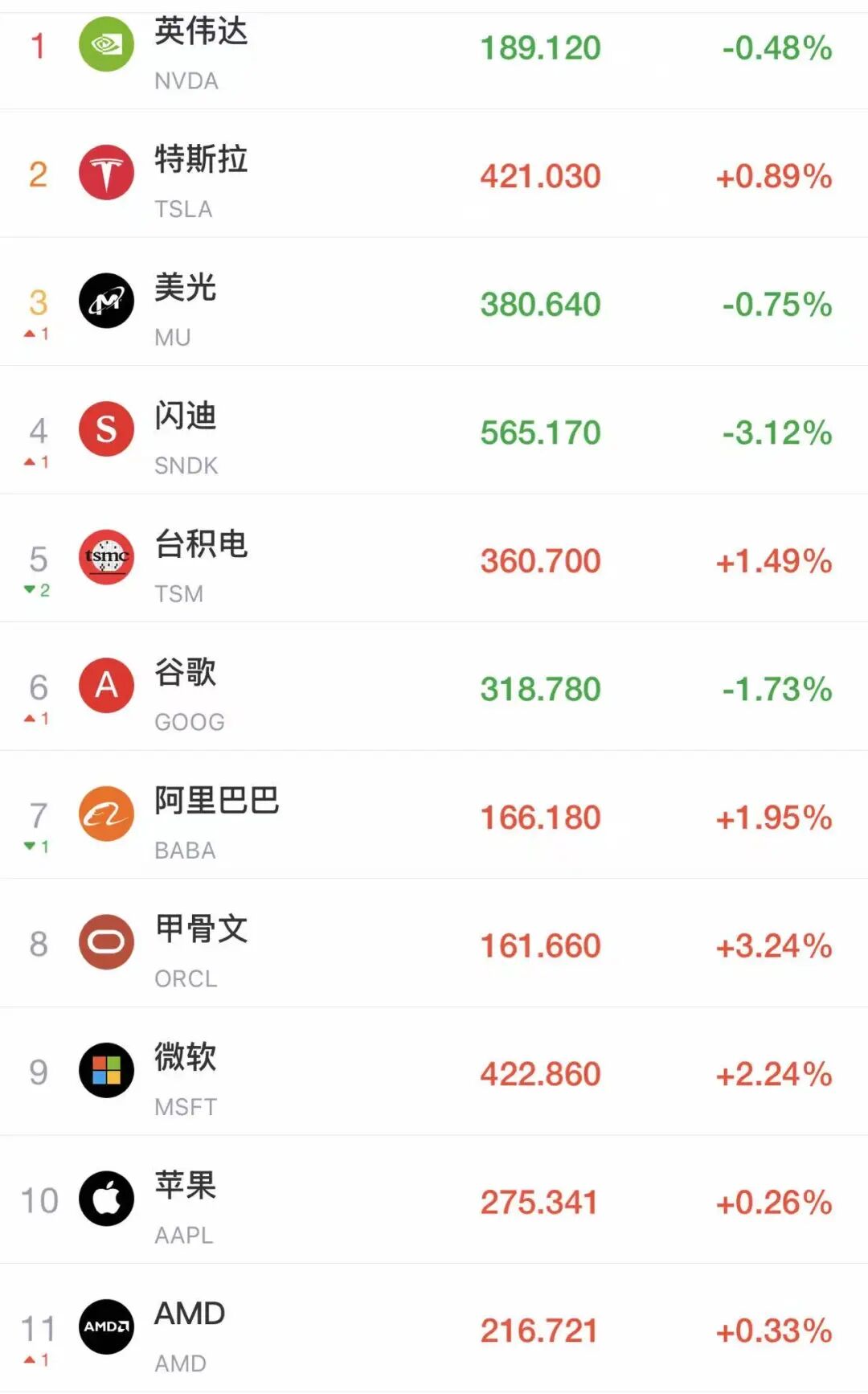
谷歌刚掀了模型记忆的桌子,英伟达又革了注意力的命
3 6 Ke· 2026-01-20 01:12
Core Insights - Google's Nested Learning has sparked a significant shift in the understanding of model memory, allowing models to change parameters during inference rather than being static after training [1][5] - NVIDIA's research introduces a more radical approach with the paper "End-to-End Test-Time Training for Long Context," suggesting that memory is essentially learning, and "remembering" equates to "continuing to train" [1][10] Group 1: Nested Learning and Test-Time Training (TTT) - Nested Learning allows models to incorporate new information into their internal memory during inference, rather than just storing it temporarily [1][5] - TTT, which has roots dating back to 2013, enables models to adapt their parameters during inference, enhancing their performance based on the current context [5][9] - TTT-E2E proposes a method that eliminates the need for traditional attention mechanisms, allowing for constant latency regardless of context length [7][9] Group 2: Memory Redefined - Memory is redefined as a continuous learning process rather than a static storage structure, emphasizing the importance of how past information influences future predictions [10][34] - The TTT-E2E method aligns the model's learning objectives directly with its ultimate goal of next-token prediction, enhancing its ability to learn from context [10][16] Group 3: Engineering Stability and Efficiency - The implementation of TTT-E2E incorporates meta-learning to stabilize the model's learning process during inference, addressing issues of catastrophic forgetting and parameter drift [20][22] - Safety measures, such as mini-batch processing and sliding window attention, are introduced to ensure the model retains short-term memory while updating parameters [24][25] Group 4: Performance Metrics - TTT-E2E demonstrates superior performance in loss reduction across varying context lengths, maintaining efficiency even as context increases [27][29] - The model's ability to learn continuously from context without relying on traditional attention mechanisms results in significant improvements in prediction accuracy [31][34] Group 5: Future Implications - The advancements in TTT-E2E suggest a shift towards a more sustainable approach to continuous learning, potentially becoming a leading solution in the industry for handling long-context scenarios [34][35] - This approach aligns with the growing demand for models that can learn and adapt without the high computational costs associated with traditional attention mechanisms [33][34]
Gemini 3拉动业务显著增长,谷歌AI模型申请量五个月翻倍
Hua Er Jie Jian Wen· 2026-01-20 00:34
Group 1 - The core viewpoint is that Google's Gemini AI model sales have experienced explosive growth over the past year, driven by improved model quality and increased API call requests [1] - The number of API calls for Gemini increased from approximately 35 billion at the launch of Gemini 2.5 in March last year to about 85 billion in August, more than doubling [1] - The release of Gemini 3 in November has sparked renewed interest and received widespread acclaim, contributing to the growth in both quantity and quality of the models [1] Group 2 - Despite positive business data, the market remains concerned about the high capital expenditure, with Google projecting capital expenditures between $91 billion and $93 billion, nearly double the $52.5 billion expected for 2024 [2] - Investors are closely monitoring the upcoming Q4 financial report for signs of returns on these substantial investments [3] Group 3 - Google is attempting to enhance profit margins through Gemini Enterprise, which currently has 8 million subscribers from 1,500 companies and over 1 million online registered users [4] - Market feedback on Gemini Enterprise is polarized, with customer satisfaction split nearly 50/50, indicating mixed reactions to the product [4] - Challenges arise from Google's "developer-first" approach, leading many customers to prefer building custom agents using Gemini models rather than purchasing pre-packaged software [4] - While Gemini Enterprise excels in answering general questions based on enterprise data, it struggles with specific tasks, though customers are willing to continue using it with a "let's give it a try" attitude [4]
8点1氪丨SK海力士向全体员工发放人均超64万元绩效奖金;深圳水贝市场推出投资铜条;茶颜悦色回应在北上深开店传闻
3 6 Ke· 2026-01-20 00:12
Group 1 - SK Hynix announced a record performance bonus of over 1.36 million KRW (approximately 640,000 RMB) per employee, benefiting from the AI boom, with stock prices increasing by 275% in 2025 [1] - The company has sold out all chip production capacity for 2026, indicating strong demand [1] Group 2 - Bubble Mart announced a share buyback plan, investing 251 million HKD to repurchase 1.4 million shares at prices ranging from 177.7 to 181.2 HKD per share [11] - Tencent and Taobao have invested in Zhijia Power Technology, a smart driving technology developer, indicating growing interest in AI and smart driving sectors [9] Group 3 - Tea Yan Yue Se is expanding its workforce in major cities, leading to speculation about market expansion, although the company clarified that this is part of regular personnel reserves [2][3] - The company currently operates 758 stores across four provinces and is known for its cautious expansion strategy [2] Group 4 - Vanke has been ordered to pay over 1.089 billion RMB due to enforcement actions, highlighting potential financial challenges [4] - The company is facing scrutiny as it navigates legal and financial obligations [4] Group 5 - The price of gold and silver has risen, with new investment copper bars being introduced in Shenzhen, although concerns about copper's investment viability were raised [2] - The market is reacting to rising commodity prices, which may influence consumer behavior and investment strategies [2]
新一代AI基础设施,全球科技力量争相布局太空算力
Jin Rong Jie· 2026-01-19 23:43
Core Insights - The Space AI Center represents a new generation of AI infrastructure characterized by AI computing power deployment in space, aimed at overcoming energy, environmental, and spatial bottlenecks for AI development [1] - Global tech companies are actively investing in the construction of Space AI Centers, leading to rapid advancements in related technologies and applications [1] Group 1: Developments in Space Computing - Space computing is transitioning from concept validation to operational systems, with notable advancements from companies like NVIDIA, SpaceX, Google, and Starcloud [1] - NVIDIA has completed in-orbit testing of its H100 GPU, while SpaceX plans to deploy 100GW of space data centers annually within four years [1] - Google aims to launch a TPU prototype satellite by 2027, and Starcloud is working on establishing a 40MW data center [1] Group 2: China's Progress in Space AI - China has successfully established the world's first commercial AI satellite network, marking significant progress in space data centers [1] - In May 2025, China Guoxing Aerospace and Zhijiang Laboratory launched the first batch of 12 intelligent computing satellites equipped with AI chips and models, achieving a total computing power of 5 POPS [1] Group 3: Energy Solutions for Space Computing - CITIC Securities suggests that the energy supply for space computing will heavily rely on photovoltaic technology [1] - Perovskite, as a next-generation photovoltaic technology with high efficiency and low cost, is expected to become a crucial energy solution for space [1] - Since 2025, the industrialization of perovskite has accelerated, with breakthroughs in efficiency and stability, and multiple GW-level production lines have been launched [1]
2 Stocks to Buy in 2026 and Hold Forever
The Motley Fool· 2026-01-19 23:15
Group 1: Alphabet - Alphabet is the parent company of various businesses including Google, YouTube, Waymo, and Android, with a significant portion of its revenue derived from advertising, particularly through its Google Search engine which now integrates generative AI summaries [3][6] - The company is emerging as a leader in generative AI, having quickly caught up in the competitive landscape, which may not currently generate substantial revenue but holds significant future potential [4][7] - Alphabet's cloud computing segment, Google Cloud, is positioned for growth, especially with the anticipated rise of its Gemini AI model, similar to the growth seen with Azure due to its association with ChatGPT [6][7] Group 2: Taiwan Semiconductor - Taiwan Semiconductor is a critical player in the global semiconductor industry, producing the majority of advanced chips, with limited competition due to high entry costs [8] - The company is innovating with its next-generation 2-nanometer chip, which offers 25% to 30% better energy efficiency compared to its previous 3nm chip at the same speed [9][10] - Taiwan Semiconductor is expanding geographically with new fabrication plants in the U.S., Japan, and Germany, which mitigates some geopolitical risks associated with its operations in Taiwan [14]