Alphabet(GOOG)

Search documents
200亿元,全国社保基金再落一子 | 融中投融资周报
Sou Hu Cai Jing· 2026-02-08 02:54
Group 1 - The Hubei Social Security Science and Technology Equity Investment Fund has been established with an initial scale of 20 billion yuan, focusing on industries such as optoelectronic information, automotive manufacturing, and life health in Hubei [2] - The Jiading Future Industry Fund, with a total scale of 800 million yuan, aims to support early-stage investments in disruptive technologies across five core sectors [2] - The Guangdong Hengjian Investment Holding Company has launched the Nanyue Green Beauty Ecological Investment Fund, the first provincial-level government investment fund focused on ecological construction, with an initial scale of 2 billion yuan [3] Group 2 - The Yanming Lake Fund, established to support the commercialization of technology from Yanshan University, has a registered capital of 10.2 million yuan and focuses on hard technology fields [4] - Waymo has completed a new funding round of 16 billion dollars, achieving a post-money valuation of 126 billion dollars, with significant backing from major investment firms [4][5] - SpaceX announced a stock-based acquisition of AI company xAI, resulting in a combined valuation of 1.25 trillion dollars, with SpaceX valued at 1 trillion dollars and xAI at 250 billion dollars [5][6] Group 3 - Meituan is set to acquire 100% of Dingdong Maicai's China business for approximately 717 million dollars, enhancing its instant retail capabilities [7] - AI startup ElevenLabs has raised 500 million dollars in funding, achieving a valuation of 11 billion dollars, with a significant increase from its previous funding round [7]





通信行业周报:北美云厂商业绩超预期,关注CPO及产业链公司投资机会
GUOTAI HAITONG SECURITIES· 2026-02-08 02:45
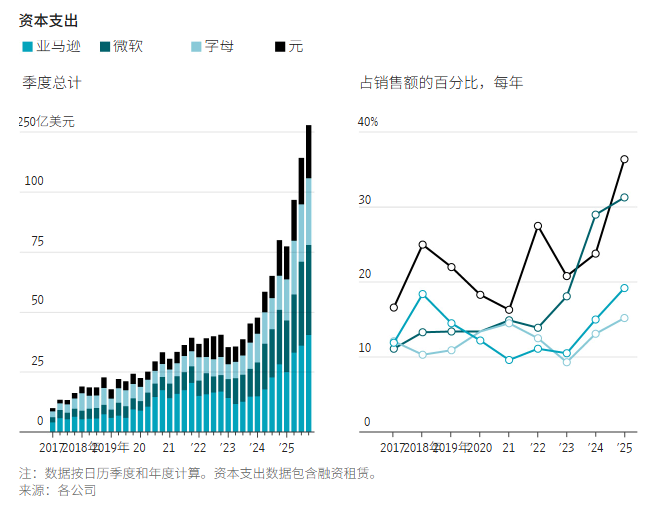
Investment Rating - The report maintains a positive outlook on the communication equipment and services industry, particularly focusing on investment opportunities in CPO and related supply chain companies [3][11]. Core Insights - North American cloud vendors have reported better-than-expected earnings, with significant capital expenditure guidance increases from major players like Google and Amazon, indicating strong growth in the AI computing industry chain [3][11]. - The report highlights the rapid growth of the optical communication industry driven by AI applications, with leading companies achieving record highs in stock performance [6][9]. - The transition from Scale-OUT to Scale-UP in optical applications is emphasized, suggesting a broadening of application scenarios and increased demand for optical modules and components [6][9]. Summary by Sections Weekly Viewpoint - The optical communication sector is experiencing unprecedented growth, with major cloud companies significantly increasing capital expenditures, leading to a strong performance in the optical communication supply chain [9]. - The report notes that while the market is currently experiencing fluctuations, long-term investment opportunities are becoming more apparent, particularly in the context of rising prices for optical fibers and components [9]. Industry News - Major cloud service providers like Google and Amazon have substantially raised their capital expenditure forecasts for 2026, with Google estimating between $175 billion and $185 billion, nearly double that of 2025, and Amazon projecting around $200 billion, a 50% increase from the previous year [11][24][25]. - The report discusses the implications of a recent tax increase on value-added services in China, which may impact the revenue and profit margins of major telecom operators [12]. Investment Highlights - The report indicates that the proportion of holdings in the optical communication sector has increased, reflecting a positive market sentiment driven by AI-related infrastructure investments [11][41]. - The domestic new generation computing infrastructure is set to enter a new cycle, with significant opportunities arising from the ongoing global infrastructure wave [11][41]. - The report suggests that the AI-driven network upgrades will enhance communication capabilities, leading to rapid advancements in network innovation and technology applications [11][41].





AI交易“被忽视的风险”:万一,天量资本开支“花不出去”
Hua Er Jie Jian Wen· 2026-02-08 02:17
Group 1 - The core narrative is that the story of AI is shifting from "software eating the world" to "hardware being constrained by the world," highlighting a growing risk in the investment landscape due to political and physical limitations on data center expansion [1][15] - A rare bipartisan consensus has emerged between Senator Bernie Sanders and Governor Ron DeSantis regarding the need to halt the rapid increase of data centers, driven by public concerns over the negative impacts of AI [2][3] - The political landscape is changing, with states like New York, Arizona, Georgia, and Texas considering legislation to pause new data center projects or eliminate tax incentives, reflecting a growing backlash against the expansion of AI infrastructure [2][3] Group 2 - The anticipated capital expenditure of approximately $600 billion in 2026 faces skepticism regarding its feasibility, as major tech companies plan to spend $670 billion on AI infrastructure this year alone [4][6] - The energy demand from data centers is projected to double by 2035, raising concerns about whether the current U.S. power grid can meet this demand, which is already causing regulatory issues in Texas [8][9] - The financial markets are reacting to the risk of unspent capital, leading to significant sell-offs in tech stocks and a shift towards defensive sectors, indicating a potential reevaluation of the AI investment landscape [10][12][13]
AI周报 | 微信屏蔽元宝、千问红包链接;马斯克宣布SpaceX收购xAI
Di Yi Cai Jing Zi Xun· 2026-02-08 01:05
微信屏蔽元宝、千问红包链接 2月4日上午,记者在微信群中点入好友发出的元宝红包,显示"网页包含诱导分享、关注等诱导行为", 提醒用户可以通过浏览器访问。随后,元宝红包在微信的分享改为口令的形式。微信安全中心公众号发 文称,微信对以春节为主题集中爆发的过度营销、诱导分享等违规行为进行打击。2月6日,千问在春节 活动的第一天,微信链接也被屏蔽了,部分用户在千问APP点击分享活动至微信好友时,已自动改为复 制口令形式。 【点评】:这场争夺AI入口的春节"撒币"大战,正变得前所未有地复杂与激烈。各厂商抢夺AI入口,但 可能都没有预料到,最激烈的竞争出现在国内最大的社交平台微信上。目前看来,或许微信社交裂变的 方式无法成为任何一家AI应用厂商扩大用户池的杀手锏。或许各大厂商接下来要靠产品实力说话了。 SpaceX收购xAI,马斯克打造AI太空帝国 当地时间2月2日,马斯克旗下的太空探索技术公司SpaceX宣布收购人工智能初创公司xAI。在公告中, 马斯克强调,将xAI并入SpaceX,旨在打造一个"垂直整合的创新引擎",覆盖从地面到太空的完整技术 链条。该公告发布于xAI官网,并由马斯克本人署名。据外媒援引知情人士消息 ...


The U.S. construction industry’s need for labor is soaring and will need half a million new workers next year while AI giants ramp up spending
Yahoo Finance· 2026-02-07 20:56
Core Insights - The U.S. construction industry is projected to need 456,000 new workers by 2027, a 30.7% increase from the 349,000 needed in 2023 [1] - The demand for new workers this year is primarily driven by retirements rather than an increase in construction services [2] - Overall construction spending is expected to recover and grow for the first time in years, with every additional $1 billion in spending creating demand for 3,450 new jobs [3] Labor Market Dynamics - Labor shortages in the construction sector are exacerbated by immigration policies, with 92% of hiring construction firms reporting difficulties in finding qualified workers [5] - AI data center projects are more lucrative, leading to labor shortages for other types of construction projects such as apartments and healthcare facilities [6] Future Projections - If spending forecasts are conservative, the industry may require even more workers, especially with tech giants expected to increase capital expenditures significantly [4] - Employment in skilled trades is projected to grow by 5.3% from 2024 to 2034, with electricians and HVAC technicians seeing even higher growth rates of 9.5% and 8.1%, respectively [7]

This AI Stock Could Be One of the Most Valuable in the World by 2027
Yahoo Finance· 2026-02-07 19:09
Core Insights - Alphabet is positioned to become the leader in artificial intelligence (AI) over the next few years due to its strategic developments and market share growth [1][3]. Market Position - Google Gemini is rapidly increasing its market share and is projected to surpass ChatGPT soon, having grown from 7% to 21% market share, while ChatGPT has fallen from 50% to 27% [4][5]. - Competitors like Anthropic have also seen significant growth, increasing from 12% to 40% market share, indicating a competitive landscape [5]. Technological Advancements - Alphabet is developing its own proprietary AI hardware, the Tensor Processing Unit (TPU), which serves as an alternative to Nvidia's GPU, enhancing its competitive edge [6]. - Anthropic is utilizing Alphabet's TPU, indicating that Alphabet benefits from its competitors' reliance on its hardware [6]. Financial Performance - Alphabet is already profitable, with projected revenue exceeding $400 billion in 2025, marking a 15% increase from 2024, and a net income of $132.1 billion, up 32% from the previous year [7]. - The company plans to significantly increase its capital expenditures in 2026 to between $175 billion and $185 billion, indicating strong investment in future growth [9].
AI and The Software Rout: Lessons From the Handset Industry and Why Indian IT is Still Not Cheap
BusinessLine· 2026-02-07 16:28
Core Insights - The recent volatility in global enterprise software stocks has been unprecedented, with significant underperformance over the past year, raising concerns about the impact of AI on the software industry [1][2] - The introduction of a new AI plug-in by Claude has sparked fears regarding AI's potential to disrupt the software sector, leading to a broader discussion among industry experts [2] Historical Context - The launch of the iPhone in January 2007 marked a significant turning point in the mobile industry, surprising competitors and leading to a shift in market dynamics [3][4] - Following the iPhone's unveiling, Google pivoted its strategy towards developing a sophisticated operating system, resulting in the creation of Android, which now holds a 70% market share [4] - The iPhone's introduction also contributed to the decline of major players like Nokia and BlackBerry, who failed to recognize the disruptive potential of the new technology [5][8] Market Performance - By the end of 2007, Nokia and BlackBerry had market capitalizations of $150 billion and $100 billion respectively, but these figures would drastically decline in the following years due to the iPhone's impact [7][9] - By 2012, Apple captured approximately 70% of global mobile handset industry profits, despite holding only a 10% unit share, illustrating the profound effect of the iPhone on competitors [9] Current Industry Dynamics - Recent concerns about AI disruption have led to a significant decline in the stock prices of SaaS companies, despite their strong business performance in recent years [15] - For instance, Adobe, which reported 11% revenue growth and 15% net profit growth, is currently trading at a trailing PE of 15.5 times, indicating a disconnect between performance and market valuation [15] Investment Considerations - Investors are advised to approach the current market with caution, considering multiple potential outcomes rather than adopting a "buy the dip" mentality [13][16] - The Indian IT services sector is currently not priced for disruption, trading at high PE multiples despite lower revenue and profit growth compared to SaaS companies [19][21] - Historical data shows that during previous disruptions, leading IT services companies traded at lower PE multiples, suggesting that current valuations may not reflect the risks posed by ongoing technological changes [21][22]




Palantir, Strategy, Amazon And More: 5 Stocks Investors Couldn't Stop Buzzing About This Week - Advanced Micro Devices (NASDAQ:AMD)
Benzinga· 2026-02-07 14:01
Core Insights - Retail investors have shown interest in five stocks this week, influenced by retail hype, earnings reports, AI discussions, and corporate news flow [1] Amazon.com (AMZN) - AMZN is perceived as a bargain by some retail investors, trading around $197 to $200 per share, with a 52-week range of $161.43 to $258.60 [7] - The stock has declined by 6.76% over the year and has risen just 0.17% in the last six months, indicating a weaker price trend in the short, medium, and long term, despite a solid quality ranking [7] Palantir Technologies (PLTR) - Retail investors are curious about the performance of PLTR, especially regarding Michael Burry's shorts, as the stock has slid 22.55% year-to-date [7] - Trading around $126 to $130 per share, with a 52-week range of $66.12 to $207.52, PLTR has returned 16.83% over the year but declined 27.59% in the last six months [7] - The stock shows a weaker price trend in the short, medium, and long terms, but has a solid growth score according to Benzinga's Edge Stock Rankings [7] Alphabet (GOOG) - Retail investors view owning GOOG shares as safe due to its substantial revenue, with the stock trading around $322 to $325 per share and a 52-week range of $142.66 to $350.15 [7] - GOOG has increased by 71.40% over the year and 68.26% over the last six months, maintaining a stronger price trend across all time frames and a solid quality score [7] Advanced Micro Devices (AMD) - Retail investors are puzzled by the decline of AMD, questioning the AI spending directed towards semiconductor manufacturers [7] - The stock is trading around $187 to $190 per share, with a 52-week range of $76.48 to $267.08, having gained 74.75% over the year and 18.01% over the last six months [7] - AMD shows a weaker price trend in the short and medium terms but a strong trend in the long term, with a poor value ranking [7] Market Context - The retail focus has combined meme-driven narratives with earnings outlooks and corporate news, occurring during a week of negative market action for the S&P 500, Dow Jones, and Nasdaq [8]



Palantir, Strategy, Amazon And More: 5 Stocks Investors Couldn't Stop Buzzing About This Week
Benzinga· 2026-02-07 14:01
Core Insights - Retail investors are actively discussing five stocks driven by retail hype, earnings, AI buzz, and corporate news flow during the week of February 2 to February 6 [1] Amazon.com (AMZN) - AMZN is perceived as a bargain by some retail investors, trading around $197 to $200 per share, with a 52-week range of $161.43 to $258.60 [7] - The stock has declined by 6.76% over the year and has risen just 0.17% in the last six months, showing a weaker price trend in the short, medium, and long term, but maintains a solid quality ranking according to Benzinga's Edge Stock Rankings [7] Palantir Technologies (PLTR) - Retail investors are curious about the performance of PLTR, especially regarding Michael Burry's shorts, as the stock has slid 22.55% year-to-date [7] - Trading around $126 to $130 per share, with a 52-week range of $66.12 to $207.52, PLTR has returned 16.83% over the year but declined 27.59% in the last six months [7] - The stock shows a weaker price trend in the short, medium, and long terms, but has a solid growth score according to Benzinga's Edge Stock Rankings [7] Alphabet (GOOG) - Retail investors view owning Alphabet shares as safe due to its massive revenue, with the stock trading around $322 to $325 per share and a 52-week range of $142.66 to $350.15 [7] - GOOG has increased by 71.40% over the year and 68.26% over the last six months, maintaining a stronger price trend across all time frames and a solid quality score according to Benzinga's Edge Stock Rankings [7] Advanced Micro Devices (AMD) - Retail investors express confusion over the decline of AMD, questioning the AI spending directed towards semiconductor manufacturers [7] - The stock is trading around $187 to $190 per share, with a 52-week range of $76.48 to $267.08, gaining 74.75% over the year and 18.01% over the last six months [7] - AMD shows a weaker price trend in the short and medium terms but a strong trend in the long term, with a poor value ranking according to Benzinga's Edge Stock Rankings [7] Market Context - The retail focus combines meme-driven narratives with earnings outlook and corporate news flow, occurring during a week of negative market action for the S&P 500, Dow Jones, and Nasdaq [8]

Big Tech earnings: What do investors do now?
Youtube· 2026-02-07 13:08
Core Insights - Amazon's Q4 earnings report showed an EPS of $1.95, slightly below the expected $1.96, while net sales reached $213.39 billion, exceeding the estimate of $211.49 billion [1] - AWS net sales grew by 24%, surpassing the expected 21%, with total sales of $35.58 billion compared to the street's estimate of $34.88 billion [1] - The company guided for Q1 net sales between $173.5 billion and $178.5 billion, lower than the street's expectation of $175.54 billion [1] - Amazon's capex forecast for 2026 is set at $200 billion, significantly higher than the previous estimate of $146.1 billion, raising concerns among investors [1][2] - Despite the initial drop in stock price, 95% of analysts maintain a "buy" rating on Amazon, indicating strong long-term confidence in the company's growth potential [1] Amazon's Financial Performance - Q4 operating margins were reported at 11.7%, aligning with market expectations [1] - North American net sales for Q3 were $127.08 billion, matching consensus estimates [1] - AWS margins have been stable, hovering around the mid-30% range, with potential for growth above 40% in the future [2] Market Reactions and Analyst Insights - The significant increase in capex has led to a nearly 11% drop in Amazon's stock price in after-hours trading, reflecting investor concerns about the sustainability of such high spending [1][2] - Analysts suggest that the elevated capex is necessary to meet growing demand for AI and cloud services, with Amazon needing to invest aggressively to maintain its competitive edge [2] - The bullish sentiment among analysts is driven by Amazon's strong position in the cloud market and the potential for significant operating margin expansion in the coming years [2][3] Competitive Landscape - Amazon's capex forecast is compared to Alphabet's, which announced a capex range of $175 billion to $185 billion, indicating a broader trend of increased investment in technology infrastructure among major players [1][2] - The competition in the cloud space is intensifying, with AWS facing pressure from Azure and Google Cloud, both of which are also ramping up their investments [2][3] - Analysts believe that the demand for compute power will continue to drive spending across the tech sector, benefiting companies involved in semiconductor manufacturing and AI technologies [2][3]