Alphabet(GOOGL)

Search documents
世界模型竞赛提速:蚂蚁灵波首次开源世界模型 谷歌开放世界模型体验平台
Huan Qiu Wang Zi Xun· 2026-01-30 08:38
Core Insights - Ant Group's Lingbo Technology has launched a series of four core models in the field of embodied intelligence, marking a significant shift towards open-source development in the world model competition [1][2][4] - The release of these models indicates a strategic move by a Chinese tech company to break the long-standing dominance of a few global giants in the world model space, transitioning from closed development to an open ecosystem [1][7] Group 1: Model Releases - On January 27, Lingbo released the LingBot-Depth model, designed to enhance the 3D visual accuracy and reliability of robots, achieving leading performance in multiple international benchmarks [2] - On January 28, the LingBot-VLA model was introduced, which is pre-trained on over 20,000 hours of real robot data and aims to address generalization challenges and high costs in embodied intelligence applications [2][4] - The LingBot-World model was unveiled on January 29, providing a high-fidelity, real-time controllable virtual environment for applications in embodied intelligence, autonomous driving, and game development, with performance metrics comparable to Google's Genie 3 model [2][4] - On January 30, the LingBot-VA model was announced, integrating video generation with robot control, allowing robots to simulate and act in real-time [3][4] Group 2: Competitive Response - Following the announcement of the LingBot-World model, Google quickly responded by opening an experience platform for its Project Genie, targeting specific users in the U.S. [5][6] - Project Genie allows users to create and explore interactive worlds through text prompts or image uploads, although it is still in an early stage with limitations on realism and operational delays [6][10] Group 3: Strategic Implications - Ant Group's open-source strategy aims to attract developers and establish a standard in emerging fields like embodied intelligence, potentially positioning the company as a core player in the humanoid robot and physical AI market [7][14] - In contrast, Google's cautious "controlled openness" strategy focuses on gathering user feedback while maintaining control over its core technology, reflecting different approaches to ecosystem development [10][14] - The open-source release by Ant Group is seen as a significant move to lower barriers for developers, providing access to industrial-standard technology that was previously proprietary and costly [14]


英国政府施压谷歌:网站应有退出AI概览的权利
Sou Hu Cai Jing· 2026-01-30 07:35
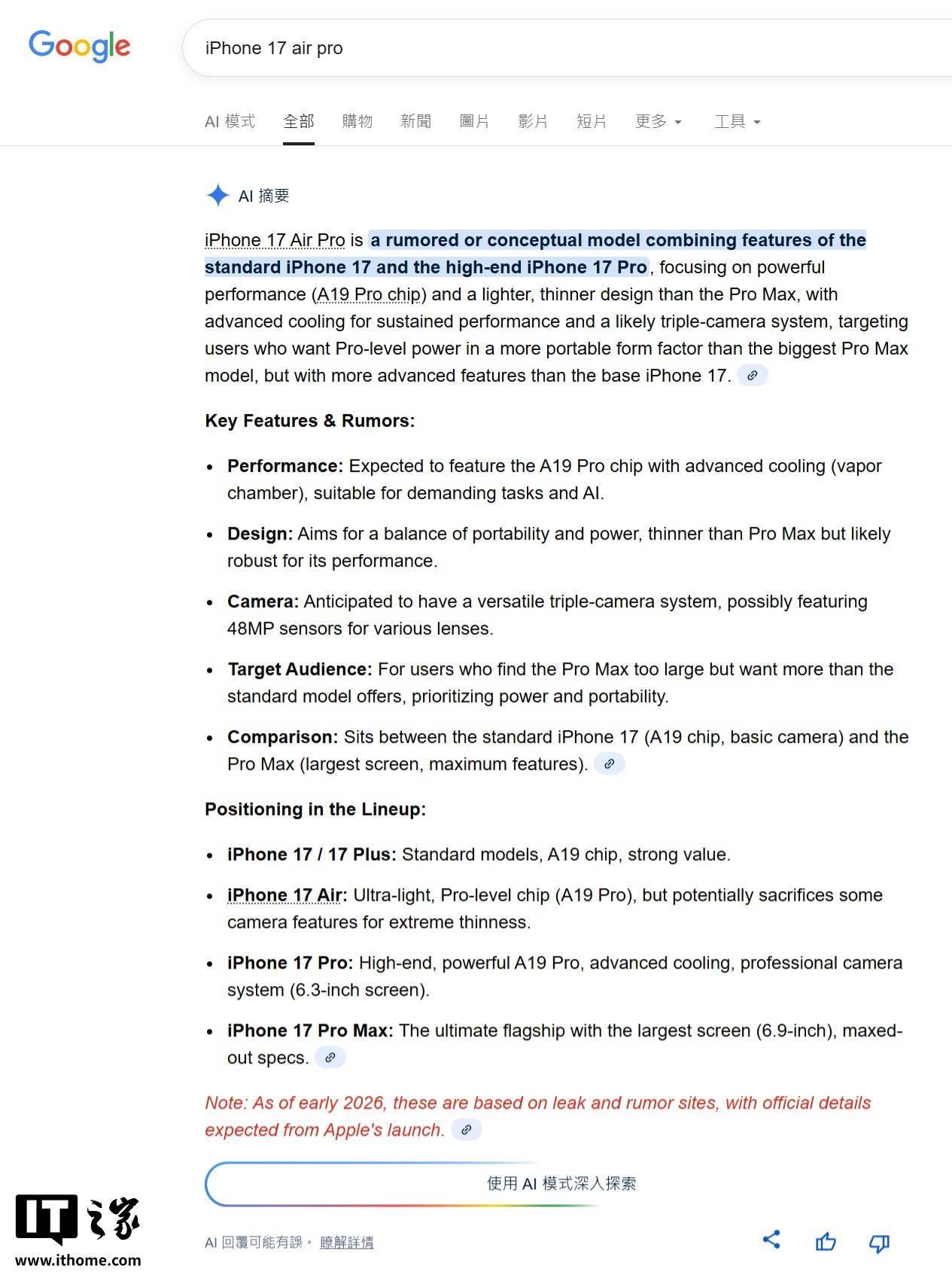
iPhone 17 air pro 新聞 AI 模式 全部 購物 国F 影片 知后 l 首 。 Al 摘要 iPhone 17 Air Pro is a rumored or conceptual model combining features c standard iPhone 17 and the high-end iPhone 17 Pro, focusing on powerful performance (A19 Pro chip) and a lighter, thinner design than the Pro Max, wil advanced cooling for sustained performance and a likely triple-camera system users who want Pro-level power in a more portable form factor than the bigge: model, but with more advanced features than the base iPhone 17. @ IT之家 1 月 30 日消 ...
国际最新研发深度学习模型:可预测DNA变异影响助力开发新疗法
Zhong Guo Xin Wen Wang· 2026-01-30 06:15
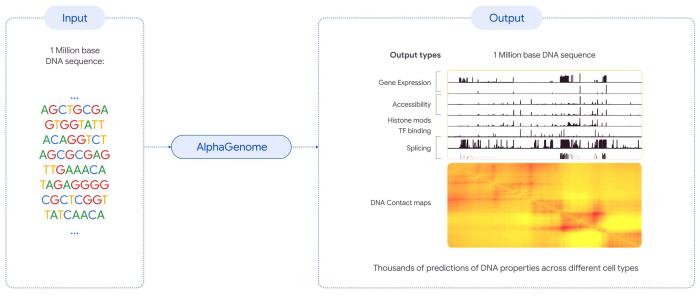
Core Insights - The article discusses the development of a deep learning model called AlphaGenome by Google's research team, which can predict the functional impact of DNA sequence variations up to 1 million base pairs long [1][3]. Group 1: Model Capabilities - AlphaGenome is designed to predict how DNA sequence variations affect various biological processes, aiding in the understanding of genetic diseases and improving gene testing [1][3]. - The model has been trained on human and mouse genomes to learn how DNA sequences influence different biological outcomes, allowing it to predict 5,930 human and 1,128 mouse genetic signals related to specific functions such as gene expression, splicing, and protein modification [3][4]. - In evaluations of 26 variant effect predictions, AlphaGenome performed comparably or better than existing top models in 25 cases, showcasing its ability to make multiple predictions across various genetic signals and biological outcomes [3]. Group 2: Future Applications - The research team suggests that further improvements to AlphaGenome could expand its applications, such as increasing the range of species covered or enhancing the model's ability to identify non-coding sequences [4]. - There is potential for AlphaGenome to deepen the understanding of complex biological outcomes resulting from DNA sequence variations in the future [4].
深层思维公司说其AI模型可解码人类暗基因组
Xin Hua She· 2026-01-30 05:59
Core Viewpoint - The article highlights that Google's DeepMind has introduced the AlphaGenome deep learning model, which can decode 98% of the "dark genome" crucial for human health, potentially aiding in understanding genetic diseases, improving genetic testing, and informing the development of new therapies [1] Group 1 - DeepMind's AlphaGenome model decodes 98% of the human genome related to health [1] - The model's applications include insights into genetic diseases and enhancements in genetic testing [1] - AlphaGenome may provide valuable information for the development of new therapies [1]
Gary Black Says Tesla's Autonomous Efforts Could Receive Major Setback Following Waymo Crash: Here's Why - Tesla (NASDAQ:TSLA)
Benzinga· 2026-01-30 05:01
Investor Gary Black of The Future Fund LLC thinks that Alphabet Inc.-backed (NASDAQ:GOOGL) (NASDAQ:GOOG) Waymo's crash incident could also be a major setback for Tesla Inc.'s (NASDAQ:TSLA) autonomous driving efforts amid NHTSA scrutiny.‘Regulators Hit Pause Button,' Says Gary BlackIn a post on the social media platform X on Thursday, the investor cautioned the Tesla faithful against not rooting for Waymo to progress. "This should be obvious but don't root against Waymo on safety issues," Black said.He outli ...



阿里补齐最后一块拼图,但它不会成为第二个谷歌
财富FORTUNE· 2026-01-30 04:49
Core Viewpoint - Alibaba has completed a crucial piece in its AI strategy with the launch of the "Zhenwu 810E" chip, marking its full-stack self-research capability in AI, encompassing AI models, cloud computing, and core hardware [1][3]. Group 1: AI Chip Development - The "Zhenwu 810E" chip is a high-end AI chip developed entirely by Alibaba, which has already been validated in real-world applications, serving over 400 external clients including State Grid and Xiaopeng Motors [1]. - This chip signifies Alibaba's position among a select few companies globally that possess a complete self-research capability in AI, integrating AI models, computing platforms, and core hardware [3]. Group 2: Competitive Advantage - Alibaba's full-stack capability allows for significant cost advantages by eliminating supplier premiums across various segments such as computing power, networks, models, and software stacks, leading to lower marginal costs and higher iteration speeds [3][4]. - The importance of cost in AI competition is highlighted, with investors noting that companies with full-stack capabilities, like Google, have a unique edge in the market [4]. Group 3: Sustainability and Risk Management - Full-stack capabilities also imply sustainability; reliance on external resources can amplify systemic risks, while having controllable alternatives in key areas mitigates these risks [4]. - Alibaba's approach is increasingly resembling Google's, with both companies building comprehensive technology ecosystems, although their ecological positions differ [4][5]. Group 4: Distinct Market Position - Despite structural similarities, Alibaba is unlikely to become a second Google; it has its own strengths in integrating mature technologies into complex business systems, focusing on efficiency and cost reduction [5][6]. - Google has established itself as a rule-maker in the AI industry over the past two decades, while Alibaba's strength lies in embedding AI deeply within Chinese commercial scenarios rather than becoming a global knowledge processing standard [6][7]. Group 5: Future Outlook - Alibaba is evolving into a different type of AI giant, potentially serving as the intelligent infrastructure for China's commercial ecosystem, aligning with the country's economic structure [9].


阿里“通云哥”概念亮相;贵州茅台辟谣参与SpaceX融资
2 1 Shi Ji Jing Ji Bao Dao· 2026-01-30 03:28
Group 1: Technology Sector Developments - Alibaba's "Tongyun Ge" concept integrates "Cloud + AI + Chips" as a strategic support triangle for future technology initiatives, emphasizing AI as a core driver of change in cloud computing over the next decade [2] - ByteDance's CEO Liang Rubo announced the company's 2026 focus on "climbing to new heights," highlighting the importance of AI opportunities and the need to enhance talent density and incentives [5] - Waymo plans to launch fully autonomous ride-hailing services in London by Q4 2023, expanding its operations internationally despite regulatory challenges [7] Group 2: Market and Company News - Guizhou Moutai denied rumors of participating in SpaceX's Series A funding, with its stock closing at 1437.72 yuan per share, up 8.61%, and a market capitalization exceeding 1.8 trillion yuan [3] - Byte's new "Doubao" smartphone is expected to be released in late Q2 2026, with significant improvements over its predecessor, developed in collaboration with ZTE Nubia [4] - Meituan's new "one-shot" verification feature requires new restaurant partners to upload unedited videos showcasing their premises, aimed at enhancing platform integrity [8] Group 3: Industry Collaborations - Black Sesame Intelligence and Baidu's "萝卜快跑" signed a strategic cooperation agreement to develop a collaborative ecosystem for autonomous driving, focusing on technology research and product development [11] - Shanghai Xixi Intelligent Technology completed several million yuan in angel financing, aimed at integrating AI with flexible robotics for food processing solutions [12] Group 4: Consumer Electronics - Apple's iPhone 16 was the best-selling smartphone globally in 2025, with Apple and Samsung dominating the top ten list, holding seven and three positions respectively, indicating strong market leadership [10]



Apple Signals AI Will Power Payments Security and Growth
PYMNTS.com· 2026-01-30 02:36
Core Insights - Apple reported a record-breaking quarter, with significant growth in revenue and earnings, highlighting the importance of Apple Intelligence as a business lever and its partnership with Google for AI development [1][7] Group 1: Financial Performance - Apple achieved quarterly revenue of $143.8 billion, representing a 16% year-over-year increase, with diluted EPS of $2.84 [7] - iPhone revenue reached $85.3 billion, up 23% year-over-year, while Services revenue hit an all-time high of approximately $30 billion, increasing by 14% [7] - Sales in greater China surged to $25.5 billion, marking a 38% year-over-year growth, primarily driven by iPhone sales [7] Group 2: Apple Intelligence and AI Strategy - Apple Intelligence is framed as an operating-system-level capability rather than a standalone product, aimed at enhancing the overall ecosystem and monetization opportunities across hardware and services [3][4] - CEO Tim Cook emphasized that the integration of AI features is designed to be personal and private, enhancing user experience without necessarily being tied to a direct revenue model [4] - The potential for revenue growth from AI is linked to improvements in discovery, shopping, customer service, and in-app conversions, which could lead to increased device upgrades and service engagement [4] Group 3: Partnership with Google - Apple announced a partnership with Google, selecting it for its AI technology capabilities while ensuring privacy standards are maintained [5] - Cook stated that Google's AI technology provides a strong foundation for Apple's future developments, although specific deal terms were not disclosed [5] Group 4: Payment Security - Apple Pay reportedly eliminated over $1 billion in fraud for partners in the previous year, with plans to expand the service into more markets [6] - The company is focusing on device-centric security and network tokenization to reduce fraud, indicating ongoing investment in payment security measures [6]

全球最大主权财富基金获利近2500亿美元,大型科技股是核心驱动力
Huan Qiu Wang· 2026-01-30 01:05
【环球网财经综合报道】日前,全球最大主权财富基金——挪威政府全球养老基金公布数据,2025年投资收益 达到2.36万亿挪威克朗,约合2465亿美元;年投资回报率为15.1%。其中,股票投资表现尤为突出,回报率达 19.3%,大型科技股是该基金业绩的核心驱动力,其前五大持仓包括英伟达、苹果、微软、Alphabet和亚马逊。 半岛电视台对此发文称,该基金投资的一半以上在美国,其中大部分在股票和债券中,最大的10项投资占股票 投资组合的20%。基金CEO尼科莱·延森分析称:"特别是在原材料行业,我们看到了强劲的表现。你们看到了 金属,如黄金、白银、铜等价格的上涨,这对业绩有很大帮助。金融行业也表现强劲,而房地产行业则表现最 差。" 报道也提到,到2025年下半年,挪威主权基金已将其在美国最大科技公司的股份降低,包括对芯片巨头英特尔 的投资份额从6月到年底从1.32%降至1.26%,对微软的投资份额从1.35%降至1.26% 该基金还预计,如果全球经济因地缘政治环境恶化,其投资组合可能会总体下降37%,这将超过人工智能场景 35%的预期影响。 ...




What's next for Apple stock after big iPhone sales everywhere, even China
CNBC· 2026-01-30 00:37
Apple on Thursday evening reported a blowout holiday quarter, driven by a 23% increase in iPhone sales. A strong revenue guide for the current March quarter suggests this strong device cycle will continue. Revenue in Apple's fiscal 2026 first quarter, which ended back on Dec. 27, rose 16% year over year to $143.76 billion, exceeding the $138.48 billion consensus estimate compiled by LSEG. Earnings per share of $2.84 increased 18% year over year, beating the $2.67 consensus estimate, according to LSEG. AAPL ...