Intel(INTC)

Search documents
美国半导体技术霸权的底层支撑与中国突围
是说芯语· 2026-01-03 00:52
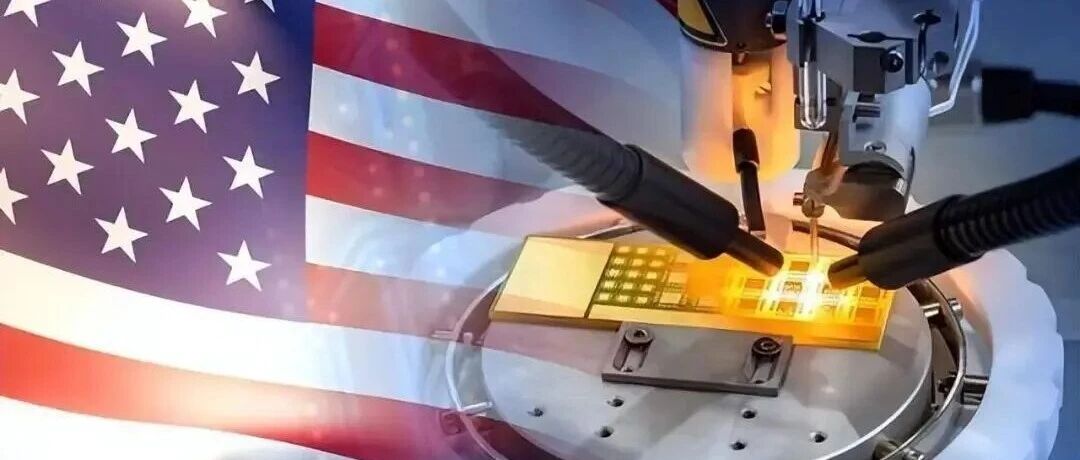
Core Viewpoint - The article discusses the absolute monopoly of the United States in the semiconductor industry, highlighting the dominance in core technologies such as design tools, high-end IP cores, advanced architectures, key manufacturing equipment, and testing instruments. This monopoly creates significant barriers to entry and establishes a comprehensive technological hegemony that is difficult to challenge globally, while also leaving room for diversification and breakthroughs in specific fields, particularly in China's domestic semiconductor industry [1]. Group 1: Chip Design Tools (EDA) - The monopoly is held by Synopsys, Cadence, and Siemens EDA, which together account for over 95% of the global market share, providing a comprehensive toolchain for chip design [3]. - These tools are essential for advanced process nodes of 7nm and below, featuring capabilities such as lithography simulation and yield optimization, making them critical infrastructure for chip development [3]. - The high density of patent barriers and deep collaboration with leading foundries like TSMC and Samsung create strong user ecosystem stickiness, making it difficult for latecomers to replace these tools [3]. Group 2: High-Performance IP Cores and Architectures - The monopoly is dominated by X86 architecture (Intel, AMD), GPU architecture (NVIDIA, AMD), and AI acceleration IP (NVIDIA, Xilinx), with ARM's technology also heavily influenced by U.S. regulations [6]. - The X86 architecture leads in high-performance computing, while NVIDIA's CUDA architecture defines global AI computing standards, creating dual barriers of performance and ecosystem [6]. - Global chip design companies are highly dependent on U.S. IP, and the U.S. can restrict access to these IPs through licensing, directly impacting the design capabilities of other nations [6]. Group 3: Key Manufacturing Equipment - The monopoly is held by U.S. companies like Applied Materials, Lam Research, and KLA, which lead in critical equipment for etching, film deposition, and process inspection [9]. - These companies provide essential technologies for advanced processes, with high barriers to entry due to long R&D cycles and significant capital investment [9]. - The dependency of global foundries like TSMC and Samsung on U.S. equipment means that U.S. export controls can directly affect the expansion and technological upgrades of advanced manufacturing capacities [9]. Group 4: High-End Chip Design and Architecture Innovation - U.S. companies like NVIDIA, Qualcomm, AMD, and Apple dominate the global technology direction in AI chips, mobile terminal chips, and high-performance computing chips [12]. - Continuous high R&D investment (approximately 17.7% of semiconductor industry revenue) and strong ecosystem integration capabilities allow these companies to maintain significant advantages [12]. - The U.S. leads in defining the demand and technological evolution of high-end chips, influencing the global semiconductor supply chain [12]. Group 5: Semiconductor Testing and Packaging Technologies - The monopoly is held by U.S. companies like Teradyne and Cohu, which dominate the high-end chip testing equipment market [15]. - These companies provide comprehensive testing solutions that meet the high precision requirements of advanced process nodes [15]. - The global chip production's yield control and quality assurance are highly reliant on U.S. testing equipment, and export restrictions can impact production efficiency and quality stability [15]. Group 6: Core Materials Technology - U.S. companies like Dow Chemical, DuPont, and GlobalFoundries dominate the market for critical semiconductor materials such as photoresists and electronic specialty gases [18]. - The high purity and stability requirements for semiconductor materials create significant barriers for new entrants [18]. - Advanced process chip manufacturing relies over 80% on U.S. core materials, and U.S. export controls can directly affect global production capacities [18]. Group 7: Semiconductor Software and Ecosystem - U.S. companies like Microsoft, Google, and NVIDIA dominate the software ecosystem that supports chip applications [21]. - The NVIDIA CUDA ecosystem monopolizes AI training and inference software, with over 90% of AI developers using the CUDA platform [21]. - The strong network effects of these ecosystems create significant barriers for new entrants, making it difficult for other countries to commercialize breakthroughs in high-performance chip development [21]. Group 8: Industry Standard Setting Authority - The U.S. leads international standard organizations like IEEE and JEDEC, controlling the core industry standards for chip interfaces and performance specifications [24]. - The binding of industry standards with technology patents creates dual barriers that are difficult for non-U.S. companies to overcome [24]. - The U.S. can guide global semiconductor technology development through standard-setting, impacting the innovation paths of non-U.S. enterprises [24]. Group 9: High-End Semiconductor Products and Solutions - U.S. companies like NVIDIA, Intel, Qualcomm, and Micron hold a dominant share in the global high-end semiconductor product market [27]. - These companies have established significant performance advantages through long-term technological accumulation and deep integration with downstream manufacturers [27]. - The global technology industry is highly dependent on U.S. semiconductor products, and U.S. export controls can directly influence the development of global technology sectors [27].


昨夜,芯片股暴涨!
证券时报· 2026-01-03 00:34
Market Overview - The US stock market showed mixed results with the Dow Jones Industrial Average rising by 0.66% to close at 48,382.39 points, while the S&P 500 increased by 0.19% to 6,858.47 points, and the Nasdaq fell by 0.03% to 23,235.63 points. For the week, the Dow Jones decreased by 0.67%, the S&P 500 by 1.03%, and the Nasdaq by 1.52% [1][2] Sector Performance - In the S&P 500, eight out of eleven sectors saw gains, with the Energy and Industrial sectors leading with increases of 2.09% and 1.88%, respectively. Conversely, the Consumer Discretionary and Communication Services sectors lagged, declining by 1.14% and 0.38% [5] Semiconductor Sector - The semiconductor sector experienced a significant surge, with the Philadelphia Semiconductor Index rising over 4%. Notable individual stock performances included Micron Technology increasing by over 10%, ASML and Lam Research both rising over 8%, and Intel gaining over 6% [5][6] Chinese Stocks - Chinese stocks saw a general increase, with the Nasdaq China Golden Dragon Index rising by 4.38%. Baidu Group led the gains with an increase of over 15%, followed by other companies such as Semiconductor Manufacturing International Corporation and NIO [2][8] Baidu's IPO Plans - Baidu announced plans to spin off its Kunlun Chip business and apply for an IPO in Hong Kong. The Kunlun Chip, a leading AI computing chip supplier, aims to enhance its market presence. The company was valued at approximately 13 billion yuan during its last funding round in April 2021 [7][8]



科技题材开年大狂欢!中概股化身“金龙傲天”
财联社· 2026-01-02 23:37
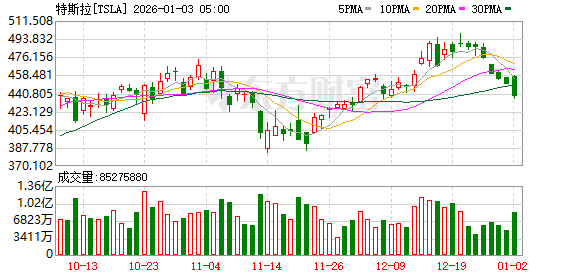
Market Overview - On the first trading day of 2026, US stock indices showed relatively calm closing fluctuations, with significant inflows into tech stocks and a collective surge in Chinese concept stocks, buoyed by a strong start in the Hong Kong market [1][3] - The S&P 500 index rose by 0.19% to 6858.47 points, the Nasdaq Composite fell by 0.03% to 23235.63 points, and the Dow Jones Industrial Average increased by 0.66% to 48382.39 points [1] Chinese Tech Stocks Performance - The Nasdaq China Golden Dragon Index surged by 4.38%, marking the largest single-day increase since May 12 of the previous year [3] - Notable Chinese tech stocks included Baidu, which rose by 15.03%, Alibaba up by 6.25%, Tencent ADR increasing by 5.23%, and Netease rising by 7.22% [3] AI Sector Developments - Investors are eagerly awaiting developments from DeepSeek, which recently published a paper on a new training method called "manifold constraint hyperconnection" (mHC), seen as a significant breakthrough [3] - This has led to speculation about the release of the next-generation flagship model from DeepSeek, reminiscent of past AI advancements [3] Performance of Major Tech Companies - Major tech companies had mixed performances, with Nvidia rising by 1.26% and Apple falling by 0.31%. Tesla experienced a decline for the seventh consecutive day [5] - The overall performance of tech giants was lackluster, with Microsoft down by 2.21% and Amazon down by 1.87% [5] Stock Movements in Various Sectors - Various thematic stocks saw significant trading activity, with Micron Technology up by 10.51% and Western Digital up by 8.96%, both reaching historical highs [6] - AI energy and storage concept stocks also performed well, with Bloom Energy rising by 13.58% and NuScale Power increasing by 15.17% [6] Electric Vehicle Market Update - Tesla reported Q4 delivery data that fell short of expectations, delivering 418,227 vehicles in the last quarter and losing its title as the global leader in electric vehicle sales to BYD, which sold 2.2567 million vehicles in 2025, a 27.86% increase from 2024 [7][8] Berkshire Hathaway Insights - Warren Buffett expressed confidence in Berkshire Hathaway's long-term prospects, suggesting a high likelihood of the company existing in a hundred years, with praise for his successor Greg Abel's capabilities [9] Retail Investor Performance - A report indicated that retail investors at Interactive Brokers achieved an average return of 19.2% in 2025, outperforming the S&P 500 index's return of 16.39% [9]



特斯拉七连跌 中概股深夜狂飙 百度大涨15% 加密货币超11万人爆仓
2 1 Shi Ji Jing Ji Bao Dao· 2026-01-02 23:31
Market Overview - On January 2, 2026, the U.S. stock indices closed mixed, with the Dow Jones up by 0.66% and the S&P 500 up by 0.19%, while the Nasdaq fell by 0.03% [2] - Large tech stocks saw more declines than gains, with Tesla experiencing a seven-day consecutive drop [4] Company Performance - Tesla reported global vehicle deliveries of 1.636 million units for 2025, a year-on-year decline of approximately 8.6%, marking the first time it was surpassed in annual electric vehicle sales by Chinese manufacturer BYD [4] - Semiconductor stocks performed strongly, with the Philadelphia Semiconductor Index rising by 4.01%. Notable gains included Micron Technology up over 10%, ASML up over 8%, Intel up over 6%, TSMC up over 5%, and AMD up over 4% [4] - Chinese concept stocks generally rose, with the Nasdaq Golden Dragon China Index increasing by 4.38%. Key performers included Baidu up over 15%, Pony.ai up over 10%, and other notable increases from companies like Global Data and Tiger Brokers [4] Commodity Market - In precious metals, spot gold rose by 0.33% to $4,332.50 per ounce, while COMEX gold futures increased by 0.02% to $4,341.90 per ounce. Spot silver rose by 1.74% to $72.80 per ounce, and COMEX silver futures increased by 2.35% to $72.27 per ounce [4] Oil Market - International oil prices saw slight declines, with WTI February crude futures down by 0.17% to $57.32 per barrel and Brent March crude futures down by 0.16% to $60.75 per barrel [4] Cryptocurrency Market - Major cryptocurrencies collectively rose, with Bitcoin surpassing the $90,000 mark, while over 110,000 individuals were liquidated in the past 24 hours [5][6] Foreign Investment Outlook - Foreign institutions maintain a positive outlook on Chinese assets, with predictions of a 38% increase in the Chinese stock market by the end of 2027 [6] - Investment opportunities are expected to be highly structured, focusing on technology innovation, particularly in artificial intelligence, semiconductors, and high-end manufacturing [7] - The inflow of foreign capital is primarily directed towards high-quality Chinese assets, including tech leaders and high-dividend stocks, emphasizing value investment [7]

特斯拉七连跌,中概股深夜狂飙,百度大涨15%,加密货币超11万人爆仓
21世纪经济报道· 2026-01-02 23:25
Market Overview - On January 2, 2026, the U.S. stock market showed mixed results with the Dow Jones up by 0.66%, the S&P 500 up by 0.19%, and the Nasdaq down by 0.03% [1] - The Dow closed at 48,382.39, the Nasdaq at 23,235.63, and the S&P 500 at 6,858.47 [2] Sector Performance - Large tech stocks experienced more declines than gains, with Tesla seeing a continuous drop for seven trading days. Tesla reported a global delivery of 1.636 million vehicles in 2025, marking an 8.6% year-over-year decline, and was surpassed by BYD in annual electric vehicle sales for the first time [2] - Semiconductor stocks performed strongly, with the Philadelphia Semiconductor Index rising by 4.01%. Notable gains included Micron Technology up over 10%, ASML up over 8%, Intel up over 6%, TSMC up over 5%, and AMD up over 4% [4] Chinese Stocks - The Nasdaq Golden Dragon China Index rose by 4.38%, indicating a positive start to the year for Chinese stocks. Key performers included Baidu Group up over 15%, Pony.ai up over 10%, and several others showing significant gains [4] Commodity Prices - Gold prices increased slightly, with spot gold rising by 0.33% to $4,332.50 per ounce, while silver rose by 1.74% to $72.80 per ounce [4] - In the oil market, WTI crude oil futures for February fell by 0.17% to $57.32 per barrel, and Brent crude for March fell by 0.16% to $60.75 per barrel [5] Cryptocurrency Market - Major cryptocurrencies saw collective gains, with Bitcoin surpassing the $90,000 mark, reflecting a 1.87% increase [6] Foreign Investment Outlook - Foreign institutions maintain a positive outlook on Chinese assets, with predictions of a 38% increase in the Chinese stock market by the end of 2027 [7] - Investment opportunities are expected to be highly structured, focusing on technology innovation, green energy transition, and high-quality brands benefiting from consumer recovery [8]


中国资产深夜爆发,百度狂飙12%,美股芯片巨头创历史新高
2 1 Shi Ji Jing Ji Bao Dao· 2026-01-02 23:17
Group 1: Semiconductor Stocks Performance - U.S. semiconductor stocks experienced a significant rally, with the Philadelphia Semiconductor Index rising over 4.5% [2] - ASML surged more than 8%, reaching a historical high, while Micron Technology and Intel both increased by approximately 8% [2] - Other notable gainers included ARM and AMD, which rose nearly 6% [2] Group 2: Chinese Stocks Surge - Chinese stocks listed in the U.S. saw a collective surge, with the Nasdaq Golden Dragon China Index increasing by nearly 3.9% [5] - Baidu's stock skyrocketed over 12% after submitting a mainboard listing application for its subsidiary Kunlun Chip [5] - Other Chinese companies like Yatsen and NetEase also saw significant gains, with increases around 7% [5] Group 3: Precious Metals and Commodities - Precious metals, particularly gold, experienced a sudden pullback after reaching $4,400, currently hovering around $4,336, with a slight increase of 0.4% [7] - Silver also saw a rise of 4% at one point but later adjusted to a 2% increase [7] Group 4: Oil Market Decline - Crude oil futures collectively declined, with WTI and ICE Brent both dropping over 1.2% [11] - Current prices for WTI and ICE Brent are $56.70 and $60.11, reflecting decreases of 1.25% and 1.22% respectively [11] Group 5: Cryptocurrency Market Recovery - The cryptocurrency market is witnessing a rebound, with Bitcoin surpassing $89,000 and Ethereum, SOL, and XRP all increasing by over 2% [12] - Dogecoin saw a notable rise of over 10% [12] - A total of over 90,000 individuals faced liquidation, amounting to $235 million, with more than 78% being short liquidations [12]


Dow Jones 2025 Scorecard: Caterpillar, Nvidia Help Index Hit All-Time Highs – Top 5 Winners & Losers
Benzinga· 2026-01-02 21:17
Core Insights - The Dow Jones Industrial Average reached new all-time records in 2025, with President Donald Trump celebrating this achievement [1] Group 1: 2025 Performance Overview - In 2025, 23 out of 30 Dow Jones Industrial component stocks experienced gains, while 7 declined, marking an improvement compared to previous years where 18 stocks were up in 2024 and 19 in 2023 [2] - The overall performance of the Dow Jones Industrial Average was an increase of approximately 13% for the full year [3] Group 2: Top Gainers and Losers - The top five gainers in 2025 included: 1. Caterpillar: +59.5% 2. Goldman Sachs: +55.8% 3. Johnson & Johnson: +43.5% 4. NVIDIA: +40.2% 5. IBM: +39.1% [6] - The top five losers in 2025 included: 1. UnitedHealth Group: -35.0% 2. Salesforce: -20.4% 3. Nike: -19.1% 4. Procter & Gamble: -13.8% 5. Honeywell: -12.7% [6] Group 3: New Additions to the Index - Nvidia replaced Intel in the Dow Jones Industrial Average in November 2024, with Intel outperforming Nvidia in 2025, gaining over 90% [4] - Sherwin-Williams replaced Dow Inc. in November 2024, with Sherwin-Williams down 1.3% over the past year, while Dow stock fell more than 30% [5] - Amazon replaced Walgreens Boots Alliance, with Amazon shares up 4.8% in 2025 [6]



英特尔周五尾盘上涨7.4%
Xin Lang Cai Jing· 2026-01-02 20:49
Core Viewpoint - Intel (INTC) shares rose by 7.4% on Friday, driven by the release of its client system-on-chip (SoC) Panther Lake and ambitions in the foundry business, which boosted market confidence [1] Group 1 - Intel's client SoC Panther Lake release is a significant factor in the recent stock price increase [1] - The company's ambitions in the foundry business are contributing to positive market sentiment [1]
Unusual Options Activity: Revisiting The Best and Worst Bets From Q4 2025
Yahoo Finance· 2026-01-02 18:30
Summary of Key Points Core Viewpoint - The article reflects on the unusual options activity in Q4 2025, particularly focusing on Intel's options strategy and performance, while also assessing the overall market trends and investment strategies for the upcoming year [2][3]. Group 1: Intel Options Activity - Intel's $50 call option, which was noted for its unusual activity, had a volume-to-open-interest (Vol/OI) ratio of 134.59, indicating strong interest in this option [4]. - The ask price for the $50 call was $0.65, while Intel's share price was $37.30 at that time [5]. - A Covered Combination options strategy was suggested, involving buying 100 shares of Intel and selling an out-of-the-money (OTM) call and put expiring on October 31 [5]. Group 2: Financial Performance and Strategy - Selling the $50 call generated $61 in premium income, and Intel reported better-than-expected Q3 2025 results on October 23 [6]. - The closing share price on October 31 was $39.99, which was below the $50 strike price, allowing the investor to retain the $61 premium [6]. - Alternative strike prices for the OTM put were provided, with the $30 strike being highlighted as the best option for those not wanting to own more than 100 shares, generating an additional $38 in premium income [7].
Why Intelligent Bio Solutions Shares Are Trading Lower By Around 20%? Here Are Other Stocks Moving In Friday's Mid-Day Session - Aimei Health Technology (NASDAQ:AFJK), Astera Labs (NASDAQ:ALAB)





Benzinga· 2026-01-02 17:23
Company Overview - Intelligent Bio Solutions Inc. (NASDAQ:INBS) announced plans to raise $10 million through a private placement, leading to a significant drop in its share price [1] - Following the announcement, shares of Intelligent Bio fell 19.7% to $7.65 [1] Stock Movements - Lavoro Limited (NASDAQ:LVRO) saw a substantial increase of 181%, reaching $1.2900 [4] - Ironwood Pharmaceuticals, Inc. (NASDAQ:IRWD) rose 57.7% to $5.32 after issuing FY26 guidance, expecting US net sales of Linzess to be between $1.125 billion and $1.175 billion [4] - Brand Engagement Network, Inc. (NASDAQ:BNAI) jumped 56% to $3.6290 after entering a Vendor Services Project Agreement with a global advertising agency [4] - ChowChow Cloud International Holdings Limited (NYSE:CHOW) increased by 39.7% to $0.8500 due to year-over-year revenue and net income growth in H1 2025 [4] - Sidus Space, Inc. (NASDAQ:SIDU) gained 29% to $4.0314, marking a 470% surge over the past month [4] - Baidu, Inc. (NASDAQ:BIDU) rose 12.1% to $146.57 after announcing a proposed spin-off and Hong Kong listing of its AI unit [4] Declines - Outlook Therapeutics, Inc. (NASDAQ:OTLK) experienced a significant decline of 58% to $0.6632 after receiving a complete response letter from the FDA regarding its biologics license application [4] - ESH Acquisition Corp. (NASDAQ:ESHA) fell 23.5% to $14.68 [4] - Nuvve Holding Corp. (NASDAQ:NVVE) declined 15.3% to $2.1500 after announcing the closing of a private placement [4]